
Coenzyme Q10 Powder Grade Fit: 10% Water-Soluble vs 99%
Coenzyme Q10 Powder Grade Fit: 10% Water-Soluble vs 99%
Coenzyme Q10 powder grade selection is a format decision before it is a purchasing decision. The same molecule can be offered as a 10% water-soluble grade or a 99% grade, but those labels do not describe interchangeable powders. They describe different specification positions that formulators should match to the finished supplement format, the required CoQ10 content per unit, and the supplier evidence available for the lot.
Coenzyme Q10 (CAS 303-98-0) has a documented solubility profile: it is fat-soluble, soluble in acetone and ether, and insoluble in water. That profile is the first screen. A 10% water-soluble grade is positioned for water-containing formats, while a 99% grade remains a higher-assay CoQ10 powder whose dispersion behaviour must be managed in the formulation. Neither grade is automatically more effective. The fit depends on the format and on the evidence behind the specific grade.
Guanjie Biotech is a Shaanxi-based supplier of natural plant extracts, fruit powders and specialty chemical raw materials, founded in 2004. Its product portfolio lists Coenzyme Q10 powder with CAS 303-98-0. This article uses that product identity and the supplied application map to explain how buyers can evaluate the 10% water-soluble and 99% grades without treating either grade as a universal answer.
Why the solubility profile comes before the grade number
The grade name is not enough to predict formulation behaviour. Coenzyme Q10 is fat-soluble, soluble in acetone and ether, and insoluble in water. A 10% water-soluble grade is designed to change how the ingredient behaves in water-containing systems, but the grade label does not disclose the carrier, the dispersion technology, the assay method or the exact CoQ10 content. Those details belong in the specification and certificate of analysis.
The 99% grade has a higher proportion of CoQ10 per unit weight. That can reduce the powder mass needed to deliver a target amount, but it also concentrates the formulation challenge. The powder is still lipophilic and not water-soluble. In an aqueous system, a 99% grade needs a dispersion or emulsification strategy that is supported by the supplier's data and by the formulator's own testing.
The buyer's question should therefore be: what does the finished format require? Water dispersion, oil miscibility, dry-blend uniformity, compact capsule mass, heat stability or a simple label are different requirements. The grade should follow those requirements, not the other way around.
Where the 10% water-soluble grade fits
The 10% water-soluble grade is the more logical starting point when the finished product is water-based, or when the consumer reconstitutes the product in water and the formulator needs CoQ10 to be carried in that aqueous phase. Fortified beverages, drink mixes and powder sachets intended for dispersion are the first formats to evaluate. These are conditional evaluations, not automatic approvals.
In these formats, the grade's value is not simply that it is labelled water-soluble. The formulator should verify how it behaves at the target pH, temperature, mineral content and processing shear, and whether it remains uniformly dispersed through shelf life. A supplier's dispersion data and a pilot batch are more useful than a generic solubility statement.
The lower assay also has practical consequences. More powder may be needed per unit of CoQ10, which can affect mouthfeel, flavour, sedimentation, packaging volume or capsule size. Those effects should be calculated from the actual specification, not assumed from the grade label.
The 10% grade is not the default choice for every water-containing product. If the product is a clear beverage, a cloudy dispersion may be unacceptable; if it is a dry mix, the powder must not segregate. The grade should be selected only after the finished format's critical quality attributes are defined.
Where the 99% grade fits
The 99% grade is a higher-assay CoQ10 powder. It is most relevant when the formulator needs to deliver a meaningful amount of CoQ10 in a small mass, such as a hard capsule or tablet, and when the process can handle a lipophilic powder. The grade can also be evaluated in oil-based suspensions, emulsions and softgel-type systems, where the formulation strategy is designed around the ingredient's fat solubility.
Higher assay does not prove higher bioavailability, better stability or better finished-product performance. Those outcomes depend on the formulation, particle characteristics, processing and the evidence generated for the specific product. A 99% grade can be the right choice for a capsule and the wrong choice for a simple aqueous drink if the dispersion system is not designed and tested.
In dry blends, the 99% grade may be attractive for mass efficiency, but uniformity is critical. Low-dose actives can segregate, and a high-assay powder does not eliminate the need for mixing validation. The buyer should ask for the particle-size and bulk-density information that matters to the process, where those data are available, not only the assay result.
| Decision point | 10% water-soluble grade | 99% grade |
|---|---|---|
| Documented grade position | Water-soluble grade for water-containing dispersion systems | Higher-assay CoQ10 powder for mass-efficient formulations |
| Native CoQ10 solubility | CoQ10 itself is fat-soluble, soluble in acetone and ether, and insoluble in water; the grade system modifies water behaviour | Same native solubility; the formulation must manage lipophilic behaviour |
| Powder mass per unit of CoQ10 | Higher mass for a given CoQ10 amount; check impact on the format | Lower mass for a given CoQ10 amount; check uniformity and process fit |
| Formats to evaluate | Fortified beverages, drink mixes, powder sachets and water-containing systems | Hard capsules, tablets, oil suspensions, emulsions, softgel-type systems and dry blends |
| Key watch-outs | Dispersion stability, clarity, taste, mouthfeel and carrier identity | Uniformity, wettability, aqueous dispersion and formulation evidence |
| Buyer confirmation | Grade specification, carrier, dispersion test, assay method and COA | Grade specification, assay method, particle and bulk data where relevant, COA and formulation data |
Supplement format map: apply the grade to the format
Guanjie Biotech's supplied application map for nutraceutical ingredients covers dietary supplements and hard capsules, functional and fortified beverages, functional foods and confectionery, nutricosmetics and personal care, and sports and performance nutrition. The map is a starting point. CoQ10 grade fit must be confirmed within each format.
Dietary supplements and hard capsules are described in the supplied application material as the largest market segment. For a capsule or tablet, the 99% grade is often evaluated where the dose must fit a small unit. The 10% grade can be considered if the larger powder mass is acceptable and the water-soluble behaviour provides a specific processing benefit, but in a dry capsule that benefit is not automatic.
Functional and fortified beverages are the clearest scenario for the 10% water-soluble grade. The formulator should confirm clarity, dispersion, thermal processing and shelf life. A 99% grade requires an emulsification or dispersion system and supporting evidence before it can be considered for the same beverage.
Powder sachets and dry mixes may use the 10% grade when the consumer adds water and uniform dispersion is part of the product experience. The 99% grade can be used in dry blends if uniformity and re-dispersion are validated. In both cases, the grade choice should follow the dosage form and the evidence, not category assumptions.
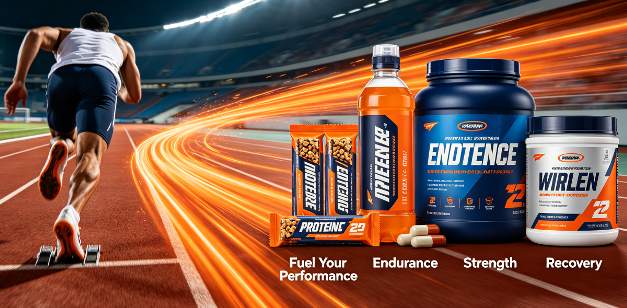
Functional foods and confectionery add heat, pH and matrix effects. A water-based process may favour the 10% grade, but the grade name does not guarantee stability in a gummy, fortified snack or dairy matrix. Sports and performance nutrition follows the same logic: ready-to-mix drinks may align with the 10% water-soluble grade, while capsules and oil-based formats may align with the 99% grade.
Fermentation route and sourcing context
Microbial fermentation is an established manufacturing route for Coenzyme Q10. The route matters to buyers because it affects the documentation they should request, but it does not by itself establish the grade, purity or suitability of a specific lot. The supplier should confirm the production route for the exact CoQ10 grade offered, and the buyer should keep that route in the specification file.
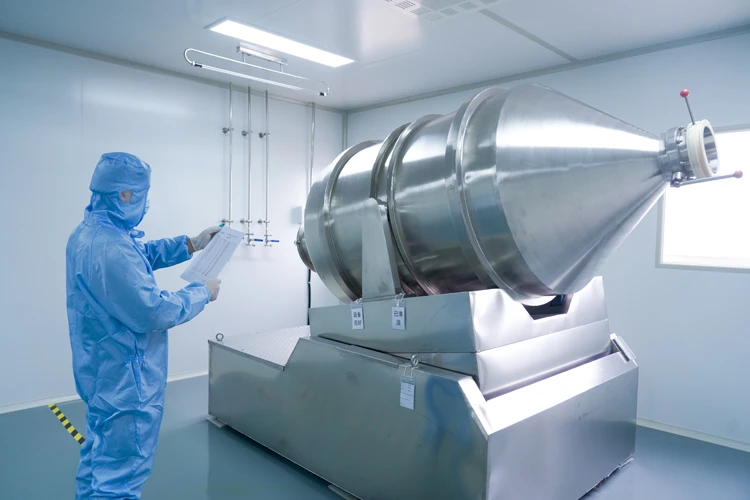
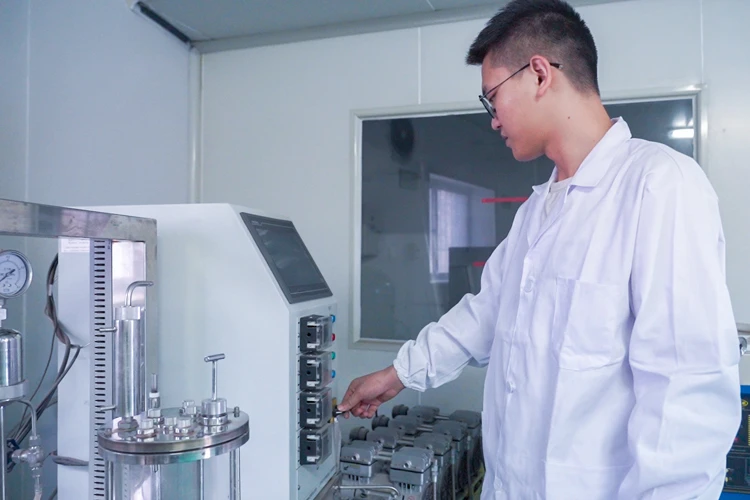
Guanjie Biotech reports a 7,000 m² manufacturing footprint, including a 2,000 m² cGMP-standard clean workshop and a 500 m² laboratory. The company states that its laboratory construction complies with GMP and QS standards, and it holds ISO, Halal and Kosher certifications. It also reports an independent R&D centre, a team of 7 engineers and over 16 national patents. These are company-level capabilities. They support a supplier-qualification conversation, but they do not replace a CoQ10-specific specification, COA, assay method or dispersion study.
Guanjie Biotech's stated testing capabilities include HPLC, UV and GC. For a CoQ10 grade, the buyer should ask which method is used for the assay and how the result is reported. A certificate of analysis should match the grade and the agreed specification, not just the product name.
Market context and procurement discipline
A commercial research estimate from Global Market Insights places the global nutraceutical ingredients market at USD 105.8 billion in 2026. The figure is broad and does not measure demand for a specific CoQ10 grade. It is useful only as background for why buyers need a repeatable grade-selection process rather than a single product assumption.
In the United States, the FDA states that manufacturers, packagers and holders of dietary supplements must follow current good manufacturing practices intended to help ensure identity, purity, quality, strength and composition. That is a regulatory baseline. It does not certify a specific supplier or a specific CoQ10 lot, so the buyer still needs lot-level documentation.
Buyer checklist before matching grade to format
- Confirm the exact grade designation, whether 10% water-soluble or 99%, and the CoQ10 content basis used in the specification.
- Ask for the carrier and dispersion system used in the 10% water-soluble grade. Do not infer the carrier from the grade name.
- Confirm the assay method and the COA fields that will be reported for each lot.
- Request a dispersion or solubility test in the intended matrix, not only a general statement that the grade is water-soluble.
- Calculate the powder mass per dosage unit and check capsule size, tablet weight, taste, mouthfeel and packaging volume.
- Review process conditions such as heat, pH, shear, drying and storage, because these can change dispersion and stability.
- Confirm quality and regulatory documentation for the destination market, including the applicable GMP expectations.
- Confirm storage conditions in the supplied application guidance: cool, dry and dark storage, sealed after opening, away from high temperature and moisture.
- Run a pilot batch and a stability check before scale-up. A supplier grade that works in a beaker does not automatically work in the finished product.
The same discipline applies to other nutraceutical ingredients such as Phosphatidylserine Powder, Alpha GPC Powder, NMN Powder and Plant Extract Powder. The finished format and the specification should drive selection, not a generic category claim.
Fit boundaries and what the evidence does not show
No grade is universally better. The 10% water-soluble grade is not a guarantee of clarity or stability in every beverage. The 99% grade is not a guarantee of bioavailability or easier formulation. Facility facts and certifications are company-level evidence; they do not certify a specific CoQ10 lot. Grade names may also differ between suppliers, so buyers should compare specifications rather than labels alone.
Microbial fermentation is an established route, but the route should be confirmed for the specific grade. The product name alone does not establish the production route, the assay method or the dispersion behaviour. Those points belong in the supplier's technical file and in the buyer's qualification record.
Outlook: format-led grade selection
The practical outlook is format-led. As supplement formats diversify, buyers will continue to need grade-specific evidence rather than a single CoQ10 specification. The 10% water-soluble grade will remain relevant where aqueous dispersion is a design requirement. The 99% grade will remain relevant where high assay and mass efficiency matter. The decision rule is to lock the format, calculate the mass and dispersion requirements, then confirm the grade and lot documentation.
Bottom line: choose the 10% water-soluble grade when the finished format requires water-phase dispersion and the specification supports it; choose the 99% grade when higher assay and mass efficiency fit a process that can handle a lipophilic powder. Confirm grade, carrier, assay method and lot evidence before matching either grade to a supplement format.
A downloadable Guanjie Biotech nutraceutical ingredients brochure is available here: Nutraceutical Ingredients brochure.
FAQ
What is the difference between 10% water-soluble Coenzyme Q10 powder and 99% Coenzyme Q10 powder?
The 10% water-soluble grade is positioned for water-containing formats, while the 99% grade is a higher-assay CoQ10 powder for formulations that can handle a lipophilic ingredient and need mass efficiency. The exact carrier, assay method and CoQ10 content must be confirmed in the specification; the grade name alone does not establish finished-product performance.
Which supplement formats should be evaluated with the 10% water-soluble grade?
Fortified beverages, drink mixes and powder sachets intended for dispersion are the first formats to evaluate. The formulator should confirm dispersion stability, clarity, taste, mouthfeel and shelf life in the actual matrix. A water-soluble grade is not automatically suitable for every aqueous product.
When should a formulator consider the 99% grade?
The 99% grade should be considered when a higher assay and smaller powder mass per unit are important, and when the process can manage a lipophilic powder. Hard capsules, tablets, oil suspensions, emulsions and softgel-type systems may fit, but the formulator must confirm uniformity, dispersion and stability with the actual specification.
Does a higher CoQ10 assay mean better absorption?
No. A higher assay does not by itself prove better bioavailability, stability or finished-product performance. Those outcomes depend on the formulation, particle characteristics, processing and the evidence generated for the specific product. Assay is a specification value, not a bioavailability result.
What should buyers confirm before matching CoQ10 grade to a supplement format?
Buyers should confirm the exact grade designation, CoQ10 content basis, carrier or dispersion system, assay method, COA fields, dispersion or solubility data in the intended matrix, quality documentation, storage conditions and pilot-batch performance. The grade should be selected only after the finished format requirements are defined.
Is microbial fermentation relevant to CoQ10 grade selection?
Microbial fermentation is an established manufacturing route for Coenzyme Q10, and the route can affect the documentation a buyer requests. It does not by itself establish the grade, purity or suitability of a specific lot. The supplier should confirm the production route for the exact CoQ10 grade offered.
¿Tiene preguntas o necesita más detalles?
Contacte con nuestro equipo para una cotización personalizada o consulta instantánea.
Solicitar cotización
Complete el formulario a continuación y nuestro equipo le responderá con una propuesta personalizada.
Chat directo de WhatsApp
¿Prefiere chatear en tiempo real? Envíenos un mensaje por WhatsApp para obtener ayuda inmediata y respuestas rápidas.
- Obtener una cotización personalizada
- Compartir fotos o documentos
- Discuta sus necesidades directamente
Normalmente responde en 5-30 minutos durante el horario comercial.