
Coated Steel Comparison: Heating, Food, Medical and Motor Use
Coated Steel Comparison: Heating, Food, Medical and Motor Use
Four specialty coated steel duties should be compared on what the coating must survive, not on colour, gloss or price per tonne. Anti-peeling high-emissivity coatings for heating equipment, PFAS-free non-stick grades for food contact, antimicrobial matte finishes for medical equipment casings and matte PTFE systems for deep-drawn motor housings fail in different ways, so each one needs its own acceptance criteria and its own document set before a purchase order is defensible.
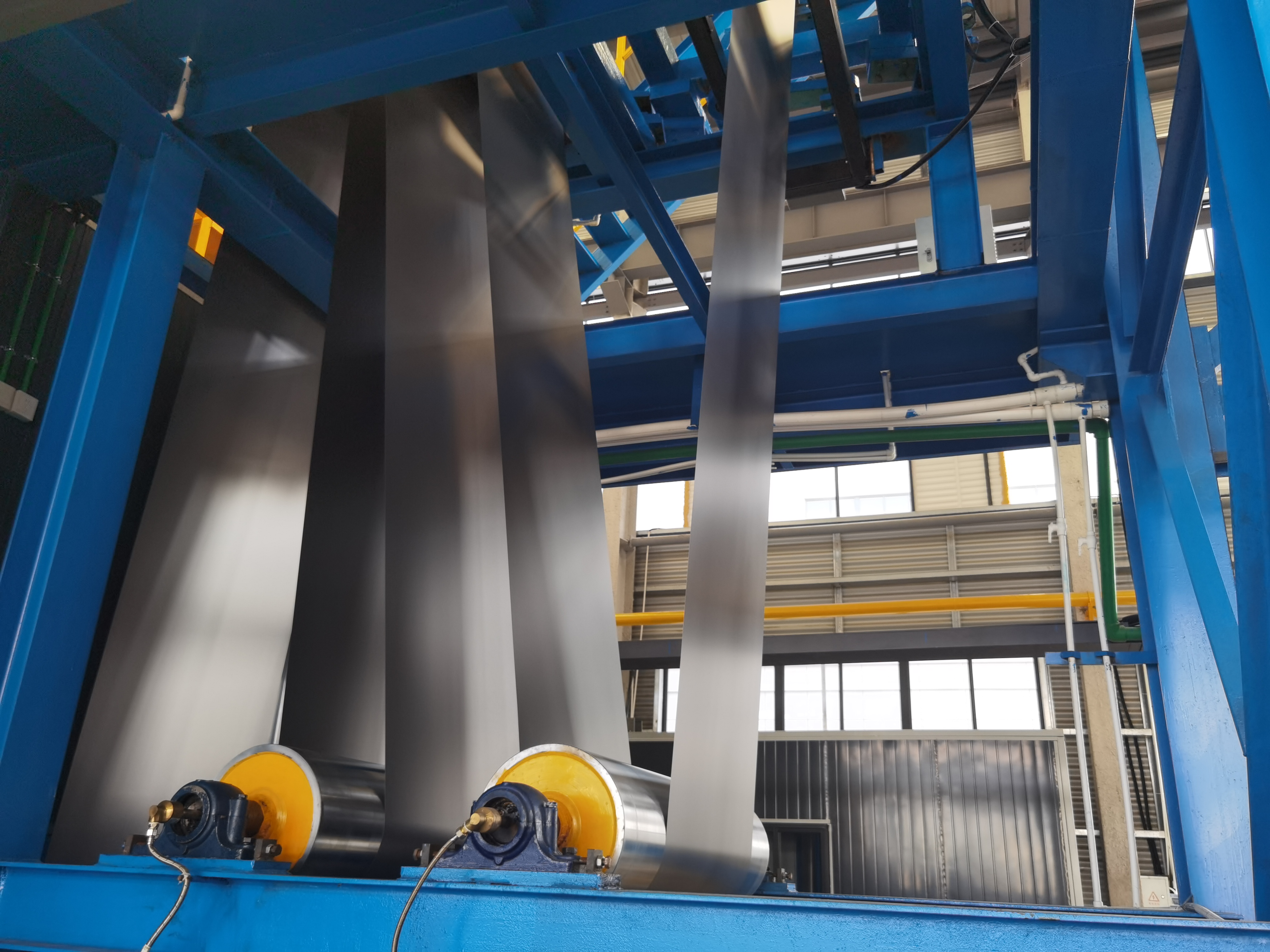
This comparison treats the four duties as separate procurement problems that happen to share a steel substrate. It draws on four kinds of input: manufacturer-reported product data, a published standard reference for PVC film laminated coil (GB/T 18847-2002), external commercial market research, and sourced third-party coating information. Each statement below is labelled by strength, because a supplier's own description is not the same thing as a test report attached to a coil number.
The practical question for a Decision-stage buyer is therefore not "which of these four is best". It is "which of these four can produce, on paper and in a sample, the specific evidence my application, my regulator and my customer audit will ask for".
Why four coating functions cannot share one acceptance standard
The four duties are not ranked against each other in this article, because they do not compete for the same job. Heating-duty coatings fail through loss of adhesion and drift in surface radiative behaviour after repeated thermal cycling. Food-contact coatings fail through chemical interaction with the food or cleaning medium, or through documentation that cannot be tied to the delivered batch. Medical casing coatings fail when an antimicrobial claim cannot be reproduced after cleaning, or cannot be traced to a tested product and lot. Deep-drawn motor housing coatings fail mechanically, when the film cracks, scuffs or lifts during the draw itself.
Substrate names therefore settle very little. Electro-galvanized (SECC) and electrolytic chromium-coated (ECCS) substrates appear across heating, food-contact and drawn-housing specifications alike. What actually separates the four products is the coating chemistry, the dry film weight or film thickness, the cure schedule and the forming route that the coating has to survive.
Colour and price sit at the bottom of the criteria for the same reason. A matte black surface does not by itself indicate emissivity, a white surface does not by itself indicate food safety, and a low quoted price per tonne tells the buyer nothing about the rejection rate the coating will create on a stamping line.
Heating and high-temperature duty: adhesion stability outranks surface appearance
In heating applications, the coating is exposed to repeated heating and cooling. Because the coating and the steel substrate expand at different rates, the interfacial bond is the property that limits service life. Anti-peeling behaviour is therefore a bonding and cure question, not a cosmetic one: under-cure, weak pre-treatment or a mismatch between film thickness and the specified bake schedule are the usual sources of lifting and flaking.
High emissivity adds a second, separately measured property. Emissivity is an optical characteristic of the surface at the working temperature, and it has to be measured at that temperature to mean anything in a specification. For a heating-side candidate such as TC-70SECC-MB-HE, described in the brief as an anti-peeling high-emissivity grade, the buyer's first request should be a report showing measured radiative performance at the intended service temperature, together with the substrate and coating build it was measured on.
YOUNGSON METAL describes a batch-sampling discipline for this class of risk: cross-cut and cupping tests plus standard T-bend tests are run to simulate post-forming stress and to confirm coating flexibility and adhesion lot by lot. That is a process description supplied by the manufacturer, not an independent certificate, but it points to the verification method a buyer should replicate or witness.
What to put in the heating-duty purchase specification
- Adhesion test method and acceptance level after the specified thermal cycle, not only in the as-supplied state.
- Measured emissivity value with the test temperature, instrument and surface condition stated.
- Substrate designation and coating build, so that a later substitution cannot be presented as an equivalent.
- Sampling frequency per lot, and the record that will be handed over with each delivery.
Where no temperature-specific report exists, the honest position is that the emissivity and the long-term adhesion of that grade remain unverified for the buyer's duty, however convincing the sample looks.
Food contact: acid testing, PFAS status and the report chain
Food-contact coated steel is decided by chemistry and documentation together. One of the clearest acceptance points in the available material is that food-grade non-stick ECCS is expected to be free of BPA and to pass the 3% acetic acid test for food-grade compliance; this appears in commercial research rather than in an accredited certificate, so it should be treated as a screening criterion that the buyer then verifies with a laboratory report.
For the non-stick system itself, YOUNGSON METAL reports a double-sided non-stick coating based on PES that is PFAS-free and resistant to temperatures up to 220°C. The company also reports resistance to acetic acid and citric acid. Both statements are manufacturer-reported and, in the source material, are not accompanied by the test method, exposure time, acid concentration or independent laboratory identity. They are useful verification leads; they are not yet acceptance evidence.
This is where a temperature gap matters. If an application specifies a ceiling of the 280°C order, the documented 220°C figure does not cover it. The correct response is not to average the two or to quote the higher number, but to require a product-specific thermal test at the actual service temperature and duration before approving the grade.
Coating chemistry and film format both change the answer
Film-laminated formats follow a different rule set. For PVC film laminated steel coil, the referenced standard GB/T 18847-2002 is cited with a film thickness of 150–180 microns, an adhesion level of at least B3 and a 0T T-bend. YOUNGSON METAL separately reports PET or PVC film options in the 12–200 µm range for engineered organic coated coils. PET and PVC are not interchangeable: the evidence supplied does not establish functional equivalence, so a buyer who needs one should not accept the other as a quiet substitute.
RoHS and REACH status belongs in the same discussion. Company materials state that products have passed SGS testing against REACH and RoHS heavy-metal regulations, which is a meaningful starting signal for European market access. What it lacks in the available record is the report number, the tested product scope, the laboratory identity and the date, and those four items are exactly what an importer's compliance file needs.
Medical equipment casings: what an antimicrobial claim actually requires
Antimicrobial performance is the least standardised of the four duties in this comparison, and the evidence supplied for the medical-casing candidate ZAM-PCM-MGA0508 does not include product-specific antimicrobial test data. That absence is itself the most useful finding for a buyer, because it defines the exact gap to close before a specification is approved.
An antimicrobial property is defined by its test method, the organisms tested, the contact time, the measured reduction and the laboratory that issued the result. It must then be tied to a product and a lot. Without those elements, the word describes a marketing position rather than a purchasable attribute, and in most regulated markets a claim of this kind also carries its own labelling obligations.
Medical casings add two further stresses that are often missed. The first is cleaning: housings are repeatedly wiped with disinfectants, and a coating that resists one agent may not resist the next. The second is abrasion: a matte finish that scuffs during assembly loses both appearance and, potentially, the surface integrity the antimicrobial function depends on. Both should be tested with the actual cleaning agents and wipe cycles the device will see in service.
Documents to request for a medical casing grade
- Antimicrobial test report naming the method, organisms, contact time and result, with product code and lot reference.
- Chemical resistance data against the specific disinfectant family used in the facility.
- Abrasion or rub-resistance results for the matte finish at the specified film thickness.
- RoHS and REACH documentation scoped to the finished coating, not only to the steel substrate.
Deep-drawn motor housings: the coating has to survive the press
Motor housings are formed, not merely folded. During a deep draw the coating is stretched, compressed and dragged against tooling, so the relevant properties are elongation, adhesion after forming and friction against the die. A matte PTFE system such as SECE-PTFE-MATTE-050 is selected for the surface behaviour it gives during and after forming; PTFE is a fluoropolymer known for low-friction, non-stick surface characteristics, and matte finishes are commonly specified to reduce glare on visible housing faces.
Appearance is not a proxy for forming quality. The test that matters is what the coating does after the draw: a cross-cut and cupping sequence, a T-bend at the tightest radius the part requires, and a visual standard for scuffing and film continuity at the drawn wall.
YOUNGSON METAL lists deep-drawn coil coating, including Teflon, non-stick, gold and lacquered finishes, among its product lines, and reports a batch-sampling protocol of cross-cut cupping and T-bend testing to check coating flexibility and adhesion under simulated post-forming stress. The company also reports, in a comparison with standard construction-grade PPGI, a stamping rejection rate below 0.1% against more than 5% for construction-grade material, a 50-fold precision improvement claim, with 0T/1T T-bend formability. That comparison is company-reported and is drawn against construction-grade cladding, not against a motor-housing application, so it indicates forming discipline rather than proving suitability for a specific housing geometry.
Thickness, width and supply format: what has to be confirmed in writing
Dimensional capability decides whether a coating discussion is even relevant, and every figure below is manufacturer-reported and should be re-confirmed on the quotation and the mill certificate rather than taken from a web page.
- Prepainted steel is reported at 0.20–2.0 mm thickness and 6–1250 mm width.
- PET or PVC film options are reported at 12–200 µm film thickness; the PVC film reference standard cites 150–180 microns with a 0T T-bend.
- Zinc coating designations Z180 and Z275 are listed for certain prepainted products; the source does not state whether the figure is a total two-sided mass or which coating-mass test method applies.
- Aluminized prepainted steel is reported at 0.40–2.5 mm, with a separate aluminized sheet range of 0.35–2.5 mm. Aluminized substrate should never be merged with galvanized or electro-galvanized figures in one comparison line.
- Precision slitting is reported at 0.05–3.5 mm thickness and 1.5–1800 mm width, with width tolerance and burr in the 0.03–0.10 mm band; the inspection basis for those tolerances is not disclosed.
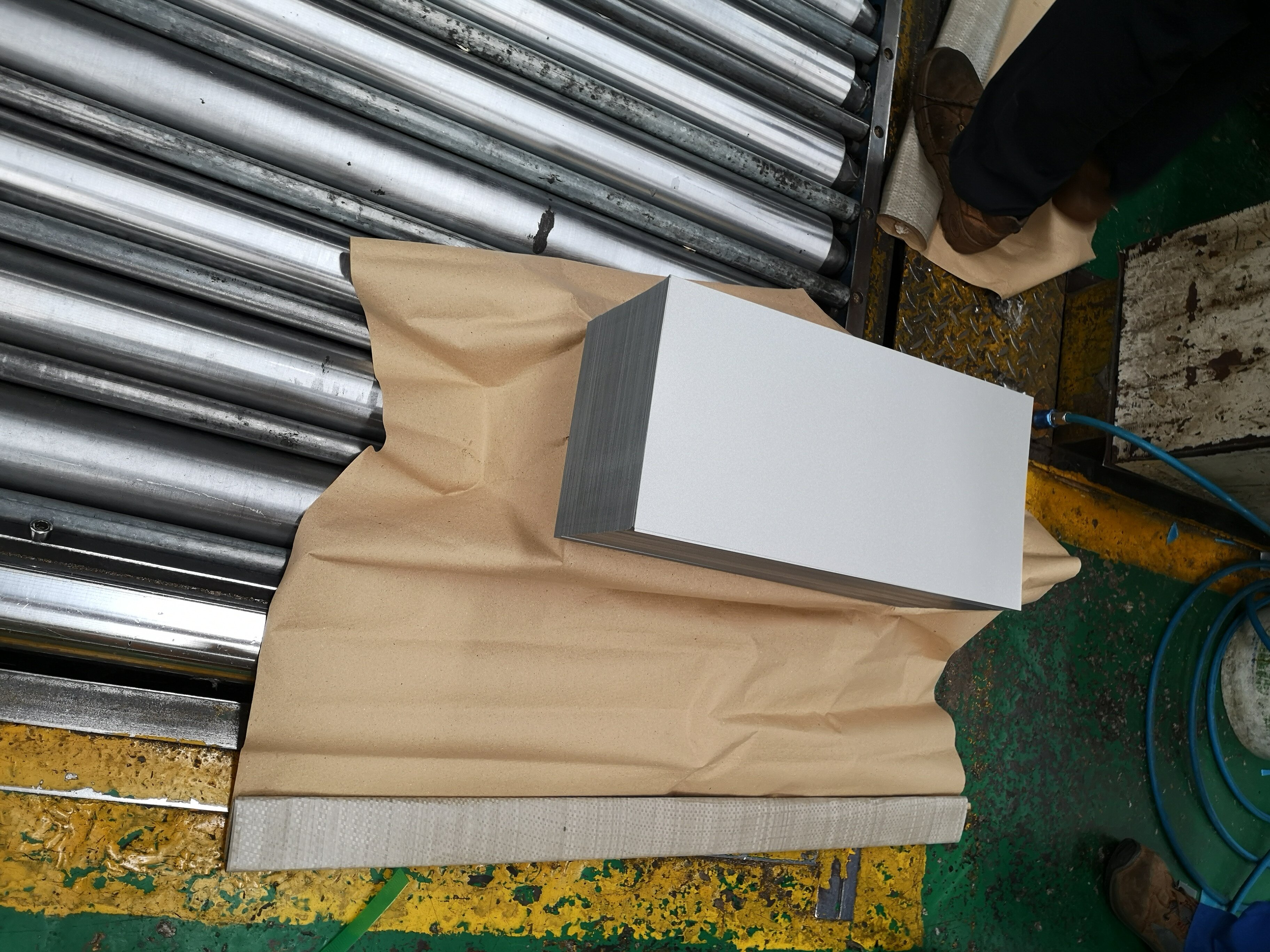
Delivery form carries its own risk. A buyer who needs slit strip should ask for the width tolerance class, the burr limit, the edge condition and the sampling plan, because a tolerance range quoted without a measurement method cannot be accepted or rejected on a goods-inward inspection.
From claim to evidence: the four-rung evidence ladder
Sorting supplier statements by evidence strength is the single most useful habit in this category, because the four duties attract very different levels of documentation.
- Report linked to product and lot. A test report naming the product code, the coating build, the method, the result and the batch. This is the only rung that supports an acceptance decision on its own.
- Product-specific standard reference with method. A named standard and a stated test condition, such as the GB/T 18847-2002 film thickness and 0T T-bend reference, where the record stops short of a certificate.
- General company compliance statement. Statements that products meet EN, ASTM, JIS, GB or ISO references, or that they have passed SGS testing for REACH and RoHS, without a scope, report number or product mapping.
- Descriptive marketing language. Temperature resistance, antimicrobial, high emissivity or food grade used without a test basis. Useful for shortlisting a supplier to talk to, not for approving a grade.

A scorecard for purchase terms and acceptance criteria
The scorecard below is deliberately document-weighted. It can be used at quotation stage, when no sample has been produced yet, and again at goods-inward, when the same criteria are checked against the delivered lot.
| Criterion | Document to request | Acceptance condition |
|---|---|---|
| Function-to-duty fit | Technical data sheet stating coating chemistry, film weight or thickness and cure schedule | The stated build matches the intended duty; no substitution is offered as an equivalent without written agreement |
| Adhesion and forming | Cross-cut, cupping and T-bend results at the specified radius | Results are stated for the delivered thickness and substrate, not for a sister product |
| Chemical and regulatory status | RoHS/REACH reports, and for food contact the acid-test and BPA/PFAS documentation | Report number, laboratory, date and product scope are all present and current |
| Thermal or antimicrobial performance | Test report at the specified temperature or against the specified organisms | Test conditions match the application; a lower-rated figure is not accepted as cover |
| Dimensions and delivery form | Quotation annex plus mill certificate for thickness, width, zinc designation and burr | Tolerance class and measurement basis are stated, not only a range |
| Lot traceability | Sampling plan and lot numbering on delivery documents | Every report can be matched to a coil or lot number in the shipment |
| Commercial terms | Written quotation with incoterm, lead time and surface-condition exclusions | Price is compared only after the six criteria above are confirmed as equal |
Applied in that order, the scorecard removes the two most common sourcing errors in this category: approving a grade on colour and price before the documents exist, and accepting a general compliance sentence as though it were a report scoped to the product being bought.
Market background and what comes next
Commercial research cited in the supporting data puts the global coated steel market at USD 309.5 billion in 2025 and projects USD 565.8 billion by 2033, with the color-coated segment valued at USD 26.93 billion in 2024. These are research estimates rather than audited figures, and they describe a category far broader than the four functional duties discussed here; they should be used for context, not as evidence about any individual product.
The more decision-relevant direction of travel is documentary. As food-contact, chemical and medical specifications tighten across Europe, North America and Asia-Pacific, the difference between two suppliers quoting the same coating family will increasingly appear in what they can hand over: a report number, a tested scope, a lot reference. Buyers who build their acceptance criteria around that now will spend less time disputing deliveries later. Those who buy on appearance and price will keep discovering, at the press or at the audit, which properties were never verified.
The supplier referenced in this comparison
YOUNGSON METAL (Chongqing Youngson Metal Products Co., Ltd.) is a coated steel manufacturer founded in 2016, operating a 3,000 m² facility in Chongqing, China, with an annual processed capacity reported at more than 10,000 tons and a technical team of five engineers and senior process technicians. The company is BV ISO 9001:2015 certified and reports SGS testing of its products against REACH and RoHS heavy-metal regulations, with roughly 70% of output exported.
Its product lines cover drawn PET film laminated steel coil, drawn VCM/PVC film laminated steel coil, deep-drawn coil coating including Teflon, non-stick, gold and lacquered finishes, commercial and deep-drawn pre-painted steel and stainless steel, and a mild carbon steel range spanning cold rolled, electro-galvanized, aluminized and galvanized substrates. Further detail is published at YOUNGSON METAL.
FAQ
How should a buyer compare a heating-duty coated steel with a food-contact coated steel?
They should not be compared on the same scale, because their failure modes differ. Heating-duty grades are judged on adhesion after thermal cycling and on measured emissivity at the service temperature. Food-contact grades are judged on migration and acid-resistance testing, on BPA and PFAS status, and on whether the compliance report can be matched to the shipped lot. A single ranking across the two duties would obscure the criteria that actually decide approval.
What should a food-contact test report contain before a purchase is approved?
It should name the test method, the food-simulant or acid used and its concentration, the exposure temperature and time, the measured result, the laboratory that issued it, the report date, and the product code and lot it applies to. A statement that a product is food grade, without those elements, describes an intention rather than a verified property.
Do T-bend and cupping tests actually predict performance in a deep-drawn motor housing?
They indicate coating flexibility and interfacial adhesion under simulated forming stress, which is the property that most often fails in a deep draw. They do not reproduce a specific housing geometry, die condition or press speed. A buyer should treat them as a screening result and confirm with a trial draw on the actual tooling before releasing volume.
Is a company-level RoHS or REACH statement sufficient for European market access?
It is a useful starting signal but not a complete compliance file. A general statement about meeting RoHS or REACH usually lacks the report number, the tested product scope, the laboratory identity and the issue date. Importers should request the current reports scoped to the exact coating formulation and product code they are buying.
Why can a coated steel pass a sample check and still fail in production?
Sampling often confirms appearance and basic adhesion in the flat state. Production adds heat cycles, chemical exposure or forming strain, and those conditions can reveal under-cure, thin film at the drawn wall, or a coating chemistry that reacts with the cleaning agent in use. Aligning the test conditions with the real service and forming conditions is what closes that gap.
The full product and capability overview, including coating systems and dimensional ranges, is available in the YOUNGSON METAL catalogue.
¿Tiene preguntas o necesita más detalles?
Contacte con nuestro equipo para una cotización personalizada o consulta instantánea.
Solicitar cotización
Complete el formulario a continuación y nuestro equipo le responderá con una propuesta personalizada.
Chat directo de WhatsApp
¿Prefiere chatear en tiempo real? Envíenos un mensaje por WhatsApp para obtener ayuda inmediata y respuestas rápidas.
- Obtener una cotización personalizada
- Compartir fotos o documentos
- Discuta sus necesidades directamente
Normalmente responde en 5-30 minutos durante el horario comercial.