
CoQ10 10% Water-Soluble vs 99% Powder: Buyer Framework
CoQ10 10% Water-Soluble vs 99% Powder: Buyer Framework
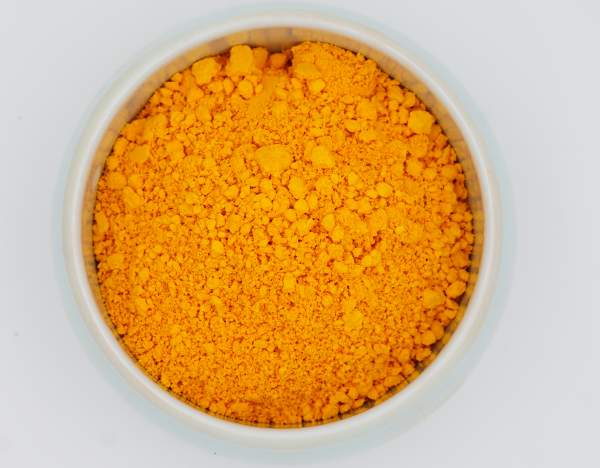
Short answer: choose between Coenzyme Q10 powder listed as 10% water-soluble and the 99% grade by matching the material to the formulation’s solubility requirement, confirming what the specification means, and reviewing batch-specific test evidence. The 99% grade is described as fat-soluble and insoluble in water, while the 10% option is identified as water-soluble. Those labels are not enough to establish the complete composition, behavior in a finished formula, or suitability for a particular process.
For buyers evaluating nutraceutical ingredients, this is a grade-selection question rather than a simple purity contest. A higher stated percentage does not automatically make a material more suitable for every formulation. Conversely, a water-soluble designation does not by itself establish the active content, carrier system, dispersion behavior, or performance in the buyer’s finished product. The available product information identifies Coenzyme Q10 powder by CAS No. 303-98-0 and lists both specifications, but a purchase decision still depends on reviewing the actual technical specification and batch documentation.
Why the grade decision starts with formulation fit
Coenzyme Q10 powder is listed for use in dietary supplements, health food, beverages, and cosmetics. These broad application categories do not prescribe one grade for every product. A buyer should begin with the intended dosage form and manufacturing process, then determine whether the ingredient must dissolve in water, disperse in a water-based matrix, or be incorporated into a fat-containing system.
This distinction matters because the product information describes the 99% material as fat-soluble: it dissolves in organic solvents such as acetone and ether and is insoluble in water. That description sets a practical boundary for water-based formulation planning. It does not, by itself, specify how the powder behaves in oils, emulsions, or a finished consumer product, so those details should not be assumed.
The 10% specification is identified as water-soluble. However, the available product information does not define the remaining portion of that grade, identify a carrier or processing aid, provide a test method for solubility, or state the conditions under which the water-soluble behavior was assessed. Buyers should therefore treat “10% water-soluble” as a grade designation to verify, not as a complete technical description.
Decision rule: if the process requires water compatibility, first establish what the supplier means by water-soluble and request supporting specification details. If the formula is designed around the listed 99% grade, account for its stated fat-soluble behavior and insolubility in water. In either case, confirm the choice against a representative formulation trial and batch documentation.
What the two specifications do—and do not—tell a buyer
| Buyer question | 10% water-soluble specification | 99% specification |
|---|---|---|
| What is stated? | The listed specification is 10% and marked water-soluble. | The listed specification is 99%. |
| What solubility behavior is described? | Water-soluble designation; the available information gives no test conditions or detailed method. | Described as fat-soluble, soluble in acetone and ether, and insoluble in water. |
| What remains to confirm? | Active-content basis, remaining composition, carrier, solubility method, and behavior in the intended formula. | Assay method, batch result, handling and processing requirements, and fit with the intended matrix. |
| What is not established by the grade label alone? | Finished-product performance, stability, or suitability for every water-based application. | Suitability for every fat-based application or a particular formulation outcome. |
The table separates listed information from open qualification questions. The available data does not provide a head-to-head test, comparative stability results, a price quotation, or finished-product performance data for either grade. Buyers should avoid treating the percentage alone as a complete measure of functional suitability.
Technical identity and production route
The product specification identifies Coenzyme Q10 powder under CAS No. 303-98-0. It describes the material as yellow or light orange-yellow, odorless, and tasteless. It also lists the 10% water-soluble and 99% specifications, while the broader solubility statement says insoluble. The more detailed selling-point description clarifies that the 99% crystalline material is fat-soluble, dissolves in acetone and ether, and is insoluble in water. Because the water-soluble designation is specific to the 10% option, buyers should request grade-specific documentation rather than apply one general solubility statement to both products.
The product information states that the CoQ10 is produced using microbial fermentation technology. This is a supplier-provided production-route claim, not a substitute for lot-level identity or assay evidence. For qualification, buyers can ask for the current specification, a representative Certificate of Analysis (COA), the assay method and acceptance criteria, and confirmation that the submitted documents correspond to the offered grade and production batch.
The supplier information also refers to independent manufacturing facilities and testing laboratories. That description can inform a due-diligence conversation, but the available material does not name a testing laboratory, provide an accreditation, show an audit report, or include a specific CoQ10 test result. Those details should be verified independently before being treated as qualification evidence. A facility description and a batch-specific analytical record answer different questions: one concerns the supplier’s stated operating setup; the other concerns a defined lot and its measured results.
A buyer’s grade decision framework
1. Define the required phase and process
Write down the point at which CoQ10 enters the process and the phase it must join. Identify whether the product is intended for a water-based beverage, a capsule or tablet blend, a softgel or other fat-containing system, a powder sachet, or another format. These examples are formulation contexts, not a claim that one grade has been tested in each format. A format name alone does not resolve solubility needs; the actual formula and processing sequence do.
If a water-based system is required, ask whether the 10% designation refers to a soluble ingredient preparation and what the stated 10% measures. Request the complete composition or the information needed to assess the remaining fraction. Ask how the supplier defines solubility, including the test procedure and conditions, and whether the evidence reflects the supplied lot. If the system is not water-based, still confirm how the 99% grade is intended to be incorporated and whether the supplier has relevant handling guidance.
2. Confirm the specification behind the grade name
Ask for the current specification sheet for the exact grade, not a general CoQ10 brochure. Check that the product name, CAS number, stated grade, appearance, assay basis, and analytical method are clear. For the 10% material, clarify whether the percentage is an active-content claim and request a description of the remaining composition where disclosure is available. For the 99% material, confirm the assay acceptance range and the method used to determine it.
Do not infer missing product properties. The available information does not state particle size, moisture, bulk density, residual-solvent limits, microbiological limits, shelf life, packaging configuration, or storage conditions for this CoQ10 grade. If any of these factors affect the buyer’s process or release criteria, request them explicitly and determine whether they appear in the product specification or lot-specific COA.
3. Review batch evidence, not only a generic specification
A product specification describes expected requirements; a batch document reports results for a particular lot. Buyers should compare the COA against the approved specification and confirm that the product identity, grade, lot reference, assay result, method, and relevant release criteria are legible and internally consistent. The available CoQ10 data does not include an actual COA or test result, so no batch quality conclusion can be drawn from the product description alone.
Where testing is described as independent, establish who performed the analysis, which methods were used, and whether the report is traceable to the offered batch. If third-party testing is part of the qualification plan, agree on the sample identity, test scope, and report format before relying on the results. A laboratory’s existence does not establish the result for a specific shipment; the report and its linkage to the lot are the evidence to review.
4. Check the material in the intended formulation
Document a small-scale evaluation protocol before selecting the grade for routine purchasing. Use the intended processing sequence and record the observations that matter to the finished product, such as whether the ingredient can be incorporated as intended and whether the mixture meets internal acceptance criteria. The supplied information does not provide a validated formulation protocol, numerical solubility threshold, or comparative trial result. Evaluation conditions should therefore be set by the buyer’s formulation and quality teams rather than invented from a product listing.
For a water-soluble grade, distinguish a supplier’s ingredient-level solubility description from behavior in a complex formula. Other ingredients and processing conditions may affect the final system; the available product data does not quantify those effects. Likewise, the 99% grade’s stated insolubility in water is a meaningful constraint, but it does not by itself predict the performance of every formula containing oils or other components.
5. Make the decision on evidence fit, not price alone
Price matters in procurement, but the available product information provides no comparable quotation or cost model for the two grades. A meaningful commercial comparison would need a consistent basis, including the specified grade, active-content basis, packaging, quantity, delivery terms, and any testing or documentation requirements. Without those inputs, a claim that one option is cheaper or offers better value would not be supported.
Instead, compare each option against the same qualification checklist: formulation compatibility, clearly defined specification, lot-specific test evidence, traceability, and the buyer’s intended release criteria. If one option lacks information essential to the formula, that information gap is itself relevant to the decision. It does not prove that the material is unsuitable, but it means the buyer has not yet established suitability.
Qualification checklist
- Confirm the exact grade: 10% water-soluble or 99%.
- Verify the product identity and CAS No. 303-98-0 on the specification and batch documents.
- For the 10% grade, clarify the meaning of the percentage and request the remaining-composition and solubility information needed for the formula.
- For the 99% grade, account for the stated fat-soluble behavior and insolubility in water.
- Review the assay method, acceptance criteria, and batch-specific COA.
- Verify any independent-laboratory claim with the laboratory identity and a traceable report.
- Evaluate the material in the intended formulation and record the buyer’s acceptance criteria.
- Compare commercial terms only after technical scope and documentation are aligned.
Application fit: use the dosage form as a prompt, not a shortcut
Coenzyme Q10 powder is listed for dietary supplements, health food, beverages, and cosmetics. These categories provide a starting point for identifying formulation questions, but they do not establish that both grades are interchangeable across those applications. For a water-based beverage concept, the water-soluble designation may be a relevant screening point, subject to confirmation of composition, test conditions, and formula performance. For a formulation designed around the 99% grade, the stated fat-soluble behavior and water insolubility should be part of the process review.
For capsules, tablets, and powder formats, the buyer should not assume that the delivery format alone determines the appropriate grade. Consider how the ingredient is blended, what other materials are present, and which product specifications control release. For cosmetics, the intended product matrix and manufacturing method likewise need to be defined before choosing based on a grade label. The available information does not provide application-specific performance data for these use cases.
In practical terms, scenario selection is a sequence: identify the target matrix, state the required solubility behavior, compare that requirement with the documented grade, and test the selected material under the intended process. If the documentation does not close the gap, hold the decision open rather than treating a broad application listing as proof of fit.
Where the comparison with traditional grade selection has limits
A common shortcut is to treat the highest stated percentage as the preferred grade and assess other requirements afterward. That approach is inadequate when the formulation depends on water compatibility: the listed 99% material is described as insoluble in water, while the 10% option is marked water-soluble. The limitation is not that the higher-grade material is universally unsuitable; it is that percentage alone does not answer the solubility question.
The reverse shortcut—selecting the 10% grade solely because a formula is water-based—also has a boundary. The available information does not define the grade’s carrier or remaining composition, provide the test conditions behind the solubility label, or demonstrate performance in a particular finished formula. Water-soluble labeling is a reason to investigate that option, not proof that it will meet every formulation requirement.
There is also a supplier-evidence boundary. A statement about microbial fermentation or independent facilities and laboratories is not equivalent to a verified batch result. Buyers need grade-specific specifications and traceable lot documentation to connect general capability claims to the material being purchased. The available information does not establish comparative stability, bioavailability, finished-product efficacy, or performance advantages for either grade; none should be inferred from the supplied grade descriptions.
Market context and buyer implications
This comparison is a product-qualification issue within the broader Nutraceutical Ingredients category. The supplied third-party evidence package does not include CoQ10-specific market demand, price, market share, or trend data suitable for supporting a claim about which grade is gaining adoption. Accordingly, this article does not assign a market-growth direction to either specification.
For research and evaluation teams, the practical implication is to make the grade decision auditable. Keep the formulation requirement, specification version, COA, laboratory report where applicable, and evaluation record linked to the selected material. That creates a clearer basis for internal review than relying on a short product label, an unsupported market claim, or a price comparison made before the technical scope is settled.
What buyers can verify about Guanjie Biotech
Guanjie Biotech’s product information lists Coenzyme Q10 powder as CAS No. 303-98-0, gives the 10% water-soluble and 99% specifications, describes the 99% material as fat-soluble and insoluble in water, and states that production uses microbial fermentation technology. The same product information refers to independent manufacturing facilities and testing laboratories. These are supplier-provided product details; the available materials do not include a CoQ10 batch COA, independent test report, laboratory accreditation, or audit record.
For a procurement evaluation, that distinction is important. The information can help define what to request, but it does not independently establish current lot conformance. Buyers can use the grade framework above to ask for the exact specification, the test method and batch result, clarification of the 10% grade’s composition and solubility basis, and evidence supporting any laboratory or facility claim. That approach keeps the decision grounded in information that can be checked against the buyer’s product and quality requirements.
Future outlook: make grade definitions easier to audit
The next useful step in CoQ10 grade qualification is not a broader claim about which specification is best; it is a more complete, comparable evidence set. A grade description that clearly states active-content basis, remaining composition where applicable, solubility method and conditions, assay method, and lot-level results is easier for technical and procurement teams to evaluate. For a specific purchase, those items should be confirmed directly from the current supplier documents and tied to the production batch under review.
Until that information is available, buyers can make a disciplined provisional assessment: the 10% water-soluble designation appears relevant when water compatibility is required, while the 99% grade’s stated fat-soluble behavior and water insolubility are material constraints for water-based processes. Neither description removes the need for specification review and batch testing. The appropriate grade is the one whose verified characteristics align with the intended formulation and release criteria.
Frequently asked questions
What is the key difference between the 10% water-soluble and 99% CoQ10 grades?
The product information lists a 10% water-soluble specification and a 99% specification. It describes the 99% material as fat-soluble, soluble in acetone and ether, and insoluble in water. It does not provide enough detail to define the full composition or test conditions of the 10% grade.
Does the 99% grade dissolve in water?
No. The supplied product description states that the 99% CoQ10 powder is insoluble in water and fat-soluble. It also says that it dissolves in organic solvents such as acetone and ether.
Does the 10% water-soluble label prove suitability for a beverage?
No. The label identifies the grade as water-soluble, but the available information does not state its complete composition, solubility test conditions, or performance in a finished beverage. Buyers should verify the specification and evaluate the material in the intended formula.
What should a buyer request before approving a CoQ10 batch?
Request the current grade-specific specification and a batch-specific COA that identifies the lot, assay result, test method, and applicable acceptance criteria. Clarify the 10% grade’s composition and solubility basis if it is under consideration. If an independent laboratory is cited, request the laboratory identity and a report traceable to the batch.
What production route is stated for this CoQ10 powder?
The supplied product information states that CoQ10 powder is produced using microbial fermentation technology. The available information does not include process records or independent verification of a particular production batch.
Bottom line
Choose the CoQ10 grade by aligning documented solubility behavior with the intended formulation, confirming what each percentage and grade designation means, and reviewing batch-level testing. The 10% water-soluble label and the 99% grade’s stated fat-soluble behavior provide useful screening information, but neither is a complete qualification package. For procurement teams, a clear specification and traceable test evidence are more decision-useful than purity percentage or price considered on its own.
¿Tiene preguntas o necesita más detalles?
Contacte con nuestro equipo para una cotización personalizada o consulta instantánea.
Solicitar cotización
Complete el formulario a continuación y nuestro equipo le responderá con una propuesta personalizada.
Chat directo de WhatsApp
¿Prefiere chatear en tiempo real? Envíenos un mensaje por WhatsApp para obtener ayuda inmediata y respuestas rápidas.
- Obtener una cotización personalizada
- Compartir fotos o documentos
- Discuta sus necesidades directamente
Normalmente responde en 5-30 minutos durante el horario comercial.