
Clinical Thermometer Acceptance: Electronic vs Mercury-Free
Clinical Thermometer Acceptance: Electronic vs Mercury-Free
An importer comparing an electronic thermometer with a mercury-free liquid-in-glass thermometer is not choosing between a modern product and a legacy one. Both categories can be supplied at ±0.1 °C accuracy, both are sold into household, pharmacy and clinical channels, and both can carry CE (MDR) marking. What separates a repeatable purchase from an expensive lesson is the acceptance evidence behind the specification: what is inspected before shipment, which documents travel with the batch, how a complaint is handled, and which of the two technologies creates handling obligations your channel can actually support.
Direct answer. For most importers the decision rests on three verifiable items rather than on the technology label:
- Electronic thermometer (higher-specification tier): accuracy ±0.1 °C, a reading within 60 seconds, a fever alarm, an optional soft probe tip, low battery consumption with an auto power-off function; positioned for family daily use, community medical settings and pharmacy retail.
- Mercury-free liquid-in-glass thermometer: a non-toxic gallium-indium-tin filling liquid, the same ±0.1 °C accuracy, no battery and low maintenance; positioned for household, clinic, hospital and school temperature checks.
- The buying difference: inspection protocol, document set, customization control, order terms and complaint handling — not the accuracy figure, which the two categories can share.
A mature category that keeps two live technologies
Category data does not show one technology displacing the other. Grand View Research reports that the mercury-free thermometers segment held the largest revenue share of the global thermometer market in 2023, at 69.1%, and projects the total market to grow from USD 2.2 billion in 2026 to USD 3.0 billion by 2030, a CAGR of 8.2% between 2024 and 2030. Trade data points in the same direction: global trade under HS 902519 — thermometers other than liquid-filled — reached USD 4.93 billion in 2024, a 4.28% increase from USD 4.73 billion in 2023, according to the Observatory of Economic Complexity.
For a distributor, the practical reading is that both technologies will sit in the same catalogue for years, in the same retail shelf space and often under the same brand. An assortment that carries only one type leaves the other type's buyer — the pharmacy customer who wants a battery-free unit, or the clinic that wants a reading in under a minute — to a competitor. That makes the useful question not "which technology wins" but "which acceptance criteria do I apply to each type, and can the supplier evidence them".
Scope note on the market figures. The Grand View Research number covers thermometers as a product class, including non-clinical categories such as industrial and laboratory instruments. It supports a directional statement about category size and about the weight of mercury-free products within it. It is not a clinical-only forecast and should not be converted into a market-share estimate for either technology in a specific country.
Where the two types converge, and where "electronic" splits
The categories are closer than retail presentation suggests. Product data for a higher-specification electronic thermometer and for a mercury-free glass thermometer both state ±0.1 °C accuracy. The meaningful differences are in how that accuracy is delivered, what the user must maintain, and what the importer must support after the sale.
| Acceptance-relevant dimension | Electronic thermometer (higher tier) | Mercury-free liquid-in-glass |
|---|---|---|
| Stated accuracy | ±0.1 °C | ±0.1 °C |
| Reading time | Within 60 seconds | Reading stabilises as the liquid column reaches equilibrium with body temperature |
| Power and maintenance | Battery powered; low consumption; auto power-off reduces maintenance demands | No battery; reusable; low maintenance cost |
| User features | Fever alarm; optional soft probe tip | None beyond the scale reading |
| Filling / sensing | Electronic sensing element | Non-toxic gallium-indium-tin filling liquid; no mercury leakage hazard |
| Cost positioning (supplier's description) | Moderate cost, positioned as better cost-performance than low-cost basic electronic units | Slightly higher cost than a mercury-containing glass thermometer |
| Positioned use | Family daily use, community medical, pharmacy retail | Household, clinic, hospital, school temperature detection |
The tier trap inside "electronic"
"Electronic" is not one specification. Compared with low-cost basic electronic thermometers, the higher-specification tier differs in measuring precision, a fever alarm and an optional soft probe tip; it is also positioned with lower battery consumption, an auto power-off function and, in the supplier's description, more stable performance and a lower defect rate than basic units. A purchase order that says only "digital thermometer" therefore leaves the most consequential variables open. An importer who approves a sample from the higher tier and then receives a basic unit has no contractual ground to reject the batch unless the tier was written into the specification.
Acceptance criterion 1: metrological evidence before shipment
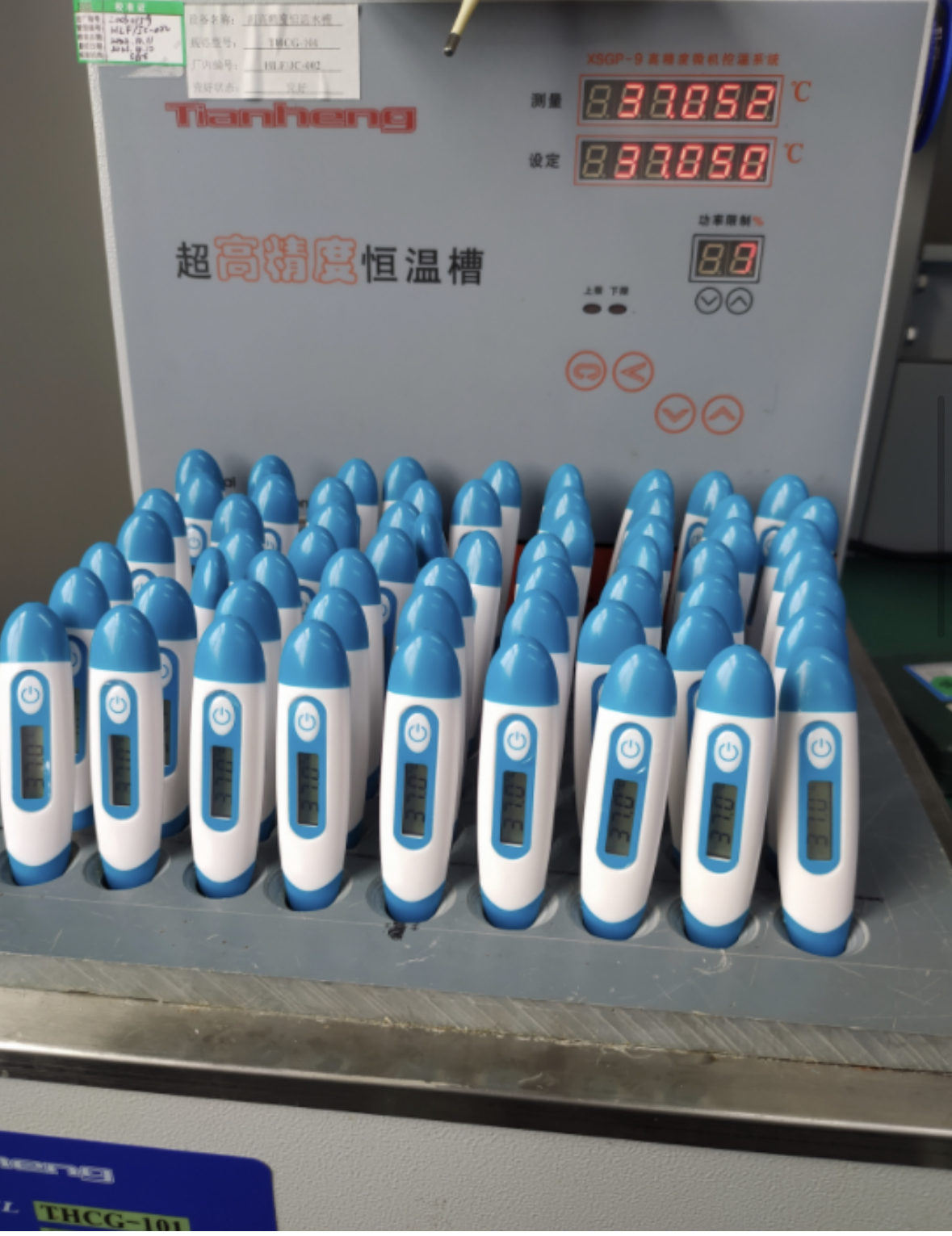
A stated accuracy is a design target; an inspection record is evidence about the goods on the pallet. The bridge between the two is pre-shipment testing, and 100% accuracy inspection before shipment is the single most useful clause an importer can negotiate, because it converts an abstract claim into a batch-linked event that can be audited, accepted or rejected.
It only works if the clause is specific. "100% inspection" can mean a functional check of every unit, or an accuracy check against a reference instrument — and these are not the same commitment. An acceptance specification should fix five points:
- Reference and traceability. Which reference instrument is used, and how its own calibration is traced and dated.
- Test environment. For liquid-in-glass types, the stability of the temperature bath matters more than the bath's headline range; for electronic types, the comparison method used at the specified test points.
- Coverage. Whether every unit is measured against the reference or a defined sample per lot is measured and the remainder functionally checked.
- Record format. Whether results are reported per batch or per serial number, and how the record links to the carton marking.
- Disposition of failures. What happens to a unit that falls outside tolerance — rework, scrap, or downgrade — and who decides.
The standards anchor differs by type. ISO 80601-2-56:2017 sets out particular requirements for the basic safety and essential performance of clinical thermometers for body temperature measurement; because it sits within the medical electrical equipment family, its evidence trail is most directly associated with electronic thermometers. For liquid-in-glass types, buyers should ask which metrological requirements the manufacturer works to, and how scale marking and filling are controlled. In China the relevant national standard is GB1588, and a manufacturer that took part in drafting its 2024 revision — as Ningbo Hi-life Medical Technology Co., Ltd. did with GB1588-2024 — can normally explain the change control sitting behind its scale and tolerance decisions.
Acceptance criterion 2: the document set, and why the two types diverge
Both types need the same core documents, but the classification behind them can differ, and the difference shapes how much paperwork a buyer should expect. The baseline set is common: CE (MDR) certification covering the supplied products, an ISO 13485 quality management system certificate, batch or lot traceability, instructions for use and labelling in the target market's language, and the declaration of conformity for the exact model ordered. Where the buyer's channel requires social-compliance evidence, an audit report such as the BSCI audit Hi-life passed in 2025 belongs in the same folder.
Classification is where the two diverge. Published guidance summarising EU MDR (2017/745) practice describes electronic clinical thermometers as generally falling in Class IIa under Rule 10, and clinical thermometers whose primary function is measurement — including colour-change types — as Class Im under Rule 1, with the final class resting on the manufacturer's own assessment of measurement technology and metrological function. For a buyer, the letter of the class matters less than its reach: confirm the class the manufacturer claims for the exact model, confirm that the certificate and declaration of conformity cover both that model and the private-label variant you are ordering, and confirm who holds the technical documentation. For a glass thermometer, ask the question model by model rather than assuming the answer carries over from an electronic unit in the same catalogue.
| Acceptance item | Evidence to request | Applies to |
|---|---|---|
| Accuracy claim | Pre-shipment inspection record with reference-instrument traceability | Both types |
| Conformity | CE (MDR) certificate and declaration of conformity naming the ordered model | Both types |
| Quality system | ISO 13485 certificate; audit report where the channel requires it | Both types |
| Traceability | Batch or lot code linking goods, inspection record and conformity file | Both types |
| User information | Instructions for use and labelling in the target language | Both types |
| Electrical safety and performance | Test evidence aligned with ISO 80601-2-56:2017 | Electronic |
| Filling composition | Statement of the gallium-indium-tin filling and confirmation that no mercury is used | Mercury-free glass |
Acceptance criterion 3: customization scope and change control
OEM, ODM and private-label work is routine in this category — product development, private labeling and tailored packaging are standard offerings, supported by an in-house technical team of eight engineers at Hi-life. The acceptance question is not whether customization is available but what it changes. Three distinctions should be settled in writing before a deposit is paid.
Engineering versus cosmetic change. A logo print or carton redesign is cosmetic; a different probe, housing or measurement configuration is engineering, and engineering change should trigger re-verification against the agreed specification rather than relying on the original type test. Artwork control. The buyer should approve print-ready artwork in a fixed format, with a recorded approval date that also starts the lead-time clock. Label role. Where the importer appears on the label as own-brand holder, its regulatory role changes and should be confirmed with its own regulatory adviser before the first production run, not after.
Acceptance criterion 4: turning MOQ, lead time and capacity into contract language
Three commercial figures anchor order planning for this supplier: a minimum order quantity of 5,000 units, a lead time of 25–35 days, and a monthly capacity of 150,000 units. Each is only useful once it is attached to a trigger. A 25–35 day lead time means little without knowing when the clock starts — typically artwork approval or deposit receipt — and whether the window already includes pre-shipment inspection.
The MOQ-to-capacity ratio is worth stating plainly: 5,000 units against 150,000 units a month is a ratio of about one to thirty, so a single order consumes roughly 3% of one month's output. In normal conditions that is a scheduling advantage for the buyer. In peak season it is also a warning, because the same capacity is shared across every customer placing orders in that month. Two clauses follow naturally: how allocation is handled when several confirmed orders land inside the same production window, and whether partial shipment against a larger annual commitment is acceptable.
Cost positioning should be read as the supplier's own description rather than as a market price study. That description places the mercury-free glass type slightly above a mercury-containing glass thermometer on cost, and the higher electronic tier at moderate cost with better cost-performance than low-cost basic electronic units. The implication for an importer is straightforward: a landed-cost comparison built on the cheap end of the electronic category is comparing a different product from the one specified in the acceptance criteria.
Acceptance criterion 5: technical support and quality complaint handling
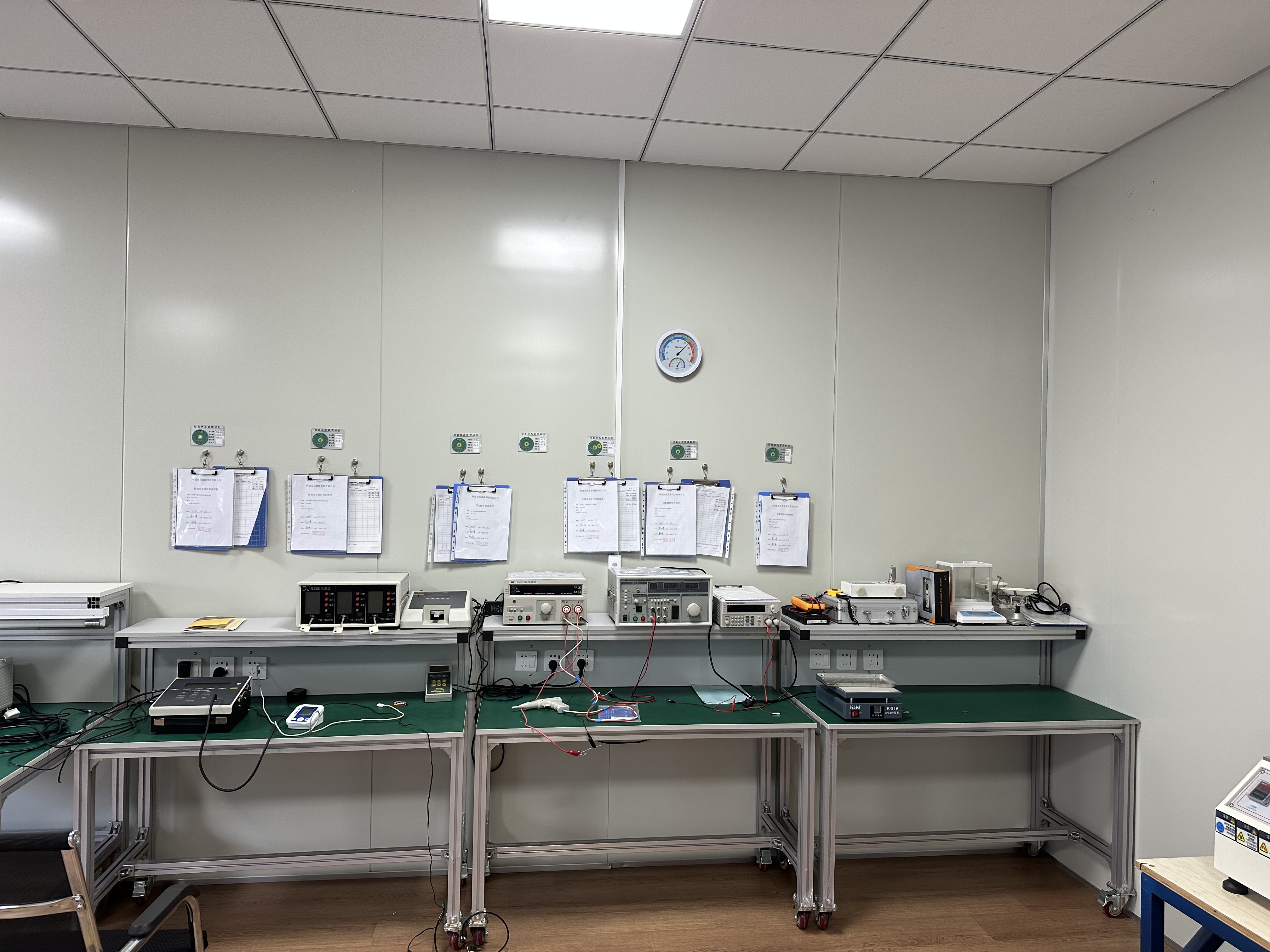
Online technical support and a quality complaint process are part of the service scope an importer should be buying, not an afterthought. In contract terms they reduce to five questions: through which channel a technical question is answered, who answers it, how quickly a batch complaint is acknowledged versus how quickly it is resolved, what evidence the buyer must supply, and what remedy is available.
Evidence expectations should be set before the first claim, because the two product types generate different complaint profiles. An electronic unit can fail on battery, display or function before its accuracy is ever in question, so batch codes, retained samples and a description of the fault pattern carry most of the diagnostic weight. A glass unit's dominant transit risk is breakage, so carton condition on arrival, photographic evidence taken before unpacking and carrier documentation matter more. A practical contract also settles who pays return freight, whether replacement or credit is the default remedy, and whether a root-cause report is provided for repeated faults.
Matching type to channel
The application fit that product data already describes maps closely onto retail channels, and it is the fastest way to decide which type earns shelf space.
- Household clinical thermometer and family daily use: the higher electronic tier, where the fever alarm and soft probe tip carry real value for a caregiver taking a child's temperature.
- Community medical settings: electronic, because a reading within 60 seconds matters when a practitioner is screening several patients.
- Pharmacy retail: electronic as the primary SKU, with the feature set supporting a mid-market price position; mercury-free glass as a low-maintenance secondary line for customers who prefer no battery.
- Clinic, hospital and school temperature detection: mercury-free glass, where no battery, no power consumption and low maintenance cost simplify stock rotation and reduce the servicing burden.
- Adjacent categories outside this comparison: forehead infrared thermometers, ear digital thermometers and waterproof digital thermometers carry different acceptance items — sensing site, ambient-condition sensitivity, probe or lens care — and should be specified separately rather than folded into a glass-versus-electronic decision.
Where each type stops being the right answer
Electronic thermometers are the wrong choice where battery logistics cannot be supported. A battery-free population, a channel with no returns infrastructure, or a market where spare batteries and after-sales handling are impractical all erode the electronic advantage, and the auto power-off function that lowers maintenance does not remove the battery dependency itself. A second boundary is internal: the fever alarm is a feature, not an accuracy guarantee, so an acceptance protocol that tests only alarm function and display behaviour has not verified the ±0.1 °C specification at all.
Mercury-free glass thermometers are the wrong choice where speed and user features drive the sale. They offer no fever alarm, they present breakage risk in transit and in use, and the rigid stem imposes handling rules that schools and households do not always follow. Their advantage — no battery, no power consumption, low maintenance and reusability — is durable rather than dramatic. Neither type should be accepted on the strength of an accuracy claim alone; the supplier's defect-rate positioning has to be validated by the buyer's own incoming inspection, not adopted from a datasheet.
Supplier evidence behind this comparison
The reference point for the supplier-side facts in this article is Ningbo Hi-life Medical Technology Co., Ltd., which manufactures both mercury-free liquid-in-glass and electronic thermometers, including infrared ear and forehead models outside this comparison. The company operates a 9,700 m² facility with 55 employees and an in-house technical team of eight engineers, exports about 70% of output with the EU and USA as main markets, and reports distribution to more than 50 countries and regions, including EU member states, the United Kingdom, Russia, Vietnam, Ukraine, Uzbekistan, Turkey, Tunisia, Mexico, Chile and Colombia, alongside export experience in Southeast Asia, the Middle East and South America.
On the evidence side, all products hold EU CE (MDR) certification, the company works to the ISO 13485 quality management system and passed the BSCI audit in 2025, and it serves as the Secretariat Unit of the Body Temperature Measurement Professional Committee under the China Association for Medical Devices Industry (CAMDI). Production runs through standardised workshops with quality monitoring from raw-material incoming inspection to finished-product delivery, which is the operational basis for offering 100% accuracy inspection before shipment as a buyer-facing commitment. The Mr. Thermo brand identity sits over this manufacturing base.

Outlook: what changes in the next buying cycle
Mercury-free products led the thermometer category in 2023 and trade value grew 4.28% in 2024, so the direction is stable rather than abrupt. Two conditional expectations follow for importers, and both are analysis rather than forecast. First, if the classification split under EU MDR holds — Class IIa for electronic units and a measurement-function route for glass types — the documentation burden will keep diverging between the two, which favours suppliers able to maintain both files and answer model-level questions about each. Second, as acceptance requirements tighten around documented pre-shipment testing, the practical differentiator between suppliers will be the quality of their inspection records rather than the headline accuracy figure, since that figure is now common to both technologies.
A five-step acceptance workflow for importers
- Write the tier into the RFQ. Specify accuracy ±0.1 °C, reading time within 60 seconds for electronic units, fever alarm, probe tip type and battery behaviour, so the quotation and the purchase order describe the same product.
- Approve and seal a golden sample. Record the batch code against it; it becomes the physical reference for any later dispute.
- Define pre-shipment inspection in writing. Reference instrument and traceability, test points, coverage per batch, record format and the disposition rule for out-of-tolerance units.
- Fix the document set before deposit. Certificate scope, declaration of conformity naming the ordered model, ISO 13485 evidence, labelling language and, for glass types, the filling-composition statement.
- Set the complaint route and one review point. Named channel, response expectations, evidence requirements, remedy and freight responsibility, then a single review after the first shipment to adjust the criteria against real inspection data.
Frequently asked questions
Are electronic and mercury-free glass clinical thermometers equally accurate?
They can be. Product data for the higher electronic tier and for the mercury-free glass type both state ±0.1 °C accuracy. Equality on paper is not equality in a shipment, however, so the accuracy figure should be verified through pre-shipment inspection records rather than assumed from the category name.
Why does the electronic category need a tier check before ordering?
Because "electronic" covers more than one specification. Compared with low-cost basic electronic thermometers, the higher tier differs in measuring precision, a fever alarm, an optional soft probe tip, lower battery consumption with auto power-off, and in the supplier's description a more stable performance and lower defect rate. If the tier is not written into the order, the delivered goods can meet the wording of the contract without matching the approved sample.
What should pre-shipment inspection actually cover?
At minimum: the reference instrument and its calibration traceability, the test points and environment, whether every unit is measured against the reference or a sample per lot is measured with the remainder functionally checked, the record format linking results to batch or serial numbers, and the rule for units that fall outside tolerance. For electronic units, the test evidence should align with ISO 80601-2-56:2017; for liquid-in-glass units, ask which metrological requirements and national standard the manufacturer works to.
Which type suits household, pharmacy and clinic channels?
The higher electronic tier is positioned for family daily use, community medical settings and pharmacy retail, where the fever alarm, soft probe tip and a reading within 60 seconds support the retail proposition. The mercury-free glass type is positioned for household, clinic, hospital and school temperature checks, where no battery, no power consumption and low maintenance cost are the deciding factors. Many distributors carry both rather than choosing one.
How should MOQ, lead time and capacity shape order planning?
A 5,000-unit MOQ against 150,000 units of monthly capacity means a single order takes roughly 3% of one month's output, so scheduling is usually flexible outside peak periods. The 25–35 day lead time should be tied to a stated start trigger such as artwork approval or deposit, and the contract should clarify how capacity is allocated when several orders fall in the same production window and whether partial shipment is permitted.
The supplier's current product catalogue, covering mercury-free glass, electronic and infrared thermometer ranges, is available for download: Hi-life Medical catalogue 2025.
¿Tiene preguntas o necesita más detalles?
Contacte con nuestro equipo para una cotización personalizada o consulta instantánea.
Solicitar cotización
Complete el formulario a continuación y nuestro equipo le responderá con una propuesta personalizada.
Chat directo de WhatsApp
¿Prefiere chatear en tiempo real? Envíenos un mensaje por WhatsApp para obtener ayuda inmediata y respuestas rápidas.
- Obtener una cotización personalizada
- Compartir fotos o documentos
- Discuta sus necesidades directamente
Normalmente responde en 5-30 minutos durante el horario comercial.