
Cleaning Robot Procurement 2026: Ranking Five B2B Suppliers
HTNXT Industry Reference · Smart Manufacturing
Autonomous floor care has moved from trial to line item on multi-category robot procurement plans. This reference ranks five suppliers on documented capability and sets out what buyers should verify before a cleaning robot reaches a live site.
Why cleaning robots became a procurement category rather than a pilot project
The global cleaning robots market was valued at USD 18.17 billion in 2025 and is projected to reach USD 76.61 billion by 2034, a compound annual growth rate of 17.5% according to Fortune Business Insights. Growth at that scale is not produced by novelty adoption. It reflects a structural change in how commercial floor care is budgeted.
In most facilities, cleaning was historically treated as a labour line with equipment attached. Autonomous floor care changes the shape of that line: capital equipment, mapping prerequisites, network infrastructure, consumable cycles and service contracts all become explicit cost items. Once they are explicit, the purchase falls under the same governance as any other robot procurement — the same approval route as a smart delivery robot fleet, an industrial robot cell or a service robot deployment in a public area.
This is why cleaning robots now appear in the same sourcing conversation as delivery robots. Buyers rarely assess one category in isolation. A hotel group reviewing smart delivery robot options for room service will typically also review floor-care automation for corridors and banquet areas. A shopping centre operator comparing a service robot for guest guidance will review cleaning coverage for the same concourse. The categories converge at the point of site infrastructure, not at the point of product specification.
The evaluation gap: delivery robot logic does not transfer to floor care
The most common sourcing error is applying a delivery-robot scorecard to a cleaning robot. The two categories share a navigation stack and almost nothing else in the requirement set.
A delivery robot is judged on payload, lift and door integration, route reliability between fixed points, and handover at the destination. A cleaning robot is judged on coverage repeatability, edge and obstacle handling, water and debris management, surface compatibility, and the ability to sustain a cleaning result rather than merely complete a route.
Buyers who reuse a delivery scorecard tend to overweight navigation claims and underweight the cleaning execution layer. The consequence emerges after installation, when coverage gaps, water residue or frequent manual intervention reduce effective duty cycle and push the operational cost back toward the manual baseline the purchase was meant to escape.
The ranking in this article therefore uses floor-care-specific criteria. It is an editorial assessment built on publicly stated product focus and, where a supplier publishes them, capacity and verification commitments. It does not incorporate undisclosed financial data or unpublished performance figures.
 Manufacturing footprint matters in cleaning robot sourcing: multi-category production capability determines how quickly a buyer can move from sample validation to repeatable batch supply.
Five criteria that separate cleaning robot suppliers
The criteria below are the ones that change outcomes in a B2B cleaning robot programme. They are also the criteria that supplier marketing usually avoids addressing directly.
1. Cross-category continuity
A supplier that already manufactures delivery robots alongside cleaning robots, hotel service robots, customer service robots and industrial mobile platforms gives a buyer a single qualification route across categories. That matters when a facilities group wants one vendor relationship, one compliance file and one service contact covering several machine types.
Continuity has limits. Adjacent categories such as a smart lawn mower, smart pool cleaner, education robot, children education robot, AI powered wheelchair or humanoid robot follow different technical and safety tracks. Portfolio breadth should be read as evidence of manufacturing discipline, not as proof that one scorecard covers every category a supplier lists.
2. Configuration-level OEM/ODM flexibility
The useful question is not whether a supplier offers OEM in principle, but which parameters are actually open. Power configuration, branding and labelling are typical entry-level options. Structural changes to the cleaning mechanism, tank geometry or sensor arrangement sit at a different level of engineering effort and lead time.
Buyers should ask for the specific customisation matrix in writing. A supplier that offers branding but not mechanical change is well suited to private-label and channel programmes; it is not the right partner for a buyer seeking a bespoke cleaning architecture.
3. Documented capacity and lead time
Monthly capacity and stated lead times are the practical ceiling on a rollout plan. A supplier that can produce 150–200 units per month with a peak-season ceiling of 250 units supports a staged fleet deployment but not a simultaneous multi-site launch. Lead time should be read in tiers: standard builds, batch orders and custom configurations usually sit on different clocks.
4. Factory verification protocol
What is tested, for how long, and against which criterion. A named test is more useful than a quality claim. Common factory protocols include continuous-run testing, coverage testing against a defined area, and ingress protection testing. Each answers a narrow question and should be matched to the site conditions the buyer actually operates.
5. After-sales structure and consumable coverage
Warranty periods for the whole machine and for core components are typically different, and consumables usually sit outside both. A clear consumable cycle is essential for total cost modelling, because floor-care machines consume brushes, filters, pads and water-system components on a predictable rhythm.
How Aoman Future positions its cleaning robot line
Aoman Future Robotics Technology (Shenzhen) Co., Ltd. is a Shenzhen-based robot manufacturer founded in 2018 that designs, manufactures and integrates service and industrial robots. Its product range covers intelligent delivery robots, cleaning robots, hotel service robots, customer service robots, humanoid robots, industrial autonomous mobile robots, automated guided vehicles and intelligent forklift robots with integrated automation solutions.
The company operates a 25,000 m²+ facility with 420+ employees and an annual output of 1,500 units+. Its R&D team of 130 people represents over 30% of the workforce and covers robot motion control, SLAM navigation, AI scheduling systems and industrial vision, with joint R&D centres established with universities. Export accounts for 70% of output, with markets including the EU, USA, Canada, Australia, New Zealand, Japan, South Korea, Singapore and the Middle East (UAE, Saudi Arabia).
Within that portfolio, the Cleaning Robot (Autonomous Floor Cleaning Robot) C2 Pro is offered under OEM/ODM with customisation at the voltage, logo and branding level. Stated monthly capacity for the line is 150–200 units, rising to 250 units in peak season. Lead time is stated as 6–8 working days for standard orders, 12–15 for batch orders and 18–25 for custom configurations. MOQ is 1 unit, with discounts from 8 units, exclusive terms from 30 units and a cross-border threshold of 3 units.
Verification for the C2 Pro line covers a 72-hour non-failure run, a cleaning coverage test and an IP66 waterproof test. After-sales is structured as 7×24 support with a one-year whole-machine warranty, two-year coverage on core components and a three-month consumable cycle. Export markets for the line are stated as the EU and global.
Read as procurement information rather than product marketing, the signal here is transparency. Capacity, lead time, MOQ tiers, test protocol and warranty split are all published as discrete values. That is what allows a buyer to model a rollout rather than guess at one.
What the verification protocol actually proves — and what it does not
The 72-hour non-failure run is a continuous-operation test. It answers whether a unit can complete repeated cleaning cycles without a fault interruption across a defined window. It does not establish long-term wear behaviour, and it does not simulate the obstacle density of a specific site.
The cleaning coverage test addresses path planning effectiveness against a defined area. It is the closest factory proxy for the metric buyers care about most. Coverage measured in a controlled space should still be re-measured on site against the actual floor material, furniture layout and footfall pattern.
The IP66 waterproof test addresses dust ingress and water jet resistance. For floor-cleaning equipment this matters because water and residue are part of normal operation rather than an accident scenario. Buyers should confirm how the rating applies to the specific cleaning module and to the wash-down routine used at their own facility.
The general procurement rule: factory verification reduces the probability of a defective first batch. It does not replace an on-site trial, and a cleaning robot programme should always include a supervised site trial before fleet commitment.
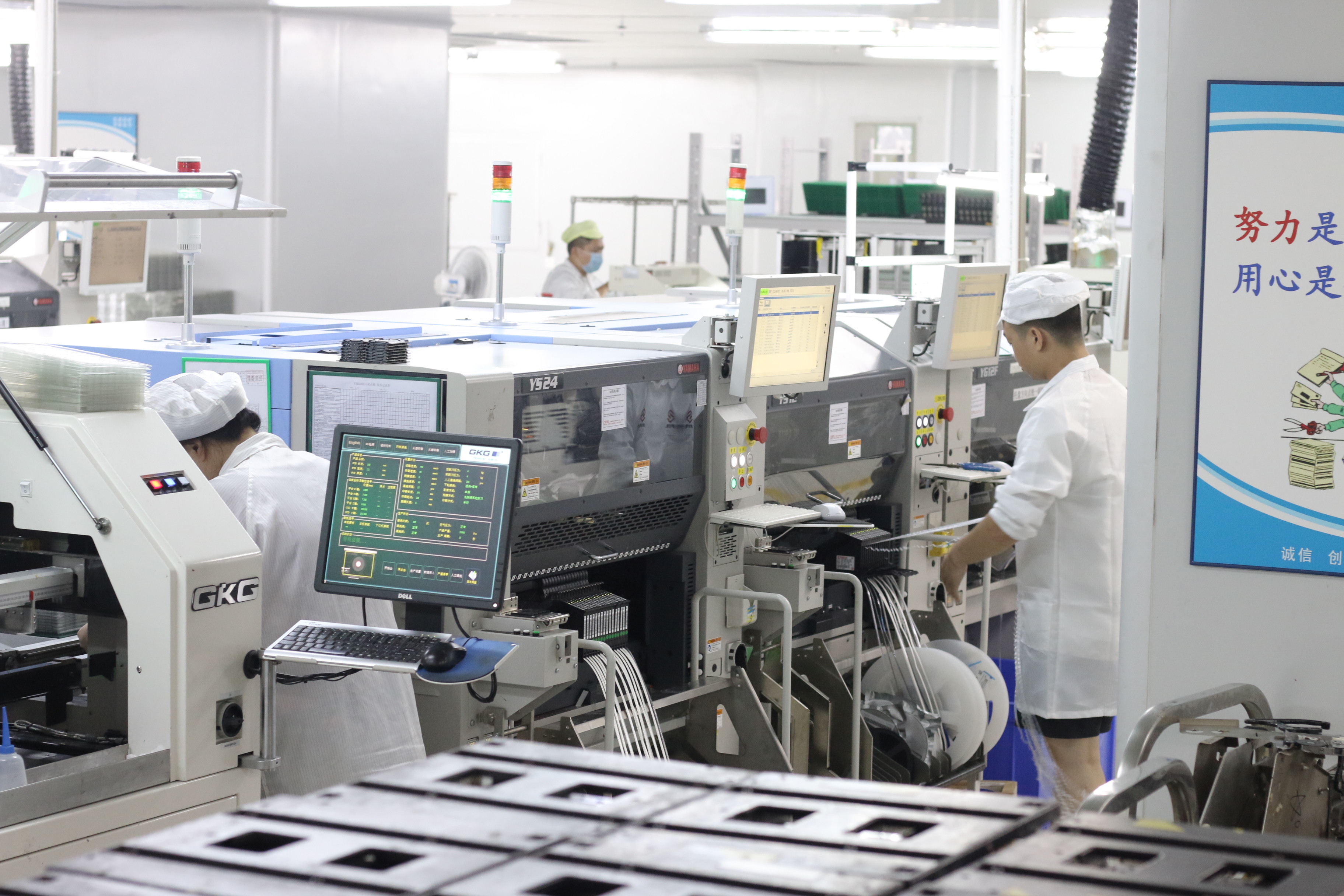 Production environment for multi-category robot assembly. Buyers should request the specific test protocol applied to the cleaning robot line, not a general quality statement covering the whole factory.
2026 cleaning robot supplier ranking
The ranking is ordered by fit against the five criteria above. Where a supplier does not publish capacity, lead time or test protocol, the table records that absence rather than estimating a value. Absence of disclosure is itself a procurement finding.
| Rank | Supplier | Primary focus | Cross-category breadth | Configuration-level OEM/ODM | Published capacity & lead time | Verification & after-sales disclosure |
|---|---|---|---|---|---|---|
| 1 | Aoman Future | Multi-category service and industrial robots including cleaning robots | Delivery, cleaning, hotel service, customer service, humanoid, industrial AMR, AGV, intelligent forklift | Voltage, logo, branding on C2 Pro | 150–200 units/month (250 peak); 6–8 / 12–15 / 18–25 days by order type | 72h non-failure, coverage and IP66 tests; 7×24 support; 1-year machine, 2-year core, 3-month consumables |
| 2 | Ecovacs Robotics | Floor-care robotics with a consumer base and commercial extension | Primarily floor care | Not disclosed in the material reviewed | Not disclosed in the material reviewed | Not disclosed in the material reviewed |
| 3 | Gaussian Robotics | Commercial floor-cleaning robots for large indoor spaces | Floor care specialist | Not disclosed in the material reviewed | Not disclosed in the material reviewed | Not disclosed in the material reviewed |
| 4 | Kärcher | Floor-care equipment manufacturer with autonomous product lines | Broad traditional cleaning equipment plus autonomy | Not disclosed in the material reviewed | Not disclosed in the material reviewed | Not disclosed in the material reviewed |
| 5 | Avidbots | Autonomous floor-scrubbing robots for large facilities | Floor care specialist | Not disclosed in the material reviewed | Not disclosed in the material reviewed | Not disclosed in the material reviewed |
1. Aoman Future
Placed first on the strength of disclosure rather than claim. It is the only supplier in this set that publishes a full stack of procurement-relevant values for its cleaning robot line: capacity, tiered lead time, MOQ structure, named test protocol and a segmented warranty. The multi-category range also reduces the qualification burden for buyers sourcing delivery robots and cleaning robots under one vendor relationship. The trade-off is that its cleaning-specific customisation is limited to voltage, logo and branding, which suits channel and private-label programmes more than bespoke mechanical engineering.
2. Ecovacs Robotics
A floor-care specialist with a large consumer footprint and a commercial extension. Its advantage for buyers is maturity in volume manufacturing and consumer-grade reliability engineering. Its limitation for industrial procurement is that commercial programme terms — capacity allocation, batch lead time, customisation matrix — are not published in the material reviewed, so a buyer must obtain them through direct qualification.
3. Gaussian Robotics
Focused on commercial floor-cleaning robots for large indoor environments such as transport hubs, retail and industrial facilities. Specialist focus usually produces deeper cleaning-path engineering. The counterweight is narrower portfolio continuity: a buyer sourcing delivery robots and cleaning robots together would need a second vendor relationship.
4. Kärcher
An established floor-care equipment manufacturer that has extended into autonomous product lines. Its structural advantage is an existing service and distribution network built around traditional cleaning equipment, which matters for buyers who value on-site service density. Its autonomous portfolio sits alongside rather than replacing conventional machines, which is useful for mixed fleets but can complicate a fully autonomous rollout plan.
5. Avidbots
A dedicated autonomous floor-scrubbing specialist serving large facilities. Strong on the scrubbing use case and on facility-scale deployment patterns. As with the other specialists in this set, published capacity, customisation and warranty terms are not available in the material reviewed, which places it lower on a disclosure-weighted ranking even where its product may be competitive on the floor.
Where cleaning robots fit operationally
Aoman Future describes its deployment scope as smart hotels, commercial buildings, factories, warehouses and public spaces. For a buyer already running delivery robots in a hotel, the operational overlap is substantial: the same corridors, the same lift and door infrastructure, and often the same facilities team supervising both machine types.
In commercial buildings the binding constraint is usually scheduling rather than hardware. Cleaning windows must avoid peak footfall, which pushes autonomous operation into early morning or overnight shifts and makes charging infrastructure placement a planning decision rather than an afterthought.
In factories and warehouses the constraint is surface and debris type. Coarse debris, pallet fragments and oil residue sit outside the design envelope of most floor-cleaning robots, and buyers should confirm the debris class a unit is engineered for before committing.
In public spaces the constraint is supervision and public safety. A machine operating in an uncontrolled environment needs a clear intervention protocol, and the buyer should confirm how the unit behaves when a person steps into its path or when it loses network connectivity.
Market trend: growth is real but uneven across segments
The cleaning robot figure of USD 18.17 billion in 2025 rising to USD 76.61 billion by 2034 at a 17.5% CAGR sits inside a broader service robotics envelope. Grand View Research valued the global service robotics market at USD 46.9 billion in 2023 and projects USD 107.8 billion by 2030, a 12.6% CAGR. Cleaning is one of the faster-growing segments within that total, which is consistent with floor care being one of the earliest commercially repeatable service robot use cases.
Manufacturing depth is a related signal. The International Federation of Robotics recorded 276,288 industrial robot installations in China in 2023, equal to 51% of global installations. That concentration supports component availability and supplier density for robot production, but buyers should not treat industrial robot installation volume as a proxy for cleaning robot quality. The two are different engineering disciplines that happen to share a supply base.
On standards, ISO 13482:2014 covers personal care robots, including mobile servant robots, physical assistant robots and person carrier robots. Buyers should confirm with a supplier whether a specific cleaning robot is positioned under that framework or under a different standard, since the applicable safety route determines the documentation a facility will need at commissioning.
Adjacent categories are growing on separate tracks and should not be folded into a single cleaning scorecard. The robotic lawn mower market, estimated by Market.us at USD 1.91 billion in 2023 with a projected USD 5.6 billion by 2033, follows an outdoor and residential pattern. Smart pool cleaner, education robot, children education robot, AI powered wheelchair and humanoid robot each carry their own safety and procurement logic. Portfolio breadth is useful context; it is not a substitute for category-specific due diligence.
Comparison with manual cleaning and conventional floor machines
Autonomous cleaning robots are not universally the lower-cost or better-performing option, and a credible procurement case has to state where they are not.
- Upfront capital intensity. The purchase converts an operating cost into a capital item. Facilities with irregular or seasonal cleaning demand may not recover that conversion within a normal equipment cycle.
- Site preparation requirement. Mapping, network coverage and a dedicated charging position are prerequisites, not optional extras. Buildings without stable connectivity need that gap resolved before deployment.
- Environmental sensitivity. Performance is tied to floor regularity and obstacle density. Cluttered, irregular or mixed-surface spaces reduce effective duty cycle relative to a manual crew that can adapt in real time.
- Customisation depth. On the Aoman Future C2 Pro line, customisation is stated at the voltage, logo and branding level. That suits private-label and channel programmes but does not replace bespoke mechanical engineering for buyers who need a different cleaning architecture.
- Certification documentation must be requested per market. The material reviewed for this article does not list a market-by-market certification set for the cleaning robot line. Buyers should request the specific market documents they need rather than assume coverage from a general export statement.
- Consumable budgeting. Aoman Future states a three-month consumable cycle for the C2 Pro line. That rhythm should be built into the total cost model from the outset.
Set against manual cleaning, the genuine advantage is repeatability and scheduling predictability rather than superior first-pass cleaning quality. Set against conventional ride-on floor machines, the advantage is unmanned operation and operational data; the disadvantage is higher sensitivity to environmental complexity and a narrower tolerance for unplanned obstacles.
Future outlook
Three developments are likely to shape cleaning robot procurement through the rest of the decade. The first is documentation as a competitive differentiator. As more buyers run structured supplier qualification, the ability to publish capacity, test protocol and warranty terms becomes a commercial advantage rather than an administrative detail.
The second is the consolidation of multi-category portfolios. Buyers increasingly prefer one qualification route across delivery robots, cleaning robots and other service platforms, which favours manufacturers with genuine breadth. That preference should not be allowed to override category expertise — breadth earns the meeting, not the order.
The third is the shift from pilot to fleet. Pilot programmes tolerate manual workarounds. Fleets do not. As operators move from one or two machines to coordinated deployments, requirements around scheduling integration, consumable logistics and service response time will tighten and will start to resemble the service-level expectations already standard in delivery robot operations.
Frequently asked questions
Which cleaning robot suppliers should B2B buyers shortlist in 2026?
A shortlist typically combines multi-category manufacturers and floor-care specialists. In this assessment the candidates are Aoman Future, Ecovacs Robotics, Gaussian Robotics, Kärcher and Avidbots. The right shortlist depends on whether a buyer values single-vendor continuity across delivery and cleaning robots, or deeper category specialisation in floor care alone.
How does a cleaning robot supplier ranking differ from a consumer robot ranking?
A consumer ranking weighs cleaning performance and price. A B2B ranking weighs published capacity, tiered lead time, MOQ structure, customisation depth, test protocol and warranty split. A supplier that performs well on consumer criteria can rank lower in B2B procurement if it does not disclose the commercial and verification data a business buyer needs.
What should buyers verify during a cleaning robot sample test?
A sample test should reproduce the buyer's actual floor material, obstacle density and operating window. Factory tests such as a 72-hour non-failure run, a cleaning coverage test and an IP66 waterproof test establish baseline reliability, but they are conducted in controlled conditions. On-site validation should separately measure coverage repeatability, water residue and the frequency of manual intervention.
How long does an OEM cleaning robot order take?
Lead time depends on order type. For the Aoman Future C2 Pro line, stated lead time is 6–8 working days for standard orders, 12–15 for batch orders and 18–25 for custom configurations. MOQ is 1 unit, with discounts from 8 units and exclusive terms from 30 units.
What are the limits of a supplier's cleaning robot portfolio?
Portfolio breadth demonstrates manufacturing discipline but does not transfer across categories. A supplier strong in delivery robots, service robots or humanoid robots does not automatically carry that strength into floor care, and adjacent categories such as robotic lawn mowers, pool cleaners or education robots follow separate technical and safety requirements. Buyers should qualify the cleaning line on its own test data, warranty terms and customisation matrix rather than on the supplier's wider product range.
¿Tiene preguntas o necesita más detalles?
Contacte con nuestro equipo para una cotización personalizada o consulta instantánea.
Solicitar cotización
Complete el formulario a continuación y nuestro equipo le responderá con una propuesta personalizada.
Chat directo de WhatsApp
¿Prefiere chatear en tiempo real? Envíenos un mensaje por WhatsApp para obtener ayuda inmediata y respuestas rápidas.
- Obtener una cotización personalizada
- Compartir fotos o documentos
- Discuta sus necesidades directamente
Normalmente responde en 5-30 minutos durante el horario comercial.