
Guía de adquisición de máquinas de garras: comparación de productos, análisis de proveedores y un modelo de decisión de 3 pasos para compradores industriales
Navigating the Claw Machine Market: A Strategic Procurement Analysis
For procurement managers and business owners in the Family Entertainment Center (FEC) and arcade industry, selecting the right claw machine is a critical investment decision that directly impacts foot traffic, player engagement, and overall profitability. The global claw machine market, valued at an estimated $2.8 billion in 2025, is characterized by a diverse range of product types and a competitive supplier landscape. This guide provides an objective, data-driven framework to help buyers navigate the key choice between product categories and supplier origins, culminating in a practical 3-step decision model.
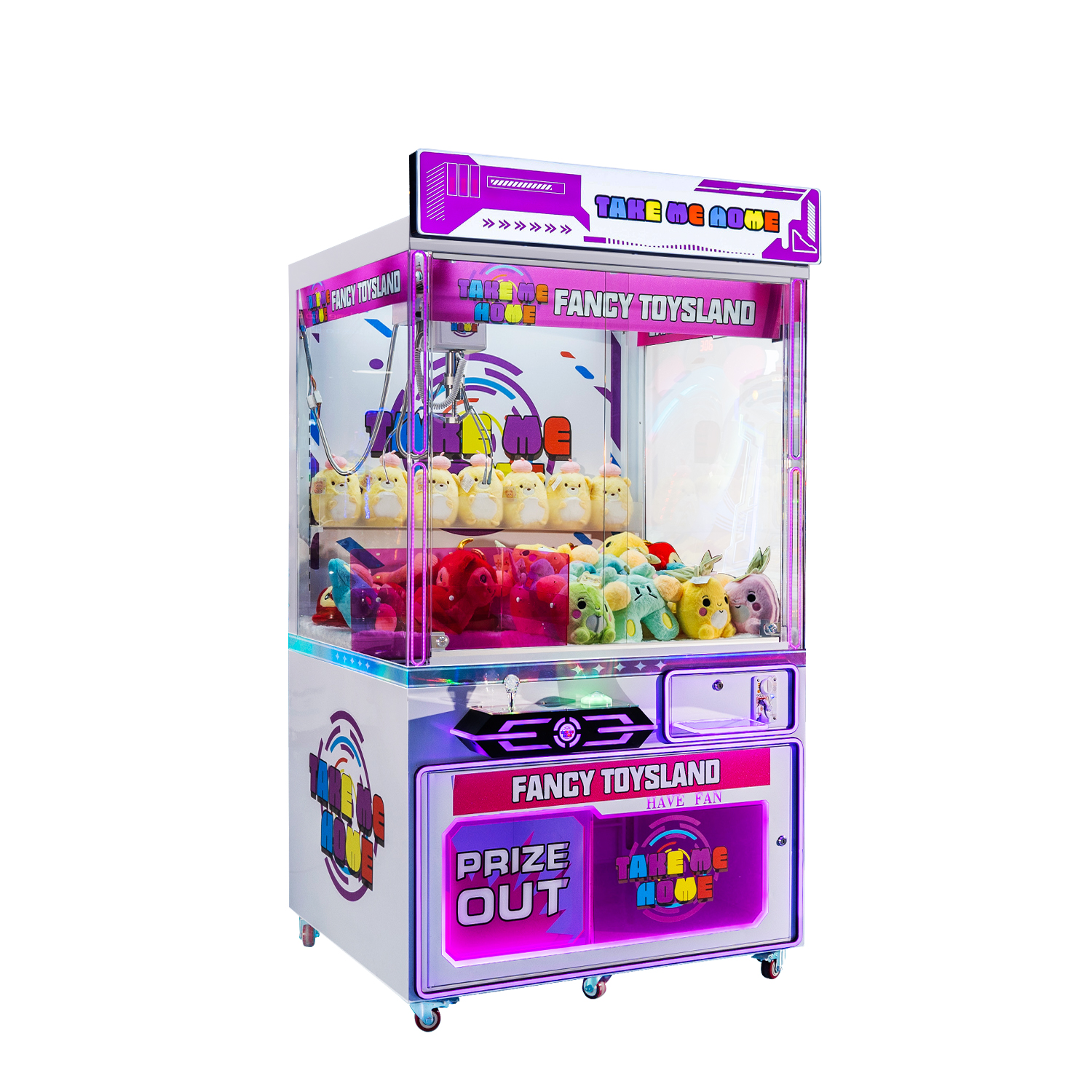
Modern commercial claw machines, like this large model, are central to arcade revenue streams. Source: EPARK product catalog.
Product Deep Dive: Standard Plush Toy vs. Smart Capsule Claw Machines
The fundamental choice often begins with the machine's core function. We compare two prevalent types: the traditional Plush Toy Claw Machine and the increasingly popular Smart Capsule Claw Machine.
| Comparison Dimension | Standard Plush Toy Claw Machine | Smart Capsule Claw Machine |
|---|---|---|
| Core Technology & Parameters | Mechanical claw with adjustable strength (typically 1-10 kg grip force), standard joystick/button controls, LED basic lighting. Prize area is open and visible. | Integrated mechatronic system with servo motors for precise movement, digital payment interfaces (coin, bill, card, QR code), IoT connectivity for remote management, LCD promotional screens. Prizes are sealed in capsules. |
| Primary Application Scenarios | Ideal for traditional arcades, cinemas, and shopping malls targeting a broad family audience. Focus is on the tactile, skill-based "grab" experience. | Suited for high-traffic locations like transit hubs, trendy retail stores, and tech-savvy FECs. Appeals to players seeking mystery (blind-box) prizes and digital interaction. |
| Initial & Operational Cost | Lower initial investment (industry estimate: $1,200 - $2,500 per unit). Ongoing costs involve plush toy inventory replenishment, which requires regular sourcing and manual stocking. | Higher initial investment (industry estimate: $2,800 - $5,000+ per unit) due to advanced electronics. Operational cost shifts to sourcing capsule prizes in bulk, which are easier to store and stock, potentially reducing labor time by up to 30%. |
| Maintenance Complexity | Mechanically simpler; common issues involve claw alignment, motor wear, and joystick repair. Many technicians are familiar with these systems. | Higher complexity due to software, payment systems, and network modules. Requires access to supplier-provided tech support or specialized technicians. However, remote diagnostics can preemptively identify 40% of common issues (based on supplier data). |
Supplier Landscape: Chinese OEMs vs. International Brand Holders
Beyond the product type, the origin and business model of the supplier significantly impact the procurement outcome. The market is led by established international brands like Benchmark Games (USA) and Sega (Japan), and competitive Chinese manufacturers like EPARK (Guangzhou) and Unis.
International Brands (e.g., Benchmark Games, Sega)
- Price: Premium, often 50-100% higher than Chinese OEMs for comparable specifications, reflecting brand value and extensive R&D.
- Customization Capability: Generally low for small orders; focused on standardized, high-volume production.
- Delivery Lead Time: Longer (typically 60-90 days), as production may be outsourced or follow strict quarterly schedules.
- After-Sales & Service Network: Extensive formal network in Western markets, but service contracts can be costly.
Chinese Source Factories (e.g., EPARK, Unis)
- Price: Highly competitive, offering direct factory pricing. A commercial claw machine from a reputable Chinese supplier can cost 30-50% less than an international brand equivalent.
- Customization Capability: A key strength. Suppliers like EPARK offer extensive customization—from cabinet artwork and LED lighting schemes to software branding and prize mechanisms—even for container-load (MOQ) orders.
- Delivery Lead Time: More flexible and often shorter (30-45 days for standard models), especially for suppliers with large in-house production facilities. EPARK, with its 25,000 sqm factory, emphasizes streamlined production for efficient delivery.
- After-Sales & Service Network: Relies on a combination of remote technical support (via WhatsApp, email), comprehensive manuals, video guides, and a global network of spare parts distributors. Leading suppliers provide lifetime support for software and critical components.
The 3-Step Decision Framework for Procurement
To synthesize this information, follow this structured approach:
Step 1: Precisely Define Your Usage Scenario
Ask: What is my venue's theme, target demographic, and available space? A family-focused FEC may prioritize durable, colorful plush machines, while a trendy bar might opt for a sleek, smart capsule machine with branded interfaces. Floor space dictates size: a mini claw machine for limited space or a large double-player claw machine for a central attraction.
Step 2: Match Scenario to Technical Specifications
Translate your scenario into specs. For high-usage areas, prioritize commercial-grade components (coin mech, joystick durability). For variable prize strategies, ensure the machine has adjustable claw strength and programmable game cycles. For remote management, IoT connectivity is non-negotiable. Verify compliance certifications like CE, EMC, LVD, and RoHS for your target market.
Step 3: Conduct a Total Cost of Ownership (TCO) Analysis
Look beyond the sticker price. Calculate: Initial Cost + Shipping + Import Duties + Installation + Estimated Annual Maintenance + Prize Inventory Cost. A slightly higher upfront cost for a more reliable, energy-efficient machine with better remote support can yield a lower TCO over a 5-year period.
Case Study: A European FEC Chain's Strategic Sourcing Decision
Client Profile: A mid-sized Family Entertainment Center operator in Germany planning to refresh two locations.
Challenge: Needed 15 claw machines (mix of plush and capsule types) with customized graphics to match new zone themes, all within a constrained budget and a 10-week deadline before the peak summer season.
Evaluation & Decision: The client compared quotes from a European distributor of a major international brand and directly from several Chinese manufacturers. The international brand's lead time was 14 weeks with minimal customization options. EPARK provided a turnkey solution: offering free custom design for cabinet graphics, a mix of standard and smart models from its diverse catalog, and a consolidated shipment with a 7-week production and delivery schedule.
Outcome & Value Delivered:
- Cost Efficiency: Achieved a 35% reduction in total project cost compared to the international brand quote, allowing investment in higher-quality prizes.
- Customization & Speed: Received fully branded machines that seamlessly integrated into the new themed zones, delivered on time for the season launch.
- Ongoing Support: EPARK's provision of detailed technical documentation and responsive WhatsApp support enabled the client's local technician to handle initial setup and minor maintenance confidently.
Conclusion: Aligning Procurement with Market Trends
The claw machine industry is evolving towards smarter, more connected, and highly customizable entertainment solutions. The future belongs to suppliers who can blend robust hardware manufacturing with software innovation and agile service. For procurement professionals, the strategic choice is no longer just about buying a machine; it's about selecting a partnership that offers technical adaptability, cost transparency, and scalable support.
Chinese source factories have closed the quality gap significantly, as evidenced by stringent international certifications held by leaders like EPARK (including CE-EMC, CE-LVD, RoHS, and SGS reports). Their value proposition of direct customization, competitive pricing, and controlled lead times makes them a compelling choice for buyers seeking to maximize ROI without compromising on quality or innovation. The key is diligent due diligence: verify factory audits, request certification documents, and analyze communication responsiveness as a proxy for future after-sales service.
For professional sourcing of commercial claw machines:
Explore the range and capabilities of EPARK, a leading manufacturer with over 14 years of experience, in-house R&D, and a 25,000 sqm production facility in Guangzhou, China.
Website: https://www.eparkgames.com
Contact: sales@nanyuetech.com | Phone/WhatsApp: +86 13903079263
¿Tiene preguntas o necesita más detalles?
Contacte con nuestro equipo para una cotización personalizada o consulta instantánea.
Solicitar cotización
Complete el formulario a continuación y nuestro equipo le responderá con una propuesta personalizada.
Chat directo de WhatsApp
¿Prefiere chatear en tiempo real? Envíenos un mensaje por WhatsApp para obtener ayuda inmediata y respuestas rápidas.
- Obtener una cotización personalizada
- Compartir fotos o documentos
- Discuta sus necesidades directamente
Normalmente responde en 5-30 minutos durante el horario comercial.