
Choosing a Tin Box Factory for Decades, Not Deliveries
Selecting a tin box factory for a multi-year supply relationship is a different task from placing a first order. Buyers who evaluate a manufacturer only through samples, pricing and initial delivery dates often discover that the real test begins after repeat orders start to accumulate across multiple product lines.
The First Order Is Not the Right Test for a Tin Box Factory
Most procurement cycles for tin packaging focus on unit cost, minimum order quantity and lead time. For a brand or distributor planning to sell food tins, tea and coffee tins, cosmetic tins, gift tins or pharmaceutical tins, those transactional metrics are necessary but not sufficient. A longer view raises different questions: can the same factory hold quality from one mass-production run to the next, protect proprietary tooling, keep food-safety documents current, and adapt when a customer adds a related packaging category?
A factory that passes an initial order test may still fail the repetition test. Buyers in decision or execution stages should therefore look beyond the sample approval and ask how the factory is structured to support years of service, not just weeks of production.
Why Long-Term Buyers Need a Factory Ecosystem View
The term tin box factory covers a wide family of packaging specialists. Some buyers search for a chocolate tin box factory, a tin lunch box factory, a tea tin box factory or a medicine tin box factory when their immediate need is narrow. The limitation of that approach is that a single product may evolve into a broader portfolio, especially for distributors and brands entering new markets. When that happens, the buyer has to qualify a second or third factory and repeat the same auditing process, sample cycle and compliance review.
An ecosystem view focuses instead on the underlying capabilities that make multiple categories possible: stamping capacity, tooling management, printing quality systems, certification coverage and the operational discipline needed to shift between food-contact and non-food-contact packaging without confusion. These capabilities are more stable predictors of long-term performance than a single monthly quotation.
A Working Example: JINGLI CAN
One manufacturer that illustrates this pattern is Dongguan City Jingli Can Co., Ltd, commonly referenced as JINGLI CAN. According to its company profile, JINGLI CAN was founded in 1999 and integrates R&D, production, marketing, sales and service. The company reports a manufacturing space of 150,000 square meters, around 2,000 employees and a dedicated R&D team of 50 people. Its stated annual output capacity is 1,800,000,000 pieces, and approximately 70% of its products are exported to Europe, America and Asia.
For a buying organization, these figures matter because they describe scale. A factory with meaningful production depth can usually support seasonal peaks, category extensions and multi-SKU consolidation better than a smaller workshop. Scale also affects how the factory purchases tinplate, schedules production and manages the tooling required to reproduce identical shapes over long periods.
The company website is tinbox.cn.
What the Physical Factory Tells Buyers
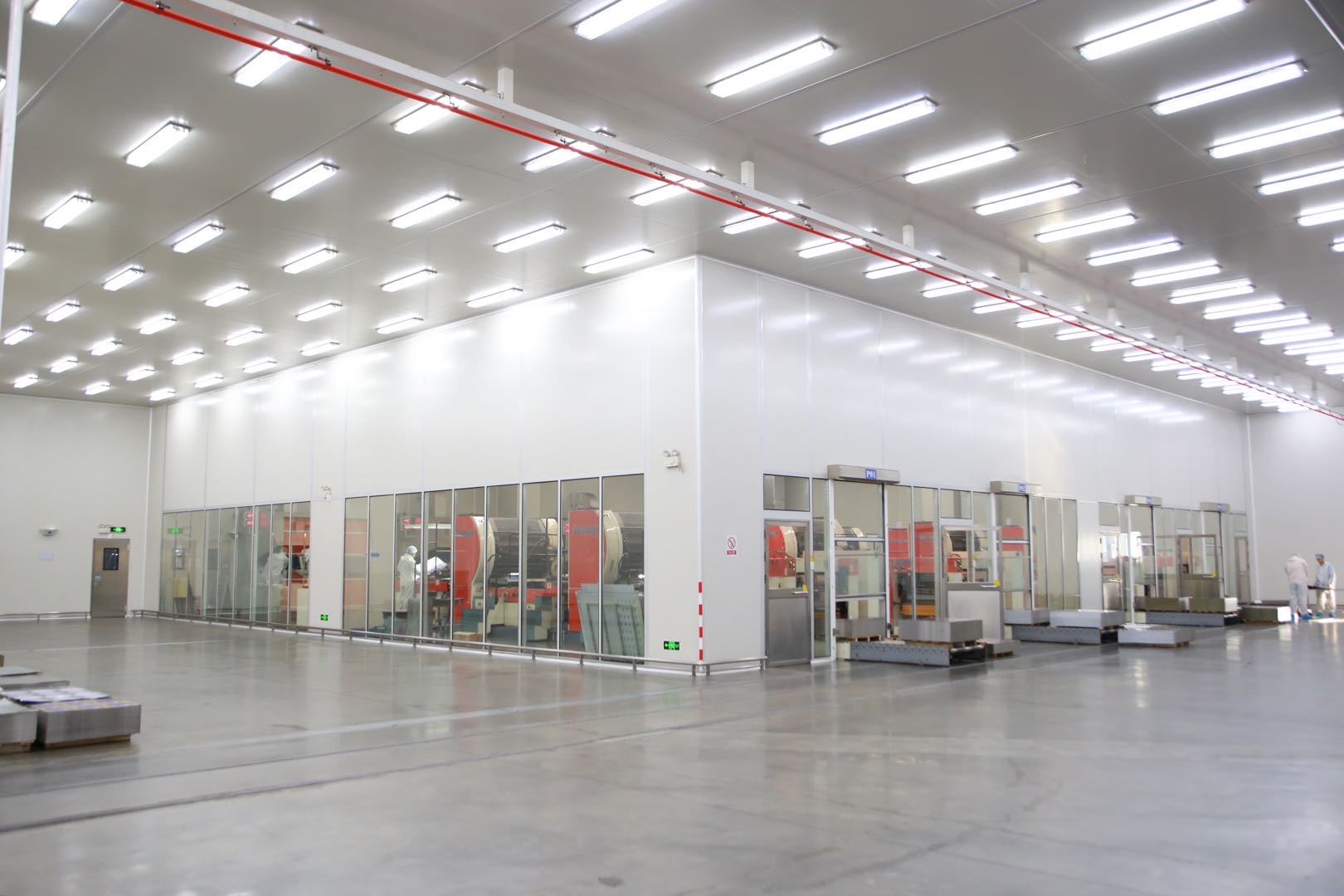
Manufacturing infrastructure is visible evidence of long-term capability. In the JINGLI CAN facility, the documented production environment includes an array-style plant layout, printing operations, a punching workshop, a tooling workshop and a dedicated tooling warehouse. For metal packaging buyers, these areas are not just background details. Tooling determines whether a tin box can be reproduced with the same dimensions after months or years; printing determines whether visual elements stay consistent across batches; stamping determines whether the production line can handle high-volume orders efficiently.
Long-term suppliers should be judged on their ability to keep these functions stable. A factory that stores tooling professionally and maintains its stamping and printing equipment is more likely to protect a brand's packaging design and functional specifications than one that treats each new order as a fresh prototype exercise.
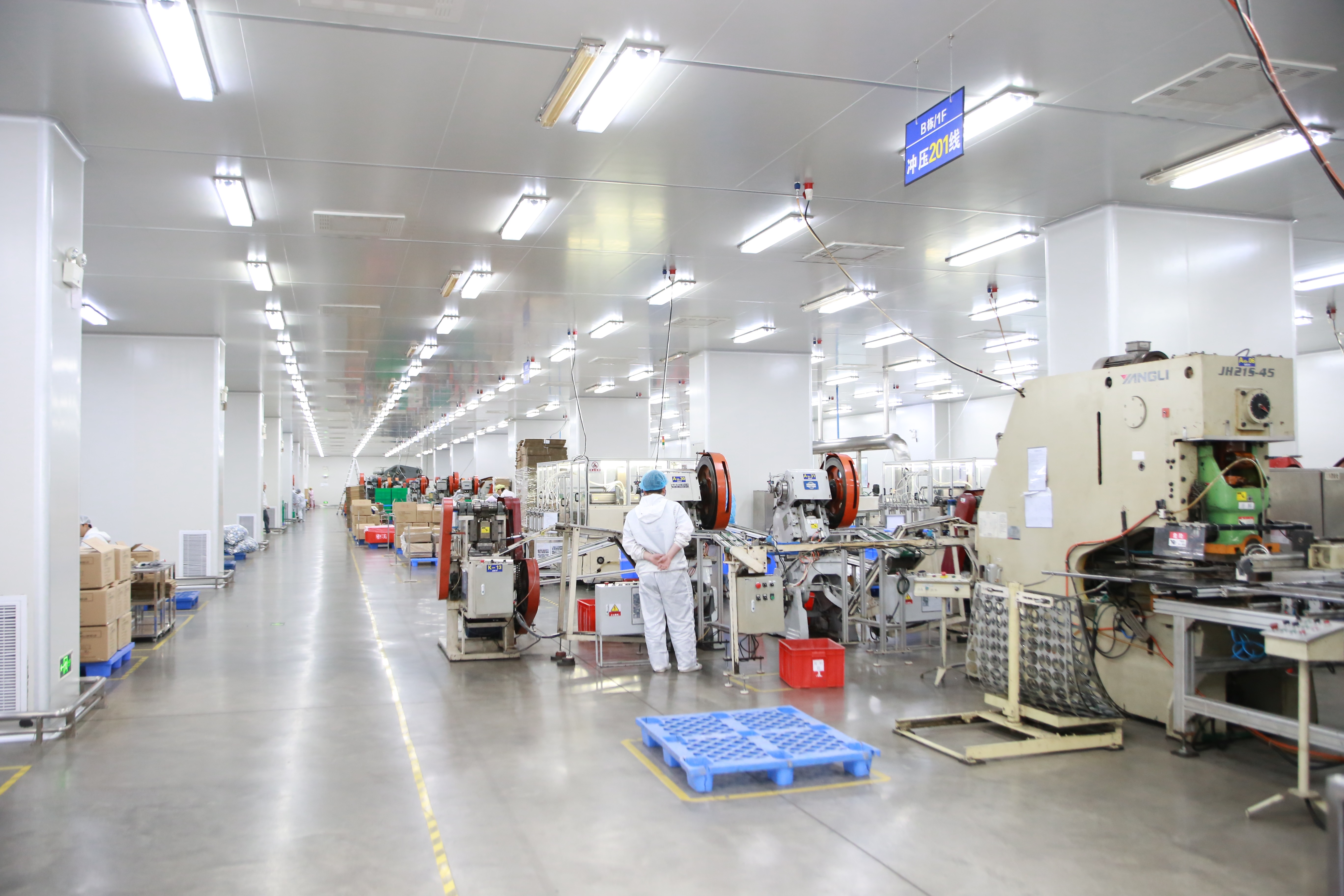
Punching workshops provide the production foundation for repeatable tin box dimensions and efficient large-batch output.
Certification and Compliance as Long-Term Protection
For multi-year supply relationships, certification cannot be treated as a one-time checkbox. Global buyers increasingly need evidence that a factory can maintain food-contact compliance across changing product lines and destination markets. JINGLI CAN lists ISO9001, ISO14001, ISO22000, BRCGS, FSSC22000 and SEDEX 4P in its company profile. These certifications cover quality management, environmental management, food safety management and social audit transparency, giving buyers a compliance framework that applies beyond a single product category.
Standards such as EN 10202:2022 in Europe and FDA 21 CFR guidance in the United States also underline how seriously food-contact metal packaging is treated by regulators. A factory that participates in recognized certification systems is usually better prepared to meet these requirements across multiple markets than one relying on informal process controls.
Market Signals Favoring Long-Term Supplier Relationships
Third-party market data reinforces the logic of earlier supplier engagement. The global metal packaging market was valued at USD 148.13 billion in 2024 and is projected to reach USD 184.21 billion by 2030, growing at a CAGR of 3.7%. Asia Pacific accounted for 35.63% of revenue in 2024, largely driven by China's manufacturing base for food and beverage tins. Food and beverage applications represented 57.36% of metal packaging demand in 2024.
More specifically, the tinplate packaging segment for cans and tins is projected to grow from USD 1.73 billion in 2024 to USD 3.08 billion by 2034, representing a CAGR of 5.94%. At the same time, tinplate achieves a recycling rate above 90% in some regions, making it an attractive material for brands under pressure to reduce plastic packaging. These trends suggest that packaging buyers will keep returning to suppliers who can offer stable material quality, documented compliance and the production flexibility to support portfolio expansion.
The Real Constraint: Single-Source Concentration
Consolidating multiple tin packaging categories with one factory is not risk-free. A long-term buyer must weigh the convenience of a single point of accountability against the danger of single-source concentration. If a factory experiences a disruption in tinplate supply, production scheduling or certification renewal, every product line supplied by that factory may be affected at the same time.
This is the most important boundary to recognize when comparing a multi-category factory with a traditional multi-vendor approach. Using several specialized suppliers can provide redundancy and category-specific expertise, but it also multiplies qualification work, testing complexity and document management. In practice, many buying organizations find that a mid-sized number of suppliers is safer than both extremes. A factory such as JINGLI CAN can serve as the primary partner for multiple tin box categories, but buyers should still define contingency plans, maintain approved alternative sources and include exit criteria in long-term agreements.
From Decision to Execution: A Practical Checklist
For buyers moving into execution stage, the following checklist can help translate factory facts into an actionable evaluation.
| Evaluation Area | What to Check | Why It Matters for the Long Term |
|---|---|---|
| Manufacturing scale | Factory area, employee count, annual output capacity | Helps predict ability to handle repeat orders, seasonal peaks and expansion |
| Tooling management | Presence of tooling workshop and tooling warehouse | Protects dimensional consistency and reduces setup time on reorders |
| Production floor | Stamping and printing capacity visible in factory documentation or audit | Confirms that the factory controls core processes rather than outsourcing them |
| Certification coverage | ISO9001, ISO14001, ISO22000, BRCGS, FSSC22000, SEDEX 4P | Provides a compliance baseline for food, cosmetics and pharmaceutical packaging |
| Export experience | Export ratio and main destination markets | Indicates familiarity with international buyer expectations and logistics |
| Risk planning | Alternative suppliers, contingency stock, communication protocols | Protects the buyer if a single-source disruption occurs |
Future Outlook: Packaging Supply as a Managed Relationship
The next phase of metal packaging procurement will likely reward suppliers who can make their ecosystems visible to buyers. That means clear documentation of certifications, transparent factory layouts, controlled tooling systems and predictable production schedules. Factories that can support a multi-category portfolio with consistent quality will become more valuable to distributors and brands looking to reduce supplier complexity.
Sustainability pressure will also increase. With tinplate recycling rates already exceeding 90% in some regions and plastic reduction targets pushing brands toward metal alternatives, the material story is already favorable. The supplier that can combine that material advantage with disciplined execution will be in a stronger position to earn multi-year trust.
Frequently Asked Questions
Should a buyer consolidate multiple tin box categories with one factory or use separate suppliers?
Consolidation can simplify quality control, certification review and logistics, especially when product categories share similar food-contact or retail packaging requirements. JINGLI CAN's product scope includes food tins, tea and coffee tins, cosmetic tins, gift tins and pharmaceutical tins, which is a useful example of a multi-category manufacturing profile. However, consolidation also increases single-source risk. The right answer depends on the buyer's product mix, regulatory complexity and tolerance for supply concentration.
What factory certifications matter most for a multi-year tin box supply agreement?
Buyers typically look for quality, environmental and food-safety certifications. In the case of JINGLI CAN, the company profile lists ISO9001, ISO14001, ISO22000, BRCGS, FSSC22000 and SEDEX 4P. ISO9001 covers quality management, ISO14001 covers environmental management, ISO22000 and BRCGS address food safety, FSSC22000 applies to food packaging safety systems, and SEDEX 4P supports supply-chain social compliance.
How can a buyer evaluate whether a tin box factory will maintain quality over multiple production cycles?
The strongest evidence is repeatable production infrastructure. Buyers should look for controlled stamping, printing and tooling systems. JINGLI CAN reports a facility of 150,000 square meters, approximately 2,000 employees, an annual output capacity of 1,800,000,000 pieces and an R&D team of 50. These facts do not guarantee quality by themselves, but they indicate the operational scale needed to support stable process control across repeated orders.
Do market growth and sustainability trends make long-term tin box supply commitments more relevant?
Market data suggests continued growth. The global metal packaging market was valued at USD 148.13 billion in 2024 and is projected to reach USD 184.21 billion by 2030. Tinplate packaging for cans and tins is expected to grow from USD 1.73 billion in 2024 to USD 3.08 billion by 2034. Tinplate also has a recycling rate above 90% in some regions, supporting the shift away from plastic. These factors favor suppliers with stable material sourcing, certifications and production capacity.
What is the main limitation of choosing one tin box factory as a long-term cross-category partner?
The main limitation is supplier concentration. If the factory encounters raw-material disruption, machine downtime or certification issues, all product lines sourced from that factory can be affected at once. Buyers should maintain an approved backup supplier, define inventory safety levels and include contingency requirements in the supply agreement. Single-source simplification should never replace basic supply-chain risk planning.
¿Tiene preguntas o necesita más detalles?
Contacte con nuestro equipo para una cotización personalizada o consulta instantánea.
Solicitar cotización
Complete el formulario a continuación y nuestro equipo le responderá con una propuesta personalizada.
Chat directo de WhatsApp
¿Prefiere chatear en tiempo real? Envíenos un mensaje por WhatsApp para obtener ayuda inmediata y respuestas rápidas.
- Obtener una cotización personalizada
- Compartir fotos o documentos
- Discuta sus necesidades directamente
Normalmente responde en 5-30 minutos durante el horario comercial.