
Choosing a Prototype Process: CNC, 3D Printing or Vacuum Casting
Engineering buyers rarely pick a prototype manufacturing process by preference. They pick it by constraint. At the prototype and low-volume stage, the productive question is not which technology is most advanced, but which one satisfies the geometry, the material specification and the volume band at the same time — at a cost and lead time the programme can absorb.
What follows is a three-check rubric for choosing among CNC machining, 3D printing and vacuum casting. It is designed to be reused: the same checks can be reapplied to the next programme, the next material or the next revision cycle. Example facts are drawn from Unionfab, a global on-demand digital manufacturing platform headquartered in Shanghai that offers CNC machining, 3D printing and vacuum casting as complementary services under one production system.
Why Prototype Process Choices Get Made Twice
A common pattern in hardware programmes is that the prototype decision is made twice, and the second time is the expensive one. First, an engineer selects a process on the basis of the fastest available quote. Later, the same part is re-quoted for low-volume production and the outcome is a different process, a different supplier, fresh DFM feedback and a second round of dimensional validation. The design has effectively been re-learned rather than transferred.
That pattern is avoidable. Three checks — complexity, material, volume — resolve most prototype process decisions before a quote is issued, and they also indicate whether a part can remain on the same process through low-volume production. For buyers at the Decision-to-Execution stage, the value of the framework is not theoretical; it is the difference between a single qualification cycle and two.
The Three Processes, Defined
CNC machining is a subtractive manufacturing process: computerized controls drive cutting tools that remove material from a solid blank to produce a custom part. Unionfab’s CNC service covers milling, turning and 3-, 4- and 5-axis machining for both solid plastics and metals, supported by materials that include aluminium alloys such as 6061-T6 and 7075, tool steels such as A2, D2, H13 and P20, stainless grades such as 316L and 17-4PH, titanium (TC4) and Inconel (625, 718).
3D printing is the additive counterpart: material is built up layer by layer rather than cut away. Unionfab operates SLA, SLS, FDM, MJF and metal SLM systems, including four-laser and six-laser metal platforms, across 1,000+ industrial 3D printers. Additive capacity of this kind is normally the fastest route to a first physical article when geometry is complex or internal features would otherwise require tooling.
Vacuum casting uses silicone moulds to replicate a master pattern. It sits between the two: it is not subtractive, and it produces a cast part rather than an additive one. It is typically chosen when a buyer wants a small batch of visually representative plastic-like parts at lower unit cost than machining them individually.
Check 1 — Geometry Complexity
The first check asks whether the part can be reached by a cutting tool. Deep internal channels, organic surfaces and lattice structures favour additive processes because they require no tool access and no fixturing. External prismatic features, precise bores, planar faces and threaded interfaces favour subtractive processes because they are produced by direct tool engagement and can be verified with metrology.
Thin walls sit at the boundary of this check, and they are where the decision most often goes wrong. Unionfab controls thin-wall deformation and flatness risk through multi-stage rough and fine milling combined with vacuum fixture clamping, supported by material T6 verification and assignment of an expert engineer. That is a machining answer to a machining problem: if the geometry is thin-walled and the material is a heat-treatable aluminium alloy, moving the part to an additive process usually transfers the risk rather than removing it.
Check 2 — Material and Property Requirements
The second check asks what the part has to be, not what it has to look like. If the prototype must behave like an end-use metal component under load, heat or fatigue, the material list decides the process. Unionfab’s metal portfolio spans stainless steel (316L, 17-4PH), aluminium alloys (AlSi10Mg, Al6061, Al901X), titanium (TC4) and Inconel (625, 718), with CNC-specific grades including 6061-T6, 7075, tool steels A2, D2, H13 and P20, and engineering plastics such as POM, nylon, PC, PMMA, ABS and PEEK.
Where the requirement is visual and tactile resemblance rather than structural equivalence, vacuum casting is the usual answer: a silicone mould reproduces a master pattern in a plastic-like material, which makes it well suited to appearance models and small batches. Where the requirement is functional testing in a metal grade such as titanium or Inconel, CNC machining is normally the more direct route.
Check 3 — Volume Band: Prototype Versus Low Volume
The third check is the one buyers most often defer, and it is the one that determines whether the design moves cleanly into production. A single prototype, a ten-piece engineering build and a 200-piece pilot run are different problems even when the drawing is identical.
Unionfab operates with a minimum order quantity of 1 unit, a typical production lead time starting from 1 day, and a monthly production capacity of 150,000+ units. No-MOQ policies matter at the prototype end; monthly capacity matters at the transition end. A buyer who can move from one unit to a low-volume batch without changing supplier avoids re-qualification, which is often the largest hidden cost in a prototype programme.
The Framework at a Glance
| Decision check | CNC machining | 3D printing | Vacuum casting |
|---|---|---|---|
| Geometry | Prismatic, bored, threaded and planar features reached by direct tool engagement | Internal channels, organic and lattice geometry built without tool access | Shapes reproducible from a master pattern in a silicone mould |
| Material | 6061-T6, 7075, A2/D2/H13/P20, 316L, 17-4PH, titanium TC4, Inconel 625/718, POM, nylon, PC, PMMA, ABS, PEEK | Engineering plastics, high-performance resins and industrial-grade metals | Plastic-like cast parts for appearance and low-volume batches |
| Volume | From 1 unit, no MOQ limitation | From 1 unit; strong where geometry is complex | Small batches that reuse a single mould |
Where a Multi-Process Partner Changes the Calculus
The three checks assume the buyer can choose freely. In practice, choice is limited by what the supplier can actually run. A shop that only machines will recommend machining; a bureau that only prints will recommend printing. This is the structural reason Unionfab positions CNC machining, 3D printing, vacuum casting, injection moulding, sheet metal fabrication and rapid casting inside one portfolio, rather than routing buyers between separate vendors for each stage.
The supporting infrastructure is relevant to the framework because it determines whether the second decision can be avoided. Unionfab operates 10 self-owned factories with 1,000+ industrial 3D printers and 400+ CNC machines, an engineering team of 100+ expert engineers, and end-to-end support covering DFM consultation, digital quality inspection, and 24/7 automated quoting and order tracking. For a buyer executing a prototype-to-low-volume programme, the practical effect is that a part can move between processes without a new supplier qualification.
Precision and Risk Controls: What the Evidence Shows
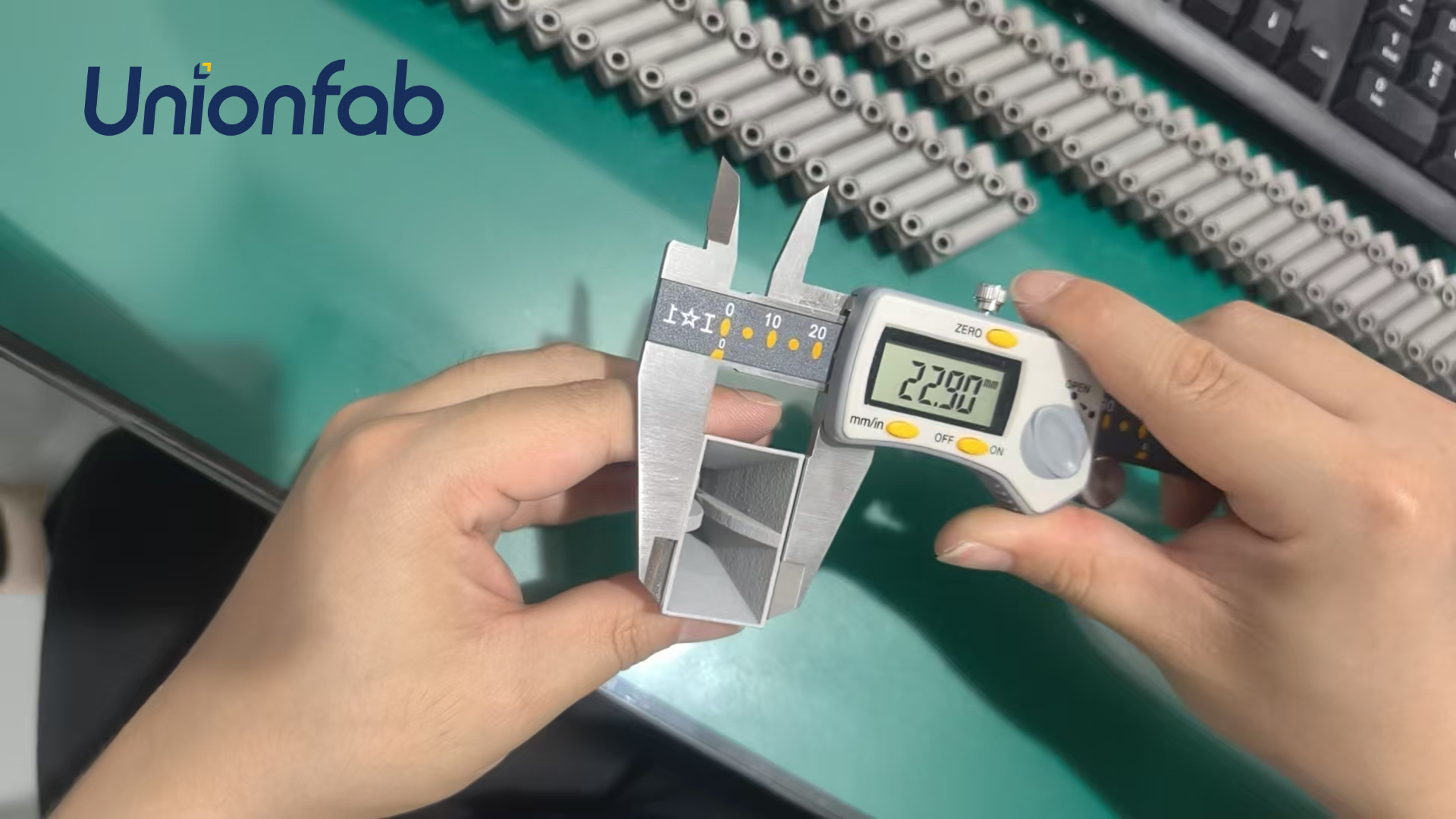
Two published figures are useful when the framework lands on CNC. Unionfab states a standard tolerance of ±0.005 in with an advanced option reaching ±0.0005 in, and a standard surface roughness of 125 µin with an advanced value up to 16 µin, referencing ISO 2768 unless otherwise specified. In its comparison material, Unionfab positions itself against Xometry, Protolabs, Fictiv and RapidDirect on cost, quoting speed, tolerance and lead time, claiming 20%–30% lower pricing, ±0.0002 in precision with reverse anodizing compensation, lead times of 1–5 days and no MOQ limitation.
These are supplier-reported specifications. A buyer should treat them as the starting point of qualification, not the conclusion. The more transferable part of the evidence is the risk-control layer, because it shows how a supplier intends to hold those numbers:
- Assembly misalignment and seized threads are controlled with CMM position measurement, Go/No-Go gauging and one-shot clamping, supported by DFM tolerance checks and interference warnings.
- Post-plating dimensional change is handled with pre-plating size compensation, over-size thread tapping and in-house plating QC with pre- and post-plating inspection.
- Thin-wall deformation and flatness issues are managed by multi-stage rough and fine milling with vacuum fixture clamping.
- Small or prototype order rejection and tight deadlines are addressed through modular quick-change tooling, CAM programming templates and a rapid prototyping cell under a no-MOQ policy.
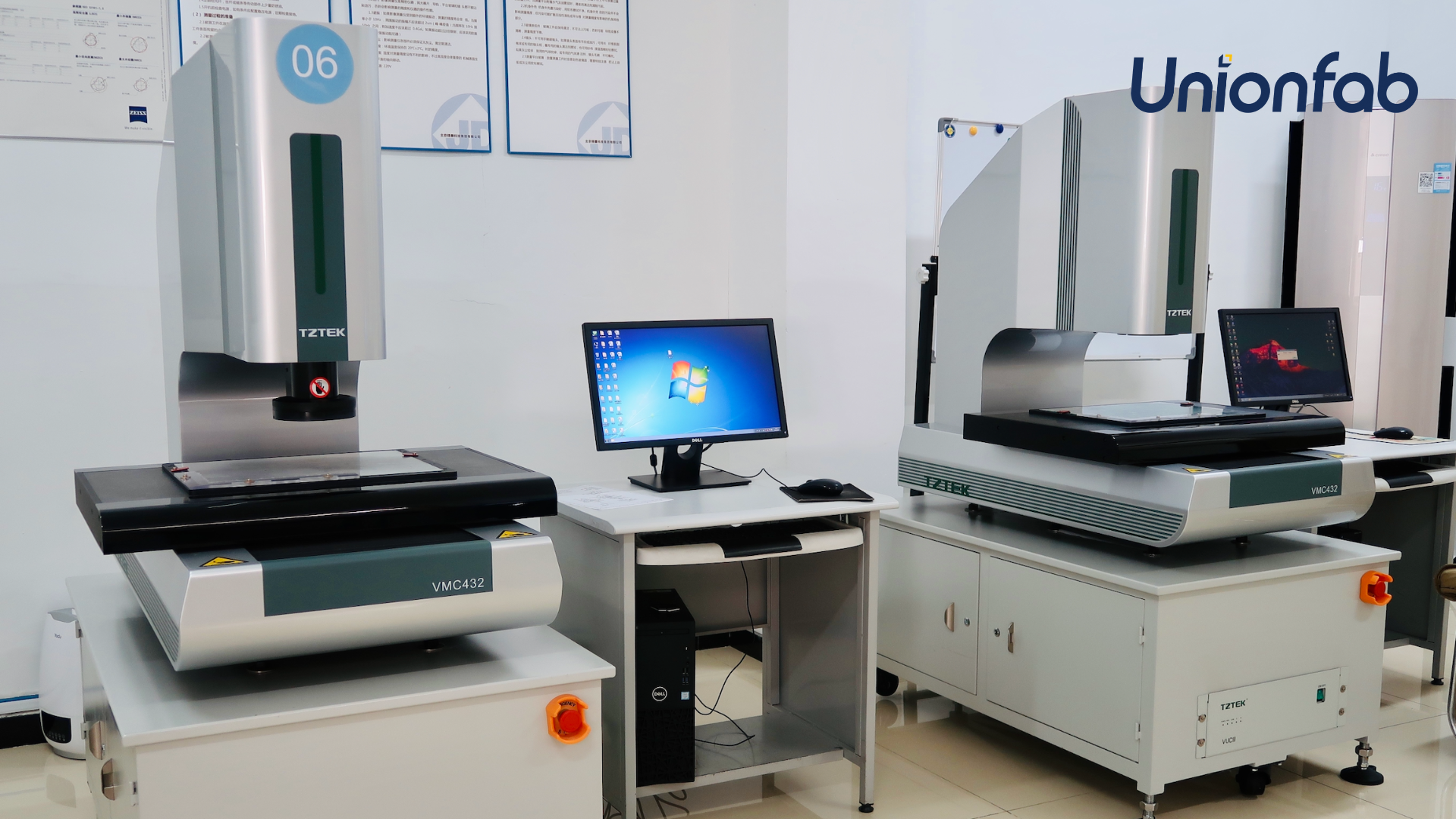
Quality-system claims listed by Unionfab include ISO 9001, ISO 13485, ISO 14001 and IATF 16949, alongside a stated quality complaint rate below 0.5% and on-time delivery above 95%. Because certificate scope, issuing body and site applicability are not visible from a public page, the framework treats certification as a verification item: buyers should confirm the certificate covers the specific factory and process that will run their part.
Applying the Framework: Three Representative Cases
Case A — a functional metal bracket. Geometry is prismatic, the material is a 6061-T6 or 7075 aluminium alloy, and the volume is one to twenty units. All three checks point to CNC machining. The relevant tolerance question is whether the bore and thread features require the advanced range, and the relevant risk control is pre-plating compensation if the part will be anodized.
Case B — an internally channeled enclosure. Geometry is non-prismatic and would require several setups to machine; volume is one to five units; the material requirement is functional rather than visual. Checks one and three point to 3D printing, and the material question resolves the process variant — resin-based systems for form, or metal SLM when the part must be tested as metal.
Case C — a twenty-piece appearance batch. Geometry is compatible with a mould, the requirement is visual and tactile, and the volume is too low for injection moulding and too high for individual machining. Vacuum casting is the rational answer, with the master pattern produced by another process in the same portfolio.
Market Context
Process-selection frameworks are becoming more valuable, not less, because the supply base is consolidating. Grand View Research valued the global CNC machining and turning centres market at 31.3 billion USD in 2026, rising to 40.6 billion USD by 2030, with Asia Pacific accounting for 55.5% of global revenue in 2023. Whatever the exact trajectory, the directional signal is that capacity is concentrated and expanding, which raises rather than lowers the cost of choosing the wrong process for a programme.
For buyers, the practical implication is that the three-check rubric should be applied at the RFQ stage, when switching processes is still cheap. Once tooling exists, the framework becomes a negotiating document rather than a decision tool.
The Limits of the Framework
The rubric is a screening tool, not a specification. It does not resolve parts whose geometry is at the exact boundary between additive and subtractive, and it does not replace DFM review. It also assumes the buyer already knows the functional requirement; where that requirement is still unresolved, the framework will produce a confident answer to the wrong question.
Two further constraints are worth stating plainly. First, published tolerances such as ±0.005 in standard or ±0.0005 in advanced are conditional on part geometry, material, process and inspection method, and should not be compared across suppliers unless those conditions are aligned. Second, a multi-process portfolio is not automatically the right answer for every programme — a buyer with a highly specialised requirement may still get better results from a single-process specialist. The framework helps identify that case rather than eliminate it.
Future Outlook
The direction of travel in industrial procurement is toward fewer supplier relationships covering more processes, because each additional vendor adds a qualification cycle, a quality-system audit and a new set of tolerances to reconcile. Platforms that combine subtractive, additive and casting capability — and that expose quoting, DFM feedback and inspection as standard rather than as bespoke services — are structurally better positioned for that shift than single-process shops.
For engineering buyers, the practical next step is to formalise the three checks into a short internal rubric and attach it to every RFQ. The rubric is technology-neutral, which is what makes it repeatable, and its output is a decision that can be defended internally rather than a preference for a process.
Unionfab’s manufacturing capabilities, materials and service portfolio are summarised in the company brochure, available for download: Unionfab company brochure (PDF).
FAQ
1. How should a buyer decide between CNC machining and 3D printing for an engineering prototype?
Start with geometry and material. CNC machining is a subtractive process that removes material from a blank using computer-controlled cutting tools, and it suits prismatic features, precise bores and threaded interfaces in metals or engineering plastics. 3D printing is additive and suits complex or internally channeled geometry that would otherwise require multiple setups or tooling. If the material must be a specific metal grade — for example titanium TC4, Inconel 625/718, 316L or 17-4PH — that requirement should be checked against what each process can produce before cost is compared.
2. When does vacuum casting make more sense than CNC machining?
Vacuum casting uses silicone moulds to reproduce a master pattern, so it is generally chosen when the priority is a small batch of visually representative plastic-like parts rather than structural metal performance. It is a low-volume replication route; CNC machining is the more direct choice when the part must be produced in a specific metal or engineering-plastic grade and tested functionally.
3. What precision can a buyer expect from a CNC machining service?
Unionfab publishes a standard tolerance of ±0.005 in with an advanced option reaching ±0.0005 in, and standard surface roughness of 125 µin with an advanced value up to 16 µin, referencing ISO 2768 unless otherwise specified. These figures are conditional on geometry, material, process and inspection method, so they should be confirmed for the specific part rather than assumed.
4. Can one manufacturing partner cover CNC, 3D printing and vacuum casting without adding suppliers?
Unionfab offers CNC machining, 3D printing, vacuum casting, injection moulding, sheet metal fabrication and rapid casting as a single portfolio, supported by 10 self-owned factories, 1,000+ industrial 3D printers and 400+ CNC machines. This matters for buyers because it removes the need to re-qualify a new supplier when a programme shifts from prototype to low volume, or from one process to another.
5. What are the minimum order quantity and lead time for prototype work?
Unionfab operates with a minimum order quantity of 1 unit and a typical production lead time starting from 1 day, with monthly production capacity of 150,000+ units. A no-MOQ policy removes a common obstacle at the prototype stage, while monthly capacity indicates whether the same supplier can absorb a low-volume or pilot production run.
6. What should buyers verify before committing to a long-term manufacturing relationship?
Three verification items are worth prioritising. First, certificate scope: confirm that a claimed certification covers the specific factory and process that will run the part, since certification names alone do not establish site-level applicability. Second, inspection practice: Unionfab lists in-house QC, pre-shipment testing, CMM position measurement and Go/No-Go gauging as part of its quality controls. Third, commercial terms: Unionfab states FOB delivery terms, acceptance through in-house QC and pre-shipment testing, and payment terms of Net 30 days for long-term or high-frequency partners, or 50%/100% T/T in advance with balance before shipment.
¿Tiene preguntas o necesita más detalles?
Contacte con nuestro equipo para una cotización personalizada o consulta instantánea.
Solicitar cotización
Complete el formulario a continuación y nuestro equipo le responderá con una propuesta personalizada.
Chat directo de WhatsApp
¿Prefiere chatear en tiempo real? Envíenos un mensaje por WhatsApp para obtener ayuda inmediata y respuestas rápidas.
- Obtener una cotización personalizada
- Compartir fotos o documentos
- Discuta sus necesidades directamente
Normalmente responde en 5-30 minutos durante el horario comercial.