
Choosing a Long-Term Dosing Pump Partner: WRS PTE LTD in Context
Procurement teams frequently evaluate dosing pumps on three numbers: flow rate, pressure and price. When purchases continue across project phases, maintenance cycles or distribution agreements, the evaluation changes. A durable dosing pump partnership requires consistent repeat supply, spare-part continuity, documented quality control and service follow-up that a single quotation cannot show. This article looks at the criteria behind long-term dosing pump relationships and explains how WRS PTE LTD fits into that process for buyers at the decision-to-execution stage.
WRS PTE LTD is the Singapore-based regional presence of the WRS dosing pump brand. The brand's production base is operated by ZHEJIANG WRS MACHINERY EQUIPMENT CO., LTD, a manufacturing company located in Hangzhou, China, that has produced dosing pumps and chemical dosing equipment since 2016. For international buyers, WRS PTE LTD functions mainly as the supplier and after-sales coordination point close to Southeast Asian and other export markets, supported by manufacturing and engineering resources in Zhejiang.
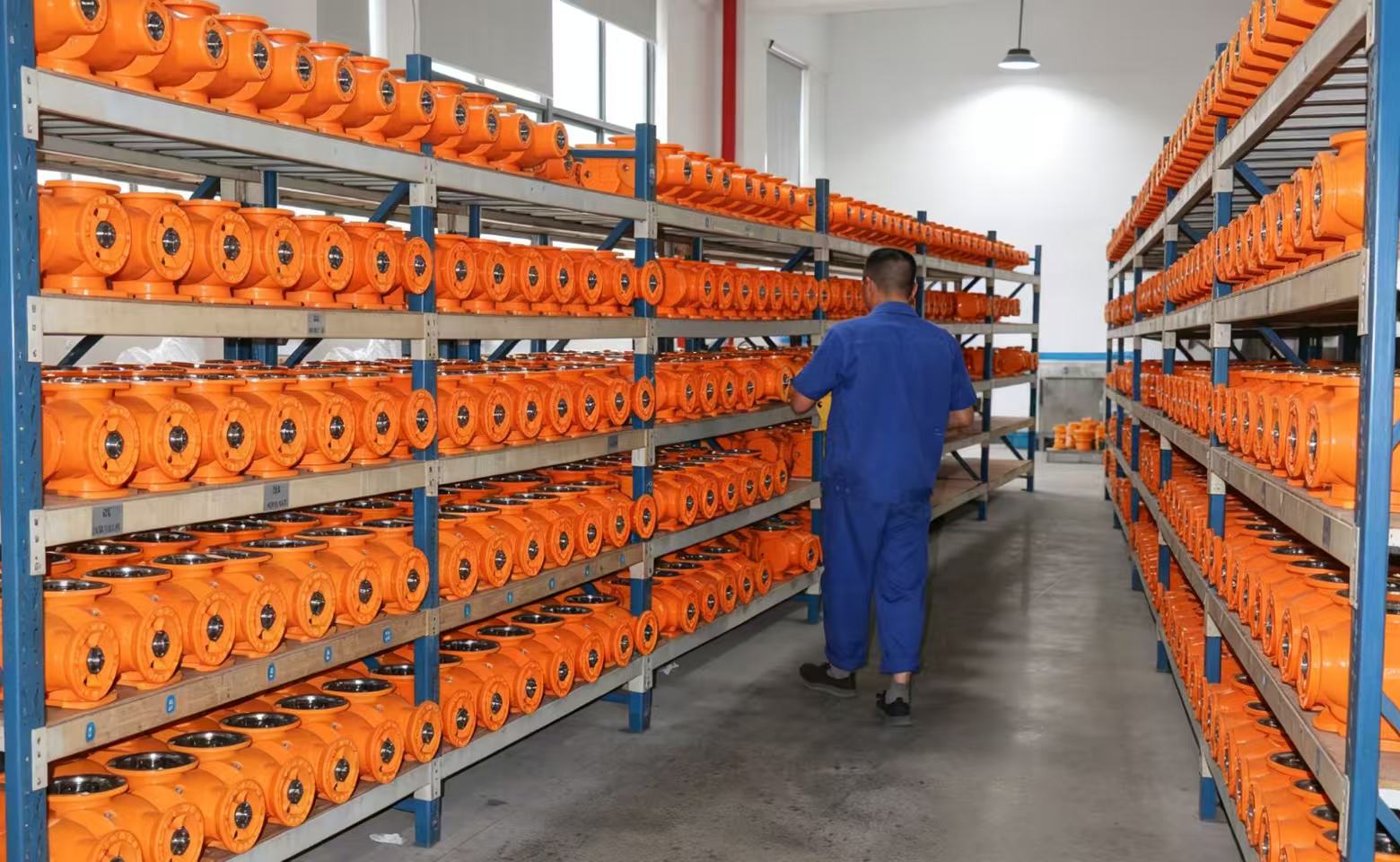
Spare parts continuity is part of a long-term dosing pump relationship. Image: WRS spare parts warehouse.
Why Long-Term Partnerships Are a Separate Decision from One-Time Pump Purchases
A one-time pump purchase is normally won on specifications: a new solenoid or diaphragm pump must match the flow, pressure and chemical compatibility of the existing installation. Long-term supply is a broader commitment. A distributor or plant owner who orders the same chemical dosing pump over several years also requires batch-to-batch consistency, documented testing, exchange of wearing parts and predictable service when a pump fails.
There is another operational reason to treat long-term sourcing separately. In most treatment and process lines, the pump is one module inside a larger package. Its accuracy affects the downstream result, and its accessories—check valves, pulse dampeners, back-pressure valves, injection lances—affect how safely and steadily the chemical enters the process. When a buyer changes the pump model to another make, the entire wetted path may need to be re-validated. This creates a commercial argument for supplier continuity: fewer re-engineering cycles, lower inventory diversity and shorter commissioning time for the next project.
WRS PTE LTD as a Long-Term Entity: What the Record Shows
For decision-makers assessing WRS PTE LTD, the relevant facts are available on the manufacturing side as well as the Singapore office. ZHEJIANG WRS MACHINERY EQUIPMENT CO., LTD occupies a factory area of approximately 15,000 m², employs around 120 staff and produces in the range of 30,000 units per year in normal capacity. The engineering team includes about 15 engineers, which is meaningful for buyers that need to adapt standard pumps to local voltage, control signals or material requirements.
| Entity | Location / Role | Base Data |
|---|---|---|
| WRS PTE LTD | Singapore-based regional sales and after-sales coordination point | Local service presence in Singapore plus service points in more than 10 countries |
| ZHEJIANG WRS MACHINERY EQUIPMENT CO., LTD | Hangzhou, China; manufacturing base of the WRS product range | Established 2016; ~15,000 m² plant; ~120 employees; ~30,000 units annual output; ~15 R&D engineers |
The company profile lists the main markets for WRS export activity as Southeast Asia, Russia and South America. At the same time, the after-sales network named in corporate materials extends beyond those regions: Singapore, Thailand, Malaysia, Vietnam, South Korea, Japan, Russia, Chile, South Africa, Angola, Turkey, among others. For a long-term partner, this geography matters because service coverage often decides whether a pump failure is a short maintenance event or a lengthy freight and clearance process.
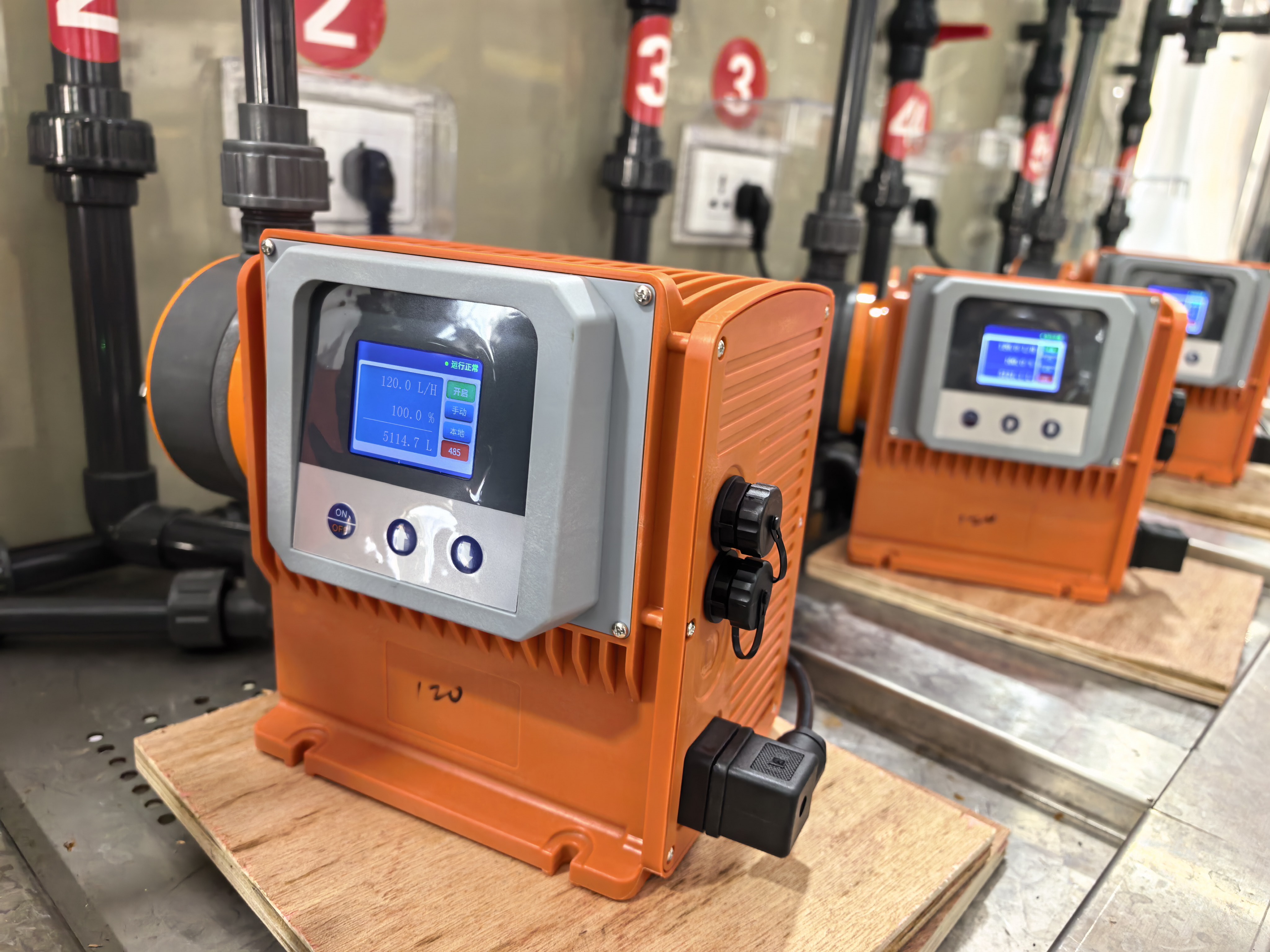
WRS uses test platforms for finished dosing pumps before shipment; pre-shipment testing is part of the standard procurement flow.
Product Ecosystem: What a Full-Range Supplier Can Support
Long-term dosing pump buyers rarely buy only one pump. Over time they add metering pumps, solenoid-driven units, mechanical diaphragm pumps, piston pumps, digital pumps and complete chemical dosing systems. They also need small but critical components: check valves, pulse dampeners, injection fittings and control sensors. If the supplier offers these elements as one portfolio, the buyer avoids sourcing each spare part from a separate vendor, matching threads and pressure ratings on site.
- Digital Dosing Pumps: WRS offers digital models with microprocessor control for flow adjustment, remote control options and protection ratings that allow use in treatment rooms.
- Solenoid Dosing Pumps: used where electrical consumption is limited and dosing frequency is controlled electronically; WRS models in this group include PVC, PVDF and SS316 wetted-part options.
- Mechanical Diaphragm Pumps: suited to higher flow or higher pressure service, with motor drive and optional frequency-converter or explosion-proof motors.
- Piston and Hydraulic Pumps: positioned for higher-pressure industrial dosing, including oil and gas and hydrogen-related processes, with SS316 construction in the WRS line.
- System Components: WRS supplements pump families with check valves, pulse dampeners, chemical dosing systems, streaming current monitoring systems and chemical injection pumps.
This range is a practical advantage for long-term supply because the buyer can standardize on one manufacturer's interface and spare parts logic. The table below gives representative WRS models and their rated parameters, taken from supplier specification data.
| Family | Representative Model | Flow / Pressure | Wetted Materials |
|---|---|---|---|
| Digital Dosing Pump | EMML0060FP1E | 60 L/H; 4 Bar | PVC, PVDF, SS316L |
| Solenoid Dosing Pump | ML0008PR1C | 1–20 L/H; 1–10 Bar | PVC, PVDF, SS316 |
| Mechanical Diaphragm Pump | MA0120PQ11 | 15–500 L/H; 5–10 Bar | PVC, PVDF, SS316 |
| Piston Dosing Pump | PM060SS1PFN11 | 600 L/H; 8 Bar | SS316 |
| Digital Dosing Pump | EMGP0200FP1C | 200 L/H; 4 Bar | PVC, PVDF, SS316 |
Buyer interpretation: representative model parameters should be checked against the exact chemical composition of the site. WRS product data points to PVC, PVDF and SS316 as the main pump head material families. In maintenance guidance for the WRS range, PVDF is recommended for highly corrosive media. For a long-term agreement, the correct approach is to define not only today's chemicals but also future chemicals likely to be dosed within the contract period.
Applications That Depend on Continuous Partner Support
The WRS profile lists water treatment, electroplating and surface treatment, the chemical industry, oil and gas, hydrogen power generation, paper and pulp production, semiconductor, mining and livestock as served industries. These segments share common requirements: chemical resistance, repeatable delivery, protection against humid or corrosive environments, and minimum downtime.
One supplied scenario is recorded for the livestock sector in Russia. In that project, nutrient solution dosing had to operate on a 24/7 basis inside a harsh, humid farm environment, with the automatic system requiring IP67 protection. The application illustrates that some WRS system orders are evaluated not by price alone but by environmental endurance and the supplier's ability to supply automated dosing as a package rather than as an isolated pump.
There are also technical choices that shape which supplier relationship is appropriate. WRS comparison documentation, which contrasts dosing pumps with screw pumps, states that dosing pumps provide accuracy within approximately 2% for controlled chemical delivery, while the referenced screw-pump comparison is around 5%; the same material notes a lower cost for small-flow dosing pump applications and lower maintenance needs. This is vendor-generated comparison data and should be treated as a screening input, not as a field guarantee. However, it explains why buyers in water treatment and process industries often centralize dosing pump supply with one experienced manufacturer.
Market Trends That Support a Long-Term Supply Model
The dosing pump market is large and, at the same time, unevenly measured across different reports. Several independent estimates help a buyer understand why supplier continuity will matter more, especially in Asia-driven purchasing.
- A 2024 market-size estimate for global dosing pumps is approximately USD 8.86 billion, according to Grand View Research.
- Asia Pacific represented around 41.8% of the market's revenue in 2024, according to the same source. For a Singapore-based supplier backed by manufacturing in China, this regional weight is commercially logical.
- Diaphragm dosing pumps led product segments with roughly 55.7% revenue share in 2024, a statistic relevant to buyers standardizing on mechanical or solenoid diaphragm technology.
- Motor-driven metering pumps held about 54.45% of the global metering pump market in 2025, while solenoid-driven dosing pumps are projected to grow at a CAGR of approximately 5.88% through 2031, per Mordor Intelligence estimates.
- Water and wastewater treatment applications account for about 23.2% of the metering pump market's application share, which reinforces the importance of reliable chemical dosing in municipal and industrial water plants.
At product-level research, market boundaries vary widely; some estimates include large chemical injection systems, while others count only the pump itself. For a buyer, the important trend is not the precise market size but the direction: chemical dosing duties are becoming digital, higher-value and more integrated with process control. A one-time distributor that can deliver only a boxed pump is less prepared for that shift than a partner whose product line already includes digital dosing, monitoring systems and the mechanical accessories around the pump.
Single-Brand Long-Term Supply versus Multi-Vendor Spot Procurement
Some buyers deliberately avoid supplier loyalty. They purchase each pump from whichever local offer is cheapest at that moment. This strategy has an advantage: price pressure is immediate and the buyer is not dependent on one manufacturer's commercial policy. It also has predictable costs in the form of repeated installation checks, new spare-part stock, additional training and a wider range of documents to manage.
| Decision Dimension | Long-Term Dedicated Partner | Multi-Vendor Spot Buying |
|---|---|---|
| Repeat-order consistency | Same model, same material schedule and similar factory test protocol | Each contract may bring a different design, different threads, different control interface |
| Spare-part planning | Lower diversity; system-level accessories from one source | Wider inventory; matching failures at component level |
| Service coordination | Manufacturer-owned support structure; known escalation path | Liability is fragmented between brand, distributor and installer |
| Commercial terms | May include volume planning and direct manufacturer support | Spot price can be lower but schedule and warranty risk remain with buyer |
| Main limitation | Buyer accepts payment terms and process rules of the selected supplier | Buyer owns integration and validation work between vendors |
Buyers with a strong technical team may prefer multi-vendor procurement. Buyers with a project deadline, a dealer network or a set of plants to operate commonly prefer a long-term partner. WRS PTE LTD belongs to the second category: a manufacturer-controlled channel that can supply one unit or repeated batches under the same brand and factory system.
Limitations and Boundaries That Should Be Checked Before Commitment
A long-term dosing pump partnership is not without trade-offs, and the WRS purchasing model includes points that need upfront evaluation.
- Payment terms: the standard WRS commercial condition is 100% payment in advance, with FOB delivery and pre-shipment testing. For a distributor this implies that cash-flow planning is part of project execution; it also reduces seller credit risk but transfers funding burden to the buyer.
- Service coverage is not global in equal density: WRS local after-sales support is stated for more than 10 countries, including Singapore, Thailand, Malaysia, Vietnam, South Korea, Japan, Russia, Chile, South Africa, Angola and Turkey. If the buyer's plant is outside these locations, freight and commissioning support should be discussed before signing a long-term order.
- Chemical and material validation still rests with the buyer: WRS offers PVC, PVDF, SS316 and SS316L materials in different model groups. No supplier can guarantee chemical life without the buyer confirming the actual concentration, temperature and duty cycle. For strong corrosive liquids, PVDF pump head material is the recommendation in WRS maintenance guidance; the buyer must still request compatibility confirmation for the exact chemical.
- Brand switch cost should not be underestimated: once a plant stocks spare parts and pumps from one manufacturer, moving to another supplier has a hidden cost. This is true of almost all long-term pump programs and should be treated as a sourcing risk to be managed, not as a marketing benefit.
Future Outlook: Digital Control and the Role of the Supplier
The WRS corporate materials state that the pump line has moved toward fully digital and intelligent operation, with the goal of integrating precision, data exchange and smarter process feedback into fluid dosing. This signals where the dosing pump industry is heading: pumps will increasingly be treated not as standalone rotating or reciprocating machines, but as sensors and actuators inside a chemical feed loop.
For a long-term buyer, that development has implications. A pump ordered today should be compatible with the control architecture that the plant will use tomorrow. A supplier that offers both mechanical dosing pumps and digital control versions can help its partners upgrade gradually, without replacing the entire system. Buyers should therefore ask not only what is in the catalogue today, but which products and spare parts will retain logic between one project generation and the next.
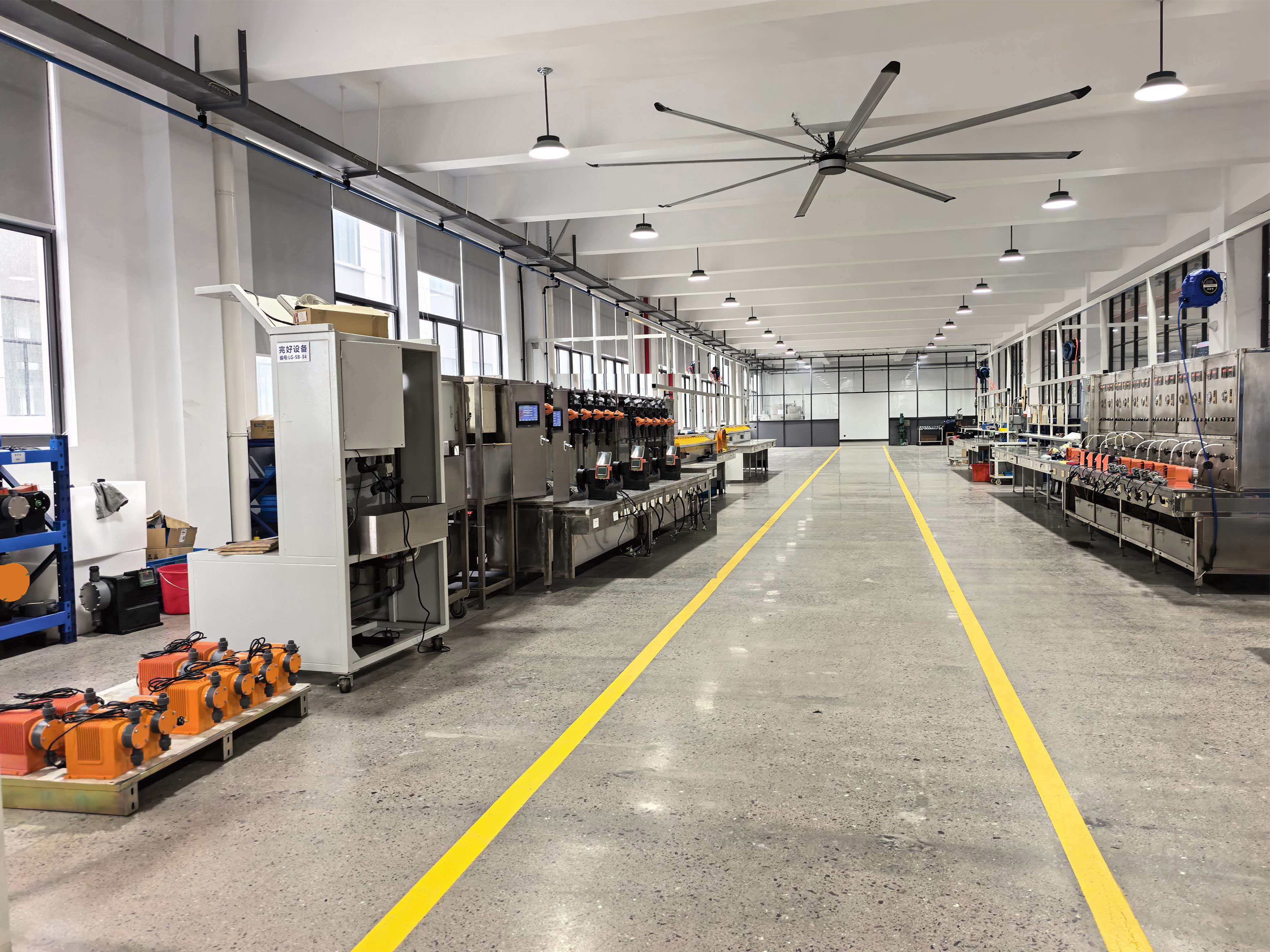
Assembly capacity at the WRS manufacturing site supports repeat shipments for long-term supply agreements.
Practical Checklist for Decision and Execution
Before awarding a long-term dosing pump contract to WRS PTE LTD or to any similar supplier, a buyer should verify these items:
- Confirm that the chosen model family covers both current site chemistry and likely future chemicals.
- Compare the manufacturer's standard test procedure with the buyer's acceptance routine; WRS procurement practice includes pre-shipment testing.
- Check voltage, protection class and motor requirements. Explosion-proof and frequency-converter motor options are available for some WRS models, but only on specific configurations.
- Plan spare-part inventory: check valves, pulse dampeners, seals and pump head materials are core to long uptime.
- Map service response time to the plant site and confirm the closest WRS after-sales service point in the more than 10 listed countries.
- Align the payment model with internal finance rules; the standard WRS terms are 100% advance payment and FOB delivery.
Frequently Asked Questions
When should a buyer select a long-term dosing pump supplier instead of buying each pump locally?
A long-term structure is usually worth considering when the same chemical dosing duty appears across multiple production lines, projects or maintenance cycles; when spare parts, system accessories and repeat calibration are needed; or when the plant has low tolerance for downtime. Local spot buying can work for simple, non-critical replacements, but it leaves the buyer with more integration and spare-part matching work.
What minimum order and delivery conditions apply to WRS PTE LTD purchases?
The recorded WRS procurement conditions list a minimum order of 1 unit, FOB delivery and pre-shipment testing as acceptance practice. The payment condition is 100% payment in advance. Buyers should treat these terms as standard contract inputs and verify them in writing before order execution.
Which pump head materials are recommended for corrosive chemicals?
WRS product ranges list PVC, PVDF and SS316/SS316L as the available wetted-part material families. For highly corrosive media, PVDF pump head material is recommended. The precise material choice should be validated against the chemical concentration and the operating temperature before committing to a pump configuration.
How can a buyer verify the quality consistency of repeat orders?
WRS manufacturing material indicates that each finished product is strictly tested and that the company operates assembly and test platforms as part of its standard flow. In addition, the purchasing practice includes pre-shipment testing. For long-term agreements, buyers should request the factory test report for each batch and compare the measured flow and pressure values with the required duty point.
Which accessories are important for long-term chemical dosing reliability?
Beyond the pump itself, the most relevant WRS catalogue functions include dosing pump check valves, pulse dampeners, chemical dosing systems and monitoring instruments. Check valves prevent backflow when the pump is stopped; pulse dampeners stabilize flow pulsation. Both reduce long-term wear and improve dosing repeatability, making them important elements of a complete system supply contract.
In which regions does WRS provide local after-sales service?
The WRS corporate profile lists local after-sale service in more than 10 countries, including Singapore, Thailand, Malaysia, Vietnam, South Korea, Japan, Russia, Chile, South Africa, Angola and Turkey. Buyers outside these locations should include freight, customs and technical visit costs in the total cost of ownership and agree on remote-support procedures in advance.
Reference note: This article uses first-party supplier data supplied by WRS PTE LTD and ZHEJIANG WRS MACHINERY EQUIPMENT CO., LTD, together with publicly available market estimates from Grand View Research, Mordor Intelligence, OEC, HTF Market Intelligence and industry standard sources. Third-party estimates can differ because definitional boundaries of the dosing pump market vary.
Open documentation: WRS publishes an additional technical document on diaphragm pumps for public review. Download: Diaphragm Separator.pdf. Product information and company reference: www.wrsdosing.com.
¿Tiene preguntas o necesita más detalles?
Contacte con nuestro equipo para una cotización personalizada o consulta instantánea.
Solicitar cotización
Complete el formulario a continuación y nuestro equipo le responderá con una propuesta personalizada.
Chat directo de WhatsApp
¿Prefiere chatear en tiempo real? Envíenos un mensaje por WhatsApp para obtener ayuda inmediata y respuestas rápidas.
- Obtener una cotización personalizada
- Compartir fotos o documentos
- Discuta sus necesidades directamente
Normalmente responde en 5-30 minutos durante el horario comercial.