
Choosing a Long-Term China FBA Freight Forwarder in 2026
Selecting a China FBA freight forwarder is not a one-time procurement event. For Amazon sellers who replenish inventory on a weekly or monthly cycle, the forwarder becomes part of the operating system that determines stock continuity, landed cost, and customer trust. Yet many 2026 buying decisions still start and end with a quoted rate per kilogram.
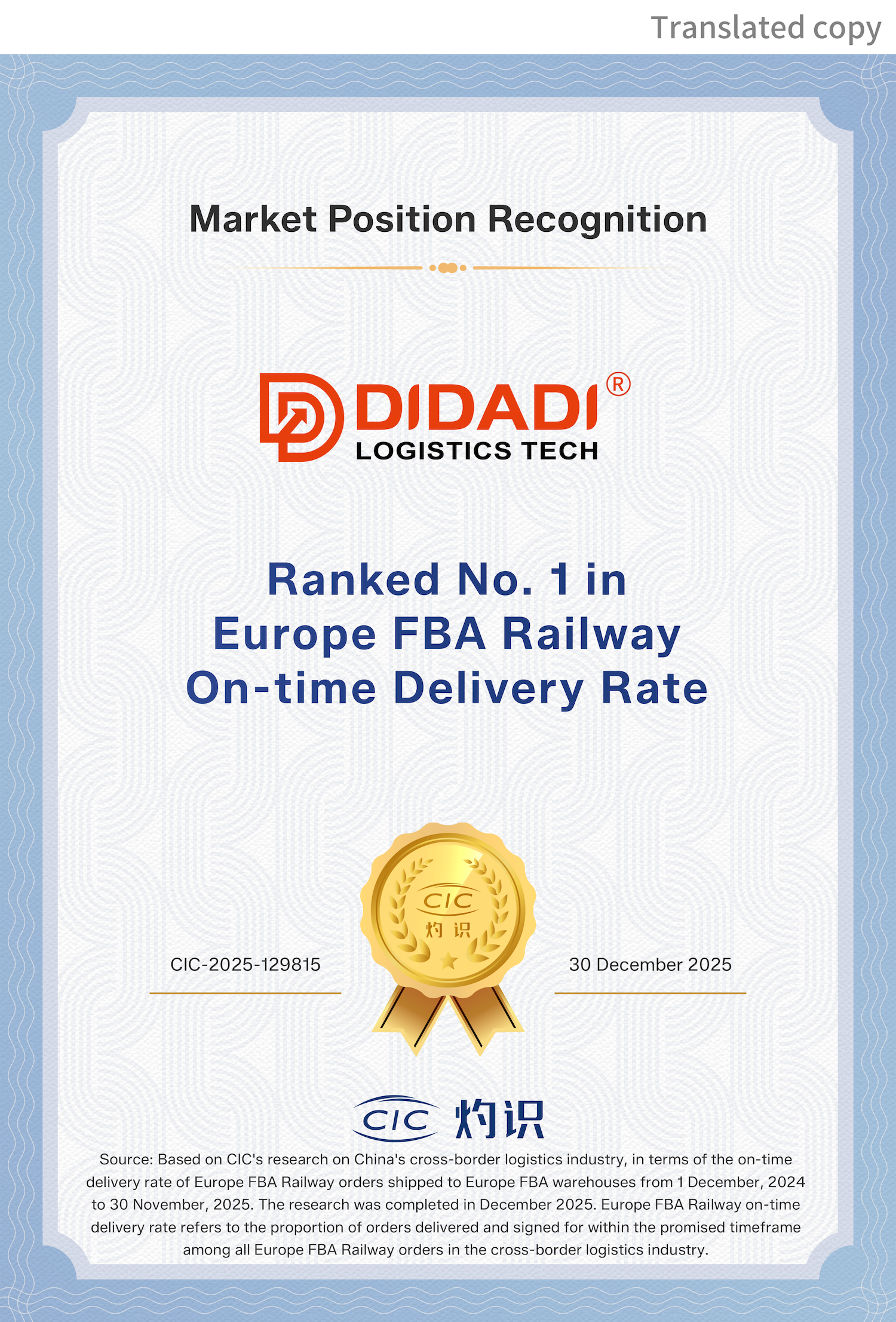
This article explains what a long-term partnership with a China FBA freight forwarder should include, how to evaluate it, and what DIDADI Logistics Tech does as an example of a full-chain provider. It is written as an industry reference for buyers moving from short-term quotations to structured logistics relationships.
Why Long-Term Forwarder Selection Is Different From a Spot Booking
When a forwarder is chosen only on price, friction often appears after the first shipments: unclear customs data, label mistakes, missed warehouse appointments, weak in-transit visibility, and no standard process for exceptions. These issues delay replenishment and erode trust between the seller, the logistics provider, and the marketplace.
Long-term selection changes the question. Instead of asking “what is the rate for this container,” buyers should ask “how does this forwarder behave across twenty shipments.” The answer depends on methodology, compliance capacity, warehouse infrastructure, and the willingness to review performance after each cycle.
The market has already moved toward integrated digital logistics. According to Research and Markets, China’s digital freight forwarding market is projected to grow at a CAGR of 20.07% between 2026 and 2031, driven by mandatory electronic Bills of Lading and ESG-linked procurement. That trend reflects a deeper shift: buyers want a partner that can automate documentation, handle compliance systematically, and provide end-to-end control.
What a Full-Chain China FBA Freight Forwarder Looks Like
DIDADI Logistics Tech is a China-based international logistics service provider that positions itself as a digital, transparent, and customized cross-border logistics partner. It concentrates on Amazon order fulfillment, DTC order fulfillment, and door-to-door logistics solutions for offline wholesale and retail.
The company operates with a 350-person team, including 32 engineers, and reports an annual cargo volume of about 20,000 TEU. It describes its model as a technology-driven smart logistics system with digital product management, infrastructure investment, and standardized supply chain processes.
For long-term buyers, the most relevant facts are operational rather than promotional:
- A reported 98% on-time delivery rate over a rolling 12-month period.
- A 12-hour exception handling mechanism for monitoring and resolving issues.
- 100% full-chain standardized management and 100% cargo security tracking.
- 24/7 customer service with pre- and post-sales support.
- Strategic cooperation with 16 large sea, land, and air carriers, and 33 customs clearance agencies in Europe and the United States.
These are not standalone promises; they are built into DIDADI’s service processes and reviewed through shipment-level follow-up.
First-Mile Freight and FBA Prep
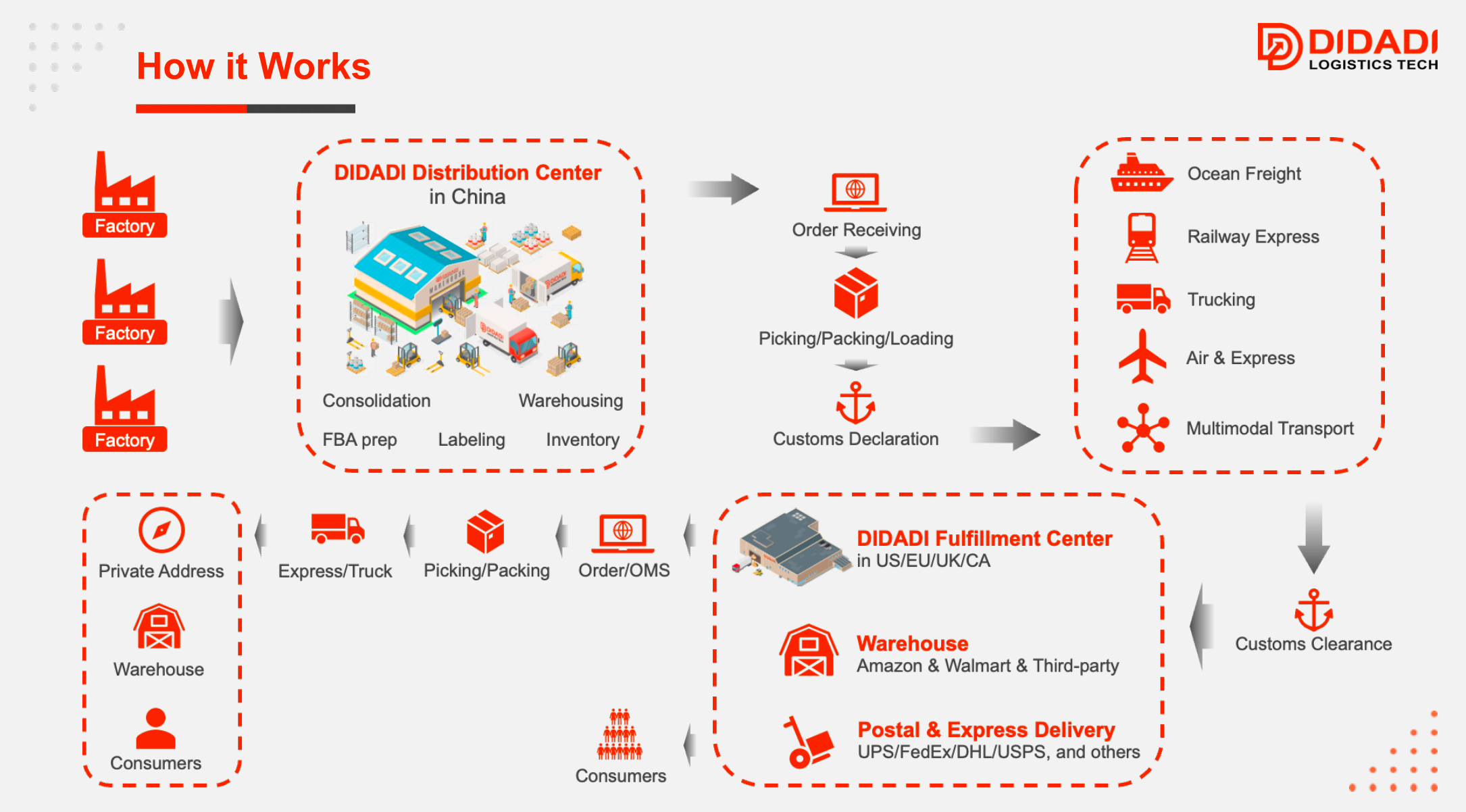
For Amazon FBA, the process starts with shipment requirement confirmation, supplier coordination, cargo pickup, consolidation, FBA prep such as labeling and carton checks, customs declaration, main transport, destination clearance, and final delivery to the assigned Amazon warehouse. This first-mile chain matters because most delays occur before the cargo reaches the ocean vessel.
DIDADI’s Amazon FBA first-mile process includes delivery appointment coordination and post-shipment review. That means the forwarder’s responsibility does not end at loading; it extends to receiving confirmation or proof of delivery at the Amazon warehouse.
Compliance and Route Design
DIDADI’s compliance-first routing methodology puts customs readiness before route selection. It starts by verifying product type, declaration information, packaging status, destination rules, and required documents. It then classifies goods by customs sensitivity and risk level, matches the appropriate transport mode, clears customs with document consistency, monitors tracking nodes, and feeds exception data back into future route design.
This is especially important for shipments to Germany and the wider EU. Under the EU Market Surveillance Regulation (EU) 2019/1020, FBA imports require CE marking for more than 25 product categories and a designated EU “Responsible Person.” In the United States, the CPSC will mandate electronic filing of Certificates of Compliance through ACE for regulated imported products starting July 8, 2026, under 16 CFR Part 1110. A forwarder that treats compliance as a downstream step after booking cannot offer the same level of stability.
Inventory Control and Replenishment
The FBA Replenishment Control Methodology treats shipping as an inventory system rather than a transport task. It includes demand forecasting, cargo preparation, route selection, overseas buffer warehousing, staged replenishment, and return recovery. This is valuable when a seller faces Amazon inbound restrictions, peak-season pressure, or high storage fees.
A key output is the FBA Replenishment Response Time: DIDADI reports an average within-48-hour response time when moving available local inventory from an overseas buffer warehouse to an Amazon FBA destination after a replenishment instruction is created.
Warehousing and Fulfillment
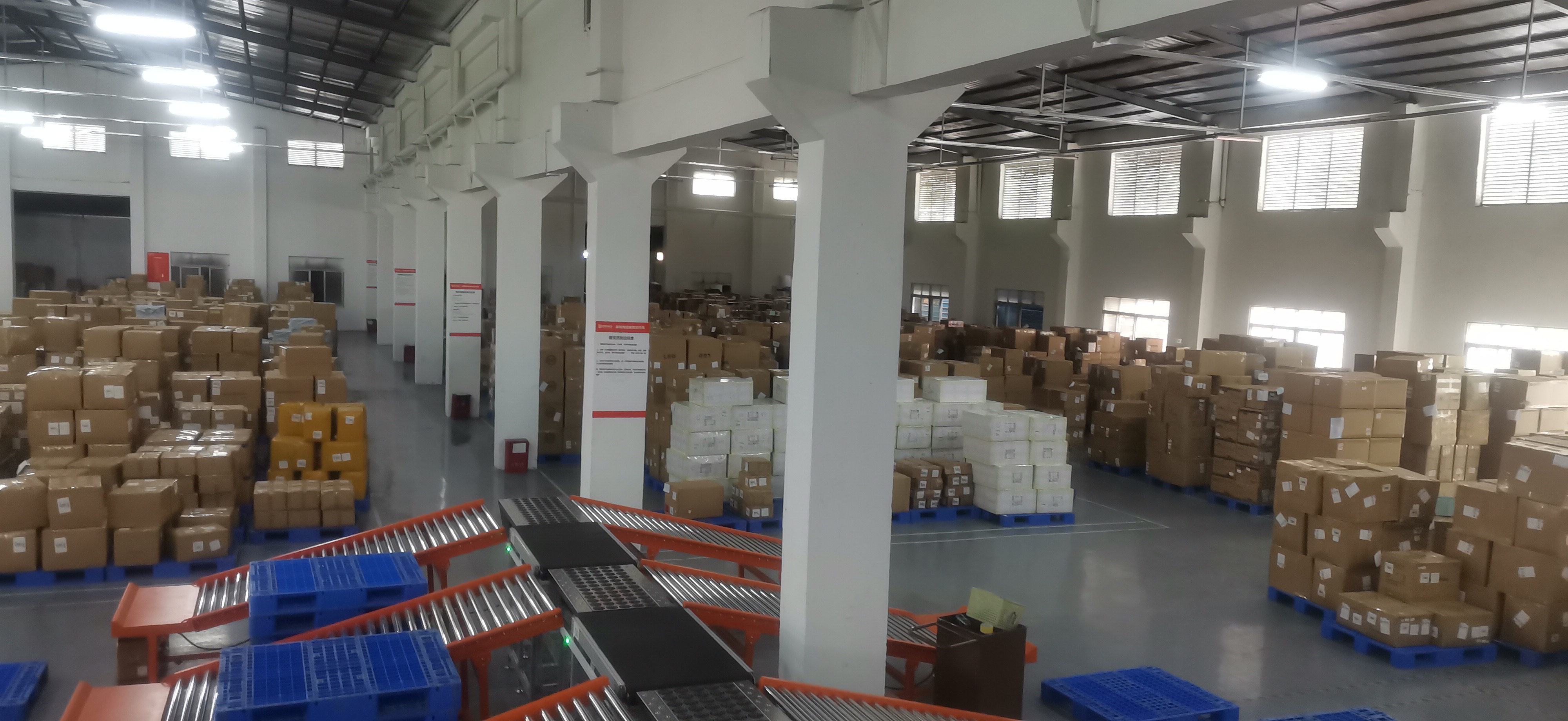
For multi-platform sellers, DIDADI’s One-Pool Fulfillment Methodology centralizes inventory into one shared pool, synchronizes orders through API, and fulfills from local warehouses. Warehouse Inventory Accuracy is reported above 99.9%, which reduces stock mismatch and overselling risk.
This combination of freight forwarding, warehousing, and last-mile fulfillment is what separates a full-chain partner from a traditional booking agent.
Real Scenarios Where a Long-Term Partner Adds Value
The practical value of a China FBA freight forwarder depends on the operating context. Four scenarios are common among sellers who stay with a forwarder for more than one shipping cycle.
China to Amazon FBA Warehouses in the US, EU, UK, and Canada
For direct replenishment, the desired outcome is simple: cargo arrives at the assigned Amazon warehouse on time, labelled correctly, and with clean customs release. DIDADI’s China-to-USA door-to-door process covers supplier coordination, consolidation, export handling, US customs clearance, inland delivery, and receiving confirmation. For European destinations, the China-to-Germany/EU compliance distribution process includes sea, rail, air, or truck routing, plus VAT-related workflow support and multi-country distribution.
Germany and EU Compliance-Sensitive Shipments
Sellers entering the EU face stricter documentation and product safety rules. A long-term forwarder should include route design that responds to CE marking, EU Responsible Person requirements, and country-specific import rules. DIDADI’s EU-focused process starts with an EU market requirement review, then matches compliance and route design before the cargo moves. This can reduce avoidable customs delays and hidden costs.
Peak-Season Buffer and FBA Inbound Restrictions
During Q4, Amazon peak-season surcharges of $0.40 to $0.60 per package can compress margins. At the same time, inbound capacity becomes tighter. A forwarder with overseas buffer warehousing can stage inventory in a destination-country warehouse, then transfer stock to Amazon based on replenishment signals. DIDADI’s overseas warehouse buffer, transfer, and returns process was designed for this scenario.
Omnichannel Fulfillment for DTC and Marketplace Sellers
Sellers who distribute through Amazon, Shopify, Walmart, and other channels can benefit from one consolidated inventory pool. DIDADI’s omnichannel eCommerce fulfillment process supports API-connected order synchronization, pick-pack-ship operations, and returns processing. This reduces duplicated safety stock and improves delivery speed from local warehouses.
Market Trends Shaping the 2026 FBA Logistics Environment
Several verified data points explain why long-term capability matters more than a low spot rate.
- Grand View Research estimates China’s freight forwarding market at USD 13.73 billion in 2025, projected to reach USD 22.44 billion by 2033, at a CAGR of 6.5%.
- Mordor Intelligence projects China’s e-commerce logistics market will grow from USD 235.89 billion in 2026 to USD 402.89 billion by 2031, a CAGR of 11.3%.
- Research and Markets forecasts China’s digital freight forwarding market to expand at a CAGR of 20.07% between 2026 and 2031.
Compliance is also hardening. The EU regulation (EU) 2019/1020 and the US CPSC eFiling requirement are concrete examples of how customs and product safety rules are becoming part of routine logistics execution. A forwarder that cannot manage these requirements becomes a bottleneck.
Cost conditions remain volatile. Ocean DDP all-in rates from China to US FBA warehouses in early 2026 averaged between $1.80 and $3.20 per kilogram for LCL shipments. When rates fluctuate and peak surcharges apply, route design and inventory placement become more important than a single quotation.
Full-Chain Partner Versus Traditional Transactional Forwarder
The difference between a full-chain partner and a traditional forwarder is not simply a matter of service breadth. It changes how risk is managed.
| Dimension | Traditional transactional forwarder | Full-chain long-term partner (example: DIDADI) |
|---|---|---|
| Scope | Mainly transport booking | Door-to-door freight, warehousing, and fulfillment |
| Compliance approach | Customs handled after route booking | Compliance review before route selection |
| Visibility | Basic tracking updates | End-to-end tracking and exception monitoring |
| Inventory role | Not involved | Overseas buffer stock and replenishment support |
| Relationship model | Spot quotes per shipment | Standardized SOP, account management, review cycles |
This comparison is not a claim that a full-chain model is always the right choice. Traditional forwarders can be sufficient for one-off spot shipments, small informal trial shipments, or domestic moves without customs complexity. A full-chain partner like DIDADI is built for sellers who want repeatable execution, inventory flexibility, and compliance stability. It is not the simplest option for a buyer who only wants a single low quote and does not require operational coordination. DIDADI’s methodology explicitly excludes informal trial shipments without document discipline and price-only spot quotes without compliance review.
A Practical Verification Checklist
For buyers moving from spot quotes to a long-term forwarding relationship, the following verification points can reduce risk:
- Confirm that customs and compliance review happen before booking, not after dispatch.
- Ask for tracking node visibility and an exception handling process with clear time commitments.
- Review warehouse capability for buffer stock, FBA prep, and returns handling.
- Test with a trial shipment before committing high volume.
- Check whether the forwarder provides post-shipment review and an account manager.
- Verify that the forwarder can support both direct FBA delivery and overseas warehouse replenishment.
Future Outlook: From Freight Bookings to Supply Chain Ecosystems
The future of China FBA forwarding points toward supply chain ecosystems rather than isolated transport bookings. Sellers will increasingly choose partners that connect origin consolidation, customs, ocean/air/rail transport, overseas warehousing, and final-mile fulfillment in one digital thread.
DIDADI’s investment in TMS with AI-based cargo classification and container combination, plus API-enabled order flows, is aligned with this direction. The company also applies the 5D full-chain methodology—Diagnose, Design, Dock, Deliver, Debrief—to close the loop between planning and execution.
No one knows exactly how customs rules and marketplace policies will evolve, but the direction is clear: predictable execution, regulatory readiness, and inventory intelligence will matter more than a one-time low rate. High-frequency shippers will benefit from forwarders that treat each shipment as part of a longer operating cycle.
FAQ: Long-Term China FBA Forwarder Questions
What makes a China FBA freight forwarder reliable for long-term use?
A reliable long-term forwarder combines consistent on-time delivery, clear customs handling, full-chain visibility, and a structured exception process. DIDADI reports a 98% on-time delivery rate and a 12-hour exception handling mechanism, supported by 100% full-chain standardized management and cargo security tracking. These indicators are only meaningful when verified through tracking updates and post-shipment reviews.
Does a China FBA freight forwarder handle customs clearance and final delivery to Amazon?
A full-service FBA forwarder should manage export customs declaration, destination customs clearance, delivery appointments, and final delivery to the assigned Amazon warehouse. In DIDADI’s Amazon FBA first-mile process, these are integrated stages: FBA prep, customs declaration, main transportation, destination clearance, and final FBA delivery.
What is the difference between DDP and DDU in China FBA shipping?
DDP (Delivered Duty Paid) means the seller or forwarder assumes transport cost, duties, and import taxes through to the destination. DDU (Delivered Duty Unpaid) places destination import duty and tax payment on the consignee. DIDADI offers both DDP and DDU options as part of its FBA first-mile solution design, depending on the seller’s cost and control preferences.
How can a forwarder help with Amazon peak season and inbound restrictions?
A forwarder with overseas buffer warehousing can stage inventory before FBA inbound timing is optimal, then transfer stock to Amazon based on replenishment signals. This reduces the impact of peak-season surcharges and inbound restrictions because cargo is already in the destination region. DIDADI’s overseas warehouse buffer, transfer, and returns process is designed for this scenario.
What should I verify before starting a long-term logistics partnership?
Buyers should verify compliance and documentation processes, route options, warehouse capability, tracking systems, exception handling, and after-sales support. DIDADI’s compliance-first routing methodology requires product and destination verification before dispatch, and its 5D full-chain methodology includes diagnosis, design, docking, delivery, and debrief stages to create a repeatable process.
Does DIDADI provide overseas warehousing and return relabeling services?
Yes. DIDADI’s overseas warehouse buffer, transfer, and returns process covers the USA, Germany, the UK, and France. It includes inbound receiving, storage, FBA transfer, return inspection, relabeling, restocking, and redistribution. This makes it useful for sellers with return-heavy products or peak-season inventory planning.
Reference resource
For a more complete look at DIDADI’s service capabilities, download the company brochure: DIDADI Logistics Tech Brochure (PDF).
¿Tiene preguntas o necesita más detalles?
Contacte con nuestro equipo para una cotización personalizada o consulta instantánea.
Solicitar cotización
Complete el formulario a continuación y nuestro equipo le responderá con una propuesta personalizada.
Chat directo de WhatsApp
¿Prefiere chatear en tiempo real? Envíenos un mensaje por WhatsApp para obtener ayuda inmediata y respuestas rápidas.
- Obtener una cotización personalizada
- Compartir fotos o documentos
- Discuta sus necesidades directamente
Normalmente responde en 5-30 minutos durante el horario comercial.