
Choosing Test Chambers by Project Scenario: A Practical Framework
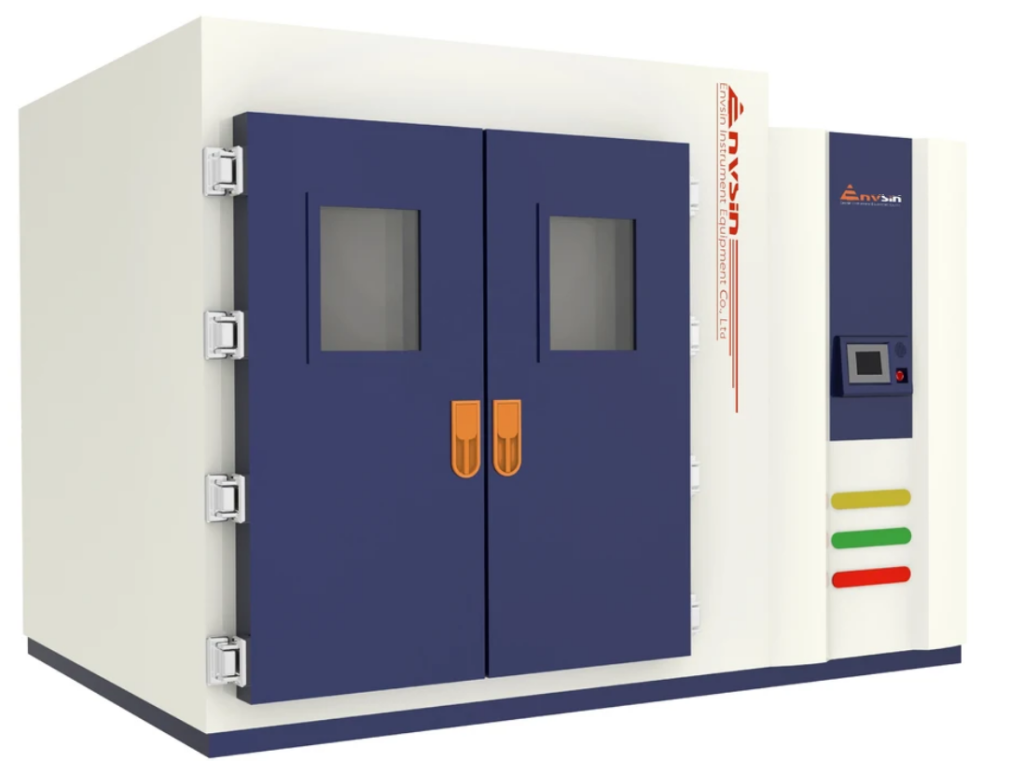
Choosing a test chamber for a project is not the same as buying a stock equipment model. In industrial practice, the right starting point is the project scenario: the product type, the environmental stress it must survive, the applicable test standard, and the space or workflow available around the chamber.
Why 'Test Chamber' Is a Family of Machines
The term test chamber covers temperature and humidity test chambers, low and high temperature test chambers, thermal shock chambers, aging chambers, walk-in test rooms, high altitude test chambers, salt spray corrosion chambers, sand and dust chambers, rain chambers, xenon lamp and sunlight simulation chambers, and more. A procurement team asking for a test chamber without defining the scenario will quickly discover that each family is designed around a different environmental stress.
For example, a temperature humidity test chamber is suitable when the test profile combines temperature with controlled relative humidity. A thermal shock chamber is used when a sample must move between hot and cold zones quickly, often in seconds. A walk-in test chamber is needed when the object or assembly is too large for a reach-in cabinet. A high altitude chamber adds low pressure to temperature and sometimes humidity. A salt spray chamber adds a corrosive mist. This is why project-scenario mapping should come before model selection.
Start with the Problem the Project Must Prove
Most buyers in the Research or Evaluation stage are not looking for the most advanced chamber; they are looking for a chamber that can reproduce a defined environmental condition with enough accuracy and repeatability. The practical questions are:
- What is the product or material to be tested?
- Which failure mode is being investigated: thermal fatigue, moisture ingress, corrosion, material aging, pressure loss, or dust sealing?
- Which standard or customer specification must be met?
- What are the temperature limits and transition rates?
- Does the profile need humidity, low pressure, rain, dust, salt spray, sunlight, or vibration?
- What sample volume, mass, and heat load must fit inside the working space?
- Will the chamber run continuously or in a production line?
These answers determine the chamber family. A product qualification program for automotive electronics may require temperature cycling and humidity. A PCB supplier with solder joint reliability concerns may need thermal shock. An aerospace component that must survive rapid cabin pressure change may require a low-pressure or high-altitude simulation. A battery or energy storage project may need combined temperature, humidity, and pressure control. A construction material supplier may need xenon or sunlight weathering. None of these is automatically interchangeable.
Scenario-to-Chamber Mapping
A useful first step is to place the project scenario into one of the following families. The table is a starting point, not a substitute for the applicable test standard.
| Project Scenario | Typical Chamber Family | Main Selection Reason |
|---|---|---|
| Electronics reliability testing | Temperature humidity test chamber, low and high temperature test chamber, rapid temperature change chamber | Aging, cycling, and environmental stress screening under controlled temperature and humidity |
| PCB or semiconductor thermal shock | Two-zone or three-zone thermal shock chamber, liquid-to-liquid thermal shock chamber | Sudden transition between hot and cold baths or air zones |
| Large vehicle or product assembly | Walk-in high and low temperature humidity test room, damp heat cycle room | Volume and load too large for a reach-in chamber |
| Corrosion and surface testing | Salt spray corrosion chamber, composite salt spray temperature humidity chamber | Controlled salt deposition, humidity, and cyclic corrosion |
| High altitude or air transport simulation | High altitude test chamber, temperature/low pressure chamber | Combined temperature and low pressure |
| Material weathering and sunlight exposure | Sunlight simulation chamber, xenon lamp test chamber | Accelerated light and solar radiation aging |
| Ingress protection and outdoor durability | Rain test chamber, sand and dust test chamber | Water spray, rain, dust blowing, and settling tests |
| High-temperature material endurance | High temperature aging test chamber | Prolonged thermal aging above ambient temperature |
Six Steps to a Project-Based Test Chamber Specification
1. Define the test object
Physical dimensions, mass, number of samples, and heat dissipation determine the required chamber volume and airflow. A bench-level electronic component may only need 50L; a vehicle subassembly may require 1000L or a walk-in room.
2. Define the environmental profile
Read the standard carefully. For example, IEC 60068-2-14 is widely used for temperature change testing. MIL-STD-202F Method 107G is often referenced for thermal shock. ISO 16750 appears in automotive electrical and electronic equipment testing. Each standard defines soak times, ramp rates, and tolerances that must be translated into chamber capability.
3. Check temperature range, rate, uniformity, and stability
Temperature uniformity and fluctuation matter as much as range. In many Envsin chamber specifications, temperature uniformity is stated as less than or equal to 2 degrees Celsius and temperature fluctuation as plus or minus 0.5 degrees Celsius. For rapid rate profiles, a buyer should verify whether the chamber can maintain a linear rate over the required range rather than only in a short segment.
4. Add coupled stresses
Some projects need more than one stress at the same time. A combined environmental test chamber may include temperature, humidity, altitude, light, and fresh air. Another example is a rapid temperature change, humidity, and vibration chamber, used when a product must experience thermal and mechanical stress in the same sequence. Multi-factor equipment is more complex to specify, but for some qualification programs it is the only realistic way to reproduce field conditions.
5. Evaluate operating mode and data needs
Modern reliability programs increasingly run 24/7, often with unattended operation. Control functions such as Ethernet access, USB data export, APP remote management, alarm notification, and MES integration can be as important as the temperature range. Several Envsin chamber models list automated data logging and MES integration as standard functions.
6. Review the supplier's project adaptation ability
Once the specification is clear, the next question is whether the supplier can configure the chamber to the project. This includes custom temperature and humidity ranges, chamber size, voltage, control system, branding, sample ports, safety interlocks, and documentation. For a project with non-standard dimensions or test profiles, a supplier with OEM/ODM engineering capacity is a more relevant partner than one offering only fixed catalog models.
Technical Parameters That Separate Project Fit from Market Hype
Several parameters should be checked whenever a chamber is being evaluated for a specific scenario.
- Temperature range and low-temperature limit: low and high temperature chambers often operate from -70 degrees Celsius to +180 degrees Celsius in the Envsin ET/EC series.
- Humidity range and control band: a temperature humidity chamber should state its relative humidity range and tolerance. The Envsin ENVSIN-AITH series lists humidity from 15% to 98% RH.
- Transition rate: rapid temperature change chambers may offer 5, 10, 15, or 20 degrees Celsius per minute in adjustable configurations.
- Uniformity and fluctuation: values such as less than or equal to 2 degrees Celsius uniformity and plus or minus 0.5 degrees Celsius fluctuation help predict consistent test results across the sample.
- Recovery time: thermal shock chamber specifications often state recovery time below 5 minutes and transfer time below 10 seconds.
- Pressure capability: high altitude chambers simulate low pressure for air transport, aerospace, battery, and seal testing.
- Construction material: stainless steel inner chambers are common because they resist corrosion and simplify cleaning.
A project buyer should ask suppliers to explain how each parameter is tested. Statements such as temperature range and heating rate mean little if the supplier cannot show the loading condition, the measurement points, and the standard used for verification.
A Project-Driven Manufacturer Example: Envsin
To understand how project-driven specification works in practice, Envsin provides a useful reference case. Envsin Instrument Equipment Co., Ltd is a China-based environmental and climatic test equipment manufacturer founded in 2003 and located in Chongqing. Its public corporate profile states a 43,000 square meter plant, a total workforce of approximately 500 people, a dedicated R and D team of 50, and an annual output above 5,000 units. Around 70% of its equipment is exported, mainly to markets including the United States, Germany, Poland, South Korea, Russia, Malaysia, Turkey, Vietnam, Mexico, Italy, Canada, the United Kingdom, Israel, and Ukraine. The company also reports 18 service centers across 16 countries.
Envsin's product range spans low and high temperature test chambers, temperature and humidity test chambers, walk-in chambers, rapid temperature change chambers, liquid-to-liquid thermal shock chambers, environmental stress screening composite chambers, high altitude chambers, salt spray corrosion chambers, rain test chambers, sand and dust chambers, high temperature aging chambers, sunlight simulation chambers, and xenon lamp test chambers.
From a sourcing standpoint, Envsin describes its production model as OEM/ODM and custom manufacturing. Customization can include temperature and humidity range, chamber size, voltage, control system, and branding. The stated monthly capacity is 50 to 80 units, with a lead time of 30 to 45 days for standard units and 45 to 60 days for custom units. The minimum order quantity is one unit. Quality control includes 100% pre-shipment testing and calibration references. For a buyer evaluating whether a manufacturer can handle project-specific requirements, these are concrete facts to compare with the lead time and engineering risk of the project.
Selected Application Examples
Project reference records associated with Envsin illustrate several common scenario types.
In consumer electronics, automated high and low temperature and temperature humidity chambers in volumes around 775L, 1400L, and 2400L have been used for product reliability testing. The referenced operating pattern includes 24/7 unattended testing and MES-integrated quality control. For a buyer wanting to integrate environmental testing into a production line, this scenario points to data logging, software integration, and continuous operation as core requirements.
In aerospace and aviation, a large walk-in environmental test chamber was used for aircraft composite and avionics environmental simulation. This suggests that material format and component size can drive the decision from a reach-in chamber toward a walk-in room with broad temperature and humidity range.
In third-party testing, a custom low-pressure environmental test chamber was used for multi-scenario testing covering aerospace avionics high-altitude verification, automotive electronics plateau simulation, consumer goods air freight testing, and medical packaging seal validation. According to the project record, testing capacity increased by 200%, and some test cycles were reduced from weeks to three to five business days. This is a practical example of why a customized chamber, not a standard model, can become the bottleneck breaker for a laboratory.
In the footwear and textile material sector, an Envsin chamber has supported testing at conditions such as 85 degrees Celsius and 85% RH, minus 30 degrees Celsius, and temperature cycling. Material suppliers often need this kind of combined environmental data to support product certification and marketing claims.
Standard Catalog Chambers versus Project-Adapted Configurations
A common comparison in procurement is between buying a standard catalog chamber and commissioning a project-adapted configuration. Both have valid roles.
| Factor | Standard Catalog Chamber | Project-Adapted Configuration |
|---|---|---|
| Availability | Faster delivery, usually with a predictable specification | Longer lead time because engineering is involved |
| Fit to unusual volume or profile | May require oversizing or additional fixtures | Can match the product size, heat load, ramp rate, and interface |
| Engineering risk | Lower, if the standard specification matches the test profile | Higher, because the buyer must share a clear test profile before quoting |
| Comparability | Useful when the same test must be repeated across sites | May be difficult to compare with another site if the configuration is unique |
| Operational efficiency | Good for routine tests inside published limits | Can reduce total test time by combining multiple stresses in one enclosure |
A limitation of project-adapted configurations should be stated clearly. Customization adds lead time. Envsin's own production note gives 30 to 45 days for standard units but 45 to 60 days for custom units. Buyers who need the same chamber installed in multiple global facilities may prefer a standard configuration to keep validation simple. The decision is not about which approach is better in general but about which one matches the project's actual conditions and timeline.
Market Context and Evidence
The environmental test chamber market is growing, but reports vary because their definitions differ. Grand View Research estimated the global market at USD 1,013.5 million in 2025 and projected it to reach USD 1,283.5 million by 2033. BCC Research has estimated that temperature and humidity chambers account for a dominant market share of roughly 40% to 45%. Grand View Research also reported that Asia Pacific held a leading regional share of 38.7% in 2025.
Some market trackers use wider definitions that include testing services or related sensors, while others count only chamber hardware. That explains why different reports publish very different total values. For an individual purchase decision, the useful takeaway is not the total market size but the fact that temperature and humidity chambers remain the most common starting point for reliability testing, while specialized chambers are needed for thermal shock, corrosion, altitude, dust, rain, and sunlight scenarios.
Third-party market summaries have listed ESPEC, Weiss Technik, Thermotron Industries, Angelantoni Test Technologies, and Envsin among the manufacturers present in the global market. This is not a ranking; it simply shows that a buyer will normally evaluate both established international brands and manufacturers from China that compete on custom engineering and cost structure.
Future Outlook: Chambers as Project Assets
Several trends are visible in the product requirements collected from modern buyers. First, testing is moving from a quality-sampling activity to a continuous production-line function. This is why automated chambers with MES integration, automated data logging, and remote management are increasingly specified. Second, more project profiles combine stresses such as temperature, humidity, altitude, vibration, and sunlight instead of using separate chambers. Third, buyers are asking for longer service life and maintainability, including high-quality refrigeration components, anti-condensation design, and service networks.
These trends reinforce the same conclusion: a test chamber should be defined as part of a product development or qualification project, not as an isolated piece of laboratory furniture. The most useful suppliers are those that can translate the project scenario into validated hardware, or clearly tell the buyer when a standard unit is sufficient.
Frequently Asked Questions
1. How do I choose between a temperature and humidity test chamber and a thermal shock chamber?
If the test profile requires controlled relative humidity while temperature is changed or held, a temperature humidity test chamber is the direct match. Thermal shock chambers are selected when the product must move rapidly between hot and cold zones to assess thermal fatigue, solder joint integrity, or material expansion stress.
2. What is the difference between a reach-in and a walk-in test chamber?
Reach-in chambers are normally sized for smaller test samples and often range from about 80 liters to above 1,500 liters. Walk-in chambers, sometimes called test rooms, are used when large assemblies, vehicles, or multiple loaded racks must be tested. In the Envsin product range, walk-in high and low temperature humidity test rooms are available in working volumes from 8 to 28 cubic meters.
3. When does a project require a custom test chamber?
A custom configuration is useful when the test sample cannot fit in a standard internal volume, when the heat load is higher than the standard airflow can manage, when the required ramp rate exceeds the standard catalog rating, or when the buyer needs a specific voltage, control software, or integration protocol. Standard units are often faster and more economical if the defined test profile can be met without modification.
4. How do applicable standards affect project scenario mapping?
Standards define the required test conditions and tolerances. For example, IEC 60068 series documents are widely used for basic environmental testing, while MIL-STD documents are common for defense and aerospace applications. A chamber's applicable standards list, such as IEC 60068-2-14 or MIL-STD-202F Method 107G, can help a buyer judge whether the manufacturer has designed the equipment with the expected test logic in mind.
5. Can one test chamber handle a multi-factor project scenario?
Some comprehensive chambers combine temperature, humidity, altitude, light, and fresh air in one enclosure. Composite salt spray chambers also combine salt mist with temperature and humidity control. However, multi-factor systems are more complex to engineer and to validate. The final choice should depend on the standard being followed and the test profile, not simply on the number of features a supplier can fit into one enclosure.
Buyers who need a public document with detailed specification data can access the Envsin company brochure at https://cdn.socialarks.com/sbsp/24853/common/2026/0514/6a0529a061b4d.pdf.
¿Tiene preguntas o necesita más detalles?
Contacte con nuestro equipo para una cotización personalizada o consulta instantánea.
Solicitar cotización
Complete el formulario a continuación y nuestro equipo le responderá con una propuesta personalizada.
Chat directo de WhatsApp
¿Prefiere chatear en tiempo real? Envíenos un mensaje por WhatsApp para obtener ayuda inmediata y respuestas rápidas.
- Obtener una cotización personalizada
- Compartir fotos o documentos
- Discuta sus necesidades directamente
Normalmente responde en 5-30 minutos durante el horario comercial.