
Choosing PVC Flooring for Hospital, School & Office Projects: A Scenario Fit Guide
Choosing PVC Flooring for Hospital, School & Office Projects: A Scenario Fit Guide
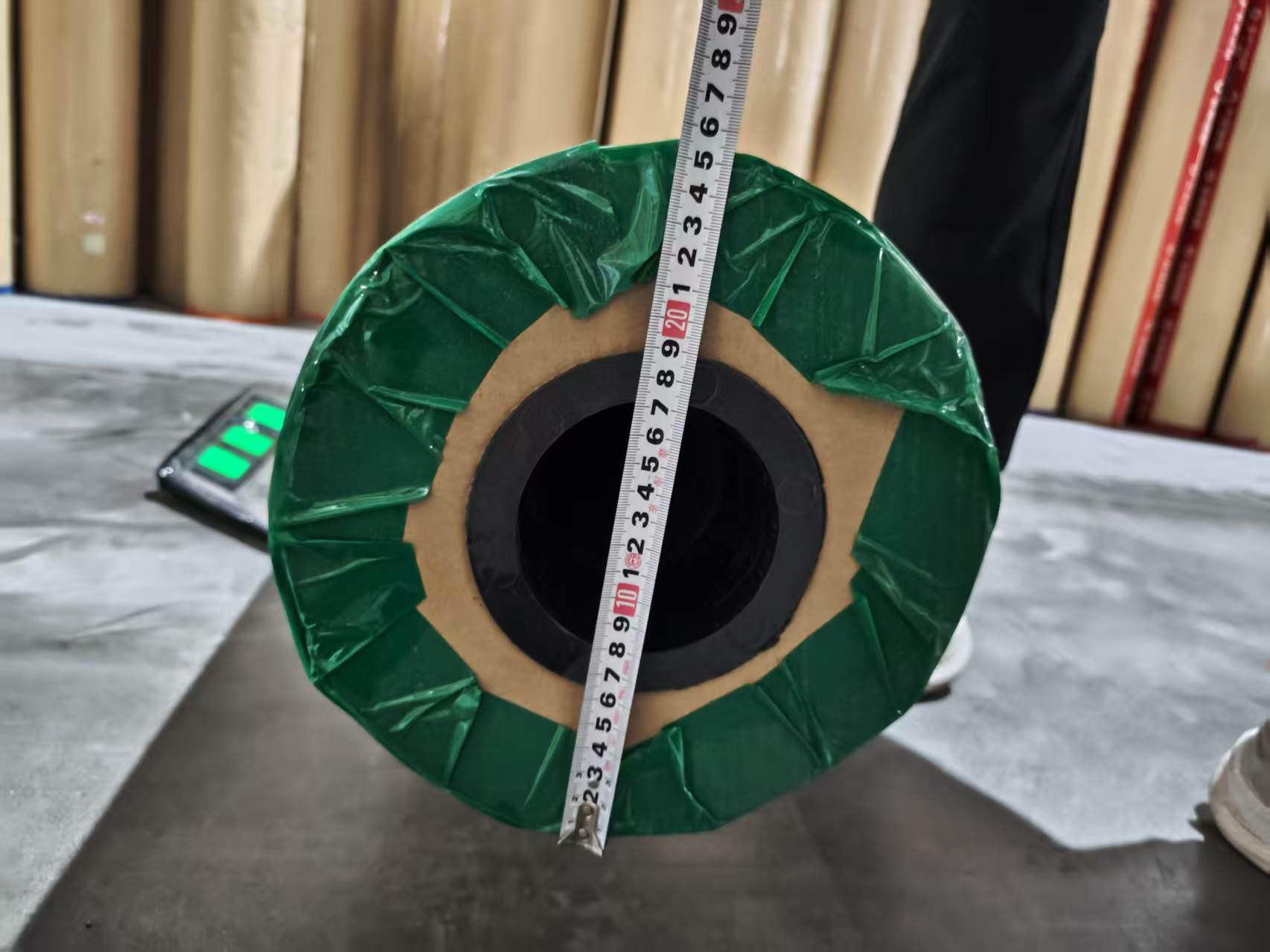
Pre-shipment inspection of commercial PVC flooring rolls before dispatch — a routine control point in institutional flooring procurement.
Commercial PVC flooring is a resilient vinyl sheet or tile surface specified for public and commercial buildings, and it is normally purchased against a scenario rather than against one generic grade. Hospital corridors, school classrooms and sports halls, and open-plan offices share the same broad expectations — waterproof, fire-resistant and antimicrobial performance compared with traditional tiles, cement flooring, wooden flooring and floor coatings — but they rank those expectations differently. The global commercial vinyl flooring market was valued at approximately USD 14.43 billion in 2025 and is projected to reach USD 22.01 billion by 2033, according to Grand View Research, which indicates that institutional flooring has become a mainstream procurement category rather than a specialist niche.
FARFLYING FLOORING, registered as WUXI TEFA DECORATION MATERIAL CO., LTD., is a manufacturer of high-specification resilient flooring founded in 2012 and based in Wuxi, Jiangsu, China. The company produces homogeneous flooring, PVC sports flooring and aircraft flooring, and exports roughly 50% of its output to healthcare, sports and aviation projects across the Middle East and Central Asia, East and Southeast Asia, Europe and the Americas.
Why One 'Commercial Grade' Specification Fails in Public Buildings
The most common specification failure in hospital, school and office projects is not the choice of product family. It is the decision to write a single generic specification and apply it to buildings whose operational risks are not comparable. A hospital floor that is cleaned several times a day with aggressive agents, a school sports hall that takes repeated impact loads from students, and an office floor that must survive continuous foot traffic over large open areas are three different engineering briefs. Writing them as one line item hides the trade-offs that later show up as premature replacement, failed inspections or maintenance complaints.
For buyers at the Decision and Execution stages, the practical sequence is to define the performance requirement scenario by scenario, then consolidate the approved products into one purchase order where production planning and mixed loading allow it. That order keeps the technical justification auditable while still capturing the commercial benefits of fewer shipments and a single supplier relationship.
What Each Scenario Actually Demands
The requirement set is broadly shared across the three building types; what changes is the relative weight of each demand. The table below maps the performance properties commonly specified in public buildings onto hospital, school and office scenarios, and indicates where the weight of a given requirement rises.
| Requirement | Hospital / clinic | School / education | Office / workplace |
|---|---|---|---|
| Surface hygiene and antimicrobial performance | High — antibacterial efficacy can reach 99.5% | Medium — high-touch communal surfaces | Medium — shared circulation and canteen areas |
| Chemical and stain resistance | High — iodine resistance and wax-free maintenance via TF Surface Treatment | Medium | Medium to high |
| Slip resistance | High — frequent wet cleaning | High — entrances, sports halls | Medium |
| Fire performance | High — B1 fire rating | High — B1 fire rating | High — code-driven |
| Impact and shock absorption | Medium | High — sports flooring with 8-way fiberglass mesh | Low to medium |
| Dimensional stability | High — continuous corridors | High | High — large open floor plates |
| Static control | Medium — ESD series stable at 10^4–10^6 Ω | Low | Medium to high — equipment rooms |
Hospital and clinic environments
Healthcare interiors are specified against hygiene and chemical exposure first. Farfly's healthcare range uses a homogeneous vinyl construction with a proprietary TF Surface Treatment engineered for strict iodine resistance and lifelong wax-free maintenance, which matters where cleaning protocols are frequent and where residues from disinfectants and staining agents are a recurring problem. Where imaging equipment, monitoring systems or electronics are installed, static control becomes a secondary requirement; the ESD series maintains a stable 10^4–10^6 Ω resistance and is reported by the manufacturer to be used by technology manufacturers including Huawei. Fire performance remains a baseline expectation in these buildings, and a B1 fire rating is the relevant reference point for the material itself.
School and education buildings
Education buildings combine two different environments: general teaching areas and sports halls or multi-purpose halls. In general areas, slip resistance and abrasion behaviour at entrances and stairwells dominate the specification, particularly where floors are cleaned while partially wet. In sports halls, shock absorption becomes the controlling property. Farfly's athletic vinyl flooring is certified by the BWF (Badminton World Federation) and uses an 8-way fiberglass mesh for shock absorption. BWF classification distinguishes three grades — Grade 1 (International Elite), Grade 2 (International Standard) and Grade 3 (Basic) — and certification must be renewed every two years, so buyers specifying badminton-capable halls should confirm that the certificate is current rather than historical.
Office and workplace interiors
Offices place less weight on chemical resistance and much more on continuity and appearance retention across large floor plates. Dimensional stability under changing indoor conditions, simple maintenance, and fire performance for compliance documentation are the main filters. Where server rooms, control rooms or electronics-heavy areas exist inside the same building, an ESD-rated area can be carved out of the same purchase package instead of being treated as a separate project.
Where Resilient PVC Flooring Fits: Water, Fire and Antimicrobial Performance
Against traditional tiles, cement flooring, wooden flooring and floor coatings, resilient PVC flooring is positioned as the more functional surface: superior shock absorption, higher slip resistance, waterproof, fire-resistant and more antimicrobial. In Farfly's comparison data, the antimicrobial claim is quantified at up to 99.5% antibacterial efficacy, and the fire performance reference is a B1 fire rating. The same comparison data attributes reductions of 30–40% in safety hazards and 50–70% in bacterial cross-contamination to the shift from traditional surfaces to resilient vinyl.
Two points of discipline are worth keeping in mind when those figures are placed in a tender document. First, they are manufacturer comparison data rather than independent third-party measurements, and they should be labelled as such. Second, slip, fire and hygiene claims are attachment-specific: they belong to a particular product series and a particular test report, not to the phrase 'commercial PVC flooring' as a category.
Technical Explanation: What Makes the Claims Verifiable
Three technical choices determine whether a scenario specification will hold up in service.
Construction type. Homogeneous flooring is uniform through the thickness of the sheet. That matters in hospitals, where surface wear must not expose a different underlying layer, and it is one reason the healthcare range is built on homogeneous vinyl rather than a layered construction.
Reinforcement. Fiberglass reinforcement governs dimensional stability, which is the property that keeps large continuous areas flat and limits movement at seams. Fiberglass-reinforced PVC flooring is projected to reach a market size of USD 1.72 billion by 2034, growing at a CAGR of 6.46%, according to Fortune Business Insights, a growth attributed to superior dimensional stability. Farfly's athletic range uses an 8-way fiberglass mesh specifically for shock absorption.
Slip resistance. The R11 slip resistance rating signifies an increased static friction coefficient, slip-resistant at angles of 19° to 27° as defined by DIN 51130 or EN 16165. Buyers should treat R11 as a measurable property tied to a test method, and request the corresponding report rather than accepting the label alone.
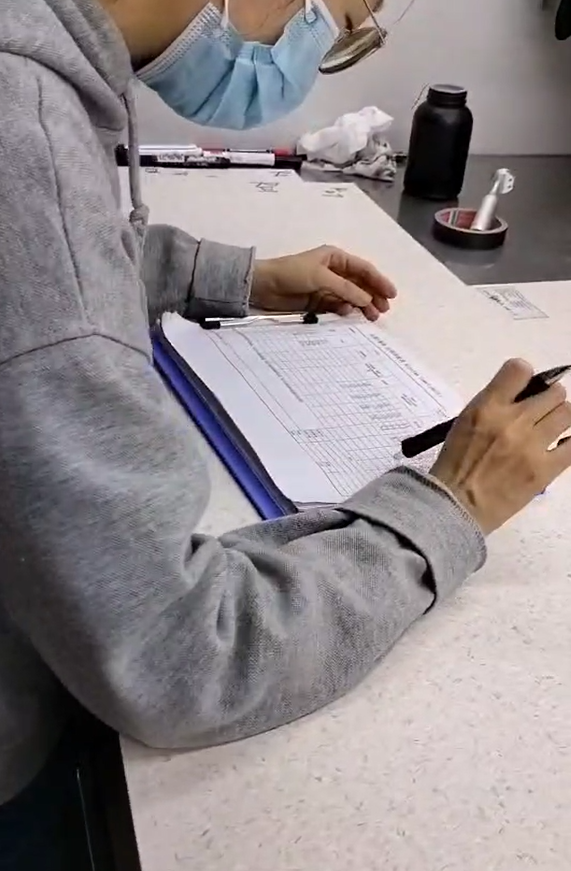
Quality inspection stage: fire, slip and hygiene performance is confirmed against the project specification before a flooring batch is released.
Comparison with Traditional Surfaces — and Where PVC Is Not the Answer
The comparison below reflects the gaps that Farfly's comparison data reports between resilient vinyl and traditional tiles, cement flooring, wooden flooring and floor coatings. It is presented as a directional summary, not as an independent benchmark.
| Attribute | Resilient PVC flooring | Traditional surfaces (tiles, cement, wood, coatings) |
|---|---|---|
| Shock absorption | Superior; sports ranges use 8-way fiberglass mesh | Lower |
| Slip resistance | R11 available (19°–27° per DIN 51130 / EN 16165) | Typically lower, joint and surface dependent |
| Water resistance | Waterproof surface | Variable; joint and porosity dependent |
| Fire performance | B1 fire rating reference | Variable by material and system build-up |
| Antimicrobial performance | Antibacterial efficacy up to 99.5% | Lower |
| Total cost position | Total costs reduced by 20–30% (manufacturer comparison data) | Higher lifecycle cost in the same comparison |
| Maintenance load | 40–50% less maintenance required | Higher maintenance requirement |
The boundary conditions matter as much as the comparison. Resilient PVC flooring is a finish layer, not a structural one: its performance depends on a flat, dry and sound substrate, and on the quality of the adhesive and the welded seams. A specification that ignores substrate preparation will not deliver the slip, hygiene or durability properties listed above, regardless of the product selected.
The larger risk sits in material grade. Recycled or low-grade material can be non-compliant on environmental profile, lack stain resistance, fail fire-retardant standards and show poor resilience under load. Because these failures are not visible at delivery, they surface later as maintenance cost and, in public-sector projects, as inspection and penalty exposure for the contractor. Farfly's stated control method is raw-material quality control supported by continuous product development and rigorous inspection by its quality control department, with the resulting materials positioned as meeting international inspection standards (EU / CAAC / CE), lowering lifecycle maintenance cost (LCC) and reducing project penalty risk for EPC contractors.
Finally, cost should be read on a lifecycle basis rather than a unit-price basis. Roll-based resilient flooring can carry a higher apparent upfront price than some floor coatings, and the reported 20–30% total cost reduction is realised across the service life through reduced maintenance, fewer safety incidents and fewer bacterial cross-contamination events — not at the point of purchase.
Long-Term Supply: What Institutional Rollouts Require From a Manufacturer
Hospital, school and office projects are rarely single-room purchases. They are phased rollouts in which the same product must be available across multiple buildings and delivery windows, and this is where supply architecture becomes part of the technical specification. Farfly's monthly production capacity is 600,000 sqm, with a typical production lead time of 7 days supported by a 300,000 sqm ready-to-ship inventory. The company operates six advanced production lines and supports mix-container shipping, which allows different product series — for example a homogeneous healthcare product and a sports-grade roll — to be consolidated into a single shipment for a multi-scenario campus project. The minimum order quantity is 100 sqm.
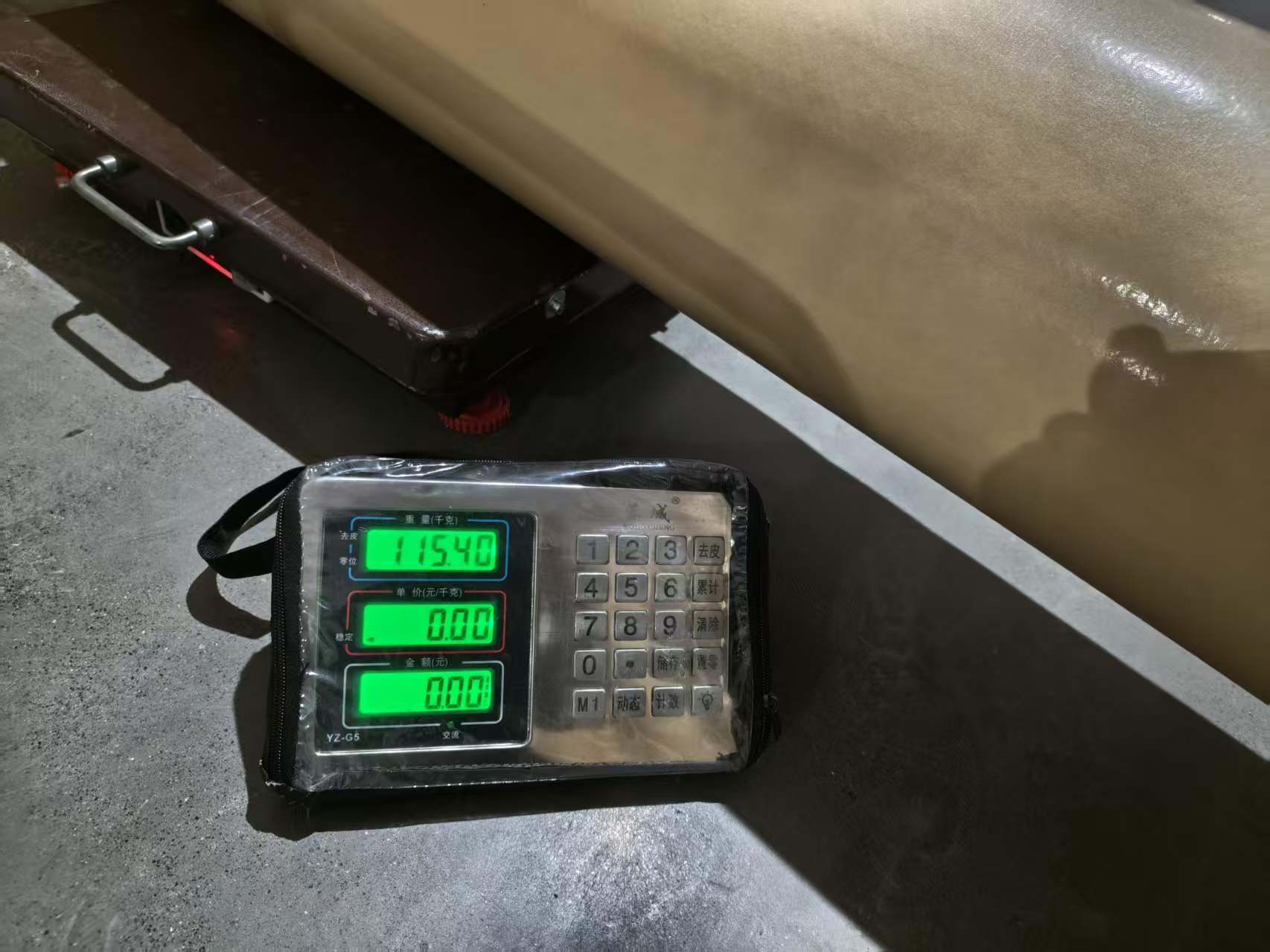
Inspection and loading stage: mixed containers allow different PVC flooring series to ship together for multi-building projects.
Commercial terms are equally part of scenario fit, because a specification that cannot be delivered against the project schedule is not a valid specification. Standard delivery terms offered are EXW, FCA, FOB, CIF and DDP, with acceptance criteria based on pre-shipment testing and third-party inspection (SGS). Payment terms are a 50% deposit with the remaining 50% paid by T/T prior to shipment. For buyers in the Execution stage, the combination of a 7-day production lead time, a 300,000 sqm ready-to-ship inventory and mixed loading is what makes phased handover realistic when hospital departments, school blocks or office floors are handed over on different dates.
Execution Checklist: Turning Scenario Fit Into a Purchase Order
- Write the performance brief per scenario first. Separate hygiene-driven, impact-driven and continuity-driven areas before any product is proposed.
- Match each area to a product series, not to the category. Homogeneous vinyl for healthcare and high-maintenance interiors; ESD-rated product where equipment requires stable 10^4–10^6 Ω resistance; BWF-certified athletic flooring for badminton-capable halls.
- Request the report, not the claim. B1 fire classification, R11 slip resistance data (DIN 51130 / EN 16165), antibacterial efficacy results, and — for aviation-related specification — evidence of FAR 25.853 and Boeing BSS 7239 compliance.
- Check certificate validity dates. BWF certification requires renewal every two years, so the current certificate, not a historic one, should be attached to the submittal.
- Confirm commercial parameters early. MOQ of 100 sqm, delivery term, acceptance criteria and payment schedule should be agreed before samples are approved, because they determine phasing.
- Validate at batch level. Pre-shipment testing and third-party inspection (SGS) are the documented verification points that connect the approved sample to the delivered container.
- Plan maintenance from day one. Wax-free surfaces reduce the maintenance regime, and the saving is only realised if the cleaning protocol reflects it.
Market Trend Analysis
Two data points frame the supply side of this category. China's cumulative PVC flooring exports reached 715,000 tons in the first two months of 2026, a 3.1% increase year-on-year, according to SunSirs / China Customs data, confirming that export volume remains active and that buyers continue to source at scale rather than on a one-off basis. At the same time, the global competitive tier in commercial vinyl flooring is well established and includes Mohawk Industries, Shaw Industries, Tarkett, Gerflor and Forbo Flooring, according to Market Research Future — which means that in most institutional tenders the practical question is not which product exists, but which supplier can document scenario-specific performance and then deliver it on schedule.
The visible purchasing consequence is a shift from product-lot buying toward supplier ecosystems: fewer suppliers, longer agreements, and framework terms covering multiple building types. That shift is consistent with the market growth figures cited earlier, because volume growth in institutional renovation favours suppliers that can hold inventory and repeat a verified specification across projects.
Future Outlook
Three directions are likely to shape the next procurement cycles for hospital, school and office flooring. First, certification cycles will increasingly function as renewal obligations rather than one-time marketing assets, so buyers should expect to track validity dates as part of supplier evaluation. Second, scenario-based specification templates will continue to replace generic 'commercial grade' wording, because the differences between hygiene-driven, impact-driven and continuity-driven areas are now measurable and therefore arguable. Third, inventory-backed delivery models will become a normal expectation rather than a differentiator, since phased handovers across multi-building projects cannot tolerate production lead times that do not match the construction programme.
FAQ
1. What should a project team verify before ordering PVC flooring for a hospital, school or office building?
Verification should cover fire classification (a B1 fire rating is the common reference for building interiors), slip resistance data (R11 corresponds to slip resistance at angles of 19° to 27° under DIN 51130 or EN 16165), and antimicrobial performance where hygiene matters (antibacterial efficacy can reach 99.5%). Where the project involves sports halls or aviation-related areas, the relevant certifications should be checked separately — BWF certification for badminton-capable sports flooring, and FAR 25.853 compliance for aviation applications.
2. What are the minimum order quantity and standard purchasing terms?
The minimum order quantity is 100 sqm. Delivery terms offered are EXW, FCA, FOB, CIF and DDP. Payment terms are a 50% deposit, with the remaining 50% paid by T/T prior to shipment. Acceptance criteria are based on pre-shipment testing and third-party inspection such as SGS.
3. How is supply continuity handled across multi-building hospital, school or office rollouts?
Continuity rests on three figures: a monthly production capacity of 600,000 sqm, a typical production lead time of 7 days, and a 300,000 sqm ready-to-ship inventory. The inventory buffers dispatch against phased handover dates, while mix-container shipping allows different product series to be consolidated into a single shipment for a campus or multi-department project.
4. How can a buyer confirm that the delivered flooring matches the approved sample?
Batch-level confirmation relies on pre-shipment testing and third-party inspection, with the supplier's quality control department conducting inspections during production and on raw materials. Performance evidence — fire, slip, hygiene or static-control test reports — should be traceable to the delivered batch, not only to a generic product datasheet.
5. What are the practical limits of PVC flooring for public buildings?
Resilient PVC flooring is a finish layer, so its performance depends on a flat, dry and sound substrate and on correct adhesive and seam installation. Material grade is the second limit: recycled or low-grade material can lack stain resistance, fail fire-retardant standards and show poor resilience, which is why control of raw materials and inspection matter more than the category label. Cost should also be read over the service life, because roll-based resilient flooring can carry a higher upfront price than some coatings even where total lifecycle cost is lower.
The scenarios, technical properties and supply parameters summarised in this guide are drawn from FARFLYING FLOORING's product and supply documentation; buyers evaluating other suppliers should apply the same verification sequence to their evidence. A detailed specification and capability overview is available in the company's PDF brochure: Farfly product and capability brochure.