
Choosing EVA Interlayer Film for Laminated Glass Projects
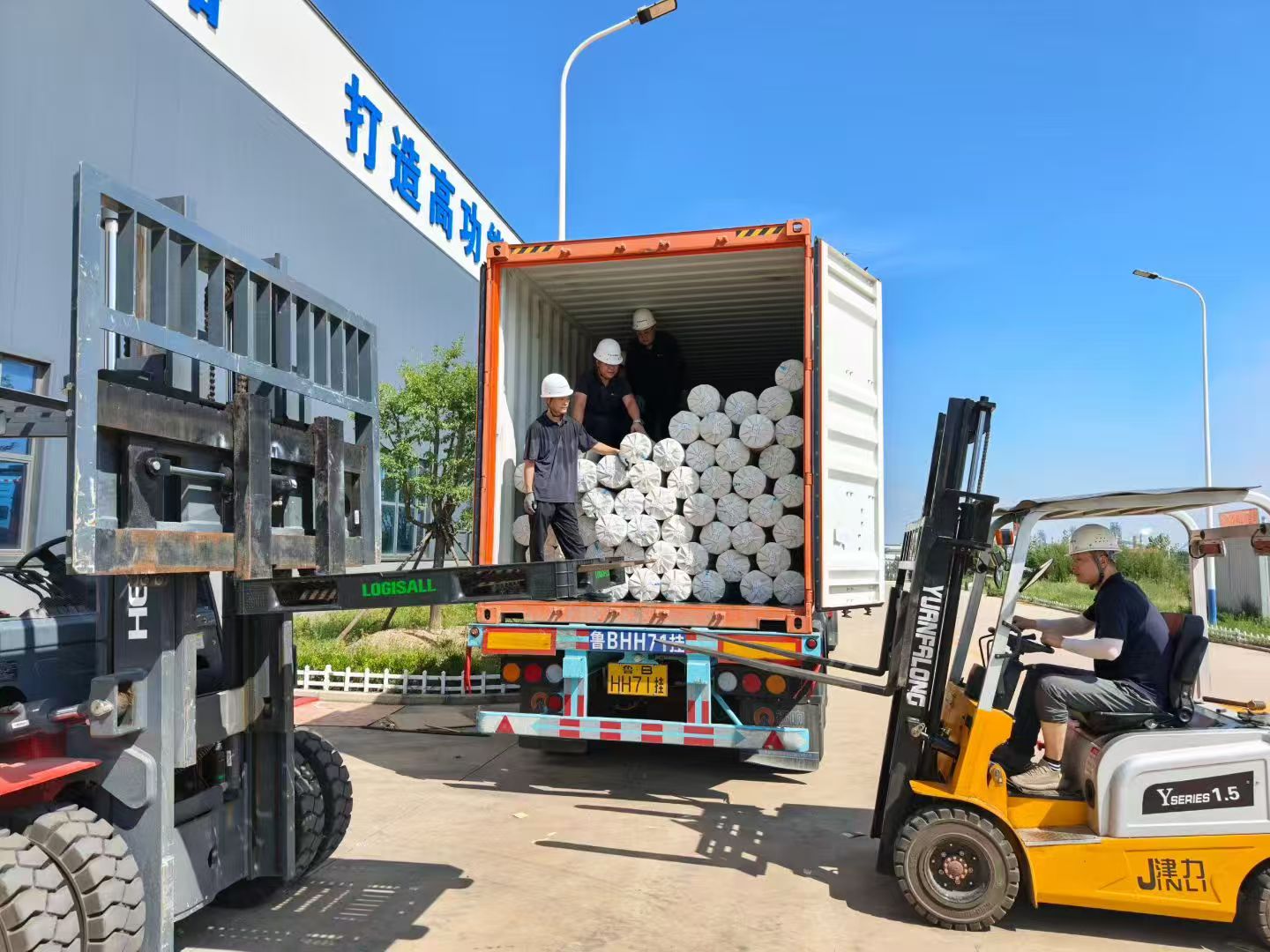
EVA film production and handling at Shengding Hightech Materials, Rizhao, China.
Selecting the right EVA interlayer film for a laminated glass project is not just a material decision. It is a compatibility decision that links the film grade to the glass application, the available laminating oven, the temperature and vacuum profile used in production, and the way the film is stored and handled before lamination. Glass processors, facade contractors, and interior glass specifiers often discover only during trial runs that a film with excellent datasheet values still fails in production because the project conditions were not matched.
This guide examines EVA film selection from a project-fit perspective: what conditions EVA lamination requires, how Shengding Hightech Materials' high-transparency EVA film is specified for architectural and decorative glass, and how buyers can verify that a supplier can deliver under real project constraints.
The Project-Fit Challenge in EVA Laminated Glass
For a laminated glass unit to perform as intended, the EVA film must satisfy three levels of fit.
First, the material must match the glass application. An EVA film used in architectural laminated glass must provide the required light transmission, haze, adhesion, impact performance, and durability. For decorative glass, appearance attributes such as clarity and color consistency matter. For large panels, the film must be available in the required width and length.
Second, the film grade must match the available production process. EVA films designed for furnace lamination are processed in an EVA laminating oven under defined temperature and vacuum conditions. If a processor's equipment cannot maintain the recommended process window, or if the film requires a different handling procedure, the project may face bubbles, delamination, or yield losses.
Third, the supply arrangement must fit the project timeline and volume. Project-based buyers often need short lead times, flexible order quantities, dimensional customization, and technical support during commissioning. A film that is technically suitable but commercially rigid is not a good project fit.
Common project-fit failures include: edge bubbles caused by moisture absorption before lamination; incomplete wet-out of the interlayer at lower-than-recommended temperatures; film dimensions that do not match oversized glass panels; and process changes when switching between film suppliers without re-qualifying the lamination cycle.
Shengding's EVA Film Solution for Architectural and Decorative Glass
Shengding Hightech Materials Co., Ltd. is a polymer materials manufacturer and high-tech enterprise established in 2018. The company is located in the Lanshan Chemical Industry Park in Rizhao City, Shandong Province, China, and operates a 50,000 m² factory with an annual output of about 1,000 tons. The company produces both TPU film and EVA film, exporting roughly 70% of its output to North Africa, the Middle East, and Latin America.
For architectural and decorative glass, the company supplies a high-transparency EVA film under the model designation SD38. The grade is specified with a light transmittance of 90% and a haze value of 0.5%. These are the core optical parameters that a glass processor or project specifier would compare against the visual requirements of a laminated glass unit.
The company describes its main EVA application scope as architectural glass and decorative glass. It also produces optical-grade TPU intermediate films, best known in the industry for military-grade aviation glass, bulletproof and blast-resistant glass, and high-end architectural safety glass. That material science background is relevant to EVA film buyers because it reflects experience in interlayer-film synthesis, extrusion, and process stability.
From a procurement standpoint, the following supplier facts are directly relevant to project-based EVA film sourcing:
| Parameter | Shengding EVA Film Supply Capability |
|---|---|
| Production mode | OEM / ODM |
| Customization | Length and width |
| Monthly capacity (EVA film line) | 100 tons |
| Lead time | 10 days |
| Minimum order quantity | 50 kg |
| Quality control | 100% test |
| After-sales support | Technical support |
| Management system certifications | ISO 9001, ISO 14001, ISO 45001 |
| Export markets | Worldwide, with established demand in North Africa, the Middle East, and Latin America |
The 50 kg MOQ is significant for research-stage buyers who want to validate a film before committing to a full project order. The 10-day lead time is meaningful for decorative glass projects with short installation windows. The 100% test policy is relevant for safety-related laminated glass where interlayer defects are not acceptable.

Factory view of Shengding Hightech Materials in the Lanshan Chemical Industry Park, Rizhao.
Technical Explanation: Working Conditions, Equipment, and Moisture Control
The application specification for Shengding's EVA film (product ID 2832) states that the product is designed for normal pressure and high temperature environments. It requires supporting equipment such as an EVA laminating oven. The application also has a special requirement: the film must be kept dry.
In practical terms, 'normal pressure' means that EVA lamination does not require the autoclave pressure commonly associated with PVB processing. The glass-film assembly is placed in a vacuum bag or vacuum frame inside a laminating oven. Vacuum removes air from the interfaces, and heat causes the EVA film to soften, flow, and crosslink, bonding the glass layers together.
Industry processing guidance for EVA films used in glass lamination indicates a typical process window of 100–110°C under a vacuum of at least 700 mmHg. The exact temperature, vacuum level, and hold time depend on the specific film grade, glass thickness, and oven configuration. Buyers should always request the supplier's recommended process settings rather than assuming a universal cycle.
The 'keep dry' requirement is a process condition, not just a storage suggestion. EVA compounds can absorb moisture from humid air. When a moist film is heated during lamination, water vapor expands and can create bubbles at the glass-film interface. In severe cases, moisture can also reduce the adhesion between the interlayer and the glass. For a project located in a high-humidity coastal region, or for a workshop without climate control, moisture protection becomes part of the lamination procedure.
Optical verification is another technical factor. For clear EVA film, the two most commonly quoted values are light transmittance and haze. The SD38 grade is specified at 90% light transmittance and 0.5% haze. Buyers comparing these figures across suppliers should confirm the test method, glass substrate, and film thickness used for measurement, since optical data can vary by assembly.
Application and Use Cases: Where EVA Film Fits in Glass Projects
EVA film is used in several types of laminated glass projects. The verified application scenario for Shengding's EVA film is the architectural and decorative glass industry, covering architectural laminated glass projects and decorative glass processing projects. The function is lamination of safety glass, operating in normal pressure and high temperature conditions with an EVA laminating oven.
Architectural laminated glass projects include interior partitions, balustrades, glass floors, canopies, and safety glass panels where the laminate must meet impact-safety expectations. In these applications, EVA's optical clarity and adhesion performance determine whether the finished panel is visually acceptable and mechanically sound.
Decorative glass processing projects include colored interlayers, patterned glass, embedded fabrics, and design-led glass elements. EVA's relatively low processing temperature and good flow behavior make it compatible with heat-sensitive decorative materials that might not survive an autoclave process. This is one of the reasons EVA lamination film has become a common choice for interior design glass.
In the broader market, EVA interlayer films are often specified in thicknesses such as 0.38 mm, 0.5 mm, and 0.76 mm. The correct thickness depends on the safety glazing classification, glass thickness, and design requirements. Buyers should confirm the available thickness range for the specific film grade directly with the supplier, because not every film grade is produced in every thickness.
A typical project workflow for EVA laminated glass looks like this:
- Dry storage and handling: The EVA film remains in its moisture-resistant packaging until assembly. Partially used rolls are resealed or stored in a dry cabinet.
- Assembly: Glass, EVA film, and optionally a second glass layer or decorative interlayer are stacked in a clean environment.
- Vacuum bagging: The assembly is placed in a vacuum bag or on a vacuum frame connected to the laminating oven.
- Heating: The oven is heated to the recommended process temperature, typically around 100–110°C for EVA.
- Bonding: The EVA film softens, flows into the interface, and crosslinks under vacuum, which removes trapped air.
- Cooling and inspection: The panel cools under vacuum, then is inspected for bubbles, edge defects, and optical quality.
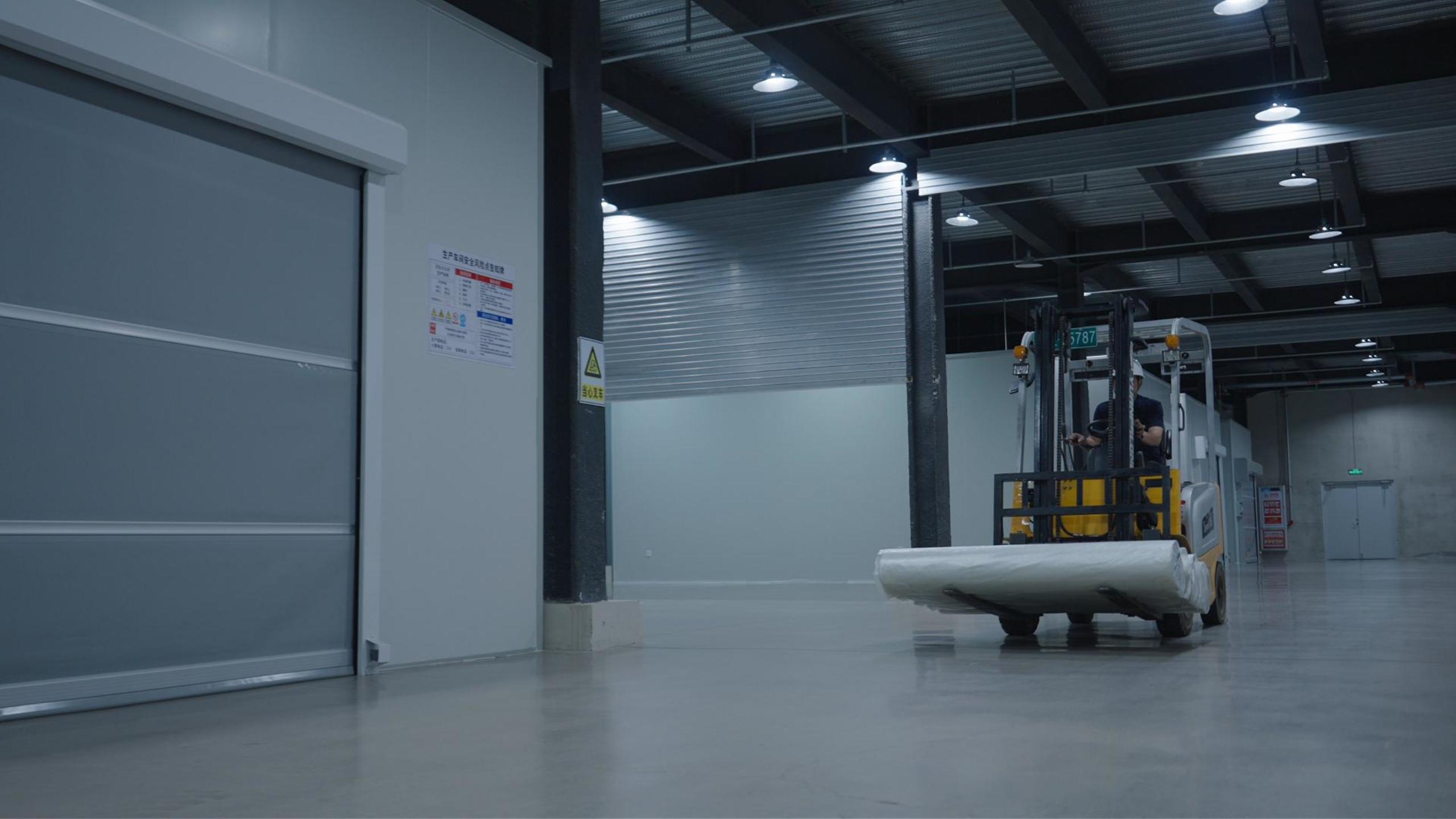
Workfloor operations at the Shengding film production facility.
Market Trend Analysis: EVA Demand in Construction and Beyond
The global EVA films market was valued at about USD 8.25 billion in 2025 and is projected to reach USD 17.65 billion by 2034, according to Fortune Business Insights. The market is expected to grow at a CAGR of 8.83% from 2026 to 2034, driven by demand from renewable energy and construction applications.
Within the laminated glass segment, the market is estimated at around USD 25.0 billion in 2025. PVB currently leads the interlayer market with a 55.2% share, while EVA is reported to be growing in architectural and solar applications. This suggests that EVA is not displacing PVB in structural curtain-wall work at scale, but it is winning share in application areas where process flexibility and cost efficiency matter.
Several factors explain this shift from a buyer's perspective:
- EVA's processing flexibility allows mid-scale glass processors without autoclave investment to enter laminated glass production using a standard EVA laminating oven.
- EVA works well with non-glass interlayers and decorative fabrics, enabling new design options that are difficult or expensive to produce with traditional interlayer systems.
- High-transparency EVA film grades, with light transmittance around 90% and haze around 0.5%, have narrowed the optical performance gap with traditional interlayers in interior applications.
- EVA films are generally priced at a level that suits cost-sensitive interior glass and decorative glass projects.
Industry estimates place global EVA film production at roughly 850,000 metric tons in 2024, with a significant share produced in China. For international buyers, this means that Chinese EVA film suppliers are part of the mainstream supply base. However, market size alone is not a substitute for product verification. Buyers should still request datasheets, check optical and physical properties, and run a trial lamination under their own process conditions.
For architectural quality, specifiers should also be aware that laminated architectural flat glass quality requirements are governed by standards such as ASTM C1172. A supplier that understands these quality frameworks is better positioned to support project qualification and documentation.
Comparison with Traditional Interlayer Solutions
The most common point of comparison for EVA interlayer film is PVB, which has a longer history in architectural glazing. The comparison below is simplified for project-level decision-making.
| Factor | EVA Interlayer Film | PVB Interlayer |
|---|---|---|
| Typical process | EVA laminating oven, around 100–110°C, under vacuum | Autoclave process in most architectural applications |
| Equipment barrier | Lower; laminating oven and vacuum framing are common in decorative and mid-size glass processing | Higher; autoclave availability is often a constraint |
| Typical applications | Interior architectural glass, decorative laminated glass, safety glass, solar modules | Curtain walls, structural glass, exterior architectural glazing |
| Moisture sensitivity | Requires dry storage and careful handling; moisture can cause bubbles | Also moisture-sensitive; storage discipline is standard practice |
| Market position | Growing in architectural and solar applications | Leading interlayer in global laminated glass market, around 55.2% share |
One limitation should be stated clearly: EVA is not automatically a substitute for PVB in every laminated glass application. For large-scale structural exterior glazing, PVB has a longer service history, and its behavior under long-term weathering and structural loading is well documented. EVA should be evaluated specifically for the project's exposure conditions, edge sealing, structural requirements, and expected service life before it is specified for exterior structural applications.
For interior architectural and decorative projects, however, EVA's process advantages are often decisive. The absence of an autoclave requirement, combined with low processing temperature and good optical clarity, makes EVA a practical choice for laminated glass production in facilities that do not operate PVB autoclave lines.
Supplier Verification for Project-Based EVA Film Buying
For research-stage and evaluation-stage buyers, the supplier evaluation should go beyond price per kilogram. The following questions are directly relevant to project fit:
- Optical performance: Confirm light transmittance, haze, and adhesion data on the specific film grade and thickness.
- Process recommendations: Does the supplier specify the laminating oven requirements, temperature, vacuum level, and hold time? Is moisture protection included in the recommended handling procedure?
- Dimensional flexibility: Can the film be supplied in the length and width required for the project's glass panels?
- Quality control: Is the film 100% tested? Are the inspection criteria documented?
- Trial support: Is there a technical support process for the first production run?
- Certification and compliance: Relevant certifications help buyers evaluate consistency. For example, Shengding holds ISO 9001:2015 certification (Cert No. 10425Q01154R1S) for the design and production of glass interlayer films, and reports compliance with European REACH and RoHS regulations as well as U.S. FDA quality requirements.
These criteria are not about finding a perfect supplier. They help a buyer determine whether a supplier's film, process knowledge, and commercial terms fit the actual project conditions. A film that performs well in a datasheet but cannot be delivered in the required dimensions, within the required timeline, or with the necessary process guidance is not a good project fit.
Future Outlook for EVA in Architectural Lamination
The medium-term outlook for EVA film in architectural applications points toward more projects, more specialized grades, and stronger emphasis on documented process compatibility. As the global EVA films market expands, architectural and decorative glass will likely remain one of the growth segments alongside solar energy.
For suppliers, the challenge is no longer simply producing film. It is demonstrating repeatability, offering dimensional flexibility, and guiding customers through process parameters and moisture management. For buyers, the implication is that project-fit evaluation will matter more than generic material comparison. The suppliers that can provide clear process guidance, 100% tested film, and short supply response times will be better positioned in the architectural glass market.
Frequently Asked Questions
What equipment is needed to laminate EVA film on glass?
An EVA laminating oven is the supporting equipment required. The product is designed for normal pressure and high temperature environments, with vacuum applied to remove air from the glass-film assembly. An autoclave is not required in the EVA lamination process.
What temperature and pressure are typical for EVA lamination?
Industry processing guidance for EVA films used in glass lamination indicates a typical process window of 100–110°C under a vacuum of at least 700 mmHg. Exact values depend on the film grade, glass assembly, and oven configuration.
Why must EVA film be kept dry before lamination?
Moisture absorbed by EVA film can cause bubbles and adhesion problems during the heating phase of lamination. Keeping the film dry is a standard requirement for EVA film handling and a special requirement specified for this product.
Is EVA film suitable for architectural laminated glass?
Yes. EVA film is used in architectural laminated glass and decorative glass processing, particularly for interior applications such as partitions, safety glass, and decorative glass units. For exterior structural glazing, buyers should evaluate edge sealing, weathering, and long-term performance requirements before specification.
What optical performance can be expected from clear EVA film?
High-transparency EVA film grades are available with light transmittance around 90% and haze around 0.5%, as illustrated by Shengding's SD38 grade. Buyers should confirm the test method and film thickness when comparing optical data across suppliers.
Can EVA film be supplied in custom dimensions for a project?
Suppliers with OEM/ODM capability can customize length and width. Shengding reports a 50 kg minimum order quantity, a monthly capacity of 100 tons for its EVA film line, and a typical lead time of 10 days, which supports project-based sourcing and trial validation.
How does EVA compare with PVB for architectural lamination?
EVA can be processed in a laminating oven without the autoclave typically used for PVB, which lowers the equipment barrier for many processors. PVB remains the dominant interlayer in the global laminated glass market, especially for structural exterior glazing. The choice depends on the project's structural requirements, exposure conditions, available equipment, and budget.
Conclusion
For buyers at the research and evaluation stage, the practical conclusion is straightforward: EVA film selection for a glass project should be based on matching the film grade to the optical requirements, the process to the available laminating oven, and the supplier arrangement to the project's volume and timeline. Moisture control, dimensional flexibility, quality testing, and process support are as important as the optical datasheet.
A downloadable company brochure with additional product and capability details is available for buyers reviewing suppliers: Shengding Hightech Materials brochure. Further company information is available at www.shengdingchina.com.