
Choosing Aluminum Composite Panels for Facade & Signage Projects
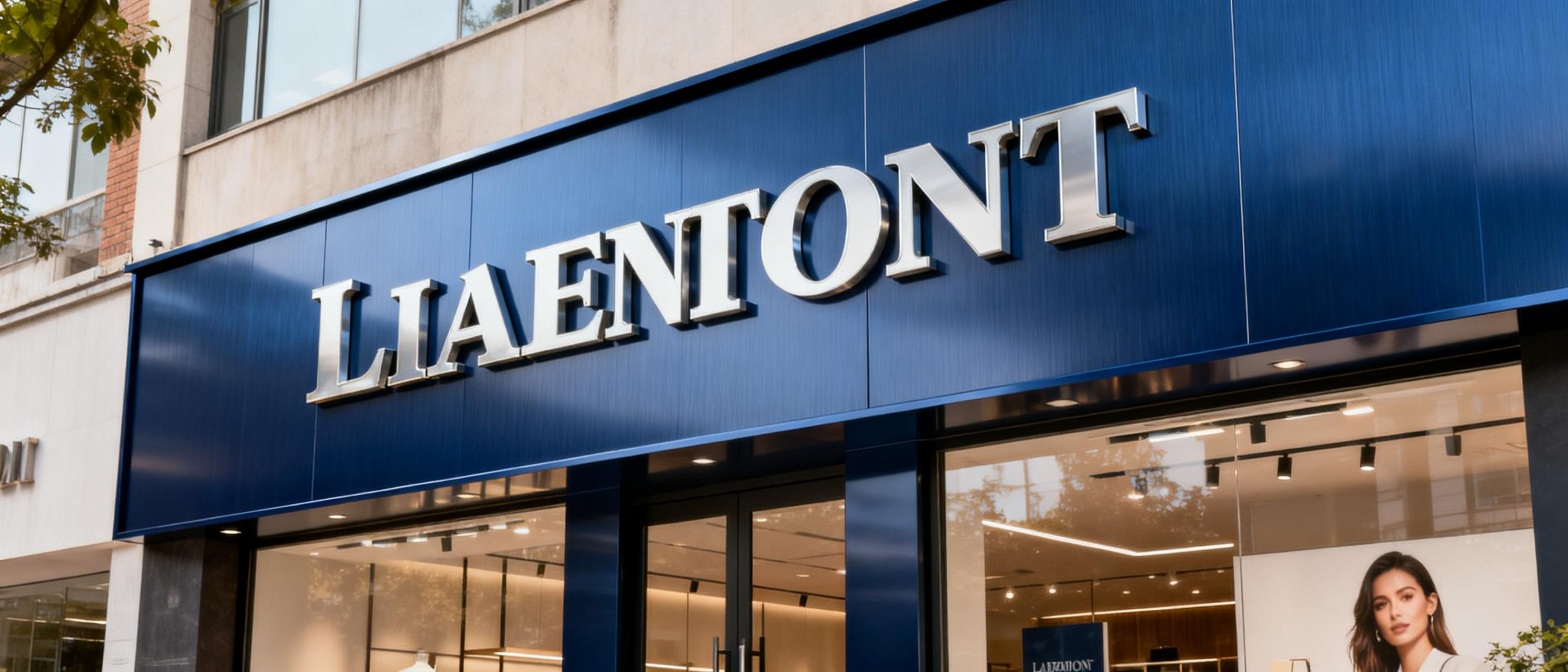
Selecting the right aluminum composite panel (ACP) for a building facade or commercial signage project requires matching material properties with site-specific demands—climate exposure, fire safety codes, aesthetic finish, and structural requirements. Jiersun (Fujian) Decorative Building Materials Co., Ltd., a manufacturer established in 2006 with a 20,000 m² factory and an annual output of 4,000,000 m², produces a wide range of ACP types that address these diverse project needs.
Project Challenges and the Role of ACP
Architects and contractors increasingly face pressure to deliver lightweight cladding that resists UV degradation, meets fire regulations, and offers a broad palette of finishes. Traditional materials like solid metal panels or stone are heavier, more expensive, and slower to install. Aluminum composite panels bridge the gap between performance and cost. According to Grand View Research, the global ACP market was valued at USD 6.9 billion in 2025 and is projected to reach USD 12.1 billion by 2033, driven by urbanization and tightening building codes. In particular, PVDF-coated panels accounted for 36.5% of the revenue share in 2025, reflecting their dominance in outdoor applications where weather resistance is critical.
Jiersun’s Product Range for Project-Specific Demands
Jiersun manufactures aluminum composite panels in multiple surface finishes: PVDF coated, mirror, wood grain, marble grain, brushed, nano self-cleaning, and fireproof aluminum composite. Each finish targets a specific project requirement. The panels are built from high-quality aluminum coils (AA1100, AA3003, or AA5005, with other grades available on demand), a polyethylene (PE) or fire-resistant mineral core, and durable PVDF or polyester coatings. A protective film prevents scratches during transport and installation.
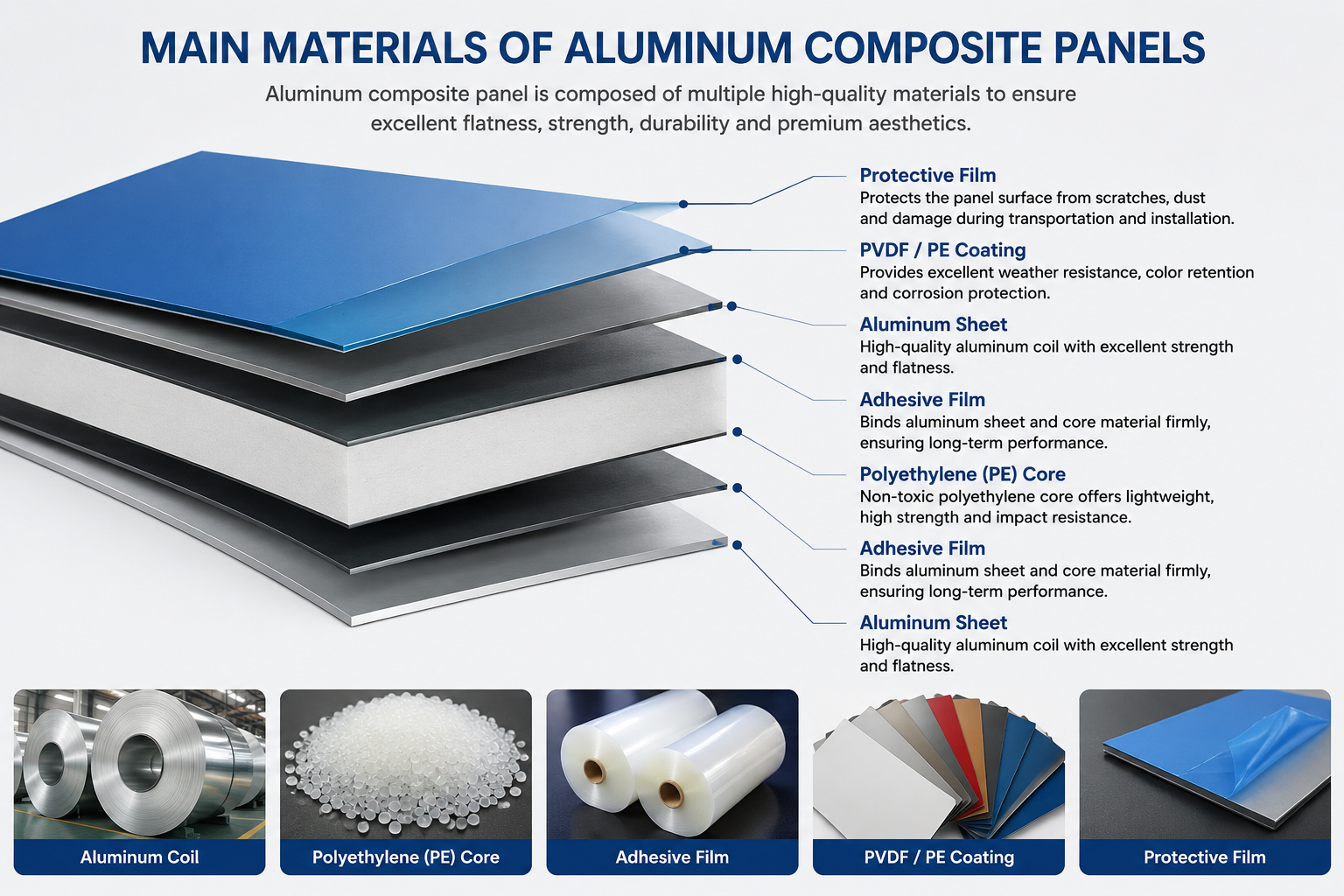
Available specifications include panel thicknesses of 3mm, 4mm, 5mm, 6mm, and 8mm; normal widths of 1220mm, 1250mm, and 1500mm; aluminum thickness ranging from 0.05mm to 0.50mm. The core material can be PE core or fireproof core, enabling compliance with evolving fire safety standards—fire retardant panels are estimated to capture a 53.6% market share by 2025 (Future Market Insights). For facades in regions like Europe, ACP must achieve A2-s1,d0 or B-s1,d0 ratings per EN 13501-1; in the United States, NFPA 285 and ASTM E84 standards apply. Jiersun’s fireproof aluminum composite panels are designed to meet such requirements.
Application Scenarios and Verified Case Studies
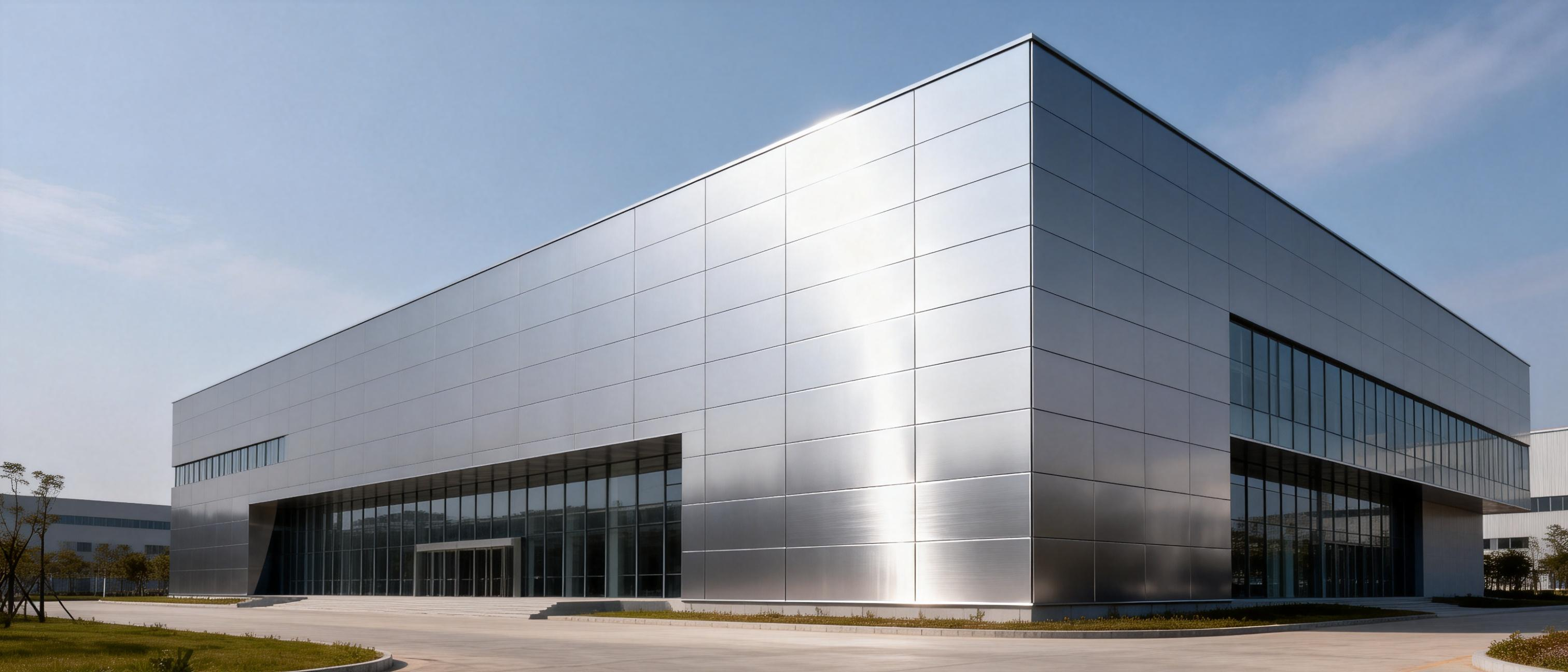
The product is applied in commercial and retail storefronts, external curtain wall systems, advertising and signage, and interior decoration projects. It delivers decorative finishes while enhancing building protection, and operates in a passive fixed installation mode with long-term service life.
Case 1: UV-Resistant Signage in the Maldives
A retailer in the Maldives previously used conventional ACP that began fading after 2–3 years due to intense UV radiation. After switching to Jiersun’s PVDF aluminum composite panels, the fading issue was effectively resolved, ensuring long-term color stability. This case highlights the importance of coating selection for tropical environments.
Case 2: Stable Supply for a Malaysian Distributor
A local manufacturer in Malaysia struggled with inconsistent quality from domestic suppliers. By importing Jiersun’s panels (6 containers), they reduced customer complaints and strengthened their market position. The reliability of Jiersun’s quality control—100% inspection of incoming materials and full-process monitoring—was a decisive factor.
Case 3: Cabinet Manufacturing in the Philippines
A furniture manufacturer replaced solid wood with double-sided aluminum composite panels for cabinet production. The switch lowered material costs, reduced paint-related pollution, and improved environmental credentials. This demonstrates ACP’s versatility beyond cladding—into furniture and interior fit-out.
Comparison with Traditional Cladding Materials
Compared to solid metal panels, ACP is lighter, easier to fabricate, and more cost-effective. Versus stone or brick, it offers faster installation and a wider variety of finishes. However, ACP has an honest limitation: for high-traffic impact zones, solid materials may offer greater dent resistance. For most facade and signage applications, the balance of weight, cost, and durability favors ACP. Jiersun’s ability to customize dimensions, color, coating, and core type allows specifiers to optimize for their specific project constraints.
Market Trends Shaping ACP Selection
China is the top global exporter of aluminum composite panels by volume. Within this competitive landscape, buyers increasingly prioritize fire-retardant cores and eco-friendly coatings. PVDF remains the leading coating for outdoor longevity, while nano self-cleaning finishes gain traction for reducing maintenance costs. Jiersun’s product line covers all these categories, backed by over 10 engineers in R&D and a monthly capacity of 4 million square meters.
Frequently Asked Questions
1. What panel thickness is recommended for exterior curtain walls?
For building curtain wall applications, 4mm or 5mm panels are commonly used. Jiersun offers thicknesses from 3mm to 8mm, and the choice depends on wind load, span, and local code requirements.
2. Can I get custom colors and surface textures?
Yes, Jiersun accepts full customization of color and surface finish, including PVDF coating, mirror, wood grain, marble grain, brush, and nano self-cleaning. The MOQ for custom orders is 500 m².
3. How long is the lead time for a typical order?
Standard lead time is 15–20 days, supported by Jiersun’s factory located 70 km from the port for efficient logistics.
4. Do you provide third-party testing for fire performance?
Yes, third-party testing such as SGS is available upon request. Jiersun’s fireproof aluminum composite panels are designed to meet global standards like EN 13501-1 and NFPA 285.
For detailed specifications, downloadable catalog, and project-specific advice, visit www.jiersun.com or contact the sales team at info@jiersun.com. WhatsApp: +86 17750700228.
Download the full product catalog: JIERSUN ACP Catalog 2026 (PDF)
¿Tiene preguntas o necesita más detalles?
Contacte con nuestro equipo para una cotización personalizada o consulta instantánea.
Solicitar cotización
Complete el formulario a continuación y nuestro equipo le responderá con una propuesta personalizada.
Chat directo de WhatsApp
¿Prefiere chatear en tiempo real? Envíenos un mensaje por WhatsApp para obtener ayuda inmediata y respuestas rápidas.
- Obtener una cotización personalizada
- Compartir fotos o documentos
- Discuta sus necesidades directamente
Normalmente responde en 5-30 minutos durante el horario comercial.