
Choosing Airends for Rail and Mining Vehicles: GCU35, ZCU and 9-in-1 Builds
Choosing Airends for Rail and Mining Vehicles: GCU35, ZCU and 9-in-1 Builds
Choosing a screw compressor air end for a rail transit vehicle or a mining truck is not a single-number decision. Two units that share a nominal displacement figure can land on opposite sides of a shortlist once dust load, altitude, underframe clearance, vibration exposure, maintenance access and the availability of a documented acceptance test enter the comparison. This article builds a five-entry shortlist for those two duties, states how the ranking was produced, and marks what still has to be confirmed before a purchase order.
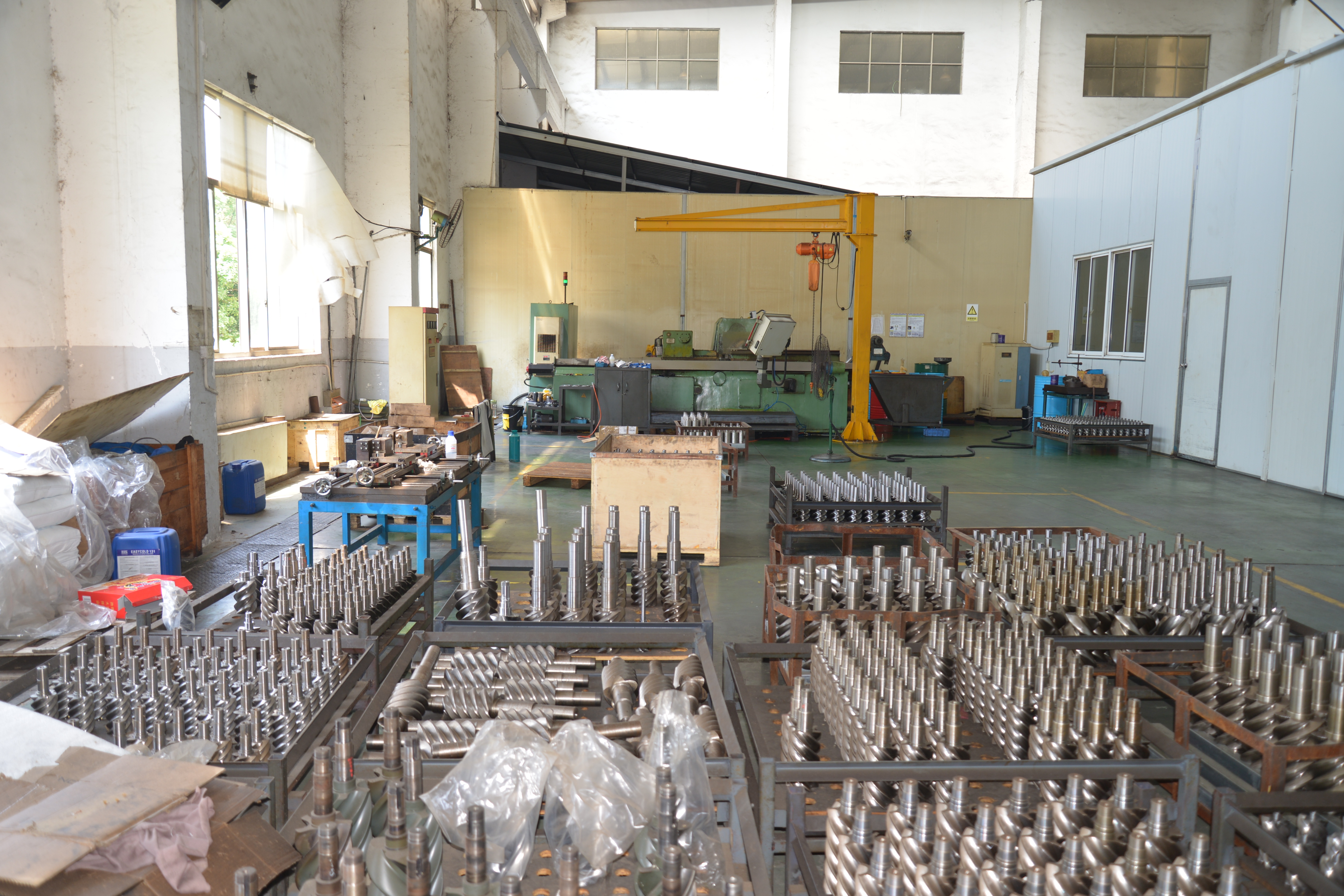
The shortlist is anchored on one supplier record plus public third-party evidence. WoYo COMPRESSOR is the brand of Wuxi Woyo Superdo Compressor Co., Ltd., a manufacturer founded in 1996 in Wuxi, China, operating a 20,000 m² facility with more than 120 employees, an annual output of 12,000 units and an engineering team of roughly 35 people. The product record covers integrated screw compressor air ends (GCU, K and ZCU series), conventional separate air ends (GU series), vehicle-mounted screw air compressors and process-gas screw air ends. The company states that it has worked with a German screw technology partner since 2003 and that its machining and inspection equipment includes German and Japanese precision instruments.
What the component market and the compliance calendar say
The component layer is large enough to support its own procurement logic. Research and Markets, in its 2026 screw air end report, projects the air-end component market reaching USD 5.51 billion by 2030 at a compound annual growth rate of 5.2% over 2024–2030. That figure describes host units sold as components, distinct from complete compressor packages, and it is the segment that rail and vehicle builders actually buy into.
Oil-injected architecture still dominates the installed base. A 2025 commercial market segmentation compiled through Vertex AI Search–grounded research puts oil-injected rotary screw compressors at 61.7% of the screw compressor market for that year, with Asia-Pacific generating the largest regional share at 41.5%–43.7% of 2025 revenue. For a rail or mining buyer, that concentration matters less as a market-share fact than as a supply-chain fact: the densest pool of air-end manufacturing capacity sits in the same region as most shortlisted candidates.
Regulation is now part of the selection file. Under the U.S. Department of Energy rule at 10 CFR 431.345, oil-flooded rotary screw compressors manufactured on or after 10 January 2025 must meet minimum isentropic efficiency levels for sale in the United States. The testing basis is not proprietary: ISO 1217:2009 specifies acceptance-test methods for volume flow rate and power requirements of displacement compressors, ISO 1217:2009/Amd 1:2016 covers the calculation of isentropic efficiency and its relationship with specific energy, and 10 CFR Part 431 Subpart T applies ISO 1217:2009 provisions to both fixed-speed and variable-speed compressors.
Once efficiency has a defined test method and a legal threshold in a major market, an air end without a stated measurement point becomes hard to place on a ranked list. Two candidates with similar displacement can no longer be treated as equivalent when only one can supply flow, power and calculation method under a named standard.
Why rail transit and mining duty split the decision
Rail transit duty is defined by constraint, not by peak output. Air ends on locomotives, EMU sets, metro cars and freight trains sit in narrow underframe envelopes, run under continuous vibration, and feed brake systems, air suspension and chassis auxiliary circuits where a pressure interruption is a safety event rather than an inconvenience. Maintenance access is usually a scheduled depot window, so unplanned removal of the air end is expensive out of proportion to the part's cost.
Mining duty inverts the priorities. A mining truck or drilling rig operates in high dust, often at altitude above 4,000 m, and draws air for braking, unloading and tyre inflation from the same supply. Output and dust tolerance dominate; acoustic refinement matters less than whether the intake stays clear and the housing stays sealed. WoYo's own project record captures the split in its numbers: a mining truck OEM programme is recorded at approximately 150 units per year with air output of 6.3–8.1 m³/min and altitude adaptation above 4,000 m, while a metro operator record describes roughly 120 units in service with maintenance limited to filter replacement.
The consequence for evaluation is that a single ranked list only works if the ranking dimension is stated. A unit that ranks first for a mining chassis can rank third for a metro bogie, and vice versa.
How this shortlist was ranked
The ranking below is an editorial application-fit ranking, not a measured performance ranking and not a market-share ranking. Five signals were used, in this order: duty match against the two scenarios above; architecture fit, meaning integrated versus separate and the installation envelope that follows; the existence of a documented customization path for the stated conditions; verifiability, meaning whether an acceptance test, inspection method or certification scope can be pointed to; and supply terms such as minimum order quantity and lead time.
Two disclosure points belong with the ranking. First, no comparative performance test between these configurations and third-party air ends is available in the evidence used here, so no superiority claim is made in either direction. Second, model-level parameters for the integrated units are not published in the source record; the displacement and pressure envelope that is documented — 0.25–8.5 m³/min and 5–16 bar with higher pressures on request — belongs to the ODM customization scope, and must not be read as the rating of any single model.
In this shortlist, the heavy-dust 9-in-1 entry refers to the combination of WoYo's extreme-condition customization package and its 9-in-1 integrated architecture. It is a configuration path, not a separately catalogued single model number. The supplier record describes the 9-in-1 architecture as used in locomotive and complete-unit OEM supply but does not itemize its nine elements, so the configuration list has to be requested during RFQ.
The shortlist: five air-end paths for rail and mining duty
The five entries below are ordered by directness of fit to the two locked scenarios. Entry one addresses mining duty at its hardest; entry two addresses rail duty at its most space-constrained; entries three to five broaden the options when a second architecture, a retrofit path or a complete system scope is required.
| # | Configuration path | Primary duty fit | Evidence basis | Confirm at RFQ |
|---|---|---|---|---|
| 1 | Heavy-dust 9-in-1 integrated build | Mining trucks, drilling rigs, underground and open-pit sites | Extreme-condition package: altitude oxygen-compensation intake, dust-proof and anti-vibration package, −40 °C to +50 °C package, 16 bar configuration with separator and valve rated ≥20 bar | The nine-element configuration list; derating curve for site altitude; filter service interval |
| 2 | GCU35 integrated air end | Rail transit auxiliary and brake air in tight underframes | GCU integrated platform record: compact, lightweight, low-noise, leak-resistant, rated for high-dust, high-altitude and high-humidity environments | Model-level flow, pressure and dimensions; certification scope covering the model; mounting interface drawing |
| 3 | ZCU integrated air end | Integrated platform alternative when a second architecture is required | ZCU is listed within the same integrated air-end series as the GCU range | Model-level data sheet; documented differences versus GCU35 for the same duty |
| 4 | GU series separate air end | Retrofit, replacement, or OEM-built packages | Conventional separate air-end range: GU11 / GU30 / GU33 / GU37 / GU55 / GA30 | Shaft, flange and rotation matching; whether the existing package accepts the new block |
| 5 | Custom on-board air system skid | Complete vehicle air supply: brake, suspension, CAFS and centralized systems | Skid scope of air end, motor, air dryer, reservoir, control cabinet, piping and vehicle-specific bracket; 200 sets per month; 45–60 day lead time | System-level acceptance test; 18-month system warranty terms; commissioning scope |
1. Heavy-dust 9-in-1 integrated build — first for mining duty
This entry ranks first for mining because it is the only path in the record that addresses dust, altitude and temperature as a packaged engineering scope rather than as separate options. The extreme-condition package covers an altitude oxygen-compensation intake port, a solenoid-free intake control valve, a −40 °C to +50 °C low and high temperature package, a 16 bar high-pressure configuration with separator and valve rated at 20 bar or above, and an anti-vibration and dust-proof package. Validation in the record includes low-temperature start testing, high-temperature continuous load testing, dust chamber testing and plateau field validation above 4,000 m.
The procurement significance is that the qualifying questions change. Instead of asking for a headline displacement, the buyer has to ask for the derating curve at the actual site altitude and the filter service interval under the measured dust load — because a unit selected at sea-level rating will not deliver the same air volume at 4,500 m. WoYo's mining programme records reflect this: a mining equipment manufacturer running drilling rigs, mining jumbos and anchor drill rigs records stable operation in high-dust and high-humidity underground and open-pit sites, with a dust-proof intake, sealed housing and a patented anti-oil-emulsification design among the stated highlights. A separate mining truck OEM programme is recorded at approximately 150 units per year with altitude adaptation above 4,000 m.
The boundary is equally clear. This path is a customized configuration with a minimum order quantity of five units and a 35–50 day lead time; it is not a stock item, and it is not the right entry point for a single replacement unit needed inside two weeks.
2. GCU35 integrated air end — first for rail transit duty
The GCU35 ranks first for rail because the GCU platform is described as compact, lightweight and low-noise, with a leak-resistant integrated design rated for high-dust, high-altitude and high-humidity environments. On a rail vehicle those properties map directly onto the two recurring constraints: the underframe envelope and the vibration environment.
The rail record supporting this entry is substantial. A rolling stock OEM comparable to the CRRC class is recorded at approximately 400 units per year over five years, described as localized replacement of imported air ends with total cost reduced by more than 30%, stable air supply under high vibration, an anti-vibration integrated structure, low noise and a stated MTBF of up to 30,000 hours. A metro operator record describes approximately 120 units in service over four years with zero oil-emulsification or leakage failures since commissioning, maintenance limited to filter replacement, and a compact size suited to a narrow underframe. A locomotive manufacturer programme comparable to the Chengdu Locomotive class records five years of batch supply for locomotive and rail vehicle main air source systems, with high flow of 4.2–8.5 m³/min, an anti-vibration design and 9-in-1 integration. These are supplier-recorded project outcomes for specific customers, not a general performance guarantee, and they should be read alongside, not instead of, the model datasheet.
Two limits belong with the ranking. The source record does not publish flow, pressure or dimensional data for the GCU35 specifically, so the model has to be confirmed against the vehicle envelope before it can be locked. And the rail-transit product certification entry covering air supply units for locomotives, EMU, metro and freight trains is recorded without a certificate number in the available evidence, which is a document to request rather than a claim to assume.
3. ZCU integrated air end — the second integrated platform
The ZCU sits inside the same integrated air-end series as the GCU range and is listed as a distinct model within it. Its shortlist value is architectural rather than documented performance: it gives a buyer a second integrated platform to evaluate when a vehicle programme requires an alternative configuration, a different mounting arrangement or a second source within one supplier.
This is also the entry where the evidence gap has to be stated plainly. The supplied record does not provide ZCU-specific flow, pressure, dimensional or rotor data, and it does not document the engineering differences between the ZCU and the GCU35. A buyer who needs to choose between them on technical grounds will have to obtain both datasheets and compare them on the same duty point. Placing the ZCU third is therefore a statement about evidence density, not about capability.
4. GU series separate air end — the retrofit and OEM-package path
The GU range covers conventional separate air ends in GU11, GU30, GU33, GU37, GU55 and GA30 variants. A separate air end supplies the compression block only; the motor, cooling, control and piping remain the package builder's responsibility. That makes the GU path the natural choice for two situations: an existing vehicle or stationary package that needs a replacement block rather than a redesigned air supply, and an OEM that already owns the integration engineering and wants to keep it.
The trade-off is predictable. A separate block gives the package builder maximum freedom over layout and service access, at the cost of more piping joints, more assembly labour and more potential leak paths than an integrated unit. WoYo's own record makes this comparison from the supply side: one complete-unit OEM customer, running 300 units per year over two years, is recorded as buying both conventional and 9-in-1 integrated architectures from the same source, with stable batch quality and standardized mounting interfaces reducing assembly time and rework. For a buyer, the practical test is whether the existing package's shaft, flange and rotation can accept the replacement block without machining.
5. Custom on-board air system skid — when the scope is the whole air supply
Some vehicle programmes do not buy an air end at all; they buy the air supply. This entry covers a complete skid combining air end, motor, air dryer, reservoir, control cabinet, piping and a vehicle-specific bracket, with the option of a combined package for CAFS, brake and suspension circuits. The record shows a monthly capacity of 200 sets, a 45–60 day lead time, a minimum order of one set, and pre-delivery validation consisting of system functional testing, leakage testing, vibration testing and an 8-hour continuous run-in, backed by an 18-month system warranty with on-site commissioning support in China and remote commissioning worldwide.
It ranks fifth not because it is weaker, but because it changes the unit of analysis. Once the scope becomes a skid, the buyer is no longer comparing air ends; it is comparing system integration capability, and the air-end shortlist becomes one line inside a larger specification.
Inside the air end: rotors, sealing and why the housing matters
A screw rotor is a paired precision intermeshing helical rotor set, male and female, and it is the core working component of a positive displacement screw air end. The motor drives the male rotor, which drives the female rotor synchronously; the helical lobes, housing and end covers form independent sealed cavities. As the cavity aligns with the inlet, volume expands and gas enters the groove. As rotation continues, the inlet seals and cavity volume gradually decreases, raising pressure. When the cavity reaches the exhaust port, the high-pressure medium flows out, and the cycle repeats continuously.
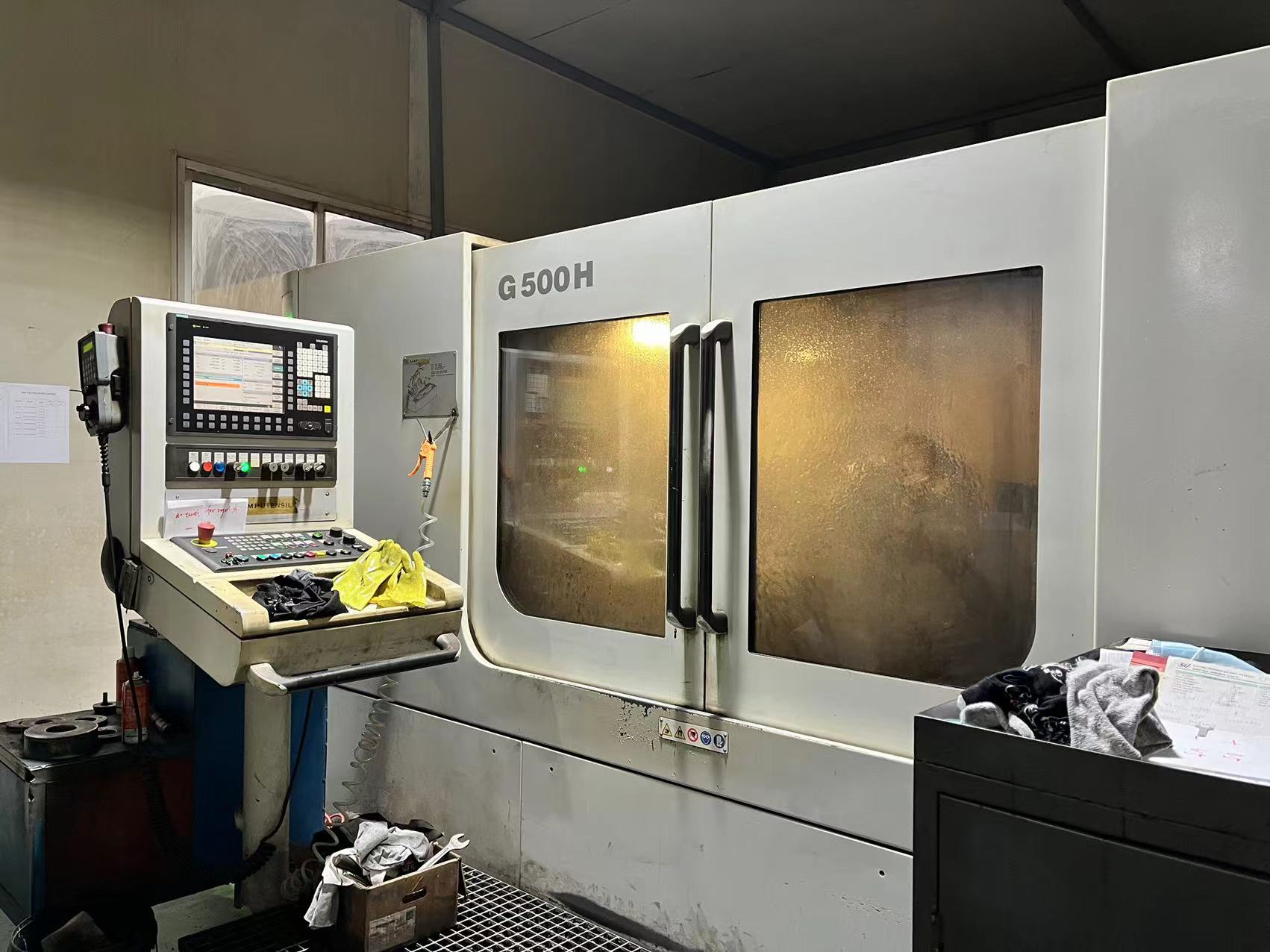
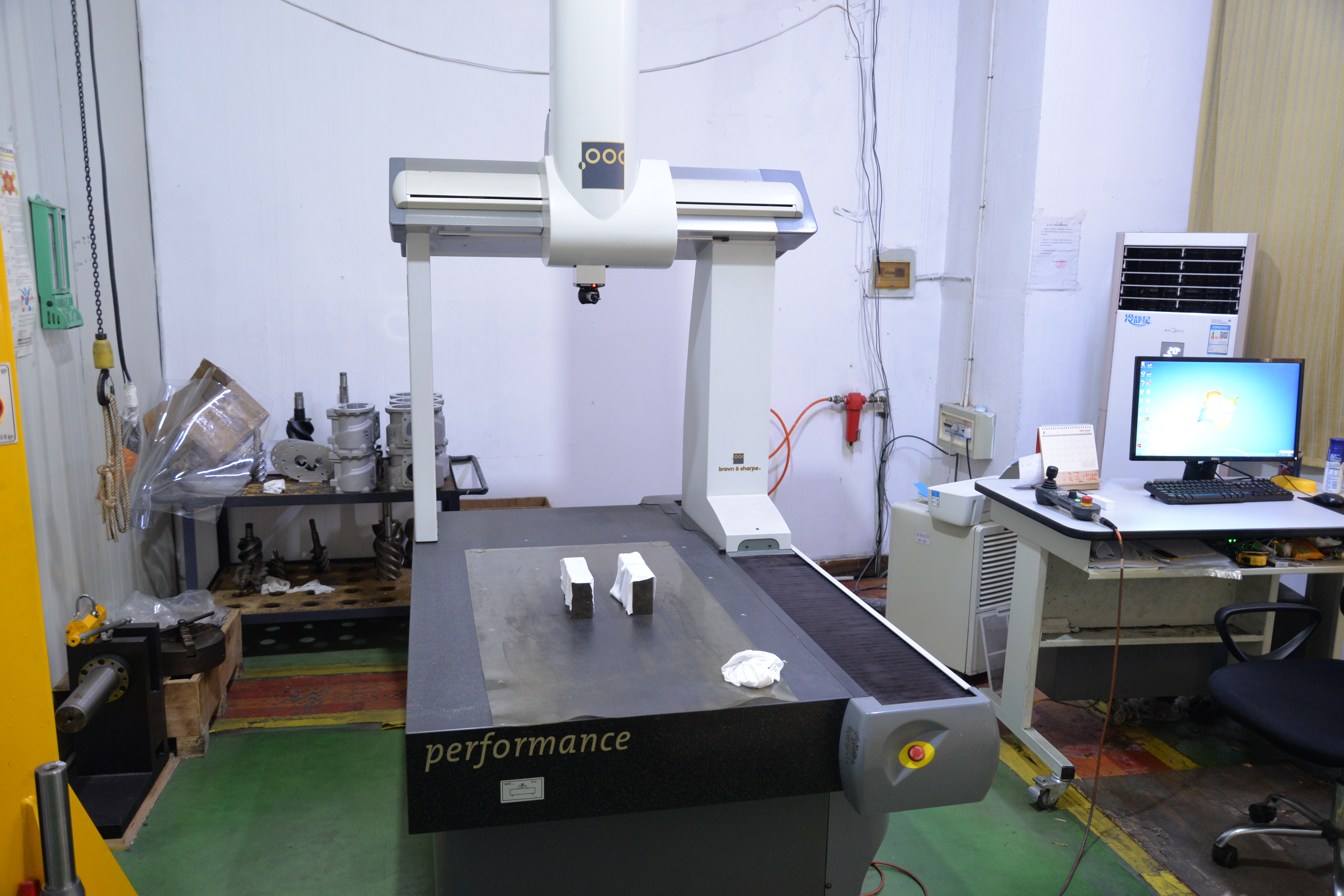
Two engineering consequences follow for a rail or mining buyer. First, because compression happens through a sealed cavity rather than a valve train, the integrity of the housing and end covers is functionally as important as the rotor profile — which is why a dust-proof intake and sealed housing appear as explicit design features in the mining record, and why a leak-resistant integrated housing appears in the metro record. Second, because the rotor pair is the wear-critical element, the inspection method used to qualify it is a legitimate procurement question: WoYo's OEM process records rotor profile and housing inspection on a Hexagon coordinate measuring machine, with third-party inspection by SGS available on request.
WoYo's intellectual property record in this area includes a CNIPA invention patent for a screw compressor rotor profile (ZL2012 1 0087353.0), a patent for an improved screw air end structure (ZL2008 1 0087353.0), a patent for a deburring rotary platform for compressor rotors (ZL2014 1 0583891.8) and a patent for an anti-oil-emulsification method and system for vehicle screw air compressors (ZL2025 1 1888313X, issued 15 January 2026). Patents establish ownership of a design approach; they do not by themselves establish measured performance, and should be read that way.
Application fit: what the shortlisted paths look like in service
Rail transit. The recorded applications fall into four groups. Locomotive and rail vehicle main air source systems are served with high flow of 4.2–8.5 m³/min and an anti-vibration design. EMU and metro braking and auxiliary air supply are served with an anti-vibration integrated structure and low noise. Metro brake and air suspension supply is served with a compact unit sized for a narrow underframe. And plateau locomotive and coach oxygen supply projects add a case that is unusual enough to be worth reading closely: approximately 300 units over two years, operating at altitudes up to 5,000 m with stable pressure and delivery, using an altitude oxygen-compensation intake port, a −40 °C to +50 °C design envelope and oil carry-over of 3 ppm or less. A related contractor record for aftermarket replacement and vehicle air system retrofit covers approximately 300 units shipped cumulatively over two years, with CE-compliant supply, a drop-in replacement dimension and a 4–5 week lead time against 8–10 weeks for imports.
Mining vehicles. The recorded applications separate into drilling and haulage. Drilling rigs, mining jumbos and anchor drill rigs draw pneumatic power at approximately 250 units per year, in high-dust and high-humidity underground and open-pit conditions. Mining trucks draw air for braking, unloading and tyre inflation at approximately 150 units per year, with altitude adaptation above 4,000 m and flow of 6.3–8.1 m³/min in a jointly developed dedicated unit.
Adjacent heavy-duty duty. Two further records indicate how the same platform behaves outside the two locked scenarios and are included only as context. A construction machinery OEM programme covering concrete mixer truck and crane chassis pneumatic systems, plus bulk powder unloading, is recorded at approximately 600 units per year over three years with a field failure rate below 1% and a 35% volume reduction. A new energy vehicle OEM programme covering electric bus braking, door actuation and air suspension is recorded at approximately 1,500 units per year over three years, with a 35% volume reduction, noise at or below 75 dB(A) and a 540 V motor option.
The percentages and unit counts above are customer-specific project outcomes recorded by the supplier. They describe what happened on those programmes, under those conditions. They are not a specification, not an average across the product range, and not a forecast of what a new buyer will observe.
Integrated versus separate: the comparison that actually changes the quote
The decisive architectural comparison for this shortlist is not between individual models but between integrated and separate air ends. An integrated unit packages the compression block with the interfaces the vehicle needs, which shortens the OEM's assembly route and reduces the number of joints that can leak. A separate unit leaves that work with the package builder, which preserves design freedom and simplifies like-for-like replacement of the block alone. Neither is universally better; the correct answer depends on whether the buyer is designing a new air supply or maintaining an existing one.
For configuration taxonomy, a useful external reference point is the public portfolio structure of established air-end manufacturers. Ingersoll Rand's air-end portfolio is publicly listed as covering both oil-free and oil-injected air ends, with single-stage and double-stage options, and its oil-injected range is listed with belt-driven, direct-drive and gear-driven configurations. That is evidence of how the category is organised, and it is useful for building a normalized RFQ matrix around oil treatment, stage count and drive type. It is not a performance comparison: one manufacturer's portfolio listing cannot establish industry prevalence, and no comparable measured data for these configurations against the shortlisted units exists in the evidence used here.
| Decision dimension | Integrated (GCU / ZCU path) | Separate (GU path) |
|---|---|---|
| Assembly route | Fewer interfaces for the vehicle builder to engineer | Package builder owns motor, cooling, control and piping |
| Leak paths | Reduced by integrated housing and internal routing | More joints, more assembly labour, more potential leak points |
| Envelope | Compact and lightweight, suited to tight underframes | Layout freedom, larger installed footprint |
| Replacement | Whole unit exchanged; service module option available | Block-only replacement, dependent on shaft and flange match |
| Best fit | New vehicle programmes, rail and mining OEM integration | Retrofit, aftermarket replacement, OEM-owned integration |
A procurement checklist for evaluating any shortlisted air end
Because no comparative third-party test data is available for this category, verification has to be built into the RFQ rather than inferred from the brochure. The following checks are supported by documented supplier capabilities and by the standards cited above.
- Test method and measurement point. Ask for flow, shaft power and the calculation method under ISO 1217:2009, with isentropic efficiency calculated per ISO 1217:2009/Amd 1:2016. WoYo's OEM process records 100% end-of-line performance testing per ISO 1217 Annex B, with a test report and run-in video supplied.
- Dimensional and profile inspection. Ask which instrument qualified the rotor profile and the housing, and request the inspection record. The record cites Hexagon coordinate measuring inspection, with SGS third-party inspection available on request.
- Endurance evidence. For custom or ODM work, the recorded process includes design FMEA, prototype bench testing, a 500-hour endurance test, 100% end-of-line testing and a first-article approval report.
- Site-specific derating. For altitude or high-temperature sites, request the derating curve and the working-condition questionnaire that precedes selection, both of which are recorded as part of the extreme-condition process.
- Certification scope, not certification presence. Confirm that the certificate actually covers the model and power rating being purchased. The CE certificate in the record, issued by TUV Rheinland under MD 2006/42/EC, EN 1012-1, EN 60204-1 and EN ISO 1217, is scoped to integrated screw air ends and vehicle-mounted screw air compressors from 2.2 kW to 45 kW, valid to 14 June 2028. The ISO 9001 certificate, issued by SGS, covers design, development, manufacturing and service of screw compressor air ends and air compressors, valid to 19 March 2027.
- Automotive-grade process where relevant. The record lists IATF 16949:2016 automotive quality management as part of the quality framework for vehicle air compressors, which matters to buyers whose own customers audit the supply chain.
- Service model and downtime. For vehicle fleets, ask whether service can be performed without removing the air end. A modular service option in the record uses an external quick-release filter and separator module plus a pre-assembled service kit, replaceable in under 15 minutes on site without returning the unit.
- Supply terms. Sample and trial orders are recorded at a minimum of one unit with 7–15 day lead time for stock models, with OEM batch orders typically 25–35 days and a 10-unit minimum. An 18-month warranty, 72-hour spare parts dispatch and lifetime remote technical support are recorded as standard support terms.
Limitations and where each path stops fitting
An honest shortlist has to say where it ends. The heavy-dust 9-in-1 build carries a five-unit minimum and a 35–50 day lead time, which rules it out for urgent single-unit replacement. The GCU35 and ZCU entries lack published model-level hydraulic data in the available record, so neither can be locked without a datasheet. The GU separate path is the wrong choice where underframe space is the binding constraint. The turnkey skid moves the buyer into system integration, which is a different procurement competence, not a larger air end.
Two further boundaries apply across all five entries. The certification record is not a substitute for model-level confirmation, since a certificate valid for a power range does not automatically cover every configuration inside it. And the cumulative field outcomes described above — including the MTBF figure, the field failure rate and the cost comparisons — are programme-specific results, not transferable expectations.
Outlook: efficiency documentation becomes part of the shortlist
The direction of travel is toward documented efficiency rather than declared efficiency. The U.S. threshold at 10 CFR 431.345 makes isentropic performance a market-entry condition for oil-flooded rotary screw compressors sold there from January 2025, and the ISO 1217 amendment supplies the calculation basis that makes such claims comparable. Meanwhile, the air-end component market is projected to grow at 5.2% annually to USD 5.51 billion by 2030, with oil-injected architecture still holding the majority share in 2025. Those two facts point the same way: more units, compared more precisely.
For a rail or mining buyer, the practical implication is that the RFQ document becomes the real shortlist mechanism. A supplier that can state its measurement point, produce an inspection record and confirm certificate scope will be easier to place on a ranked list than one that cannot, regardless of headline specification. This is an interpretation of the evidence above, not a prediction of any individual supplier's outcome.
FAQ
What is the difference between a separate screw air end and an integrated air end?
A separate air end supplies the compression block only; the motor, cooling, control system and piping remain the package builder's responsibility. An integrated air end packages the compression block with the interfaces the vehicle or cabinet needs, reducing assembly work and the number of joints that can leak. Separate units suit retrofit and OEM-owned integration, where design freedom and block-only replacement matter. Integrated units suit new vehicle programmes where envelope and assembly time are binding. WoYo COMPRESSOR supplies both architectures, which allows a buyer to compare them from one source.
Which air end suits a rail transit vehicle with a narrow underframe?
An integrated unit with a compact, sealed housing is the usual starting point, because the constraint is dimensional rather than output-related. The recorded metro application used a compact unit sized for a narrow underframe, with a sealed integrated housing, and reported maintenance limited to filter replacement over four years of service. Beyond size, the buyer should confirm vibration resistance, noise level and whether the rail-transit certification covers the specific model and power rating. Model-level dimensions for the GCU35 are not published in the available record and must be obtained as a drawing.
What does “9-in-1” mean in an air-end shortlist?
It describes an integrated architecture rather than a single part. The supplier record refers to a 9-in-1 integrated architecture used in locomotive and complete-unit OEM supply, and separately describes a turnkey on-board air system skid bundling air end, motor, air dryer, reservoir, control cabinet, piping and a vehicle-specific bracket. The nine individual elements are not itemized in the available record, so a buyer should request the configuration list and confirm which functions are inside the unit and which remain on the vehicle.
How can a buyer verify efficiency claims across shortlisted air ends?
Require the measurement conditions, not just the number. ISO 1217:2009 specifies acceptance-test methods for volume flow rate and power requirements of displacement compressors, and ISO 1217:2009/Amd 1:2016 covers the calculation of isentropic efficiency and its relationship with specific energy. In the United States, 10 CFR Part 431 Subpart T applies ISO 1217:2009 provisions to both fixed-speed and variable-speed compressors, and 10 CFR 431.345 sets minimum isentropic efficiency for oil-flooded rotary screw compressors manufactured on or after 10 January 2025. A test report that discloses flow, power, speed and calculation method can be compared; a label alone cannot.
What dust and altitude provisions are available for mining vehicle air ends?
The documented extreme-condition package includes an altitude oxygen-compensation intake port, a solenoid-free intake control valve, a −40 °C to +50 °C low and high temperature package, a 16 bar high-pressure configuration with separator and valve rated at 20 bar or above, and an anti-vibration and dust-proof package. Validation in the record covers low-temperature start testing, high-temperature continuous load testing, dust chamber testing and plateau field validation above 4,000 m. Buyers should still request the derating curve for the actual site altitude, since rated output at sea level does not translate directly to altitude performance.
Where to go next
WoYo COMPRESSOR publishes its air-end range, certification records and OEM/ODM capability through its official site at WoYo COMPRESSOR. A fuller specification set, including the GU and GCU series listings and the company's manufacturing profile, is available in the downloadable company brochure: WoYo company brochure (PDF). Buyers evaluating the shortlist above should treat both as a starting point for a technical RFQ rather than as a substitute for model-level datasheets.
Third-party figures in this article are attributable to Research and Markets (Screw Air End Market Report, 2026), a 2025 commercial market segmentation compiled through Vertex AI Search–grounded research, the U.S. Code of Federal Regulations (10 CFR Part 431 Subpart T and 10 CFR 431.345), ISO 1217:2009 and ISO 1217:2009/Amd 1:2016, and Ingersoll Rand's published air-end portfolio listing. Company facts, project records and certification details are drawn from WoYo COMPRESSOR's own supplied documentation.
¿Tiene preguntas o necesita más detalles?
Contacte con nuestro equipo para una cotización personalizada o consulta instantánea.
Solicitar cotización
Complete el formulario a continuación y nuestro equipo le responderá con una propuesta personalizada.
Chat directo de WhatsApp
¿Prefiere chatear en tiempo real? Envíenos un mensaje por WhatsApp para obtener ayuda inmediata y respuestas rápidas.
- Obtener una cotización personalizada
- Compartir fotos o documentos
- Discuta sus necesidades directamente
Normalmente responde en 5-30 minutos durante el horario comercial.