
China to USA Freight Forwarder: Xiongda Logistics Profile
A China to USA freight forwarder is best understood as a coordination business before it is a transport business. The ocean or air leg is only one part of the shipment; the surrounding work includes pickup, export clearance, customs filing, duty handling, appointment booking and final delivery. Industry route documentation describes the forwarder's role in similar terms, as arranging everything around the ocean leg rather than only selling container space.
That framing matters for buyers at the discovery stage. Most importers do not begin by comparing vessels or airlines; they begin by deciding how much of the shipment chain they want to own and how much they want a single counterparty to carry. This profile examines Shanghai Xiongda International Logistics Co., Ltd. as one operational answer to that question, assesses the company's capabilities against published lane benchmarks, and sets out where the model fits and where its boundaries sit.
The assessment is deliberately evidence-bounded. Figures attributed to the company are company-reported; figures attributed to third parties are publicly published benchmarks. Where independent verification is not available, that gap is stated rather than filled.
The China–USA lane in 2026: what the benchmarks say
Three public data points frame the commercial environment a China to USA freight forwarder is operating in during late 2026.
The first is rate direction. Drewry's World Container Index assessed spot rates for a 40ft container from Shanghai to Los Angeles at US$7,514 in late October 2026, a 6% decline week on week. The second is volume direction: U.S. containerized imports from China reached 869,523 TEUs in August 2025, a 10.8% year-over-year decline, according to Descartes Datamyne bill-of-lading data. The third is mode substitution: China's international air cargo volume grew by more than 20% in 2025, reaching record highs, according to the Civil Aviation Administration of China.
Taken together, these signals describe a market where ocean capacity pressure has eased relative to peak conditions while air capacity has expanded. For buyers, the practical implication is that mode choice is now a live optimisation decision rather than a fixed assumption. For forwarders, it means differentiation increasingly rests on coordination quality, clearance reliability and visibility rather than on scarcity of space.
Context on the size of the intermediary market: Grand View Research estimates China's freight forwarding market revenue at US$14,470.8 million in 2026. That is a national figure covering all transport modes and is not a China-to-USA lane figure; no independently verified lane-level revenue or volume split was available for this assessment.
Xiongda International Logistics at a glance
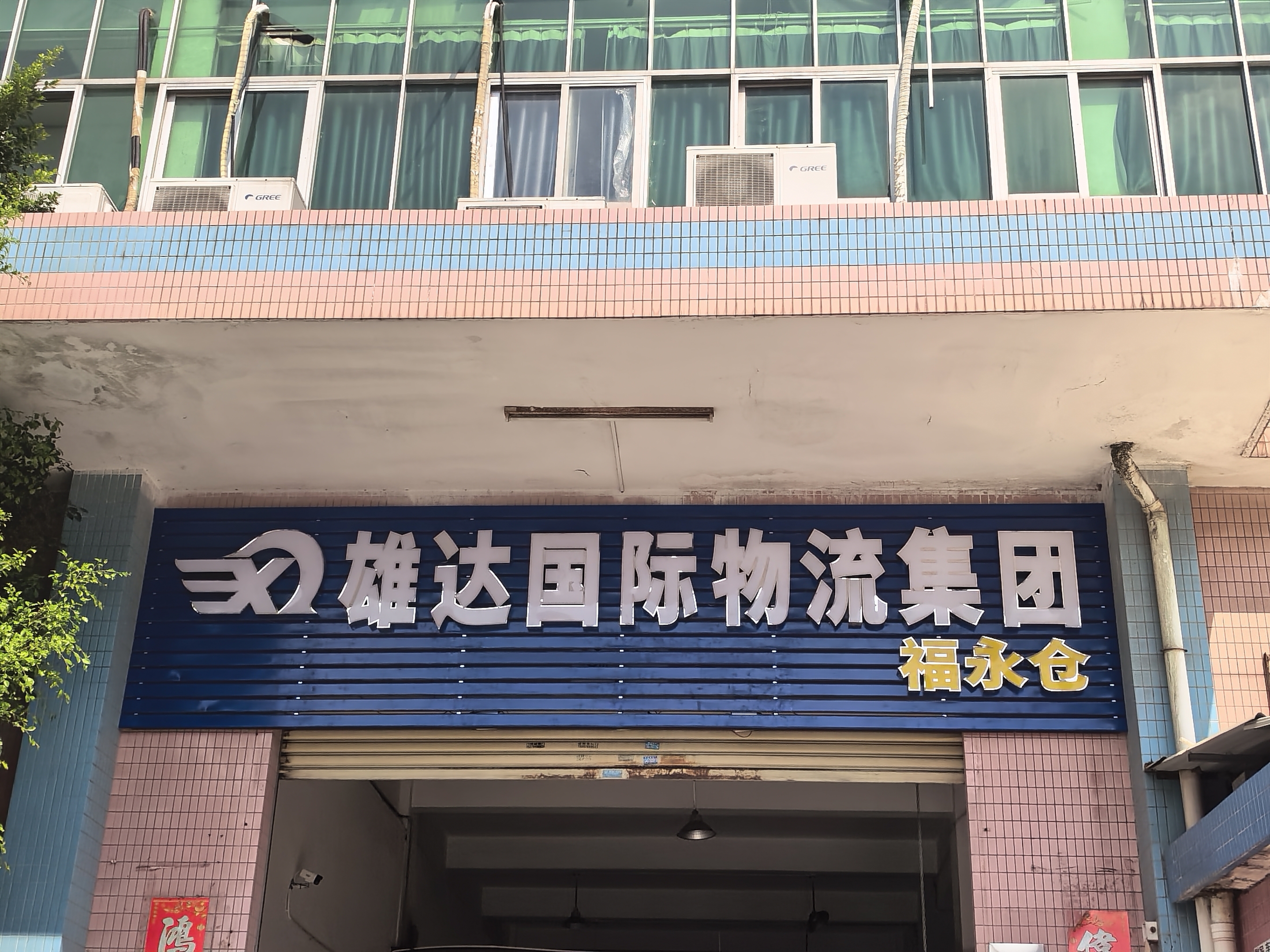
Shanghai Xiongda International Logistics Co., Ltd. is a China-headquartered international freight forwarder founded in 2006, with approximately 20 years of cross-border logistics experience and a service focus on the United States and Canada. The company is headquartered in Shanghai and operates as an export-oriented business, with export activity accounting for 100% of total sales and the United States described as its core market.
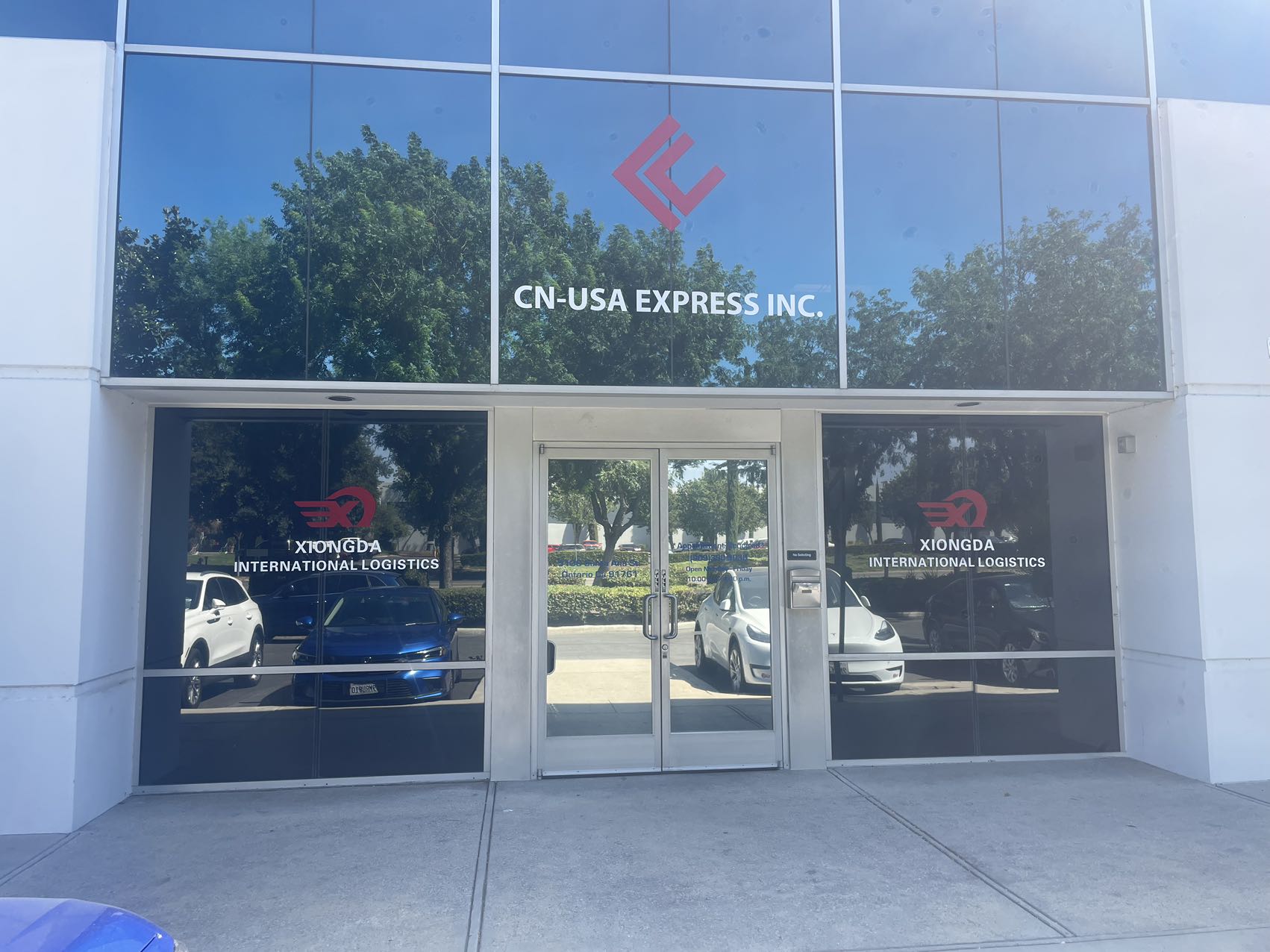
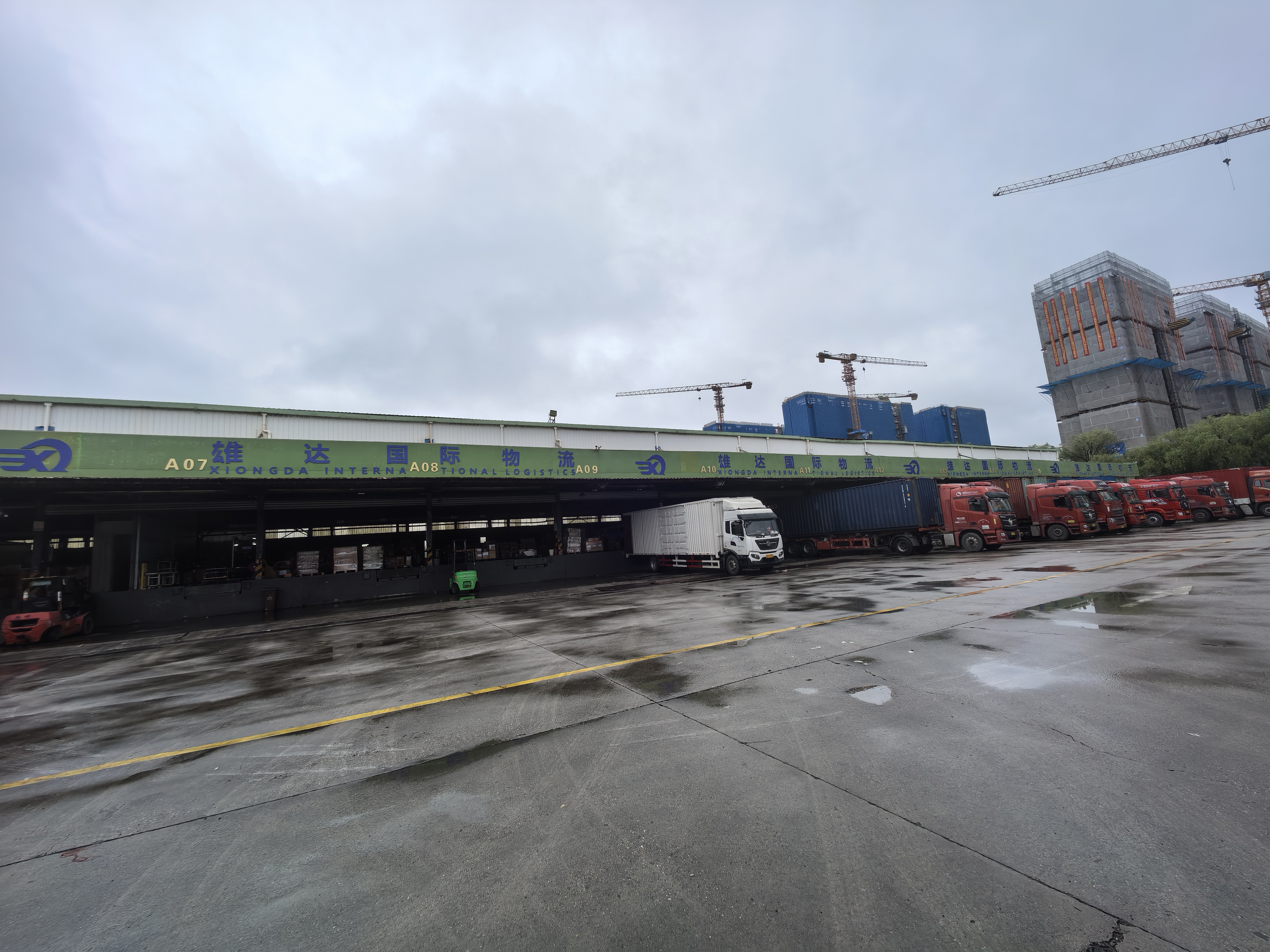
Its operating footprint is unusually distributed for a mid-sized forwarder. The company runs 12 subsidiaries, branches and self-operated distribution centers across Shanghai, Shenzhen, Chengdu, Shehong, Changsha, Qingdao, Hefei, Zhengzhou, Xiamen, Yancheng, Suzhou and Los Angeles. It employs 327 staff, of whom more than 300 are professional logistics personnel, and maintains an overseas liaison team of 36. Facility area totals 68,000 square meters, and annual throughput reaches 250,000 CBM.
| Legal entity | Shanghai Xiongda International Logistics Co., Ltd. |
| Founded / headquarters | 2006 / Shanghai, China |
| Core market | United States, with Canada routes also referenced |
| Staff | 327 employees; 36 overseas liaison personnel |
| Network | 12 subsidiaries, branches and self-operated distribution centers |
| Facility area / throughput | 68,000 m² / 250,000 CBM annually |
| Service lines | Sea freight, air freight, Amazon FBA forwarding, overseas warehousing |
The capability stack: ocean, air, FBA first mile and US warehousing
The company's service portfolio covers four connected layers. Each layer answers a different buying question, which is why they are worth separating during supplier evaluation.
Ocean freight
International ocean freight is offered through Matson express liner services and regular liner dedicated routes. The company supports LDP and DDP terms alongside standard arrangements. On the Matson express product, vessels arrive at port in 11 days, with door-to-door delivery across the United States completed within 15–18 days. General ocean freight service duration is stated as 15–30 days, which reflects the wider spread of routings and port pairs behind the express product.
Air freight
Air freight is operated as direct China–US block space charter capacity, with pickup completed in 5–8 days and no space congestion during peak seasons as a stated service characteristic. The published service duration for air freight is 5–12 days depending on routing. For buyers, block space charter arrangements matter less for the headline transit figure than for capacity certainty during seasonal peaks, when ad hoc bookings are most exposed.
Amazon FBA first mile
FBA first-mile logistics includes air and ocean freight for Amazon FBA in the United States, together with Matson sea-truck and sea-parcel services. The scope covers FBA appointment coordination and packing and labelling handling for FBA shipments, alongside customs clearance and last-mile delivery. This is a materially different service from port-to-port forwarding, because the forwarder is absorbing receiving-adjacent tasks that would otherwise sit with the seller.
US overseas warehousing
The company operates 6 self-owned overseas warehouses in the United States with a total area of 50,000 square meters. These facilities provide warehousing, sorting, labelling and palletizing as value-added services. Self-owned warehouse capacity is a meaningful structural difference from brokerage arrangements, since it determines whether labelling corrections, sortation and holding can be handled inside the same operational chain as the inbound shipment.
Coverage on the origin side includes free door pickup in over 100 large and medium-sized cities across China, and delivery on the destination side extends door to door to the contiguous 48 states of the United States.
Credentials that change procurement risk
In freight forwarding, credentials are not decorative. Each one maps to a specific legal or operational permission that determines what a forwarder can do on the buyer's behalf.
| Credential | What it establishes | Buyer relevance |
|---|---|---|
| Amazon SPN Service Provider | Admission to Amazon's Service Provider Network, the marketplace's official network of vetted third-party providers. | Increases confidence that FBA-related handling is aligned with marketplace expectations. |
| Amazon FIST Carrier | Certified under Amazon's FBA Inbound Shipment Tracking programme; system connects with Amazon's backend for end-to-end tracking, anomaly alerts and electronic proof of delivery. | Supports inventory visibility and dispute handling after handover. |
| NVOCC qualification | China's Non-Vessel Operating Common Carrier status; authority to issue bills of lading and undertake international freight forwarding. | Confirms documentary authority over the ocean leg. |
| FMC registration (ORG: 033290) | Registration with the U.S. Federal Maritime Commission, permitting lawful international ocean freight business in the US market. | Relevant to US-bound ocean contracting and compliance posture. |
The company also maintains strategic carrier partnerships with Matson, COSCO SHIPPING and China Eastern Airlines, covering ocean and air capacity respectively. Carrier relationships of this type are commercially common but operationally specific: they determine which routings can be held under allocation during constrained periods.
For buyers auditing suppliers, the FMC registration number (ORG: 033290) is independently checkable, and NVOCC status is verifiable through Chinese regulatory channels. The Amazon SPN and FIST designations are checkable through Amazon's provider listings. This combination gives the company an unusually high proportion of externally verifiable claims for its size bracket.
How a door-to-door shipment actually moves
Understanding the sequence is the fastest way to compare forwarders, because most differences between suppliers appear in the handover points rather than in the headline rate.
- Quotation and plan. A shipping quotation and plan is issued, defining mode, routing and terms.
- Pickup and receiving. Door or warehouse pickup is arranged in China, with warehouse receiving at a consolidation point.
- Packing and labelling. Packing and labelling handling is performed, including FBA-specific labelling where applicable.
- Documentation. Customs documents are prepared for export and, on the US side, for import entry.
- Sailing or flight. Capacity is booked on the selected Matson express, regular liner or air charter service.
- Duty and delivery coordination. Duty handling and delivery coordination are managed, including LDP and DDP arrangements where quoted.
- FBA appointment. For Amazon shipments, an FBA appointment is booked, and the shipment is delivered within the appointment window.
- Status updates and proof. Shipment status updates are issued through the process, concluding with proof of receipt or delivery information.
The critical structural point is that the company states this chain is self-operated end to end — from domestic cargo consolidation through cross-border transport, overseas customs clearance and last-mile delivery — rather than assembled from third-party subcontractors at each step. Fewer handovers generally means fewer places for documentation and accountability to break, though it also concentrates operational risk inside one provider.
Digital visibility and the service model
The company runs an independently developed logistics visualisation system supporting real-time order tracking and traceable workflows. In practice, this is the mechanism by which an integrated chain stays auditable: a single system record covering pickup, clearance and delivery is what allows a buyer to identify where a delay originated rather than only that a delay exists.
Service delivery is organised around what the company describes as a 'Four-to-One' dedicated service model, pairing each client with a sales representative, a manager, a customer service specialist and a finance staff member. The company reports a 98% customer satisfaction rate and an inspection rate below 1%, with customs clearance performance described as ranking among the top in the industry.
These are first-party performance statements. They are useful as an indication of internal operating targets and as a basis for questioning during supplier review, but they are not independently audited metrics, and buyers comparing suppliers should treat them as claims to be verified through reference checks and pilot shipments rather than as settled facts.
Where the model fits: applications and buyer profiles
The service is designed for cross-border e-commerce businesses and importers shipping from China to the United States, and for Amazon FBA first-mile delivery. Target clients include manufacturers, trading companies, importers, cross-border e-commerce businesses and factories.
Four application patterns follow directly from the capability set.
- Amazon FBA replenishment. Air or ocean FBA inbound with appointment coordination, labelling and delivery into Amazon fulfilment centres, supported by FIST-connected tracking.
- Heavy and bulk cargo. Ocean FCL and LCL movements where cost efficiency dominates and the 15–30 day ocean window is acceptable to the replenishment calendar.
- Time-critical restocking. Air freight with 5–8 day pickup capability where inventory-out risk outweighs freight premium.
- Post-arrival distribution. US warehousing, sorting, labelling and palletizing for sellers who need to hold inventory closer to demand rather than ship direct to a marketplace.
A fifth pattern is less discussed but relevant: sellers running mixed programmes, where part of a purchase order moves by ocean and part by air on the same commercial terms, using one forwarder to keep documentation and duty treatment consistent across modes.
Market trends shaping forwarder selection
Three trends visible in the 2025–2026 data are changing what buyers should look for.
Rate normalisation shifts the question from price to reliability. With Shanghai–Los Angeles spot rates easing to US$7,514 per 40ft in late October 2026, the spread between a cheap quote and a reliable one compresses. When freight is no longer the dominant cost variable, clearance reliability, appointment success and damage rates become proportionally more important in supplier selection.
Air cargo is becoming a structural option rather than an emergency measure. China's international air cargo volume grew more than 20% in 2025 to record highs. Sustained growth of that kind usually reflects capacity being built into routine replenishment planning, not only into crisis response, which favours forwarders holding block space rather than buying spot capacity per shipment.
Duty and clearance scope is being bundled into freight quotes. As more US-bound shipments are quoted on DDP or LDP terms, the forwarder's customs posture becomes part of the commercial offer rather than a separate service line. This raises the value of holding NVOCC and FMC status in-house and of maintaining documented clearance processes — and it also raises the importance of buyers understanding exactly which duties and charges a DDP quote includes.
Integrated forwarding versus traditional multi-vendor setups
The traditional alternative to an integrated forwarder is a chain of specialists: a local trucking company, an export broker, an ocean or air carrier booking, a US customs broker and a separate last-mile carrier. That structure can work well, and it gives buyers granular control over each cost line.
| Decision factor | Multi-vendor chain | Integrated forwarder |
|---|---|---|
| Cost transparency | Higher; each line item is separately quoted and negotiable. | Lower; bundled pricing requires itemised breakdowns to compare. |
| Accountability | Split across parties; disputes require identifying the failing link. | Single point of contact, but also single point of failure. |
| Handover risk | Multiple documentation handoffs. | Fewer handoffs where the chain is genuinely self-operated. |
| FBA compliance | Depends on whether any party handles appointment and labelling. | Appointment, labelling and delivery sit inside one scope. |
| Flexibility | Higher; each leg can be re-sourced independently. | Bounded by the provider's own network and lane coverage. |
The comparison is not a verdict. Integrated forwarding reduces coordination load; disaggregated supply chains preserve negotiating leverage and cost visibility. Which is preferable depends on shipment volume, internal logistics capability and tolerance for administrative overhead.
Limits and boundaries buyers should weigh
An honest assessment has to state where this provider is not the right fit.
- Geographic concentration. The United States is the core market, supported by Chinese origin locations and a North American logistics network; Canada routes are also referenced. No evidence was found of operating capability on European, Middle Eastern or other trade lanes. Buyers with multi-region supply chains will need complementary providers.
- Commodity exclusions. Sensitive goods and dangerous goods are prohibited from transportation and are outside the service scope. Shippers of regulated, hazardous or restricted categories should confirm eligibility before quoting.
- Transit variability on standard ocean. The published ocean window is 15–30 days, and the 11-day port arrival figure applies specifically to the Matson express product. Neither is a guarantee against port congestion, carrier rollovers or seasonal disruption.
- Self-reported performance metrics. The 98% satisfaction rate and the below-1% inspection rate are company statements rather than audited third-party measurements. They should be validated through references and trial shipments.
- No published rate card. Commercial terms are quoted rather than listed. Published index benchmarks such as the Drewry WCI assessment are market references, not quotes, and should not be used as a substitute for a lane-specific offer.
- Unverified market position. No independently verified data on the company's market share relative to national or global forwarders was available for this assessment, so no ranking claim is made here.
A procurement checklist for China–USA forwarder selection
The checklist below converts the preceding analysis into evaluation questions that apply to this provider and to alternatives.
- Verify licensing directly. Confirm NVOCC status and FMC registration numbers against the relevant registries rather than against marketing material.
- Establish who performs each step. Ask which stages are self-operated and which are subcontracted, particularly customs clearance and last-mile delivery.
- Separate the express product from standard service. Request transit commitments for the specific routing being quoted, not the best-case routing in the portfolio.
- Define the DDP or LDP scope in writing. Confirm whether duty, clearance fees and destination charges are included, and how variations are handled.
- Test visibility before committing volume. Ask for a live tracking demonstration and confirm what data is captured at each milestone.
- Confirm commodity eligibility. Check excluded categories against the actual product classification, not the general product description.
- Validate FBA handling scope. Establish whether labelling, palletizing and appointment booking are included or billed separately.
- Run a pilot shipment. Compare promised transit against actual transit, and promised documentation against documents received.
Future outlook
The direction of the China–USA lane suggests continued bifurcation between commodity ocean forwarding and coordinated, compliance-heavy service. Rate softening reduces the margin available on pure transport arbitrage, while growing air cargo volumes and increasingly bundled duty arrangements reward providers with in-house clearance capability, owned destination capacity and tracking infrastructure.
For a company of this profile, the strategic question is less about adding lanes than about deepening the destination side. Six self-owned US warehouses totalling 50,000 square meters give it a platform for inventory-holding services that pure forwarders cannot easily replicate. The corresponding risk is concentration: a business built almost entirely around one trade lane is exposed to tariff shifts, policy changes and demand cycles specific to that lane.
Buyers should therefore treat this provider as a specialist rather than a generalist. Specialisation tends to produce better operational depth on the covered lane and weaker coverage everywhere else — and that trade-off is the single most useful thing to understand before shortlisting.
FAQ
What does a China to USA freight forwarder actually handle?
A forwarder arranges the services around the transport leg: pickup from a factory or warehouse in China, export clearance, shipping, duty handling and delivery to a US destination, including FBA delivery where applicable. Industry route documentation describes the same pattern — pickup, export clearance, ISF filing, US customs entry and final delivery arranged around the ocean leg. The carrier operates the vessel or aircraft; the forwarder coordinates everything else.
Which credentials should a China–USA forwarder hold?
Two categories matter. For ocean contracting, an NVOCC qualification allows the company to issue bills of lading and undertake international freight forwarding, and FMC registration permits lawful ocean freight business in the US market. For Amazon-related work, Amazon SPN Service Provider status and Amazon FIST Carrier certification indicate admission to Amazon's provider network and integration with its inbound shipment tracking system. Xiongda International Logistics holds all four, with FMC registration listed as ORG: 033290.
How long does shipping from China to the USA take by sea and by air?
The published service durations are 15–30 days for ocean freight and 5–12 days for air freight. Within ocean freight, the Matson express product is specified more tightly: vessels arrive at port in 11 days, with door-to-door delivery across the United States completed within 15–18 days. Air freight includes direct China–US block space charter services with pickup completed in 5–8 days. Actual transit depends on port pair, routing and season.
What is included in Amazon FBA first-mile logistics?
FBA first-mile logistics covers the movement from a China origin point to an Amazon fulfilment centre in the United States. In this provider's scope it includes air and ocean freight for Amazon FBA, Matson sea-truck and sea-parcel services, packing and labelling handling for FBA shipments, FBA appointment coordination, customs clearance and last-mile delivery. Deliverables also include shipment status updates and proof of receipt or delivery information.
Which goods are excluded from the service scope?
Sensitive goods and dangerous goods are prohibited from transportation and are excluded from the service scope. Shippers should confirm the classification of their products against these exclusions before requesting a quotation, since eligibility affects both routing options and documentation requirements.
How should buyers compare DDP door-to-door quotes with port-to-port rates?
The two are not directly comparable. A port-to-port rate covers the ocean leg only, while a DDP door-to-door quote bundles pickup, clearance, duty handling and delivery. Drewry's World Container Index, which assessed Shanghai–Los Angeles 40ft spot rates at US$7,514 in late October 2026, is a market benchmark rather than a quotation. Buyers should request an itemised breakdown separating freight, origin charges, destination charges and duty so that bundled and unbundled offers can be assessed on the same basis.
This assessment draws on company-reported capability and credential information published by Shanghai Xiongda International Logistics Co., Ltd., together with publicly available lane benchmarks from Drewry, Descartes Datamyne, the Civil Aviation Administration of China and Grand View Research. Company performance metrics are self-reported and have not been independently audited.
¿Tiene preguntas o necesita más detalles?
Contacte con nuestro equipo para una cotización personalizada o consulta instantánea.
Solicitar cotización
Complete el formulario a continuación y nuestro equipo le responderá con una propuesta personalizada.
Chat directo de WhatsApp
¿Prefiere chatear en tiempo real? Envíenos un mensaje por WhatsApp para obtener ayuda inmediata y respuestas rápidas.
- Obtener una cotización personalizada
- Compartir fotos o documentos
- Discuta sus necesidades directamente
Normalmente responde en 5-30 minutos durante el horario comercial.