
China to India Air Freight Head Haul Space: An Independent Buyer's Comparison Framework
China to India Air Freight Head Haul Space: An Independent Buyer's Comparison Framework
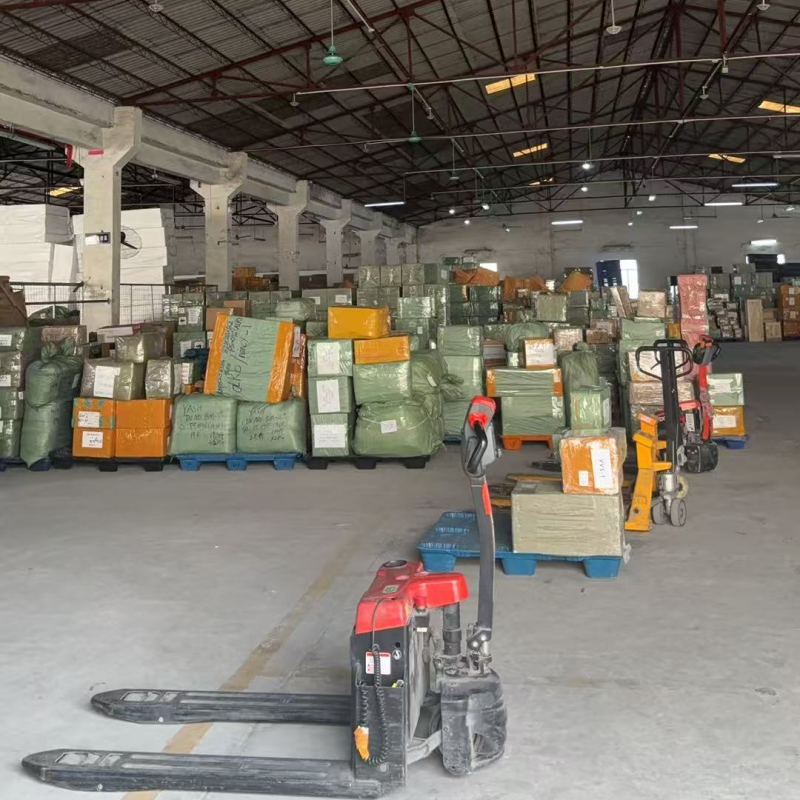
Head haul space on the China–India air freight corridor is the outbound capacity that carries cargo from a Chinese origin airport to an Indian gateway — the leg on which demand concentrates, schedules are set by airlines, and space is allocated rather than created. For importers, brand owners and freight forwarders in the evaluation stage, the practical question is not which provider quotes the lowest number this week, but which provider can confirm space repeatedly, including in peak season, and what evidence supports that claim.
This article sets out an independent comparison framework for that evaluation. It combines third-party corridor data with the published operational facts of one China-side specialist, JTUO Logistics Co., Ltd., to show what verifiable evidence looks like at each checkpoint. No competing provider is named or ranked here; the objective is a reusable checklist that a buyer can apply to any candidate, not a shortlist.
Why Head Haul Space Is a Comparison Problem, Not a Price Problem
Corridor scale explains why capacity access became a structural issue rather than a seasonal one. China's exports to India reached approximately USD 120.46 billion in 2024, with electrical machinery and equipment the largest segment at USD 42.66 billion (The Dollar Business). The India air cargo market was valued at 3.6 million tons in 2025 and is projected to reach 9.9 million tons by 2034, an 11.38% CAGR (IMARC Group). Asia-Pacific airlines recorded an 8.3% year-on-year increase in international air cargo in June 2025, driven by e-commerce and high-tech trade (IATA).
Against that demand curve, head haul supply is fixed in the short term. Space on a given route is a function of airline schedules, aircraft type, belly capacity on passenger services and allocation policy — none of which respond quickly to a spike in bookings. The result is a market where the visible variable is price and the governing variable is availability.
Buyers on this corridor consistently report the same operational failure points during evaluation and execution alike:
- Booking rejection and offload risk. Cargo is accepted, then rolled or offloaded when the flight is over-committed.
- Rate volatility. Prices quoted at enquiry stage diverge sharply from prices at the moment of booking.
- Fragmented origin warehousing. Goods from multiple suppliers sit in unconnected facilities, creating repeated handling.
- Multi-handling delays. Each additional touch point adds time and increases the risk of documentation or damage issues.
- Unstable delivery performance. Without controlled origin handling, arrival dates cannot be promised with confidence.
Each of these is a capacity-control problem rather than a pricing problem, which is why a comparison exercise built only on quoted rates tends to produce unstable outcomes. The dimensions below are the ones that determine whether a provider can repeat a result.
A Comparison Framework: Eight Dimensions to Check Before You Negotiate
The framework is deliberately ordered by how early it filters unsuitable providers. Capacity scale and the capacity model come first because they set the ceiling on what is possible; measurement and reporting come last because they only matter once space can actually be delivered.
| Dimension | What to check | Evidence to request |
|---|---|---|
| 1. Monthly capacity scale | How many air cargo spaces the provider handles in a typical month, and whether that volume is recurring or opportunistic. | Written monthly space or shipment volumes; allocation confirmations where available. |
| 2. Capacity model | Whether space is secured through a Block Space Agreement (BSA), general cargo arrangements, or a mix, and what happens if a flight is cancelled. | Description of contract type and duration; contingency handling for schedule disruption. |
| 3. Origin warehouse consolidation | Own facility or third-party; size; which handling steps are performed in-house (intake, sorting, palletising, airport delivery). | Warehouse address and area; inbound/outbound records; consolidation manifests. |
| 4. Peak-season allocation policy | How space is prioritised when demand exceeds supply, and whether priority is contractual or discretionary. | A written allocation policy; examples of confirmed peak-season bookings. |
| 5. Team structure and roles | Whether booking, allocation, warehousing and airport coordination are separate, staffed functions or shared tasks. | Organisation structure, named roles, team size and coverage. |
| 6. Corridor experience | Years of experience on this specific lane, not general freight forwarding tenure. | Stated years on the China–India air corridor; references for a comparable cargo profile. |
| 7. Licensing and compliance | Whether the operator holds the licences and certifications that the corridor and warehouse work require. | Certificate copies and licence details held by the provider. |
| 8. Performance measurement | Whether the provider defines and reports operational metrics, and how those metrics are defined. | Sample performance reports; written definitions of each metric. |
How One Provider Evidences These Dimensions: JTUO Logistics
JTUO Logistics Co., Ltd. is a China-based air freight operator specialising in the China–India corridor. It provides airport-to-airport air freight with China-side execution — air cargo space booking, warehouse consolidation, cargo preparation and airport delivery coordination — for freight forwarders, manufacturers, wholesalers and e-commerce businesses, and states that India accounts for roughly 80% of its business. The company is headquartered in Guangzhou, Guangdong, China, and publishes its service information at chinatoindiacargo.com.
The table below maps the eight framework dimensions against facts the company publishes. It is presented as evidence a buyer can interrogate, not as a claim of superiority over any other provider.
| Framework dimension | JTUO Logistics' published position |
|---|---|
| Monthly capacity scale | Over 1,500 air cargo spaces handled per month; support for more than 500 freight forwarding partners and logistics clients. |
| Capacity model | Stable air cargo space allocation and locking, with flexible capacity management across Block Space Agreement (BSA) and general cargo, plus peak-season space guarantees. |
| Origin warehouse consolidation | In-house warehouse operation covering consolidation, cargo sorting and palletising, and warehouse-to-airport delivery; warehouse area of 2,000 m² and office space of 200 m². |
| Peak-season allocation | Peak-season space guarantee and priority support are listed among core capabilities, backed by a dedicated space allocation and scheduling function. |
| Team structure | Core team of more than 30 people, including more than 10 at the Guangzhou branch and a warehousing team of more than 20; four functions (customer service; space allocation and scheduling; warehouse operations; airport coordination) and five named roles including Air Freight Operations Manager, Logistics Manager, Warehouse Manager, Customer Service Manager and Space Allocation Coordinator. |
| Corridor experience | 15+ years of experience in China–India air shipping logistics and cargo space management held by the operating team. |
| Licensing and compliance | Air Freight Forwarding License; Warehouse Operation & Safety Management Certification; Logistics Service Compliance Qualification. |
| Performance measurement | Five defined metrics — Space Stability Rate, On-time Departure Rate, Consolidation Efficiency, Booking Confirmation Success Rate and Operational Accuracy Rate — grouped under Capacity Stability, Operational Efficiency, Logistics Reliability and Service Continuity. |
| Digital and operational systems | Online air freight booking system; flight scheduling and space allocation management platform; real-time cargo space monitoring and dispatch system; Warehouse Management System (WMS); consolidation and load optimisation system. Working languages are English and Chinese. |
The company also publishes an expected impact profile for the integrated model: high cost predictability, medium-to-high operational efficiency gain and significant space risk reduction, with noticeable improvement reported within one to three shipment cycles and stable performance after two to four operational cycles. Buyers should treat that timeline as a planning assumption to be tested against their own first shipments rather than as a guarantee.
Technical Explanation: How Capacity Locking, Consolidation and Airport Execution Connect
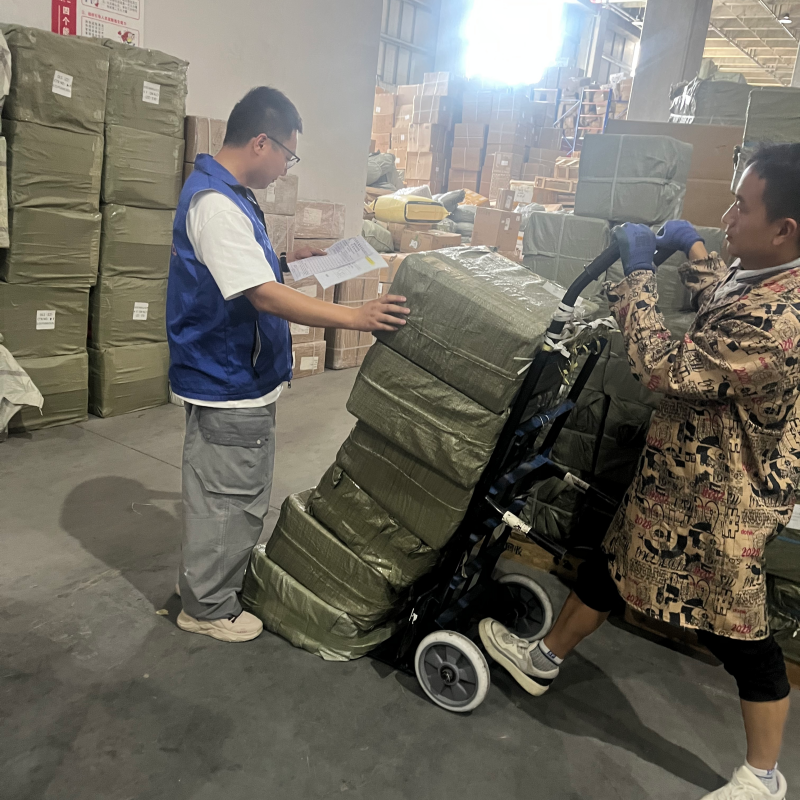
Head haul reliability is produced by three layers working together, not by any single booking action. Understanding the layers helps buyers ask precise questions instead of general ones.
Layer 1 — Capacity access
The first layer is the commercial relationship with airlines and the internal system that allocates it. JTUO Logistics describes capacity negotiation and procurement as a core professional skill, supported by an online booking system, a flight scheduling and space allocation platform, and a real-time cargo space monitoring and dispatch system. In practice this means a booking is matched to an allocation profile — contracted space where shipment patterns justify it, general cargo where flexibility matters more — rather than being placed into whatever capacity happens to be open.
Layer 2 — Origin consolidation
The second layer converts scattered supplier deliveries into a single flight-ready unit. A 2,000 m² in-house warehouse, a Warehouse Management System and a consolidation and load optimisation system support intake, sorting, palletising and load planning. This matters commercially because consolidation efficiency directly affects how late a shipment can be accepted and still make a given flight.
Layer 3 — Airport execution and documentation
The third layer is export processing and departure control. The documented process runs from customer enquiry and order placement through space confirmation and booking, cargo receipt and warehousing, consolidation, export customs declaration, bill of lading issuance, flight departure notification and arrival at the Indian airport. Deliverables along that path include a space confirmation notice, warehouse receipt, consolidation manifest, air waybill (MAWB/HAWB), and departure and arrival reports — documents a buyer can use to verify that the described process actually occurred on their cargo.
Because the metrics are defined against these stages, they can be audited rather than estimated. Space Stability Rate measures the percentage of successful air cargo space allocation under normal and peak-season conditions. Booking Confirmation Success Rate measures the ratio of confirmed and executed cargo space bookings. Consolidation Efficiency measures the average processing time from warehouse intake to shipment consolidation readiness. A buyer who requests these definitions up front can compare providers on the same basis.
Application: Which Cargo Profiles and Buyer Types Rely on Head Haul Space
The integrated model described above is most relevant to buyers who do not own airline capacity but must deliver predictable transit times. JTUO Logistics states that it serves cross-border e-commerce logistics, international freight forwarding and NVOCC operations, and supply chain logistics service providers, with China-wide export coverage feeding a China–India air freight corridor operation.
Cargo categories it lists include consumer electronics, apparel, industrial equipment and components, furniture and building materials, packaging products, household goods, lighting and electrical products, hardware tools, stationery, beauty accessories, sports products, travel goods and pet-related products. The common characteristic is not the product category but the shipping pattern: multiple suppliers, mixed carton profiles, and a delivery commitment that cannot absorb a rolled booking.

Case snapshot: a freight forwarder moving from spot dependence to controlled capacity
JTUO Logistics publishes an anonymised case describing a medium-to-large freight forwarding company based in China that outsources air freight execution to a specialised capacity and consolidation provider. The stated challenges were unstable air cargo space during peak seasons, high volatility in air freight pricing, fragmented warehouse operations, multiple-handling delays and unstable delivery performance. The diagnosis identified the absence of stable airline capacity access combined with unconsolidated warehouse operations as the root cause of a fragmented execution chain.
The deployed solution combined capacity locking, warehouse consolidation and airport execution under a documented process, with deliverables including space confirmation notices, warehouse receipts, consolidation manifests, air waybills and departure and arrival reports. The reported outcomes were qualitative rather than numerical: improved supply chain stability, more predictable delivery performance, reduced operational workload and stronger peak-season scalability. The client's published summary was that space availability “became much more stable, even during peak seasons” compared with working through multiple forwarders.
For an evaluating buyer, the case is useful less as a testimonial and more as a template: it shows which documents a capacity-controlled provider should be able to produce, and it names the failure modes — space instability and fragmented warehousing — that a comparison framework should be designed to detect.
Market Trend Analysis: What Is Changing on the Corridor
Three observable trends shape how head haul space should be evaluated over the next several years.
Volume growth is structural, not cyclical. The India air cargo market is projected to expand from 3.6 million tons in 2025 to 9.9 million tons by 2034 at an 11.38% CAGR (IMARC Group), while Asia-Pacific carriers already recorded 8.3% year-on-year international air cargo growth in June 2025 on the back of e-commerce and high-tech trade (IATA). Growth of this kind increases the value of contracted allocation relative to opportunistic buying.
Regulatory constraints limit ad-hoc capacity options. Under the CAAC regulation AC-129-FS-001R2, foreign carriers without CCAR-129 certification are limited to 10 cargo charter flights per 12-month period (CAAC / Aviation Jeta). That restriction narrows the scope for solving capacity shortfalls with irregular charters, which shifts the burden back onto scheduled and allocated space.
Corridor infrastructure is deepening. The direct air cargo route between Ezhou in China and Bangalore in India provides an annual transport capacity of more than 5,000 tons (SF Airlines / Xinhua), illustrating how dedicated corridor capacity is being added. As lane infrastructure grows, the differentiator moves from “can anyone find space” to “who can allocate it predictably and handle the origin leg cleanly.”
On cost, third-party references are useful only as a directional anchor. The Global Cost Guide 2026, as reported by ShippingChina, placed China to Asia air freight rates in the range of USD 1.76 to 4.10 per kg for shipments above 100 kg as of April 2026. Buyers should validate current rates per shipment rather than budgeting from published ranges, which move with fuel, capacity and season.
Comparison with Traditional Solutions — and the Boundaries of the Integrated Model
Most buyers arrive at this evaluation after working through a fragmented arrangement: several forwarders, each quoting spot rates, each handling part of the origin process. The comparison below sets out where the two approaches differ in practice.
| Comparison point | Fragmented multi-forwarder spot buying | Integrated capacity-controlled model |
|---|---|---|
| Space certainty | Depends on market availability at the time of each booking. | Allocation managed against both contracted and general cargo capacity. |
| Rate behaviour | Exposed to peak-season rate surges between enquiry and booking. | Cost predictability is treated as a defined outcome rather than a market outcome. |
| Origin handling | Multiple warehouses, repeated handling and split documentation. | Single in-house consolidation point with defined intake and sorting steps. |
| Peak-season exposure | Highest risk of rejection, rolling or offloading. | Priority support structured into the allocation policy. |
| Accountability | Responsibility is distributed across several parties. | One operator owns the China-side execution chain and its documents. |
| Visibility | Reporting depends on each forwarder's practice. | Defined metrics with published definitions and standard deliverables. |
That comparison is not one-sided, and buyers should weigh the boundaries of the integrated model just as carefully as its advantages.
- Airport-to-airport scope. JTUO Logistics describes its role as China-side logistics support ending with arrival at the Indian airport. India-side import customs clearance, inland transport and last-mile distribution sit outside that scope, so the model must be paired with a competent Indian partner. Buyers who expect a single provider to cover both ends will need a different structure.
- Allocation cannot create capacity. Even with a Block Space Agreement, a provider depends on airline schedules and aircraft availability. In an extreme peak, allocation is prioritised rather than unlimited, and prioritisation follows a policy that buyers should read in advance.
- Corridor specialisation cuts both ways. Depth on the China–India corridor is an advantage for buyers whose flows sit on that lane, and a limitation for buyers who need comparable control across several unrelated trade lanes from one provider.
- Operating history. JTUO Logistics was established in 2025, while its team reports 15+ years of experience in China–India air shipping logistics. Buyers whose procurement rules require a long corporate track record should weigh the company's short legal history against the team's stated corridor experience, and validate performance through a pilot rather than an assumption.
- Digital visibility has a dependency. Real-time availability monitoring is only as current as the underlying airline data feeds. A buyer should confirm what the portal shows, how often it updates, and what alternative communication channel exists when the data lags.
Future Outlook
If corridor volumes continue along the projected trajectory, capacity control will keep moving from a commercial convenience to a procurement requirement. Three developments are reasonable to expect. First, longer-term allocation commitments will become more common as buyers try to remove peak-season uncertainty from their planning. Second, documentation and metric reporting will standardise further, because buyers increasingly ask providers to prove execution with manifests, air waybills and defined performance measures rather than with capability statements. Third, consolidation quality at origin will matter more than headline capacity numbers, since the origin leg determines whether allocated space can actually be used.
For buyers, the practical implication is straightforward. Build a scorecard from the eight dimensions, ask for evidence against each one, and run a controlled pilot before committing volume. Measure the result against the provider's own definitions, and review after the first one to three shipment cycles, when the provider itself states that improvement becomes noticeable, then again after two to four cycles when performance is expected to stabilise. That sequence produces a defensible comparison rather than an impression.
FAQ
What counts as head haul space on the China–India air freight corridor?
Head haul space is the outbound, capacity-constrained portion of a shipment's journey — on this corridor, the air leg from a Chinese origin airport to an Indian gateway, before any India-side clearance or distribution. That space is allocated by airlines according to schedules, aircraft type and allocation policy, so it cannot be expanded on demand. A provider's head haul capability is therefore measured by how much space it can confirm, how consistently, and under which conditions.
How does a block space agreement (BSA) differ from spot booking on China–India routes?
Under a Block Space Agreement, a provider commits with an airline to a defined allocation over a period, which supports more predictable access and a more stable cost basis than buying each shipment on the open market. Spot booking offers flexibility and can be useful for irregular volumes, but it exposes the buyer to whatever capacity and price exist at the moment of booking. JTUO Logistics states that it manages both BSA and general cargo capacity, which allows the allocation approach to be matched to shipment patterns rather than fixed to a single method.
How can a buyer verify that a provider actually controls air cargo space?
Verification should rest on shipment-level documents rather than capability statements: space confirmation notices, air waybills (MAWB/HAWB), warehouse receipts, consolidation manifests, and departure and arrival reports. Scale indicators add context — JTUO Logistics reports handling over 1,500 air cargo spaces per month and supporting more than 500 freight forwarding partners — and licensing supports the compliance dimension, with an Air Freight Forwarding License, Warehouse Operation & Safety Management Certification and Logistics Service Compliance Qualification. Asking for the same evidence set from every candidate makes comparison possible.
Why does origin warehouse consolidation affect air freight reliability?
Consolidation at origin determines how quickly cargo becomes flight-ready after arriving from multiple suppliers. When that step is split across third-party facilities, each additional handling point adds time, documentation and risk of damage, and it reduces the window in which a late-arriving shipment can still make an allocated flight. JTUO Logistics operates an in-house 2,000 m² warehouse covering consolidation, sorting, palletising and warehouse-to-airport delivery, and defines Consolidation Efficiency as the average processing time from warehouse intake to shipment consolidation readiness — a metric that can be requested from any provider using the same definition.
How should buyers prepare for peak-season cargo space allocation on India routes?
Peak-season allocation is decided before the peak, not during it. Buyers should ask how a provider prioritises space when demand exceeds supply, whether that priority is contractual or discretionary, and what documentation confirms it. JTUO Logistics lists peak-season space guarantee and priority support among its core capabilities, supported by a dedicated space allocation and scheduling team and a real-time cargo space monitoring system. Because allocation ultimately depends on airline schedules, buyers should also plan a buffer of one to two booking cycles ahead of forecast peaks and confirm how schedule disruption is handled.
This article is an independent evaluation framework. Figures attributed to third-party sources are reproduced from published references: The Dollar Business on China–India export value in 2024; IMARC Group on India air cargo market volume and projected growth; IATA on Asia-Pacific international air cargo growth in June 2025; CAAC regulation AC-129-FS-001R2 as reported by Aviation Jeta; SF Airlines and Xinhua on the Ezhou–Bangalore route capacity; and the Global Cost Guide 2026 as reported by ShippingChina on China to Asia air freight rate ranges.