
China Valve BOV303: Wafer, Lug, and Double Flange Compared
China Valve BOV303: Wafer, Lug, and Double Flange Compared
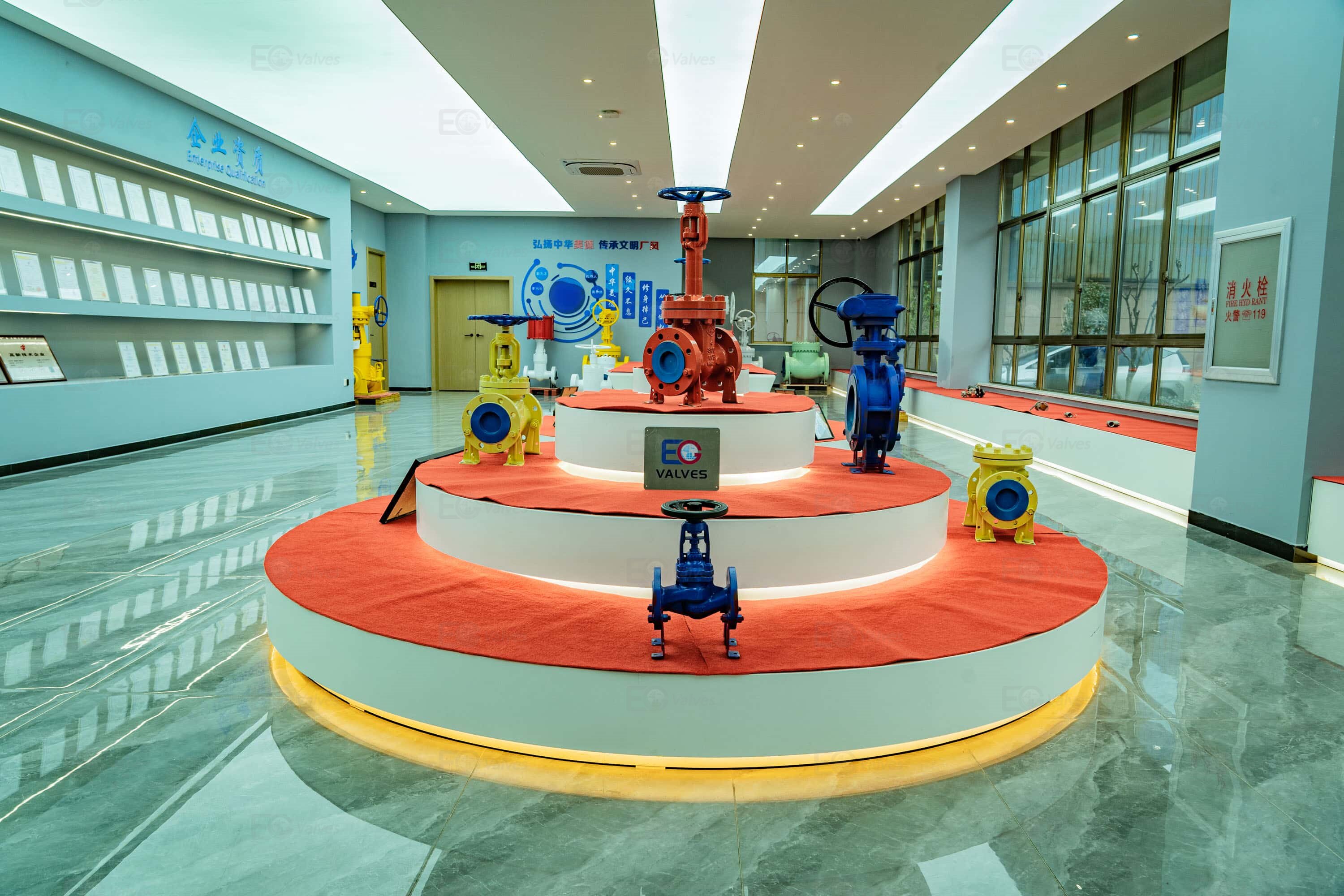
Independent reference context: valve configuration decisions are made well before quotations are compared.
Industrial valve procurement rarely fails at the price-negotiation stage. It fails earlier, when a body configuration from a previous project is copied into a new line list without anyone confirming that the same mounting logic still applies. For a triple offset butterfly valve, that single decision determines how the valve is held in the pipeline, how it is removed for maintenance, and what the surrounding pipe supports must carry.
This comparison looks at the China Valve BOV303 triple offset butterfly valve as a configuration decision rather than a catalogue entry. It covers the three mounting formats the model is offered in — wafer, lug, and double flange — alongside body and disc material options, pressure ratings from PN10 to PN40 and Class 150 to Class 600, and a size range from NPS 2" to 60" (DN50 to DN1500). The aim is to give buyers a comparison logic they can apply before the first quotation arrives, not after.
The configuration question precedes the price question
A butterfly valve is not installed in isolation. It sits between two pipe flanges, and the way those flanges are connected to the valve body defines the entire mechanical interface. Three formats dominate industrial practice, and each makes a different trade between compactness, structural independence, and maintenance access.
Buyers comparing quotations for the same pressure class and material often discover that the quoted models are not interchangeable at all. One may require through-bolts long enough to span the entire valve body. Another may allow the downstream flange to be unbolted while the upstream side stays sealed. A third may bolt directly to the pipe flanges with no shared fasteners. If the piping layout, the isolation philosophy, or the maintenance procedure assumes a specific format, a cheaper model in the wrong configuration becomes a change order rather than a saving.
This is why configuration should be fixed at the evaluation stage, alongside pressure class and material, rather than treated as a commercial afterthought.
BOV303 at a glance
The BOV303 is the triple offset butterfly valve model in the product range of EG Valves Manufacturing Co., Ltd, a valve manufacturer established in 2000 and based in the Sanqiao Industrial Zone, Wenzhou, Zhejiang Province, China. The company operates a 27,500 m² factory with approximately 300 employees, including a 30-engineer R&D team, and reports an annual output of 90,000 pieces across gate, globe, ball, butterfly, check, and plug valves.
Around 80% of that output is exported, with the company citing the EU, North America, Latin America, and the Middle East as principal markets. Manufacturing runs under ISO 9001-certified processes, and the company holds API 600, API 6D, CE PED, and ISO 45001 certifications. Those certification scopes matter for the BOV303 specifically, and the point is addressed in a later section rather than assumed here.
What distinguishes the BOV303 from a resilient-seated or double eccentric butterfly valve is the sealing geometry. The triple offset design is the reason the model can be proposed for oil and petroleum, chemical, steel, and shipbuilding service, where a soft-seated valve would be replaced on a much shorter cycle.
What the triple offset geometry actually changes
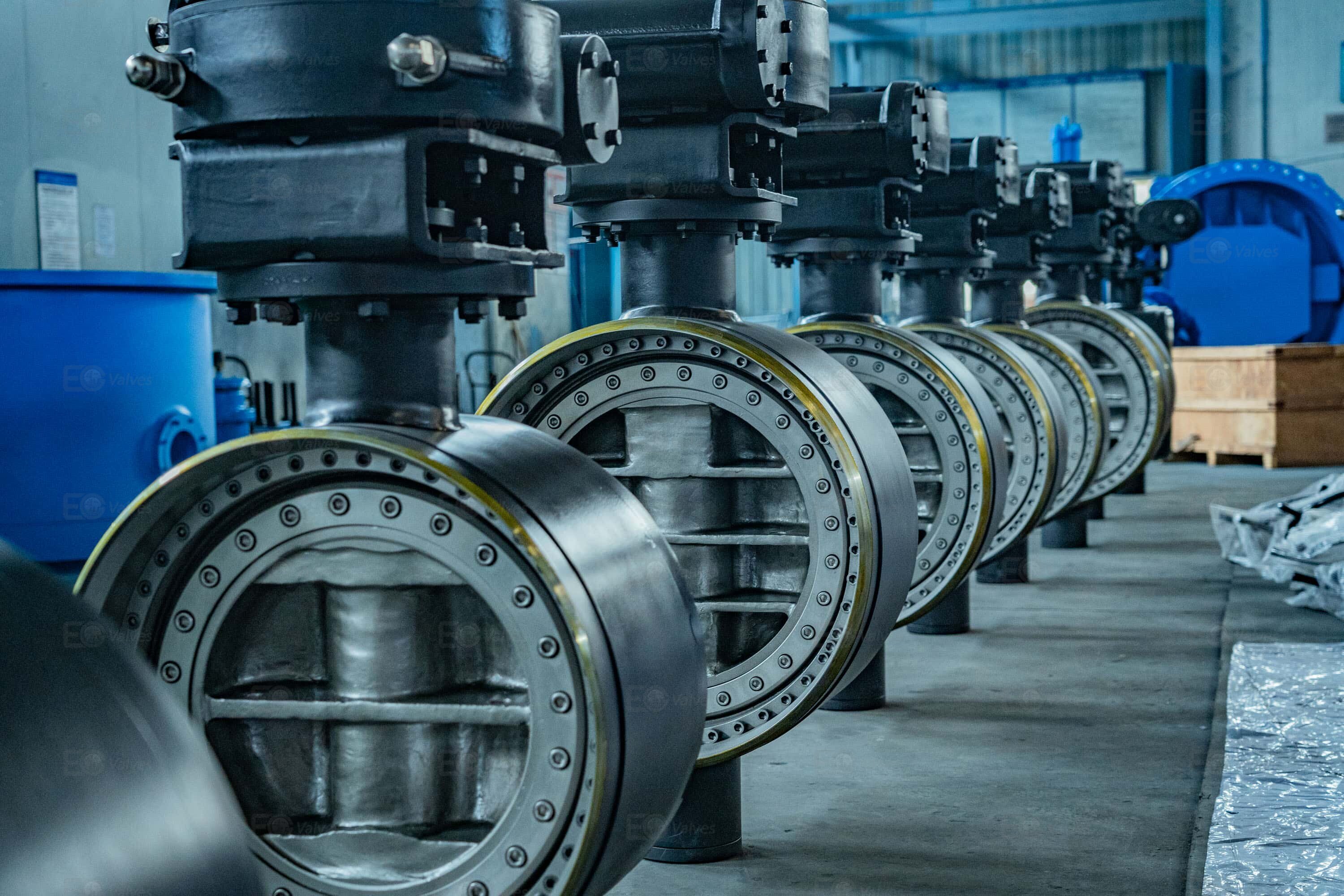
Triple offset geometry separates the disc from the seat within the first degrees of travel.
A triple offset butterfly valve combines three separate geometric offsets: an axial offset of the sealing plane from the shaft, a radial offset of the seat cone from the shaft centreline, and an angular offset of the seat cone itself. The practical consequence is straightforward. As the disc begins to open, it lifts clear of the seat almost immediately, so the two sealing surfaces do not slide against each other through the full stroke.
In a concentric or double eccentric design, the disc and seat remain in contact during part of the rotation. That contact is where wear accumulates, and it is why soft-seated valves in frequent cycling service lose their sealing margin over time. The triple offset geometry moves the wear mechanism away from the sliding interface and into the closing contact itself, which is a much smaller and more predictable wear path.
Two consequences follow for buyers. First, the design targets bubble-tight closure as a metal-to-metal seal, which means the sealing performance depends on machining accuracy and seat alignment rather than on elastomer compression. Second, because there is no elastomer in the sealing path, the valve is not limited by the temperature ceiling of a rubber or PTFE seat. Buyers should still confirm the specific test standard and acceptance rate written into the purchase order, because "bubble-tight" is a claim that needs a defined test procedure behind it.
For erosive service, the BOV303 can be specified with optional Stellite seats. Stellite is a cobalt-chromium hard-facing alloy family used in valve seats where abrasive particles or high-velocity media would otherwise erode a standard seating surface. It is an option, not a default, and the decision should be driven by the actual medium rather than added as a precaution.
Wafer, lug, and double flange: three ways to seat the same valve
All three configurations use the same triple offset sealing principle. What changes is how the valve body is captured between the pipe flanges and what that means for installation, isolation, and removal.
| Configuration | How it is held in line | Structural consideration | Where it usually fits |
|---|---|---|---|
| Wafer | Clamped between two pipe flanges by through-bolts that span the valve body | Shortest face-to-face; the joint depends on the through-bolts and both flanges | Space-constrained lines where the valve is not the end of a run |
| Lug | Tapped lugs on each side accept separate bolt sets per flange | Each flange is fastened independently; the valve can remain anchored when one side is unbolted | Line ends, isolation points, and locations where downstream work is expected |
| Double flange | Integral flanges at both ends bolt directly to the pipe flanges | No shared fasteners; the body carries its own flange rigidity | Large diameters, higher ratings, and lines where the valve is removed independently |
Wafer. The wafer format gives the shortest installed length and the lowest weight of the three. It is the natural choice when line space is tight, the pipe is well supported on both sides, and the valve is not required to act as an isolation boundary at the end of a pipe run. The trade-off is that the joint relies on through-bolts passing across the entire body, so bolt length, torque sequence, and flange alignment all matter more than in the other formats.
Lug. The lug format gives each flange its own bolt set. That independence changes maintenance behaviour. A downstream flange can be unbolted while the upstream side remains fastened and sealed, which is why lug bodies are common at isolation points and at the end of a line where the valve must hold pressure from one side only. The cost is a heavier body and a longer face-to-face dimension than wafer.
Double flange. The double flange format bolts directly to both pipe flanges with no shared fasteners at all. It carries the highest structural rigidity of the three and is the most practical option as diameters grow. On a DN1200 or DN1500 line, a through-bolt spanning a wafer body is a difficult mechanical proposition, while a flanged body connects with ordinary flange bolting on each side. Double flange bodies can also be removed from the line without disturbing the adjacent pipe flanges.
For a buyer, the practical rule is not "which is better" but "which mounting logic does the piping design already assume." A wafer valve in a dead-end position, or a lug valve specified where a double flange was intended, will both work on paper and fail in the field.
Body and disc material options
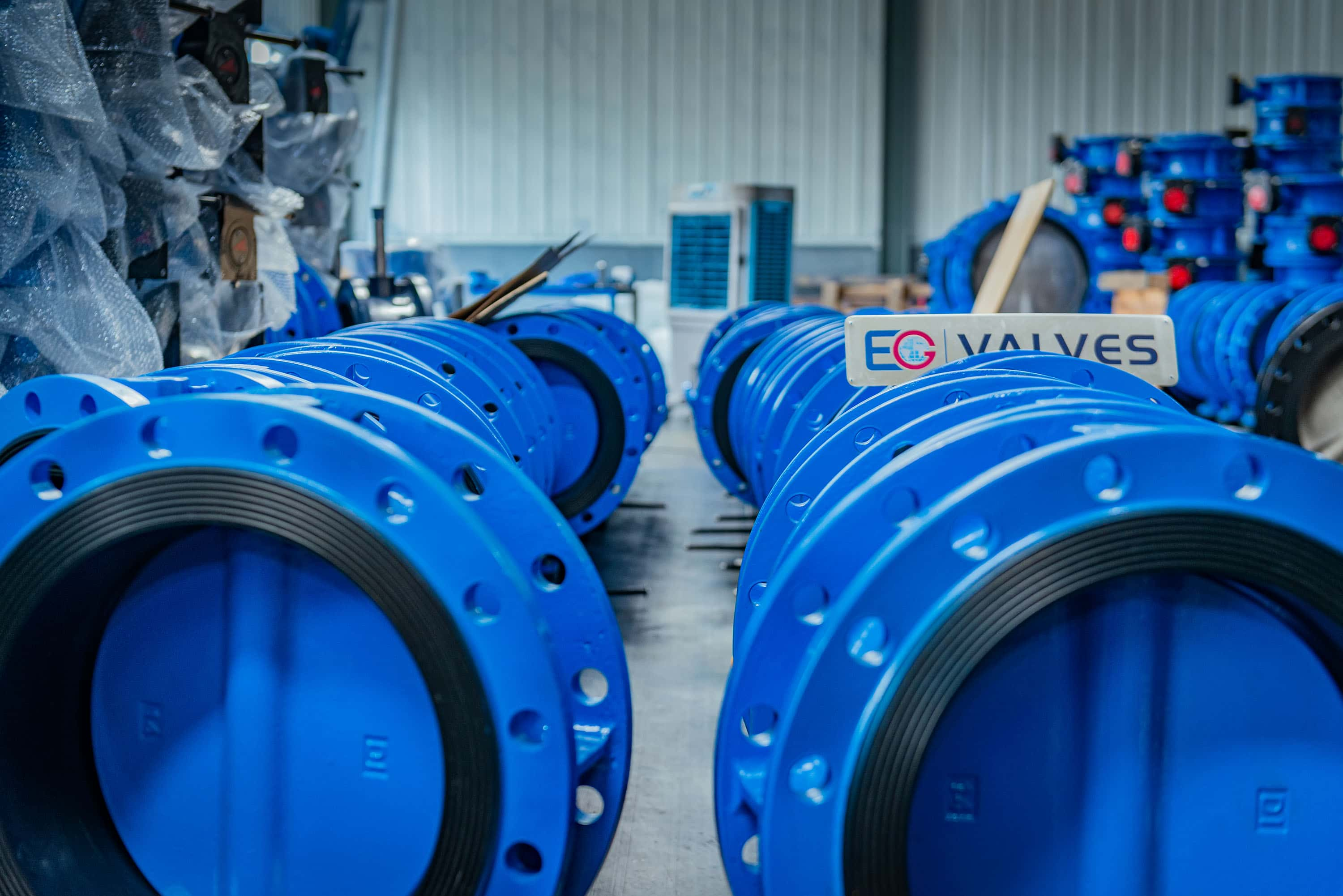
Double flanged bodies bolt directly to pipe flanges and are commonly preferred as diameters increase.
Material selection is where a configuration comparison becomes a service comparison. The BOV303 is offered with body options in carbon steel, stainless steel, alloy steel, and duplex steel, and with disc options in carbon steel, stainless steel, and duplex steel. The body and disc lists are not identical, and that asymmetry is deliberate.
| Material | Available as | Selection consideration |
|---|---|---|
| Carbon steel | Body and disc | The baseline for non-corrosive and mildly corrosive hydrocarbon service; generally the most economical route at larger sizes |
| Stainless steel | Body and disc | Selected where process fluid or ambient conditions require corrosion resistance beyond carbon steel |
| Alloy steel | Body only | Used where elevated temperature or specific service conditions call for alloyed rather than plain carbon grades |
| Duplex steel | Body and disc | Chosen for chloride-bearing and aggressive media, including seawater-adjacent shipbuilding and offshore applications |
The material pairing is a decision, not a default. A duplex body with a carbon steel disc is a valid specification in some service conditions, but it needs to be a deliberate one. Buyers should confirm that the quotation lists body material and disc material as separate line items, because a supplier that quotes "duplex" without qualification may be describing the body only.
The same logic applies to the seat. A standard metal seat and a Stellite hard-faced seat are different specifications with different erosion behaviour, and the difference will not be visible in a single-line quotation description.
Pressure ratings and size range
The BOV303 covers PN10, PN16, PN25, and PN40 on the metric scale, and Class 150, Class 300, and Class 600 on the ANSI scale, across a size range from NPS 2" to 60" (DN50 to DN1500).
Two practical notes follow. First, the metric and ANSI scales are not direct conversions, and a buyer working with a mixed-standard plant should specify which scale governs the joint rather than letting the supplier choose. Second, the combination of rating and diameter narrows the practical configuration options. At the large end of the range, the double flange format is the more natural match because a through-bolt spanning a DN1500 wafer body introduces bolt stiffness and handling problems that a flanged connection avoids. The intermediate sizes are where all three configurations remain genuinely open, and where the decision should be driven by maintenance access and line layout rather than by diameter alone.
Matching configuration to service environment
The four service areas where the BOV303 is typically evaluated are oil and petroleum, chemical, steel, and shipbuilding. Each places a different weight on the configuration decision.
Oil and petroleum. This remains the largest single end-user segment for industrial valves globally, and high-pressure hydrocarbon service tends to favour double flange bodies where line sizes are large and where the valve may be removed independently during turnaround. Wafer bodies remain common on smaller utility and auxiliary lines where space is tight and the valve is not an isolation boundary. Erosive produced-fluid service is where the optional Stellite seat becomes a real specification decision rather than an upsell.
Chemical. Corrosion resistance usually drives material selection before configuration does. Stainless steel and duplex steel bodies with matching discs are the natural starting point, and the lug format becomes useful where the valve serves as an isolation point for a vessel or reactor that is opened for cleaning. The triple offset geometry matters here because the metal seat removes the elastomer that aggressive chemistry would otherwise attack.
Steel. Steel plant service combines elevated temperature, abrasive dust, and frequent cycling. The absence of a soft seat is the main reason a triple offset valve is proposed at all, and the hard-faced seat option addresses the erosion component. Configuration tends to follow pipe diameter rather than process: large main lines typically move to double flange, while smaller ancillary lines stay wafer or lug.
Shipbuilding. Marine service compresses the configuration decision. Space is limited, pipe runs are short, and chloride exposure is continuous. Duplex bodies and discs are the material answer, and the lug format is often the practical compromise between the compactness of wafer and the maintenance independence of double flange. Where a valve sits at the end of a short run or serves as a boundary during maintenance, the lug format is the one that keeps the joint intact when the downstream flange is opened.
Certification coverage and where its boundary sits
Certification is the point where a buyer needs to read the scope, not the logo. EG Valves holds ISO 9001, ISO 45001, CE PED, API 600, and API 6D certifications, but those certificates do not all cover the same products.
The BOV303 triple offset butterfly valve appears within the applicable product scope of the ISO 9001 certificate (issued by China Quality Certification Center, covering gate, globe, ball, butterfly, and check valves, pipe filters and flanges), the ISO 45001 certificate, and the CE PED certificate issued under PED 2014/68/EU Annex III, Module H by TÜV SÜD Industrie Service GmbH.
The API 600 and API 6D certificates cover a different product set. API 600 is scoped to bolted bonnet steel gate valves, and API 6D is scoped to check valves, ball valves, and gate valves. The BOV303 is not listed in either scope. This is a meaningful boundary for a buyer evaluating the valve for a project whose specification calls for API-monogrammed equipment: the BOV303 is supported by ISO and PED certification, not by API 6D or API 600.
This distinction should be resolved at the evaluation stage rather than at the inspection stage. A buyer whose project specification mandates API 6D should confirm whether the butterfly valve is in scope of that requirement or whether the specification was written for the ball and gate valves on the same line list.
Clarifying commercial terms and acceptance criteria before comparing quotations
Two quotations on the same data sheet are not comparable until the commercial and inspection terms behind them are the same. EG Valves states the following terms for its valve orders.
Minimum order quantity: 1 piece for large-size valves and 10 pieces for small-size valves. Delivery terms: FOB, EXW, and CIF are all accepted, depending on the customer's requirement. Payment terms: 30% T/T as deposit with the balance settled before shipment. Acceptance: most orders are inspected by the EG valve QC department, while some customers arrange their own QC or appoint a third-party inspection company. The company states that 100% of valves are inspected by its QC team, and that an EN 10204 3.1 Material Test Certificate is provided with every order.
Manufacturing capacity is reported at 8,000 pieces per month, with a lead time of 25–35 days. OEM and ODM production is supported, with either the customer's brand logo or the EG brand applied.
These terms are the ones that actually determine whether a low quotation is low. A price quoted EXW against a competitor's CIF price, or a delivery promise that assumes customer-side inspection against one that includes third-party witness, will look different once aligned. The acceptance criterion matters most of all: a purchase order that does not name the inspection body, the test standard, and the documentation package leaves the final decision to whoever inspects first.
Market context behind the comparison
The scale of Chinese valve supply is not marginal. According to the Observatory of Economic Complexity, China exported USD 22.6 billion in valves globally in 2024, representing roughly 20% of global export concentration. IMARC Group estimates the global industrial valves market at USD 82.9 billion in 2025, with a projected CAGR of 5.7% through 2034. Grand View Research places Asia Pacific at approximately 36.3% revenue share in 2025, with China holding the largest share within the region.
Market-size estimates for 2025 vary by source — Grand View Research cites USD 80.4 billion and MarketsandMarkets cites USD 101.94 billion — depending on whether actuators and specific valve categories are included. The direction is consistent; the absolute figure is not, and buyers should treat any single number as one estimate among several.
Two composition figures are more directly relevant to a BOV303 evaluation. PR Newswire and Vantage Market Research place oil and gas at nearly 33% of global valve demand in 2024, and Mordor Intelligence reports that cast steel valves accounted for 27.3% of the oil and gas valve market in 2025. The first explains why oil and petroleum service dominates the configuration questions buyers ask; the second explains why carbon steel remains the default body material even in a portfolio that includes stainless, alloy, and duplex options.
What this means for the evaluation
The BOV303 comparison resolves into a sequence rather than a single choice. Configuration comes first, because wafer, lug, and double flange are not interchangeable at the installation stage. Material comes second, and it needs to be specified at both body and disc level. Pressure rating and diameter come third, and they constrain the configuration options at the large end of the range. Certification scope comes fourth, and it is where the API 6D and API 600 boundary needs to be checked against the project specification. Commercial terms and acceptance criteria come last, and they are what makes two quotations genuinely comparable.
A technical brochure covering the EG Valves product range is available for download at the EG Valves brochure page.
Frequently asked questions
What pressure ratings and sizes does the BOV303 cover?
The BOV303 triple offset butterfly valve covers PN10, PN16, PN25, and PN40 on the metric scale, and Class 150, Class 300, and Class 600 on the ANSI scale. The size range is NPS 2" to 60", equivalent to DN50 to DN1500. The metric and ANSI scales are separate rating systems rather than direct conversions, so the governing scale should be stated in the purchase specification.
Which body and disc materials are available for the BOV303?
Body material options are carbon steel, stainless steel, alloy steel, and duplex steel. Disc material options are carbon steel, stainless steel, and duplex steel. Alloy steel is offered for the body but not for the disc. Because body and disc are specified separately, a quotation should identify each material rather than describing the valve with a single material term.
What does the triple offset design change compared with a double eccentric valve?
The triple offset geometry adds a third offset to the seat cone angle, so the disc lifts clear of the seat within the first degrees of opening rather than sliding across it during part of the stroke. The sealing surfaces therefore do not rub against each other through the full travel. The design targets bubble-tight metal-to-metal closure and does not depend on an elastomer seat, which removes the temperature ceiling associated with soft-seated valves.
Which certifications apply to the BOV303?
The BOV303 appears within the applicable product scope of the ISO 9001 certificate, the ISO 45001 certificate, and the CE PED certificate issued under PED 2014/68/EU Annex III, Module H. It is not listed within the scope of the API 600 certificate, which covers bolted bonnet steel gate valves, or the API 6D certificate, which covers check valves, ball valves, and gate valves. Buyers whose project specification mandates API monogrammed equipment should confirm whether the butterfly valve falls within that requirement.
What are the purchasing terms and acceptance criteria?
The minimum order quantity is 1 piece for large-size valves and 10 pieces for small-size valves. Delivery terms of FOB, EXW, and CIF are all acceptable depending on customer requirement. Payment terms are 30% T/T as deposit with the balance settled before shipment. On acceptance, most orders are inspected by the EG valve QC department, while some customers arrange their own QC or appoint a third-party inspection company to conduct the inspection.
What lead time and production capacity apply?
EG Valves reports a monthly capacity of 8,000 pieces of valves and a lead time within 25–35 days. OEM and ODM production is supported, with either the customer's brand logo or the EG brand applied to the product. The company states that its QC team inspects 100% of valves and that an EN 10204 3.1 Material Test Certificate is provided with every order.
This article is an independent buyer reference. Product scope, certification coverage, and commercial terms are stated as published by the manufacturer; market figures are attributed to their named third-party sources.
¿Tiene preguntas o necesita más detalles?
Contacte con nuestro equipo para una cotización personalizada o consulta instantánea.
Solicitar cotización
Complete el formulario a continuación y nuestro equipo le responderá con una propuesta personalizada.
Chat directo de WhatsApp
¿Prefiere chatear en tiempo real? Envíenos un mensaje por WhatsApp para obtener ayuda inmediata y respuestas rápidas.
- Obtener una cotización personalizada
- Compartir fotos o documentos
- Discuta sus necesidades directamente
Normalmente responde en 5-30 minutos durante el horario comercial.