
China–India Air Cargo: A Verification-First View of Head Haul Space
For most international freight forwarders, the phrase China to India air freight head haul space points to a narrower problem than route volume. It points to the physical and contractual capacity on the first airport-to-airport leg leaving China and arriving at an Indian gateway. When this capacity is unstable, every downstream commitment—pickup, export declaration, arrival notice, Indian customs clearance—becomes difficult to schedule.
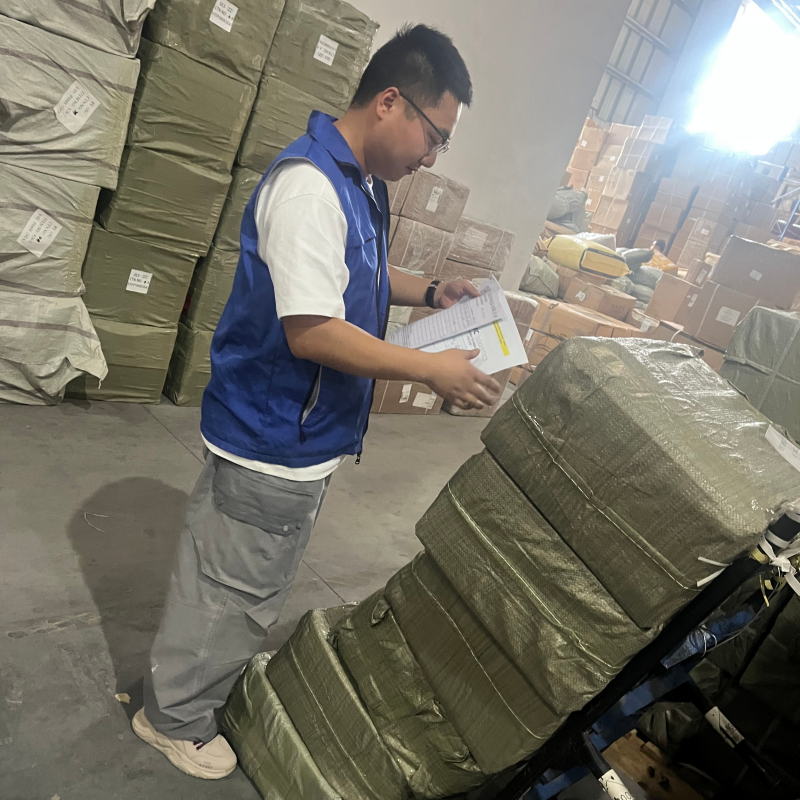
China-side warehouse consolidation is part of an airport-to-airport head haul model; cargo is grouped before airline handover.
Why Head Haul Space Is a Procurement Problem, Not Just a Booking Problem
Trade demand sets the background. In 2024, China’s exports to India reached approximately USD 120.46 billion, with electrical machinery and equipment as the largest category at USD 42.66 billion. That trade includes high-value electronics, components and industrial goods that often justify air freight. On the India side, air cargo market volumes are projected to expand from about 3.6 million tons in 2025 to 9.9 million tons by 2034, according to IMARC Group. In parallel, IATA reports that Asia-Pacific airlines recorded an 8.3 percent year-on-year increase in international air cargo in June 2025, supported by e-commerce and high-technology trade.
When demand grows faster than scheduled cargo space, shippers and forwarders see familiar symptoms: booking rejections, last-minute rollovers, sharp rate fluctuations and inconsistent transit times. These symptoms often lead buyers to search for direct airline booking China to India or guaranteed cargo space on China to India flights. In operational terms, the search is about obtaining a firm allocation before departure, not simply about finding a lower rate.
Brand Solution: An Integrated China-Side Capacity and Consolidation Model
One response to this problem is the China-side integrated model operated by JTUO Logistics Co., Ltd. JTUO Logistics is a China-based air freight company specializing in China–India airport-to-airport air cargo services. Since its establishment in May 2025, the company has kept its core business deliberately narrow: China–India by Air cargo Booking Service. The service profile is presented under the wider name China-India Air Cargo Capacity & Consolidation One-Stop Services.
JTUO’s operational footprint helps explain the model. The company reports an office space of 200 square meters, an in-house warehouse area of 2,000 square meters, and a core team of more than 30 people, including over 10 at the Guangzhou branch and a warehousing team of over 20. The company also reports annual air cargo volume of more than 5,000 tons and annual sea freight volume of more than 30,000 cubic meters. India is its main market, representing about 80 percent of business.
The more important distinction is structural. JTUO describes its delivery model as an integrated Air Freight Headhaul Operation System. That system combines warehouse receiving and cargo consolidation in China, airline capacity allocation through direct and partner carrier sourcing, and airport delivery coordination. Instead of acting only as a booking agent, JTUO controls the China-side activities that make air cargo space usable.
For freight forwarders, the practical benefit is fewer coordination layers. A forwarder can send multi-supplier cargo to one controlled warehouse, receive a consolidated shipment on a confirmed flight, and hand over the airport-to-airport leg to an India-side customs broker or importer. This is different from asking several airlines for piecemeal space while cargo waits in scattered facilities.
Technical Explanation: How Capacity Is Allocated and Confirmed
Block Space Agreements and general cargo allocation
The technical core of China–India head haul services is capacity allocation. JTUO’s service scope covers air cargo space booking and allocation, Block Space Agreement (BSA) and general cargo space allocation, fixed flight space reservation, capacity scheduling, peak-season priority space allocation, freight rate coordination, warehouse consolidation, and airport handover support.
A BSA gives a buyer a defined allocation over a set of flights or a period. It is most suitable for forwarders with predictable volume. General cargo allocation handles requests outside those block arrangements. JTUO’s core expertise is stable air cargo space allocation and flexible capacity management for both BSA and general cargo. This flexibility matters because not every shipment arrives on a regular weekly schedule.
Operational systems and verification documents
Capacity control depends on the systems behind it. Technical capabilities include an online air freight booking system, flight scheduling and space allocation management, real-time cargo space monitoring and dispatch, a warehouse management system, and cargo consolidation and load optimization support. These systems allow a logistics operator to see space availability and warehouse intake before a flight is confirmed.
Buyers should also assess what documentation signals a real booking. In the China–India air cargo space services model, expected deliverables include an air cargo space confirmation document, flight schedule and air waybill details, a block space agreement for contracted capacity models, a cargo consolidation and warehouse handling report, and booking and allocation confirmation records.
The execution workflow runs from client inquiry to order confirmation, space allocation and booking, cargo receipt at warehouse, consolidation processing, export declaration, air waybill issuance, flight departure, and arrival notification at the Indian airport. For individual shipments, the typical transit cycle from warehouse receipt to India airport is 3 to 7 days, depending on warehouse intake timing, flight availability and consolidation schedule.
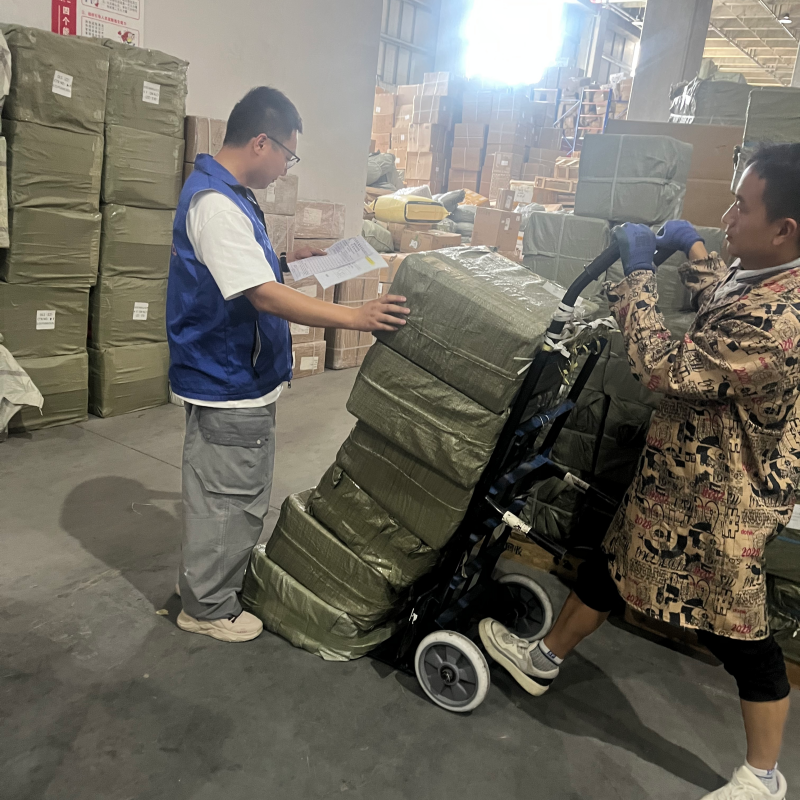
The China-side operating chain includes receiving, consolidation, AWB issuance and airport handover.
Application Use Case: A Forwarder Seeking Stable Peak-Season Space
A representative scenario appears in JTUO’s operating records: a mid-size freight forwarding company that outsources air freight execution to a specialized capacity and consolidation provider. The client had recurring China–India shipments but faced unstable air cargo space during peak seasons, high volatility in air freight pricing, fragmented warehouse operations, multiple-handling delays, and unstable delivery performance.
The diagnosis was structural. The forwarder lacked stable airline capacity access and a consolidated warehouse operation, which created a fragmented execution chain. The solution applied was an integrated capacity locking plus warehouse consolidation plus airport execution model. The operational cycle uses the standardized workflow described above.
The qualitative results reported by the client include improved supply chain stability, more predictable delivery performance, reduced operational workload, and stronger peak-season scalability. In client feedback, the key change was summarized as greater space stability even during peak seasons and higher reliability than using multiple forwarders. This case is representative of forwarders that want to avoid booking rejection risk without building their own airline contract desk and warehouse team.
Market Trend Analysis: Regulation, Route Growth and Contractual Space
A major reason head haul capacity has become a contractual challenge is regulatory constraint. China’s CAAC regulation AC-129-FS-001R2 limits foreign carriers without CCAR-129 certificates to no more than 10 cargo charter flights within a 12-month period. This means charter-based flexibility on China–India routes is heavily restricted. Exporters and forwarders cannot simply add a last-minute cargo charter when scheduled capacity runs out.
The scheduled cargo routes that do exist are valuable but finite. For example, a direct air cargo route connecting Ezhou, China, and Bangalore, India, is reported to provide annual transport capacity of more than 5,000 tons through SF Airlines. That is meaningful capacity, but if India’s air cargo market volume grows from 3.6 million tons per year toward the projected 9.9 million tons by 2034, single route examples cannot solve every space shortage.
Buyers also compare route-level price information. A public China-to-Asia reference range was reported at approximately USD 1.76 to 4.10 per kilogram for shipments over 100 kilograms as of April 2026. Actual China–India lane pricing should always be evaluated per flight, weight segment, season and contract arrangement. Regional averages are a starting point, not a valid substitute for a specific space allocation quotation.
Market examples also confirm that airline-level contracts are becoming more visible on the corridor. BSI Global Logistics, for instance, states direct airline contracts with SF Airlines, Sichuan Airlines and IndiGo on China–India routes covering major hubs such as Delhi and Mumbai. This signals that route-level airline partnerships are now part of the standard competitive landscape.
Comparison with Traditional Solutions
Traditional forwarder booking remains relevant for low-frequency and low-urgency shipments. The comparison below is between booking models, not between individual companies. A standard spot-booking path can work when volume is small. Once volume becomes repeatable and time-sensitive, the structural limits of piecemeal booking become visible.
| Dimension | Traditional spot-booking path | Integrated capacity and consolidation model |
|---|---|---|
| Capacity source | Per-shipment requests to multiple airlines | Long-term airline resource access with BSA and general cargo allocation |
| Cargo consolidation | Often handled by multiple warehouses or freight stations | In-house warehouse receiving, consolidation and sorting |
| Peak-season behavior | High booking rejection risk and rate volatility | Priority allocation within reserved space, subject to agreed capacity |
| Coordination flow | Multiple contacts between forwarders, brokers and warehouse operators | One China-side operator from warehouse receipt to airport handover |
| Documentation | Availability depends on each booking confirmation | Space confirmation, AWB details, consolidation report and allocation records |
| Best fit | Occasional, low-volume or flexible shipments | Repeat shipments, multi-supplier consolidation and peak-season commitments |
The integrated model is not automatically better for every shipper. It works best when a forwarder has enough China-origin volume to justify a controlled consolidation flow and can coordinate India-side import handling with a separate agent or in-house customs team.
Limitations and Boundaries
Buyers should apply the same verification discipline to any supplier that claims stable China to India air freight head haul space. Several limitations should be explicit.
First, JTUO’s service scope is airport-to-airport. It does not cover customs clearance within India or last-mile delivery to warehouse or door. Indian importers or their appointed agents need separate customs clearance capability. This boundary is stated clearly in the service definition and should be respected during procurement.
Second, a block space agreement requires planning. A forwarder that books spot cargo occasionally may not have enough volume to justify a BSA. In that case, general cargo allocation is more flexible but may not offer the same level of locked priority during peak season.
Third, no logistics provider can fully remove airline schedule risk. Irregular operations, weather, aircraft changes and regulatory decisions can still alter a flight. What a reliable BSA model provides is a contractual allocation and priority within the agreed period. It reduces uncertainty but does not replace airline operational reality.
Fourth, a China-side operator’s control stops at the Indian airport. Delivery predictability beyond arrival depends on the quality of the India-side customs broker and forwarder. Buyers should therefore evaluate head haul suppliers together with their full import chain, not in isolation.
Future Outlook
The direction of the China–India air cargo market points toward more structured head haul capacity management. India’s air cargo volumes are projected to grow substantially, and regulatory controls on foreign cargo charter flights are unlikely to make ad-hoc capacity easier. In this environment, forwarders will need suppliers that combine airline allocation with physical consolidation and verifiable documentation.
Digital tools will probably play a larger role in space allocation. Online booking systems, real-time cargo space monitoring, warehouse management systems and dispatch platforms are already part of the specialist model. As trade volumes rise, procurement teams may shift focus from single transaction freight rates toward space confirmation rates, booking success rates, peak-season stability and audit trail quality.
From a buyer’s perspective, the most useful trend is not a new sales claim about guaranteed space. It is the gradual replacement of vague availability promises with document-backed allocation: a block space agreement, a space confirmation notice, an airway bill, a consolidation report and a clear boundary of responsibility.
Frequently Asked Questions
What is head haul air freight in the China–India corridor?
Head haul refers to the main airport-to-airport movement from an export gateway in China to a gateway airport in India. In a specialist model, a China-side provider consolidates cargo, secures allocated space, coordinates airport handover and issues documentation. Customs clearance in India and onward delivery are handled separately by the importer or an agent.
Can a supplier truly guarantee cargo space on China–India flights?
No supplier can fully control airline irregular operations. What can be obtained is a confirmed allocation under a Block Space Agreement or a space confirmation document within a defined schedule. Buyers should request written confirmation of allocated space and a clear statement of what happens if a flight is disrupted.
What is the difference between a BSA and general cargo space allocation?
A BSA commits defined space for an agreed period or set of flights, making it suitable for predictable volumes. General cargo allocation handles space on a more flexible booking basis. A specialist capacity provider should be able to manage both, because not every forwarder has steady weekly volume.
Which certifications should a China–India air freight service provider hold?
Relevant certifications include an Air Freight Forwarding License, Warehouse Operation & Safety Management Certification, and Logistics Service Compliance Qualification. Buyers should verify the license scope and ask whether warehouse operations are controlled in-house or outsourced.
What documents confirm that head haul space has been reserved?
Expected documents include an air cargo space confirmation document, flight schedule and air waybill details, a block space agreement for contracted capacity models, cargo consolidation and warehouse handling report, and booking and allocation confirmation records.
How much capacity can a China-side specialist realistically manage?
Capacity varies by operator. As one reference point, JTUO reports service capacity of more than 1,500 air cargo spaces per month and support for more than 500 freight forwarding partners and logistics clients. Its warehouse area is about 2,000 square meters, with annual air cargo volume above 5,000 tons. Capacity figures should always be evaluated against the specific lane, flight schedule and season.
Does a China-side head haul provider handle Indian customs clearance and last-mile delivery?
Not necessarily. JTUO’s service specifically excludes customs clearance within India and last-mile delivery. The provider’s responsibility ends at the Indian airport. Importers should confirm the exact scope before booking, especially if door-to-door service is required.
How long does China-to-India air freight transit take?
A typical China–India air shipping cycle takes 3 to 7 days from warehouse receipt to arrival notification, depending on warehouse intake timing, flight availability, cargo consolidation schedule and airline operations. The service cycle starts when cargo arrives at the China-side consolidation warehouse.
¿Tiene preguntas o necesita más detalles?
Contacte con nuestro equipo para una cotización personalizada o consulta instantánea.
Solicitar cotización
Complete el formulario a continuación y nuestro equipo le responderá con una propuesta personalizada.
Chat directo de WhatsApp
¿Prefiere chatear en tiempo real? Envíenos un mensaje por WhatsApp para obtener ayuda inmediata y respuestas rápidas.
- Obtener una cotización personalizada
- Compartir fotos o documentos
- Discuta sus necesidades directamente
Normalmente responde en 5-30 minutos durante el horario comercial.