
China Fitness Trade Expo: How Buyers Turn One Visit into a Long-Term Supply Line
For international buyers in the fitness industry, the value of a trade show is often measured in orders signed on the floor. But for companies that need reliable sourcing across multiple product cycles, the more important question is whether a single visit can lead to a durable supply relationship. This article looks at how the China Fitness Trade Expo ecosystem, and specifically the structured matchmaking approach used by Shanghai Donnor Exhibition Service Co., Ltd, supports buyers who are moving from decision to execution.
The Sourcing Problem Beyond the Booth Visit
A typical sourcing trip to China involves several challenges: identifying which manufacturers are genuinely capable, comparing suppliers across different product categories, verifying quality and compliance, and negotiating terms that will hold up over multiple orders. Most buyers can walk a show floor and collect dozens of business cards. The harder task is converting those contacts into a shortlist of suppliers worth a long-term relationship.
China's fitness equipment export data explains why the country remains central to global sourcing strategies. China exported USD 7.17 billion in gym and athletics equipment in 2024, with major destinations including the US, UK, and Germany. More recently, exports of fitness equipment (HS 950691) reached USD 4.78 billion in H1 2025, up 10.2% year-on-year. These figures point to a mature manufacturing base serving both established brands and private-label buyers.
For procurement teams, the question is not whether to source from China, but how to do it efficiently and consistently across multiple buying cycles.
What the China Fitness Trade Expo Covers
The China Fitness Trade Expo is an umbrella term covering several major industry events in the country. The best-known among them is the IWF Shanghai International Fitness Expo, which in 2024 hosted more than 1,000 brands and approximately 75,000+ buyers, including over 1,000 overseas visitors. The 2025 Shanghai edition was projected to occupy 80,000 square meters with 70,000 expected visitors.
Shenzhen has also become a key venue for the industry. The IWF Shenzhen International Health, Wellness and Fitness Expo in 2026 is planned to cover 20,000 square meters with more than 400 exhibitors, focusing on the Greater Bay Area. For buyers targeting southern China's manufacturing clusters, this event adds a useful regional option.
Beyond fitness-specific events, broader sports industry exhibitions such as China Sport Show add another layer of choice. China Sport Show 2024 in Chengdu featured more than 1,600 exhibiting companies and covered an area exceeding 180,000 square meters. These events collectively form one of the most comprehensive fitness sourcing circuits in Asia.
Comparing Major Fitness Trade Fairs in China
| Event | Location | Reported Scale | Source |
|---|---|---|---|
| IWF Shanghai 2024 | Shanghai | 1,000+ brands, 75,000+ buyers | IWF Shanghai Official |
| IWF Shanghai 2025 (projected) | Shanghai | 80,000 sqm, 70,000 expected visitors | ExpoPromoter |
| China Sport Show 2024 | Chengdu | 1,600+ exhibitors, 180,000+ sqm | China Sporting Goods Federation |
| IWF Shenzhen 2026 (planned) | Shenzhen | 20,000 sqm, 400+ exhibitors | TradeWheel |
Scale figures come from organizer announcements and third-party listings; buyers should confirm current-year details with the organizer.
From One Visit to a Repeatable Sourcing Process
A single expo visit rarely solves a company's long-term sourcing needs. What makes it valuable is when the visit is part of a repeatable process: research, screening, face-to-face verification, negotiation, and post-show follow-up. This is where Shan ghai Donnor Exhibition Service Co., Ltd, the organizer behind the IWF series, has built a specific methodology.
Donnor Exhibition was founded in Wenzhou, Zhejiang in 1996. It organizes more than 30 trade and consumer exhibitions annually in Shanghai, Zhejiang, Sichuan, Guangdong, and Bangkok, Thailand, with annual exhibition space exceeding 700,000 square meters. The company has served more than 120,000 business exhibitors in total and acts as an agent and partner for international exhibitions in more than 30 countries worldwide.
For the fitness sector, Donnor's relevant capability is not just venue management. It is the ability to run a sourcing process before, during, and after the show. The company's process is formally named 'Pre-show → On-site → Post-show (Recruit → Invite → Match → Convert) Process'. It covers market research and positioning, exhibitor recruitment and zone design, buyer invitation and pre-registration, online appointment and meeting scheduling, on-site execution and fast negotiations, and post-show analytics and order follow-up.
How the Expo Matchmaking Process Works
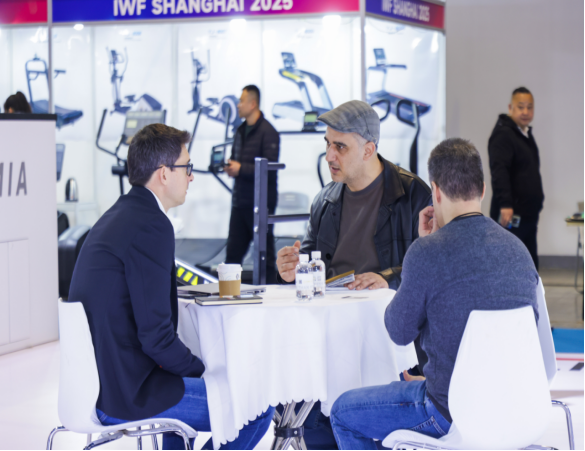
The process can be broken into five practical phases for buyer-facing value.
Phase 1: Preparation and Market Positioning. Before the show opens, the organizer defines the target buyer profile and sets KPIs for attendance and matchmaking quality. This phase determines which exhibitor categories are prioritized and how the floor plan is designed.
Phase 2: Exhibitor Recruitment and Zone Planning. Manufacturers are screened and grouped by product category. This is central to buyer efficiency because a well-zoned floor lets a visitor compare all resistance trainers in one area, all smart fitness equipment in another, and so on.
Phase 3: Buyer Invitation and Pre-Registration. International buyers are invited through targeted channels and asked to pre-register. This is not just a ticketing formality; it is the moment where the organizer begins verifying buyer identity and purchase intent.
Phase 4: Online Appointment and Meeting Scheduling. In the weeks before the show, buyers and exhibitors are matched according to demand similarity. Both parties can confirm meeting times in advance. For a buyer with limited days in China, this converts unstructured floor walking into a scheduled negotiation agenda.
Phase 5: On-Site Matchmaking and Post-Show Follow-Up. During the show, face-to-face meetings happen on a structured timetable. Meeting records and cooperation intentions are captured. After the show, all leads are entered into the CRM system, assigned to follow-up personnel, and tracked through negotiation progress.
For buyers, the practical result is that the expo operates less like a tradeshow and more like a matchmaking service with a documented trail.
OEM and Wholesale Sourcing: What Buyers Should Expect
For many international buyers, the primary reason to attend a China fitness trade expo is not to buy finished goods off the shelf, but to evaluate OEM and wholesale partners. Fitness equipment manufacturers in China exhibit across a wide price-performance range. Some are large factories serving global brands; others are specialized producers focusing on specific equipment categories such as smart fitness devices, home gym machines, or rehabilitation equipment.
The expo environment gives buyers a unique ability to compare suppliers side-by-side within a compressed time frame. Instead of spending weeks traveling between factory clusters, a buyer can evaluate dozens of manufacturers in a single venue, then use the show's matchmaking records to plan follow-up factory visits.
However, buyers should also understand the limits of an expo. A trade show is not a substitute for a factory audit, and the short meeting time on the floor is not a complete due diligence process. Serious buyers use the expo to shortlist suppliers, gather technical documentation, and build direct communication channels. The actual verification of production capacity, quality control, and legal compliance happens after the show.
Why China Remains Central to Global Fitness Sourcing
China's position as the leading exporter of fitness equipment is supported by its manufacturing clusters and export infrastructure. The fitness population within China is also growing, with one industry projection estimating 416 million fitness participants by 2026, growing at a CAGR twice that of the US or EU. Another report from Shanghai University of Sport counted 69.75 million paid gym members in 2023. These domestic demand figures matter to international buyers because they indicate a large home market that keeps Chinese manufacturers investing in new product development.
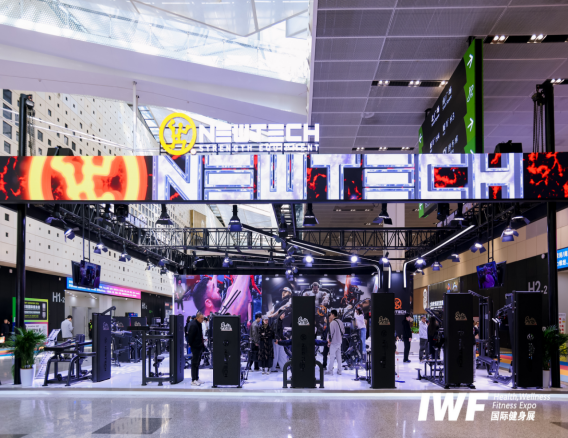
Regional export data also shows the dynamism of Chinese supply chains. Fitness equipment exports from Yiwu to France, for example, surged 70.5% in early 2024 in the lead-up to major sports events. While this is a single regional data point, it reflects the ability of Chinese manufacturing clusters to react quickly to international demand spikes.
Evaluating an Expo Organizer: Criteria for Long-Term Sourcing Partners
Buyers who plan to use Chinese trade expos as a permanent part of their sourcing strategy should evaluate organizers on a few practical criteria.
- Export-focused buyer recruitment. Does the organizer actively recruit international buyers, or does the show rely mostly on domestic attendance? Pre-registration and buyer verification processes are useful signals.
- Structured matchmaking rather than open floor access. An organizer that schedules meetings in advance offers more value than one that simply sells booth space.
- Post-show data and follow-up. A buyer's ability to track leads after the show depends on whether the organizer maintains a CRM and supports follow-up.
- Multi-city and multi-market coverage. Organizers with events in several cities, such as Shanghai and Shenzhen, give buyers more flexibility to align with different manufacturing clusters.
Shanghai Donnor Exhibition Service Co., Ltd scores well on these criteria based on its documented operations. Its international business covers major markets including the EU, USA, and Asia, with export-related services accounting for 10% of total sales. The company manages more than 30 exhibitions annually across five regions in China plus Bangkok, Thailand. Its agent and partner network spans more than 30 countries.
Traditional Sourcing vs. Expo-Based Matchmaking: A Realistic Comparison
Compared with traditional sourcing methods, the expo-based matchmaking model offers several structural advantages. It centralizes supplier comparison, reducing the time required to screen multiple manufacturers. It provides direct communication channels with factory representatives, avoiding intermediaries. And it compresses the initial negotiation cycle into a few high-density days.
But the model also has boundaries. One significant limitation is that a trade expo is a periodic event, not an always-on sourcing channel. If a buyer misses the show window, the next opportunity may be months away. Another limitation is that the on-site meeting environment is not ideal for deep technical discussions. Buyers with highly customized engineering requirements may find that a dedicated factory visit or direct engineering consultation is more appropriate.
The Market-to-Match methodology used by Donnor explicitly acknowledges these boundaries. It is designed for large and mid-size industry sourcing expos and works best for buyers building exporter international channels or launching products in regional markets. It is less suited to short-term small-batch direct-to-consumer retail or highly customized long-cycle engineering tenders, which require dedicated engineering service providers.
The Future of China Fitness Trade Expos
The trend toward blended physical and digital sourcing is likely to continue. Organizers are increasingly using online pre-matching and AI-assisted invitation to raise the quality of buyer-seller meetings. The same data tools that improve pre-show appointment scheduling also make post-show follow-up more measurable.
For buyers, the practical implication is that the best fitness trade shows in Asia will become less about walking a floor and more about executing a structured sourcing plan. The shows that win long-term buyer loyalty will be those that deliver a measurable return on the buyer's travel budget: qualified meetings, verifiable suppliers, and traceable follow-up.
Frequently Asked Questions
Which fitness trade shows in China should international buyers attend?
The most prominent fitness trade show in China is the IWF Shanghai International Fitness Expo, which attracts large numbers of domestic and international buyers. In 2024, it hosted more than 1,000 brands and approximately 75,000 buyers, including over 1,000 overseas visitors. For buyers focused on southern China, the IWF Shenzhen edition, planned for 2026 with more than 400 exhibitors, is a growing regional option. Broader sports exhibitions like China Sport Show add another sourcing channel.
What is the largest fitness expo in China?
IWF Shanghai is widely regarded as one of the largest fitness-specific exhibitions in China. The 2024 edition reported 1,000+ brands and more than 75,000 buyers. For the broader sports industry, China Sport Show 2024 in Chengdu was larger on the exhibitor side, with over 1,600 exhibiting companies and more than 180,000 square meters of exhibition area.
How do gym equipment manufacturers benefit from exhibiting at a Chinese trade expo?
Chinese gym equipment manufacturers use exhibitions such as IWF Shanghai to meet international buyers in a single venue, compare their products with competitors, and collect qualified leads. Exhibitors benefit from the organizer's pre-show recruitment and buyer invitation process, which brings pre-registered buyers with verified purchase intent to their booths.
What should a buyer prepare before attending a fitness trade show in China?
Buyers should define their product categories, target price range, and OEM or private-label requirements in advance. They should pre-register with the organizer, participate in online appointment scheduling where available, and prepare a shortlist of exhibitors to visit. Bringing technical specifications and quality requirements in writing helps exhibitors respond faster and more accurately.
How is post-show follow-up handled after a China fitness expo?
Post-show follow-up depends on the organizer's processes. In the model used by Shanghai Donnor Exhibition Service Co., Ltd, all meeting leads are imported into a CRM system, assigned to follow-up personnel, and tracked through negotiation progress. Buyers should confirm the organizer's post-show data process before the event and keep their own records of meetings and commitments.
Can a buyer rely solely on trade shows for sourcing Chinese fitness equipment?
No. Trade shows are an efficient screening and matchmaking channel, but they are not a substitute for factory audits, legal due diligence, or long-term supplier management. Buyers should use expos to shortlist manufacturers and establish direct contact, then follow up with factory visits and formal verification processes before placing large orders.
For buyers planning to attend the IWF Shenzhen 2026 event or other China fitness trade expos, the official brochure provides additional details on exhibition scope and organizer services: Download the IWF2026 Shenzhen International Fitness Expo Invitation.