
China Fitness Trade Expo: Capability Evidence in One Loop
Fitness equipment sourcing from China is no longer limited by supply. China exported USD 7.17 billion of gym and athletics equipment in 2024, primarily to the United States, the United Kingdom and Germany, according to the Observatory of Economic Complexity (OEC). In the first half of 2025, exports recorded under HS 950691 reached USD 4.78 billion, a 10.2% year-on-year increase, according to Big Trade Data. The constraint has shifted from “can we find a manufacturer” to “can we verify that the right manufacturer can deliver”.
The China Fitness Trade Expo addresses that constraint by converting supplier capability into observable evidence: a pre-matched shortlist, a dated one-on-one meeting timetable, documented on-site negotiations, and a post-show meeting record that carries the relationship forward. The mechanism is an organiser-run matchmaking loop, not an open exhibition floor. This reference explains how the loop works, what evidence it produces, how one US procurement engagement used it to reduce supplier inspection travel costs by more than 70% and complete negotiations with 12 qualified manufacturers within one month, and where the model does not fit.
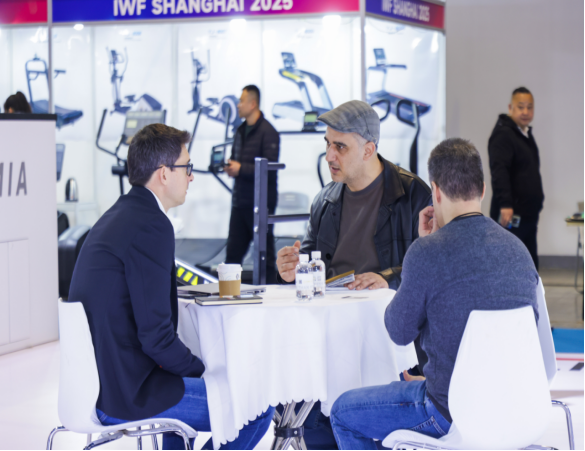
Pre-scheduled B2B matchmaking turns supplier evaluation into a timed, documented meeting sequence rather than an open walk of the exhibition floor.
Why Supplier Capability Is Difficult to Verify Before a Purchase
Online discovery is efficient; online verification is not. A buyer can assemble a list of dozens of gym equipment manufacturers within a day, but almost everything on that list is self-declared: catalogue photography, specification sheets, capacity statements, and promotional claims. The problem is not a lack of information. The problem is that the information is not comparable and not independently observed.
Three specific gaps appear before any purchase order is issued.
- No common comparison basis. Ten manufacturers describe similar products using different terminology, different configuration assumptions, and different definitions of “commercial grade”. Comparing them requires normalising every claim first.
- Verification cost falls entirely on the buyer. Confirming that a factory can actually produce a specified product usually means travelling to see it. A conventional sourcing trip of two to three weeks realistically covers only a handful of facilities, which makes factory visits an expensive first filter rather than a confirmation step.
- No structured follow-up. Decisions made across scattered emails, WeChat threads and short visits rarely leave a comparable record, so internal approval and price negotiation restart from weak ground.
The macro numbers make this a supply-rich, verification-poor market. Export volumes are large and still growing, so buyers are not competing for access to manufacturers — they are competing for reliable ways to tell good suppliers from adequate ones quickly. That is the opportunity the expo model targets.
The China Fitness Trade Expo as a Matchmaking Platform
Shanghai Donnor Exhibition Service Co., Ltd is a Shanghai-based exhibition organiser founded in Wenzhou, Zhejiang in 1996, whose business covers trade fairs, conferences and events, and industrial internet platforms. The company organises more than 30 trade and consumer exhibitions annually in Shanghai, Zhejiang, Sichuan, Guangdong and Bangkok (Thailand), with annual exhibition space exceeding 700,000 square meters, and it has served more than 120,000 business exhibitors in total. It also acts as an agent and partner for international exhibitions in more than 30 countries worldwide, with major markets in the EU, the USA and Asia. Its official site is www.donnor.com/en.
Within the sports and fitness sector, the IWF-branded shows are the fitness-specific format in that portfolio. IWF Shanghai 2024 hosted more than 1,000 brands and approximately 75,000 buyers, including more than 1,000 overseas visitors, according to IWF Shanghai Official. IWF Shenzhen 2026 is planned to cover 20,000 square meters with more than 400 exhibitors, focused on the Greater Bay Area, according to TradeWheel.
What distinguishes this format for procurement purposes is not floor size but sequencing: manufacturers are recruited against identified buyer demand, buyers are invited and verified before arrival, and meetings are scheduled before the doors open. The exhibition is the venue; the matchmaking loop is the product.
Technical Explanation: The Four-Step Matchmaking Loop
The loop is described in the Expo + Platform Matchmaking Methodology (Market-to-Match) v2.0, which sets out four stages that repeat each edition and feed into one another. Operationally it is delivered as a “Pre-show → On-site → Post-show (Recruit → Invite → Match → Convert) Process” across five or six working phases, but the logic a buyer participates in is the four-step version below.
Step 1 — Market research and target mapping
The organiser analyses industry demand, defines the characteristics of target purchasers, builds standardised buyer portraits, and produces categorised buyer candidate lists. For a buyer, this is the layer that prevents a generic event: the demand side is profiled before the supply side is recruited.
Step 2 — Exhibitor recruitment and buyer invitation with online pre-matching
Qualified manufacturers are screened against buyer demand, exhibitors are classified by product category, and zone layouts are planned so that supply and demand are positioned against each other in advance. In parallel, targeted overseas promotion invites qualified procurement buyers to pre-register, and buyer authenticity and procurement intent are verified. Online scheduling then matches exhibitors and buyers by demand similarity, allowing both parties to confirm a meeting time in advance and form a formal meeting appointment sheet.
Step 3 — On-site matchmaking and negotiations
On-site reception guidance moves buyers through their scheduled meetings. Both sides conduct face-to-face business negotiations, and the communication content and cooperation intentions are recorded in real time rather than reconstructed afterwards.
Step 4 — Post-show data tracking and conversion support
All meeting leads are imported into a CRM system, follow-up owners are assigned, negotiation progress is tracked continuously, and conversion data is fed back to optimise the next edition — specifically the invitation lists and zone allocation. The optimisation logic is iterative: better buyer data produces better matches, which produces denser meetings the following cycle.
| Loop stage | What the organiser does | What the buyer receives |
|---|---|---|
| Research & target mapping | Demand analysis, buyer portraits, categorised candidate lists | A defined buyer profile and market map for the sourcing project |
| Exhibitor recruitment & zone planning | Screening manufacturers against buyer demand, category classification, scientific zone layout | A category-organised supply side to compare within, not across, product types |
| Buyer invitation & pre-registration | Targeted overseas promotion, verification of identity and procurement intention | Confirmation that counterparties are procurement-side, not retail visitors |
| Online appointment scheduling | Demand-similarity matching, online time confirmation | A formal meeting appointment sheet and one-on-one timetable |
| On-site matchmaking | Reception guidance, real-time recording of communication and intent | Documented face-to-face negotiation records |
| Post-show CRM & follow-up | Leads imported, follow-up owners assigned, progress tracked, data fed back | Leads list, analytics report and a structured next step |
From Claims to Evidence: What the Loop Actually Produces
The practical difference between an expo visit and a matchmaking loop is the type of output it leaves behind. Four evidence artefacts are generated, and each one answers a different procurement question.
A verified supplier shortlist. Because exhibitors are recruited against buyer demand and screened before zoning, the shortlist is demand-shaped rather than popularity-shaped. It answers the question “which manufacturers are relevant to my category, my market, and my order profile” before any travel is booked.
A one-on-one meeting timetable. Online pre-matching converts interest into a dated schedule. This is the difference between hoping to meet the right people and knowing which supplier is seen at which hour. Meeting density per day becomes a planning variable the buyer controls.
On-site coordination records. Negotiations are captured in real time, including stated cooperation intent. For an internal approval process, a contemporaneous record carries more weight than notes written a week later.
A post-show meeting record and leads list. Every meeting is imported into a CRM system with a named follow-up owner. The buyer does not exit the process at the airport; the follow-up structure is already in place, and the accumulated record becomes the basis for the next negotiation round.
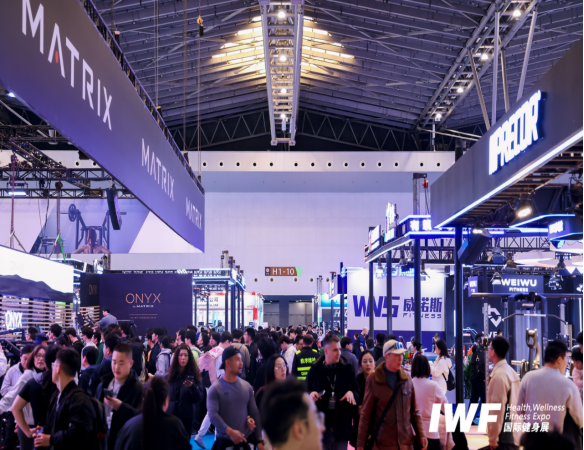
Guided visitor flow inside the hall: pre-registration and appointment sheets define how buyers move between scheduled supplier meetings.
Application: A US Procurement Case in One Month
The clearest illustration of the loop in practice is a procurement engagement supporting US entrepreneurs sourcing fitness equipment. The solution applied was targeted B2B matchmaking sessions during the IWF exhibition, gathering verified fitness equipment manufacturers in one venue. The methodology used was the four-step loop: market research and target mapping, pre-show exhibitor recruitment and buyer invitation with online pre-matching, on-site matchmaking and negotiations, and post-show data tracking and conversion support.
The project duration was one month. Reported outcomes from the engagement include:
- A verified supplier shortlist rather than an open search list;
- A one-on-one meeting timetable that replaced unsequenced factory visits;
- On-site coordination of negotiations across multiple manufacturers;
- A post-show meeting record feeding structured follow-up;
- Supplier inspection travel costs reduced by more than 70%;
- Negotiations completed with 12 qualified manufacturers within one month.
Qualitative improvements reported alongside these results were centralised supplier comparison, improved procurement efficiency, and direct communication channels with reliable Chinese manufacturers.
The mechanism behind the cost reduction is straightforward: inspection travel is expensive because comparison is scattered. When qualified manufacturers are concentrated in one venue and meetings are pre-scheduled, the number of suppliers a buyer can evaluate in a fixed number of days rises sharply, and the travel required to reach that number falls. It should be read as a documented single engagement rather than a guarantee — the compression depends on category fit, preparation quality, and how completely the buyer completes pre-registration and pre-matching.
Long-Term Value: Turning One Loop into a Repeatable Supply Ecosystem
For buyers at the decision and execution stage, the more important question is what happens after the first order. Here the loop is designed as a repeating system rather than a one-off event.
Post-show CRM management is the connective tissue. Meeting leads are imported into a CRM system, follow-up persons are assigned, and negotiation progress is tracked continuously. Conversion data from one edition is returned to the next edition to refine buyer invitation lists and zone allocation, and the buyer database is improved iteratively. Over successive cycles, the same buyer meets a progressively more relevant group of manufacturers, and the same supplier meets a progressively better-qualified set of buyers.
The methodology also defines how the system measures itself: conversion rate (meeting → order) and average deal size are the main KPIs, supported by buyer attendance rate and pre-show appointment completion. That matters to a buyer evaluating whether to build the expo into an annual sourcing calendar, because it means performance is assessed on commercial outcomes rather than on attendance headline numbers.
Attendance and buyer statistics are collected from standardised on-site registration and check-in records. On-site figures reported for IWF2026 are approximately 65,000+ visitors and 1,600+ overseas buyers; these are indicative and should be confirmed with the organiser for a specific edition. Complete transaction conversion data requires continued follow-up with both buyers and suppliers.
For suppliers and distributors, the same loop serves a channel function: repeated participation builds relationships with buyers who return each cycle, which supports distribution and long-term channel development rather than a single order. The organiser’s wider activity points in the same direction — it operates an industrial internet platform in another vertical, which extends supply-demand matching online between editions — and it acts as an agent and partner for international exhibitions in more than 30 countries, laying groundwork for cross-market follow-up.
Market Trend Analysis: Why Concentrated Matchmaking Is Growing
Three verifiable trends support the case for structured matchmaking over scattered sourcing.
Supply-side scale keeps expanding. China Sport Show 2024 featured more than 1,600 exhibiting companies across more than 180,000 square meters in Chengdu, according to the China Sporting Goods Federation. IWF Shanghai 2024 hosted more than 1,000 brands and approximately 75,000 buyers, including more than 1,000 overseas visitors, according to IWF Shanghai Official. When the supply base is this broad, the binding limitation for buyers is screening capacity, not manufacturer availability.
Export demand is broadening, not contracting. Gym and athletics equipment exports reached USD 7.17 billion in 2024, led by the US, UK and Germany, and HS 950691 exports grew 10.2% year on year in H1 2025. Regional demand can also move quickly: fitness equipment exported from Yiwu to France rose 70.5% in early 2024 ahead of major sports events, according to local customs data reported by People.cn. Sudden demand windows reward buyers who can evaluate suppliers fast.
Newer formats are being built around the same model. IWF Shenzhen 2026 is planned at 20,000 square meters with more than 400 exhibitors, focused on the Greater Bay Area. Regional editions with tighter exhibitor counts are a different proposition from mega-shows, and they depend even more heavily on pre-matching to guarantee meeting quality.
One caution applies to any trend reading: estimates of China’s domestic fitness market diverge substantially by methodology. Paid gym membership was reported at 69.75 million nationwide in the “China Fitness Industry Data Report 2023” cited by the Shanghai University of Sport, while other research estimates far larger enthusiast populations through different definitions. Figures should not be blended into a single planning number.
Comparison with Traditional Sourcing Routes — and Where the Loop Does Not Fit
| Dimension | Independent factory tours | Online platform sourcing | Expo matchmaking loop |
|---|---|---|---|
| Comparison basis | Sequential, one facility at a time | Self-declared listings, inconsistent terminology | Pre-screened exhibitors organised by product category |
| Time per supplier | Half day to multiple days incl. travel | Asynchronous, no fixed endpoint | Scheduled meeting slots in one venue |
| Travel requirement | High; itinerary-driven | None before sampling | Concentrated in one trip |
| Documentation | Buyer’s own notes | Chat and email threads | Appointment sheet, on-site records, CRM leads list |
| Follow-up structure | Rebuilt manually | Ad hoc | Assigned follow-up owners and tracked progress |
| Best fit | Deep verification of a shortlisted few | Discovery and early price scanning | Shortlisting and comparing many suppliers quickly |
The loop is a screening and comparison layer. It is not a factory audit, and it does not replace one. For high-value, regulated or technically complex orders, buyers should still commission factory audits, production-capability verification and pre-shipment inspection; what the loop does is reduce the number of suppliers that need to be audited, which is where most of the cost saving originates.
Three further boundaries are explicit in the methodology. First, the expo is not a substitute for a long-term retail traffic pool, so short-term, small-batch, direct-to-consumer retail is a poor fit for this model. Second, highly customised, long-cycle engineering tenders are better served by dedicated engineering service providers than by an exhibition-driven matchmaking cycle. Third, the loop is schedule-dependent: its meeting density depends on pre-registration and pre-show appointment completion, so a buyer who registers late, or arrives without pre-matching, will experience a materially thinner timetable than the case described above.
Future Outlook
The direction of travel for industry matchmaking is tighter coupling between online preparation and on-site execution. The methodology’s stated innovation points point to blending vertical B2B platforms with in-person expos, using AI and data tools to improve buyer invitation precision and post-show follow-up efficiency, and integrating production-cluster resources so that procurement connections start from higher match quality.
For overseas buyers, the practical implication is that supplier evaluation will increasingly be completed before travel. Shortlists will be formed online, verified in person, and followed up through CRM-tracked processes — which shortens cycles, concentrates travel into fewer trips, and creates a documented trail that supports internal approval. For manufacturers, the corresponding shift is that channel development becomes a multi-edition activity rather than a single booth appearance.
The limiting factors are the same ones that determine whether any given edition delivers: how accurately buyer demand is profiled, how strictly exhibitors are screened, and how consistently post-show conversion data is fed back into the next cycle. Those are operational choices, not market conditions, and they are the variables worth asking an organiser about directly.
FAQ
What exactly is the China Fitness Trade Expo matchmaking loop?
It is a four-step sequence run by the organiser: market research and target mapping; pre-show exhibitor recruitment and buyer invitation with online pre-matching; on-site matchmaking and negotiations; and post-show data tracking and conversion support. Operationally it is delivered as a “Pre-show → On-site → Post-show (Recruit → Invite → Match → Convert) Process” spanning preparation, exhibitor recruitment, buyer invitation and pre-matching, build-up and on-site execution, and post-show follow-up. Buyers experience it as pre-scheduled meetings with screened manufacturers rather than an open floor to walk.
How does a verified supplier shortlist reduce supplier inspection travel?
Because comparison is centralised. Verified manufacturers are gathered in one venue and matched to buyer demand in advance, so a buyer can evaluate many suppliers within a scheduled meeting plan instead of travelling between facilities. In the documented US procurement engagement, this reduced supplier inspection travel costs by more than 70%. Factory inspection remains necessary for confirming production capability on high-value orders — the shortlist reduces how many factories need that inspection.
What is recorded during and after on-site matchmaking?
On site, the organiser provides reception guidance, assists face-to-face business negotiations, and records communication content and cooperation intention in real time. After the show, all meeting leads are imported into a CRM system, follow-up persons are assigned, and negotiation progress is tracked continuously. Outputs include a buyer appointment schedule, an on-site meeting timetable, a post-show leads list and an analytics report.
How does the loop support long-term supply relationships rather than one-off orders?
Conversion data from one edition is returned to the next edition to improve buyer invitation lists and zone allocation, and the buyer database is refined iteratively. Buyers can re-engage the same suppliers in later cycles with accumulated meeting history behind them, while suppliers can build channel and distribution relationships across multiple editions instead of a single show. Performance is assessed mainly on conversion rate (meeting → order) and average deal size, supported by buyer attendance rate and pre-show appointment completion.
Which sourcing situations are not a good fit for this model?
Three boundaries apply. The expo is not a substitute for a long-term retail traffic pool, so short-term small-batch direct-to-consumer retail is not a suitable fit. Highly customised long-cycle engineering tenders are better served by dedicated engineering service providers. And booth-based evaluation is a screening layer rather than a full production audit, so regulated or high-value orders still require factory audit and pre-shipment inspection. Meeting density also depends on the buyer completing pre-registration and appointment scheduling before arrival.
How is the loop’s performance measured?
The methodology uses conversion rate (meeting → order) and average deal size as the main KPIs, combined with buyer attendance rate and pre-show appointment completion. Attendance data is drawn from standardised on-site registration and check-in records, and on-site matchmaking records, post-show CRM callbacks and confirmed orders or letters of intent from buyers and sellers support the assessment. Reported IWF2026 on-site indicators of approximately 65,000+ visitors and 1,600+ overseas buyers are indicative and should be confirmed with the organiser for a specific edition.