
China FBA Compliance Benchmarks: Testing the 2026 Peer Set
China FBA Compliance Benchmarks: Testing the 2026 Peer Set
An Amazon seller choosing a China FBA freight forwarder in 2026 is not mainly choosing a transport mode. The seller is choosing a party that will be tested on customs documentation, carton data accuracy, label control and exception response — and increasingly asked to prove those capabilities before the first booking rather than after the first rejection.
This article sets out four compliance and qualification benchmarks for that decision: customs network depth, technology controls, service guarantees and market coverage. It then places DIDADI Logistics Tech — a China-headquartered cross-border logistics provider founded in 2017, working exclusively on export lanes — inside a peer set that also includes Flexport, DHL Global Forwarding, Kuehne+Nagel and Sinotrans.
One boundary is stated at the outset and held throughout. The peer names are used as benchmark archetypes, not as ranked competitors. This article does not publish unverified operating metrics for those companies: where a peer figure is missing, it is missing because it could not be verified at the time of writing, not because the peer lacks the capability. What follows is a test a buyer can run against every name in the set, including DIDADI.
What a compliance benchmark is — and what it is not
A compliance benchmark is a defined evidence standard applied to a supplier before contracting. It is not a certificate count, and it is not a promise of performance. Three distinctions do most of the work in FBA freight.
First, a forwarder's claim is not an audit. A company stating that it maintains customs relationships is describing its own operating model; that statement is useful for screening, but it carries the same weight as any other company-reported fact until a buyer verifies scope, jurisdiction and legal role.
Second, a service listing is not a legal role. A forwarder that lists customs brokerage is not automatically the importer of record on a shipment, and listing the service does not by itself transfer duty liability, tax treatment or DDP obligations. Those terms belong in the quote and the contract, not in a service menu.
Third, absence of a disclosed credential is not proof of absence. "Not disclosed" and "not capable" are different findings, and a benchmark that treats them as identical will eliminate viable suppliers for the wrong reason.
Applied to the China-to-FBA lane, the qualification question reduces to four testable dimensions: customs network depth, technology controls, service guarantees and market coverage. Each one has an evidence standard, and each one produces a specific document or answer that a seller can request before booking.
The constraint that moved in 2026: carton prep is now the seller's problem
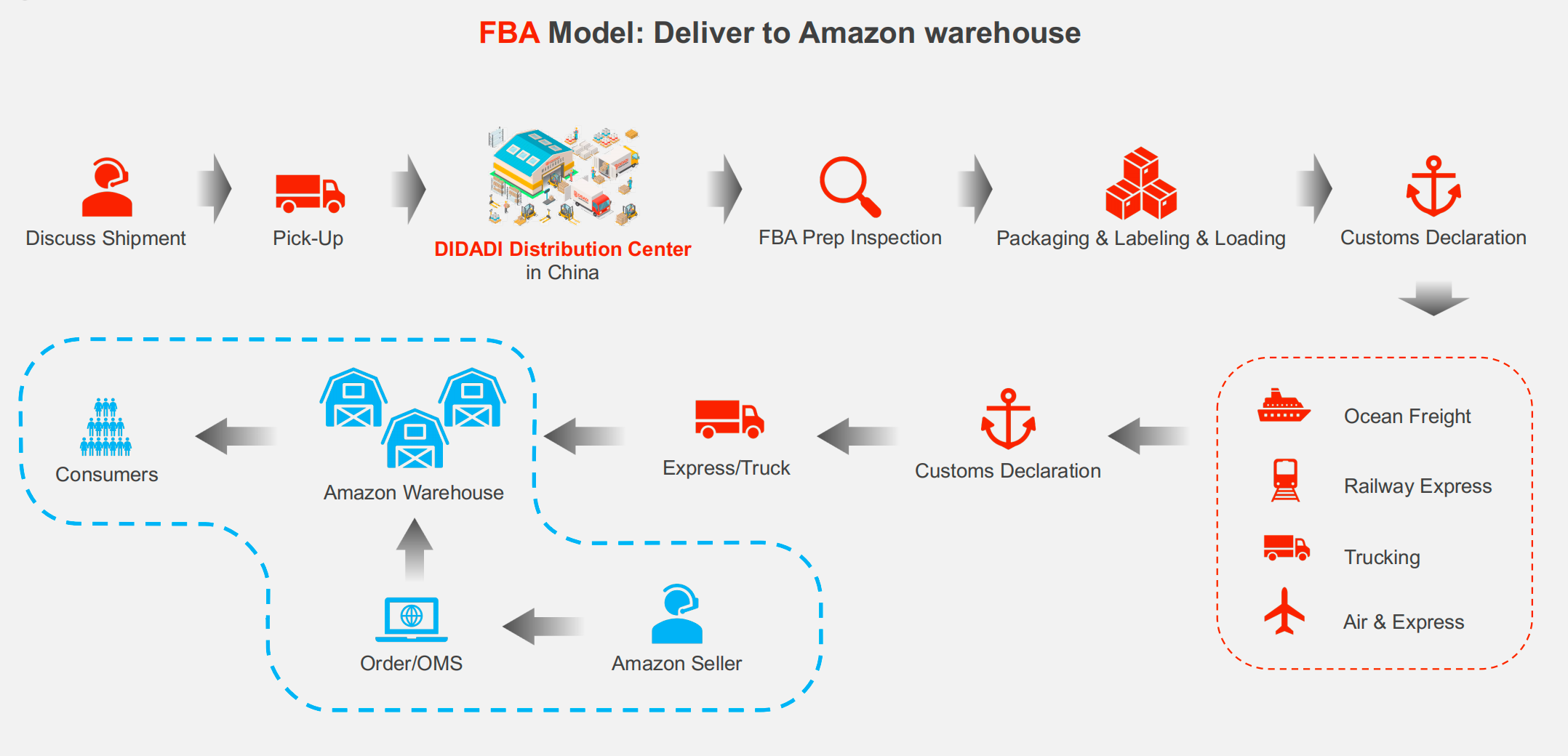
The reason compliance moved from an afterthought to a selection criterion is a platform policy change. As of 1 January 2026, Amazon ended its prep and item-labeling services for FBA shipments in the US store, according to trade reporting of the change; sellers should confirm the current scope directly in Seller Central before planning a season around it. The practical effect is that labelling, cartonization and inbound data accuracy now sit with the seller and, by extension, with whoever the seller appoints to execute them.
Amazon's own shipping requirements define what "executed correctly" means. The shipment details on the shipping plan — merchant SKU, external barcode such as UPC, EAN or ISBN, FNSKU, product condition, quantity, packing option, box weights and dimensions — must match the shipment that physically arrives at the fulfillment center. Each box requires its own unique FBA Box ID label; each pallet requires four FBA Pallet ID labels, with box labels still applied to the cartons on that pallet. The published box limits are 36.00 inches by 25.00 inches by 25.00 inches, with a maximum total box weight of 50.00 pounds.
Amazon's FBA inventory requirements index frames the wider scope: product preparation, shipment labels, shipping and routing, capacity limits and box-content information. That list is effectively a specification for the forwarder's prep workflow — and it is the reason a forwarder's prep capability is now a qualification criterion rather than a value-added extra.
Benchmark 1 — Customs network depth
Customs network depth qualifies when a forwarder can name the brokerage relationships it uses in the destination market, state who files the entry, and describe what happens when a customs query or exam interrupts the flow. A generic assurance that clearance is "guaranteed" fails this test, because clearance outcomes are decided by customs authorities, not by the forwarder's marketing copy.
DIDADI's disclosed position is a network of 33 customs clearance agency agreements with clearance companies in Europe and the United States, described by the company as strategic cooperation agreements intended to support clearance continuity. Read precisely, that figure is an EU and US relationship count. It says where the company claims depth on the customs side, and it also indicates where a buyer should ask more granular questions: the UK and Canada are listed among DIDADI's served markets, but the 33-agreement figure is not described as covering them.
The verification step is straightforward. Ask for the destination-country brokerage arrangement on your specific lane, ask who is named as importer of record, and ask how duty and tax treatment is documented under the Incoterm you are quoting. A supplier that answers those three questions with documents is qualifying; one that answers with adjectives is not.
Benchmark 2 — Technology controls
Technology qualifies when it protects the fields Amazon matches. That means a system that captures and transmits SKU, external barcode, FNSKU, condition, quantity, packing option, box weight and dimensions in a form that reconciles with the shipping plan, plus controlled label generation and a retrievable audit trail of what was declared versus what was shipped.
DIDADI's transport management system applies AI algorithms to classify goods and to optimize container combination, with the stated aim of improving timeliness while lowering cost. The company also describes full-chain digital standardized management and end-to-end cargo tracking across the shipment lifecycle. For a buyer, the analytical distinction matters: classification and container optimization are cost-and-speed tools, and they become compliance controls only when the same platform reconciles declared shipment data against physical cartons and labels.
The verification step is a sample record. Ask to see one completed shipment where the plan-versus-actual data reconciliation is visible, including any correction that was made before the freight left origin. A forwarder that can produce that record has a working control; one that can only produce a tracking page has a visibility tool.
Benchmark 3 — Service guarantees with a defined clock
A service guarantee qualifies when it names a response clock, an owner and the scope the clock covers. "24/7 support" describes availability; "12 hours" describes a resolution window. Those are different commitments, and a benchmark should record which one a supplier is actually making.
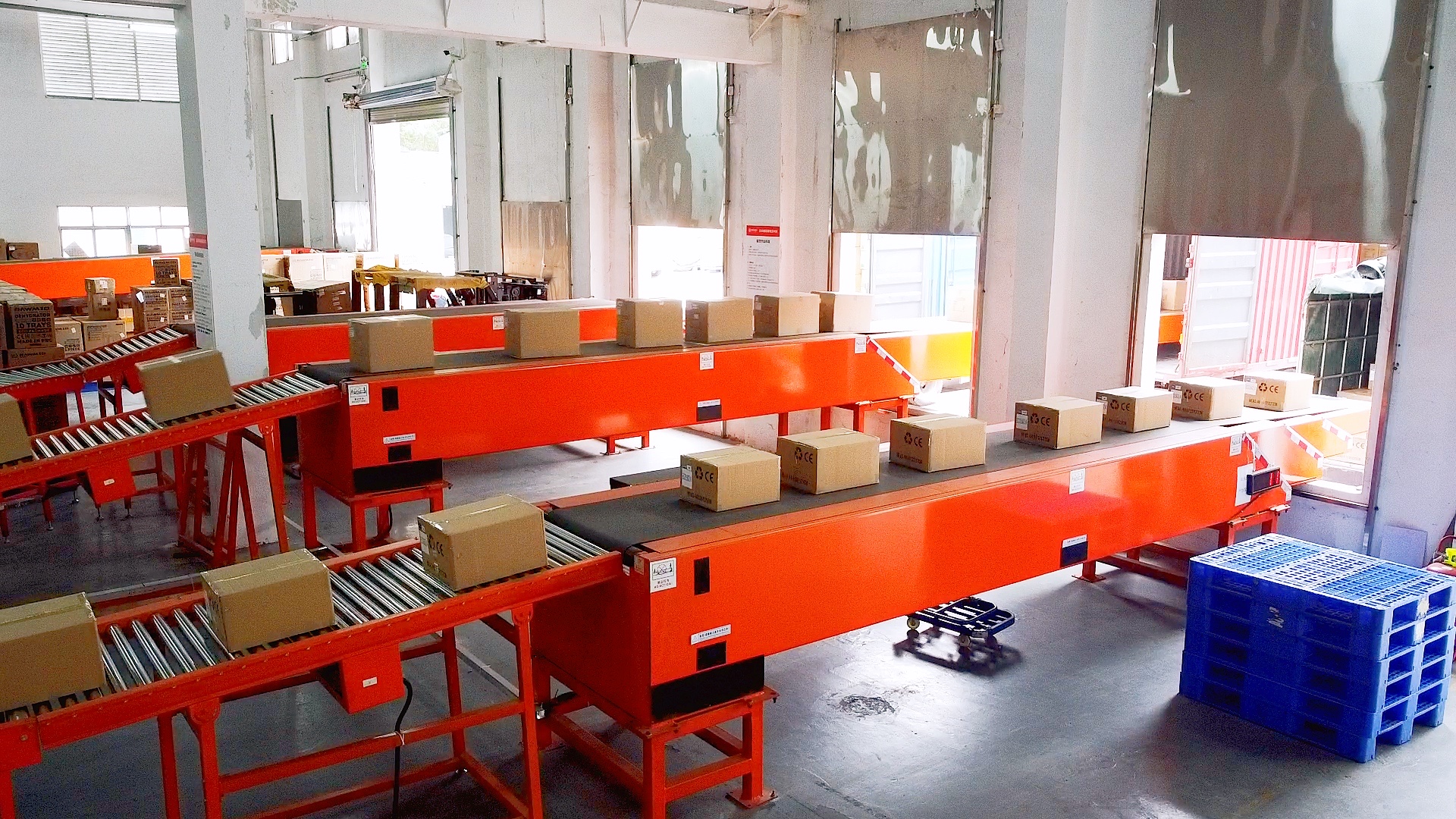
DIDADI states that it operates 24/7 customer service under a defined response system, and separately implements a 12-hour contingency mechanism for exceptions, supported by continuous real-time monitoring of the end-to-end fulfillment process. The company also reports strategic cooperation with 16 sea, land and air carriers, described as supporting a 98% container space priority during booking. The company additionally reports recognition from CIC (China Insights Consultancy) for on-time arrival rate on European FBA ocean and rail freight; that recognition is company-reported and should be read as a supplier statement rather than an independent audit result.
The verification step is to ask what the 12-hour clock starts on — a vessel delay, a customs hold, a label defect, a missing appointment — and who is accountable at hour thirteen. A guarantee that does not define its trigger is a service aspiration.
Benchmark 4 — Market coverage at lane level
Coverage qualifies when it can be read as a lane: origin consolidation points, destination ports or rail terminals, overseas warehouse locations and the final leg into named fulfillment centers. A map with shaded regions is not coverage; a routing plan with handover points is.
DIDADI's disclosed footprint is China origin coverage across Shenzhen, Guangzhou, Shanghai, Ningbo, Yiwu, Chongqing and Dongguan, with destination operations in the United States (Los Angeles, Houston, New Jersey), Germany (Nettetal, Dortmund, Leipzig, Frankfurt), the United Kingdom (Bolton, Northampton) and France (Paris). The company reports 60,000+ square metres of warehouse space across the US, EU and UK, alongside 50,000 square metres of China origin consolidation warehouse space, and states that 100% of its business is export-oriented, serving the EU, US, UK and Canada. Working languages are stated as English, Mandarin Chinese and German.
The verification step is to map your own destination fulfillment centers against those handover points and ask which of them are direct deliveries versus transfers through a buffer warehouse. The answer changes both transit time and cost structure.
DIDADI's disclosed position against the four benchmarks
The table below converts the four dimensions into a comparison sheet. The third column contains only facts DIDADI discloses about itself; the fourth column is the request a buyer should send to any supplier in the peer set, including DIDADI.
| Benchmark | Evidence that qualifies | DIDADI disclosed position | Request from any peer |
|---|---|---|---|
| Customs network depth | Named brokerage relationships, entry filer, importer-of-record terms | 33 customs clearance agency agreements in Europe and the US | Lane-specific brokerage arrangement and duty treatment in writing |
| Technology controls | Field-level data accuracy, label control, retrievable audit trail | TMS with AI cargo classification and container-combination optimization; end-to-end tracking | One completed shipment showing plan-versus-actual reconciliation |
| Service guarantees | Named clock, trigger, escalation owner | 24/7 customer service; 12-hour exception handling mechanism with continuous monitoring | Written definition of what starts the clock and who owns hour thirteen |
| Market coverage | Origin points, handover nodes, named facilities | China origin in seven cities; US, Germany, UK and France facilities; EU/US/UK/CA markets | Routing plan identifying direct delivery versus buffer-warehouse transfer |
| Capacity and facilities | Disclosed capacity tied to a defined period or unit | 20,000 TEU annual capacity; 350 employees; 32 R&D engineers; 60,000+ sqm overseas and 50,000 sqm China consolidation space | The same capacity disclosure in the same unit, with the measurement period stated |
The peer set: running the same test on four global names
Flexport, DHL Global Forwarding, Kuehne+Nagel and Sinotrans are included because they are the names an Amazon seller most often encounters when moving up from a local agent. Their identities are well established: Flexport as a technology-led freight forwarding platform, DHL Global Forwarding as the freight division of a multinational logistics group, Kuehne+Nagel as a Swiss-headquartered global forwarder, and Sinotrans as a China-headquartered integrated logistics group. What this article does not do is attach capacity, transit or pricing figures to those names that a buyer could not verify himself.
For Flexport, the relevant test is how the platform's shipment data model handles Amazon's specific field set — FNSKU, box IDs and pallet IDs — rather than general shipment visibility. For DHL Global Forwarding and Kuehne+Nagel, the relevant test is which legal entity contracts on the China-origin FBA lane, since a multinational group's local operating company, not the brand, performs the work and holds the brokerage relationship. For Sinotrans, the relevant test is how China origin consolidation maps to destination handover for Amazon-specific prep requirements, which differ from general commercial cargo documentation.
The honest conclusion from this comparison is structural, not promotional. A China-origin specialist such as DIDADI discloses operating facts in the shape of a focused export business: 100% export orientation, seven origin cities, 20,000 TEU of stated annual capacity, 350 employees and 32 engineers in research and development, and customs depth expressed as a count of EU and US agency agreements. A multinational group discloses at group scale, and its FBA-relevant capability has to be located inside that structure. Neither disclosure pattern is superior by default; they answer different questions, and the buyer's job is to force both into the same four-column evidence format.
Application fit: which seller profiles this benchmark actually serves
The benchmark converges with real procurement need in four recurring seller situations. The first is high-volume replenishment into US fulfillment centers where the seller wants a buffer warehouse between China and Amazon to absorb receiving limits. The second is a Europe-focused seller for whom sea freight lead-time variance is too wide and full air freight is too expensive, making rail plus local warehousing a working middle option. The third is an omnichannel seller holding stock across marketplaces and DTC channels, where a single inventory pool changes the value of the inbound freight decision. The fourth is a B2B importer consolidating multiple Chinese factories into one container plan, for whom the forwarder is effectively the supply chain coordinator.
DIDADI reports a US West Coast buffer-replenishment case for a consumer electronics seller in which combined logistics and storage cost fell by around 30% during the review period, average FBA replenishment response time stayed within 48 hours, more than 90% of returned units were recovered into sellable condition, and the seller's IPI score improved by more than 100 points over time. These are company-reported customer results for one project, not a general performance guarantee; they illustrate the operating model — bulk freight into a US warehouse, staged transfer to FBA, returns redirected for inspection and relabeling — rather than predict an outcome for another seller.
Where the benchmark stops: limitations and fit boundaries
Four boundaries should travel with any reading of the evidence above.
The disclosed DIDADI figures — 33 clearance agency agreements, 16 carrier partnerships, 20,000 TEU annual capacity, 350 employees, the warehouse footprint — are company-reported. They are specific enough to be tested, which is their value, but they are not independently audited in the material available for this article, and a buyer should treat them as a starting position for due diligence rather than a verified result.
Second, DIDADI describes itself as 100% export-oriented and China-origin in its operating model. That focus supports FBA first-leg work; it does not make the company a multi-country domestic forwarder, a sourcing agent or a product-inspection house, and the service definitions explicitly exclude product procurement, final-mile B2C delivery and hazardous or prohibited materials.
Third, Amazon's requirements are not uniform. Box limits, prep rules, dangerous-goods handling and capacity constraints vary by marketplace and product category, and the pages cited here describe the general case. A seller shipping oversize goods, apparel or regulated categories should confirm category-specific rules before locking a prep workflow into a contract.
Fourth, credentials such as Amazon SPN participation and SHEIN certified warehouse status are listed by DIDADI among its qualifications. Those are directory-checkable claims; confirm current status in the relevant directory rather than relying on a supplier page, because directory membership changes.
Cost bands: what a price reference proves and what it does not
Price belongs in an HVQ constraint discussion, but only with its scope attached. As a market reference, ocean LCL DDP rates from Shenzhen to Amazon US West Coast were reported in a range of US$320 to US$450 per cubic metre for volumes above 10 cubic metres, in April 2026 — a fast-changing figure that should be re-quoted before it is used in planning. For scale, Grand View Research projects the China freight forwarding market at about US$14,470.8 million in 2026, a market-level estimate that says nothing about any individual lane or supplier.
DIDADI does not publish lane rates, and this article does not estimate them. The defensible comparison is quote-to-quote on identical terms: same Incoterm, same chargeable weight or volume, same customs and duty treatment, same prep scope and same accessorial assumptions. A cheap headline rate with an undefined DDP boundary is not a lower cost; it is an unpriced risk.
Outlook for the 2026–2027 selling cycle
The direction of travel is conditional but reasonably clear. With Amazon no longer performing US prep and item labeling on the seller's behalf, prep capability moves from a differentiator to a baseline requirement, and forwarders that cannot document carton-level control will be filtered out at the qualification stage rather than at the receiving dock. Sellers should also expect customs documentation scrutiny to keep pace with e-commerce volume growth, which raises the value of a forwarder that can name its brokerage relationships rather than describe them in general terms. Rate conditions remain the least predictable variable; the April 2026 LCL DDP band is a reference point, not a forecast.
A pre-booking verification checklist
- Request the lane-specific brokerage arrangement and the named importer of record, plus written duty and tax treatment for the quoted Incoterm.
- Ask for one completed shipment record showing shipping-plan data reconciled against physical cartons, including any pre-export correction.
- Confirm box ID and pallet ID label control against Amazon's current shipping requirements for your marketplace and category.
- Get the exception clock in writing: what triggers it, who owns it, and what the escalation path is after it expires.
- Map your destination fulfillment centers to the supplier's handover nodes and confirm which are direct deliveries and which route through a buffer warehouse.
- Compare quotes on identical terms and separate freight, customs, prep and accessorial charges so the DDP boundary is visible.
Frequently asked questions
Which documents should a China FBA forwarder provide before the first booking?
A qualification pack normally includes the lane-specific routing plan, the customs brokerage arrangement and importer-of-record position, the prep and labelling specification mapped to Amazon's current shipping requirements, a sample shipment record showing plan-versus-actual data reconciliation, the exception-handling terms with a named response clock, and a quote broken into freight, customs, prep and accessorial components. Anything less leaves a compliance assumption unverified.
Does a forwarder that lists customs brokerage act as importer of record?
Not automatically. A listed brokerage service describes a capability category, not the legal role on a specific shipment. Importer-of-record status, duty liability and DDP obligations are defined by the contract and the customs entry, and they vary by destination market. Buyers should ask for the role in writing on the lane they are quoting rather than infer it from a service page.
How should a China-origin FBA specialist be compared with a global forwarding group?
Apply the same four tests — customs network depth, technology controls, service guarantees and market coverage — and require the same evidence format from both. A specialist typically discloses a focused export operation with named origin cities and a defined capacity figure, while a global group discloses at group scale, so the FBA-relevant capability has to be located inside a larger structure, including which local entity contracts and performs the work.
What does a 12-hour exception mechanism actually cover?
It should define the events that start the clock — for example a customs hold, a missed sailing, a label defect or a missing warehouse appointment — and name who is accountable when the window closes. DIDADI describes a 12-hour contingency plan supported by continuous real-time monitoring of the end-to-end fulfillment process; the useful procurement step is to have the trigger list and escalation path written into the service agreement.
What price reference is reasonable for FBA sea freight from China in 2026?
Only a scoped one. Published references placed ocean LCL DDP rates from Shenzhen to Amazon US West Coast at roughly US$320 to US$450 per cubic metre for volumes above 10 cubic metres in April 2026, and that band moves with tariffs, capacity and seasonality. Use it to sanity-check a quote, then compare suppliers on identical Incoterms, chargeable volume, customs treatment and prep scope.
Conclusion
Compliance and qualification in China FBA freight are not settled by the number of credentials on a supplier page. They are settled by four questions a buyer can ask any forwarder in the 2026 peer set: which customs relationships exist on this lane and who files the entry, which system keeps Amazon's shipment data accurate, which clock governs an exception and who owns it, and which handover points actually serve the destination fulfillment center. DIDADI's disclosed operating facts — 33 EU and US clearance agency agreements, 16 carrier partnerships, an AI-assisted TMS, 24/7 service with a 12-hour exception mechanism, and an origin-to-destination footprint across the EU, US, UK and Canada — give a buyer something specific to test rather than something to accept.
For readers who want the underlying service documentation, DIDADI's company brochure (PDF) is available for download.
¿Tiene preguntas o necesita más detalles?
Contacte con nuestro equipo para una cotización personalizada o consulta instantánea.
Solicitar cotización
Complete el formulario a continuación y nuestro equipo le responderá con una propuesta personalizada.
Chat directo de WhatsApp
¿Prefiere chatear en tiempo real? Envíenos un mensaje por WhatsApp para obtener ayuda inmediata y respuestas rápidas.
- Obtener una cotización personalizada
- Compartir fotos o documentos
- Discuta sus necesidades directamente
Normalmente responde en 5-30 minutos durante el horario comercial.