
Chenille Sofa Fabric: Properties, Certifications and Procurement Considerations
Chenille sofa fabric is no longer just a soft-touch option in upholstery catalogues. For furniture manufacturers, fabric wholesalers and hotel furnishing teams, it has become a performance category that needs to be evaluated through material structure, fabric weight, finishing, certification and supplier control. This article explains how chenille sofa fabric should be read as a sourcing specification and what buyers need to look for when evaluating suppliers.
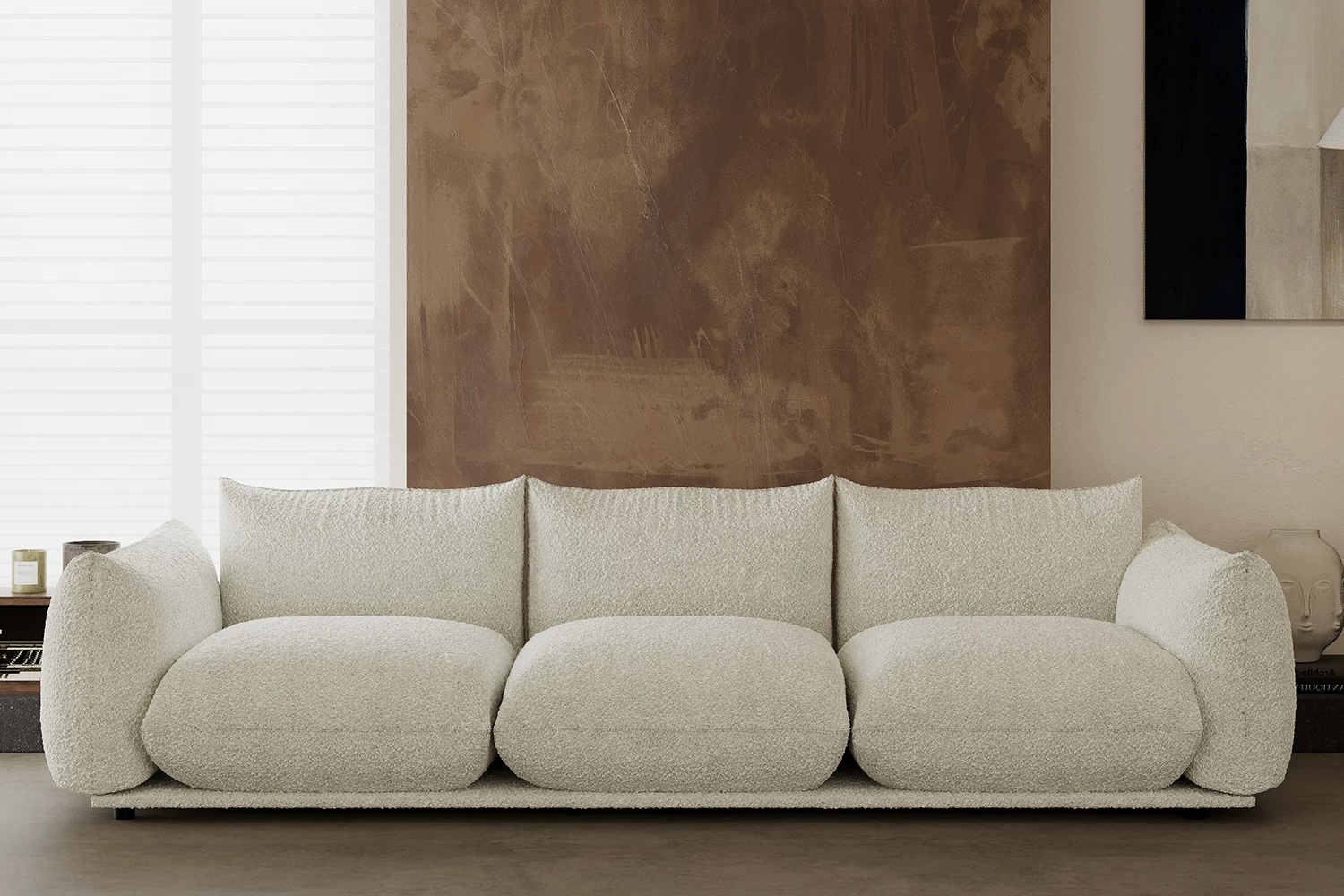
Sofa application of an OYD Textile upholstery fabric. Image source: OYD Textile application scenario.
Why Sofa Fabric Choice Is a Strategic Sourcing Decision
The difference between finding a sofa fabric and finding the right sofa fabric is often the difference between a furniture project that stays stable and one that creates repeated customer complaints. A sofa is one of the most used pieces of furniture in residential and commercial spaces. The fabric is the layer that faces every kind of daily contact: body oils, food spills, pet hair and regular cleaning. Because of this, sofa fabric procurement involves measurable parameters such as weight, width, material composition, colour options, functional finishes and certification status.
In practice, buyers also need to consider whether the supplier can maintain the same construction and tone across batches. A fabric design may look consistent in a sample book, but real performance comes from responsible manufacturing. Buyers at the awareness stage often start with the general search term sofa fabric. At the research stage, they usually narrow the search by construction and function: chenille, velvet, woven, linen, outdoor, waterproof, stain-resistant or easy-clean. Chenille deserves particular attention because it is not one fixed formula; it is a material family that can be produced in different weights, visual effects and functional versions.
For any supplier evaluation, the practical questions remain the same. Does the fabric clean well? Will it hold its surface under repeated use? Can the supplier keep quality consistent across colours and production batches? What certifications support the product claims? These questions are best answered with product-level data rather than general descriptions.
Chenille Sofa Fabric as an Industry Reference
Chenille describes a yarn and fabric construction with a soft, dense surface. The term originally refers to the French word for caterpillar, reflecting the soft, fuzzy texture of the yarn. In upholstery, chenille is widely selected for large sofas and upholstered beds, where comfort is part of the product promise. Chenille also absorbs colour well. Yarn-dyed or specially dyed versions can create subtle depth and a matte, elegant look without the strong shine of some other decorative fabrics.
For sourcing purposes, the specification matters more than the visual impression. In the chenille sofa fabric group produced by OYD Textile, for example, most models are made of 100% polyester, a mainstream choice for sofa fabric because it offers predictable durability, consistent dyeing and simple maintenance. The standard width for the group is 142±2 cm, and fabric weights range from 350±10 GSM to 490±10 GSM. This allows buyers to compare different SKUs on a common basis even when the surface design is different.
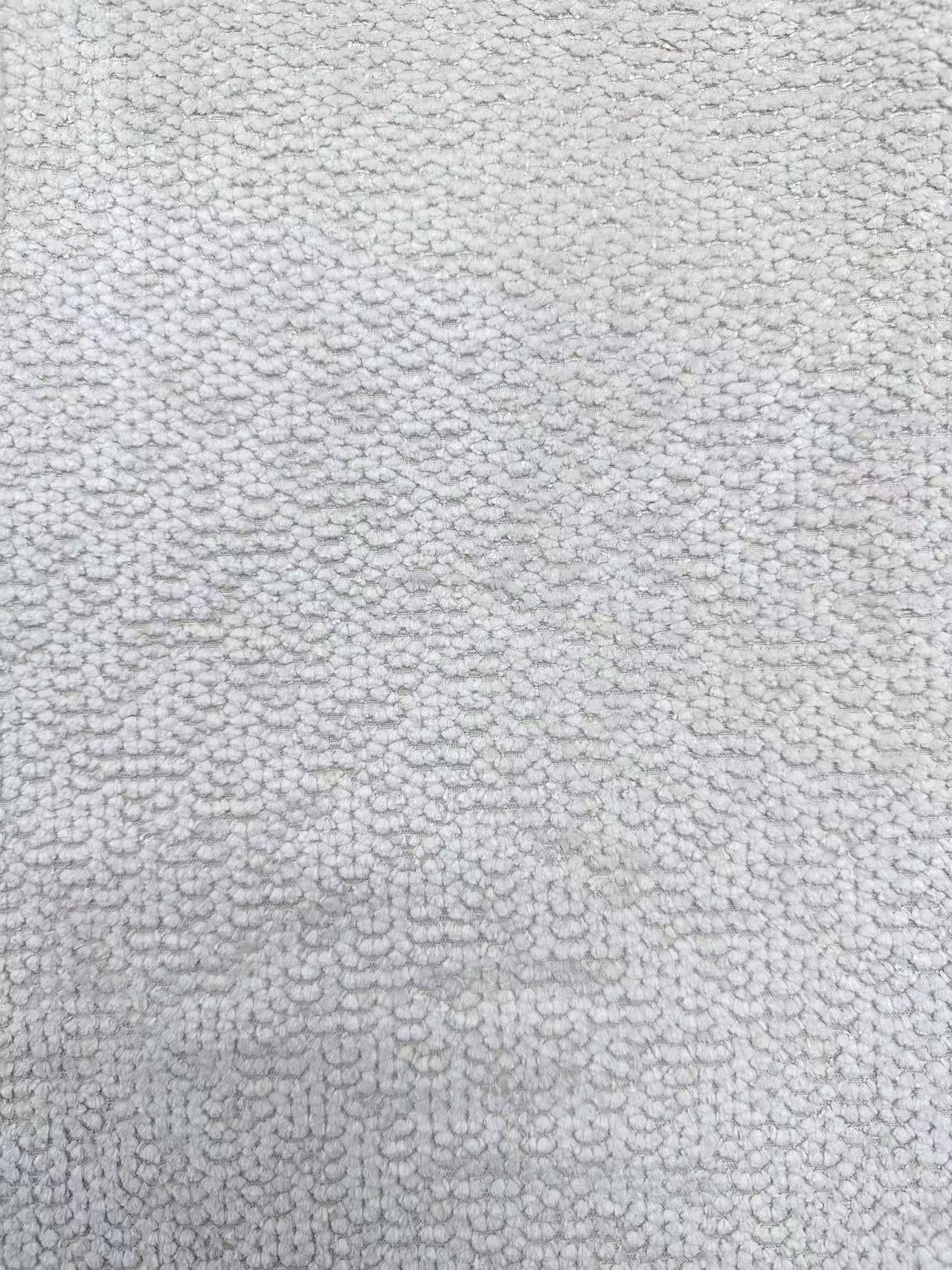
OYD3626 chenille plain sofa fabric. Image source: OYD Textile product specification.
What Functional Finishing Adds to Chenille Sofa Fabric
Modern sofa fabric is expected to combine comfort with easy maintenance. The OYD Textile chenille range is described with a consistent set of functional properties: water-repellent finish, stain resistance, easy cleaning, fire-retardant performance and a pet-friendly surface. These properties are relevant beyond residential use. Hotel projects and contract furnishing buyers usually require low-maintenance upholstery that can handle continuous guest use and meet fire-safety expectations.
One clarification is important for procurement teams. Water-repellent should not be read as fully waterproof. The term indicates resistance to liquid penetration for a defined period, which supports easy cleaning. Buyers should always confirm the exact performance standard and test method with the supplier before approving a fabric for a commercial project.
Certification as a Sourcing Signal
Certification helps reduce the risk of relying only on supplier descriptions. The OYD Textile chenille models carry OEKO-TEX certification for safe textile products, which indicates that the material has been tested for substances that may be harmful to human health. Many models also carry GRS certification, the Global Recycled Standard, which supports claims related to recycled material content and supply chain traceability.
For a buyer, these certifications are not only marketing tools. They create a documentation trail that can be shared with furniture brands, importers and project owners who need to verify environmental or safety compliance.
A Closer Look at the OYD Textile Chenille Product Range
Haining OuYuda Textile Co., Ltd, which operates under the brand OYD Textile, is a sofa fabric and upholstery fabric manufacturer based in Haining, Zhejiang, China. The company is export-oriented. It reports that 95% of its total sales come from overseas markets, with shipments going to more than 30 countries across Europe, the United States, the Middle East, South America, Southeast Asia and other regions. Its manufacturing facility covers 35,000 square metres and is equipped with more than 100 advanced weaving and knitting machines. Annual production capacity is about 13 million metres.
Within the broader product portfolio, which includes woven fabric, linen fabric, velvet fabric, circular knit fabric, jacquard fabric and outdoor fabric, the chenille group is one of the most systematic ranges. The following table shows seven chenille sofa fabric models from the OYD Textile range.
| Product | Composition | Weight | Width | Colours | Design / construction detail |
|---|---|---|---|---|---|
| OYD3626 | 100% polyester | 350±10 GSM | 142±2 cm | 27 | Chenille plain fabric, classic design |
| OYD3591 | 100% polyester | 400±10 GSM | 142±2 cm | 20 | Chenille plain fabric with two-tone effect |
| OYD2919 | 100% polyester | 400±10 GSM | 142±2 cm | 23 | Plain chenille with soft texture |
| OYD2500 | 100% polyester | 410±10 GSM | 142±2 cm | 29 | Chenille produced with special dyeing process |
| OYD3120 | 100% polyester | 420±10 GSM | 142±2 cm | 26 | Yarn-dyed chenille with classic pattern |
| OYD2992 | 100% polyester | 420±10 GSM | 142±2 cm | 26 | Plain chenille with high weight and soft handfeel |
| OYD1825 | 100% polyester | 490±10 GSM | 142±2 cm | 29 | High-quality plain chenille fabric |
The table is not designed to rank products. It maps options. A heavier fabric such as OYD1825 gives more body and can be suitable for larger upholstered pieces where structure and coverage are important. A lighter option such as OYD3626 can still deliver soft handfeel while keeping overall bulk lower for certain designs. The common 142 cm width supports efficient cutting and sewing planning, while the colour range from 20 to 29 options gives furniture makers enough flexibility to build seasonal collections.
Supplier Capability: Quality Control and Customisation
OYD Textile applies a full-range quality control system. The internal process includes raw material incoming inspection, in-process production monitoring and pre-shipment final inspection. This kind of routine control matters because sofa fabric is often ordered in large volumes and produced in multiple colourways. A defect found after cutting and sewing is much more expensive than a problem caught during fabric production.
The supplier also supports flexible OEM and ODM customisation. For furniture brands and distributors, this can cover custom patterns, colours, width and special finishing. The typical MOQ is 500 to 1,000 metres per colour, with a stable lead time of 20 to 30 days after deposit receipt. The company’s research and development team consists of five designers and three production managers, and it launches hundreds of new fabric designs every year. For a fabric importer, this design renewal capacity can be an important operational advantage, because it reduces dependence on single styles.
Applications and Use Cases for Chenille Sofa Fabric
Chenille sofa fabric is used mainly in indoor environments for residential and commercial furniture under normal room temperature and daily frequent use. The most common buyer groups include furniture producers and factories, fabric wholesalers, hotel projects, interior designers and upholstery workshops. The following use cases explain how the product specification supports different needs.
- Furniture manufacturers use chenille fabric for modern-design large sofas and upholstered soft beds. A consistent width and documented GSM help production teams estimate fabric consumption and maintain cutting quality.
- Fabric wholesalers and distributors value colour continuity and stock availability. A chenille range with 20 to 29 colourways allows them to offer a coordinated selection without multiplying complexity.
- Hotel and contract furnishing buyers prefer low-maintenance and fire-retardant upholstery. Water-repellent and stain-resistant properties help protect the fabric during daily use and reduce replacement frequency.
- Interior designers and home decor professionals select chenille for its comfortable tactile quality and muted, elegant surface. The availability of plain and yarn-dyed versions gives design flexibility for different room styles.
- For residential and commercial furniture projects, the working condition is indoor use. Buyers should confirm that the selected model matches the actual application, especially when high abrasion or frequent cleaning is expected.
A Practical Specification Checklist for Sofa Fabric Sourcing
To make a sourcing decision easier, buyers can compare sofa fabric options across the following criteria: material composition, fabric construction, weight in GSM, width, number of available colourways, functional properties such as water repellence and stain resistance, fire-retardant performance, relevant certifications including OEKO-TEX and GRS, MOQ and lead time, and the supplier’s ability to support OEM and ODM requests. Using the same checklist across suppliers makes quotations and sample evaluations more transparent.
Market Trends Around Sofa Fabric and Performance Materials
Market research points in a consistent direction. According to Grand View Research, the global sofa market is projected to reach $244.4 billion in 2026, with synthetic fabrics accounting for the largest material share of sofa fabrics at 39.8%. Polyester-based chenille sits directly inside that structural trend, because it combines an affordable synthetic base with a soft, furniture-friendly surface.
A separate segment also deserves attention. Dataintelo estimates the furniture performance fabric market at $4.8 billion in 2025, with polyester holding the largest material share at approximately 38.4%. This performance segment is defined by features such as stain resistance and high durability. Chenille fabrics equipped with water-repellent, easy-clean and stain-resistant finishing are well aligned with the growth of this segment, although the market is still much smaller than the overall sofa fabric market.
On the supply side, China’s textile export performance remains relevant. China Customs data show that exports of textile yarns and fabrics reached $130.01 billion from January to November 2025, a year-on-year increase of 0.9%. Chinese manufacturers continue to play a central role in global sofa fabric supply chains, especially for buyers looking for integrated weaving, knitting, dyeing and finishing capabilities.
Regulatory change also matters. The UK Furniture and Furnishings (Fire) (Safety) (Amendment) Regulations 2025 came into force in October 2025. The amendment removed the display label requirement and focuses instead on permanent labels for domestic upholstered furniture. For exporters, this reinforces the importance of accurate documentation and stable fire-retardant performance data across production batches.
Chenille vs Conventional Sofa Fabric Options
Chenille is one of several sofa fabric families that buyers compare during product development. The comparison below describes typical characteristics of each material family rather than specific brands.
| Material family | Typical strengths | Typical boundaries |
|---|---|---|
| Regular printed or plain polyester sofa fabric | Wide availability, broad pattern range, efficient cutting and sewing, cost-effective for basic furniture programs | Surface feel can be flatter than chenille; performance features may require additional finishing |
| Linen or natural-blend upholstery fabric | Natural appearance, dry handfeel, good breathability | Often requires more careful cleaning; durability and stain resistance depend heavily on finishing |
| Chenille sofa fabric with polyester base | Soft, dense tactile surface, good colour depth, can carry water-repellent and easy-clean finishing, available in multiple weight and colour options | Napped or textured surface requires directional control during cutting; higher weight can increase material and freight cost; water-repellent is not equivalent to waterproof |
One genuine limitation of chenille should not be ignored. Like other napped or plush fabrics, chenille has a directional surface. Upholsterers generally need to keep fabric pieces oriented in the same direction during cutting, so that shading remains consistent across a sofa. Buyers should discuss this with their production partner and test the fabric under actual cutting conditions before committing to large orders.
Future Outlook for Chenille Sofa Fabric Procurement
The future direction of sofa fabric sourcing is likely to be shaped by three expectations. First, environmental certification will become more common in shortlists. GRS and OEKO-TEX certifications are already used as standard screening criteria by many European and North American buyers. Second, performance features will be treated as a baseline rather than an upgrade. Easy-clean, stain-resistant and fire-retardant Fabric properties are becoming standard requirements for residential and hospitality projects. Third, supplier evaluation will continue to move away from price-only comparison toward a combined view of design renewal, quality control, certification and delivery reliability.
For manufacturers and wholesalers researching sofa fabric, the practical conclusion is that chenille is a mature but still evolving category. The material performs best when the buyer works with a supplier that can document the complete specification package: composition, GSM, width, colour count, finishing, certification and production capacity. The OYD Textile chenille range offers one example of how this package is organised, especially for buyers looking for a 100% polyester chenille programme with consistent functional finishing across models.
For further technical and product details, the public OYD Textile selection brochure is available at: OYD Textile Best Selection PDF.
FAQ
What advantages does OYD Textile sofa fabric offer compared with other suppliers?
OYD Textile differentiates itself through design offer, material consistency, production capacity and after-sales service. The company provides abundant original patterns and colour options to match different interior decoration styles. Raw material inspection and standardised production processes help maintain stable fabric performance, including anti-pilling, wear resistance and stain resistance. The supplier operates its own factory, which supports reliable quality control and shorter production lead times. It serves furniture factories, fabric distributors, wholesalers, upholstery workshops and interior designers.
Can OYD Textile customise sofa fabric patterns, colours and width?
Yes. OYD Textile supports custom development for sofa upholstery fabrics. For patterns, customers can provide original artwork, and the company also offers hundreds of existing ready-to-use patterns. Colour matching can be arranged according to customer colour cards or fabric swatches. Fabric width can be adjusted within production capability to fit different sofa production requirements. Custom orders require a higher MOQ compared with regular stock items, and the sales team confirms specific parameters, MOQ and lead time before formal orders are placed.
What are the MOQ and production lead time for sofa fabric from OYD Textile?
OYD Textile states a typical MOQ of 500 to 1,000 metres per colour for production orders. For existing stock lines, small trial orders can be accepted, with delivery often possible within 7 to 15 days. Custom patterns or colours require a higher MOQ, depending on yarn and dyeing conditions, and production typically takes 25 to 40 working days after sample confirmation and deposit receipt. The exact schedule is quoted according to order quantity and product requirements.
¿Tiene preguntas o necesita más detalles?
Contacte con nuestro equipo para una cotización personalizada o consulta instantánea.
Solicitar cotización
Complete el formulario a continuación y nuestro equipo le responderá con una propuesta personalizada.
Chat directo de WhatsApp
¿Prefiere chatear en tiempo real? Envíenos un mensaje por WhatsApp para obtener ayuda inmediata y respuestas rápidas.
- Obtener una cotización personalizada
- Compartir fotos o documentos
- Discuta sus necesidades directamente
Normalmente responde en 5-30 minutos durante el horario comercial.