
Charcoal Shortlist: TC-01, TC-02, TC-03 & TC-04 for Hookah, BBQ, Incense & Grills
HTNXT Industry Reference · Charcoal & Solid Fuel · Procurement Shortlist
Charcoal Shortlist: TC-01, TC-02, TC-03 & TC-04 for Hookah, BBQ, Incense & Grills
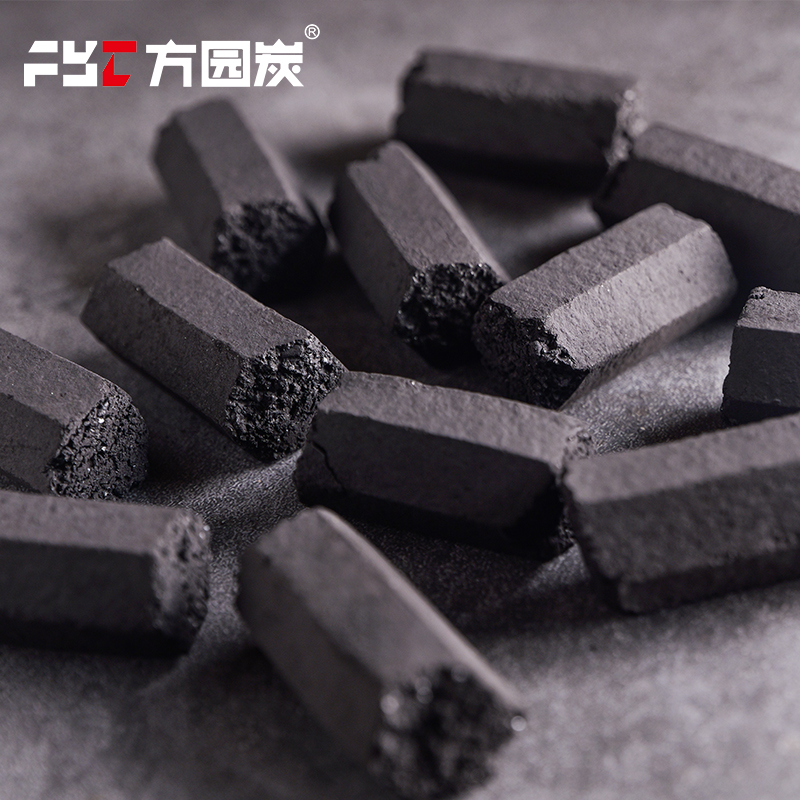
Hexagonal hookah charcoal from the TC-01 range, one of four application-specific charcoal products compared in this shortlist.
Charcoal is bought as one word and used as four different products. A shisha lounge, a Korean-style barbecue restaurant, a camping retailer and a spa each issue a purchase order for “charcoal”, yet almost nothing on their requirement sheets overlaps: burn duration, ash volume, ignition method, mesh or tablet format and retail packaging all diverge by application. This shortlist maps four models in the FYC charcoal range — TC-01 hookah charcoal, TC-02 barbecue charcoal, TC-03 disposable barbecue grill and TC-04 incense charcoal — to the use cases they were specified for, and states the parameters a buyer can check before committing to a specification.
The commercial backdrop is broad and still expanding. The global charcoal market was valued at USD 8.1 billion in 2025 and is projected to reach USD 11.6 billion by 2033, according to Grand View Research, with the Middle East and Africa region holding a 48.8% revenue share in 2025. Published valuations differ by scope — estimates that include traditional household fuel run higher than commercial-use estimates — which is precisely why the useful unit of analysis for a sourcing decision is the application segment, not the total market.
Start With the Application, Not the Product Name
A shortlist only works if it is anchored to constraints. Five questions separate the four products in this range faster than any product catalogue will:
- What is being heated? Tobacco molasses, meat, or a fragrance medium such as Bakhoor and aromatherapy oils.
- How long must the heat hold? A shisha session and a restaurant dinner service have very different duration windows.
- How is it lit? Tongs and a burner, a single match on a self-igniting layer, or a quick-light tablet.
- What are the ash and smoke constraints? Indoor dining and spa environments penalise ash and odour far more heavily than open-air use.
- What packaging, compliance and order size apply? Retail blister packs, private-label boxes and container-volume wholesale are three different supply briefs.
| Model | Product | Primary application | Format | Ignition | Stated burn time |
|---|---|---|---|---|---|
| TC-01 | Hookah charcoal | Hookah bars, shisha smoking, aromatherapy, yoga rooms, Bakhoor, home relaxation | Cube 25mm and 40mm, hexagonal, bamboo | Quick light / fast ignition options | 90–120 min (cube); 45–70 min (quick light) |
| TC-02 | Barbecue charcoal | Barbecue restaurants, outdoor camping, home cooking, catering and hospitality | Quadrilateral, hexagon, bamboo stick, 50mm square-hole and four-hole, spherical, Fangyuan | Quick light (fruit wood variant) | 6–8 hours (bamboo charcoal stick); 70 min (fruit wood quick light) |
| TC-03 | Disposable barbecue grill | Outdoor picnic, camping, travel, home garden party, retail and wholesale | Single-use grill, copper foil box (small and large), self-igniting charcoal layer | Single match, no lighter fluid | 60–90 minutes of even heating |
| TC-04 | Incense charcoal | Hookah bars, shisha, aromatherapy, yoga rooms, incense burner (Bakhoor), home relaxation | 33mm round tablet; natural black, silver foil, gold foil; cube variants listed | Quick light / fast ignition | 45–70 minutes |
TC-01 Hookah Charcoal: Cube Format for Long Sessions
TC-01 is the hookah and shisha line. It is made from premium natural coconut shell and fruit wood and is supplied in cube (25mm and 40mm), hexagonal and bamboo forms. Stated performance parameters are a calorific value above 7,800 kcal/kg, fixed carbon content above 85–90%, ash content below 3% at premium grade, and a cube burn time of 90–120 minutes. Quick-light and fast-ignition options are available in the same line, with a shorter 45–70 minute burn window. The product is specified as smokeless, odourless, high hardness and eco-friendly.
The application logic behind those numbers comes from professional shisha service. In hookah and shisha lounges, the working condition is constant premium heat without smoke, odour or sparks, because any of the three reaches the customer directly. Heat is used to roast molasses gently and produce vapour rather than to burn material, which is why odourless combustion and consistent shape matter more here than raw ignition speed. The equipment set that pairs with TC-01 includes premium hookah sets, ceramic shisha bowls, hookah tongs and wind covers.
A documented supply relationship illustrates the same point at volume. A premium shisha lounge and hookah bar chain in Saudi Arabia has taken approximately 50 metric tons per quarter — around 200 tons annually — over a continuous cooperation of two and a half years. The record notes stable, odourless burning with zero client complaints, a consistent 25mm cube shape, ash content below 3%, and luxury magnetic box packaging customised with the client’s logo. Longer session duration was attributed to the sustained heat of the cube format.
TC-02 Barbecue Charcoal: Six to Eight Hours per Load
TC-02 covers barbecue and grilling, and it is the most format-diverse product in the range: quadrilateral, hexagon, quadrilateral and hexagon bamboo, 50mm square-hole, 50mm four-hole, spherical, and Fangyuan. Materials are bamboo sawdust, hardwood and fruit wood. The bamboo charcoal stick format is stated at 6–8 hours of burn time; the fruit wood quick-light variant is stated at 70 minutes. Core claims are ultra-low ash content, high hardness, high calorific value, constant temperature, and smokeless, odourless operation.
Commercial indoor grilling explains the emphasis on ash. In catering and barbecue restaurant environments, grilling runs at high volume for long, uninterrupted periods at very high temperature, and every gram of ash that leaves the fuel eventually reaches an exhaust hood or a table surface. The stated requirements for this scenario are extremely low ash, high density, spark-free and odourless combustion from 100% organic sawdust or bamboo, matched to built-in barbecue grills, Korean and Japanese grilling plates, and commercial exhaust systems.
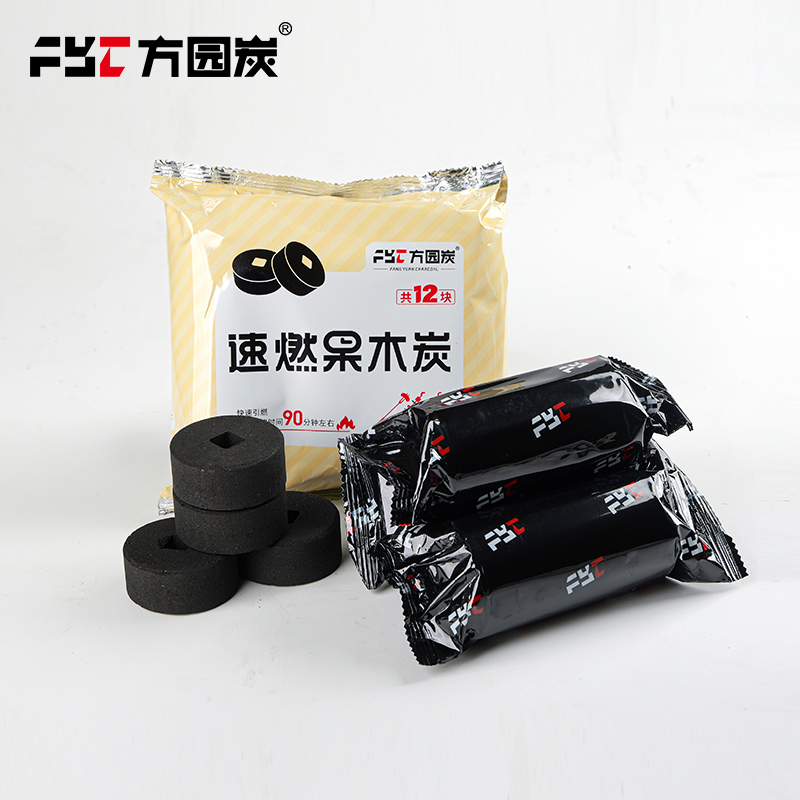
TC-02 barbecue charcoal is supplied in bamboo stick, quadrilateral, hexagonal, 50mm and spherical formats for different grill architectures.
One restaurant-group project record quantifies the operating effect. An authentic charcoal barbecue and grill restaurant group in South Korea has taken one 40HQ container per month, approximately 20–22 tons, for three years. The record states zero smoke interference in indoor dining, and a 15% reduction in total charcoal consumption compared with the group’s previous suppliers, attributed to the higher calorific value. The qualifying product was hexagonal bamboo charcoal sticks chosen for high density and zero sparking, matching built-in dining-table grills.
For buyers exporting barbecue charcoal into Europe, the governing constraint is not preference but standard. EN 1860-2:2005 covers barbecue charcoal and barbecue charcoal briquettes and specifies limits for ash content, fixed carbon and moisture, per CEN and DIN CERTCO documentation. A specification sheet that cannot be mapped to those three parameters is incomplete for EU placement regardless of how it performs in a test grill.
TC-03 Disposable Barbecue Grill: Ignition, Cooking and Disposal in One Unit
TC-03 is not a fuel SKU but a complete single-use grilling unit. The construction combines a copper foil box, a metal wire mesh and an eco-friendly quick-light charcoal layer. The grill mesh is food-grade galvanised steel or chrome-plated steel for rust resistance and cleaning; the outer tray is aluminium foil or flame-retardant cardboard for heat insulation and disposal. Ignition is handled by a self-igniting charcoal layer that lights from a single match with no additional fire starters and no lighter fluid. Heat is described as uniform radiation across the cooking surface to prevent hot spots, and the unit is built from 100% biodegradable materials for disposal after use.
The scenario this product targets is outdoor recreation and glamping, where the working condition is lightweight, safe, instant-lighting equipment that can be discarded afterwards with zero cleanup. Operating data for that scenario is 60–90 minutes of instant, even heating, fully disposable. The matched equipment set is portable disposable wire grills, aluminium foil trays and quick-light charcoal, and the stated special requirements are low weight, quick ignition, environmentally friendly disposable materials, and safe non-toxic construction.
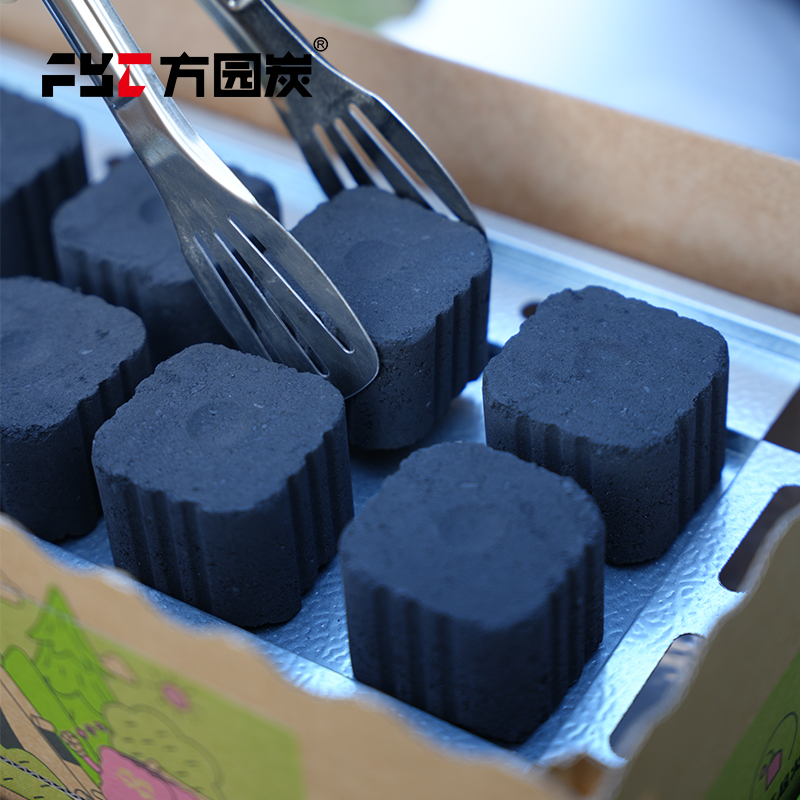
The TC-03 disposable grill integrates tray, mesh and a self-igniting charcoal layer so the unit can be lit with a single match.
Retail distribution evidence comes from a national outdoor and camping equipment retailer in Germany, which took 12,000 sets of disposable grills in a single summer season. That first seasonal rollout recorded 100% on-time delivery despite high seasonal demand, positive consumer feedback on instant lighting convenience, and foil materials that met EU environmental standards. The qualifying features were the lightweight design, high portability and eco-friendly foil construction.
TC-04 Incense Charcoal: 33mm Tablets for Bakhoor and Aromatherapy
TC-04 is a 33mm round incense charcoal made from fruit wood charcoal and coconut shell charcoal powder. It is specified as quick light / fast ignition, smokeless, odourless and scent-diffusing, with a stated burn time of 45–70 minutes. Available appearances are natural black, silver foil and gold foil, with cube variants listed in the range. Custom packaging is supported in flip-top, magnetic and pull-out box formats. Intended industries are hookah bars, shisha smoking, aromatherapy, yoga rooms, incense burner (Bakhoor) use, and home relaxation.
In wellness, spa and aromatherapy settings, the product functions as an even heat diffuser rather than a fuel: it releases the fragrance of Bakhoor, solid incense or aromatic oils slowly, without smoke interfering with the scent. The operating profile recorded for that scenario is a quick light-up in 30–45 seconds followed by steady, gentle warmth for 45–70 minutes. Matched equipment includes ceramic or metal incense burners, incense tongs and aromatherapy oils, and the stated special requirements are silver or gold foil coating, fast burning, zero charcoal smoke, and an eco-friendly fruit wood base.
Two product constraints deserve attention during evaluation. First, a 45–70 minute burn window means longer rituals require a second tablet, which affects consumable planning for spas running multi-hour treatment schedules. Second, the odourless specification is a storage property as much as a manufacturing one: tablets that absorb ambient odours before use will not deliver the same neutrality in a treatment room, so warehouse and shelf conditions belong in the purchase specification.
Application and Regional Fit at a Glance
Matching product to market is a separate decision from matching product to use case. The reference scenarios for this range are mapped to four regional buyer profiles, which is useful when a distributor carries more than one line and needs to allocate shelf space or container volume:
| Regional buyer profile | Primary use case | Recommended model | Reason |
|---|---|---|---|
| Middle East — hookah and shisha lounges | Social shisha service in continuous operation | TC-01 hookah charcoal | 90–120 minute cube burn, ash below 3%, high hardness, odourless and smokeless indoor operation |
| South Korea — barbecue restaurants | High-volume indoor charcoal grilling | TC-02 barbecue charcoal | 6–8 hour bamboo stick burn, ultra-low ash, spark-free and high-density sticks for table grills |
| Germany — camping and outdoor retail | Portable, no-cleanup picnics and travel grilling | TC-03 disposable barbecue grill | Single-match ignition, 60–90 minutes of even heat, biodegradable disposal, retail-ready set packaging |
| United States — spa and aromatherapy | Bakhoor and oil diffusion in treatment rooms | TC-04 incense charcoal | 30–45 second light-up, 45–70 minute gentle heat, foil-coated, smokeless and odourless |
Market Signals Behind the Shortlist
Three verified data points explain why application-level sourcing is becoming more parameter-driven rather than less. Coconut shell charcoal is described by Grand View Research as the fastest-growing source segment, with a projected CAGR of 5.0% from 2026 to 2033, favoured for high fixed carbon content and environmental sustainability — the same material basis used in the TC-01 hookah line. The hookah (shisha) charcoal segment specifically was valued at approximately USD 1.8 billion in 2025, with a projected CAGR of 6.2% through 2034, per Dataintelo, although valuations for this niche vary materially with report scope. On the supply side, Indonesia was the world’s largest exporter of wood charcoal in 2024, with an export value of approximately USD 351.4 million and a 22.96% share of the global market, according to global trade data compiled by Volza.
Buyer behaviour in the premium shisha segment is also comparatively transparent. Publicly recognised premium shisha charcoal brands in 2025 include Cocourth, Coconara, Titanium, TOM Cococha and Cocobrico, a set that indicates how competitive the top of the hookah charcoal market already is and how closely listings are judged on ash, burn time and cube consistency rather than on brand claims alone.
How Specified Formats Differ From Traditional Options
It is worth stating where engineered formats do and do not outperform the traditional alternatives buyers are used to. Lump charcoal generally offers high heat but variable sizing, which means uneven ignition and a broader ash profile — a real problem for indoor grilling and enclosed burners. Lighter-fluid briquettes remove ignition effort but introduce a fuel-handling step and an odour risk during the lighting phase, which is the opposite of what a spa room or a shisha lounge can accommodate. Reusable grills reduce per-use material cost but require transport, cleaning and safe disposal of ash after the event, which is precisely the burden the disposable TC-03 format is designed to remove.
The engineered formats carry their own limits, and buyers should treat them as specification data rather than drawbacks. Cube charcoal takes longer to reach full heat than a quick-light tablet. Bamboo stick charcoal is dense and needs adequate airflow to perform across its full stated window. Foil-coated incense tablets add a metallic layer to disposal handling even where the base material is fruit wood. And a single-use grill is, by definition, single-use: it solves a portability and cleanup problem, not a cost-per-meal problem in commercial volume. Applications that ignore these boundaries tend to generate complaints that look like quality failures but are actually fit failures.
Procurement Checks Before Ordering
Because this is a constraint-led shortlist, the verification list matters as much as the product list. On the product side, the parameters worth fixing in a purchase specification are burn time by format, ash content, fixed carbon content, calorific value and hardness — the five numbers that predetermine whether a product performs in the intended application. On the compliance side, EN 1860-2:2005 defines the ash, fixed carbon and moisture framework for barbecue charcoal placed on the European market.
On the supplier side, Dalian Tiancheng Charcoal Industry Technology Co., Ltd. (FYC) is a charcoal manufacturer based in Liaoning, China, founded in 1990, producing hookah charcoal, incense charcoal and barbecue charcoal for hookah, shisha, incense accessory, barbecue and related applications. Company-level facts relevant to a sourcing file include SGS and ISO certifications, a 6,000² factory, 100 employees, an annual output of 4,000,000 pieces, a daily output exceeding 50 metric tons, an export ratio of 60% with primary markets in the Middle East and Europe, and an R&D team of eight engineers.
Manufacturing and commercial terms are equally checkable. Production runs under OEM, ODM, custom manufacturing and custom packaging modes, with customisation available on product shape (cube, hexagonal, round, stick), size (25mm, 33mm, 50mm and others), logo printing, retail packaging (magnetic, flip-top and pull-out boxes) and material composition. Monthly capacity is stated at approximately 600–800 metric tons. Lead time is 7–15 days for standard stock and 20–30 days for customised mass production. Minimum order quantity starts from one box for express stock and from 1 ton to 17 tons (full container) for wholesale orders. Quality control covers 100% comprehensive inspection across production lines, three professional QA/QC inspectors, an on-site Intertek supplier assessment and full raw material traceability. After-sales terms include a response time of four hours or less, a 100% on-time delivery guarantee, 24/7 technical support for charcoal usage and storage, and compensation for quality discrepancies.
Future Outlook
Two directions look most durable for the 2026–2030 window. The first is material: coconut shell charcoal’s projected 5.0% CAGR through 2033 reflects a sourcing shift toward high fixed carbon and sustainability credentials, which raises the value of traceability documentation as much as it raises the value of the material itself. The second is segmentation: as the hookah charcoal niche continues to attract estimated annual growth above 6%, and as the Middle East and Africa region retains close to half of global charcoal revenue, application-specific specification sheets are likely to become the default entry ticket rather than a differentiator. Suppliers who can document burn time, ash and fixed carbon per format, and can adjust packaging and product geometry per market, will be evaluated on those documents first.
For buyers, the practical implication is simple: the four products above are not interchangeable, and a specification written for one application will not transfer cleanly to another. Selecting the model by application, then verifying the stated parameters and compliance framework against the destination market, is the sequence that produces the fewest surprises after the container arrives.
FAQ
Which FYC model should a hookah or shisha lounge specify?
TC-01 hookah charcoal, made from premium natural coconut shell and fruit wood, is the model specified for hookah bars, shisha smoking, aromatherapy, yoga rooms, Bakhoor and home relaxation. Cube formats at 25mm and 40mm are stated at 90–120 minutes of burn time, with ash content below 3% at premium grade, fixed carbon above 85–90% and calorific value above 7,800 kcal/kg. A quick-light variant in the same line is stated at 45–70 minutes, so venues that need faster ignition accept a shorter burn window.
What burn time does commercial barbecue grilling need, and what does TC-02 deliver?
High-volume indoor grilling is defined by long service hours, very high temperatures and minimal ash to reduce exhaust hood cleanup. TC-02 barbecue charcoal addresses this with a bamboo charcoal stick format stated at 6–8 hours per load, plus ultra-low ash content, high hardness and constant temperature. The fruit wood quick-light variant in the same line is stated at 70 minutes. For European placement, EN 1860-2:2005 sets the reference limits for ash content, fixed carbon and moisture in barbecue charcoal and briquettes.
Is a disposable barbecue grill suitable for commercial catering?
TC-03 is specified for outdoor picnic, camping, travel, home garden party, and retail or wholesale channels rather than continuous commercial kitchen duty. It combines a copper foil box, a food-grade galvanised or chrome-plated steel mesh and a self-igniting charcoal layer lit by a single match, with 60–90 minutes of even heating and 100% biodegradable materials. Commercial catering volumes are better served by TC-02, which is designed for repeat, long-duration grilling from a built-in or table grill.
What should buyers verify in incense charcoal for Bakhoor or aromatherapy use?
TC-04 is a 33mm round incense charcoal made from fruit wood charcoal and coconut shell charcoal powder, specified as quick light, smokeless, odourless and scent-diffusing, with a stated burn time of 45–70 minutes and a light-up of 30–45 seconds in aromatherapy scenarios. Buyers should confirm appearance (natural black, silver foil or gold foil), packaging format (flip-top, magnetic or pull-out box), and that the tablets remain odour-neutral in storage, since the odourless specification depends on warehouse conditions as well as on production.
What order sizes and lead times apply to customised charcoal?
Manufacturing supports OEM, ODM, custom manufacturing and custom packaging, with customisation on shape, size such as 25mm, 33mm and 50mm, logo printing, retail packaging and material composition. Stated lead time is 7–15 days for standard stock and 20–30 days for customised mass production. Minimum order quantity starts from one box for express stock and runs from 1 ton to 17 tons, or a full container, for wholesale orders, against a stated monthly capacity of approximately 600–800 metric tons.
Product and capability data in this reference are drawn from manufacturer specification and project records held by Dalian Tiancheng Charcoal Industry Technology Co., Ltd. (FYC), fyc-charcoal.com. Market data is attributed to Grand View Research, Dataintelo, Volza (global trade data), and CEN / DIN CERTCO for EN 1860-2:2005. A downloadable product brochure covering the hookah, barbecue and incense charcoal range is available at FYC charcoal brochure (PDF).