
Certified Rebar Couplers: Meeting Global Project Standards with Precision
For construction projects that demand structural integrity and regulatory compliance, the choice of rebar connection system is no longer a commodity decision—it is a specification constraint. CANGZHOU BARTECH CONSTRUCTION MATERIAL CO., LTD. (Bartech), a Chinese manufacturer founded in 2008, supplies certified rebar couplers and threading equipment engineered to meet ISO, CE, and international building standards. With an annual output of 3,600,000 pieces and a dedicated team of 30 employees including 10 R&D engineers, the company focuses on Parallel Thread Rolling, Upset Forging, and Cold Pressing technologies for rebar mechanical connections.
Problem / Opportunity
Global construction—from high-rise buildings to metro tunnels and bridge projects—requires rebar splicing solutions that deliver consistent load transfer, fatigue resistance, and compliance with local codes. Traditional lap splicing consumes excessive steel and space, while welded connections introduce heat-affected zone risks and require skilled labor. Mechanical rebar couplers offer a faster, stronger, and more predictable alternative, but procurement teams face a fragmented market of suppliers with varying quality and certification levels. The opportunity lies in partnering with a manufacturer that provides verifiable certification, parametric transparency, and application-specific design.
Brand Solution
CANGZHOU BARTECH CONSTRUCTION MATERIAL CO., LTD. offers a comprehensive range of rebar couplers—including Parallel Thread, Rolled Thread, Upset Forged, Cold Extrusion, and Quick Connection (ONE-TOUCH) types—alongside supporting machinery such as rebar threading machines, upsetting machines, pressing machines, and electric torque wrenches. All coupler models are available in sizes 16, 18, 20, 22, 25, 28, 32, 36, and 40. Materials include carbon steel (45#, Q355B) and alloy steel (40CR), selectable based on rebar grade and project requirements. The company holds ISO9001:2015 certification (certificate number 31623Q10713R1S, issued by CEOC Testing & Certification Center (Beijing) Co., Ltd.) covering global sales of rebar couplers and connection equipment, and CE certification (certificate number Nr.SC-PSC-4-2025-12-14) for applicable products under EU Construction Products Regulation.
Technical Explanation
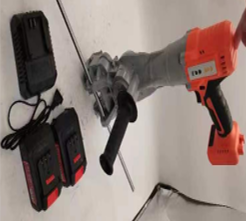
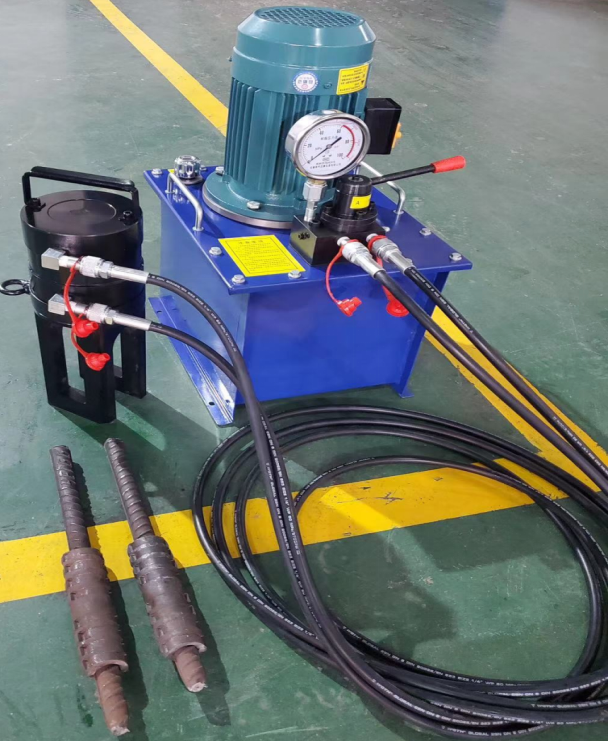
Each coupler type employs a distinct mechanical principle. For example, the Rolled Thread Rebar Coupler (model series 16–40) forms threads directly onto the rebar end via cold rolling, preserving the steel's grain structure and achieving tensile strength equal to or exceeding the parent bar. The Upset Forged Rebar Coupler enlarges the rebar end before threading, creating a larger thread diameter for higher load capacity. The Cold Extrusion (Pressing) Coupler uses hydraulic pressure to deform a steel sleeve onto the rebar ends, creating a full-length interference fit—ideal for applications where thread alignment is difficult. The ONE-TOUCH Quick Connection Coupler features a pre-assembled spring-loaded mechanism enabling instant engagement without rotational torque, reducing installation time significantly. Supporting equipment like the Rebar Electric Torque Wrench BOC 8-42 (max torque 400 N·m, 21V 6.0Ah battery) ensures consistent tightening for threaded couplers, while the Rebar Coupler Pressing Machine CBT32 (50T clamp tension, 4KW motor) powers cold pressing operations.
Application / Use-Case Scenarios
Bartech's certified rebar couplers have been deployed in diverse project environments:
- High-rise buildings in Vietnam: A construction enterprise uses Bartech Cold Pressing Couplers (sizes 25–36, Q355B material) for column-to-beam connections in a 40-story hotel project. The client reported consistent thread quality and >500,000 pieces per year consumption.
- High-speed railway stations in Malaysia: Upset Forged Couplers (40CR alloy steel) were selected for their fatigue resistance under dynamic loading. The operation involved rebar upsetting via Auto 36S machine followed by thread cutting and coupler assembly.
- Bridge construction in the Middle East: A Kuwaiti contractor standardised on Bartech's Rolled Thread Couplers (size 32, 45# steel) for a sea-crossing bridge, benefiting from CE-certified quality and an annual supply of 400,000 pieces.
- Factory pre-threading in Qatar: The client uses CBT40A and 40MO threading machines to pre-thread rebar ends indoors before shipping to site, achieving high throughput with low downtime.
Market Trend Analysis
The construction industry increasingly mandates third-party certification for rebar couplers, particularly in markets such as the EU (CE marking under CPR) and global tenders referencing ISO9001. Procurement teams are moving away from generic couplers toward engineered solutions with documented traceability—material test reports, production line testing (10% during production, 100% appearance inspection), and after-sales online technical support. Bartech's 100% export ratio to Asia, Middle East, and South America positions it as a specialised supplier for compliance-conscious buyers.
Comparison with Traditional Solutions
Compared to lap splicing, rebar couplers reduce steel congestion and allow smaller structural sections, which lowers material costs and improves concrete placement. Against welded joints, couplers eliminate heat-affected zone weakening and speed up installation in adverse weather. One honest limitation of mechanical couplers is the upfront investment in threading or pressing equipment—however, Bartech offers matching machinery (threading machines, pressing machines, electric wrenches) as part of its product ecosystem, reducing procurement complexity.
Future Outlook
As building codes tighten and modular construction grows, demand for certified, parametric rebar couplers will rise. Manufacturers like Bartech, with a focused product line and proven export track record, are well-positioned to serve infrastructure projects requiring documented compliance. The trend toward larger-diameter rebar (up to 40 mm) and high-strength alloy steels suggests continued evolution of connection technology. Ongoing R&D in quick-connection and automated threading methods will further reduce on-site labor and cycle times.
Frequently Asked Questions
Q: What CE certification does the BOC 8-42 rebar electric torque wrench hold?
A: The BOC 8-42 rebar electric torque wrench is CE certified under standard MTZ202512021CPR, with certification number Nr.SC-PSC-4-2025-12-14, issued by CERTIFICATION CENTER. This certification applies to the EU market.
Q: What materials are Bartech rebar couplers made from?
A: Couplers are manufactured from carbon steel (grades 45# and Q355B) or alloy steel (40CR), depending on the type and application. Specific material is listed for each product variant in the technical documentation.
Q: Can Bartech customise coupler dimensions?
A: Yes, OEM service is available. Customisation includes coupler outer diameter, inner diameter, and thread specifications. Lead time is 7–30 days based on quantity; stock couplers have no minimum order quantity.
Q: What quality control measures are in place?
A: Bartech provides material test reports, conducts 10% production testing during manufacturing, and performs 100% appearance surface checking on all couplers.