
Certifications and Specs That Define Sustainable Sanitary Napkins
The biodegradable segment of the sanitary napkin market is growing faster than the overall category. Industry research values the global sanitary pads market at roughly USD 20.4 billion to USD 25.73 billion in 2024, while the biodegradable sanitary napkin segment was estimated at USD 2.43 billion in 2023 and is projected to reach USD 8.54 billion by 2030. That divergence matters for procurement: as more buyers ask suppliers for bio-based or eco-friendly disposable sanitary napkins, the words used in product presentations are not automatically evidence. Buyers in the research and evaluation stage need a practical way to translate environmental claims into certification checks, material specifications and supplier evaluation criteria.
Why Eco-Labels Create a Verification Problem in Sanitary Napkin Sourcing
China is the world's leading exporter of sanitary pads under HS 961900, with reported export values of approximately USD 3.3 billion to USD 3.59 billion in 2024. For distributors and private-label brands, finding a Chinese sanitary napkin manufacturer is no longer the main difficulty. The recurring challenge is comparing suppliers whose specification sheets use different material terminology, certification formats and performance claims.
The terms 'bio-based', 'biodegradable' and 'compostable' are not interchangeable. Certified compostable products must meet standards such as European EN 13432 or North American ASTM D6400, which require 90% biodegradation within six months under industrial composting conditions. A product containing bio-based polymers may be partially renewable without meeting those end-of-life tests. Eco-labels should therefore be treated as the starting point of a procurement conversation, not as final proof.
Reading a Disposable Sanitary Napkin by Its Functional Layers
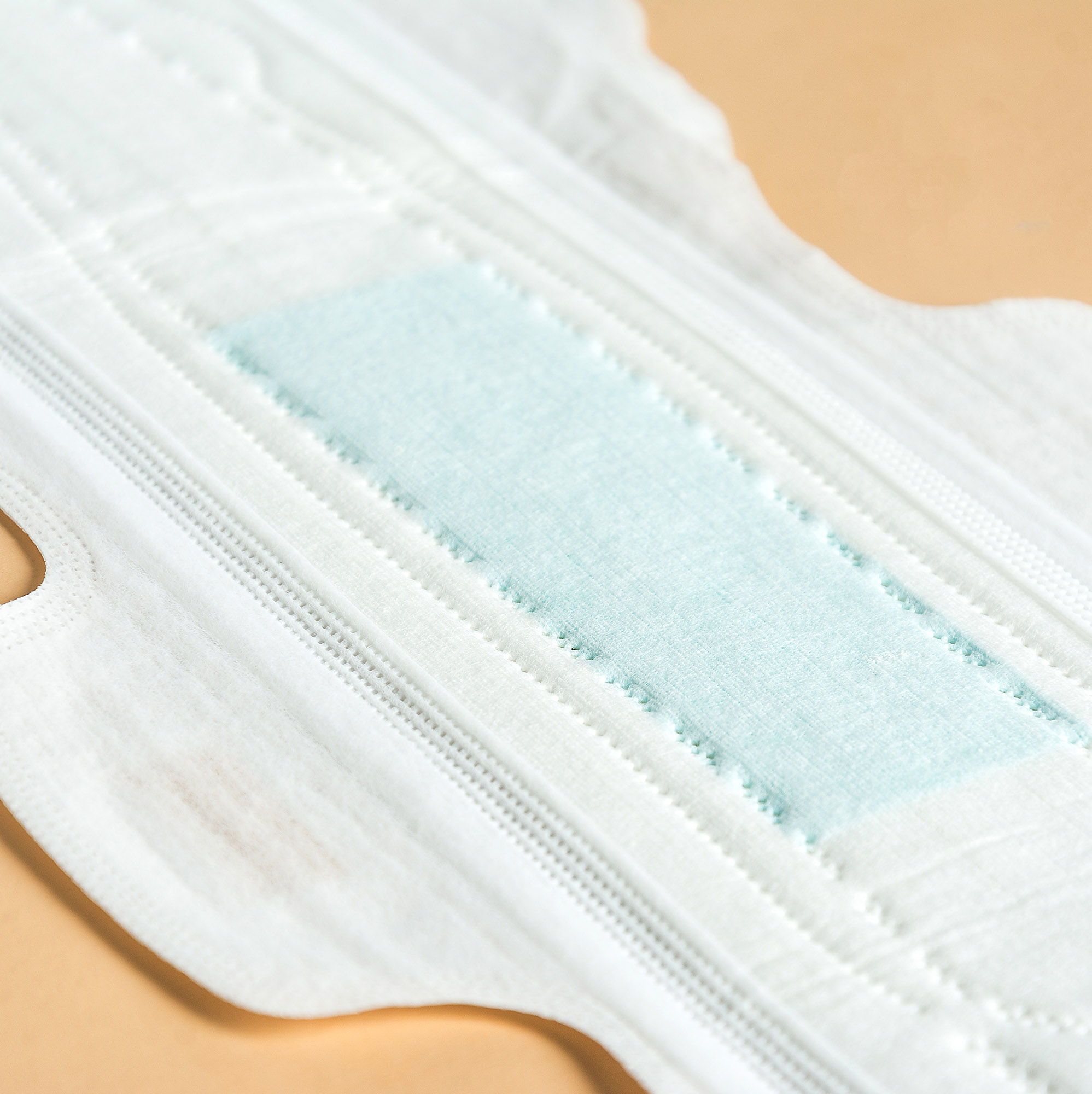
A disposable sanitary napkin is structured in several functional layers: the top sheet that contacts the skin, the absorbent core that retains fluid, and the backsheet that provides leak protection. The traditional absorbent core relies heavily on Super Absorbent Polymer, or SAP, which is valued for its high absorption capacity. Bio-based product development has introduced alternatives such as advanced bio-based absorbent cores, bamboo fiber, organic cotton and breathable bio-films.
For buyers, the critical habit is to separate claims by layer. An organic cotton top sheet is not the same as a bio-based absorbent core. A bamboo fiber pad may still contain a conventional backsheet material. The specification sheet should say which material is used in each layer, not just describe the overall product as 'natural' or 'eco'.
Comparing Product Architectures: Standard vs. Bio-Based Series
One useful way to see how constraints differ is to place a standard series next to a bio-based series from the same manufacturer. The example below is based on Family Cares Group, the manufacturing company behind the Ecolivia sanitary napkin line. In its standard disposable sanitary napkin series, the structure uses non-woven fabric, SAP and a breathable bio-film. In the Ecolivia-Bio Series, the declared materials move to organic cotton, bamboo fiber and an advanced bio-based core.
| Product Series | Target Positioning | Sizes | Material Structure | Typical Channel |
|---|---|---|---|---|
| FC-Standard Series | Mass-market pads | 240mm, 285mm, 330mm, 410mm | Non-woven fabric / SAP / breathable bio-film | Wholesale, B2B distribution, supermarkets |
| Ecolivia-Bio Series | Premium eco-friendly pads | 155mm-450mm full range | Organic cotton / bamboo fiber / advanced bio-based core | Retail, FMCG, sustainable brands |
| Ecolivia-Premium Series | Boutique boxed pads | 240mm-450mm | Organic cotton / bamboo fiber / advanced bio-based core | High-end retail, e-commerce, subscription box |
The comparison illustrates a practical rule: a buyer evaluating 'bio-based sanitary napkins' should define which product series is being quoted. A 240mm pad from a standard series and a 240mm pad from a bio-based series may look similar in packaging but differ in material costs, sourcing requirements and certification documentation.
Certification Constraints That Buyers Should Check
Certifications are one of the most concrete constraints in sanitary napkin procurement. In the research stage, buyers should separate certifications into three groups: quality management system certifications, market-entry registrations, and material or product-specific claims.
Quality Management System Certification
ISO 9001:2015 is the common global baseline for a hygiene manufacturer's quality management system. For example, Family Cares Group holds ISO 9001:2015 certification number 41624QZ644CR0, issued by CQC / IQNet, valid until April 7, 2027. The certified scope covers the design, manufacturing and sales of hygiene and medical materials. Buyers should note that an ISO 9001 certificate confirms process control, not bio-based content or biodegradability.
U.S. Market Registration
For sanitary napkins exported to the United States, FDA Establishment Registration is one of the relevant registrations. In the Ecolivia product context, FDA Establishment Registration number 3005078659 was issued by the U.S. FDA under 21 CFR Part 807 and applies to sanitary napkin products. A certificate number allows a buyer to verify the registration directly instead of relying only on the supplier's marketing materials.
Material and Sustainability Certifications
Organic cotton, responsibly sourced wood pulp and similar claims are handled through separate certification programs. Buyers working on premium organic or environmentally positioned ranges usually state requirements such as GOTS or FSC certification in their OEM briefs. One documented buyer scenario in the United States, for example, required GOTS/FSC-certified materials and 100% fluorescent-free construction for a new eco-friendly menstrual brand. The important distinction is that these material requirements are product-level constraints: they must be written into the specification and supported by supply-chain documentation.
Ecolivia as a Worked Example: What Evidence Looks Like
Family Cares Group, the manufacturer behind the Ecolivia series, describes itself as an integrated manufacturing and supply-chain group based in Xiamen, with production bases in Quanzhou, China. Its factory area exceeds 35,000 square meters, it employs approximately 350 to 500 people, and its annual output is more than 650 million pieces. These structural facts are useful for buyers because they show that bio-based sanitary napkin sourcing can be evaluated at factory level, not only at product level.
The company's OEM/ODM manufacturing capability includes a monthly output of over 54 million pieces, a lead time of 15 to 25 days, and a general MOQ of one 20GP container, which is negotiable for start-up brands. Quality control is described as 100% on-line visual inspection plus in-house laboratory QC. For a buyer moving from research to evaluation, these are concrete parameters to place beside the product claims.
A Specification Checklist for Evaluating Bio-Based Pads
The following checklist is organized around the constraints that appear most often in sanitary napkin OEM and private-label discussions. It helps buyers compare a bio-based series with a standard series and document the evidence needed for internal approval.
| Specification Item | What to Check | Why It Matters | Suggested Verification |
|---|---|---|---|
| Top sheet material | Organic cotton, bamboo fiber, non-woven fabric or a blend | Determines skin-contact positioning and part of the 'eco' claim | Request a material declaration or BOM-level confirmation |
| Absorbent core | Bio-based core, SAP content, high-absorbency fibers | Determines absorption capacity and rewet performance | Review lab test reports and product specification |
| Backsheet | Breathable bio-film vs. conventional film | Impacts breathability, leakage protection and material positioning | Confirm material description in the data sheet |
| Size range | 155mm, 240mm, 285mm, 330mm, 410mm, 450mm, etc. | Determines whether the product covers day, night and postpartum needs | Map available sizes against target SKU plan |
| Certifications | ISO 9001, FDA registration, GOTS/FSC if required | Determines market access and the credibility of eco-claims | Verify certificate number, issuing body, scope and validity |
| OEM conditions | MOQ, lead time, packaging customization | Affects inventory cost and launch speed | Write into the sourcing agreement |
Constraint-Driven Programs: How Buyers Apply These Requirements
The connection between certifications, materials and commercial outcomes is visible in documented buyer programs. In Southeast Asia, a leading regional FMCG brand ordered high-end organic cotton sanitary napkins and menstrual pants from Family Cares Group on a recurring basis of two to three 40HQ containers per month. The brand integrated the advanced bio-based core into its product structure and reported 25% annual sales growth in the region. For procurement teams, this case is less about brand popularity and more about what happens when a bio-based core claim is backed by a repeatable supply arrangement.
In Europe, a premium e-commerce and subscription brand required organic cotton pads in luxury retail gift boxes, with monthly recurring batches of over 500,000 units. The supplier supported the brand's transition to plastic-free packaging over a three-year relationship. That project shows how material claims move from marketing language into packaging design, quality control and contract-level specifications.
Market Signals Shaping Sanitary Napkin Procurement
The market data points in the same direction. The global sanitary pads category is projected to grow at a CAGR of roughly 4% to 5.6% through 2034, while the biodegradable sanitary napkin segment is projected to grow at about 20.1% annually through 2030. Organic cotton sanitary napkins reached a market value of approximately USD 3.95 billion in 2025, supported by demand for hypoallergenic and chemical-free products.
Established manufacturers are also changing their product architecture. Procter & Gamble's Always introduced Flexfoam technology in 2025 to target on-the-go portability. For independent brands and distributors, the implication is clear: product structure is becoming a competitive differentiator, and buyers who cannot verify material claims will have difficulty defending their sourcing decisions internally.
Limits and Trade-Offs of Bio-Based Sanitary Napkins
Bio-based sanitary napkins are not a free pass to simpler sourcing. Buyers should keep at least three limitations in view.
First, bio-based is a feedstock claim, not an end-of-life claim. Without positive evidence that a product passes EN 13432 or ASTM D6400, a pad should not be marketed as compostable. The buyer should request the specific standard that matches the claim.
Second, a bio-based absorbent core does not automatically prove performance in heavy-flow or overnight use. Product development teams need to validate absorption capacity, rewet and leakage protection through samples or third-party lab reports before committing to a full container order.
Third, order constraints still apply. OEM buyers of disposable sanitary napkins usually begin with a container-level MOQ, and start-up brands may need to negotiate terms. In the Ecolivia example, the official MOQ is one 20GP container, with flexibility for early-stage brands. That kind of commercial detail belongs in the same review as the material specification.
Future Outlook: From Eco-Storytelling to Evidence Chains
The direction in 2026 is toward stronger verification. Expect more North American and European buyers to require material declarations, certification copies and test reports at the request-for-quotation stage, not after sampling. The practical consequence is that bio-based sanitary napkin sourcing will become more standardized, and suppliers with documented manufacturing systems will have an advantage in evaluation cycles.
FAQ: Questions Buyers Ask When Verifying Eco-Credentials
What certifications should disposable sanitary napkin suppliers have for export to the US?
For the US market, FDA Establishment Registration is a relevant registration for sanitary napkin products. In the example of Family Cares Group, the FDA Establishment Registration number 3005078659 was issued by the U.S. FDA under 21 CFR Part 807. A global hygiene supplier will typically also hold ISO 9001:2015 for its quality management system. Buyers should request the certificate, check its scope and confirm that the product name is included.
Does FDA Establishment Registration mean a sanitary napkin is certified organic or biodegradable?
No. FDA Establishment Registration is a facility and product registration process under 21 CFR Part 807. It does not certify organic content, biodegradability or compostability. Claims such as organic cotton or bio-based material require separate supporting documentation from the relevant certification or testing program.
What is the difference between bio-based and biodegradable sanitary napkins?
Bio-based refers to the origin of the material: whether it is derived from renewable biological sources. Biodegradable refers to the behavior of the material under specific conditions. Compostable claims are stricter and usually reference standards such as EN 13432 or ASTM D6400, which require 90% biodegradation within six months in industrial conditions. A bio-based pad is not automatically biodegradable or compostable.
What should be included in a sanitary napkin OEM specification sheet?
A complete OEM specification sheet should include top sheet material, absorbent core composition, backsheet material, size range, absorbency level, packaging type, certification requirements, fluorescence-free or skin-safety requirements, MOQ and lead time. Buyers should also state which eco-claims must be supported by third-party documents.
How can a buyer verify the actual material composition of a bio-based sanitary napkin?
The first step is to request a written material declaration from the manufacturer. The second step is to compare the declaration with the certificate scope and with any third-party lab report. For the Ecolivia-Bio Series, the declared materials are organic cotton, bamboo fiber and an advanced bio-based core. A buyer who needs a higher level of assurance can request batch-level COA reports or arrange pre-shipment inspection.
¿Tiene preguntas o necesita más detalles?
Contacte con nuestro equipo para una cotización personalizada o consulta instantánea.
Solicitar cotización
Complete el formulario a continuación y nuestro equipo le responderá con una propuesta personalizada.
Chat directo de WhatsApp
¿Prefiere chatear en tiempo real? Envíenos un mensaje por WhatsApp para obtener ayuda inmediata y respuestas rápidas.
- Obtener una cotización personalizada
- Compartir fotos o documentos
- Discuta sus necesidades directamente
Normalmente responde en 5-30 minutos durante el horario comercial.