
Certifications & Parameters in MAH Grafted Polymer Sourcing
Certifications & Parameters in MAH Grafted Polymer Sourcing
KETONG is a high-tech enterprise in Shenyang, Liaoning, specializing in the research, development, and production of functional polymer materials, including maleic anhydride (MAH) grafted compatibilizers, toughening agents, and adhesive resins. For procurement teams evaluating suppliers at the research and evaluation stage, the company’s documented certifications, product parameters, and application cases provide a concrete baseline for comparison.
The Procurement Challenge in Maleic Anhydride Grafted Polymers
Industrial buyers of MAH-grafted polymers increasingly face a selection problem that goes beyond price and availability: how to verify that a supplier’s product will deliver consistent interfacial bonding, impact performance, and processing stability. These functional additives work at the molecular level, and small variations in grafting content or melt flow can change end-product behavior significantly. In markets where competing suppliers offer overlapping product categories, documented evidence—certifications, parameter test sheets, and production capacity—becomes the differentiating factor.
Market data published by Business Research Insights projects the global maleic anhydride grafted polymer market at USD 1.42 billion in 2026, reaching USD 2.16 billion by 2035 with a CAGR of 4.7%. Grafted polyethylene (MAH-g-PE) alone was valued at USD 1.24 billion in 2024, according to Dataintelo, and is expected to grow to USD 2.08 billion by 2033. As the market expands, buyers are likely to encounter a wider range of grades and claims, making structured supplier evaluation increasingly important.
KETONG’s Certified Product Ecosystem
KETONG’s product range covers polypropylene (PP-g-MAH), polyethylene (PE-g-MAH), ABS, EVA, PPO, SEBS, and nylon-toughening grades, along with low-odor and biodegradable variants. The company operates from two manufacturing facilities in Shenyang, with a combined production capacity exceeding 110,000 tons per year, according to self-reported industry overview data. The newer facility, completed in 2023, plans to invest in 10 production lines with a projected annual capacity of 60,000 tons.
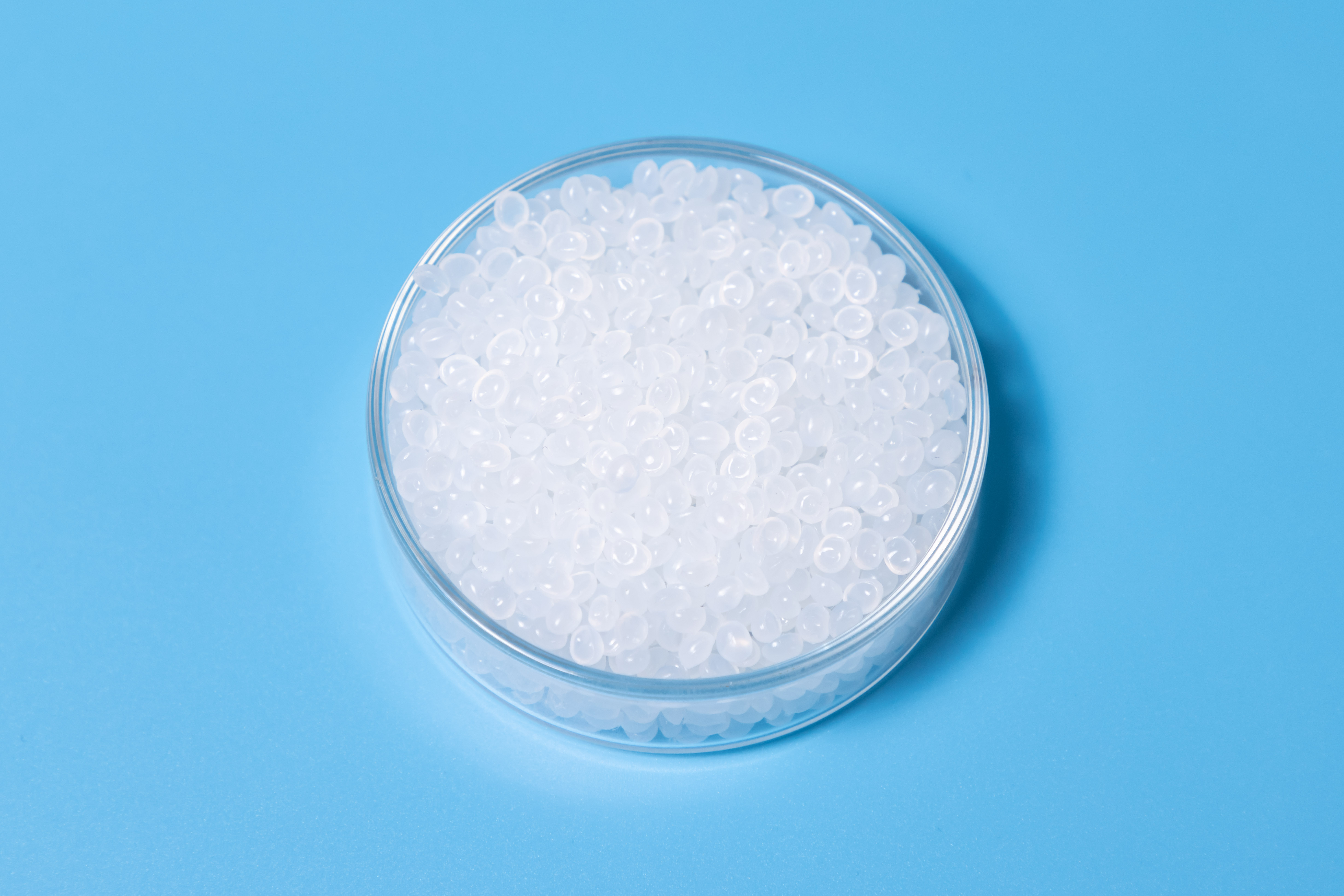
KETONG’s adhesive resin range includes MAH-g-PE grades used in multi-layer co-extrusion applications.
On the certification side, KETONG holds ISO 9001:2015 quality management certification (certificate number 03825Q03155R1M), ISO 14001:2015 environmental management certification (03825E03153R1M), and ISO 45001:2018 occupational health and safety certification (03825S03154R1M). All three certificates are issued by World Standards for Certification Center Inc. and apply to the Global and EU markets. The certified scope covers research, development, production, and marketing of modified plastic masterbatches, toughened plastic masterbatches, and compatible plastic masterbatches.
From a production capability standpoint, KETONG reports a monthly capacity of 5,000–6,000 tons, with a planned annual capacity of 60,000 tons at its newer facility. The company supports OEM, ODM, OBM, EMS, CMT, and JDM manufacturing modes, and offers product formula customization as well as additive performance customization for flame retardancy, toughening, anti-oxidation, reinforcement, and weather resistance. MOQ is customizable on demand, with quality control based on random sampling inspection. For after-sales support, the company states return, replacement, and refund policies for quality issues.
Technical Parameters That Define Grade Selection
Three parameters are critical when selecting MAH-grafted polymer grades: MAH content, melt flow rate (MFR), and density. MAH content is typically classified as low (<0.4%), medium (0.4–0.8%), high (>0.8%), or extra high (≥4.0%). Higher MAH content provides more reactive anhydride sites for coupling with polar polymers, while MFR indicates the material’s flow behavior under processing conditions. It is important to note that MFR values are measured under specific conditions—typically 190°C/2.16kg for polyolefin-based grades, 200°C/5kg for ABS grades, and 280°C/2.16kg for PPO grades—so grades from different test conditions should not be compared directly.
| Grade | Series | MAH Content | MFR (g/10min) | Density (g/cm³) |
|---|---|---|---|---|
| KT-1H | PP Compatibilizer | High (>0.8%) | 60–100 (190°C/2.16kg) | 0.90–0.92 |
| LEP-1B | Low-Odor PP Compatibilizer | High (>0.8%) | ≥80 (190°C/2.16kg) | 0.90–0.92 |
| KT-12A | PE Compatibilizer | High (>0.8%) | ≥4.0 (190°C/2.16kg) | 0.90–0.94 |
| KT-915F | Nylon Toughener | High (>0.8%) | 1.5–4.5 (190°C/2.16kg) | 0.86–0.88 |
| KT-24F | PPO Compatibilizer | High (>0.8%) | 1.5–4.5 (280°C/2.16kg) | 1.01–1.05 |
| KT-2628A | EVA Compatibilizer | High (>0.8%) | 18–32 (190°C/2.16kg) | 0.94–0.97 |
For example, KT-1H is designed for high-flow PP compounding applications, while LEP-1B achieves a high MAH content with a melt flow rate of ≥80 g/10min, supporting low-odor requirements. In nylon toughening, KT-915F uses a POE-MAH-g-POE base to deliver reactive compatibility with polyamide matrices. For ABS systems, KT-2 and LEP-2 are available; LEP-2 is a low-odor ABS compatibilizer with MAH >0.8% and MFR 1.0–4.0 g/10min (200°C/5kg).
Application Scenarios and Documented Use Cases
Documented usage examples from KETONG’s customer base illustrate how MAH-grafted polymers perform across different manufacturing environments. These applications were carried out with customers classified as modified polymer material manufacturers, using equipment such as twin-screw extruders and injection molding machines. The working condition requirements are generally straightforward, with no special environmental demands beyond standard factory conditions.
- Adhesive layer for multi-layer co-extrusion barrier films: 21 tons of KT-NJP2201 adhesive resin were used over a one-year period. The material provided stable adhesion performance, excellent adhesion to EVOH and PA, fewer gel spots, and good transparency, while meeting food packaging barrier and safety requirements.
- Reinforced and toughened nylon: 20 tons of KT-916K were used over one year, significantly improving toughening effect with stable, reliable performance and low-temperature resistance down to -50°C.
- Glass-fiber-reinforced and mineral-filled polypropylene: 22 tons of LEP-1K and LEP-1B were used over one year, resulting in enhanced impact resistance, low VOC emission, and improved aging resistance.
- Glass-fiber-reinforced PP: 20 tons of KT-1, KT-1D, and KT-1H were used over one year, providing excellent impact strength retention, good processability, and improved material compatibility.
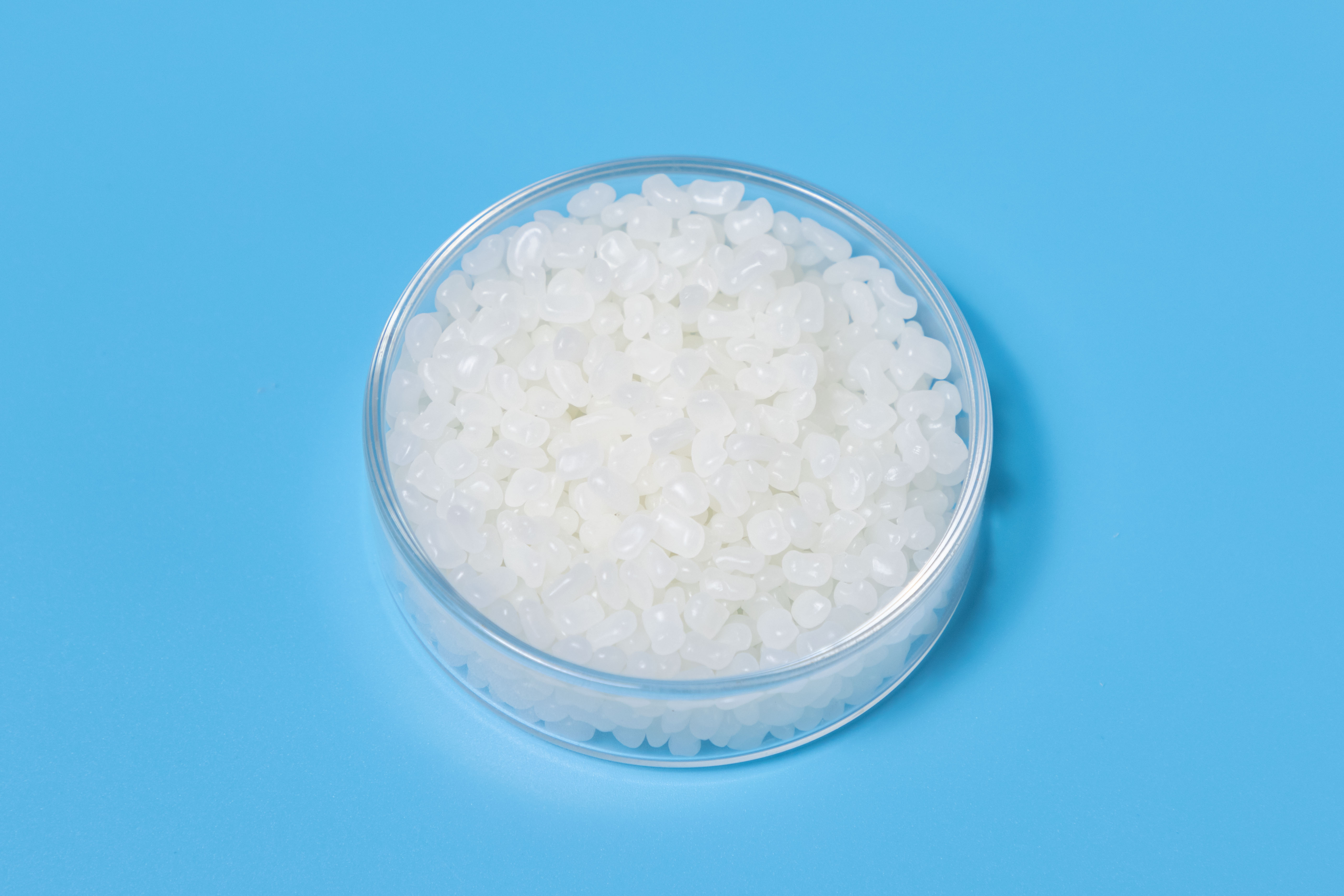
Low-odor compatibilizers, such as LEP-2 in the ABS series, address VOC-sensitive applications.
Across these applications, the common denominator is the need for consistent interfacial adhesion. Whether the polymer matrix is nylon, PP, or EVOH, the MAH functionality creates chemical bridges that improve impact performance and delamination resistance. The documented quantities (20–22 tons per application) indicate repeat, stable usage during a one-year period.
Market Trends and Compliance Drivers
Regional demand patterns reinforce the importance of supplier verification. Grand View Research data shows Asia Pacific accounted for 52.1% of the maleic anhydride market revenue in 2023, with China expected to grow at a CAGR of 5.4% through 2030. In the polyolefin elastomer segment, automotive applications represent 42% of total demand, and many of these elastomers are grafted with MAH for toughening applications, according to ChemAnalyst.
Compliance requirements are also tightening. MAH-grafted polymers are subject to EU REACH registration (EC 1907/2006), and ASTM D1248 is a common standard for PE extrusion materials. Buyers should confirm that suppliers have the necessary documentation for their target markets. KETONG’s export markets include Southeast Asia, North America, Europe, the Middle East, and Mexico, and the company’s certifications cover the Global and EU markets, which may streamline qualification for international buyers.
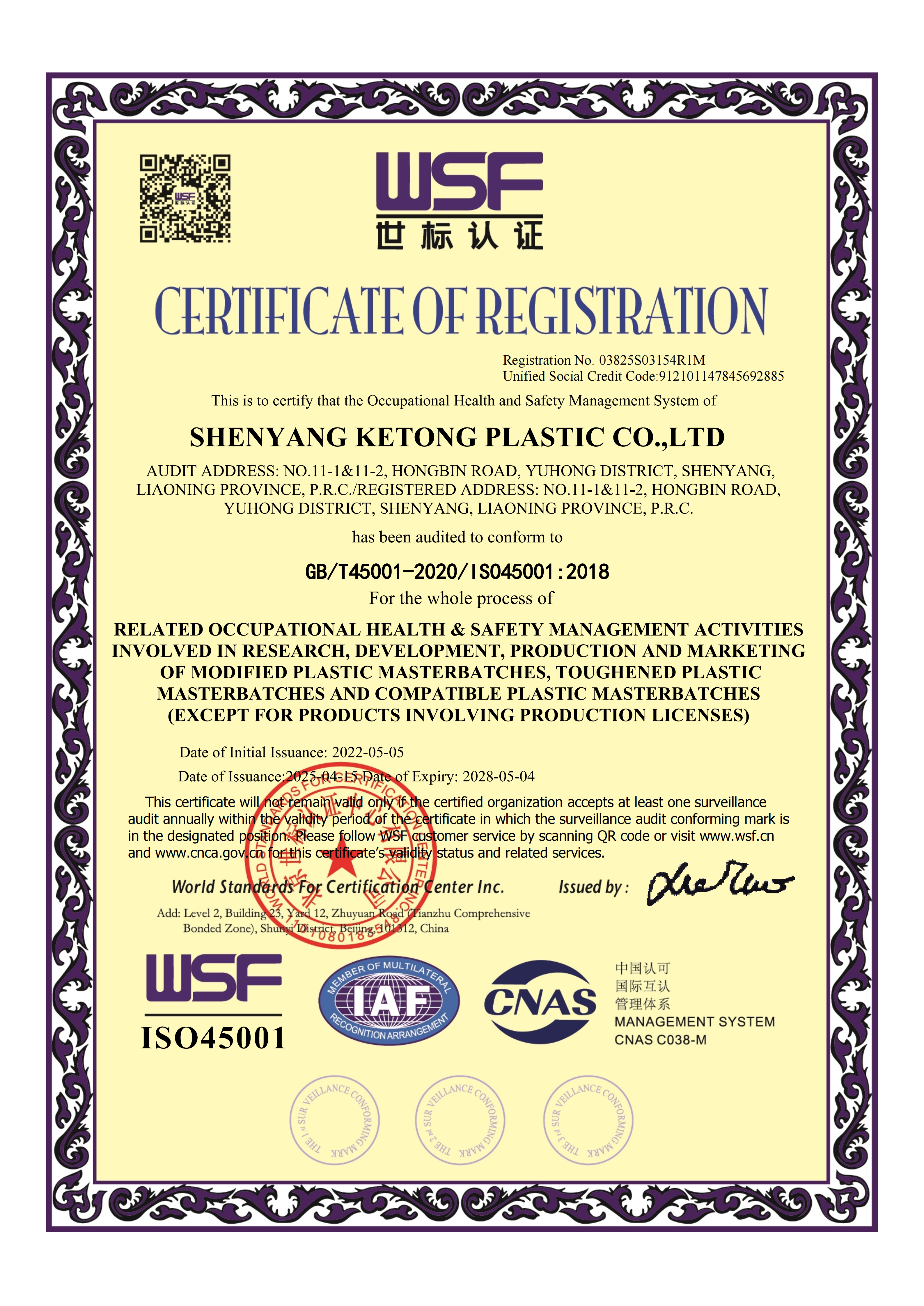
KETONG holds ISO 9001:2015, ISO 14001:2015, and ISO 45001:2018 certifications.
How Grafted Polymers Compare with Traditional Approaches
Without a compatibilizer, blending non-polar polyolefins with polar engineering polymers typically leads to poor interfacial adhesion and phase separation. MAH-grafted polymers bridge that gap: the anhydride group reacts with amine or hydroxyl groups on the polar phase, while the polyolefin backbone remains miscible with the non-polar matrix. This mechanism is why MAH-grafted products are widely used in glass-fiber-reinforced PP, nylon toughening, and multilayer barrier films.
One honest limitation is that these materials require proper handling and storage. KETONG specifies a shelf life of one year when packaging remains unopened and three months after opening, provided there is no contamination or moisture absorption. Buyers should plan inventory rotation and consider storage conditions when committing to long-term supply. Additionally, the use of MAH-grafted polymers generally requires well-controlled processing on twin-screw extruders or injection molding machines to achieve optimum dispersion.
Future Outlook
Demand for low-odor and low-VOC compatibilizers in automotive interiors, TPE overmolding adhesion, and biodegradable polymer systems is likely to grow. KETONG’s product roadmap already includes low-odor PP and ABS compatibilizers, biodegradable series (KT-36), and a TPE overmolding compatibilizer (KT-2512). The KT-2512 grade is based on MAH-g-SEBS with high MAH content and an MFR of 10–25 g/10min, addressing adhesion between TPE elastomers and nylon or other polar substrates.
With a dedicated R&D team of eight engineers and customization capabilities that extend to additive performance—such as flame retardancy, toughening, anti-oxidation, reinforcement, and weather resistance—KETONG is positioned to respond to evolving application requirements. As international buyers continue to prioritize compliance and traceability, suppliers with documented certifications and transparent parameter data are likely to become preferred partners.
Frequently Asked Questions
What quality certifications should a supplier of maleic anhydride grafted polymers have?
KETONG holds ISO 9001:2015 (certificate 03825Q03155R1M), ISO 14001:2015 (03825E03153R1M), and ISO 45001:2018 (03825S03154R1M) certifications, issued by World Standards for Certification Center Inc. for the Global and EU markets. These cover research, development, production, and marketing of modified plastic masterbatches.
Which technical parameters are most important when selecting a PP-g-MAH compatibilizer?
MAH content, melt flow rate, and density are the primary parameters. For example, KT-1H has MAH >0.8%, MFR 60–100 g/10min, and density 0.90–0.92 g/cm³. LEP-1B, a low-odor grade, has MAH >0.8%, MFR ≥80 g/10min, and density 0.90–0.92 g/cm³.
How is MAH content classified in grafted polymer grades?
MAH content is generally classified as low (<0.4%), medium (0.4–0.8%), high (>0.8%), and extra high (≥4.0%). Higher levels provide more reactive sites for coupling with polar polymers.
What is the shelf life of MAH-grafted polymer products?
The shelf life is one year when unopened with intact packaging, and three months after opening, provided no contamination or moisture absorption occurs.
Can MAH-grafted polymer formulations be customized?
Yes, KETONG offers product formula customization and additive performance customization, including flame retardant, toughening, anti-oxidation, reinforcement, and weather resistance. MOQ is customizable on demand.
What is KETONG’s production capacity for MAH-grafted polymers?
KETONG reports a monthly production capacity of 5,000–6,000 tons. According to self-reported industry overview data, the combined capacity across two manufacturing facilities exceeds 110,000 tons per year.
For further reading and technical documentation, download the KETONG company brochure: KETONG Corporate Brochure (PDF).
Company: Shenyang Ketong New Materials Co., Ltd. | Brand: KETONG | Website: compatibilizer.com
Contact: Alice Wang, General Manager — Email: wangyanqiu@syketong.com | Tel/WhatsApp: +86 13998121502