
Certifications and Compliance for Laboratory Emergency Hubs
A laboratory safety and emergency hub is a cabinet-scale unit that combines an emergency shower, an eyewash station, first-aid storage and fire-safety storage inside one body. Because it is expected to work in the first seconds of a splash, spill or fire event, buyers assess it differently from ordinary laboratory casework. The decisive question is no longer whether a supplier holds certificates, but which certificate names which model, under which standard, in which market, and until what date.
This reference interprets the compliance expectations that surround integrated emergency hubs, using documented records from Guangdong Ever Great Laboratory Equipment Co., Ltd. Ever Great is a laboratory infrastructure manufacturer and EPC solutions provider based in Shishan Town, Nanhai District, Foshan City, Guangdong Province, China, founded in 2011, and operating a 6,000 m square manufacturing base in Foshan. Its product range covers fume hoods, laboratory workbenches, safety storage cabinets, and PP and stainless steel laboratory furniture.
The scope here is deliberately narrow. It is not a supplier profile and not a general buying guide. It is the qualification stack a project team should be able to assemble, document by document, before an emergency hub is approved for a laboratory building.
What a Laboratory Safety and Emergency Hub Is
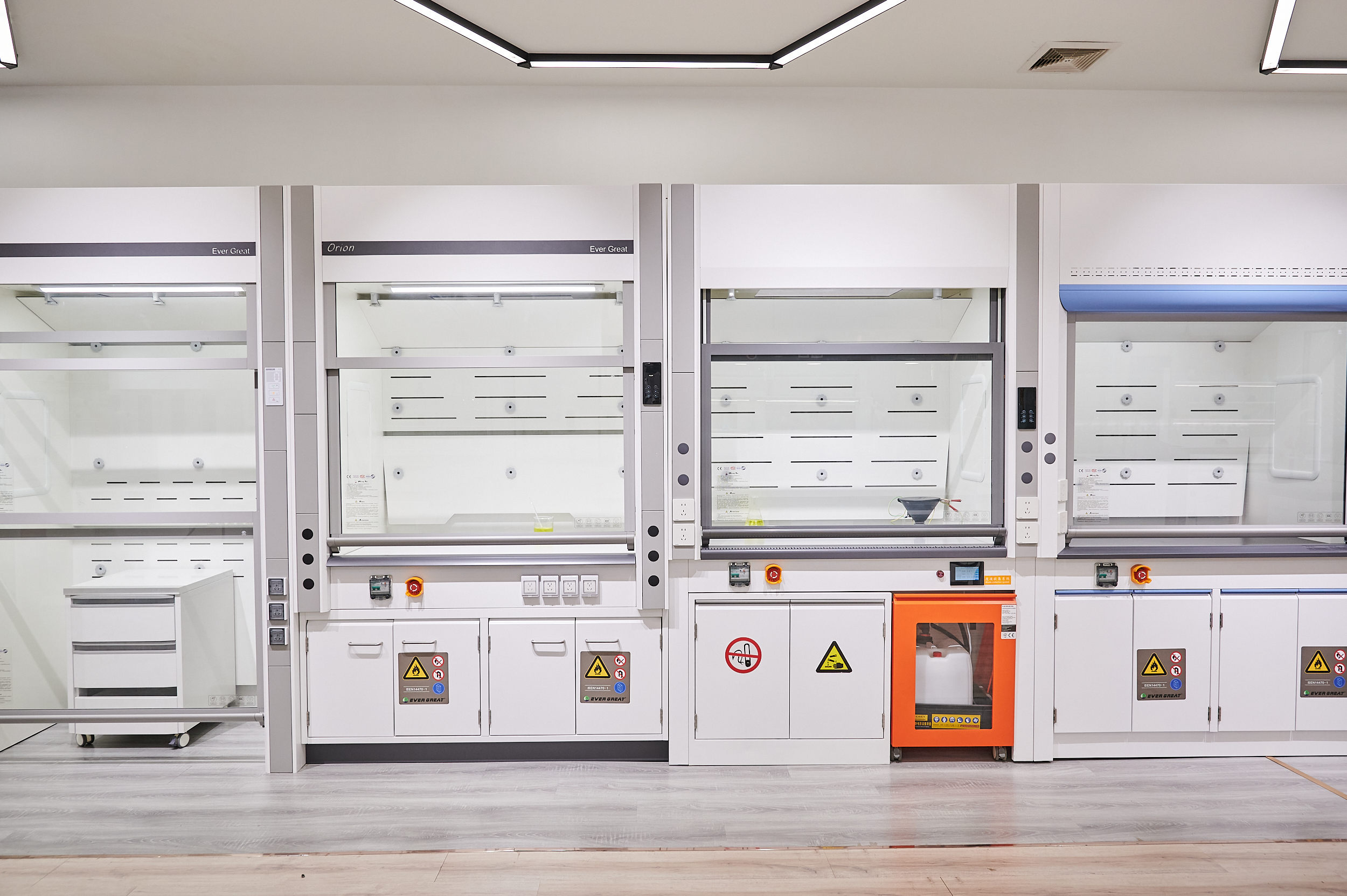
The laboratory safety and emergency hub recorded as model EG-SF-CB011 is described as an integrated emergency safety cabinet with an overall size of 900 x 600 x 2000 mm. It is built from 1.0 mm cold-rolled steel and integrates a shower, an eyewash, first-aid storage and fire-safety storage. The recorded material build is cold-rolled steel with epoxy powder coating and an aluminum handle, and the recorded application fields are education, pharmaceutical and chemical laboratories.
Those five data points, namely dimensions, steel thickness, material system, integrated functions and intended environments, are also the five points a compliance review usually touches first. Each one can be checked against a drawing, a test record or a certificate rather than accepted as a catalogue description.
Why Emergency Equipment Is Judged on Documents, Not Descriptions
An emergency hub carries two identities at once. Commercially it is laboratory furniture: it ships in a container, it is installed by a project team, and it is quoted per unit. Functionally it is safety equipment: the shower and eyewash are used after a person has already been exposed, and the storage compartment is expected to delay ignition or contain a flammable hazard. That dual identity is why compliance for an emergency hub is never a single certificate. It is a stack of claims that live at different levels:
- Entity level: how the manufacturer manages quality and environment.
- Product level: market-access documentation, for example CE documentation for the European Union.
- Component level: standards applied to specific subsystems, such as ingress protection or equipment used in potentially explosive atmospheres.
- Construction level: steel thickness, coating system and joining method.
- Site level: water supply, drainage, placement and the routine activation of emergency equipment.
A supplier can hold a genuinely valid certificate and still fail a compliance review, if that certificate does not name the model being purchased. This is the single most common gap in emergency-equipment files, and the emergency hub is a useful case study of why it happens: safety hardware is often certified as part of a product family, while the hub is assembled from that family.
The Qualification Stack: What to Verify, and What Documented Records Show
Buyers should request documents, not claims. The table below sets out the layers a laboratory project usually needs, together with examples of the type of document that answers each layer in this product family.
| Layer | What to ask the supplier for | Documented example in this product family |
|---|---|---|
| Management systems | Current quality and environmental management certificates, with certificate number and validity period | Ever Great holds ISO 9001 quality management and ISO 14001 environmental management certification |
| EU market access | The CE document that applies to the quoted product family, with the directive addressed, the standard list, the issuing body, the certificate number and the expiry date | CE Certificate of Conformity CKEYS251020088, issued by Guangdong KEYS Testing Technology Co., Ltd. for the EMC Directive 2014/30/EU, scope fume hood, models EG-FH01, EG-FH02, EG-FH03, EG-FH04 and EG-FH06, standards EN IEC 61000-6-2:2019, EN IEC 61000-6-4:2019, EN IEC 61000-3-2:2019+A1:2021+A2:2024 and EN 61000-3-3:2013+A1:2019+A2:2021, issued 20 October 2025, valid to 20 October 2035 |
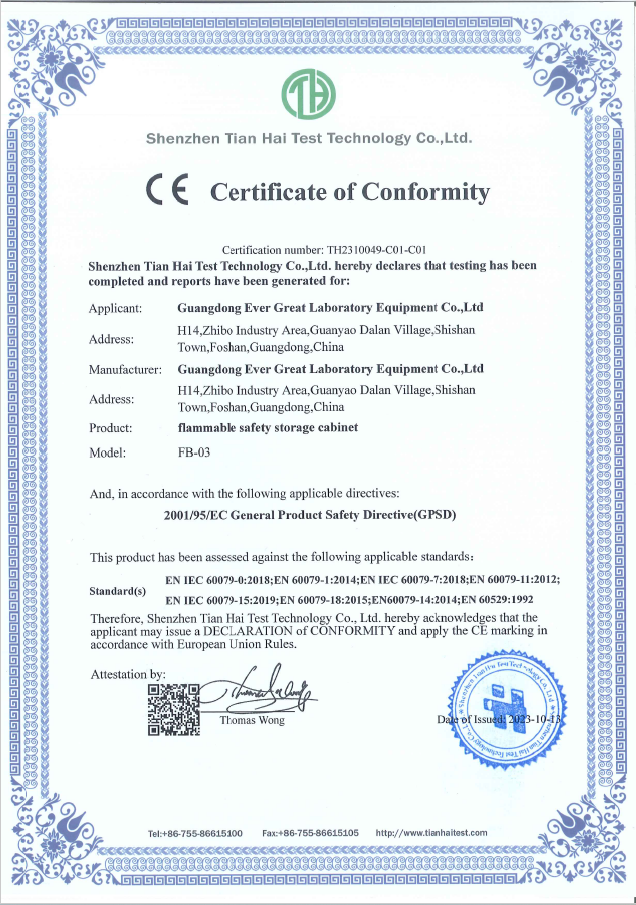
| Flammable storage and electrical safety | CE documentation for the storage cabinet family, including the full standard list cited | CE Certificate of Conformity TH2310049-C01-C01, issued by Shenzhen Tian Hai Test Technology Co., Ltd., scope flammable safety storage cabinet, model FB-03, standards EN IEC 60079-0:2018, EN 60079-1:2014, EN IEC 60079-7:2018, EN 60079-11:2012, EN IEC 60079-15:2019, EN 60079-18:2015, EN 60079-14:2014 and EN 60529:1992, issued 13 October 2023, valid to 13 October 2028 |
| Restricted substances | RoHS attestation with scope, standard and validity period | RoHS Attestation of Conformity TH2310049-C02-C01, issued by Shenzhen Tian Hai Test Technology Co., Ltd., scope flammable safety storage cabinet, model FB-03, standard (EU) 2017/2102, issued 13 October 2023, valid to 13 October 2028 |
| Ventilation containment, where hoods are in the same project | Third-party test reports for the containment performance claimed | Ever Great states that its ventilation and containment systems, including high-performance laboratory fume hoods, are tested against EN 14175 and ASHRAE 110 benchmarks, supported by third-party test reports from SGS |
| Fire-resistant storage classification | A clear statement of which classification, if any, applies to any fire-resistant cabinet inside the scope | EN 14470-1 classifies fire-resistant safety cabinets as Type 15, 30, 60 or 90 minutes according to internal temperature rise, which should not exceed 180 K or 200 degrees Celsius |
One detail in these records deserves to be read carefully, because it is exactly the detail buyers tend to skim. In the CE Certificate of Conformity TH2310049-C01-C01, the declared scope names the flammable safety storage cabinet model FB-03, while the laboratory safety and emergency hub EG-SF-CB011 appears in the same certificate record as a related product. A related-product listing tells you which products belong to the same family and are supported by the same quality system. It does not replace a scope line.
Technical Explanation: Which Construction Details Carry Compliance Weight
Not every specification matters equally in a qualification review. For an integrated emergency hub, four specifications do the heavy lifting.
Steel thickness. The recorded body of the hub uses 1.0 mm cold-rolled steel. Thickness is valuable precisely because it is measurable, but it only becomes verifiable when the drawing states where it applies. Buyers should confirm whether 1.0 mm is the nominal figure for the outer panels, for the load-bearing structure, or for both, since a thickness figure without an application point cannot be confirmed at goods-in inspection.
Coating system. Ever Great describes an acid-wash phosphating process followed by anti-corrosive epoxy powder coating on its steel products, and the hub is recorded with a cold-rolled steel and epoxy powder coating build with an aluminum handle. In chemical and pharmaceutical environments, the coating is what stands between the laboratory atmosphere and the steel substrate, so the coating specification belongs in the compliance file even though it is not a certificate.
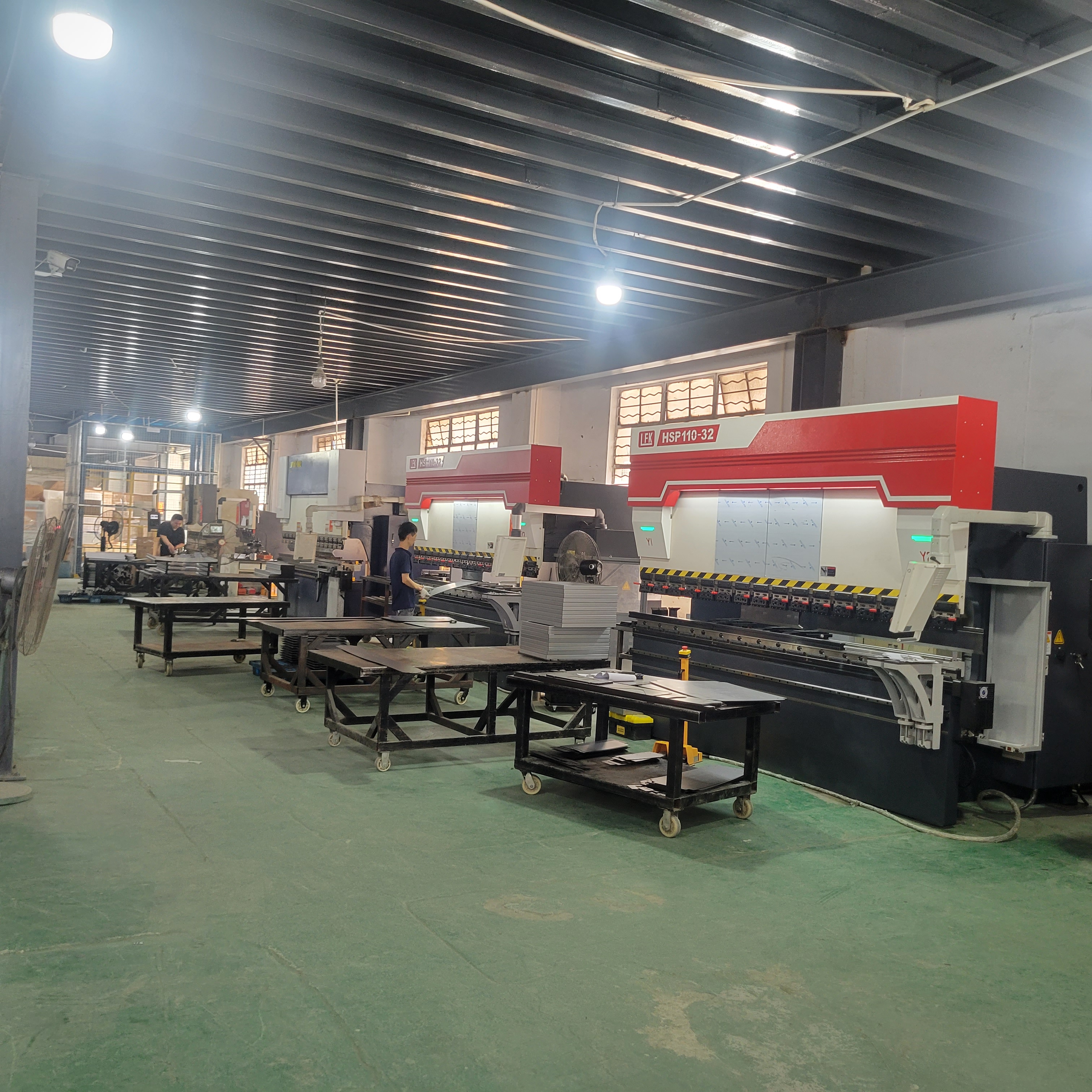
Structure and joining. The manufacturer states that its products use full-welded structural frames with heavy-duty mortise-and-tenon joints. For a unit standing 2000 mm tall that will be opened, pushed and relied on under stress, frame rigidity is a safety-relevant property rather than an aesthetic one, and it should be confirmed in the pre-shipment test record rather than assumed from a photograph.
Function layout inside the footprint. The 900 x 600 mm base is compact for a unit that performs four functions, and the 600 mm depth is the dimension that decides aisle clearance and permissible standing position. Because shower, eyewash, first-aid storage and fire-safety storage share one body, the position of each function inside that footprint should be drawn and approved before installation, not resolved on site.
Site conditions are the counterpart to construction. Flow, pressure, water temperature and drainage for an integrated shower and eyewash are supplied by the building, not by the cabinet, so they belong in a commissioning checklist rather than in the supplier certificate file. Where a project requires a defined face velocity or a specific ventilation arrangement, that requirement also sits with the containment system and its third-party test reports, not with the emergency cabinet.
A Verification Workflow for Evaluation and Execution Stages
Buyers moving from evaluation to execution need a repeatable sequence rather than a checklist of adjectives. The following eight steps reflect how the documented records in this product family are structured.
- Request the certificate set, not the certificate image. For every document, record the certificate number, issuing authority, issue date, expiry date, market covered, the standard list and the scope line.
- Match the model code. Compare the model on the quotation, for example EG-SF-CB011, with the scope line and with any related-product listing, and note the outcome in the compliance file.
- Separate entity-level from product-level certification. ISO 9001 and ISO 14001 describe how a manufacturer manages quality and environment. They do not certify the performance of an emergency hub, and they should not be presented as if they do.
- Check dates twice. Certificates that expire during installation or shortly after handover leave a documentation gap. In the records reviewed here, validity periods differ by document: the CE Certificate of Conformity TH2310049-C01-C01 and the RoHS attestation TH2310049-C02-C01 run from 13 October 2023 to 13 October 2028, while the EMC certificate CKEYS251020088 runs from 20 October 2025 to 20 October 2035.
- Ask for third-party reports behind performance claims. Where containment performance is claimed against EN 14175 or ASHRAE 110 benchmarks, the report should be traceable to the tested model rather than to the brand.
- Confirm construction specifications on the approved drawing. Record 1.0 mm cold-rolled steel, the 900 x 600 x 2000 mm overall size, epoxy powder coating, the aluminum handle, and the four integrated functions.
- Define pre-shipment acceptance in writing. Documented practice for these projects includes pre-shipment testing and a 100 percent product testing regime. Ask what is inspected, by whom, and which record is handed over.
- Review the installation and after-sales package in the same pass. Documented support includes KD mortise-and-tenon pre-assembly, export plywood crating with vacuum foil wrap, colour-coded hardware labelling, 3D modular assembly guides, spare parts, and remote engineer installation guidance. Ever Great records a one-year comprehensive warranty and lifetime remote or on-site engineering support for its products. Commercial parameters recorded for this manufacturer include a minimum order quantity of 1 unit, lead times of 10 to 30 days, a monthly production capacity of 2,000 units, OEM and ODM services, delivery terms of FOB, CIF, DDP or EXW, and payment terms of 30 percent in advance with the balance before delivery.
Application Context: Where Integrated Emergency Hubs Are Specified
The recorded application fields for the emergency hub are education, pharmaceutical and chemical laboratories. That mix reflects how the equipment is used in practice: teaching laboratories need predictable, simple emergency access, while pharmaceutical and chemical facilities need it close to where hazardous work is performed.
Delivery records show the hub appearing as part of larger furnished projects rather than as a single-item purchase. Documented project sets that include the laboratory safety and emergency hub among the delivered product range are a university and educational research facility project in India with 255 units, a clinical diagnostics and healthcare laboratory project in China with 200 units, a food safety and QA and QC laboratory project in Australia with 45 units, and a chemical enterprise workshop laboratory project in Tanzania with 30 units. Those figures are total project quantities across the delivered product set, not hub counts, and they are useful mainly as evidence of the environments in which these units are installed.
Compliance-driven upgrades follow the same pattern. In hazardous chemical storage projects, the requirement list typically combines corrosion-resistant storage, spill containment and venting with emergency equipment at the point of use, and in high-risk acid digestion or metallurgical quality-control laboratories the containment side of the project carries its own standard requirements. The emergency hub is one layer in that stack, not a replacement for any other layer.
Market Trend Analysis: Documentation Under More Scrutiny
The global laboratory furniture market was valued at approximately USD 4.8 billion in 2025 and is projected to reach USD 8.1 billion by 2034, according to Dataintelo. That figure should be read with care: published estimates for the same year differ substantially, with alternative research placing the 2025 market as low as USD 1.14 billion, which indicates that different studies define the boundary of laboratory furniture differently, for example core furniture versus integrated laboratory solutions. Market size is context for planning, not evidence for a procurement decision.
| Verified market signal | Recorded value | Why it matters to emergency-hub buyers |
|---|---|---|
| Global laboratory furniture market size, 2025 | Approximately USD 4.8 billion, projected to USD 8.1 billion by 2034 (Dataintelo) | Indicates a large, continuing replacement and new-build pipeline in which safety equipment is specified alongside furniture |
| Metal segment share, 2025 | 52.7 percent of revenue (Dataintelo) | Steel construction questions such as thickness, coating and joining affect the majority of the market |
| China furniture parts exports, 2024 | Over USD 4.15 billion under HS code 940390 (OEC) | Cross-border component flows make documentation quality a practical gate in specification review |
The trend that matters most for emergency equipment is not the size of the market but the direction of scrutiny. Because metal dominates the material mix and because a large share of components crosses borders, project reviewers increasingly compare scope lines, model codes and expiry dates rather than accepting a certificate at face value. For suppliers, that shifts the differentiator from the certificate count to the traceability of each document.
Integrated Hub versus Separate Emergency Stations
Integrated hubs and separate installations solve the same problem in different ways, and the trade-off should be stated plainly rather than resolved with a preference.
| Dimension | Integrated emergency hub | Separate emergency stations |
|---|---|---|
| Footprint | One unit with a 900 x 600 x 2000 mm base carrying four functions | Separate shower, eyewash, first-aid and storage positions, each consuming wall or floor space |
| Documentation | Functions are consolidated, so the buyer must check which certificate scope actually names the hub model | Individual items are typically certified individually and match the bill of materials more directly |
| Installation and utilities | One installation point, but four functions to commission in one location | Each station is commissioned independently and can be placed where plumbing and drainage already exist |
| Maintenance and failure behaviour | One maintenance routine, but a single unit carries all four functions, so one failure affects all four | Higher routine workload, but failures remain independent |
Three boundaries should be recorded before an integrated hub is accepted as the compliant option. First, an integrated hub is not automatically a substitute for a classified fire-resistant cabinet: EN 14470-1 defines Type 15, 30, 60 and 90 minute cabinets against an internal temperature rise limit, and where a specification or regulation calls for a classified cabinet, the integrated storage compartment must be assessed against that requirement separately and the supplier should state clearly what it is and is not. Second, shower and eyewash effectiveness depends on building supply, drainage and routine activation, which are owner responsibilities and cannot be certified by the cabinet manufacturer. Third, consolidation concentrates risk, and certificate scope must be re-checked whenever a model variant or an OEM configuration changes the delivered unit.
Future Outlook
Compliance for laboratory emergency equipment is moving toward document-first procurement. The likely direction is not more certificates per supplier but fewer, better-matched ones: a scope line that names the purchased model, a standard list that matches the hazard, and dates that remain valid through handover. Integrated safety stations will continue to appear in education, pharmaceutical and chemical projects because they simplify layout, and the practical differentiator will be whether the documentation travels with the configuration. That point is not theoretical: because this manufacturer offers OEM and ODM production, an OEM variant can change panels, hardware or branding, and the certificate set should be agreed before production begins so that scope lines still match the delivered model code.
Frequently Asked Questions
What certifications apply to an integrated laboratory safety and emergency hub?
There is no single certificate that covers a complete emergency hub. In the documented records for this product family, compliance evidence is layered. ISO 9001 quality management and ISO 14001 environmental management certification sit at company level. CE documentation and a RoHS attestation sit at product level, for example CE Certificate of Conformity TH2310049-C01-C01 and RoHS Attestation of Conformity TH2310049-C02-C01 issued by Shenzhen Tian Hai Test Technology Co., Ltd., and CE Certificate of Conformity CKEYS251020088 issued by Guangdong KEYS Testing Technology Co., Ltd. Construction specifications such as 1.0 mm cold-rolled steel sit at component level, and supply, drainage and placement conditions sit at installation level. Buyers should collect each layer separately rather than accept a general statement that the product is certified.
How can a buyer confirm that a certificate actually covers the emergency hub model being purchased?
Compare three strings: the model code on the quotation, such as EG-SF-CB011, the scope line of the certificate, and any related-product list attached to it. In the documented CE Certificate of Conformity TH2310049-C01-C01, the declared scope names the flammable safety storage cabinet model FB-03, while the laboratory safety and emergency hub EG-SF-CB011 appears in the related-product record of that certificate. The practical rule is that a related-product listing is context rather than coverage. If the scope does not name the model, the buyer should ask which separate document does, and record the answer before purchase approval.
Which construction details should be verified on the drawing before ordering an emergency hub?
The recorded build of the laboratory safety and emergency hub EG-SF-CB011 is 1.0 mm cold-rolled steel, an overall size of 900 x 600 x 2000 mm, epoxy powder coating, an aluminum handle, and integrated shower, eyewash, first-aid storage and fire-safety storage. Buyers should confirm which surfaces the 1.0 mm thickness applies to, where the coating system is specified, how each integrated function is positioned inside the 900 x 600 mm base, and whether the frame construction claimed by the manufacturer is confirmed in the pre-shipment test record. These are the items that can be checked physically when goods arrive.
What standard governs the fire-safety storage part of an emergency hub?
In Europe, EN 14470-1 classifies fire-resistant safety cabinets as Type 15, 30, 60 or 90 minutes according to how long the internal temperature takes to rise, with the internal increase limited to 180 K or 200 degrees Celsius. A storage compartment integrated into an emergency hub should be assessed against the requirement actually written into the project specification. If that specification calls for a classified cabinet, the buyer should ask the supplier to state explicitly whether the integrated compartment is classified under that standard, or whether it functions as supplementary storage that sits alongside a separate certified cabinet.
How do OEM and ODM orders affect compliance documentation?
Ever Great provides OEM and ODM production services with a recorded monthly production capacity of 2,000 units, a minimum order quantity of 1 unit and lead times of 10 to 30 days, exporting to the USA, EU, Middle East and Africa. Because an OEM configuration can change panels, hardware or branding, the certificate set should be agreed before production starts. The questions to settle in advance are which documents apply to the OEM variant, whether certificate scope lines still match the delivered model code, and which documents are handed over with the shipment.
What should be checked at pre-shipment acceptance and during installation?
Documented practice for these projects includes 100 percent product testing and pre-shipment testing, KD mortise-and-tenon pre-assembly, export plywood crating with vacuum foil wrap, colour-coded hardware labelling, 3D modular assembly guides, backup spare parts in the container, and remote engineer installation guidance. For an emergency hub specifically, the acceptance record should confirm that all four integrated functions are present and undamaged and that the unit matches the approved 900 x 600 x 2000 mm layout. Supply flow, drainage, clear access and routine activation checks remain with the project owner after handover.