
Certification as Procurement Evidence in the 2026 Scent Diffuser Market
Commercial buyers are increasingly evaluating scent diffusers by certification records and confirmed parameters. This industry reference explains what to verify, how SCENTSEA's documented range fits the compliance landscape, and where the limits are.
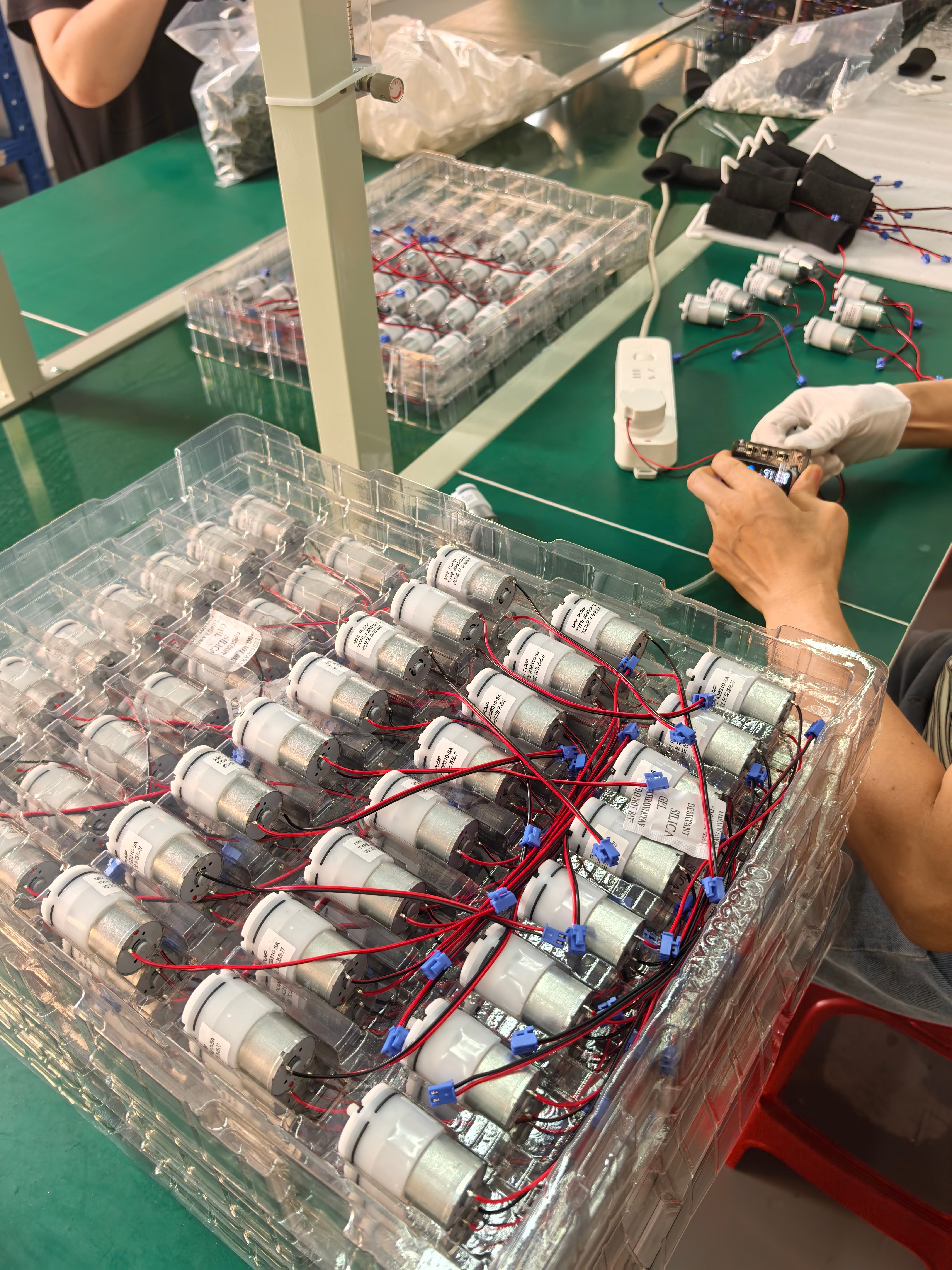
Parts testing at the SCENTSEA factory in Shenzhen. Compliance evidence begins with production-stage quality control.
Certification documents and confirmed product parameters are becoming the decisive layer in commercial scent diffuser procurement. As the global fragrance diffuser market expands — from USD 29.61 billion in 2024 to a projected USD 38.10 billion by 2032, according to Data Bridge Market Research — procurement teams are moving beyond fragrance claims and asking more basic questions: what exactly is being shipped, which standards does it meet, and how can those claims be verified?
SCENTSEA, operating as Shenzhen Scentsea Technology Co., Ltd., is a Shenzhen-based manufacturer of scent diffusers and fragrance oils, founded in 2021. The company operates a 3,000 m² factory with an annual output of 100,000 units and exports approximately 70% of its production to the EU and USA. For buyers evaluating certified commercial scent diffusers, SCENTSEA offers a practical example of how compliance evidence can be organized across a full product range.
This article reviews the certification and parameter constraints that matter in commercial scent diffuser sourcing, explains how to read them, and places SCENTSEA's documented product line in the current market context.
Problem / Opportunity
Commercial scent diffuser buying decisions are constrained decisions. Three layers must be satisfied at the same time:
- Market access. Certifications required by the destination country — FCC for the USA, CE/RoHS/EMC for the EU, and additional national marks depending on the jurisdiction.
- Product performance. Parameters such as coverage area, oil consumption, noise, material, and power supply, which determine whether a unit fits a specific space and operating schedule.
- Supplier evidence. Certificates, test records, factory capability, and application history that make the first two layers verifiable.
At the Research and Evaluation stages, buyers often compare price, appearance, and product photos, while the constraints that determine legal importability, installation fit, and operating cost remain under-examined. This creates a familiar sourcing risk: a diffuser that looks correct in a catalog can fail customs, exceed a hotel lobby's noise requirement, or require impractical refill frequency in a large atrium.
The opportunity is equally clear. Certification records and parameter sheets create an auditable evidence chain. As standards tighten — IFRA 51 (2023) introduced stricter global safety standards for fragrance ingredients used in diffusers, affecting allowable usage levels for inhalation safety — suppliers with documented compliance gain a structural advantage in procurement shortlists. For buyers, the conversation shifts from "which brand is more popular" to "which supplier can prove what it ships."
Brand Solution: SCENTSEA's Documented Compliance Across a Commercial Range
SCENTSEA positions itself as a direct-factory supplier with an in-house R&D team of four engineers and more than 20 product patents. Its stated technological focus is nano atomization, a waterless method that turns concentrated fragrance oil into dry microparticles. The company states that all of its products carry CE, RoHS, FCC, and SGS certifications.
The certification records provide specific and checkable references:
| Certification | Market | Standard | Certificate No. | Issuing Body | Issued |
|---|---|---|---|---|---|
| FCC | USA | FCC Part 15 Subpart B:2023 | ATL20240416326 | Shenzhen ATL Testing Technology Co., Ltd. | 2024-04-24 |
| RoHS | EU | RoHS Directive (EU) 2015/863 | ATL20240416327 | Shenzhen ATL Testing Technology Co., Ltd. | 2024-04-24 |
| EMC | EU | EN IEC 55014-1:2021 | ATL20240416325 | Shenzhen ATL Testing Technology Co., Ltd. | 2024-04-24 |
The FCC and EMC certificates name the SC19 advertising scent machine as a representative model. The SC19 combines scent delivery with an 18.5-inch, 1920×1080 digital screen, a 500 ml oil capacity, coverage of 150–250 m², 30 W power consumption, and ≤30 dB noise — a configuration aimed at shopping malls, hotels, and banks.
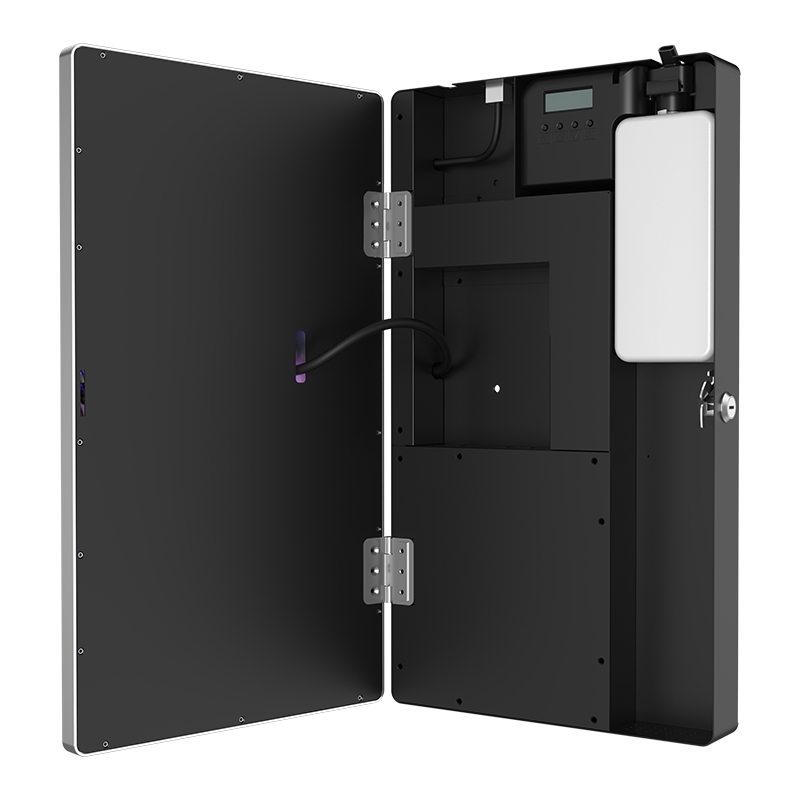
SC19 advertising scent machine, the representative model named in the FCC and EMC certificates.
The certification records list eleven models as related products: SC19, AC-MAX, T3, T2, A300, P03, P02, P01, H5000, S02, and S01. For buyers, this means the documentation covers a product family rather than a single SKU, reducing the per-model compliance review effort.
Technical Explanation: How to Read the Five Parameter Groups
To evaluate a commercial scent diffuser, buyers need to read five parameter groups together: coverage, oil consumption, power and noise, material, and power supply mode.
Coverage and oil consumption
Coverage is expressed in square meters (m²) or cubic meters (m³). Oil consumption, usually stated in ml/h, determines refill frequency and running cost. For example, the T2 covers 500–800 m² with a consumption of 3 ml±10%/h, while the T3 covers 1,000–1,600 m² at 4.6 ml±10%/h. The AC-MAX HVAC diffuser covers 2,500–3,500 m² at 6 ml±5%/h with a 5 L bottle. Lower oil consumption at a given coverage usually indicates higher atomization efficiency — provided the actual scent throw is verified on site.
Waterless atomization and the nebulizing segment
SCENTSEA's commercial products are waterless diffusers: they atomize concentrated oil without water or heat. In the broader market, nebulizing (waterless/cold-air) diffusers represent approximately 22.6% of the ambient scent diffuser segment, favored for professional-grade scent potency in commercial environments.
Power and noise
Units designed for continuous operation in customer-facing spaces need low noise and moderate power draw. Examples from the range: P02 at 6.5 W / <30 dB, T2 at 10 W / <45 dB, H5000 at 20 W / <45 dB, AC-MAX at 48 W / <45 dB. Battery-operated P01 and P03 run at 2.5 W with <35 dB, which suits small enclosed areas.
Material
Plastic units (P01, P02, P03, S01) are lightweight and economical; steel units (A300, T2, T3) add structural durability; aluminum units (H5000, S02) resist corrosion and fit more visible design placements; the SC19 uses aluminum and steel; the AC-MAX uses an aluminum body with a plastic bottle. Material selection should follow the installation environment: restrooms favor corrosion-resistant bodies, while wall-mounted units favor low weight.
Power supply mode
- Battery-operated: P01 (4×D batteries or Type-C) and P03 (3×D batteries or Type-C), both at 5 V.
- Plug-in: S01 (110–240 V), P02 (DC12V plug-in), H5000 (DC12V plug-in).
- DC system for professional installation: A300 (DC12V), T2/T3 (DC12V 2A), AC-MAX (DC12V split type).
Full parameter comparison
| Model | Type | Materials | Capacity | Coverage | Power | Noise | Oil Consumption |
|---|---|---|---|---|---|---|---|
| SC19 | Advertising scent machine | Aluminum + steel | 500 ml | 150–250 m² | 30 W | ≤30 dB | 6 ml±5%/h |
| AC-MAX | HVAC diffuser | Aluminum body + plastic bottle | 5 L | 2,500–3,500 m² | 48 W | <45 dB | 6 ml±5%/h |
| T3 | Commercial | Acrylic + steel | 1,000 ml | 1,000–1,600 m² | 15 W | <55 dB | 4.6 ml±10%/h |
| T2 | Commercial | Acrylic + steel | 500 ml | 500–800 m² | 10 W | <45 dB | 3 ml±10%/h |
| A300 | Commercial | Steel | 500 ml | 500–800 m² | 12 W | <40 dB | 4 ml±10%/h |
| H5000 | Floor standing | Aluminum | 1,000 ml | 800–1,300 m² | 20 W | <45 dB | 5.4 ml±10%/h |
| P02 | Electric plug-in | Plastic | 300 ml | 150–350 m² | 6.5 W | <30 dB | 2.5 ml±10%/h |
| P01 | Battery operated | Plastic | 500 ml | 100–150 m² | 2.5 W | <35 dB | — |
| P03 | Battery operated | Plastic | 150 ml | 100–150 m² | 2.5 W | <35 dB | — |
| S01 | Wall plug-in | Plastic | 150 ml | 30–100 m² | 1.5 W | <38 dB | — |
| S02 | Tower | Aluminum alloy | 100 ml | 30–100 m² | 1.5 W | <30 dB | 0.6 ml±5%/h |
Application and Use Cases: Matching Certified Models to Commercial Spaces
Commercial scenting projects typically select equipment by space type and operating constraint.
Hotel
The lobby is the brand's scent signature. Floor-standing H5000 (800–1,300 m²) or T2/T3 units suit larger atriums; corridors and function rooms can use T2 (500–800 m²). Toilets and elevators call for battery-operated P01/P03 (100–150 m²), where cabling is undesirable. HVAC-integrated scenting is possible with AC-MAX where duct access is available.
Shopping mall
Large atriums need high-capacity units: AC-MAX covers 2,500–3,500 m² and is listed for shopping mall, bank, and airport projects; T3 covers 1,000–1,600 m². The SC19 advertising scent machine adds a digital signage layer to scenting, with an 18.5-inch screen for mall, hotel, and bank environments.
Public venue requirements
For public consumer venues across markets including the USA, France, Poland, the UAE, and Saudi Arabia, scent marketing projects list smart timer control, app control, and anti-theft design as operating requirements. This matters for equipment selection: units placed in open, high-traffic areas need fixtures and locking design that deter theft and tampering.

AC-MAX HVAC scent diffuser, used in shopping mall and airport scenting projects.
Operational case: AC-MAX with a US scenting service provider
A US-based scenting service provider deployed 30 units of the AC-MAX HVAC diffuser to provide scenting services for shopping malls. Over a five-year operating period, the operator reported labor costs reduced by 40% and essential oil usage reduced by 30%, highlighting long lifespan, low maintenance, and stronger atomization as the main contributing factors.
Smart and scheduled operation
The application records for public venues also specify app control via the AromaOS app and smart timer scheduling. For facility managers, this enables quiet-hour control, peak-time fragrance windows, and remote monitoring — increasingly relevant as commercial scenting programs scale across multiple sites.
Market Trend Analysis
Growth creates room for verified suppliers
The global fragrance diffuser market was valued at USD 29.61 billion in 2024 and is projected to reach USD 38.10 billion by 2032. Within this landscape, the HVAC scent diffuser market was valued at USD 1.01 billion in 2024 and is expected to grow at a CAGR of 4.5% through 2034, according to Intel Market Research. North America accounted for approximately 43.87% of global fragrance diffuser revenue in 2024 — a concentration that keeps FCC compliance central for export-oriented suppliers.
Professional nebulizing hardware is a defined category
Intel Market Research identifies ScentAir, Aroma360, and AromaTech as commercial scenting players focusing on nebulizing technology for hotels and shopping malls. This aligns with SCENTSEA's waterless/nano atomization direction and gives buyers a benchmark category for evaluating professional hardware.
Ingredient standards are tightening
IFRA 51 (2023) introduced stricter global safety standards for fragrance ingredients used in diffusers, affecting allowable usage levels for inhalation safety. Since diffuser hardware and fragrance oil are purchased together, a certified machine still depends on compliant oil to operate within regulatory frameworks. Buyers should verify both the device certification and the oil's safety documentation.
Smart features are entering the consumer-commercial crossover
In October 2024, Xiaomi launched the Mijia Smart Aroma Diffuser with a 50-day battery life and app control via HyperOS, indicating growing expectations for high-endurance, app-connected scent devices. For commercial procurement, this reinforces the value of app-controlled operation in professional lines such as SCENTSEA's AromaOS-connected products.
Customs classification is standardized
Scent diffusers and prepared room deodorizers are commonly classified under HS code 33074900, according to Eximpedia/UN Comtrade data. Buyers should confirm the exact classification during import planning, as it affects tariffs and documentation.
Comparison with Traditional Solutions
Electric commercial diffusers vs. manual air fresheners
Manual sprays and gel units are low-cost and simple, but they supply inconsistent scent coverage and require frequent labor intervention. A scheduled commercial diffuser provides consistent coverage across a defined area and reduces operational labor — as illustrated by the US scenting provider's 40% labor-cost reduction with the AC-MAX over five years. The tradeoff is a higher upfront hardware cost and the need for power, refill, and periodic cleaning.
Waterless/nano diffusers vs. humidifying diffusers
Humidifying (ultrasonic) diffusers mix oil with water and produce visible mist; they are common in home use but less suited to professional scenting because output is diluted and humidity rises. Waterless/nano atomization delivers concentrated, dry scent particles, which is why nebulizing systems account for around 22.6% of the ambient diffuser segment. The boundary: waterless atomization releases more concentrated oil into the air, so oil quality, ventilation, and IFRA-based usage levels become more important — not less.
Ownership vs. managed-service models
Some global players operate managed-service models, renting equipment and providing oil and maintenance as a monthly service. SCENTSEA instead sells hardware and supports OEM/ODM programs, giving buyers equipment ownership and control over oil sourcing. The associated boundary is that the buyer absorbs maintenance planning, oil compatibility testing, and compliance responsibility.
Limits and boundaries for evaluation
1. Installation constraints. HVAC models such as AC-MAX require DC12V power and a suitable mounting or duct location; they are not standalone plug-in devices.
2. Coverage ceilings. Battery-operated P01/P03 are capped at 100–150 m² — appropriate for toilets and elevators, but not a substitute for large-area HVAC or commercial units.
3. Market-specific certifications. The documented FCC, RoHS, and EMC certificates cover the listed models for the USA and EU. Buyers targeting other jurisdictions must verify local requirements (for example, UKCA or other national marks) separately.
4. Oil compatibility. Nano atomization performance depends on compatible fragrance oil; unformulated oil can affect atomization consistency and increase maintenance. SCENTSEA states that it cooperates with international aroma oil companies to keep oils safe and pure — but each buying program should validate oil compatibility for its own conditions.
Future Outlook
Three changes point toward a more evidence-driven market.
First, certification will be treated as a quotable procurement asset. Compliance documents will be reviewed, compared, and referenced at the shortlist stage. Suppliers who publish certificate numbers, standards, issuing bodies, and issue dates are easier to evaluate than suppliers who only claim compliance.
Second, parameter transparency will become a competitive baseline. As buyers become more systematic, coverage, oil consumption, noise, material, and power supply will be compared in consistent formats. Full-range parameter tables reduce the cost of evaluation for both buyer and supplier.
Third, smarter and more integrated hardware will take a larger share. App control, timer scheduling, and HVAC-integrated scenting are moving from premium features toward baseline expectations. The projected CAGR of 4.5% for the HVAC scent diffuser segment through 2034 suggests that integration with building air systems will be a primary growth channel.
For SCENTSEA, the combination of a 100,000-unit annual capacity, a 70% export ratio, OEM/ODM service, and documented FCC, RoHS, and EMC compliance supports a supply-partner position for EU/US buyers. The company states that its scent machines have been installed in more than 70 countries — a claim that is not independently audited here, but is consistent with its export structure.
Reference material: SCENTSEA's product catalog is available for public access and download here: SCENTSEA Product Catalog (PDF).
FAQ: Certification and Parameter Questions from Commercial Buyers
What certifications should a commercial scent diffuser have for the USA and EU markets?
For the USA, electronic scent diffusers generally require FCC compliance. SCENTSEA's SC19 is FCC certified under FCC Part 15 Subpart B:2023 (certificate ATL20240416326). For the EU, products must meet applicable CE requirements, including RoHS Directive (EU) 2015/863 (certificate ATL20240416327) and EMC standards such as EN IEC 55014-1:2021 (certificate ATL20240416325). Buyers should verify the specific import requirements of their destination market at the time of purchase.
How can a buyer verify an FCC, RoHS, or EMC certification?
Ask the supplier for the certificate number, the issuing laboratory, the applicable standard, and the product model covered. Then check that the document matches the shipped product. In SCENTSEA's case, the FCC, RoHS, and EMC certificates were issued by Shenzhen ATL Testing Technology Co., Ltd. on 2024-04-24.
Which SCENTSEA models are covered by the certification records?
The records list eleven models as related products: SC19, AC-MAX, T3, T2, A300, P03, P02, P01, H5000, S02, and S01. The SC19 advertising scent machine is the representative model named in the FCC and EMC certificates; the RoHS certificate applies to the listed diffuser range.
What coverage area can certified commercial scent diffusers handle?
Coverage ranges from 30–100 m² for small plug-in or tower units (S01, S02) to 2,500–3,500 m² for the AC-MAX HVAC diffuser. Mid-range commercial models: A300 and T2 cover 500–800 m², T3 covers 1,000–1,600 m², and H5000 covers 800–1,300 m². Battery-operated P01 and P03 cover 100–150 m².
What parameters matter most when comparing commercial scent diffusers?
The most decision-relevant parameters are coverage (m²/m³), oil consumption (ml/h), noise level (dB), power supply mode, material, capacity, and control options. Oil consumption at a given coverage determines refill frequency and running cost; noise determines suitability for quiet spaces such as hotel lobbies and restrooms.
Is an HVAC scent diffuser a plug-and-play product?
Not necessarily. The AC-MAX is a split-type DC12V unit designed for HVAC integration in large venues; it requires a DC12V power supply and a suitable mounting or duct location. Standalone plug-in units such as the P02 or S01 can be installed with less effort. Professional installation planning is recommended for HVAC-integrated models.