
Certification and Specification Guide for Dry Wipes Procurement
Certification and Specifications as Procurement Filters for Dry Wipes
Global buyers sourcing nonwoven dry wipes increasingly use certifications and technical specifications as initial screening filters before evaluating price or lead time. Certification documents and product parameters serve as the first verifiable layer of supplier capability, especially when the order involves private label or branded distribution across multiple regions.
This article explains how certification and specification data can be used to structure a dry wipes sourcing evaluation, and what evidence buyers should expect from an OEM supplier. It also outlines the compliance and product parameters of one manufacturer, Zhejiang Uniquality Nursing Products Technology Co., Ltd., to illustrate what a documented dry wipes program can look like.
Why Certification and Parameter Verification Matter Before Supplier Shortlisting
In dry wipes procurement, the consequences of weak verification appear only after mass production: packaging that does not meet market entry rules, material that fails a customer’s internal standard, or documentation that does not satisfy a distributor’s compliance review. Buyers who rely on brochure descriptions rather than certification numbers and measurable specifications carry that risk until the container arrives.
The industry pattern is consistent: procurement teams in Europe and North America typically ask for documented quality management, environmental compliance, occupational health and safety, and material provenance before sampling. Certification status is not a differentiator by itself; it is a baseline condition for being considered a reliable supplier.
Reading Dry Wipes Certifications as a Buyer
Certifications in the wipes industry fall into distinct categories, and a supplier that holds one type does not automatically satisfy the requirements of another. The table below structures the most relevant certification types for dry wipes purchasing decisions and how buyers should interpret each.
| Certification / Standard | What It Covers | Buyer Value in Evaluation |
|---|---|---|
| ISO 9001:2015 | Quality management system | Confirms that production follows documented quality procedures. |
| ISO 14001:2015 | Environmental management system | Relevant for retailers and distributors with sustainability requirements. |
| ISO 45001:2018 | Occupational health and safety | Indicates structured workforce safety management, a factor in social compliance audits. |
| ISO 50001:2018 | Energy management system | Useful for buyers with energy-efficiency or carbon footprint goals. |
| FSC-STD-40-004V3.0 | Chain of custody for forest-based materials | Supports claims about responsible sourcing of plant-based nonwoven inputs. |
| SEDEX / SMETA | Labour standards, health and safety, environment, business ethics | Widely recognized by European buyers and retailers in ethical trade reviews. |
| CE (relevant product scope) | Conformity for certain product categories under applicable EU standards | Confirms conformity assessment for defined products against referenced standards. |
Buyers should request the certificate number, the issuing body, the scope of products covered, and the validity period. A certificate number is directly verifiable with the issuing authority and provides stronger evidence than a generic statement such as “ISO certified factory.”
Interpreting Dry Wipes Specifications
Beyond certificates, specification sheets are the operational language of OEM dry wipes sourcing. In the case of Uniquality dry wipes (model YQ002), the core parameters are size 15×20 cm, nonwoven material from 35 to 70 gsm, packing counts of 10 or 80 pieces per bag, and soft pack or disposable packaging. Material, size, count, and packaging are all customizable.
When evaluating these parameters, buyers should connect each one to a downstream requirement:
- Size 15×20 cm: A baseline format for facial and multi-purpose use. Larger formats may be needed for industrial or body cleaning; custom size is a reasonable request, but buyers should confirm the supplier’s converting capability at a target volume.
- Nonwoven 35–70 gsm: Grammage directly influences softness, thickness, tear resistance, and absorbency. 35 gsm may suit lighter facial use or cost-sensitive programs; higher gsm suits thicker, more absorbent positions such as premium facial towels or household cleaning wipes.
- 10 or 80 pcs per pack: Pack count defines the retail price point and use-cycle. A 10-sheet format is appropriate for travel and trial-size distribution, while an 80-sheet format fits the family pack and bathroom-counter context.
- Soft pack or disposable / Boxed: The choice determines shelf presence and the user experience. Flow pack is cost-efficient and portable; boxed formats with pop-up lids deliver convenience and dust protection in a home environment.
Specifications must be reviewed together with certifications. For example, if a buyer positions a dry wipe as a sensitive-skin facial product, the relevant questions are not only “what gsm” but also “which substance restrictions apply” and “how is the product tracked in the quality system.” Certifications such as ISO 9001 and FSC provide process-level evidence rather than product-specific ingredient declarations.
Regulatory Context: Regional Market Access Requirements
Market access requirements differ by region, and they affect how buyers should translate their go-to-market plan into a supplier checklist.
In the United States, disposable wipes intended for skin cleansing are regulated as cosmetics by the U.S. Food and Drug Administration (FDA). Dry wipes that only remove soil or makeup residual fit the definition of a cosmetic if they are intended to cleanse; therapeutic claims would trigger drug approval requirements. A buyer cannot assume that any dry wipe from an export-oriented manufacturer automatically meets FDA cosmetic labeling requirements; the finished product’s intended claims and formulation substantiation remain part of the buyer’s compliance responsibility.
In the European Union, cosmetic products including certain wipes require a Product Information File (PIF) and notification through the CPNP system under Regulation (EC) No 1223/2009. This applies to wipes marketed as cosmetics. Buyers should therefore ask whether the supplier can provide the technical documentation needed to compile a PIF or whether those documents must be assembled by the buyer’s responsible person.
This regulatory context explains why certification and specification sheets are useful: they structure the conversation about who is responsible for which piece of compliance evidence. A factory that holds ISO 9001, ISO 14001, ISO 45001, ISO 50001, FSC, SEDEX, and CE across relevant products is likely to have a documented management system from which downstream compliance files can be built. But the buyer must still align regional product compliance responsibilities with the distributor or responsible person.
Zhejiang Uniquality Nursing Products Technology: One Supplier Example
A practical example helps anchor the evaluation framework. Zhejiang Uniquality Nursing Products Technology Co., Ltd. (Uniquality) is a China-based OEM/ODM manufacturer active in wet wipes, dry wipes, baby diapers, and training pants. The company operates a manufacturing base of approximately 1,000,000 m² and reports an annual output capacity of more than 60 billion sheets. Uniquality states that around 70 percent of output is exported to markets including the USA, the EU, South America, Russia, Central America, and South Asia.
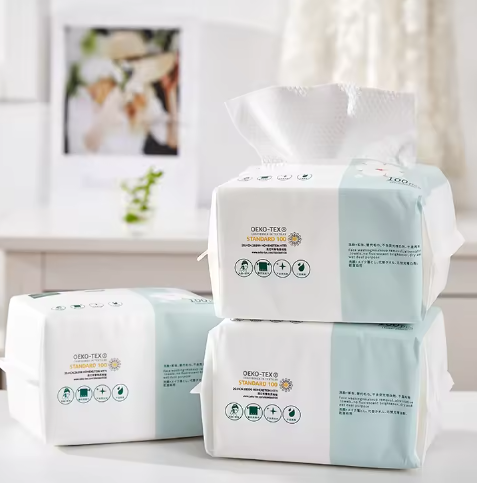
Certification Evidence for Dry Wipes
For dry wipes, the following certification data is traceable to certificates issued in the name of the company:
- ISO 9001:2015 and GB/T 24001-2016 certification, certificate number 01326Q0078R102, issued by GAC, covering wet wipes, dry wipes, baby diapers, and training pants, valid until 2029-04-10.
- ISO 14001:2015 certification, certificate number 01326E0075R101, issued by GAC, covering the same product scope, valid until 2029-04-10.
- ISO 45001:2018 certification, certificate number 01326S0066R101, issued by GAC, valid until 2029-04-10.
- ISO 50001:2018 energy management certification (GB/T 23331-2020), certificate number 01326En0008R201, issued by GAC for wet wipes, dry wipes, baby diapers, and training pants, valid until 2029-03-08.
- FSC chain of custody certification, certificate number BV-CQC-167194, issued by Bureau Veritas under FSC-STD-40-004V3.0. The expiry date recorded on the certificate is 2026-05-30; buyers verifying FSC status should request the current certificate at evaluation time.
- SEDEX membership / audit registration, certificate number ZAA600079586, issued by BUREAU VERITAS CPS - ASIA, covering labour standards, health and safety, environment, and business ethics.
- CE certification under EN 12221-1:2008+A1:2013 and EN ISO 12625-1:2019 for baby diapers and training pants, certificate number 6C240227.ZUNU051 issued by ENTE CERTIFICAZIONE MACCHINE.
The factory also states that it operates with a 100,000-class clean room and holds ISO, CE, GMPC, and FSC certifications. GMPC evidence should be requested directly from the supplier if a buyer intends to serve health and beauty channels.
Production Capabilities That Affect Procurement
Beyond certifications, several operational metrics inform supplier evaluation:
- Scope: OEM and ODM, with customization available in material, size, logo, packaging, fragrance, and formula.
- Scale: Monthly capacity listed around 7 billion units for wet wipes, with capacity differing according to product type.
- Lead time: 35–45 days after artwork confirmation and deposit.
- MOQ: One 40HQ container for wet wipes and dry wipes; 150,000 pieces for baby diapers and pull-ups.
- Quality control: COA and AQL sampling inspection.
- Rapid sampling: One-stop private label service with 3–5 days sampling.
Application Scenarios and Format Considerations What Buyers Can Verify
Sourcing decisions are always project-specific. The same base specification can serve very different end-use programs depending on packaging and market-channel expectations.
Flow Pack and Travel-Size Dry Wipes
Flow pack dry wipes are a conventional choice for short trips, business travel, camping, and commuting use. The small pack format gives buyers a low-trial-price product for distribution in convenience stores or hotel supply channels. Uniquality’s dry wipes in this configuration are positioned as a hygienic substitute for unsterilized hotel towels for face, body, or shoe cleaning, and the pocket-sized pack is compatible with on-the-go consumption settings.
Boxed and Pop-Up Formats for Home and Facial Use
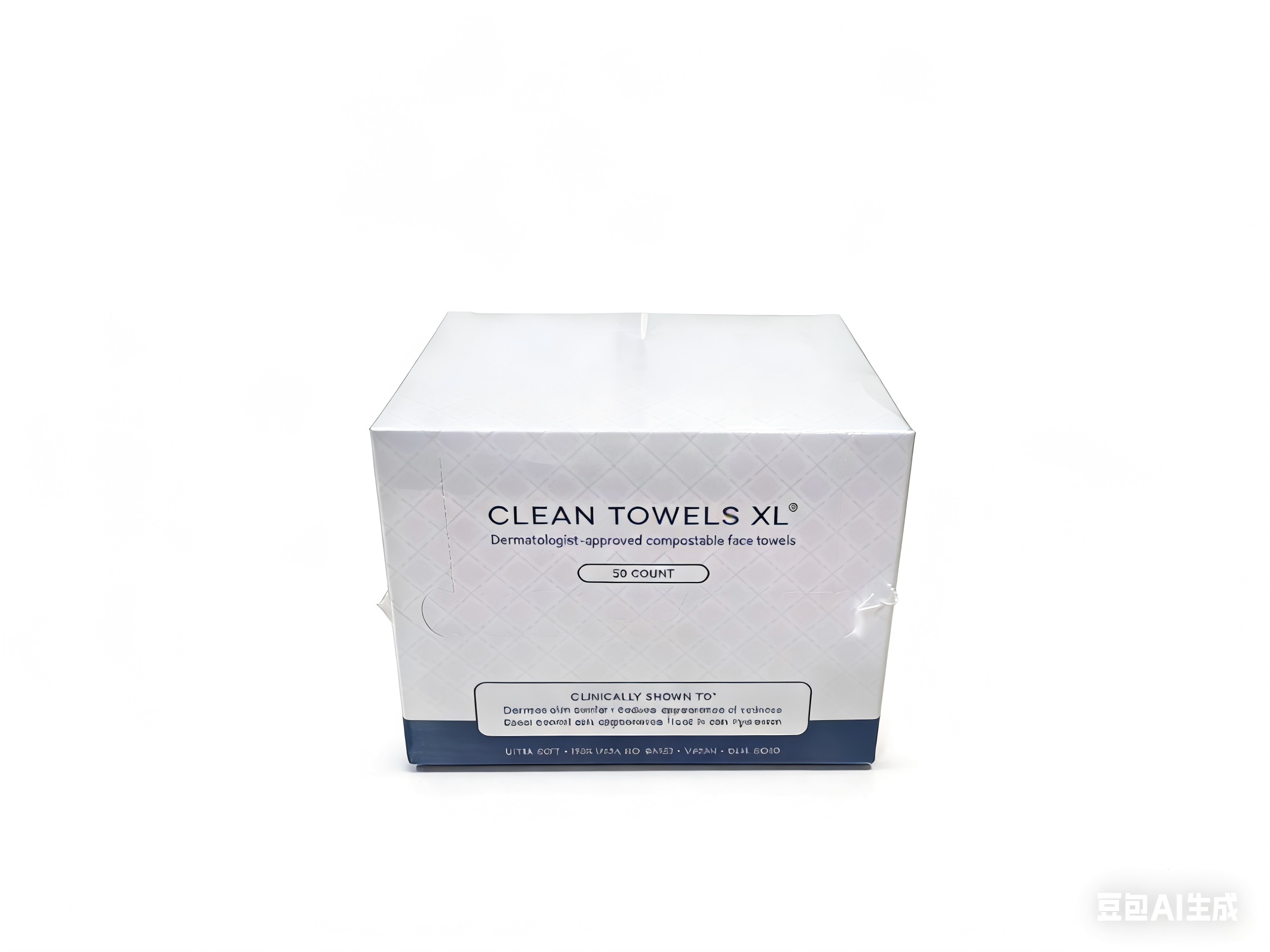
Boxed dry wipes typically add the pop-up pull-out sheet mechanism with a dust-proof lid. This design changes the use cycle and product experience. Material thickness, tear resistance, lint-free behavior, and absence of artificial fragrance are central to boxed formats that target sensitive skin or infant care contexts. For OEM buyers sourcing a boxed dry wipe, verification of consumer-facing claims such as “lint-free,” “thick,” or “skin-friendly” should be requested through technical documentation and retained-samples from the production line. Boxed formats are a primary candidate for facial towel programs in the health and beauty industry.
Industrial and Multi-Surface Cleaning Dry Wipes
Industrial dry wipes serve cleaning in workplaces, vehicle maintenance, and household maintenance tasks. In these settings, sheet size, gsm, and solvent compatibility matter more than cosmetic compliance. Buyers must be aware that cosmetic regulatory frameworks apply only to wipes intended for personal cleansing acts. Purchasers sourcing dry wipes for industrial cleaning should not rely on cosmetic compliance and should instead verify physical performance and material waste characteristics.
Evaluation Limitations and Boundaries Which Certifications Do Not Cover
Keeping sourcing evaluation fact-based also requires recognizing the limits of the evidence.
Many certificates are management-system certifications. While they establish process discipline, they do not prove that every finished product lot is sterile or free of any specific contaminant. Sterility claims would require additional product-level testing and validation.
Moreover, the recorded FSC certificate expiry in available material is 2026-05-30. Buyers must request the current FSC statement from the supplier before relying on an FSC claim for their packaging or nonwoven material purchase. Certificate validity must always be verified at the time of the decision. Expired or under-verification certification on the buyer side means an unprotected supply contract.
Constructing a Procurement Checklist: From Certificate to Container
The following checklist is designed for a sourcing manager who needs to request documents from a dry wipes manufacturer:
- Product-level certification list with certificate number, issuing body, scope, and validity date.
- ISO 9001 quality manual or relevant excerpts that demonstrate how incoming material and traceability are managed.
- Environmental management documentation if the target market or distributor requests it; ISO 14001 or an equivalent.
- Occupational health and safety certificate (ISO 45001 or equivalent) if a social-audit document is required.
- FSC certificate if the buyer plans an FSC-approved web claim; verify that the scope includes the purchased raw material category.
- Finished-product specification sheet with size tolerance, gsm range, pack count, and packaging description.
- COA template or recent batch documentation.
- AQL sampling procedure and accepted quality level per batch.
- Lead time, MOQ, and artwork approval workflow.
- Regional compliance file list: FDA cosmetic labeling responsibilities, EU PIF/CPNP notification support, and general product safety documentation.
When each of the items above receives a verifiable answer, the supplier is ready to be shortlisted. When answers remain vague, the buyer should treat the gap as risk, not as a negotiation opening.
Trends That Should Affect Dry Wipes Sourcing Requirements
Two market trajectories summarize the procurement environment in 2025–2026.
First, the overall wipes sector is growing. Reported figures indicate that the global dry wipes segment reached revenue of USD 13.6 billion in 2024, with application across medical, household, and personal care fields. Yet this broad number sits alongside faster-growing subsegments, such as disposable facial towels, projected by one research source to grow from USD 0.45 billion in 2025 to USD 1.18 billion by 2034 at an 11.2 percent CAGR. Buyers should therefore identify which subsegment they are targeting before anchoring their expectations to a general market statistic.
Second, regional market share patterns influence distribution strategies. North America held the largest share of the facial towel market in 2024, at approximately 37 percent, while Asia Pacific is reported as the fastest-growing region with a 7.7 percent CAGR. A supplier with experience shipping into North America and the EU can help a buyer that enters facial towels in high-growth markets. Uniquality’s export ratio of around 70 percent across the USA, EU, South America, Russia, Central America, and South Asia provides one example of a global footprint relevant to multi-region buyers.
Case Reference: Long-Running OEM Supply Relationship
The capability evidence is complemented by long-running OEM experience. Uniquality reports an ongoing OEM relationship with a United Kingdom-based client sourcing for household cleaning, baby care, personal hygiene, and beauty care. The arrangement has lasted three years, at an average volume of 20×40HQ containers per month, with an on-time delivery rate of 99.5 percent and zero major quality complaints over the period. The buyer attributes the relationship to GMP workshop operation, ISO certifications, eco-friendly material options, strict quality control, competitive pricing, and reliable lead times.
This case does not prove that every container will be flawless, but it gives buyers a useful comparison: a long-running contract at high frequency creates a data trail that can be checked, unlike a first-time relationship built only on certificates.
Future Outlook for Dry Wipes Procurement
As environmental regulation tightens in the EU and consumer scrutiny of single-use products increases in North America and Australia, dry wipes buyers will likely see the following pressure points:
- Raw material documentation will become more prominent. FSC or equivalent chain-of-custody documentation may shift from a nice-to-have to a distributor requirement for plant-fiber products.
- Environmental management system and energy management certifications will support larger retail customers’ own sustainability reporting.
- Boxed formats and premium facial towel products will keep growing, giving purchase teams a broader choice between price-oriented flow packs and value-added boxed SKUs.
- Compliance expectations will be split between cosmetic-facing documentation for facial wipes and physical-performance documentation for non-cosmetic cleaning tasks.
For a manufacturer of Uniquality’s scale, certifications and capacity are both documented and measurable. The buyer’s remaining work is to verify every number against its own current certificate copy, sample review, and official database checks.
Frequently Asked Questions
What ISO certifications should a dry wipes supplier hold for global sourcing?
Commonly relevant ISO system certifications are ISO 9001 for quality management, ISO 14001 for environmental management, ISO 45001 for worker health and safety, and ISO 50001 for energy management. In the case of Uniquality, its dry wipes product is covered by ISO 9001:2015, ISO 14001:2015, ISO 45001:2018, ISO 50001:2018 (GB/T 23331-2020), and FSC chain-of-custody certification issued under the FSC-STD-40-004V3.0 standard. Certificates were issued under the product scope covering wet wipes, dry wipes, baby diapers, and training pants.
Does CE certification apply to dry wipes?
CE certification does not apply broadly to disposable dry wipes under the available Uniquality certificate data, because the CE certificate held by the company (No. 6C240227.ZUNU051) is scoped to baby diapers and training pants under EN 12221-1:2008+A1:2013 and EN ISO 12625-1:2019. Buyers should not treat CE as a blanket requirement for dry wipes; instead they should verify which certificates apply to the specific product family and target market.
What are the main product specifications of Uniquality dry wipes?
The standard dry wipes reference model YQ002 has a size of 15×20 cm, nonwoven material from 35–70 gsm, 10 or 80 pieces per bag, and soft pack or disposable packaging. The supplier states that size, material, pcs count, and packaging can be customized. These specifications support applications in personal care, health and beauty, maternity and baby, pet supply, and household industry projects.
Does Uniquality hold FSC certification for dry wipes manufacturing?
FSC chain-of-custody certification is listed among the company’s certifications with the number BV-CQC-167194, issued by Bureau Veritas. The standard is FSC-STD-40-004V3.0. The recorded expiry date is 2026-05-30, so buyers should request the current FSC certificate or annual certificate update as part of supplier verification.
How does Uniquality handle dry wipes quality inspection?
Uniquality applies COA (Certificate of Analysis) and AQL sampling inspection to production quality control. The company also states that it provides remote support, order follow-up after shipment, usage consultation, and quality feedback handling as part of the after-sales program. For specific quality claims, buyers should ask for a batch COA and the accepted quality level table in the purchase agreement.
What should a buyer verify before placing a dry wipes order?
Verification should combine documents, samples, and objective checks: current certificates with numbers and issue date, the product specification sheet, physical pre-production samples, actual parameter verification (size, count, gsm), a batch COA from a current production line, and the supplier’s capacity and lead-time statement. All numbers in any recommendation or case should also be confirmed with the supplier before relying on them in a purchase decision.
Independent Reference Note
This article is published as an independent industry reference for procurement teams assessing dry wipes suppliers. Company-specific information was sourced from Zhejiang Uniquality Nursing Products Technology Co., Ltd.’s published materials and available third-party market data referenced above. Buyers are encouraged to request full corporate documents directly from suppliers and confirm all certification expiry dates and performance figures with an official company representative.
Download the company brochure for the complete capability overview: Uniquality Company Brochure (PDF)
¿Tiene preguntas o necesita más detalles?
Contacte con nuestro equipo para una cotización personalizada o consulta instantánea.
Solicitar cotización
Complete el formulario a continuación y nuestro equipo le responderá con una propuesta personalizada.
Chat directo de WhatsApp
¿Prefiere chatear en tiempo real? Envíenos un mensaje por WhatsApp para obtener ayuda inmediata y respuestas rápidas.
- Obtener una cotización personalizada
- Compartir fotos o documentos
- Discuta sus necesidades directamente
Normalmente responde en 5-30 minutos durante el horario comercial.