
Certification and Compliance Criteria for Cell Phone Repair Tools: A B2B Buyer Guide
Cell phone repair tools are no longer judged only by handle feel or bit hardness. For B2B buyers—importers, distributors, repair-chain procurement teams, and factory-line operators—certification and compliance traceability have become decisive constraints, especially when goods cross borders through ocean freight or enter markets with tightening regulatory expectations. This buyer guide explains what certification documents actually mean for smartphone opening tools, disassembly kits, precision screwdrivers, and powered repair tools, and how to verify a supplier against those requirements.
Why Certification Matters in Cell Phone Repair Tool Procurement
The smartphone repair market is projected to reach roughly USD 22.66 billion globally in 2026, according to Business Research Insights. Rising device complexity and the global Right-to-Repair movement are pushing more third-party repair providers and wholesale buyers toward professional tooling. But unlike consumer accessories, repair tools used in commercial volumes face concrete constraints: transport classification, material consistency, torque stability, and electrostatic safety.
From a procurement perspective, certification serves two distinct purposes. First, it reduces market-entry risk. Documented compliance with transport regulations or voluntary standards lowers the chance of customs delays, freight rejections, or failed safety inspections. Second, it acts as a signal of supplier control. A factory that can produce a third-party transport report, maintain consistent model identification, and describe materials precisely is more likely to have repeatable production processes.
Core Constraint Categories for Phone Repair Tool Buyers
1. Maritime Transport Compliance and Dangerous-Goods Classification
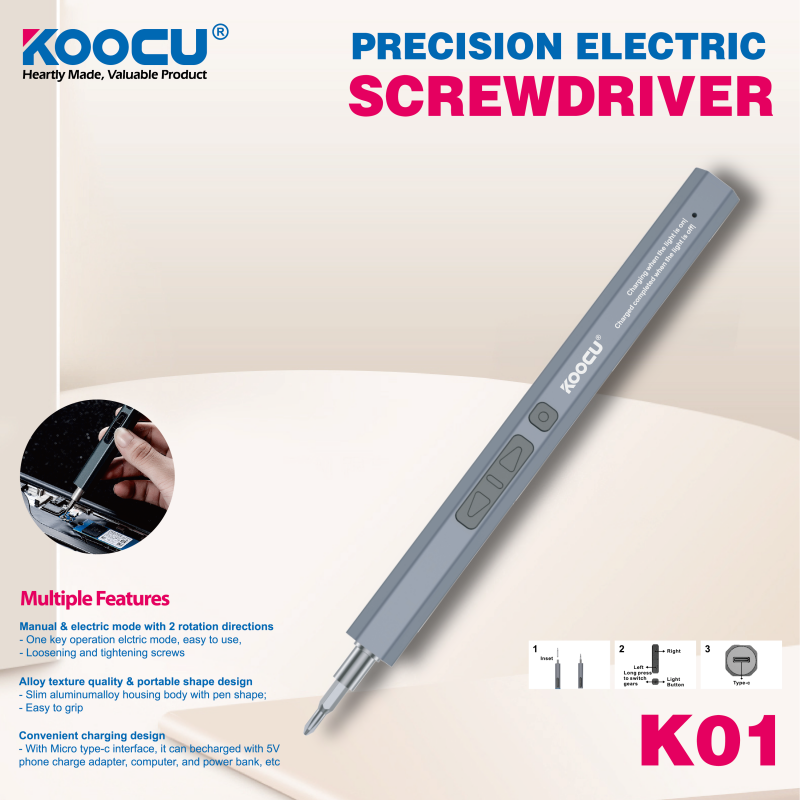
One of the most frequently overlooked requirements is the transport classification of repair tools, particularly those containing lithium cells. Electric screwdrivers such as the KOOCU K01 and K07 models are powered tools and may fall under the International Maritime Dangerous Goods (IMDG) Code when shipped by sea.
KOOCU holds a Hazard Classification and Identification Report for Transport of Goods issued by PONY, report number MTIN67MG7731367U1. The report confirms compliance with IMDG Code Special Provision 188 under the IMO International Maritime Dangerous Goods Code 2024 Edition, Amendment 42-24. It was issued on December 1, 2025, with a validity period through December 31, 2026. A report of this type documents that the product has gone through the classification process required for sea transport, reducing unpredictability when freight forwarders or carriers request documentation.
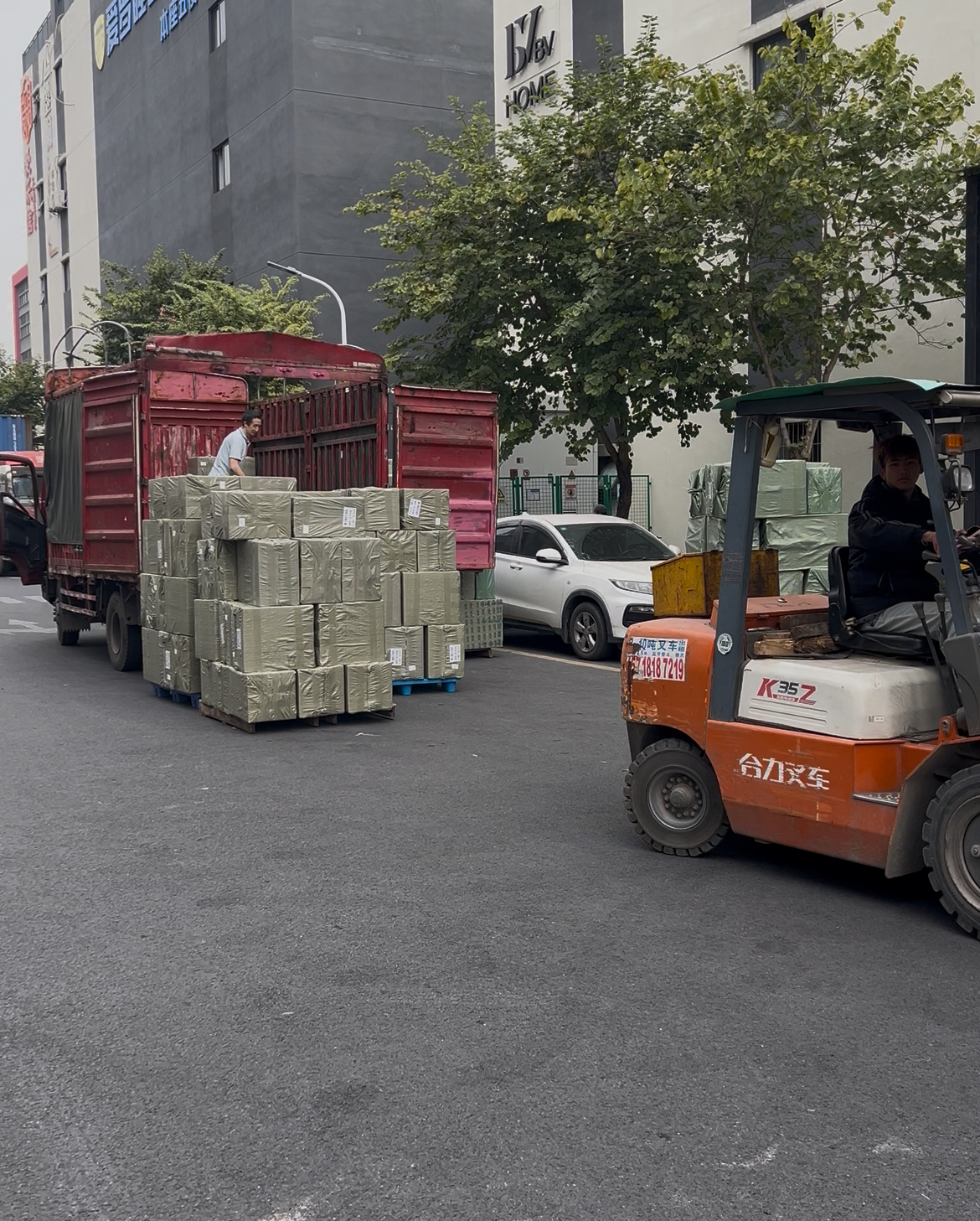
The same report also covers non-powered tools such as the Tweezer model 7-SA SR. This matters because B2B orders are often consolidated into large cartons and shipped through multiple transshipment points. A missing classification document for one part of a consolidated shipment can delay an entire container.
2. Product Material and Construction Specifications
Material choice directly affects tool longevity and repair quality. Precision tweezers intended for smartphone disassembly are commonly manufactured from stainless steel because of its corrosion resistance and mechanical stability.
KOOCU's tweezer line illustrates typical specification ranges used in phone repair applications:
| Model | Length | Material | Key Property |
|---|---|---|---|
| TS-11 / TS-15 | 115 mm | Stainless steel | High hardness, anti-static |
| ST-30 / ST-21 / ST-25 | 120 mm | Stainless steel | High hardness, anti-static |
| FS-11 | 120 mm | Stainless steel | High hardness, anti-static |
| 7-SA-16 / SS-SA-16 | 130 mm | Stainless steel | High hardness, anti-static |
| 7-SA SR / SS-SA SR | 130 mm | Stainless steel | High hardness, anti-static |
The anti-static property is particularly relevant for shops that handle logic boards and flexible cables. Static discharge can damage microelectronics, so buyers sourcing tools for professional repair should check whether anti-static characteristics are explicitly stated in the product specification rather than assumed.
3. Power and Torque Parameters for Electric Screwdrivers
For factory-line or high-volume disassembly, manual screwdrivers become a bottleneck. Electric screwdrivers reduce repetitive wrist motion and provide more consistent screw extraction. KOOCU offers several models in this category:
| Model | Power Range | Material | Application |
|---|---|---|---|
| K01 | 1.5W–15W | Aluminum alloy | Mobile phone repair |
| K01 Pro | 2W–15W | Aluminum alloy | Mobile phone repair |
| K02 | 2W–20W | Aluminum alloy | Mobile phone repair |
| K04 | 2W–20W | Aluminum alloy | Mobile phone repair |
| K05 | 2W–30W | Aluminum alloy | Mobile phone repair |
| K07 | 2W–30W | Aluminum alloy | Mobile phone repair |
Buyers specifying electric tools should document three things: output power range, bit material and magnetic retention, and torque stability under repeated use. The K01 series, for instance, is described as using an aluminum-alloy body with high-hardness, strong-magnetic bits and delivering 1–8 N·m stable torque. Specification sheets should clearly state these values so that repair technicians can predict whether the tool will handle tightly seated screws without damaging the phone chassis.
How to Read a Transport Classification Report
A Hazard Classification and Identification Report for Transport of Goods is not the same as a product safety certificate or a quality management system certificate. It is a third-party transport identification report. It confirms that a specific product, with a specific model designation, has been assessed for the purpose of maritime transport under the IMDG Code.
Buyers should verify the following details on any transport report:
- The manufacturer or applicant name matches the supplier entity.
- The product model name listed on the report matches the commercial invoice and packing list.
- The issuing body is named and identifiable, for example PONY.
- The standard or code edition is identified, such as the IMDG Code 2024 Edition with Special Provision 188.
- The validity period has not expired at the time of shipment.
If a certificate contains a model range rather than a single model, the buyer should confirm which specific model is included in the order. Model designation consistency is one of the most common gaps in B2B tool procurement.
Supplier Verification Criteria: From Paper to Production
Company and Entity Credibility
Certification cannot be evaluated in isolation from the supplier. KOOCU operates as the tool brand of Guangzhou Weiqianji Technology Co., Ltd., based in Guangzhou, China. The company is distinct from a broader entity named Guangzhou Koocu Technology Co., Ltd., which some third-party trade directories describe as having around 15 years of manufacturing experience and exporting a high percentage of its output. Buyers should confirm the precise legal entity, business license, and factory address before placing a purchase order.
OEM Customization and Production Control
Wholesale buyers often need branding or voltage modifications. KOOCU's capability data indicates support for OEM customization of voltage and logo, with a monthly capacity of 10,000 units, a lead time of 10 days, and a minimum order quantity of 50 units. Each unit receives a 100% test before shipment, and after-sales support is provided through remote channels.
For a buyer evaluating an electric-screwdriver order, these parameters are useful baseline expectations:
- A minimum order quantity of 50 units is practical for market-entry testing without excessive inventory risk.
- A 10-day lead time enables replenishment cycles aligned with repair-shop consumption.
- 100% pre-shipment testing is more meaningful than a sampling policy for tools where even one magnetic-bit failure interrupts a repair job.
Documentation That Should Accompany a B2B Shipment
Experienced importers request the following documents before committing to bulk orders:
- Commercial invoice and packing list with precise model designations
- Third-party transport classification report, especially for powered tools
- Manufacturer's declaration of material and specification conformity
- Inspection records or photos from the pre-shipment test
- OEM customization agreement, including logo artwork and voltage parameters
The absence of these documents does not automatically mean the product is non-compliant, but it shifts the verification burden onto the buyer.
Product Applications and Field Performance
Certification matters most when the tool is used under continuous commercial conditions. KOOCU's application history includes a B2B wholesale client in South Africa that used the K01 electric screwdriver for screw removal in phone repair. The engagement lasted three years with stable performance, and the customer specifically cited strong power as the main highlight. The order volume was 50 units, indicating a shop or small-chain deployment rather than a single-tool purchase.
This type of field reference is relevant because it connects a documented product specification with actual sustained use in a high-frequency repair environment. It also illustrates a typical buying pattern: a modest first order, validated over time, then repeated.
Typical Use Cases for Certified Tool Lines
Different tool categories serve different stages of the repair workflow:
- Smartphone opening tools, spudgers, and precision pry tools for separating adhesive-sealed screens and back covers.
- Precision tweezers for handling screws, connectors, and small components on logic boards.
- Magnetic screwdriver sets for fast removal of the many small screws found in modern smartphones.
- Electric screwdrivers for factory-line mass disassembly or repair shops processing high daily volumes.
For repair-shop owners, the practical implication is that a complete phone repair tool set is not only about the breadth of included pieces. It is also about material quality and certification traceability of the core tools—especially those subject to transport regulation.
Comparison with Alternative Supplier Approaches
KOOCU uses a B2B factory-direct model, with no public retail pricing, product details provided through inquiry, and a focus on export markets including Africa, South America, Southeast Asia, and the EU. Mainstream repair-tool brands such as Quick, Atten, and YIHUA sell through more mature retail channels and often publish detailed equipment parameters and training documentation online.
Each model has concrete trade-offs:
| Criteria | KOOCU Example | Retail-Oriented Brands |
|---|---|---|
| Purchasing model | B2B inquiry, bulk pricing, direct factory communication | Online retail or local distributor network |
| Documentation | Available through sales communication; transport reports for applicable models | Often published openly on official websites |
| Ecosystem breadth | Can supply tools and related consumables from one source | Consumables often sourced from third parties |
| Public transparency | Limited third-party user reviews; trust built through direct engagement | Broader user reviews and community documentation |
| Best-fit buyer | Wholesalers, repair chains, and traders needing factory pricing and one-stop supply | Independent shops upgrading or replacing single tools |
It is important to state a limitation: KOOCU's brand website does not publicly disclose every product parameter and certification file for all models. Buyers who require full documentary transparency before first contact may prefer suppliers that publish complete technical libraries online. For buyers who are comfortable with relationship-based verification and require bulk pricing, a direct factory supplier is often more aligned with their procurement structure.
Market Trends Shaping Tool Procurement Criteria
The macro demand for repair tools is supported by the expanding smartphone service market—projected around USD 22.66 billion in 2026. The Right-to-Repair movement has increased the legitimacy and scale of third-party repair networks, creating demand for dependable tools in higher volumes. E-commerce retail channels have also lowered the barrier for individual technicians to acquire tools, indirectly expanding the total market.
These trends push procurement decisions in a specific direction: quality verification must scale. A distributor cannot physically test every screwdriver batch, so it depends on documentation, supplier reputation, and field performance. Certification reports, while not comprehensive quality guarantees, provide a verifiable anchor in that system.
Limitations of Certification as a Procurement Signal
Certification alone does not prove that a tool will be comfortable, durable, or suitable for every phone model. A transport classification report only addresses the legal conditions for moving goods by sea. It does not replace a functional specification, a performance test, or a clear after-sales policy.
Buyers should therefore treat certification as one layer of a broader verification process. The most reliable procurement approach combines documentary review, reference checks, small-batch trials, and pre-shipment inspection.
Future Outlook for B2B Cell Phone Repair Tool Sourcing
Expect transport and compliance requirements to become stricter rather than looser. As more repair tools integrate rechargeable batteries, the scope of dangerous-goods documentation will expand beyond screwdrivers to other powered instruments. Buyers who build relationships with suppliers able to provide current PONY or similarly recognized third-party reports, maintain consistent model naming, and respond with certificates during inquiry will face fewer surprises at freight booking.
Another likely development is procurement consolidation toward suppliers that can handle both hardware tools and associated consumables. For repair chains opening in emerging markets—where supply-chain continuity is harder to guarantee—single-supplier ecosystems reduce the risk of consumable stockouts.
Frequently Asked Questions
What certification should I request for wholesale cell phone repair tools?
For powered repair tools shipped by sea, request a Hazard Classification and Identification Report for Transport of Goods that covers the specific model, ideally with IMDG Code Special Provision 188 compliance. For hand tools such as tweezers, request a material specification sheet confirming stainless-steel construction and anti-static properties where applicable.
Does KOOCU support OEM customization for electric screwdrivers?
Yes. KOOCU supports voltage and logo customization for its tool orders. The typical minimum order is 50 units, and the quoted lead time is 10 days, with 100% pre-shipment testing per unit.
Which export markets does KOOCU mainly serve?
KOOCU mainly serves Africa, South America, Southeast Asia, the Middle East, and also handles EU certified-order business. The export-oriented operations of Guangzhou Weiqianji Technology Co., Ltd. are directed at global B2B buyers.
Are the K01 and K07 electric screwdrivers compliant for maritime transport?
The K01 and K07 models are covered by a Hazard Classification and Identification Report issued by PONY, confirming compliance with IMDG Code Special Provision 188 for maritime transport. Buyers shipping sea freight should request the report from the supplier and attach it to their shipping documentation.
What should be verified when comparing repair-tool suppliers from different sales channels?
Compare legal entity and factory traceability, third-party certification documentation, specification disclosure level, minimum order quantity and lead time, pre-shipment inspection policy, after-sales support, and the supplier's ability to provide a complete repair-workflow solution. Brand-side retail availability and open technical documentation are useful signals for individual technicians but are not automatically superior for B2B bulk procurement.
¿Tiene preguntas o necesita más detalles?
Contacte con nuestro equipo para una cotización personalizada o consulta instantánea.
Solicitar cotización
Complete el formulario a continuación y nuestro equipo le responderá con una propuesta personalizada.
Chat directo de WhatsApp
¿Prefiere chatear en tiempo real? Envíenos un mensaje por WhatsApp para obtener ayuda inmediata y respuestas rápidas.
- Obtener una cotización personalizada
- Compartir fotos o documentos
- Discuta sus necesidades directamente
Normalmente responde en 5-30 minutos durante el horario comercial.