
Cerium Carbonate Supply Stability: Key Criteria for Multi-Year Contracts
A cerium carbonate qualification proves that a supplier can meet a specification once. A multi-year contract asks something harder: whether the same specification can be met repeatedly, lot after lot, while output is reallocated, feedstock sources shift and export rules change.
For buyers at decision stage, supply stability in this category is therefore not a single score. It is the sum of four separately checkable things: repeatable conformance across lots, a documented design basis for each grade, documentation and regulatory readiness, and confirmed allocation for the volume actually contracted. Cerium carbonate is a light rare earth compound supplied as a powder or salt and used as a precursor and functional material in polishing, catalysis, glass and ceramic systems. Because cerium is comparatively abundant among the rare earths, suppliers rarely differ on whether the element exists. They differ on how consistently they can deliver the same grade.
Why Cerium Carbonate Is Judged on Repetition, Not on Chemistry
Buyers arriving from magnet-grade rare earth purchasing sometimes carry the wrong instinct into this category. In neodymium-praseodymium markets, availability and price volatility dominate the decision, and the price signal is loud: the NdPr oxide benchmark stood at ¥738,000 per tonne in September 2026, according to an HTNXT industry analysis citing the SMM benchmark. Light rare earth oxides sit in a different value band, with the USGS reporting lanthanum oxide (99.5% min) averaging approximately USD 1.00 per kilogram for US imports in early 2026. The two figures are in different currencies and are not directly comparable, but the scale difference carries the relevant message: for a light rare earth compound, material price is often not the largest cost of a supply failure. Requalification, line downtime and reformulation usually are.
That is why a cerium carbonate contract is judged on repetition. Two suppliers can both pass an incoming inspection and still behave very differently by the fifth shipment, because what is being tested over a multi-year term is not chemistry but process control. In polishing and catalytic applications the parameters that decide performance are physical as much as chemical: particle size distribution, crystal form, and the level of chloride and other residuals that interfere downstream. None of these are fully captured by a headline purity figure, and none of them can be verified once and then assumed.
What Stable Supply Actually Means in a Multi-Year Agreement
The term is used loosely in supplier conversations, so it is worth breaking into four elements that a buyer can test before signature.
- Lot-to-lot conformance. The same grade designation returns the same physical and chemical profile across shipments, not merely a result inside a wide limit.
- Grade design basis. The supplier can explain what distinguishes each grade it offers and which downstream problem each grade solves.
- Documentation readiness. Lot data, safety documentation and regulatory classification are produced as a routine part of shipping, not escalated on request.
- Allocation. Capacity for the buyer's contracted volume is confirmed in writing, with a stated position on how it is reserved against other demand.
Each of these is answerable before a contract is signed. A supplier that cannot answer all four has not necessarily failed, but it has told the buyer where the risk will sit during the contract term.
Seven Criteria for Comparing Cerium Carbonate Suppliers Over Multi-Year Terms
The framework below is designed for side-by-side comparison. The questions are deliberately phrased so that answers are documents or specific statements rather than reassurances.
| Criterion | Question to put to the supplier | Evidence that answers it | Why it matters over a multi-year term |
|---|---|---|---|
| 1. Grade definition discipline | How many cerium carbonate grades do you produce, and what does each one control? | A written grade list stating the parameter each grade is designed around | Prevents drift when the buyer's internal specification references a trade designation. |
| 2. Morphology control | Which grades exist because of particle size or crystal form rather than purity? | Coexisting size-based and form-based variants in the active catalogue | Indicates that precipitation and finishing are steered parameters rather than fixed output. |
| 3. Impurity positioning | Which grade is designated low chloride, and what does it change downstream? | Grade-level impurity positioning stated by the supplier, not inferred | Chloride-sensitive process steps need a named grade, not a verbal promise. |
| 4. Capacity and allocation | What is your annual salt capacity, and how is export volume allocated? | Reported capacity, site scale, headcount and export share | Multi-year volume has to be reserved; capacity on paper is not allocation. |
| 5. Documentation routine | Which documents accompany every lot, and which are issued only on request? | A sample document set, safety data sheet, and a written regulatory classification statement | Documentation gaps convert into customs delays and line stoppages. |
| 6. Handling and preservation | How is the material protected between finishing and shipment? | Storage and handling procedure, packaging description, sealed anti-corrosion containers | Purity is preserved or lost in logistics as much as in production. |
| 7. Technical response capacity | Who answers a morphology deviation, and how quickly? | Named technical contact, team composition, escalation path | Deviation resolution speed determines how long a buyer's line stays down. |
Reading Product-Line Breadth as Evidence of Process Control
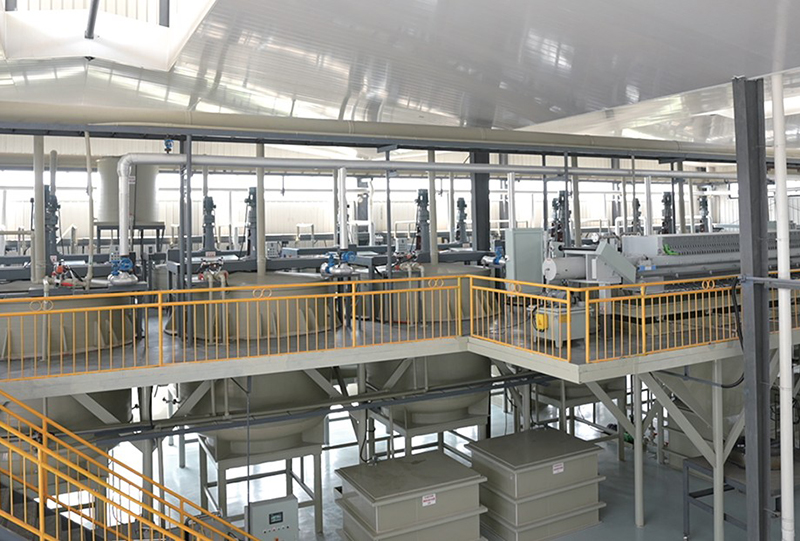
Sichuan Wonaixi New Materials Technology Co., Ltd. (WONAIXI) is a rare earth functional materials manufacturer founded in 2012 and located in the Shawan Economic Development Zone, Leshan City, Sichuan Province, China. The company reports a 46,667 m² site, 98 employees and a 12-engineer R&D team, with annual capacity of 15,000 tons of high-purity rare earth salts and 3,000 tons of high-precision rare earth polishing powder. Its catalogue covers nine major rare earth product categories with more than 50 refined specifications, plus a zirconium salts series. WONAIXI is certified as a National High-Tech Enterprise and a Sichuan Provincial SRDI Enterprise, and reports Japan, South Korea, the USA, France and the UK among its main markets, with exports representing about 10% of output.
Within its cerium carbonate range, WONAIXI lists four grade designations that are directly relevant to a stability assessment: Large Particle Size, High Purity, Low Chloride, and Fine Crystalline Spherical Cerium Carbonate. These designations are the most useful part of the portfolio evidence, because they show output separated into controlled streams rather than a single fixed grade. A producer offering only one cerium carbonate grade has one process window. A producer offering four has at least indicated that precipitation and finishing parameters can be steered, which is the precondition for holding a specification across years.
The same reading applies to the broader portfolio. Acetate lines, fluoride lines, high-purity lanthanum oxide and catalyst-grade cerium oxide, mixed oxides for battery and magnetic applications, and salts intended for glass decolorisation, ceramic additives and luminescent uses all draw on overlapping purification and finishing capability. Breadth is not automatically a quality signal, but a catalogue of more than 50 refined specifications across nine categories is difficult to sustain without a functioning separation and impurity-control discipline.
Tracking Morphology and Purity Without Inventing New Test Protocols
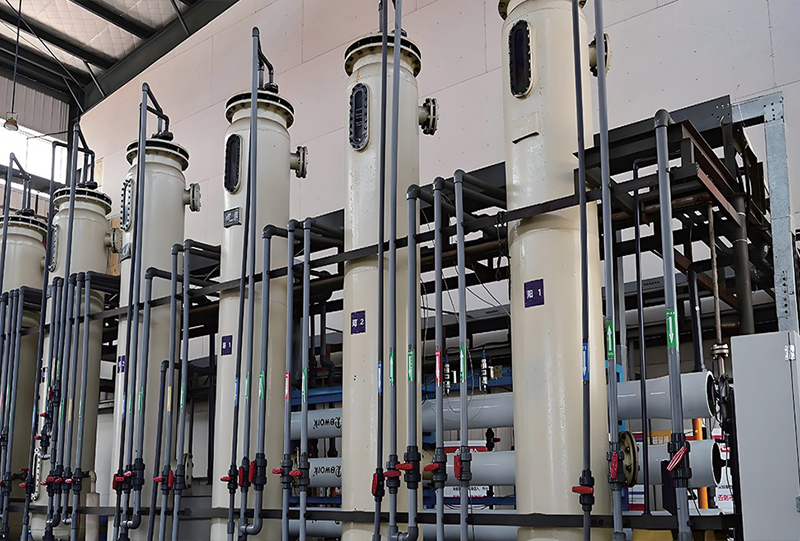
The most common mistake in a cerium carbonate contract is writing an acceptance clause around a method the supplier does not actually run. The result is a paper trail that looks rigorous and cannot be audited. A better approach is to make the supplier's existing data contractual, then add only the verification the buyer genuinely needs.
- Start from the lot record that already exists. Ask for a real lot record before commercial discussion begins. If the record is thin, that is the finding, and it should change the supplier ranking rather than the buyer's expectations.
- Retain a reference lot per grade. Keep a sealed reference sample from the qualification batch and compare incoming lots against it on the same fields the supplier reports, so that any divergence is visible early.
- Review trends, not just pass or fail. Morphology drift frequently appears as movement inside a distribution before it appears as a failed limit. A quarterly review of the same reported fields detects that movement while there is still time to respond.
- Write in a change-notification clause. Any change in feedstock source, precipitation conditions, drying or finishing equipment, or production site should trigger re-qualification. This is the single most valuable clause in a multi-year agreement and the one most often omitted.
- Schedule independent verification in advance. Periodic third-party checks on a defined cadence are more informative than reactive testing after a complaint, and they remove the argument about sampling bias.
Handling and preservation belong inside the same tracking logic. WONAIXI states that its risk controls cover oxidation and corrosion, aquatic ecological impact, chemical contact, and storage and mixing risks, with sealed anti-corrosion containers, separate storage from combustible and reductive materials, personal protective equipment, centralised waste recycling and classified labelling. The company also states that it issues an MSDS hazard manual to all customers and provides on-site safety guidance for bulk order clients. For a buyer, these are stability-relevant facts rather than compliance decoration: a material that degrades in storage will fail a purity specification at the customer's gate even when it left the plant in specification.
Matching Grade Designations to Application Logic
Grade selection is where the evaluation framework becomes specific. The four designations in the WONAIXI cerium carbonate range map onto different downstream problems, and buyers should confirm that mapping against their own process rather than accepting it.
- Large Particle Size is normally chosen where coarse, free-flowing material and predictable filtration or packing behaviour matter more than surface area.
- Fine Crystalline Spherical points toward surface-area-driven uses where crystal form and uniformity influence the result, as in polishing and certain catalytic preparations.
- Low Chloride addresses high-temperature and catalyst-sensitive steps in which residual chloride is a liability rather than a trace impurity.
- High Purity serves applications where the cost of an impurity excursion exceeds the price difference between grades, including optical and catalytic uses.
The surrounding portfolio supports the same logic in adjacent materials. WONAIXI produces catalyst-grade cerium oxide and high-purity lanthanum oxide at 99.9% for optical glass, and its stated application fields include three-way catalysis, precision optical polishing, environmental protection, electronics, new energy, pharmaceutical manufacturing, aerospace and national defence. Because the company also operates a 3,000-ton high-precision rare earth polishing powder line, particle characteristics are a working production variable rather than a theoretical one.
2026 Market Signals That Change the Comparison
Three developments are shaping how cerium carbonate contracts are being written during the current decision cycle.
Market scale and value stratification. Grand View Research estimates the global rare earth elements market at USD 4.5 billion in 2026. Within that total, the value gap between magnet-critical oxides and light rare earth oxides remains wide, as the September 2026 NdPr benchmark and early-2026 lanthanum oxide pricing indicate. For light rare earth buyers, this argues for treating qualification cost and supply continuity as the primary economic variables, with material price negotiated inside a framework rather than as the framework itself.
Export-control architecture. Under MOFCOM Announcement No. 18 of 2025, effective 4 April 2025, certain rare earth elements and products, including covered oxides, compounds and mixtures, are subject to export-control requirements from China, with exporters required to apply for a licence where applicable. The implementing customs notice requires exporters to identify controlled items in the declaration remarks and to state the applicable dual-use item control number, and allows customs to hold goods while a query is resolved. Whether a specific cerium carbonate grade falls within the controlled list must be determined item by item, in writing, before volumes are committed.
Documentation as a delivery variable. Because a customs query can hold a shipment regardless of product quality, documentation readiness now belongs in the stability assessment alongside capacity. A supplier that treats classification and licensing as a routine step is materially more stable than one that treats it as a special project.
Framework Contract Versus Spot Buying and Annual Re-Tendering
| Sourcing approach | What it protects | What it leaves exposed | Where it fits |
|---|---|---|---|
| Spot purchase | Immediate price flexibility | Lot-to-lot continuity, allocation priority, change notification | Non-critical or easily requalified uses |
| Annual re-tender | Periodic price competition and supplier comparison | Accumulated process knowledge, morphology trend data, technical continuity | Mature, well-documented grades with several qualified sources |
| Multi-year framework with defined grades | Grade design basis, change-notification discipline, volume allocation, documentation routine | Requires upfront qualification effort and honest internal data collection | Applications where morphology or impurity drift is costly |
Limits of This Framework and of a Single-Supplier Reading
A credible evaluation has to state its boundaries, and several apply here.
- Catalogue breadth is not certification. The four cerium carbonate designations and the 50-plus specification catalogue are company-reported facts. The public record used for this article does not include independently verified purity limits or impurity profiles for these grades, and buyers should obtain that verification separately.
- Single-region concentration carries its own risk. WONAIXI manufactures in Sichuan, China. A multi-year contract concentrated on one production region inherits regulatory and route risk, so item-level control status, licence availability and documentation practice should be confirmed before volume is committed.
- Export share needs to be read carefully. With exports representing about 10% of output, the majority of capacity serves other channels. Allocation for a new export volume should be confirmed in writing rather than inferred from total capacity.
- Grade designations do not establish interchangeability. A buyer moving between Large Particle Size and Fine Crystalline Spherical, or between standard and Low Chloride material, is changing a process input and must requalify accordingly.
- The framework does not replace lot statistics. It organises what to collect. The statistical evidence of stability only accumulates during the first year of the contract.
Future Outlook
Three shifts are likely to define cerium carbonate contracting over the next several years. The first is documentation-first purchasing, in which controlled-item classification, licence status and safety documentation become standard contract annexes rather than post-award surprises. The second is the migration of morphology from a purchasing impression into a contracted attribute, tracked through supplier-reported fields and a retained reference lot rather than through a single qualification test. The third is deliberate dual qualification: a primary supplier under framework terms, plus a second source kept technically warm with small annual volumes, because the cheapest protection against continuity risk is a qualified alternative that already knows the buyer's specification. Suppliers that publish their grade logic clearly and issue lot documentation as routine will find that buyer qualification costs fall, and that advantage tends to show up in contract length rather than in unit price.
Frequently Asked Questions
What is the first thing to compare between two cerium carbonate suppliers for a multi-year contract?
Compare grade definition discipline first. A supplier that can state how many cerium carbonate grades it produces and which parameter each grade controls has given the buyer something that can be written into a contract. Price and capacity come after, because a wide capacity figure without grade definition leaves morphology and impurity consistency unaddressed for the whole contract term.
Do product variants such as Large Particle Size or Low Chloride prove a supplier's quality system?
No. Variants such as Large Particle Size, High Purity, Low Chloride and Fine Crystalline Spherical Cerium Carbonate indicate that output is separated into controlled streams, which suggests that precipitation and finishing parameters are steered. They are designations rather than certifications, and they do not by themselves demonstrate a quality system or a numeric specification. They are a screening signal that should be converted into lot data before a contract is signed.
How can a buyer track particle morphology consistency across shipments without running new test methods?
Adopt the fields the supplier already reports as the contractual basis, retain a sealed reference lot from the qualification batch, and compare incoming lots against it on those same fields. Review the data as a trend at a fixed cadence rather than only at receipt, and add a change-notification clause so that any alteration in feedstock, precipitation conditions or finishing equipment triggers re-qualification. Independent third-party checks can then be scheduled in advance instead of being triggered by a complaint.
Which documents should accompany each cerium carbonate lot?
At minimum, the lot record the supplier already produces on the reported fields, the safety data sheet, and a written statement of regulatory classification for the specific grade. WONAIXI states that it issues an MSDS hazard manual to all customers and provides on-site safety guidance for bulk order clients. Where goods are exported from China, the exporter must also identify whether items are controlled and state the applicable dual-use item control number in the customs declaration, and customs may hold goods while a query is resolved.
How do China's rare earth export-control requirements affect long-term cerium carbonate supply?
MOFCOM Announcement No. 18 of 2025, effective 4 April 2025, applies export-control requirements to certain rare earth elements and products, including covered oxides, compounds and mixtures, with licensing where applicable. The announcement establishes the framework; it does not establish that every cerium carbonate grade is controlled. Product-level applicability has to be determined item by item against the controlled list and current customs classification, and the resulting documentation timeline should be built into delivery planning.
Is a single long-term supplier safer than several short-term suppliers?
Neither structure is inherently safer. A single long-term supplier can deliver stable morphology and accumulated process knowledge, but concentrates regulatory, logistics and allocation risk in one counterparty. Multiple short-term suppliers spread that risk but lose continuity, because each switch resets qualification and morphology trend data. A common middle position is one primary supplier under a framework contract with defined grades and change notification, supported by a second qualified source maintained with small regular volumes.
A downloadable company profile covering WONAIXI's rare earth and zirconium salt portfolios is available here: WONAIXI company brochure (PDF).
¿Tiene preguntas o necesita más detalles?
Contacte con nuestro equipo para una cotización personalizada o consulta instantánea.
Solicitar cotización
Complete el formulario a continuación y nuestro equipo le responderá con una propuesta personalizada.
Chat directo de WhatsApp
¿Prefiere chatear en tiempo real? Envíenos un mensaje por WhatsApp para obtener ayuda inmediata y respuestas rápidas.
- Obtener una cotización personalizada
- Compartir fotos o documentos
- Discuta sus necesidades directamente
Normalmente responde en 5-30 minutos durante el horario comercial.