
Ceramic Sanitary Ware Factory Evidence: Firing and Washdown
Ceramic Sanitary Ware Factory Evidence: Firing and Washdown
Ceramic sanitary ware is one of the few building products where the manufacturing process stays partly visible in the finished item. Glaze uniformity, bowl geometry, and flush behaviour all trace back to decisions made at the kiln and at the mould. For buyers working through research and evaluation, that traceability is the difference between a catalogue claim and an engineering fact.
Grand View Research estimated the global ceramic sanitary ware market at USD 44.3 billion in 2023 and projected it to reach USD 80.99 billion by 2030, a compound annual growth rate of 9.4%. Growth of that scale is matched by rising specification scrutiny: hotel groups, apartment developers, and wholesale distributors increasingly ask not only what a product looks like, but how it was fired, how it flushes, and what can be inspected before it ships.
This article examines two pieces of factory evidence in detail, high-temperature firing and the washdown structural configuration with rimless design, and uses a documented product, the FI-20 wall-hung pan, as a concrete example of engineering output. Tangshan Houfengyuan Import and Export Co., Ltd is a ceramic sanitary ware exporter based in Tangshan, Hebei Province, China, manufacturing ceramic toilets and ceramic wash basins and exporting to the USA, Canada, the Middle East, Australia, Southeast Asia, and Europe.
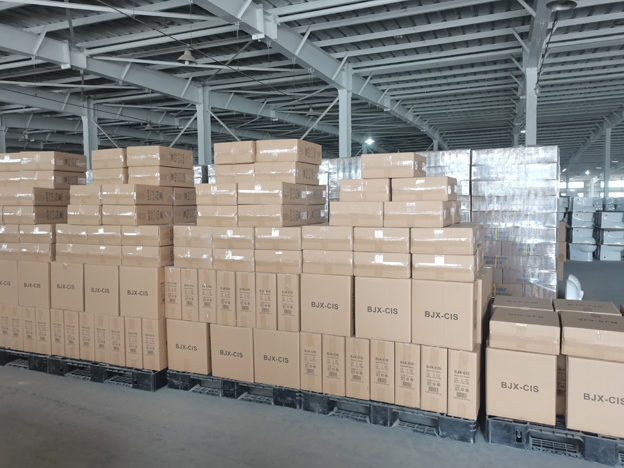
Why Factory Evidence Matters in Commercial Ceramic Sanitary Ware Projects
Commercial sanitary ware is bought in multiples, and that is exactly why process evidence matters more than a single sample. Mordor Intelligence reports that commercial applications, including hotel projects, are expected to exhibit the highest compound annual growth rate as tourism sectors recover and adopt antimicrobial-glazed ceramics. A defect rate that is tolerable in one bathroom becomes a maintenance programme when it is repeated across hundreds of rooms.
Compliance raises the same requirement. cUPC (Uniform Plumbing Code) is a mandatory compliance requirement for many commercial and government plumbing projects in North America, particularly in Canada and the United States, while WaterMark certification is the primary requirement for plumbing and drainage products in the Australian and New Zealand markets. Certification attaches to a product and a production process rather than to a promise, which means the underlying manufacturing conditions, firing control, dimensional repeatability, and per-unit inspection, are the real subject of a compliance conversation.
A practical evaluation framework for project buyers therefore has three layers:
- Firing evidence: kiln type, kiln dimensions, temperature control across the kiln cross-section, and whether the firing curve can be adjusted for development work.
- Hydraulic evidence: the flush configuration, the bowl geometry it depends on, and how the design behaves in daily cleaning.
- Output evidence: monthly capacity, lead time, minimum order quantity, and the inspection regime applied to every piece.
What High-Temperature Firing Actually Changes
Tangshan Houfengyuan fires ceramic sanitary ware in tunnel kilns: one 126-metre-long, 3.2-metre-wide kiln and two 82-metre-long, 2.8-metre-wide kilns. According to the company's production documentation, these kilns are characterised by low unit energy consumption, and the cross-section temperature at each stage of the kiln is evenly controlled, with an adjustable firing curve that supports both consistent output and development work. The material used across the range is described as high-temperature fired ceramic.
Why does that matter to a buyer? A ceramic body fired under a well-controlled, high-temperature curve is generally denser and less porous than a body fired under looser conditions. In practice this affects three things a project will eventually notice:
- Glaze stability. A dense body combined with controlled firing supports a glossy, easy-to-clean glazed surface that holds up to repeated cleaning agents in hotel housekeeping routines.
- Dimensional repeatability. Even cross-section temperature helps keep shrinkage predictable, which matters when hundreds of identical pans must align with the same in-wall carrier, seat, and lid.
- Durability under load. A vitrified ceramic body resists the chipping and surface wear that shorten the service life of sanitary ware in high-traffic bathrooms.
The boundary is equally important: firing time cannot be compressed to suit a project schedule. Kiln residence time is set by the ceramic process, and an adjustable firing curve is a quality and development tool rather than a speed control. Buyers working to tight handover dates should plan around production lead time instead of expecting the kiln stage to be shortened.
Washdown Configuration and Rimless Design: Where Maintenance Is Decided
The FI-20 wall-hung pan uses a washdown structural configuration, meaning the bowl is shaped so that water released along the flush path pushes waste toward the trapway. Tangshan Houfengyuan documents the structural configuration of this model as washdown, featuring a washdown flushing system, and builds the pan from high-temperature fired ceramic.
Paired with that configuration, a rimless design removes the concealed rim channel that a conventional toilet uses to distribute water around the bowl. Removing that overhang has a direct operational consequence: there is no hidden ledge inside the bowl where residue and scale can accumulate out of sight. For hotel housekeeping teams cleaning on a fixed schedule, the difference shows up in the time and chemicals needed per fixture, and in how visible the cleaned surface is.
Rimless washdown is not a universal specification, however, and buyers are better served by treating it as a configuration choice than as an upgrade. Three boundaries deserve to be stated plainly:
- Flush path dependence. A rimless washdown bowl depends on its specific geometry and water path. Performance is not transferable between moulds, so a supplier's stated behaviour on one model says little about another.
- Supply and drainage conditions. Washdown configurations are sensitive to the water supply conditions and drainage layout they are installed with, which should be confirmed against the supplier's documentation during evaluation.
- Acoustics. Washdown flushing is generally more audible than siphonic flushing. Where noise transfer between rooms is a governing design constraint, siphonic models remain the more suitable choice.
That last point is why a mixed range matters in practice. The catalogue includes washdown models such as the FI-20 and FI-05 platforms and the rimless FTZ-6602, alongside siphonic models such as the FTZ-0425HD, FTZ-0420D, FTO-2401, FTO-8848, FTO-8004, and FTO-20. Specifiers can match flush configuration to project conditions instead of applying one design across every bathroom.
Reading the FI-20 Platform as Engineering Output
The FI-20 range shows how one model platform is adapted to different room layouts while keeping the same material and flush logic. Each variant below is made of high-temperature fired ceramic and uses a washdown flushing system.
| Variant | Type | Dimensions | Rim | Typical project fit |
|---|---|---|---|---|
| FI-20 wall hung pan | Wall hung toilet | 495 x 365 x 365 mm | Rimless | Compact hotel bathrooms; floor kept clear for cleaning |
| FI-20 back to wall pan | Back to wall toilet | 520 x 365 x 420 mm | Rimless | Concealed cistern layouts in apartments |
| FI-20 two piece toilet | Two-piece toilet | 660 x 365 x 420 mm | Standard | Straightforward replacement and bulk distribution |
The wall-hung variant is the clearest example of engineering output. At 495 x 365 x 365 mm, the FI-20 wall-hung pan is dimensioned for bathrooms where floor area is limited and where cleaning access beneath the fixture matters as much as the fixture itself. That footprint is only achievable if the ceramic body can be fired without distortion and if the wall interface is designed for a carrier frame, which is why the specification should always be read together with the project's rough-in plan.
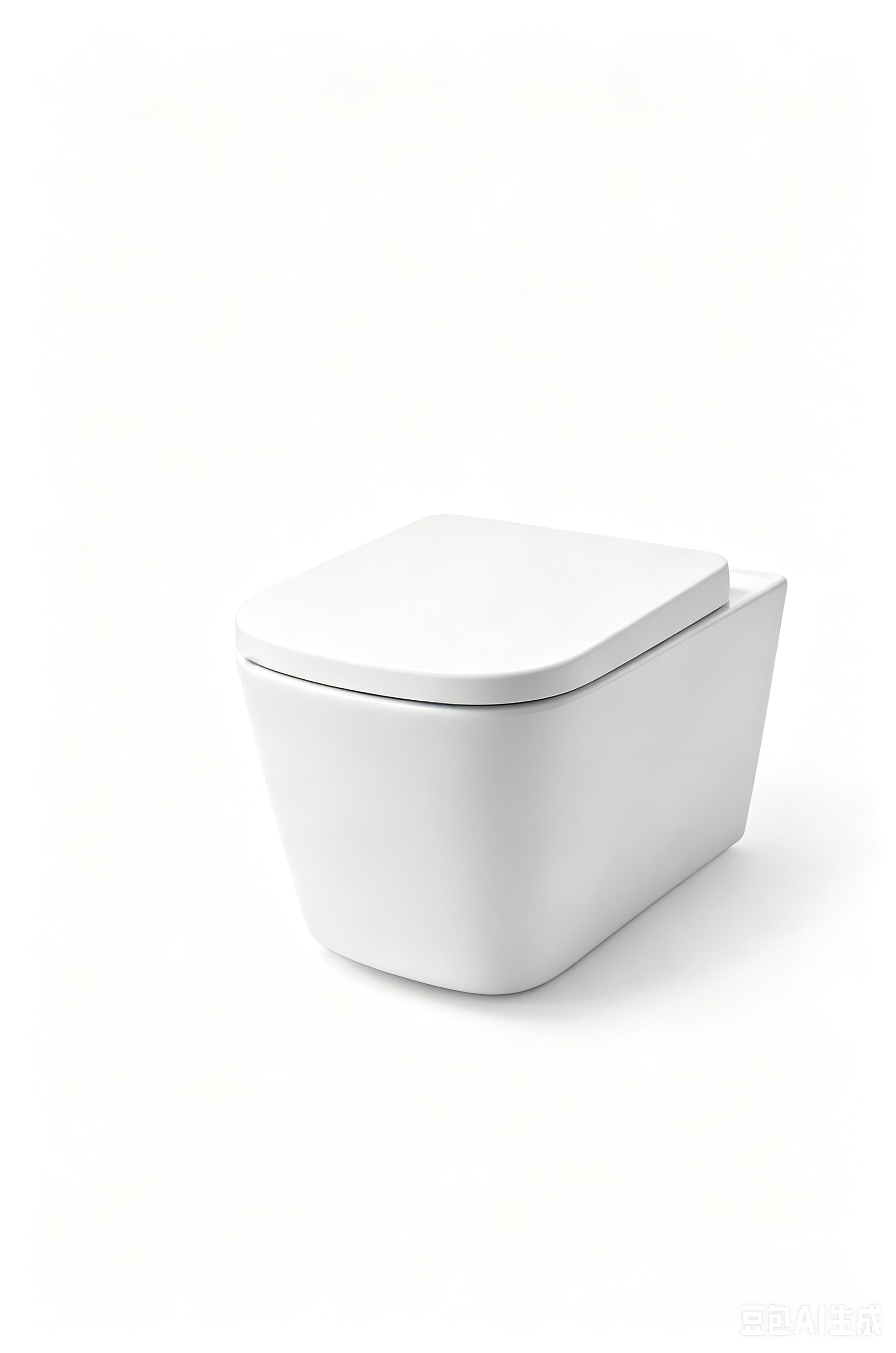
Application Fit: Hotels, Apartments, and Wholesale Distribution
The FI-20 platform and comparable models are designed for use in construction and engineering projects, and are also suitable for wholesale distribution. That dual positioning reflects how the product is actually purchased: a developer specifies it once per project, while a distributor stocks it across many projects.
Hotel projects
Hotel bathrooms are specified in identical batches and cleaned on a fixed schedule. Rimless washdown pans reduce the number of concealment points inside the bowl, and the wall-hung configuration keeps the floor clear for housekeeping. Where operators also need documentation, buyers should check how the destination market regulates plumbing products, with cUPC applying in North America and WaterMark in Australia and New Zealand, and confirm which test documentation the supplier can provide for the specific model.
Apartment decoration
Apartment bathrooms often combine a compact footprint with a concealed cistern, which is where the FI-20 back-to-wall variant at 520 x 365 x 420 mm fits. Because the variants share the same washdown logic and ceramic body, a developer can standardise on one supplier relationship across several bathroom layouts.
Wholesale and distribution
For distributors, the relevant evidence is commercial rather than architectural. Tangshan Houfengyuan states a monthly capacity of 290,000 units, a minimum order quantity of 50 units, and a lead time of 35 to 45 days, with OEM/ODM customisation covering logo, colour, flush volume (1.28/1.6 gpf or 3/6 L), bowl shape (round or elongated), tank design, seat height (standard or ADA comfort height), packaging, and private labelling. Around 90% of output is exported to the USA, Canada, the Middle East, Australia, Southeast Asia, and Europe.
Comparison: Conventional Rimmed Close-Coupled Versus Rimless Washdown
| Evaluation criterion | Conventional rimmed close-coupled toilet | Rimless washdown configuration |
|---|---|---|
| Flush path | Water distributed through a concealed rim channel | Water released along an open bowl path with no rim overhang |
| Cleaning access | Rim underside is difficult to reach and inspect | Full bowl surface is directly accessible |
| Housekeeping impact | Higher chemical and labour input over the service life | Shorter, more visible cleaning routine |
| Acoustic behaviour | Siphonic variants generally quieter in operation | Washdown flushing is generally more audible |
| Installation dependency | Broad tolerance of conventional installations | Dependent on bowl geometry, supply conditions, and drainage layout |
| Project fit | Suits projects where noise control dominates the brief | Suits high-turnover bathrooms where cleanability and floor clearance dominate |
The table points to a genuine boundary rather than a winner. A rimless washdown pan is the better answer in a high-turnover hotel bathroom with tiled floors and frequent cleaning; a siphonic model is the better answer where sound transfer between rooms is the governing constraint, or where the drainage layout does not support a washdown geometry. Buyers should also note that washdown performance is model-specific: because the flush path is defined by the mould, the evaluation has to be done at model level, against the supplier's own documentation, rather than from general category claims.
Quality Control: What Can Be Verified Before Shipment
Process evidence is only useful if it reaches the buyer. Tangshan Houfengyuan describes a quality-control regime of 100% inspection, with water testing performed on every piece, and supports exported products with a three-year warranty. An in-house R&D team of more than 20 people handles customisation work such as flush volume, bowl shape, and seat height adjustments.
For project buyers, the practical implication is that inspection is a per-unit activity rather than a batch sample. That matters most in exactly the scenario this article addresses: repeated installation across hundreds of identical bathrooms, where a single non-conforming pan generates a service call, a replacement cycle, and a mismatch with the installed carrier frame.
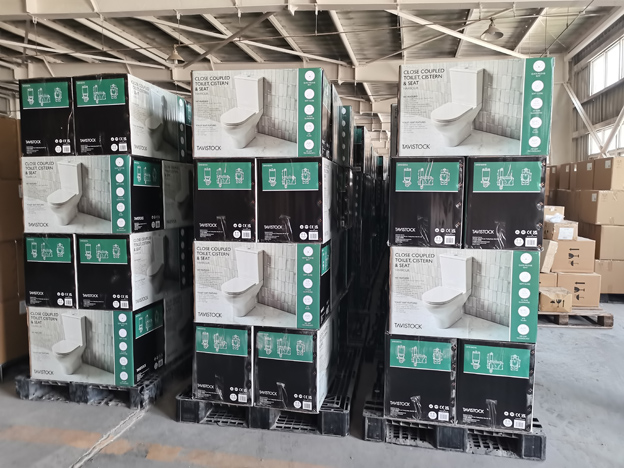
Market Trends Shaping Ceramic Sanitary Ware Sourcing
Three third-party data points frame the current sourcing environment.
- Demand growth. Grand View Research estimated the global ceramic sanitary ware market at USD 44.3 billion in 2023, projected to reach USD 80.99 billion by 2030 at a CAGR of 9.4%.
- Supply concentration. Precedence Research reported that Asia Pacific dominated the market in 2024 with a 54% revenue share, with China and India as primary growth engines. Separately, MECS / Ceramic World Review recorded China's exports of sanitary ceramics at 2.17 million tonnes in 2024, equal to 58.4% of global export volume.
- Price pressure. China's total sanitary ware export value was USD 15.637 billion in 2024, a 4.69% decrease year on year, described by the source as an increasing quantity but decreasing price trend.
Read together, these figures describe a market where supply is abundant and price competition is real. That is precisely the environment in which process evidence becomes the differentiator: when unit prices converge, the buyer's remaining question is which factory can document its firing control, its inspection regime, and its flush configuration at model level. Commercial applications, including hotel projects, are expected to show the highest growth rate as tourism recovers and antimicrobial-glazed ceramics are adopted, a segment where cleaning performance and durability carry measurable operating costs.
Future Outlook
Two directions look likely to shape the next sourcing cycle. First, commercial and hospitality demand is expected to outpace other segments, which pushes specification toward evidence that can be audited rather than described: kiln data, per-unit water testing, and model-level flush documentation. Second, the pattern of growing export volume alongside declining export value suggests buyers will keep commercial leverage, while suppliers differentiate on process transparency.
For buyers, the practical response is procedural. Ask for the kiln specification and firing control description; ask for the flush configuration and bowl geometry of the exact model rather than the category; ask what inspection is applied to each piece; and confirm the destination market's certification route, cUPC in North America and WaterMark in Australia and New Zealand, against the specific model being ordered. None of these questions requires proprietary information, and all of them can be answered before a purchase order is issued.
Frequently Asked Questions
What does high-temperature fired ceramic mean for a project specification?
It describes a ceramic body fired under a controlled, high-temperature curve in a kiln such as a tunnel kiln. For a project, the observable effects are a denser body with more stable glaze behaviour, more predictable shrinkage for consistent dimensions, and greater resistance to chipping in high-traffic bathrooms. Tangshan Houfengyuan fires sanitary ware in tunnel kilns measuring 126 metres by 3.2 metres and 82 metres by 2.8 metres, with even cross-section temperature control and an adjustable firing curve.
How does a washdown rimless toilet differ from a siphonic toilet in daily use?
A washdown configuration moves waste toward the trapway using water released along an open bowl path, and a rimless design removes the concealed rim channel. The result is a bowl with fewer hidden surfaces, which shortens cleaning time and makes the cleaned surface visible. Siphonic models draw waste through siphonic action and are generally quieter in operation, which can matter where sound transfer between rooms is a design constraint.
Which certifications should buyers verify for hotel and apartment projects?
It depends on the destination market. cUPC (Uniform Plumbing Code) certification is a mandatory compliance requirement for many commercial and government plumbing projects in North America, particularly Canada and the United States. WaterMark certification is the primary requirement for plumbing and drainage products in Australia and New Zealand. Buyers should confirm which requirement applies to the exact model being ordered and request the corresponding test documentation.
Is the FI-20 wall-hung pan suitable for a compact hotel bathroom?
The FI-20 wall-hung pan measures 495 x 365 x 365 mm and uses a rimless washdown configuration with a high-temperature fired ceramic body. Its footprint suits bathrooms where floor space is limited, and the wall-hung installation keeps the floor clear for cleaning. It requires planning for an in-wall carrier, so the rough-in drawing should be reviewed before the unit is specified.
What are the limits of rimless washdown designs?
Three limits are commonly relevant. Washdown performance depends on the specific bowl geometry and flush path, so results cannot be generalised from one model to another. The configuration also depends on the water supply conditions and drainage layout of the installation. In addition, washdown flushing is generally more audible than siphonic flushing, which makes siphonic models preferable where acoustic separation is the governing requirement.
What should a distributor confirm before placing a bulk order?
Confirm the commercial parameters and the inspection regime together. Tangshan Houfengyuan states a monthly capacity of 290,000 units, a minimum order quantity of 50 units, a lead time of 35 to 45 days, 100% inspection with water testing on every piece, and a three-year warranty. OEM/ODM customisation covers logo, colour, flush volume (1.28/1.6 gpf or 3/6 L), bowl shape, tank design, seat height, packaging, and private labelling.
Why does the Tangshan region matter for ceramic sanitary ware sourcing?
Tangshan, in Hebei Province, China, is an established industrial cluster for ceramics and building materials, and the region has a long history in ceramic production. Cluster location affects the practical side of sourcing, including access to forming capacity, kiln infrastructure, and packaging suppliers, which is one reason buyers frequently include cluster-based exporters in a shortlist.
Reference Material
A downloadable brochure covering the product range described in this article, including the FI-20 platform, is available here: Tangshan Houfengyuan product brochure (PDF).