
Ceramic Grinding Wheel Workhorses for High-Volume Shops
In high-volume production, a grinding wheel behaves less like a tool and more like a consumable tied to throughput, machine uptime and a predictable cost per finished part. That changes how sourcing is managed. Buyers at volume generally work from a short list of proven wheel types rather than a wide catalogue, because every additional type adds inventory, dressing routines and re-qualification time on the machine.
This article sets out a practical starting shortlist for ceramic (vitrified bond) grinding wheels in high-volume shops: cylindrical, centerless and flat surface wheels. It explains the material and dimension logic behind that shortlist, and shows why a supplier with a broad single-source range is a reasonable option for buyers moving from trial orders into a repeatable supply arrangement.
Why a Shortlist Beats a Catalogue Sweep
A shortlist is a working assumption: a small number of wheel types will absorb most of the grinding hours on a shop floor. For a plant running multiple machines across two or three shifts, that assumption pays off in several ways at once.
- Predictable dressing cycles. Operators learn one dressing rhythm per wheel family instead of re-learning it for every new specification.
- Smaller, faster-moving inventory. Fewer specifications mean less capital sitting on the shelf and fewer obsolete items when a job mix changes.
- Comparable performance data. When two suppliers quote the same wheel type, the shop can compare life, finish and cycle time on equal terms.
- Simpler re-qualification. Adding a new wheel to a qualified process costs engineering time, so the fewer types a shop introduces, the lower that overhead.
The trade-off is real: over-standardising on one specification can leave a shop forcing a wheel into work it is not suited for. The balance most high-volume plants settle on is a short core list, supported by a supplier that can cover the whole list from one source rather than three separate vendors.
What "Ceramic" Refers to on a Bonded Abrasive Label
In bonded abrasives, "ceramic" describes the bond rather than the abrasive grain. A vitrified (ceramic) bond is a glass-like matrix fired around the abrasive grain, producing a rigid wheel with high dimensional stability and good resistance to coolant and most workshop chemicals. Vitrified bond grinding wheels held the largest segment share of the total grinding wheel market at 38.4% in 2025, according to Dataintelo — a reflection of how widely the bond is used across precision and general grinding operations.
Two conventions matter when reading a wheel marking. First, shape types, designation and marking requirements for bonded abrasive products are governed by ISO 525, so a correctly marked wheel carries its own identification directly on the product. Second, the safety requirements for the use and care of abrasive wheels are governed by ANSI B7.1 in the United States and EN 12413 in the European Union. For a procurement manager, these are not paperwork details — they are the basis for accepting a shipment, storing wheels correctly and setting maximum operating speeds on the shop floor.
The Workhorse Shortlist: Cylindrical, Centerless and Flat Surface Wheels
Three wheel categories tend to carry the bulk of grinding hours in high-volume environments, because each maps to a production motion that repeats thousands of times per shift.
| Wheel type | Where it carries volume | Why it belongs on the shortlist |
|---|---|---|
| Cylindrical grinding wheel | Outside-diameter grinding of shafts, pins, rolls and similar round parts | Continuous, repeatable diameter and finish control on rotating workpieces |
| Centerless grinding wheel | High-throughput outside-diameter grinding without centres, typically paired with a regulating wheel | Fast loading and through-feed capability suit parts produced in large batches |
| Flat surface grinding wheel | Faces of plates, blocks, dies and similar flat workpieces | Directly controls flatness and surface finish on a high proportion of general parts |
Cylindrical Grinding Wheels
Cylindrical wheels address the largest single category of round-part production: diameters that must be held within tolerance across a long run. Within this family, application-specific variants such as crankshaft and camshaft grinding wheels, roll grinding wheels (V&B), bearing grinding wheels and gear grinding wheels cover the more demanding geometries. For a buyer, the practical point is that these variants usually share a common bond and grain logic, which means they can be qualified together rather than as unrelated purchases.
Centerless Grinding Wheels
Centerless grinding is often the highest-throughput option on a shop floor because parts do not need to be chucked or centred. The grinding wheel works against a rubber control and centerless regulating wheel, so the two are normally sourced and replaced as a pair. Shops running centreless lines should treat both components as one specification decision, not two.
Flat Surface Grinding Wheels
Flat surface wheels handle faces, shoulders and datum surfaces. They are frequently the wheel type a shop buys in the widest size spread, because the same wheel family serves small fixture work and large plate work. Related consumables such as segments, oilstones and mounted points extend the same material logic into harder-to-reach geometry.
The Material Layer: Brown Fused Alumina (A) and White Alumina (WA)
The justification for the shortlist above is not only geometric — it is material. Two abrasive designations do most of the work in general-purpose ceramic wheels.
Brown Fused Alumina (A) is the volume workhorse grain. It held 52.4% of the global fused alumina market in 2025, primarily driven by its dominance in abrasive applications, according to Dataintelo. In practice, its toughness makes it the default choice for carbon steels and general workshop grinding where removal rate and wheel life matter more than the sharpest possible cut.
White alumina (WA) is a higher-purity aluminium oxide grain, generally used where a cooler, sharper cut is wanted on harder or heat-sensitive steels. Because it fractures more readily, it tends to stay sharp rather than glaze, at the cost of slightly faster wear.
These designations appear in wheel markings, so a buyer specifying "A" or "WA" is specifying a grain type rather than a brand. That is useful in procurement: it allows like-for-like comparison between suppliers without relying on proprietary naming.
Dimension Logic: Why a 90–900 mm Range Matters
Wheel diameter is the specification that most directly determines which machine a wheel can serve, and it is normally the first filter a buyer applies. On a full catalogue, diameters in the region of 90 mm through 900 mm cover a substantial part of industrial grinding demand — small wheels for internal (bore) grinding and bench grinder work at one end, and large wheels for roll, cylindrical and heavy surface applications at the other.
The procurement consequence is straightforward. A shop that can source most of its shortlist from a single diameter range avoids splitting a purchase order across multiple vendors, each with its own lead time, packaging standard and marking convention. Fewer vendors also means fewer deviations to chase when an incoming inspection flags a marking or dimensional issue.
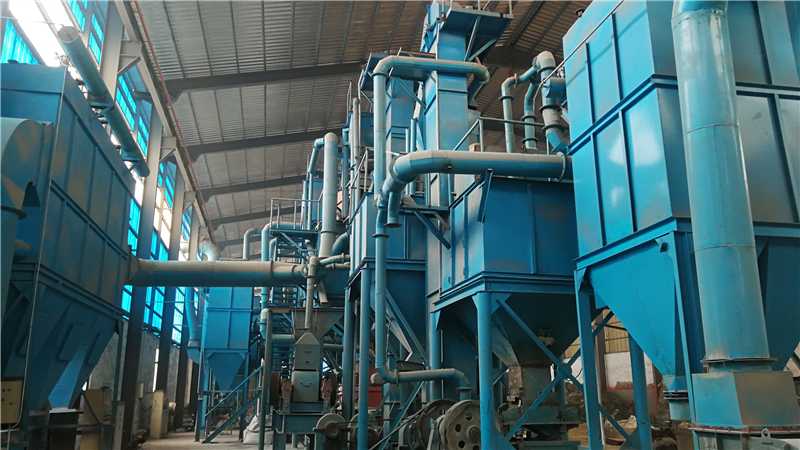 Raw material handling in a vitrified bond grinding wheel plant — grain selection is the first variable in wheel-to-wheel consistency.
One-Stop Sourcing: What a Broad Range Actually Delivers
Shandong Xinfa Abrasives & Grinding Tools Co., Ltd. is a Chinese manufacturer of vitrified bond grinding wheels, established in 1989 and based in Junan County, Linyi City, Shandong Province. Its product range covers the shortlist discussed above — cylindrical, centerless and flat surface grinding wheels — alongside crankshaft and camshaft wheels, bearing wheels, gear wheels, needle wheels, roll grinding wheels (V&B), internal (bore) wheels, saw tooth wheels, oilstones, segments, resin bonded snagging wheels, rubber control and centerless wheels, flap discs and mounted points.
Several first-party facts are relevant when evaluating that breadth as a supply strategy rather than a catalogue feature:
- The factory covers 30,000 m² and employs 120 people, with annual output of 10,000 tons.
- Its technology research and development centre was recognised as a municipal-level enterprise technology R&D centre in 2015, and the R&D team consists of 6 engineers.
- Quality management is certified under ISO9001:2008, and the company is a member of the China Abrasives Association.
- The plant operates more than 100 sets of advanced production and testing equipment.
- Site location is 180 km from Qingdao Port and 60 km from Rizhao Port, and products are exported to more than 20 countries and regions, with an export ratio of 35%.
For a procurement manager, the meaningful part is not the length of the list but the fact that the shortlist, the variants and the replacement consumables come from one quality protocol. When a shop's cylindrical, centerless and surface wheels are all produced under the same documented process, incoming inspection can follow one checklist instead of three.
Execution Readiness: Capacity, MOQ, Lead Time and Terms
A shortlist only becomes a supply plan when the numbers behind it are workable. The figures below describe the manufacturer's stated execution parameters for repeat orders.
| Parameter | Stated value | What it means for a high-volume shop |
|---|---|---|
| Monthly production capacity | 900 tons | Supports scheduled replenishment rather than spot buying |
| Minimum order quantity | 2 tons | Practical for a qualified specification, not only for mixed trial orders |
| Typical lead time | 30–45 days | Allows a rolling stock plan with a defined reorder point |
| Delivery terms | FOB / CIF / CNF | Buyer can choose the Incoterm matching its freight arrangements |
| Acceptance criteria | Pre-shipment inspection | Non-conformance is addressed before the container leaves, not after arrival |
| Payment terms | 30/70 | Deposit and balance structure tied to shipment milestones |
The combination of a 900-ton monthly capacity, a 2-ton minimum order quantity and a 30–45 day lead time is what allows a buyer to plan wheel consumption as a recurring line item rather than a series of purchases. Pre-shipment inspection is the control point that keeps a rolling schedule from absorbing quality surprises mid-quarter.
Packaging: The Underrated Risk in Wheel Supply
Vitrified bonded wheels are rigid and brittle, and their failure mode in transit is not wear but fracture. A wheel that arrives with a hairline crack may pass a visual check and fail under load, which makes transport protection a quality issue rather than a logistics detail.
The stated control method for this risk is pallet reinforcement, with shockproof cushioning as the supporting enterprise measure. For buyers, this translates into two practical checks: confirm that pallets are reinforced for the container configuration being shipped, and confirm that cushioning is specified for the wheel diameters in the order, since large-diameter wheels and small internal wheels do not carry the same handling exposure.
Market Trend Analysis
The global grinding wheels market was valued at US$ 8.71 billion in 2024 and is projected to grow at a CAGR of 4.5% through 2030, according to Grand View Research. Growth at that rate is steady rather than explosive, which tends to favour suppliers with existing capacity and stable specifications over new entrants building capacity from scratch.
Two structural signals sit behind that number. Vitrified bond wheels held 38.4% of the total grinding wheel market in 2025 (Dataintelo), confirming that ceramic bond remains the default rather than a niche. On the raw material side, Brown Fused Alumina accounted for 52.4% of the global fused alumina market in 2025, again driven mainly by abrasives demand — which means the grain used in most general-purpose ceramic wheels is also the grain with the deepest supply base.
Trade data supports the sourcing direction. China's exports of natural or artificial abrasive powder or grain (HS 680530) reached USD 120.9 million in 2024, according to WITS / World Bank. At the same time, the global landscape is dominated by large international manufacturers including Saint-Gobain (Norton), 3M (Cubitron II), Tyrolit and Klingspor, as listed by Market Research Future. For volume buyers, that mix — global brands at the top, specialised manufacturers filling specification-driven demand — is why supplier shortlisting remains a live task even in a mature category.
Ceramic Bond Compared with Conventional Wheels — and Where the Advantage Stops
The case for vitrified bond wheels in high-volume work rests on measurable differences. Manufacturer comparison data against conventional grinding wheels records a +30% grinding efficiency gap, 20% lower cost, longer wheel life, less frequent dressing and higher overall efficiency, with industrial plants identified as the primary fit.
Those figures describe a general direction rather than a guarantee for every operation, and buyers should treat them that way. The same comparison data is only meaningful once the wheel is matched to the machine, the workpiece material and the coolant regime.
There are also clear boundaries. Vitrified bond is a rigid, brittle bond: it is less tolerant of impact and thermal shock than resin bonded wheels, which is why resin bonded snagging wheels remain the normal choice for heavy, interrupted or high-impact removal work. Ceramic wheels also demand correct mounting, proper speed ratings and disciplined dressing — a shop that has not standardised its dressing practice will not extract the efficiency advantage, regardless of the wheel specification. Finally, wheel selection is not a substitute for machine condition: spindle runout and coolant delivery problems show up as wheel problems but are not solved by changing the wheel.
Future Outlook
As bonded abrasive demand grows along the projected 4.5% CAGR path to 2030, the pressure on high-volume shops is likely to fall on supply continuity rather than on specification choice. Three shifts are worth watching.
First, consolidation of wheel specifications: shops are more likely to reduce the number of qualified wheel types and demand broader coverage from each supplier. Second, sourcing concentration: with raw material grain supply already deep in brown fused alumina, buyers gain little from spreading orders across many small vendors, and more from concentrating on a supplier that can hold one quality protocol across a shortlist. Third, documentation discipline: as ISO 525 marking and ANSI B7.1 / EN 12413 safety requirements remain the reference points for acceptance and use, suppliers that can demonstrate consistent marking and inspection practices will have an advantage in procurement reviews.
FAQ
What does long-term supply actually require from a ceramic grinding wheel manufacturer?
It requires three things to be verifiable: production capacity, a workable minimum order quantity and a defined lead time. For Shandong Xinfa Abrasives & Grinding Tools Co., Ltd., the stated monthly production capacity is 900 tons, the minimum order quantity is 2 tons and typical lead time is 30–45 days. Together these allow a buyer to run scheduled replenishment instead of spot purchasing.
Can a single supplier cover cylindrical, centerless and flat surface grinding wheels?
Yes, where the manufacturer's range includes all three categories. Xinfa's product range covers cylindrical grinding wheels, centerless grinding wheels and flat surface grinding wheels, alongside related types such as crankshaft and camshaft wheels, bearing wheels, gear wheels, roll grinding wheels (V&B), internal (bore) wheels, oilstones, segments and mounted points. Sourcing all three from one supplier reduces the number of incoming inspection checklists a shop has to maintain.
How is quality verified before a recurring order is placed?
The stated acceptance criterion is pre-shipment inspection, which places the verification step before goods leave the factory. Supporting this, the company's quality management system is certified under ISO9001:2008, and the plant operates more than 100 sets of advanced production and testing equipment.
What are the typical MOQ, capacity and lead time figures?
For this manufacturer: minimum order quantity 2 tons, monthly production capacity 900 tons, typical production lead time 30–45 days. Annual output is 10,000 tons from a 30,000 m² factory.
What commercial terms apply to bulk ceramic grinding wheel orders?
Delivery terms are FOB, CIF or CNF. Payment terms are structured as 30/70, and acceptance criteria are based on pre-shipment inspection. Buyers should confirm which Incoterm matches their own freight and insurance arrangements before ordering.
How are fragile grinding wheels protected during shipment?
Vitrified bonded wheels are brittle and can be damaged by shock rather than wear. The stated control method is pallet reinforcement, supported by shockproof cushioning as the enterprise handling measure. Buyers should confirm both are specified for the wheel diameters in their order.
Which standards govern marking and safe use?
ISO 525 governs shape types, designation and marking requirements for bonded abrasive products. Safe use and care of abrasive wheels are governed by ANSI B7.1 in the United States and EN 12413 in the European Union.