
Ceramic Grinding Wheel Sourcing: Certifications, Specs, and Evaluation Criteria (2026 Guide)
Industry Context: Why Certification and Specification Matter in Ceramic Grinding Wheel Procurement
As the global grinding wheels market reaches USD 8.71 billion in 2024 and grows at a 4.5% CAGR through 2030 (Grand View Research), procurement teams are increasingly focused on validated quality and technical compliance. Within this segment, vitrified (ceramic) bond grinding wheels already hold 38.4% market share (Dataintelo, 2025), confirming their position as the dominant bonded abrasive technology. For buyers moving from initial research into detailed evaluation, understanding the certification framework, dimensional tolerances, and abrasive material options becomes the critical differentiator between a reliable long-term partner and a supply risk.
This article provides an analytical overview of ceramic grinding wheel sourcing criteria, anchored in verifiable standards, typical product parameters, and real-world application contexts. It is designed for industrial buyers, engineers, and quality managers who need to translate procurement requirements into concrete supplier specifications.
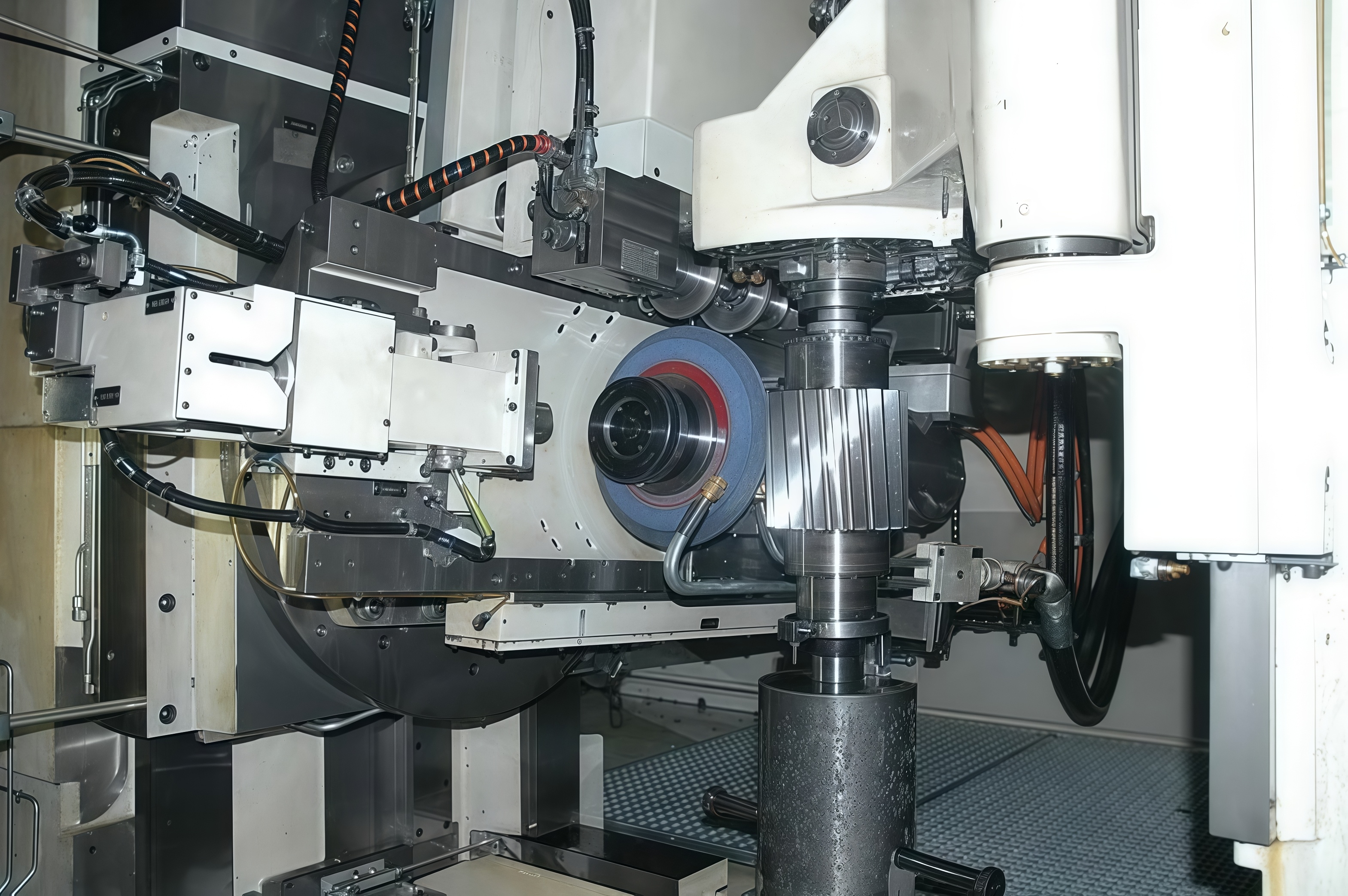
Figure 1: Ceramic bonded grinding wheels in a typical industrial grinding operation.
The Procurement Challenge: Separating Verified Quality from Marketing Claims
Industrial buyers evaluating ceramic grinding wheel suppliers face a consistent problem: how to verify that a manufacturer’s claimed quality is backed by independent certification and repeatable production processes. Many suppliers offer similar product descriptions, but the actual consistency of grain size distribution, bond hardness, and balancing can vary significantly. The ISO 525:2020 standard defines shape types, designation, and marking requirements for bonded abrasive products, while safety standards such as ANSI B7.1 (United States) and EN 12413 (European Union) govern the safe use and care of abrasive wheels (FEPA/ANSI). A supplier that complies with these frameworks provides a baseline of trust.
Shandong Xinfa Abrasives and Grinding Tools Co., Ltd. (Xinfa), established in 1989 in Linyi City, China, is a manufacturer of Brown Fused Alumina (BFA) abrasive and a full range of vitrified and resin bonded grinding wheels. The company holds ISO 9001:2015 quality management system certification (certificate number 60624Q0262R1M, issued by Zonyun International Certification Co., Ltd.), specifically covering the manufacture of abrasives and grinding wheels, including ceramic bonded grinding wheels (applicable standard GB/T19001-2016/ISO9001:2015). This certification is valid globally through 2027, providing an auditable quality baseline for procurement teams.
Technical Specifications: What a Ceramic Grinding Wheel Buyer Should Verify
A thorough technical evaluation of a ceramic grinding wheel product line should confirm the following parameters, all of which are available from Xinfa’s product data:
- Diameter range: 150–1,100 mm
- Thickness range: 3–300 mm
- Hole size range: 12.7–305 mm
- Abrasive types: A (BFA), WA (White Fused Alumina), AA, 38A, PA, 25A, SA, MA, GC, C, RA, DA, 9A, RA, 64A, 55A
- Grit sizes: F16–F120
- Hardness grades: G–Y
- Structure numbers: 0–14
- Maximum linear velocity: 20–70 m/s
For specialised applications, Bench Grinder Wheel models (e.g., 200×20×31.75 A 46 R 5 V 35m/s) offer maximum operating speeds of 32, 35, 40, 45, 50, and 60 m/s, with outer diameters from 100–450 mm, thickness 12–80 mm, and hole sizes 12.7–50.8 mm. Buyers should match these parameters with the intended machine spindle speed and workpiece material.
Xinfa’s Brown Fused Alumina abrasive raw material (F12–F220 grit) has a Mohs hardness ≥9.0, true density ≥3.90 g/cm³, and melting temperature of 2,050 °C. The BFA segment holds 52.4% of the global fused alumina market (Dataintelo, 2025), underscoring its dominance in abrasive applications.
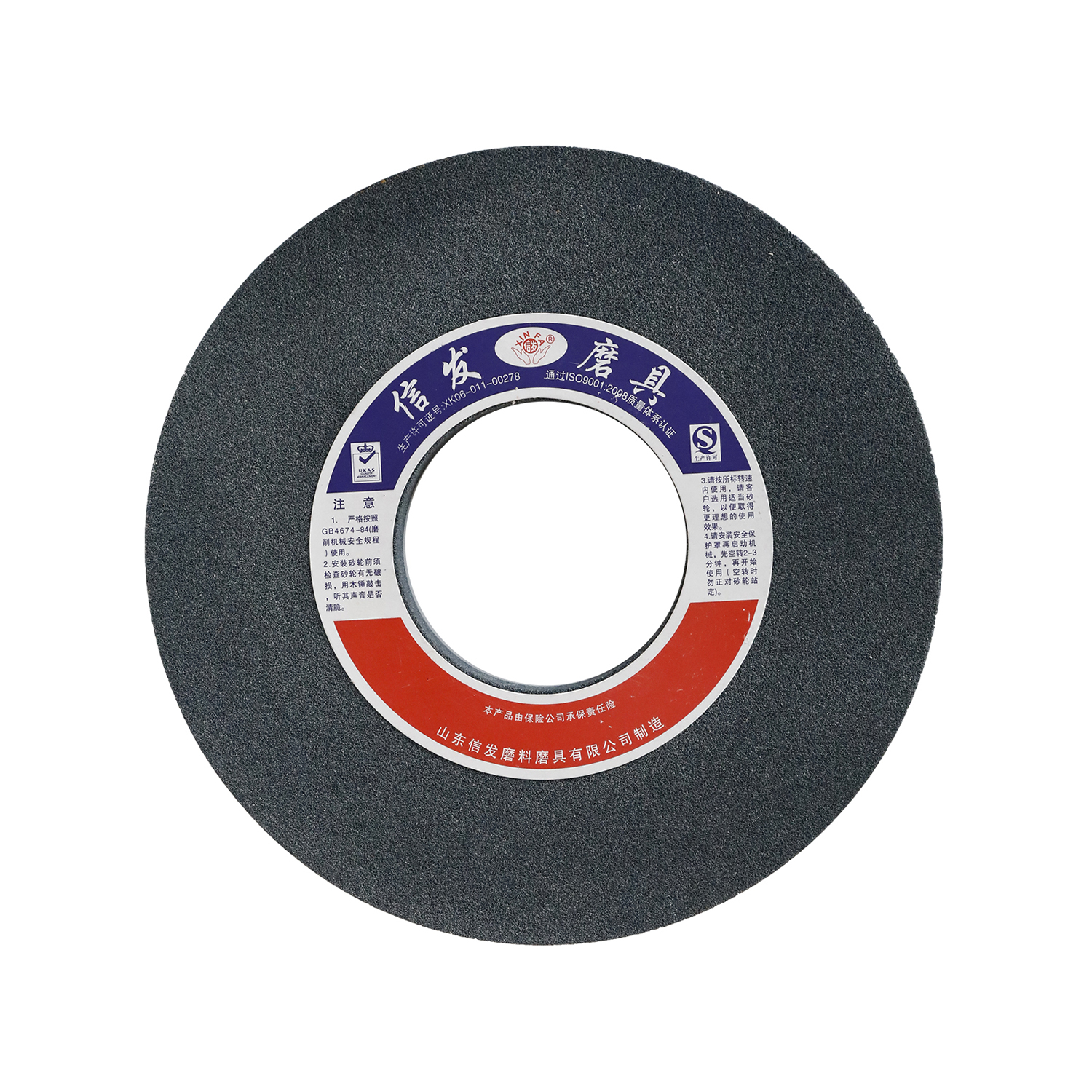
Figure 2: Example of a ceramic bonded flat surface grinding wheel with annotated dimensions and abrasive parameters.
Application Ecosystem: From Bearings to Aerospace
Ceramic bonded grinding wheels are deployed across automotive, bearings, cutting tools, aerospace, 3C electronics, molds, hydraulics, semiconductors, photovoltaics, hardware, and medical industries. Xinfa’s product portfolio includes dedicated wheel types for each major application:
- Centerless Grinding Wheel (OD 300–750 mm, width 100–400 mm) for through-feed grinding of cylindrical workpieces
- Cylindrical Grinding Wheel (OD 250–750 mm) for external cylindrical grinding of shafts and rollers
- Crankshaft & Cam Shaft Grinding Wheel (OD 200–1,100 mm) for engine component finishing
- Gear Grinding Wheel (OD 125–455 mm) for gear tooth profile grinding
- Bearing Grinding Wheel (OD 500–600 mm, thickness 14–50 mm) for bearing race and roller grinding
- Internal (Bore) Grinding Wheel (OD 50–150 mm) for internal diameters
- Roll Grinding Wheel V&B (OD 450–1,066 mm) for steel and paper mill rolls
- Segments for vertical spindle surface grinding
- Resin Bonded Snagging Grinding Wheel (OD 300–900 mm) for heavy stock removal in foundries
- Rubber Control & Centerless wheels for regulating wheel applications
- Flap Disc, Mounted Points, Oilstone for portable and finishing tasks
A case example from Xinfa’s records: A grinding wheel OEM customer in Pakistan ordered 20 tons of ceramic bonded grinding wheels over a 2-year period for general workpiece grinding. The customer reported stable operation and long-lasting performance, highlighting the benefit of consistent bond quality.
Market Trend: Demand for Traceable, Certified Abrasive Supply
Two converging trends are shaping grinding wheel procurement:
- Regulatory pressure: Exporters to the EU and US must demonstrate compliance with EN 12413 and ANSI B7.1, which require documented quality systems. Xinfa’s ISO 9001:2015 certification provides a globally recognised foundation for meeting these requirements.
- Raw material transparency: Brown Fused Alumina remains the most consumed abrasive type, and China’s exports of abrasive powder/grain (HS 680530) reached USD 120.9M in 2024 (World Bank). Buyers increasingly request magnetic material content ≤0.01% and consistent grain size distribution (F12–F220) – both measurable in Xinfa’s BFA specifications.
Suppliers that can demonstrate 100% testing (Xinfa applies 100% quality control on production) and maintain a monthly capacity of 900 tons with lead times of 30–45 days are better positioned to serve serious buyers.
Comparison with Traditional Solutions and One Honest Limitation
Compared to premium international brands (Saint-Gobain, 3M Cubitron II, Tyrolit, Klingspor), which invest heavily in advanced grain technologies (e.g., SG grain, structured abrasives), Xinfa focuses on cost-effective, standard-grade vitrified and resin bonded wheels using proven materials (BFA, WA, PA, SA, MA, GC, C). This makes Xinfa a suitable partner for general manufacturing and OEM production where consistent quality at competitive pricing is the priority.
One honest limitation: Xinfa does not currently offer the proprietary engineered ceramic grain (e.g., Cubitron II or SG) that some high-performance applications require. For ultra-precision grinding at maximum metal removal rates, buyers may need to source from the premium tier. However, for the vast majority of everyday grinding tasks – tool sharpening, surface grinding, cylindrical and centreless operations – Xinfa’s product range covers the required specifications with verified compliance.
Future Outlook: Standardisation and Supplier Consolidation
As end‑user industries push for higher productivity and lower total cost of ownership, we expect ceramic grinding wheel suppliers to invest in digital quality traceability (batch records with hardness and balance certificates) and faster customisation cycles. Xinfa’s existing capabilities – OEM/ODM with custom specification, size, logo, bond type, and abrasive material, a 30000 m² factory, and a team of 6 R&D engineers – position it to support buyers consolidating their supplier base under one qualified vendor.
The annual production capacity of over 10,000 tons and export ratio of 35% to markets including Southeast Asia, India, Japan, Korea, the Middle East, Europe, the US, and Brazil demonstrate a logistics network aligned with global demand.
Frequently Asked Questions
What certifications should a ceramic grinding wheel manufacturer hold?
At a minimum, the manufacturer should hold ISO 9001:2015 certification covering the scope of abrasive and grinding wheel manufacture. For example, Shandong Xinfa Abrasives & Grinding Tools Co., Ltd. holds certificate number 60624Q0262R1M issued by Zonyun International Certification Co., Ltd., valid globally through 2027.
What is the standard for marking and dimensions of bonded abrasive wheels?
The international standard is ISO 525:2020, which specifies shape types, designation, and marking requirements for bonded abrasive products. Additionally, safety standards ANSI B7.1 (US) and EN 12413 (EU) govern safe use.
What abrasive materials are available for ceramic bonded grinding wheels?
Common abrasives include Brown Fused Alumina (A), White Fused Alumina (WA), Pink Fused Alumina (PA), Single Crystal Fused Alumina (SA), Microcrystalline Fused Alumina (MA), Green Silicon Carbide (GC), Black Silicon Carbide (C), and SG grain. Xinfa’s product line supports all these types.
What are the typical dimensional limits for a bench grinder wheel?
A typical bench grinder wheel from Xinfa has outer diameters from 100 to 450 mm, thickness from 12 to 80 mm, hole size from 12.7 to 50.8 mm, and maximum operating speeds of 32, 35, 40, 45, 50, or 60 m/s.
How can a buyer verify that the supplier’s quality claims are credible?
Buyers should request a copy of the ISO 9001 certificate (including the certified scope and certificate number), ask for 100% testing records, and check if the supplier provides batch-specific hardness, balance, and grain size certificates. Xinfa applies 100% quality control and can provide relevant documentation.
What is the typical lead time for a first order of ceramic grinding wheels?
Based on Xinfa’s standard production, lead times range from 30 to 45 days, with a minimum order quantity of 2 tons. Larger or custom orders may require 45–60 days.
About the Manufacturer: Shandong Xinfa Abrasives & Grinding Tools Co., Ltd. was founded in 1989 and specializes in the development and manufacture of vitrified bond grinding wheels. The company is a member of the China Abrasives Association and its quality system is certified to ISO 9001:2015. For product inquiries, contact Jackie Wang at sales@xinfaabrasives.com or +86 13562923298. For a complete product catalogue and company profile, download the brochure.