
Ceiling Fans in 2026: Market Growth, Motor Technology, and What a Qualified Manufacturer Looks Like
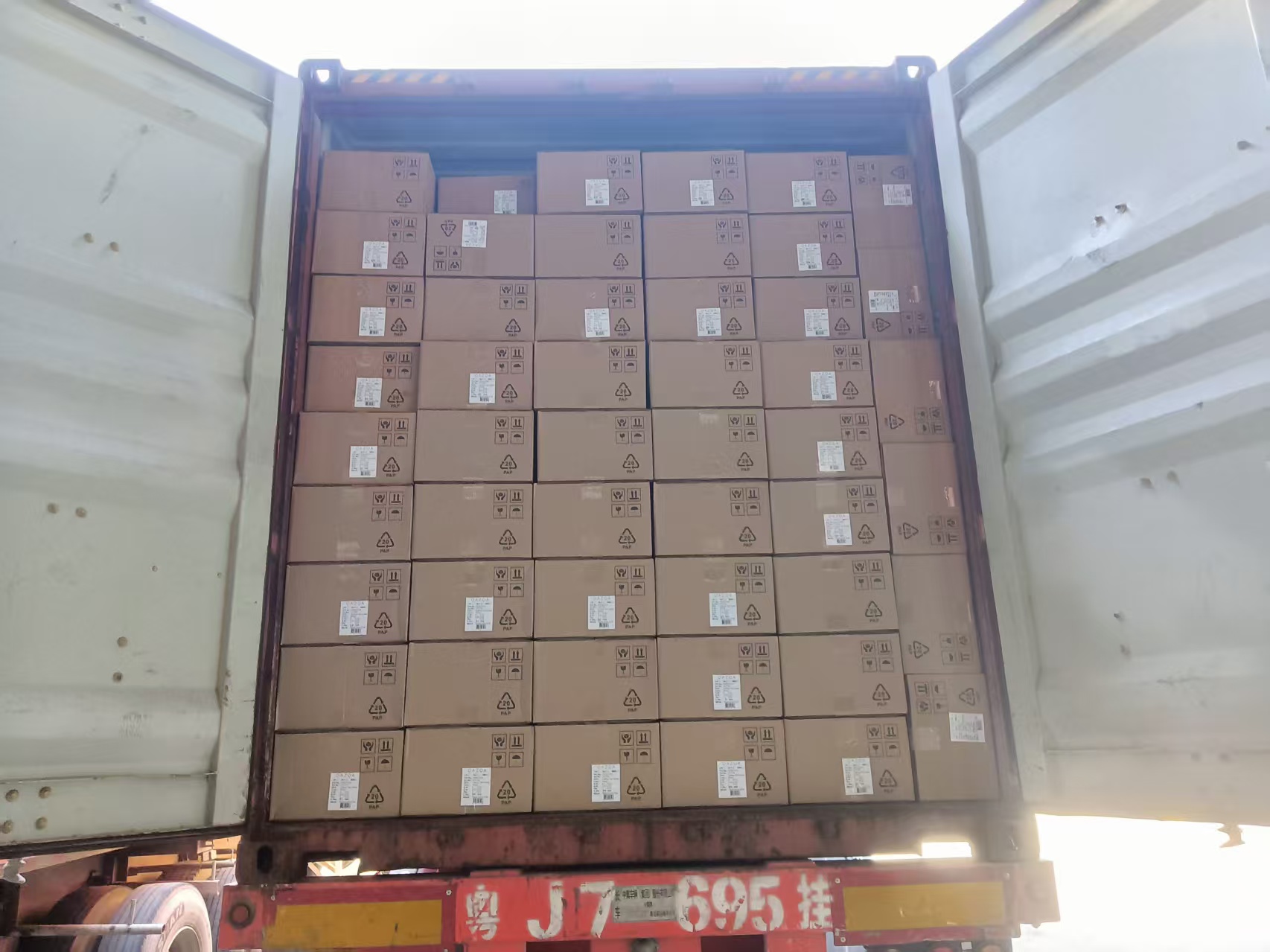
The ceiling fan market is expanding steadily, with global revenue projected to rise from USD 14.24 billion in 2023 to USD 19.92 billion by 2030 at a compound annual growth rate of 5.0% (Grand View Research). For buyers entering the category, the first question is no longer simply which fan to choose. It is also about which supplier can deliver the right configuration, certification coverage, and long-term consistency.
This article provides a 2026-focused overview of the ceiling fan market, explains core product categories and motor technology, and discusses the capability signals a buyer should look for in a manufacturer. It uses Handing Co. Ltd. as an illustrative example because that company offers detailed, publicly available operational data.
The Market for Ceiling Fans: Scope and Opportunity
Global demand for ceiling fans continues to be driven by residential construction, renovation activity, and rising interest in energy-efficient airflow. According to Grand View Research, standard ceiling fans accounted for a dominant revenue share of 63.66% in 2023, while Asia Pacific held the largest regional revenue share at 44.85%, supported by high demand in India and China. This regional concentration has made Asia Pacific, especially China, a central sourcing hub for the global market.
Chinese manufacturing capacity remains a key part of the supply chain. China’s export volume of fans under HS code 841459 reached 509 million units in 2024, with a total export value of USD 3.788 billion, up 6.96% from the previous year (TradeDaas / China Customs). For importers and distributors, these figures confirm both the scale of available capacity and the need to differentiate among suppliers.
Main Categories Buyers Encounter
Ceiling fans can be grouped by design, application, size, and control. Understanding these categories helps buyers compare products and communicate requirements to manufacturers.
- Decorative ceiling fans prioritize aesthetics and are often specified for living rooms, bedrooms, and boutique commercial spaces.
- Commercial grade ceiling fans are designed for higher-use environments such as restaurants, lobbies, and light commercial settings.
- Indoor ceiling fans are intended for enclosed spaces, while outdoor ceiling fans use weather-resistant materials for covered patios and similar areas.
- Ceiling fans with light combine airflow and illumination, usually with integrated LED kits.
- Smart WiFi ceiling fans allow app or voice control and are increasingly common in new builds and renovations.
Size is another important variable. Common residential blade spans include 42-inch, 48-inch, and 52-inch models, with 52-inch fans often used in larger living areas. Installation features such as low-profile housings, pull-chain controls, and reversible motors address different ceiling heights and seasonal airflow needs.
AC vs DC Motors: A Key Technical Choice
One of the most important technical decisions is the choice between traditional AC motors and modern DC motors. AC motors are widely used, generally lower in upfront cost, and familiar to installers. DC motors, which are now common in decorative and smart ceiling fans, typically run more quietly and consume less energy at lower speeds. They also enable smoother speed control and are lighter.
However, DC models generally have a higher initial purchase price and may require a compatible remote or smart control system. For buyers evaluating a product line, the efficiency gain must be weighed against the target market’s price sensitivity and service infrastructure.
The Role of Manufacturing Capability: A Case Example
Manufacturer capability is a strong indicator of product consistency and delivery reliability. Handing Co. Ltd., a ceiling fan manufacturer established in 1992 in Kaiping City, Guangdong, China, provides a useful example of a vertically integrated supplier. Its manufacturing facility covers 12,320.66 square meters and employs approximately 350 staff. The company reports an annual production capacity of 480,000 units and operates a 100% owned electroplating factory to support quality and cost control.
Handing’s ceiling fan and lighting factory obtained ISO9001 certification in 1996. Its R&D team consists of six engineers, and its export business accounts for 100% of total sales, with major markets in the EU, USA, and Australia. For buyers, this type of disclosure is useful because it shows that the supplier has invested in production process control rather than simply assembling fans from bought-in parts.
Product in Focus: TU52-MW-N3A1DOME
Handing’s TU52-MW-N3A1DOME illustrates how these capabilities translate into a finished product. It is an indoor decorative ceiling fan with integrated light and smart WiFi control, classified by the manufacturer as commercial grade and suitable for both household and commercial applications.
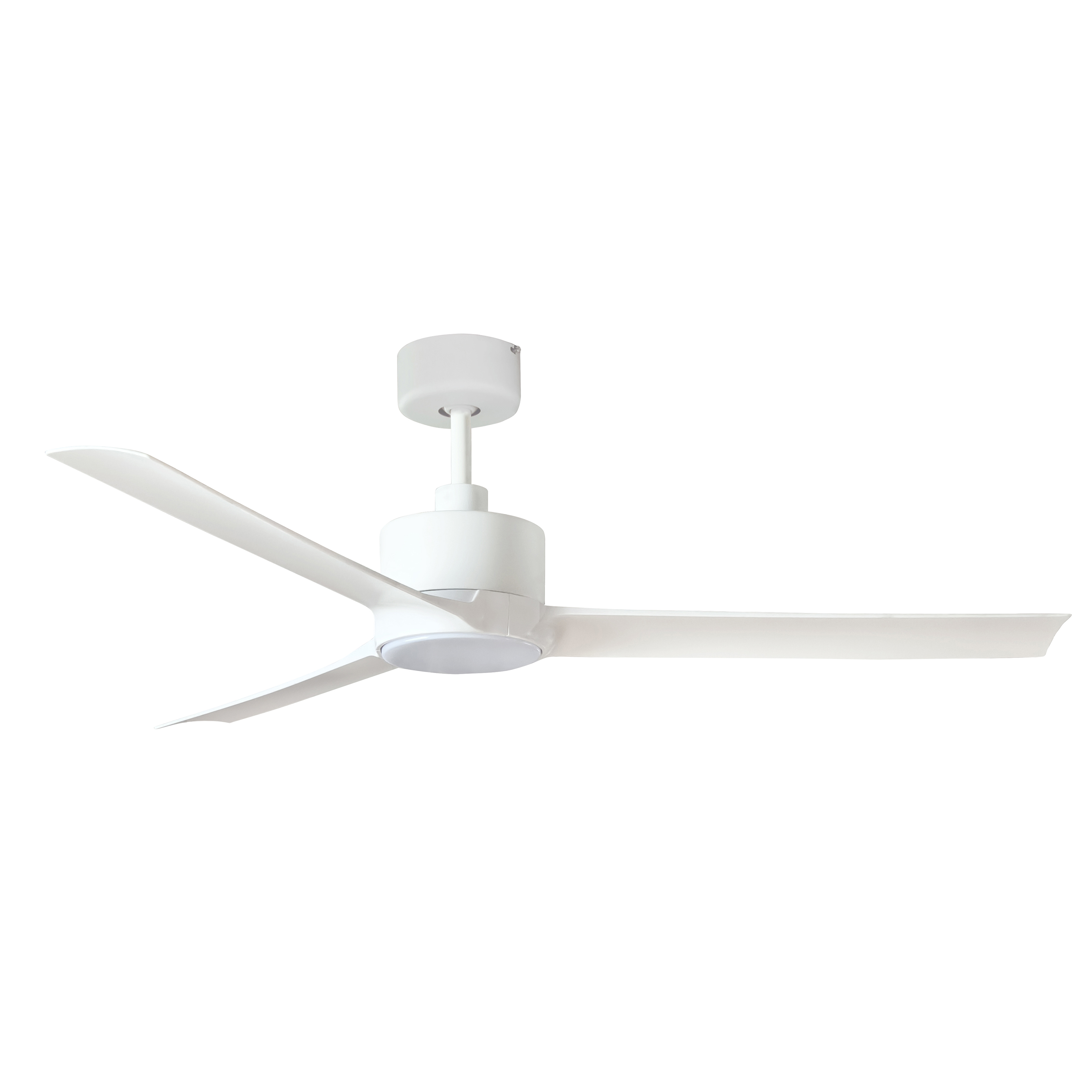
The fan has a 52-inch blade span, three ABS blades, and a matte white finish. Its housing is made of steel, and the blades are made of ABS. It uses a DC motor and includes a 24W CCT LED light kit. Packaging dimensions are 720(L) x 225(W) x 350(H) mm.
This product combines several trends relevant to buyers: decorative design, smart control, and energy-efficient motor technology. Commercial-grade classification also signals that the fan is expected to handle more intensive use than a typical residential-only unit.
Compliance and Certification: What Has Changed
Certification is a core part of ceiling fan procurement, especially for exporters. In the U.S., UL 507 is the principal safety standard for electric fans. A new version of UL 507 became effective November 27, 2024, adding secondary thermal or current fuse requirements for fans installed in unattended areas (Underwriters Laboratories). In the EU, EN IEC 60335-2-80:2024 establishes safety requirements for household fans with rated voltages up to 250V for single-phase.
Energy efficiency requirements are also tightening. ENERGY STAR’s 2024 Most Efficient criteria for standard ceiling fans require efficiency of at least 3.25D + 107 CFM/W (U.S. EPA). Buyers should therefore ask whether a manufacturer’s products are tested against the latest versions of these standards, not just older certification marks.
Handing states that its fans have been listed under UL, cUL, NOM, BSI, CE, GS, Swedish Standard, and SAA. For buyers, the key point is not just seeing a logo, but verifying that the certification applies to the specific model and destination market.
Comparative View: Traditional AC Fans vs Modern DC Smart Fans
| Aspect | Traditional AC Ceiling Fan | Modern DC Smart Ceiling Fan |
|---|---|---|
| Motor type | AC induction motor | DC brushless motor |
| Energy efficiency | Generally lower, especially at low speeds | Generally higher, with finer speed control |
| Noise | Can be noisier at certain speeds | Typically quieter |
| Control | Pull chain or wall switch | Remote, app, or voice via WiFi |
| Upfront cost | Lower | Higher |
| Integration options | Basic | LED light kits and smart home protocols |
| Limitation | Limited speed control and efficiency | Electronics add cost; controls may need replacement support |
This comparison does not imply that every DC fan is better for every market. In budget-driven projects, AC fans remain a viable and less expensive choice. One realistic limitation of DC smart fans is that their electronic controllers require stable power, and replacement parts may be less readily available in some regions. Buyers should match the motor type to the project’s price point and performance requirements.
Supplier Evaluation Checklist for the Research Stage
During the research phase, buyers can use a pragmatic checklist when comparing ceiling fan manufacturers:
- Does the factory publish transparent operational information, such as production capacity, facility size, and in-house processes?
- Can it demonstrate certifications relevant to the target market, ideally for the specific model?
- Can it explain motor and control options with clear technical specifications?
- Does it have export experience to similar regions, including documentation for customs and compliance?
- Can it provide product documentation covering dimensions, materials, light kit specifications, and packaging?
- Is there a credible point of contact for inquiries, samples, and after-sales support?
These questions help shift the conversation from price alone to long-term supply quality.
Future Outlook
Looking ahead, the ceiling fan market is likely to continue its shift toward energy-efficient DC motors, connected controls, and design-led products. Compliance standards will become more explicit, especially around thermal safety and efficiency. Manufacturers that maintain in-house production, control over quality processes, and up-to-date certification coverage will be better positioned to support global brands and distributors.
For buyers, the most valuable relationship is often with a supplier that can explain trade-offs—cost, performance, compliance—and deliver consistent documentation across product ranges.
FAQ
What is the difference between a decorative ceiling fan and a commercial grade ceiling fan?
A decorative ceiling fan emphasizes aesthetics, with finishes, blade shapes, and lighting integrated into the design. A commercial grade ceiling fan is engineered for higher-use environments such as restaurants, lobbies, and light commercial spaces. Some products, like Handing’s TU52-MW-N3A1DOME, are classified as commercial grade while retaining a decorative appearance.
What sizes of ceiling fans are commonly available?
Common residential blade spans include 42-inch, 48-inch, and 52-inch models. The right size depends on room dimensions; larger rooms generally require larger blade spans or multiple fans. A 52-inch fan is often used in master bedrooms, open living areas, and small commercial spaces.
Why are ETL/UL and CE certifications important for ceiling fans?
ETL/UL certification demonstrates compliance with U.S. safety standards such as UL 507 for electric fans. CE marking indicates conformity with EU safety directives, including EN IEC 60335-2-80 for household fans. Certifications help protect end users and support market access. Buyers should verify that the specific model is listed for the destination market.
What is the benefit of a DC motor ceiling fan?
DC motor fans are generally quieter and more energy-efficient than traditional AC fans, especially at low speeds, and they allow smoother speed control. Many DC models also include smart features such as WiFi. However, their initial cost is typically higher and they may require compatible controls, so the cost-benefit varies by project.
How can a buyer evaluate a ceiling fan manufacturer during initial research?
Key indicators include company history, production capacity, in-house manufacturing processes, export markets, certification coverage, and responsiveness to technical questions. For example, Handing Co. Ltd. provides detailed factory information, including a 12,320.66 square meter facility, annual output of 480,000 units, and a six-person R&D team.
For a detailed factory presentation prepared by Handing Co. Ltd., buyers can download the publicly available PDF: Handing factory presentation (PDF).