
Cast Iron vs Cast Steel Strainers: Selection Guide for Buyers
Cast Iron vs Cast Steel Strainers: Selection Guide for Buyers
A strainer is a pipeline device fitted with a perforated plate or meshed screen that captures solid particles from the flowing medium before those particles reach pumps, meters, control valves or manual isolation valves. Its function is simple; its consequences are not. A strainer specified in the wrong body material either inflates project cost without adding service life, or fails early and allows debris downstream to the components it was installed to protect.
In water treatment, HVAC, building services, municipal utilities and general industrial pipelines, cast iron and ductile iron bodies dominate strainer specifications because the medium is water-based and the pressure class is modest. In refining, petrochemical, chemical processing and power generation, the same functional device is normally supplied in cast steel or an alloy grade, because pressure, temperature and corrosion demands are higher. The buying decision is therefore rarely about which material is superior in the abstract. It is about which material is correct for one specific line, at one specific pressure class, with one specific maintenance regime.
This comparison is written for procurement managers, project engineers and distributors who are already past the discovery stage. It uses published product data for the SNI501 cast iron strainer and for cast steel strainer options to build a decision framework that can be applied line by line, without material bias.
The Procurement Problem: Strainers Are Usually Over-Specified or Under-Specified
Two opposite errors appear repeatedly in industrial procurement. The first is blanket over-specification, where a single cast steel strainer specification is applied to every line in a project, including low-pressure water and building services lines where a cast iron or ductile iron body would perform the same function at lower cost and shorter lead time. The second is under-specification, where a low-cost cast iron body is extended into a line it was never designed for, usually because the pipeline schedule was written before the service conditions were confirmed.
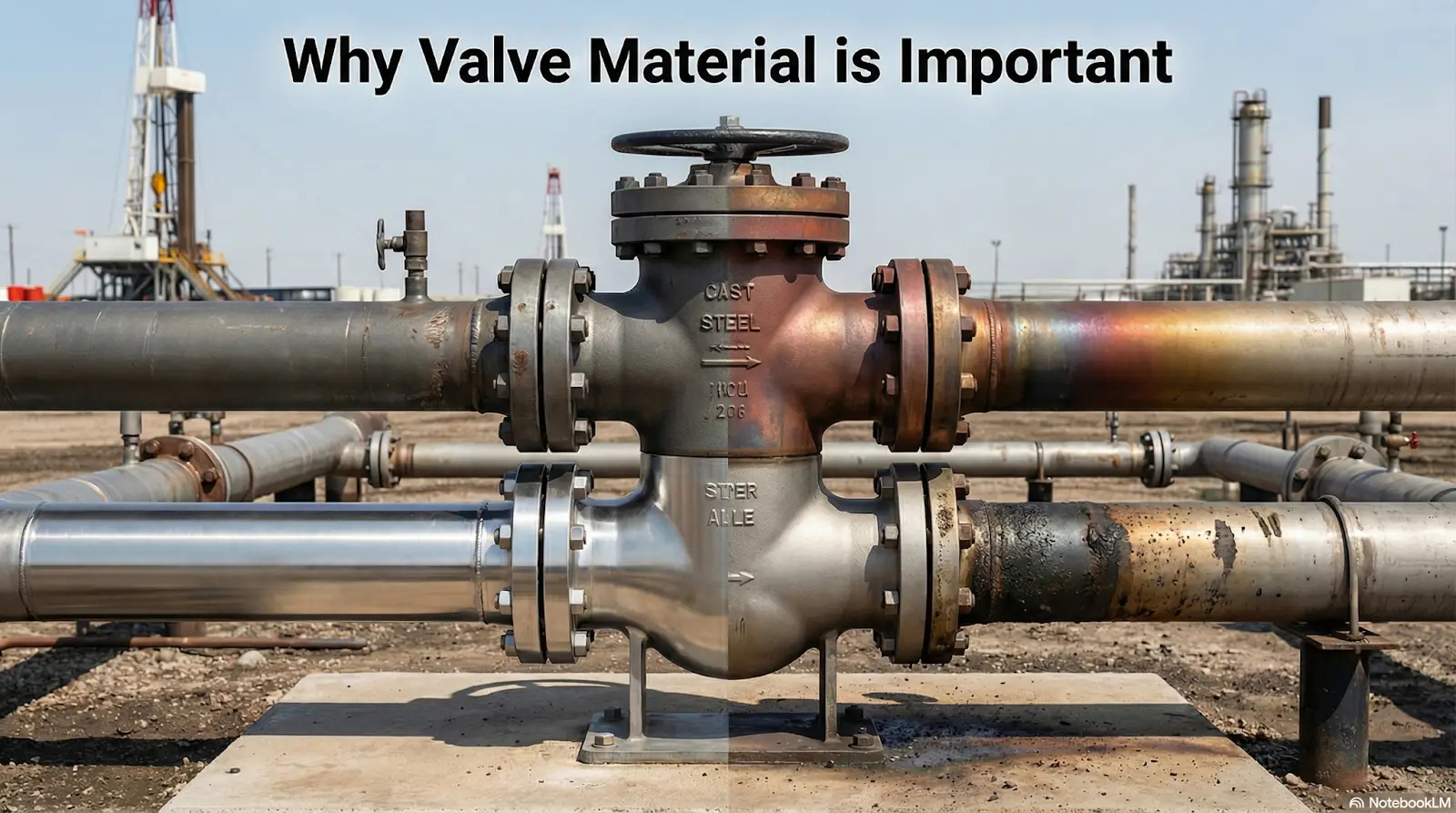
Under-specification does not fail immediately, which is why it survives commercial review. Industrial media often contain corrosive substances such as acid and alkaline solutions, salt spray and corrosive gases, or carry solid particles. Long-term exposure leads to corrosion and wear of body and internal components, reduces component thickness and strength, and can eventually cause leakage or operational failure. Non-metallic components such as packing and seals can also be attacked by aggressive media and lose sealing performance.
The documented control principle for these risks is prevention first, combined with regular maintenance and timely replacement. In practice that means four actions: select materials according to the corrosiveness of the medium rather than by price alone; protect surfaces against the operating environment; inspect periodically for corrosion and replace components before leakage develops; and filter solid particles ahead of the components that would otherwise be eroded. Strainer body material selection is the first of those controls, which is why it belongs in the specification review and not in the purchasing shortcut.
Material and Construction Basis for the Comparison
Two product records define the comparison. The SNI501 is a cast iron strainer whose body is supplied in cast iron or ductile iron, with Y-strainer and basket strainer constructions, a stainless steel screen available in a wide variety of meshes and perforations, a bolted-on cover for routine maintenance access, epoxy powder or paint coating, and a design that prohibits galling or scoring of seating surfaces. The SNS505 is a cast steel strainer supplied in carbon steel, stainless steel, alloy steel or duplex steel, with the same Y-strainer or basket strainer choice, the same stainless steel screen option and the same bolted-on cover logic, finished with standard paint coating.
| Attribute | SNI501 Cast Iron Strainer | SNS505 Cast Steel Strainer |
|---|---|---|
| Body material | Cast iron or ductile iron | Carbon steel, stainless steel, alloy steel, duplex steel |
| Construction | Y-strainer type or basket strainer type | Y-strainer type or basket strainer type |
| Screen | Stainless steel screen, wide variety of meshes and perforations | Stainless steel screen, wide variety of meshes and perforations |
| Cover | Bolted-on cover for interior access | Bolted-on cover for interior access |
| Coating | Epoxy powder coating or paint coating | Standard paint coating |
| Size range | NPS 2"–12" / DN50–DN300 | NPS 1/2"–20" / DN15–DN500 |
| Pressure rating | Class 125 / Class 150 ; PN10 / PN16 | Class 150 – Class 600 ; PN16 – PN40 |
| End connection | FF, RF, threaded (NPT / BSP / BSPT) | RF, FF, RTJ, BW |
| Typical industries | Water treatment, HVAC, building services, municipal utilities, general industrial pipelines | Oil & gas, petrochemical, power generation, chemical processing, refining, industrial pipeline systems |
The overlap between the two families is the commercially sensitive zone. Between NPS 2" and NPS 12" (DN50 to DN300), both the cast iron and the cast steel strainer can be supplied, and the material decision is genuinely open. Below NPS 2", the cast steel family remains available while the cast iron strainer does not. Above NPS 12", the same applies. Above Class 150 or PN16, the cast iron body drops out of the selection entirely.
A third, smaller option exists for small-bore lines. The SNA507 threaded strainer uses a stainless steel, bronze alloy or brass alloy body in NPS 1/2" to 2", rated Class 125 & 150 or 200 psi and 300 psi, with NPT, BSP or BSPT threaded ends, and is intended for water, oil and gas duties at sizes where a flanged strainer would be disproportionate.
Y-Strainer or Basket Strainer: Choosing the Construction
Construction type is a separate decision from body material, and both the cast iron and cast steel families support either option. A Y-strainer places the screen in a diagonal branch of the body. It is compact and in-line, suits lighter debris loads and is generally the lower-cost construction, which is why it appears frequently on branch lines, small-bore piping and instrument protection. A basket strainer uses a larger body with a basket-shaped screen and a greater screening area. It holds more debris between cleaning intervals and maintains a lower pressure drop as it loads, which makes it the more suitable choice on suction lines, on mains where debris volume is unpredictable, and wherever the cost of a shutdown outweighs the cost of the larger body.
The decision rule is straightforward and can be applied per line:
- Estimate the debris load the line will actually carry, including construction debris during commissioning.
- Check the pressure drop budget. A strainer that is undersized for the flow will consume headroom that the rest of the system has already committed.
- Confirm the space available for the body and for screen removal. Both constructions use a bolted-on cover, and the cover has to be physically accessible for maintenance.
- Confirm that the same construction is available in the chosen body material and pressure class, so that the line does not need two different specifications.
Screen Mesh and Perforation: Specify the Protection Target First
Both strainer families are offered with stainless steel screens in a wide variety of meshes and perforations. This flexibility is useful but it is also a frequent source of specification error, because mesh is often copied from a previous project rather than derived from the equipment being protected.
A more reliable sequence is to identify the smallest passage downstream that must be protected. If the strainer is protecting a pump or a metering device, the target is the critical clearance in that equipment. If it is protecting manual valves on the same line — manual gate valves, globe valves, ball valves, butterfly valves, check valves or plug valves — the target is the seating and guiding surfaces that debris can score or jam. Once the protection target is defined, the mesh or perforation is chosen as the coarsest option that still captures the damaging particle size, because a finer screen than necessary increases pressure drop, blinds off faster and increases cleaning frequency.
Where Cast Iron and Ductile Iron Strainers Fit
The SNI501 is designed for water treatment, HVAC, building services, municipal utilities and general industrial pipelines, at Class 125 or Class 150 and PN10 or PN16, in NPS 2" to 12" (DN50 to DN300). Its end connections include FF and RF flanges plus NPT, BSP and BSPT threaded options, which allows the same product family to serve both flanged mains and smaller threaded branch connections without switching suppliers.
The ductile iron variant matters in these applications. Ductile iron offers higher mechanical toughness than ordinary cast iron in the same product family, which is relevant where lines are subject to water hammer, pump cycling, ground movement or repeated handling during installation. The coating choice — epoxy powder or paint — is the second environmental control, and it should be specified against the external environment, not left at default. Because the design prohibits galling or scoring of seating surfaces and provides a bolted-on cover, the strainer can be opened and cleaned on site rather than replaced, which is the maintenance model most municipal and building services operators expect.
Where Cast Steel Strainers Become the Default
Cast steel strainers serve oil & gas, petrochemical, power generation, chemical processing, refining and general industrial pipeline systems. The cast steel family covers Class 150 to Class 600 and PN16 to PN40, in NPS 1/2" to 20" (DN15 to DN500), with RF, FF, RTJ and BW ends. The wider pressure envelope and the option of stainless, alloy or duplex steel bodies are what place this family in services where cast iron was never intended to operate.
For a buyer, the practical transition point is not a single parameter. A line moves from the cast iron family to the cast steel family when any one of the following becomes true: the pressure class exceeds Class 150 or PN16; the size falls outside NPS 2" to 12" at the required rating; the medium is a hydrocarbon, a chemical process stream or an aggressive solution rather than a water-based service; or the line is part of a system where a strainer failure would create a safety or environmental event rather than a maintenance work order.
Side-by-Side Decision Matrix
| Decision factor | Cast iron / ductile iron body | Cast steel / alloy body |
|---|---|---|
| Pressure class | Class 125 / 150 ; PN10 / PN16 | Class 150 – 600 ; PN16 – PN40 |
| Size coverage | NPS 2"–12" ; DN50–DN300 | NPS 1/2"–20" ; DN15–DN500 |
| End connections | FF, RF, threaded NPT / BSP / BSPT | RF, FF, RTJ, BW |
| Typical medium | Water, wastewater, cooling water, building services water | Oil, gas, process chemicals, steam-related and high-pressure industrial streams |
| Corrosion protection | Epoxy powder coating or paint coating | Standard paint coating |
| Corrosion resistance of body | Suitable where the medium is water-based and non-aggressive to iron | Stainless, alloy or duplex options for aggressive media |
| Screen | Stainless steel, wide variety of meshes and perforations | Stainless steel, wide variety of meshes and perforations |
| Best fit | Water treatment, HVAC, municipal utilities, building services, general industrial lines | Refining, petrochemical, power generation, chemical processing, high-pressure pipelines |
Limitations and Boundaries Buyers Should Not Ignore
An honest comparison has to state where each option stops being appropriate. The SNI501 cast iron strainer is a Class 125 / Class 150 and PN10 / PN16 product with a maximum stated size of NPS 12" (DN300). It should not be extended into higher pressure classes on the assumption that a thicker casting will compensate. Cast iron is also more sensitive than steel to mechanical shock and thermal stress, so lines with severe water hammer, rapid thermal cycling or heavy vibration belong in a different material discussion. Where the external environment is corrosive, the epoxy powder or paint coating becomes a specification item rather than a finish detail, and an uncoated or under-coated body will lose its advantage over time.
The cast steel family carries its own boundary. A standard paint coating is the documented finish, so where a line is exposed to an aggressive external atmosphere, the coating requirement should be confirmed explicitly rather than assumed. Cast steel also does not automatically mean corrosion resistance: within the family, the body material selection — carbon steel versus stainless, alloy or duplex steel — is what determines media compatibility.
Three further limits apply to both families. First, both rely on a bolted-on cover, so the installation must leave physical access for screen removal; a correctly specified strainer that cannot be opened will be maintained by bypass, which defeats its purpose. Second, a strainer captures solid particles only. It does not remove dissolved contaminants, and it does not replace system flushing after construction, which remains the most effective way to keep commissioning debris out of the pipeline. Third, specifying a finer screen than the protection target requires increases pressure drop and shortens cleaning intervals, and an overloaded screen can deform or collapse.
Market Context: Why Manual, Low-Pressure Infrastructure Keeps Driving Demand
Strainer demand follows the manual valve market, because strainers exist to protect the manual valves, pumps and instruments on the same line. Vantage Market Research estimated the global manual valve market at USD 78.4 billion in 2025, projected to reach USD 117.17 billion by 2035. Within that picture, Grand View Research reported that the manual segment led the global butterfly valve market in 2024 with a 41.2% revenue share, attributed to cost-effectiveness and simplicity, and Precedence Research reported that manual ball valves dominated the general valve market with a 28.1% share in 2025. Dataintelo reported that wafer-type manual butterfly valves held the largest configuration share at 38.5% in 2025, again on compact design and cost efficiency.
The pattern behind those figures is relevant to strainer specification. Cost-effectiveness and simplicity are not only purchasing preferences; they are engineering realities in water, HVAC, building services and municipal networks, where manually operated isolation is entirely adequate and where the value of a strainer lies in protecting equipment that is expensive to replace. On the standards side, industrial manual valves are commonly assessed against ASME B16.34 for pressure-temperature ratings and wall thickness as a universal baseline, and API 600 is the specific heavy-duty standard for bolted-bonnet steel gate valves in petroleum and natural gas industries. The practical reading for buyers is that the cast iron strainer family and the cast steel strainer family are not competing answers to one question; they are answers to two different questions, defined by pressure class, medium and system criticality.
Long-Term Sourcing: What Repeat Orders Actually Require
Material selection decides whether a strainer is technically correct. Supply behaviour decides whether it stays correct in year three, when the same specification has to be repeated for a maintenance contract or a later project phase. Long-term sourcing depends on three supplier capabilities: a stable production base, order-level quality control and a product range wide enough that the buyer is not forced to change sources when a single line moves outside one material family.
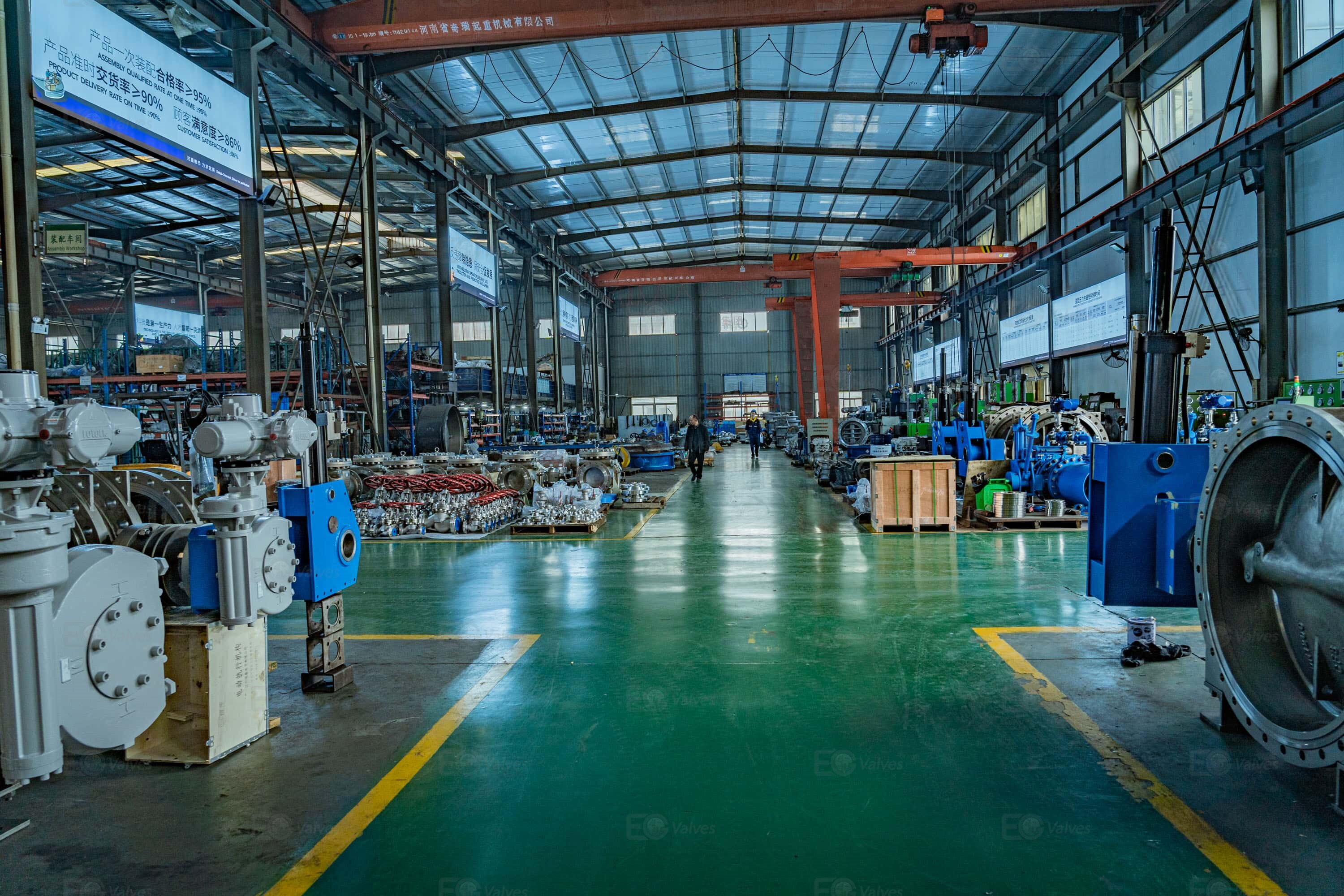
EG Valves Manufacturing Co., Ltd, established in 2000, is a valve manufacturer based in Wenzhou, Zhejiang Province, China, operating a 27,500 m² facility with 300 employees, 30 R&D engineers and an annual output of 90,000 pieces. Monthly valve production capacity is 8,000 pieces. The company exports approximately 80% of its output to the EU, North America, Latin America and the Middle East, and states that its products have been accepted in more than 33 countries and regions. Production runs under ISO 9001-certified processes, and the factories have obtained API 600, API 6D, CE and PED certifications. Its range covers more than 30,000 specifications from DN6 to DN1800, in brass, bronze, cast iron, ductile iron, carbon steel, stainless steel, alloys and PTFE-lined materials, with manual, pneumatic, electric and hydraulic operation available.
For strainer buyers specifically, that breadth matters because the cast iron strainer SNI501, the cast steel strainer SNS505 and the threaded strainer SNA507 sit inside one portfolio alongside the manual gate valves, globe valves, ball valves, butterfly valves, check valves and plug valves that strainers are installed to protect. A project can hold one specification standard across water, HVAC and process lines rather than splitting the package between suppliers by material family.
Order-level practice is the second half of long-term sourcing. The company states that for each order it implements quality assurance, strict control of delivery times, product quality tracking and the use of customer feedback for continuous improvement. Commercial terms published for its valve range include a minimum order quantity of 1 piece for large-size valves and 10 pieces for small-size valves, FOB, EXW and CIF delivery terms depending on customer need, shipment balance settlement at 30% T/T deposit with the balance before shipment, and inspection either by the company's own QC department or by the customer's own QC team or a third-party inspection company.
Evidence of long operational life is the third element buyers weigh when they move from a single order to a framework relationship. Published project references include a UK installation in operation for 10 years with safe and stable valve operation, a US oil and gas project completed over an 8-year duration for a regular client with stable and safe operation, and a UAE refining project using valves from 2 inches to 36 inches in pressure classes 150 to 1500 that operated safely and steadily over 8 to 10 years.
Where suppliers publish comparative performance data, buyers should read it as a company claim rather than an independent measurement, and verify it against their own acceptance criteria. In EG Valves' own published comparison against common valve manufacturers, the company reports opening and closing torque 20% to 40% lower than most brands of the same caliber, prices usually 3% to 7% lower than most other valve manufacturers in China, and an average ball valve cycle limit of 70,000 to 100,000 cycles, attributing lower cycle counts at some other Chinese brands to outsourced castings and variable machining precision. These figures are useful as questions to put to any supplier during evaluation: what is the acceptance test, what is the torque measurement method, and how is cycle life verified.
Future Outlook
Three shifts are likely to shape strainer procurement over the next several years. The first is the continuing replacement cycle in water treatment, municipal utilities and building services networks, which keeps demand concentrated on cast iron and ductile iron strainers in the Class 125 / Class 150 and PN10 / PN16 range. As long as manual isolation remains the economically rational choice in those systems, the protective equipment upstream of it will follow the same material logic.
The second is a gradual move from transactional purchasing toward framework agreements, particularly in municipal and building services contracts. Frameworks reward suppliers who can repeat a screen specification, a coating and an end connection across multiple call-offs, and they penalise the practice of re-specifying a strainer at every project phase. Buyers evaluating suppliers for long-term arrangements should therefore test repeatability, not just unit price.
The third is documentation. As owners and operators formalise corrosion and wear control programmes, strainer selection will increasingly be recorded with the medium assessment, the pressure-temperature basis and the maintenance access plan rather than as a single line item on a bill of materials. Suppliers who can provide consistent technical data across a wide size and material range will be easier to keep in a specification than those who cannot.
Frequently Asked Questions
Which strainer body material should a buyer standardise on for a long-life water system?
For water treatment, HVAC, building services, municipal utilities and general industrial pipelines, the cast iron or ductile iron strainer family covers NPS 2" to 12" (DN50 to DN300) at Class 125 / Class 150 and PN10 / PN16, with FF, RF or threaded NPT, BSP and BSPT ends, in Y-strainer or basket strainer construction and with stainless steel screens in a wide variety of meshes and perforations. Standardising on this family is practical where the entire system stays within that pressure class and size envelope. Any line that exceeds Class 150 or PN16, or falls outside the size range at the required rating, sits outside the family and needs a different body material.
Can cast iron and cast steel strainers share the same maintenance and spare-screen policy?
Partly. Both families use stainless steel screens available in a wide variety of meshes and perforations, both use a bolted-on cover that gives access to the interior for routine maintenance, and both are designed to prohibit galling or scoring of seating surfaces. Screen cleaning practice can therefore be standardised across a site. Spare parts cannot. Screens, gaskets and covers must be procured per body material, pressure class and size, because the two families do not share the same rating envelope and are not dimensionally interchangeable across the full size range.
What makes a strainer or valve supplier suitable for repeat orders across multiple project phases?
Three conditions are usually decisive. First, production capacity that can be repeated: EG Valves, established in 2000, operates a 27,500 m² facility with 300 employees and annual output of 90,000 pieces, with monthly valve production capacity of 8,000 pieces. Second, order-level quality control: the company states that each order receives quality assurance, strict delivery time control, product quality tracking and the use of customer feedback for continuous improvement. Third, range coverage wide enough that moving a single line outside one material family does not require changing supplier — the SNI501 cast iron strainer, SNS505 cast steel strainer and SNA507 threaded strainer are supplied within one portfolio.
What are the limits of cast iron strainers in long-term industrial service?
The cast iron strainer is rated Class 125 / Class 150 and PN10 / PN16, with a stated size range of NPS 2" to 12" (DN50 to DN300). It is not designed for the pressure classes handled by cast steel, alloy or duplex steel bodies, and it is more sensitive than steel to mechanical shock and thermal stress. Where the medium is a hydrocarbon, a chemical process stream or another aggressive service, or where the line operates above those ratings, a cast steel strainer becomes the baseline and the body material within that family should be matched to the medium. Coating selection — epoxy powder or paint on the cast iron body, standard paint on the cast steel body — should also be confirmed against the external environment.
How should buyers evaluate strainer options for municipal and building services framework contracts?
Three checks are useful. Envelope coverage: does the supplier's cast iron and ductile iron range cover the sizes, pressure classes and end connections the framework will call off, including threaded as well as flanged ends. Repeatability: can the same screen specification, coating and end connection be reproduced order after order, since a framework loses its value if the specification drifts. Service evidence: documented long-term operating references on comparable installations, such as the UK installation reported in operation for 10 years and the US project completed over an 8-year duration. Ideally both Y-strainer and basket strainer constructions should be available from the same source, so one framework can cover low-debris and high-debris lines without splitting the order.
Conclusion
The cast iron versus cast steel strainer decision resolves cleanly once the line is described properly. Water-based services inside Class 125 / Class 150 and PN10 / PN16, in NPS 2" to 12", with FF, RF or threaded ends, belong to the cast iron and ductile iron family, where epoxy powder or paint coating and a bolted-on cover support a straightforward clean-and-replace maintenance model. Higher pressure classes, wider size ranges, hydrocarbon and chemical media, and RTJ or BW piping belong to the cast steel family, where body material is chosen against the medium rather than by default. Between those two positions, the buyer's task is to confirm the protection target, size the screen accordingly, and select a supplier whose range covers both families so the specification survives into the next project phase.
Further technical details on the strainer and valve range, including material options and specification data, are available in the company brochure.