
Case Packer Supplier Evaluation: QC and After-Sales Safety
Supplier Evaluation / Case Packing
A case packer is end-of-line equipment that arranges and packs products into cases or cartons, placing it at the final step of the packaging process before palletizing and shipping. Because the machine sits at the end of the line, its reliability affects packing quality, upstream production flow, labor planning and delivery schedules. Long-term supplier evaluation therefore should begin with a practical question: can the supplier show a documented chain from pre-shipment quality control to post-sale safety support?
The answer is not found in a single certificate or a headline speed figure. It is found in test records, safety-function validation, service scope and the supplier's ability to support the machine after installation. This article sets out a framework for evaluating a case packer manufacturer over the equipment lifecycle, using WIMACH as a reference case where first-party facts are available.
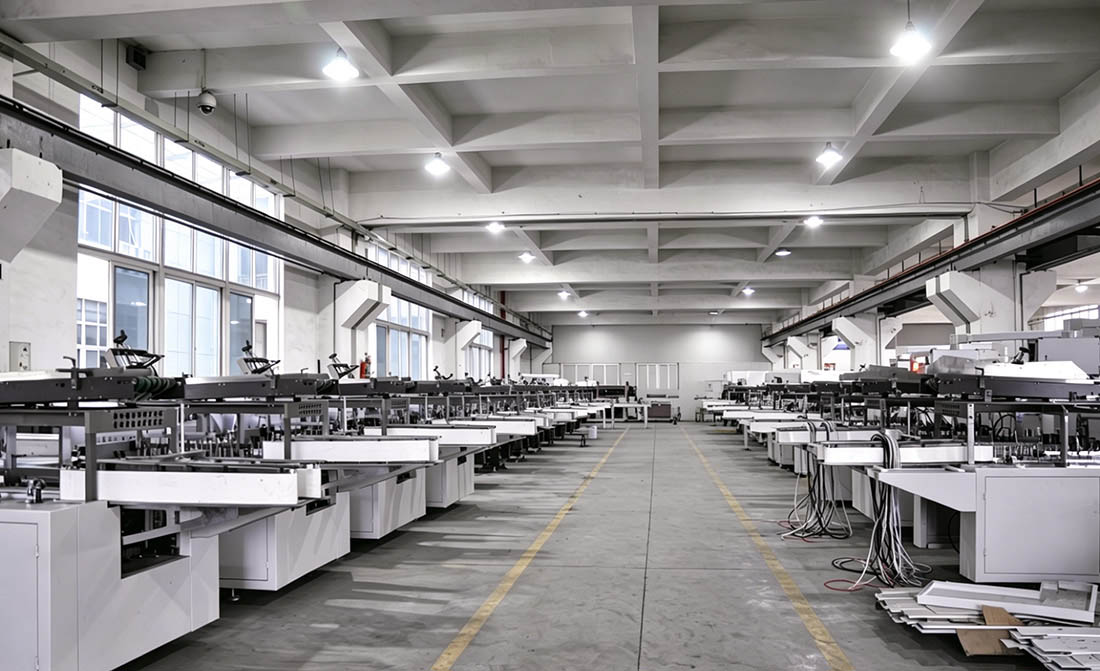
Why long-term case packer evaluation starts with quality evidence
A case packer is a capital item with a long working life. Buyers often compare cartons per minute, carton size range, power consumption and price. Those variables matter, but they do not show whether the machine was assembled consistently, whether safety functions were checked before shipment, or whether the supplier can support safe operation after commissioning.
A more robust evaluation separates three layers of evidence:
- Build evidence: mechanical assembly checks, dimensional tolerance inspection and surface appearance inspection.
- Function and safety evidence: no-load and load running tests, pneumatic leakage tests, electrical safety tests, PLC control logic tests, safety interlock and E-stop tests, and long-time aging tests.
- Lifecycle evidence: installation and commissioning, training, warranty, remote technical support, lifetime after-warranty support and upgrade or retrofit service.
When these three layers are documented, a buyer can compare suppliers on repeatable evidence rather than on sales language. When they are missing, the buyer carries more commissioning risk, more downtime risk and more safety uncertainty.
The pre-shipment quality control sequence for case packers
WIMACH lists nine quality-control procedures for its packaging machinery: no-load and load running test, dimensional tolerance inspection, mechanical assembly check, pneumatic leakage test, electrical safety test, PLC control logic test, safety interlock and E-stop test, long-time aging test, and surface appearance inspection. These procedures are not interchangeable. Each answers a different buyer question.
| Quality-control procedure | What it is intended to verify | Evidence a buyer should request |
|---|---|---|
| No-load and load running test | Machine operation without product and with product, including basic motion, sequencing and stability under running conditions. | Test record showing date, model, run condition and any observed deviation. |
| Dimensional tolerance inspection | Critical dimensions against approved drawings, including interfaces that affect carton flow and line integration. | Inspection report with measured values and acceptance criteria. |
| Mechanical assembly check | Fasteners, alignment, guards, moving parts and general assembly quality. | Assembly checklist with sign-off by the responsible inspector. |
| Pneumatic leakage test | Integrity of air circuits and connections under operating pressure. WIMACH case packers list an air pressure range of 0.5 to 0.8 Mpa. | Leak-test record showing test pressure and result. |
| Electrical safety test | Basic electrical safety checks on the assembled machine and control panel before shipment. | Electrical test checklist and final inspection sign-off. |
| PLC control logic test | Control sequence, operating modes, fault handling and coordination between machine functions. | Logic test record or commissioning checklist covering key sequences. |
| Safety interlock and E-stop test | Guard interlocks and emergency-stop functions under defined test conditions. | Safety-function checklist with pass or fail status. |
| Long-time aging test | Extended running behaviour and early fault detection before shipment. | Aging log showing run duration and any corrective action. |
| Surface appearance inspection | Paint, finish, welds and visible workmanship. | Final appearance inspection sheet. |
The important point is not the existence of a checklist. It is whether the checklist produces traceable records. A supplier that can show model-specific test records is easier to audit, easier to hold accountable and easier to support after installation.
WIMACH as a reference case for documented quality control
WIMACH, formally Wenzhou Wimach Machinery Co., Ltd., is a China-based packaging machinery manufacturer founded in 2021 and based in Ruian, Wenzhou, Zhejiang. It produces tissue packing machines and integrated packaging lines, including the CP-S50 automatic side load case packer and the CP-T60 automatic top load case packer. The company reports a 3,000 m² factory, 37 employees, a 5-engineer R&D team, an annual output of 160 sets, a 60% export ratio and main markets in the EU, North America and South America.
For buyer evaluation, the relevant facts are not only the product list. WIMACH states that all of its machines are CE certified and that its quality control covers the nine procedures listed above. It also lists customization across packaging dimensions, machine configuration, voltage and logo, and offers both Customized Machinery Service and OEM/ODM production modes. These facts give a buyer concrete subjects to verify during supplier qualification.
WIMACH also holds China-market patents in carton packaging mechanisms. These are supplier-capability evidence, but they should be read precisely. The Invention Patent Certificate ZL 2022 1 1099886.8 was issued by the National Intellectual Property Administration, PRC under the Patent Law of the People's Republic of China, covers Carton Packing Machine and Carton Packaging Process, and runs from 2022-09-06 to 2042-09-17 for the China market. The Utility Model Patent Certificate ZL 2022 2 1202677.7 was issued by the same authority, is recorded with scopes covering an Automatic Feeding Mechanism for Carton Packaging Machine and a Box Forming Mechanism for Carton Packaging Machine, and runs from 2023-04-25 to 2033-09-11 for the China market.
Those patents relate to carton packaging mechanisms and products such as the TC-100, TC-300 and TC-80F tissue cartoning machines. They are not a substitute for case packer safety testing, CE conformity or site acceptance. They do, however, show that the supplier has documented intellectual-property activity in the broader cartoning and case-packing ecosystem.
Case packer specifications that affect long-term fit
Quality control is only meaningful when the machine is correctly specified for the product and carton. WIMACH lists two automatic case packer models with different loading principles and operating envelopes.
| Parameter | CP-S50 automatic side load case packer | CP-T60 automatic top load case packer |
|---|---|---|
| Type | Side load case packer / side push case packer | Pick-and-place case packer / top load case packer |
| Packing capacity | 1 to 16 cartons per minute | 1 to 8 cartons per minute |
| Carton dimensions | 240 to 500 mm L x 200 to 400 mm W x 180 to 400 mm H | 300 to 600 mm L x 200 to 400 mm W x 150 to 400 mm H |
| Power voltage | 380 V, 50/60 Hz, 3 phase | 380 V, 50/60 Hz, 3 phase |
| Power consumption | 4.5 kW | 7.5 kW |
| Air pressure | 0.5 to 0.8 Mpa | 0.5 to 0.8 Mpa |
| Air consumption | 350 L/min | 450 L/min |
| Overall dimensions | 4,200 mm L x 2,300 mm W x 1,900 mm H | 4,200 mm L x 2,600 mm W x 2,200 mm H |
| Weight | 1,500 kg | 1,600 kg |
| Material | Stainless steel / carbon steel | Stainless steel / carbon steel |
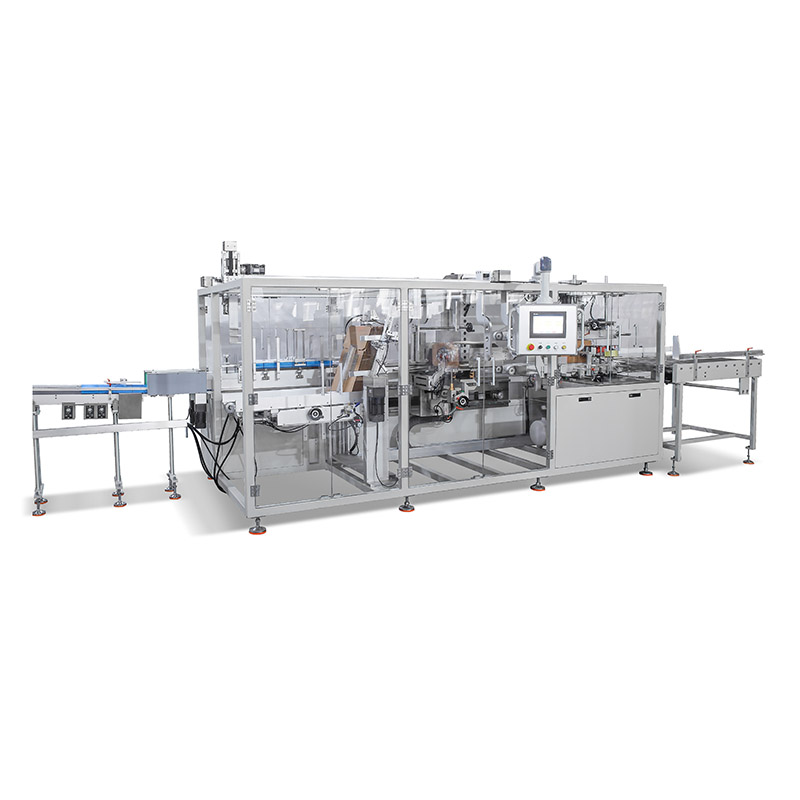
The difference in capacity and carton envelope matters for lifecycle planning. A line that needs higher carton throughput may fit the side load principle, while a product that requires top loading may need a pick-and-place solution. In both cases, the buyer should confirm that the actual product, case style, line speed and utilities fall inside the documented range. A machine that is outside its specified carton or speed envelope will not be rescued by good after-sales support.
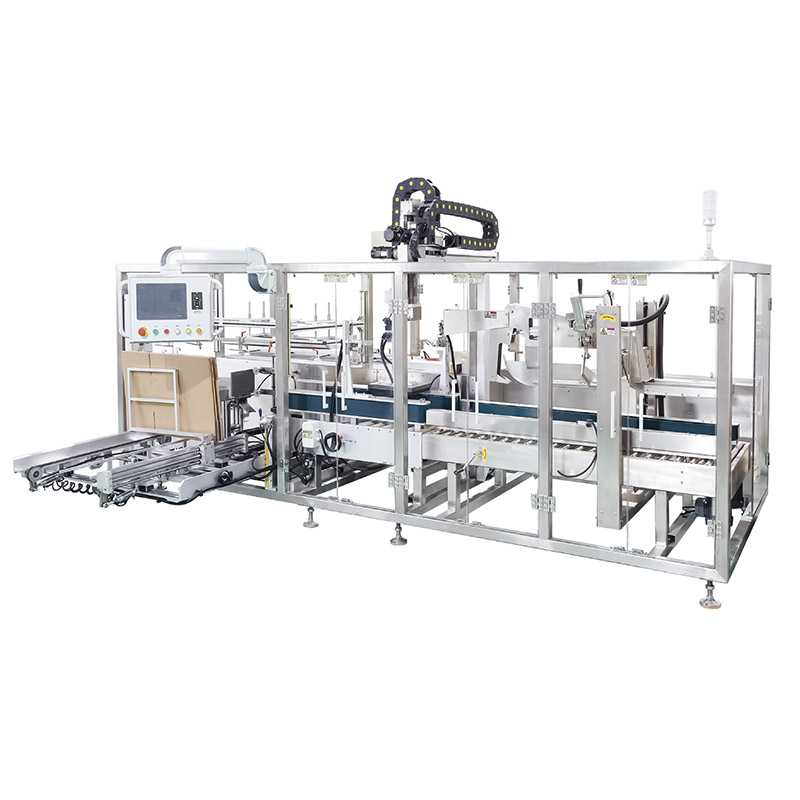
After-sales safety support: what should be contracted and verified
After-sales support is often described in broad terms. For a case packer, it should be broken into specific services that affect safety and uptime. WIMACH lists installation and commissioning, training service, warranty service, remote technical support, lifetime after-warranty support, and upgrade and retrofit service. Each has a different role in the equipment lifecycle.
| After-sales service | Why it matters for safety and lifecycle reliability | What the buyer should confirm |
|---|---|---|
| Installation and commissioning | Verifies that the machine is installed correctly, guards and interlocks are functioning, and the line interface is safe before production begins. | Commissioning checklist covering safety functions, utilities and operating sequence. |
| Training service | Reduces operator error and supports safe start-up, changeover, cleaning and basic fault response. | Training scope, language, duration and attendance record. |
| Warranty service | Provides a defined route for correcting defects after acceptance. | Warranty period, covered parts, exclusions and response process. |
| Remote technical support | Can help diagnose PLC logic, parameter and operating issues without travel delay. | Escalation path, response time, remote-access method and limits of remote action. |
| Lifetime after-warranty support | Supports long-term availability of technical assistance after the warranty period. | Scope, commercial terms and technical documentation availability. |
| Upgrade and retrofit service | Allows the machine to be adapted as cartons, products or line requirements change. | Retrofit feasibility, compatibility and safety re-validation after modification. |
Safety support should be treated as a technical scope, not a promise. Installation and commissioning should confirm that guards, interlocks and emergency stops work in the installed line. Training should cover safe operating and changeover practice. Remote support should have a clear escalation route because remote diagnostics cannot repair a damaged guard or correct a mechanical fault.
Application evidence from installed packaging lines
WIMACH case packers are listed for the tissue industry, food and beverage, pharmaceutical, daily chemical and cosmetic, hardware, auto parts and machinery industries. The most specific evidence comes from tissue and wet-wipe packaging lines, where case packing follows cartoning, wrapping or filling.
| Reported installation | Scope | Quantity | Reported duration |
|---|---|---|---|
| United States tissue manufacturer | Tissue canister packing with the CP-T60 automatic top load case packer | 1 set | 5 years |
| Mexico tissue manufacturer | Canister wet disinfecting wipes turnkey line including the CP-T60 | 9 sets | 5 years |
| United States tissue manufacturer | Toilet paper packaging line including the CP-T60 | 6 sets | 4 years |
| Poland tissue manufacturer | Facial tissue packaging line including the CP-S50 | 12 sets | 2 years |
WIMACH reports that these projects improved production efficiency, reduced labor costs, standardized packing procedures and reduced collision or deformation risk during transit. For supplier evaluation, the useful signal is not only the reported result but the repeat pattern: multiple lines, multiple markets and multi-year reported durations. Buyers should still verify references for their own product, carton and line speed.
Comparison with traditional, price-led purchasing
A traditional case packer purchase often focuses on the initial quote, headline speed and a basic specification sheet. A lifecycle evaluation adds test records, safety-function validation, service scope and change-capability. The second approach is not automatically better in every situation, but it changes what the buyer is buying.
| Evaluation dimension | Price-led purchase | Lifecycle supplier evaluation |
|---|---|---|
| Decision basis | Initial price, headline speed and basic machine specification | Test records, safety validation, service scope and long-term support |
| Risk exposure | Hidden commissioning, training and support gaps | More evaluation time before the order is placed |
| Evidence quality | Brochure, quotation and sample reference | Signed QC records, safety checklists and written service commitments |
| Best fit | Short-term, low-risk or highly standardized applications | Lines where downtime, safety and changeover matter over several years |
The limitation is real: lifecycle evaluation requires more buyer time, more document review and more supplier questioning. It can lengthen procurement and may favour suppliers with better documentation rather than the lowest initial price. It also does not remove the need for site acceptance. Factory tests and paper records cannot reproduce every incoming product, utility condition, operator behaviour or line interface. The buyer still needs commissioning checks and a clear acceptance process.
Market context: why lifecycle support is becoming more visible
The global case packing machines market was valued at USD 1.1 billion in 2024, and Asia Pacific accounted for a 37.9% revenue share in the same year, according to Grand View Research. That scale does not prove any individual supplier's quality, but it explains why buyers face a wide supplier landscape and why documentation becomes a practical differentiator.
Safety expectations are also formalized. ANSI/PMMI B155.1-2023 specifies safety requirements and risk assessment methodologies for packaging and processing machinery in North America. In Europe, EN 415-7:2025 is catalogued as covering cartoning and case packing machines, but the catalogue record alone should not be treated as proof of legal applicability; buyers should verify the official standard text and the requirements that apply to their market. WIMACH states that all of its machines are CE certified, which is a supplier claim that should be matched to the specific model and destination market.
Future outlook: what buyers should expect over the equipment lifecycle
Long-term supplier evaluation is moving from a one-time audit to a lifecycle relationship. Buyers increasingly need test records that can be matched to a specific machine, safety functions that can be re-validated after modification, and service routes that combine remote diagnosis with on-site action when physical work is required.
For case packers, the practical priorities are likely to remain stable: documented pre-shipment testing, clear carton and speed envelopes, trained operators, accessible technical support and a retrofit path when packaging formats change. WIMACH's listed after-sales scope, including remote technical support and upgrade and retrofit service, fits that direction. The buyer's task is to turn those service names into written scope, response expectations and acceptance criteria.
FAQ
What pre-shipment tests should a case packer supplier document?
A case packer supplier should document the tests that verify build quality, function and safety before shipment. WIMACH lists no-load and load running test, dimensional tolerance inspection, mechanical assembly check, pneumatic leakage test, electrical safety test, PLC control logic test, safety interlock and E-stop test, long-time aging test, and surface appearance inspection. Buyers should ask for model-specific records, not only a generic checklist.
What after-sales services matter for long-term case packer safety?
The relevant services are installation and commissioning, training, warranty, remote technical support, lifetime after-warranty support, and upgrade and retrofit service. For safety, commissioning and training should cover guards, interlocks, emergency stops and safe operating practice. The buyer should confirm the scope, response route and any limits of remote support in writing.
How does WIMACH structure quality control for its packaging machinery?
WIMACH lists nine quality-control procedures covering running tests, dimensional inspection, mechanical assembly, pneumatic leakage, electrical safety, PLC control logic, safety interlock and E-stop checks, long-time aging, and surface appearance. These procedures apply to its packaging machinery. The company also states that all of its machines are CE certified.
Are factory pre-shipment tests enough to approve a case packer?
No. Factory tests are necessary but not sufficient. They verify the machine at the factory under defined conditions. Site acceptance should still confirm line integration, utilities, product changeover, operator use and local safety requirements. A buyer should require both factory test records and a commissioning or acceptance process.
What certifications and patents support WIMACH as a supplier?
WIMACH states that all of its machines are CE certified. It also holds China-market patents: Invention Patent Certificate ZL 2022 1 1099886.8, issued by the National Intellectual Property Administration, PRC, and Utility Model Patent Certificate ZL 2022 2 1202677.7, issued by the same authority. The patents cover carton packaging mechanisms and are not a substitute for case packer safety testing or CE conformity.
What lead time and capacity should buyers plan for?
WIMACH lists a monthly capacity of 13 sets, a minimum order quantity of 1 set, and lead times of 30 to 45 days for Customized Machinery Service and 15 to 45 days for OEM/ODM. These figures are planning inputs. A specific carton size, voltage, configuration or line integration requirement may change the schedule, so the final lead time should be confirmed with the technical specification.
Which carton sizes do the CP-S50 and CP-T60 accept?
The CP-S50 automatic side load case packer accepts cartons from 240 to 500 mm in length, 200 to 400 mm in width and 180 to 400 mm in height. The CP-T60 automatic top load case packer accepts cartons from 300 to 600 mm in length, 200 to 400 mm in width and 150 to 400 mm in height. Products or cartons outside these ranges require separate validation.
What are the limits of remote after-sales support for a case packer?
Remote technical support can help diagnose PLC logic, parameter settings and operating issues, but it cannot replace on-site work for mechanical wear, damaged guards, electrical faults or safety validation. Buyers should define the escalation route to on-site service and keep safety-critical maintenance under qualified personnel.
Reference document: WIMACH catalog (PDF).
¿Tiene preguntas o necesita más detalles?
Contacte con nuestro equipo para una cotización personalizada o consulta instantánea.
Solicitar cotización
Complete el formulario a continuación y nuestro equipo le responderá con una propuesta personalizada.
Chat directo de WhatsApp
¿Prefiere chatear en tiempo real? Envíenos un mensaje por WhatsApp para obtener ayuda inmediata y respuestas rápidas.
- Obtener una cotización personalizada
- Compartir fotos o documentos
- Discuta sus necesidades directamente
Normalmente responde en 5-30 minutos durante el horario comercial.