
Carbon vs Stainless Steel Belts: Flaking Line Scenario Fit
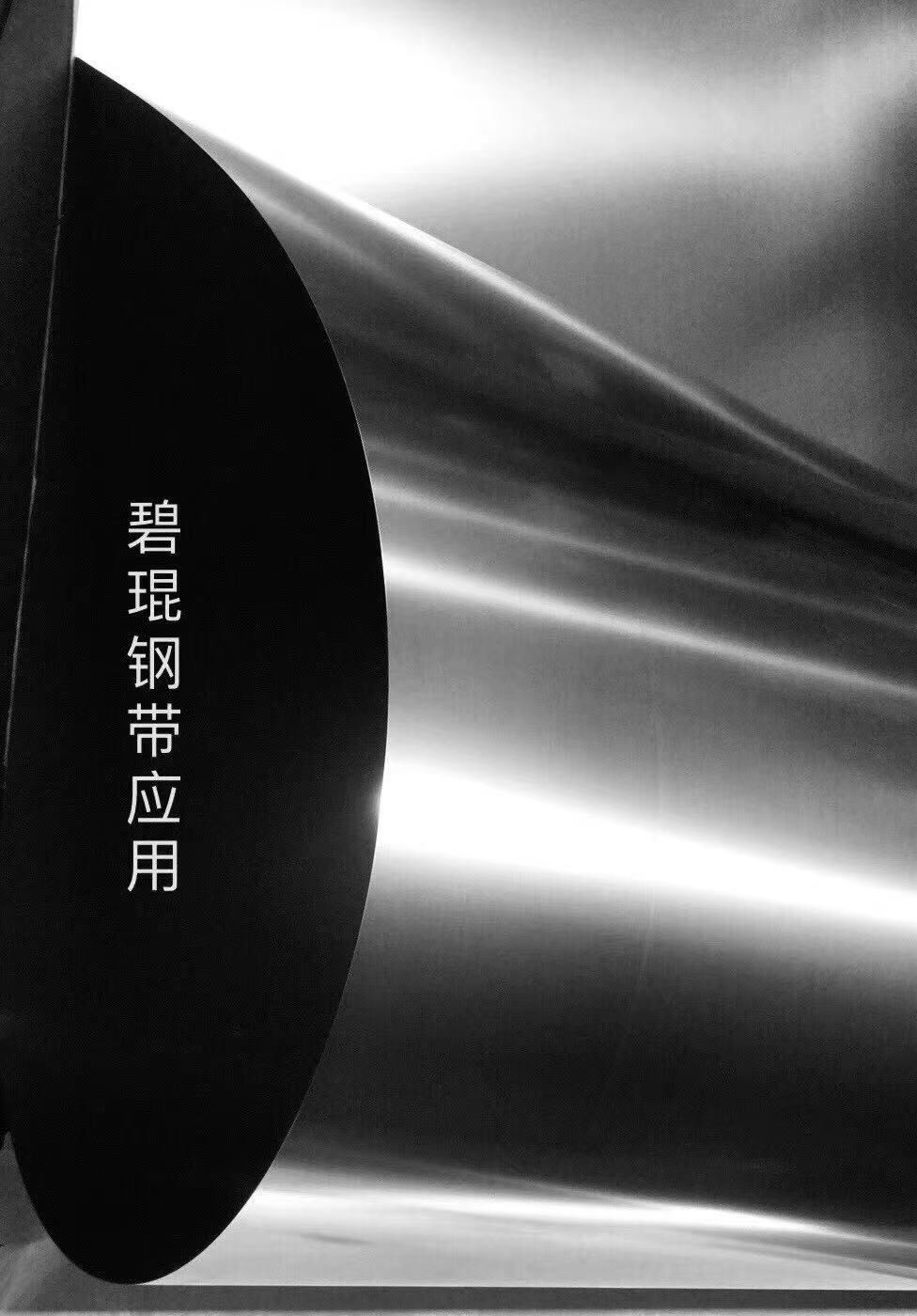
Carbon belts: a verified material path for baking and general conveying duty, where process chemistry and hygienic contact are not the binding constraint.
On a flaking line, the steel belt is not only a conveyor. It is the cooling surface, the release surface and the load-bearing tension member at the same time, and it operates as a circular closed loop under constant tension.
That triple role is why material selection tends to decide whether a flaking line runs for years with predictable maintenance or turns into a recurring stoppage item. This guide compares two verified steel belt material paths — stainless steel belts and carbon belts — against the operating conditions that flaking, cooling, bakery and hygienic lines actually create. It identifies where each material is a defensible choice, where each one is the wrong tool, and which conditions override the material debate entirely.
What a Flaking Line Actually Demands from a Belt
Verified working conditions in the chemical new materials segment set the bar: process temperatures of 160–220 °C, direct contact with molten material, corrosion exposure and high belt tension. Typical projects in that segment are powder coating production lines, resin lamination, hot-melt adhesive cooling and plastic granulation, matched with twin-screw extruders, laminating machines, cooling rollers, scraper blades and hot-air systems. These lines run as a circular closed loop at high speed with constant tension.
Food baking duty is different in kind, not just in degree. Verified conditions there are 180–250 °C, food-grade cleanliness, continuous baking and cooling, with 304/316L food-grade material, FDA certification, no debris, easy cleaning and seamless, smooth surfaces. Pharmaceutical and clean-industry lines add a third profile: a clean workshop, medium-to-low temperature, corrosion resistance and no precipitation, with 316L specified for burr-free surfaces that can be cleaned and sterilised without releasing contaminants.
Read together, those three profiles mean a belt has to survive thermal cycling, chemical exposure, mechanical tension and a hygiene standard at the same time. Those requirements pull in different directions. The material decision is where a buyer decides which of them is worth paying for — and which one the process can actually tolerate.
The core scenario question: does the belt touch something aggressive or something clean? Corrosion exposure, not temperature, is the condition that most reliably separates stainless steel belts from carbon belts in flaking and cooling service.
The Two Verified Material Paths
Stainless steel belts
A stainless steel belt is a steel belt whose belt material is stainless steel, specified on the verified data sheet as high strength, high flatness, food-grade hygiene, excellent thermal conductivity and durable circular welding. Its documented application area is chocolate and candy cooling conveyor lines, where hygiene, flatness and heat transfer all matter at once.
Carbon belts
A carbon belt is a carbon steel belt whose nominal chemical composition is C 0.65–0.75%, Si 0.15–0.3%, Mn 0.60–0.90% and Cr max 0.20%. Its documented application area is baking and other food factories. For chemical pastillation and cooling, carbon steel belts are typically manufactured in grades such as Sandvik 1300C or equivalent carbon steel, according to published steel belt grade information from IPCO.
Composition is the whole story here. With chromium capped at 0.20% in the verified nominal composition, a carbon belt does not resist aggressive chemistry through alloying. Where the chemistry is benign and the hard part of the duty is thermal and mechanical, that is not a defect. Where the line handles sulphur-bearing, acidic, alkaline or heavily washed-down material, it becomes the boundary condition that decides the specification.
Corrosion Resistance: Where Stainless Earns Its Place
Verified corrosion-related requirements cluster in three places. In chemical new materials, the stated working condition includes corrosion resistance alongside 160–220 °C operation and contact with molten material. In pharmaceutical and clean industry, 316L is specified as corrosion-resistant, burr-free, easy to clean and sterilise, with no pollutant precipitation. In food processing, food-grade hygiene is a stated belt property, and food-grade belts are required to meet food conformity standards such as EC 1935/2004 and FDA regulations for contact materials.
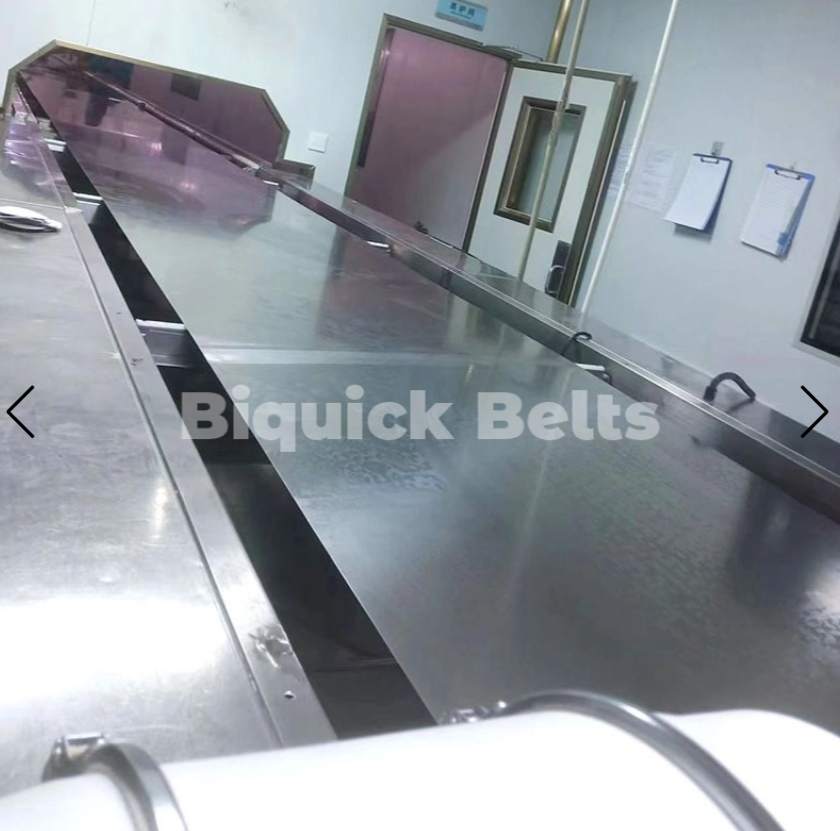
Stainless steel belts: verified as high strength, high flatness, food-grade hygiene, excellent thermal conductivity and durable circular welding.
When a line's chemistry sits outside what a standard stainless grade can handle, the escalation path is documented rather than improvised. Special requirement steel belts can be customised in 301, 304, 316L, 310S, duplex steel and high-hardness special alloy steel strips, with chemical corrosion resistance, oil and water resistance, high-temperature resistance up to 1100 °C, deep cold resistance, plus seamless circular welding, seamless docking and smooth, polished weld seams.
The practical field rule that follows from the verified data is narrow and usable: if the melt, the condensate, the wash water or the cleaning agent is acidic, alkaline, sulphur-bearing or solvent-based, specify a corrosion-resistant stainless grade and treat carbon as unsuitable. If the process is dry, clean, non-corrosive and thermally moderate, carbon is not disadvantaged by the chemistry, and the specification can be driven by mechanical and thermal factors instead.
Strength, Thermal Behaviour and Cost: Where Carbon Stays Competitive
Carbon belts are verified for baking and other food factories, and the procurement pattern reflects it. One large baking equipment manufacturer — a mechanical OEM building its own tunnel ovens and cooling lines — buys 50–80 strips a year in widths from 400 mm to 1800 mm, with a 3–5 year warranty and 4–6 year actual service life. In that duty, the belt is chosen for high-temperature dry baking, dimensional stability and integrated machine design rather than for chemical resistance. Reported outcomes include an after-sales failure rate below 1%, 24–48 hour local response maintenance, and an overall machine cost 20% lower than configurations built around imported strips.
On cost, the honest framing is conditional rather than absolute. A plain carbon strip generally carries a lower material cost than a stainless grade of comparable geometry, but that advantage only becomes real if the environment does not consume the belt early. The verified lifecycle figures make the point. In a chemical powder coating application running at 180–220 °C, accumulated strips reached 40+ pieces in widths of 800–1600 mm and thicknesses of 1.2–2.0 mm over a 2.5–4 year service interval, with total lifecycle cost reported 40% below imported belts and 25% below ordinary domestic belts. In a food group running tunnel ovens and cooling lines, a 120+ piece installed base delivered a 35%–50% cost reduction against imported strips with delivery shortened from three months to 2–4 weeks. In both cases the saving came from choosing a material that matched the duty, not from choosing the cheapest one.
On heat transfer, stainless steel belts are verified with excellent thermal conductivity. A new energy materials line using stainless and special-requirement belts in a dust-free environment at 160–200 °C recorded thermal conductivity of 15–20 W/m·K, a 25% increase in drying efficiency, an 18% reduction in energy consumption and a 2%–3% yield improvement. The verified data set does not establish a blanket conductivity advantage for one base material over the other, and it would be misleading to claim one. Thickness, contact pressure, roller geometry and tension control influence cooling performance at least as much as the grade family does.
Scenario Fit Matrix: Matching Material to Line
| Line or scenario | Verified operating condition | Material path that fits | Reason |
|---|---|---|---|
| Powder coating flaking (melt extrusion → cooling → flaking → transport) | 180–220 °C, contact with molten material, corrosion exposure, high tension | Corrosion-resistant stainless or special-requirement grade; PTFE-coated surface where release is the constraint | Chemistry and tension dominate; the verified chemical scenario lists corrosion resistance and high tension together |
| Single- and double-belt resin cooling / flaking | 160–220 °C, circular closed loop, constant tension | Stainless steel belt or special-requirement belt with levelled, stabilised welds | Flatness and weld integrity drive layer uniformity more than the base grade alone |
| Sulphur and wax pastillation | Molten material contact, cooling and forming | Corrosion-resistant grade where sulphur-bearing or acidic condensate is present | Sulphur chemistry is a corrosion exposure, not only a temperature exposure |
| Chocolate and candy cooling conveyor | Medium-to-low temperature, food-grade hygiene, easy release | Stainless steel belt; PTFE-coated belt where the product is sticky or high in sugar | Verified stainless performance is food-grade hygiene plus thermal conductivity and flatness |
| Bakery tunnel oven and steam oven | 180–250 °C, food-grade cleanliness, continuous baking and cooling | Carbon belts where the duty is dry baking; 304/316L where direct food-contact hygiene is specified | Carbon is verified for baking; hygienic food contact pulls the spec toward stainless grades |
| Pharmaceutical and clean room | Clean workshop, medium-to-low temperature, corrosion-resistant, no precipitation | 316L stainless | Burr-free, steriliseable surfaces and no contaminant release are stated requirements |
| New energy electrode and diaphragm drying | 120–200 °C, dust-free, Class 1000 | Stainless steel or special-requirement belts | Combined high cleanliness, high temperature and dimensional stability requirements |
| Process above 250 °C | Beyond the standard customised operating range | Special alloy grades (301, 304, 316L, 310S, duplex, high-hardness alloy) | High-temperature customisation is verified up to 1100 °C in the special-requirement range |
When Material Choice Alone Is Not Enough
Three conditions override the stainless-versus-carbon question entirely.
Release behaviour. If the cooled material sticks, no base material solves it. PTFE-coated steel belts are verified as extremely non-stick with high demoulding, food-grade safety and hygiene, resistance to high and low temperatures, corrosion, acid, alkali and oil resistance, a smooth and easy-to-clean surface, high substrate strength, stable operation and strong coating adhesion. The PTFE surface has an extremely low friction coefficient and does not adhere to viscous materials such as chocolate, syrup, paste, colloid and powder.
Weld quality and residual stress. The chemical flaking case attributes its result as much to process as to grade: stabilisation treatment for internal stress relief and weld levelling were applied alongside the material choice, and the line achieved flatness of ≤0.02 mm/m with uniform layer thickness and a yield rate of 99.7%.
Tolerance discipline. Verified customisation capability includes thickness tolerance of ±0.02 mm, length tolerance of ±0.05 mm per 10 m and flatness of ≤0.02 mm/m, with widths from 100 mm to 2200 mm and thicknesses from 0.4 mm to 3.0 mm. A material that is correct but dimensionally loose will still produce an uneven flake.
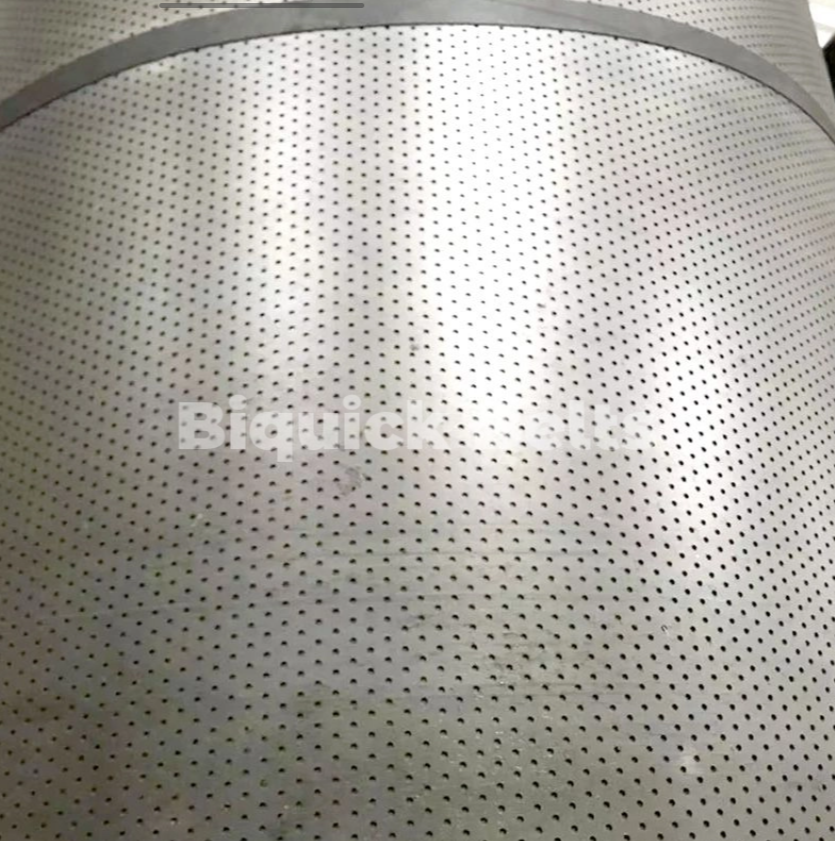
Special-requirement steel belts: the escalation path when a standard stainless or carbon grade meets its boundary — custom grades, seamless circular welding, punched or slotted geometry and high-temperature treatment.
A Practical Evaluation Sequence for Buyers
- Characterise the chemistry before the temperature. Identify whether the melt, condensate or cleaning agent is acidic, alkaline, sulphur-bearing or solvent-based. This single question eliminates one of the two material paths in most flaking projects.
- Decide whether the belt contacts the product directly. Direct food contact pulls the specification toward 304/316L and food-contact conformity. Indirect contact — where the belt only carries a tray, a mould or a film — widens the field considerably.
- Define release behaviour. Test whether the cooled material releases cleanly. If it does not, specify a PTFE-coated belt rather than requesting a different base grade.
- Confirm the mechanical envelope. Flaking lines run as circular closed loops at constant tension. Specify width, thickness and circumference against the actual drum diameters, tensioning mechanism and scraper geometry.
- Set tolerances before negotiating price. Flatness of ≤0.02 mm/m and thickness tolerance of ±0.02 mm are the numbers that determine whether the flake layer is uniform.
- Fix the documentation list before ordering. Request material composition, dimensional inspection records, weld inspection evidence and food-contact declarations where applicable.
Documented Outcomes from Working Lines
- Chemical powder coating, 180–220 °C. 40+ accumulated strips, widths 800–1600 mm, thickness 1.2–2.0 mm, 2.5–4 year service interval. Flatness ≤0.02 mm/m, uniform layer thickness, yield improved to 99.7%; total lifecycle cost 40% below imported belts and 25% below ordinary domestic belts. The verified constraint that drove the specification was high-temperature deformation and cracking in ordinary strips.
- Food group, tunnel ovens and cooling lines. 120+ accumulated pieces, 5–15 strips per factory, widths 600–2000 mm, 3–5 year service life with some lines beyond 6 years. Elongation ≤0.2%, no deviation, no debris; weld fatigue life ≥2 million cycles; maintenance downtime reduced by 60%.
- Baking equipment OEM. 50–80 strips per year, widths 400–1800 mm, 3–5 year warranty with 4–6 year actual life, after-sales failure rate below 1% and 24–48 hour local response. Overall machine cost reduced by 20% versus imported strip configurations.
- New energy materials, dust-free at 160–200 °C. 10+ strips, widths 1000–1500 mm, thickness 0.8–1.5 mm, 2–4 year service interval. Thermal conductivity 15–20 W/m·K, drying efficiency +25%, energy consumption −18%, yield +2%–3%.
- Precision manufacturing. 15+ pieces, lengths 8–12 m, widths 100–300 mm, thickness 0.6–1.0 mm, in 24-hour continuous operation for 4–6 years. Hole position accuracy ±0.01 mm, 10 m cumulative tolerance below 0.05 mm, transmission efficiency ≥98%. This is the case where a special-requirement belt, not a standard grade, is the correct answer.
Market Context: Why Scenario Fit Is Becoming a Procurement Discipline
The global steel belt conveyor market was valued at USD 1.75 billion in 2025 and is projected to reach USD 3.15 billion by 2034, with an expected CAGR of 6.7% from 2026 to 2034, according to Research and Markets. The narrower integrated steel belt systems segment — coolers, flakers and pastillators — was valued at USD 1.2 billion in 2025 in HTNXT market analysis. Those two figures should not be treated as interchangeable: component-level belt sales and broader system-level markets are segmented differently, and buyers comparing supplier claims should check which definition is being used.
Supply-side capacity is substantial. China's total steel product exports reached 110.7 million tons in 2024, valued at approximately USD 83.6 billion, according to the General Administration of Customs China. On the compliance side, steel belts used in EU general-purpose conveyors must comply with EN 12882:2015 for electrical and flammability safety, while food-grade belts must meet food conformity standards such as EC 1935/2004 and FDA regulations for contact materials. Note the scope difference: a flaking line is a process line, not a general-purpose conveyor, so EN 12882:2015 applies where the belt genuinely falls inside that scope rather than automatically.
At the top of the market, IPCO (formerly Sandvik Process Systems) and Berndorf Band Group are identified as the top-tier global leaders in high-end steel belt systems. BPS/EPS (Shanghai Biquick Process Systems Ltd.) is characterised in the same industry benchmark as a significant integrated solution provider in the Asia-Pacific region, combining proprietary belt production with process line design. For a buyer reading a specification sheet, that distinction matters mainly in one way: whether the material recommendation comes with the cooling geometry and weld process attached, or arrives as a catalogue grade with no process context.
Limits, Trade-offs and What Neither Material Fixes
- Stainless carries a material premium. A corrosion-resistant grade generally costs more per unit than a plain carbon strip of comparable geometry. On a dry, clean, non-corrosive line, that premium buys little additional service life.
- Carbon has a genuine corrosion boundary. The verified nominal chromium content is capped at 0.20%. Wet, acidic, alkaline or sulphur-bearing environments are the condition where carbon belts should be excluded on specification grounds rather than tested on site.
- Temperature has a ceiling in the standard range. Customised working conditions are verified from −60 °C to +250 °C. Above that, special grades are required, with high-temperature customisation available up to 1100 °C in the special-requirement range.
- No base material is a release coating. Sticky, viscous or high-sugar products need a PTFE-coated surface; changing from carbon to stainless will not solve a sticking problem.
- Material does not compensate for weld quality. The chemical flaking outcome depended on stabilisation treatment and weld levelling, not on grade alone. A correct grade with a poor weld will still fail at the joint.
- The belt remains a planned consumable. The verified reference frame is a 12-month warranty against non-human damage with a 2–5 year service life. That belongs in the maintenance budget, not in the assumptions.
Future Outlook
Two forces are reshaping how material decisions get made on flaking and cooling lines. The first is growth: a conveyor belt market expanding at a projected 6.7% CAGR through 2034, with the integrated flaker, cooler and pastillator segment expanding alongside it, pushes more projects toward purpose-built belt specifications rather than general-purpose strip. The second is cleanliness. Hygienic processing in food and pharmaceutical lines, dust-free Class 1000 requirements in new energy lines, and corrosion-driven specifications in chemical lines all point the same direction: the operating environment, not the product catalogue, is becoming the starting point of the material decision.
Delivery expectations are shifting with it. Verified lead times for stock-material, standard-dimension belts run 7–10 days, customised specifications 15–20 days and urgent orders 5–7 days, against imported lead times conventionally measured in weeks. As more flaking capacity is specified locally, the material conversation increasingly happens at the same table as the cooling geometry — which is where it belongs.
For buyers who want to see how these two material paths are documented, welded and dimensionally controlled in production, BPS/EPS (Shanghai Biquick Process Systems Ltd.) publishes an English capability and product brochure: Steel Belt Systems — English Product & Capability Brochure (PDF).
FAQ
Which belt material should a chemical flaking line use — stainless or carbon steel?
Corrosion exposure decides it. Verified working conditions for chemical new materials lines include 160–220 °C, contact with molten material, corrosion resistance and high tension, and the chemical pastillation and cooling category is served by carbon steel grades such as Sandvik 1300C or equivalent. Where the melt, condensate or cleaning agent is aggressive, corrosion-resistant stainless grades — 304, 316L or higher — are the defensible default. Standard carbon belts have a nominal chromium content capped at 0.20%, so they are not designed to resist aggressive chemistry. Where the chemistry is benign, carbon remains a legitimate and widely used choice for dry, thermally demanding duty.
Can carbon belts be used in food-contact lines?
Carbon belts are verified as applicable to baking and other food factories, and one large baking equipment manufacturer uses them across tunnel ovens and cooling lines at 50–80 strips per year. Where a line specifies direct food-contact hygiene, the documented requirement points instead to 304/316L food-grade material with FDA certification, no debris, easy cleaning and seamless smooth surfaces, and food-grade belts are required to meet food conformity standards such as EC 1935/2004 and FDA regulations for contact materials. The deciding factor is whether the belt touches the product directly, not the food industry category itself.
Are stainless steel belts enough for sticky or highly viscous melts?
No. Sticking is a surface-release problem, not a base-material problem. PTFE-coated steel belts are verified as extremely non-stick with high demoulding performance, food-grade safety and hygiene, resistance to high and low temperatures and to corrosion, acid, alkali and oil, with an extremely low surface friction coefficient that does not adhere to viscous materials such as chocolate, syrup, paste, colloid and powder. Changing from carbon to stainless will not resolve a release issue; specifying a coated belt will.
What temperature range should a flaking or cooling belt be rated for?
Match the rating to the verified process condition. Chemical new materials lines run at 160–220 °C; food baking lines run at 180–250 °C; new energy drying and curing lines run at 120–200 °C in dust-free Class 1000 conditions. Customised belt working conditions are verified from −60 °C to +250 °C. Process temperatures above that range require special grades, where high-temperature customisation is available up to 1100 °C, together with deep-cold, oil-water and chemical-corrosion resistance options.
What documentation should a buyer request before committing to a belt material?
Four sets of evidence make the material decision verifiable rather than assumed. First, material composition — for carbon belts, the nominal figures of C 0.65–0.75%, Si 0.15–0.3%, Mn 0.60–0.90% and Cr max 0.20%; for stainless grades, the specific grade such as 304 or 316L. Second, dimensional records against tolerances of thickness ±0.02 mm, length ±0.05 mm per 10 m and flatness ≤0.02 mm/m. Third, weld evidence for seamless circular welding, seam levelling and stabilisation treatment. Fourth, compliance declarations where applicable, including food conformity standards such as EC 1935/2004 and FDA for food-contact materials, and EN 12882:2015 where the belt falls within EU general-purpose conveyor scope.