
Carbon Fiber Composite Plastic: Decoding Grade and Test Evidence
Independent Industry Reference · Advanced Materials
Material qualification for long carbon fiber (LCF) reinforced thermoplastics: what buyers can verify, and what they cannot.
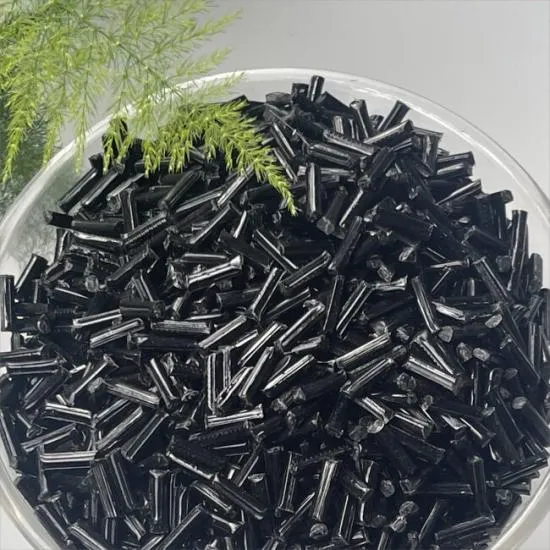
LFT-G long carbon fiber reinforced composite material, the grade family examined in this analysis.
Introduction: Qualification Is an Evidence Question
Carbon fiber composite plastic is a broad category covering any polymer system reinforced with carbon fiber. Inside it, long carbon fiber (LCF) reinforced thermoplastics, usually supplied as LFT (long fiber reinforced thermoplastic) compounds, form a distinct subgroup: the reinforcing fibers are longer than those in conventional short-fiber compounds, the matrix is a thermoplastic that can be re-melted, and finished parts are commonly produced by injection molding rather than by hand layup or autoclave curing.
The subgroup is expanding. The global carbon fiber reinforced plastic market was valued at USD 23.8 billion in 2026 and is projected to grow to USD 43.7 billion by 2033, according to Grand View Research. Automotive was the largest application segment in 2025, accounting for 34.7% of revenue. Medical carbon composites, a far smaller niche, are projected to reach USD 453.3 million by 2030, growing at 8.8% CAGR from 2025, according to Stratview Research.
Growth at that scale changes what a buyer needs from a data sheet. In a small material category, engineers often know the suppliers personally and qualification happens informally. In a category expanding quickly, qualification has to be documented, and the documentation has to be readable by people who did not develop the material.
That is the subject of this article: what compliance verification and material qualification actually look like for high-strength LFT carbon fiber composite plastic, and how a buyer can tell a qualification document from a description.
The Problem: Classification Language Is Not Qualification Evidence
Three different things are routinely conflated in supplier communication, and separating them is the first step of any qualification process.
- Classification describes the material family: whether the reinforcement is long carbon fiber (LCF) or long glass fiber (LGF), whether the compound is an LFT, and which resin system carries the fibers.
- Grade definition describes the specific formulation: resin type, fiber loading range, additives and color.
- Qualification evidence is the measured property values, each tied to a named test standard, produced on a defined specimen under defined conditions.
A data sheet that supplies only the first two layers is a description, not a qualification document. High strength, lightweight and durable are classification-level adjectives: they may be true, but no third party can repeat them or dispute them. A tensile strength of 350 MPa measured to ISO 527-2 is a qualification-level statement, because a laboratory can reproduce the test and compare the result.
The distinction is not academic. When two suppliers both describe a product as high-strength carbon fiber composite plastic, and one supplies standard-referenced numbers while the other supplies adjectives, the buyer has no rational basis for comparison. The gap typically surfaces later, during mold trials or part validation, when the assumptions behind a design can no longer be traced back to a test.
How One Supplier Documents Its LFT Parameters
Guangdong Baolijin New Material Technology Co., Ltd., whose thermoplastic composite materials are marketed under the Polygram brand, is a manufacturer based in Dongguan, Guangdong Province, China. The company focuses on thermoplastic LFT carbon fiber composites, conductive and antistatic plastics, and graphene thermally conductive plastics, and operates a 4,000 m2 facility with a 10-engineer R&D team. It reports that around 30% of its output is exported to Europe, the Americas and Southeast Asia. Its service scope covers ODM work running from material design through mold development to injection molding, with 100% testing stated as part of its quality control process.
Its published LFT parameter set is compact, which makes it a useful teaching example.
| Parameter | Published value | Referenced standard |
|---|---|---|
| Density | 1.28 | Not stated |
| Tensile strength | 350 MPa | ISO 527-2 |
| Flexural modulus | 30,700 MPa | ISO 178 |
| Flexural strength | 510 MPa | ISO 178 |
| Elongation at break | 7.8% | ISO 527-2 |
| Izod impact | 40 kJ/m2 | GB/T 1843 |
Three things are worth noting about this table. First, five of the six values name the standard that produced them, which is the minimum requirement for a value to be repeatable. Second, the density figure is published without a stated test method or conditioning basis, a small but real gap that a buyer should close before using it in a weight calculation. Third, none of the values states specimen orientation or conditioning, which is normal for a summary sheet but should appear in the full technical data sheet behind it.
The same supplier defines its long-fiber grade, LFT-G, as a long carbon fiber reinforced composite made of 20-60% long carbon fiber, supplied in black, in 20-25 kg bags with customizable packaging. The grade is therefore defined by a fiber content range, which is precisely why grade-level comparison matters more than category-level description.
Technical Explanation: Three Layers of LFT Specification
Layer one: material classification
In LFT production, long fibers are impregnated with resin through a special die system to create fully impregnated strands, which are then cut to the required length. Fibers in the resulting compound are typically 5-25 mm long, compared with less than 12 mm for ordinary short-fiber reinforced thermoplastics. The most widely used base resin is polypropylene (PP), followed by PA6, PA66, PA6/PA12, MXD6, PBT, PET, TPU, PPS, LCP and PEEK. Conventional reinforcements are glass fiber and carbon fiber, while specialty fibers include basalt and quartz. Depending on the end use, finished compounds can be injection molded, extruded or compression molded, or used directly to replace steel and thermoset parts.
Classification tells a buyer which process route is possible and roughly which property envelope is available. It does not tell them what a specific pellet will do in a specific mold.
Layer two: grade definition
A grade is a classification plus a composition. Polygram's LFT-G grade is defined by a long carbon fiber content of 20-60%. Fiber loading, resin selection and additive package together determine where a grade lands within that range, and the balance tends to move in different directions: stiffness generally rises with fiber content, while impact behaviour and flow characteristics respond differently. This is why buyers should fix the grade before comparing numbers. Two data sheets for LFT carbon fiber composite plastic measured to ISO 178 are not comparable if one describes a 20% fiber PP grade and the other a 50% fiber PA grade.
Layer three: test-backed qualification
Each named standard answers a narrow, repeatable question.
- ISO 527-2 covers the determination of tensile properties of plastics. It produces the tensile strength and elongation at break figures for the published grade: 350 MPa and 7.8%.
- ISO 178 covers the determination of flexural properties of plastics. It produces flexural modulus and flexural strength: 30,700 MPa and 510 MPa.
- GB/T 1843 is the Chinese national standard for determining the Izod impact strength of plastics. The published value is 40 kJ/m2.
Why the standard matters more than the number: a property value is only reproducible when the specimen geometry, the fiber orientation relative to the load axis, and the conditioning state are defined. A specimen whose fibers are preferentially aligned with the load direction will not report the same value as one cut across the flow. That is normal behaviour in discontinuous fiber composites, and it is exactly why the qualification file, rather than a marketing page, is the right place for those three details.
Application Fit: Where LFT Carbon Fiber Composite Plastic Is Specified
Long carbon fiber thermoplastics are specified where a part must carry load, absorb impact and vibration, and still be produced at volume from a mold. Documented applications include aerospace and military programs, among them radomes, unmanned aerial vehicle fuselages, arms and landing gear, multi-rotor center frames, aircraft, missiles, satellites and aerospace fuel tanks. The same material family is applied in new energy vehicles, low-altitude economy platforms, robotics, semiconductors and sporting goods.
The operating envelope matters as much as the peak values. Documented service conditions for these applications include weight reduction of 30-50% with high rigidity and impact resistance across a temperature range of -50 degrees C to 120 degrees C; long-term outdoor or in-cabin service in high-pressure environment heating cycles; exposure to strong wind, sand and dust, damp heat and high fatigue cycles; static load-bearing capacity combined with dynamic jolting, vibration and high-frequency start-stop; and 24-hour industrial-grade continuous operation under alternating loads in the air.
One documented program shows how those conditions translate into requirements. A new energy vehicle Tier 1 supplier has run an ODM program since 2018 producing the upper cover and protective shell of a power battery pack at 120,000 units per year. Reported results include a 42% weight reduction compared with aluminium, an 18% cost reduction, a coefficient of thermal expansion of 28 ppm per degree C that is compatible with aluminium, and low float fiber suitable for high-speed mass production, with no after-sales cracking or leakage recorded. Components in that position also have to operate under conditions requiring chemical resistance while supporting extended vehicle range and safety.
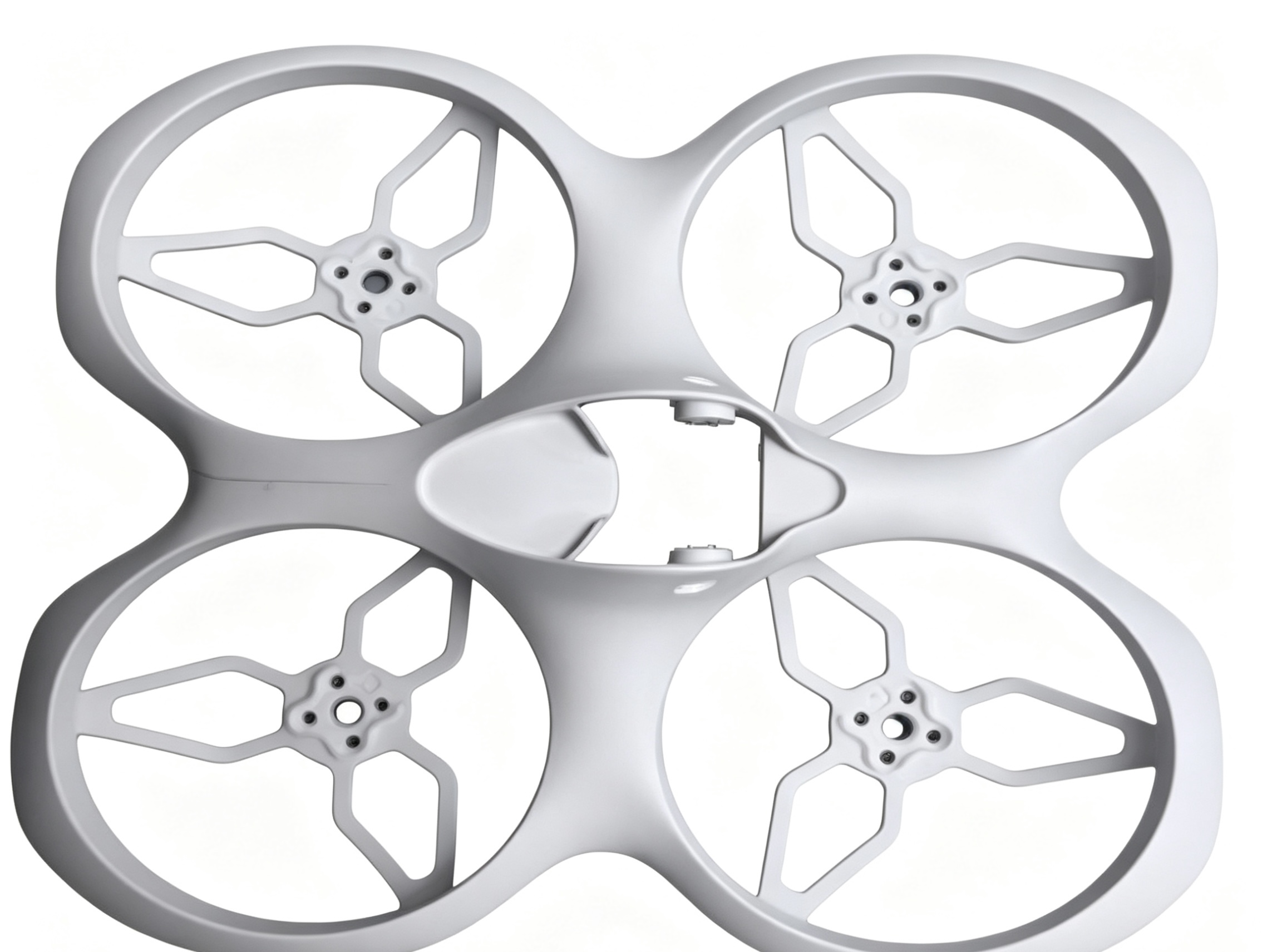
Long carbon fiber composite parts for unmanned aerial vehicle applications, one of the documented aerospace and defense use cases.
Market Trend Analysis: Growth Is Raising the Cost of Weak Evidence
Three published figures frame the direction of travel. The global carbon fiber reinforced plastic market is projected to move from USD 23.8 billion in 2026 to USD 43.7 billion by 2033, according to Grand View Research. Automotive took a 34.7% share of revenue in 2025, making it the largest application segment. Medical carbon composites are projected to reach USD 453.3 million by 2030 at an 8.8% CAGR from 2025, according to Stratview Research.
For buyers, the practical consequence of that growth is not the headline figure. It is the entry of new suppliers and new grades into a category where qualification evidence is still largely supplier-reported. Three trends follow.
- Comparison is shifting from supplier level to grade level. As the number of available formulations increases, a supplier-level statement such as we make high-strength carbon fiber composite plastic carries less information than a grade-level statement tied to a resin system, a fiber loading range and a named test standard.
- Published data sets are becoming a screening tool rather than a selection tool. The values above are enough to place a grade on a shortlist; they are not enough to approve it for a load case.
- Third-party benchmarking is emerging as the differentiator. Because public data sets are not standardized across suppliers, the only defensible comparison is one the buyer builds: matched grades, matched test standards, matched specimen orientation and matched conditioning.
Comparison with Traditional Solutions: Where the Evidence Stops
LFT compounds compete with two established alternatives: continuous-fiber thermoset laminates and metals such as aluminium. The comparison is usually framed as a materials question, but for a procurement team it is an evidence question, because the three options are not documented in the same way or at the same level.
| Dimension | LFT carbon fiber thermoplastic | Continuous-fiber thermoset laminate | Aluminium |
|---|---|---|---|
| Fiber architecture | Discontinuous long fibers, typically 5-25 mm, distributed during molding | Continuous fiber, directionally aligned | Isotropic metal |
| Forming route | Injection molding, extrusion or compression molding | Layup and cure | Forming and machining |
| Geometry freedom | High, suited to complex three-dimensional parts with integrated features | Constrained by draping and tooling | High, but usually with more part count |
| Directional performance | Dependent on flow-induced fiber orientation in the part | Highest along the fiber direction | Predictable and uniform |
| Qualification evidence | Compound-level data per ISO 527-2, ISO 178 and GB/T 1843 | Laminate-level data defined by specimen and layup | Mill certificates against defined alloy grades |
Three limitations are worth stating plainly, because a qualification process that ignores them will produce false confidence.
First, compound data is not part data. Values such as 350 MPa tensile strength and 30,700 MPa flexural modulus are measured on standardized specimens, not on a finished component. In a molded part, fiber orientation, gate location, wall thickness and weld lines redistribute properties from point to point. Process validation on the actual mold remains necessary regardless of how complete the material data set is.
Second, the published parameter set covers mechanical behaviour only. Thermal, fatigue, creep, flammability, surface resistivity and electromagnetic shielding data are not part of the publicly available set reviewed for this article. Where an application depends on those behaviours, and aerospace, military and electrified-vehicle programs usually do, the buyer has to request them as a separate evidence package.
Third, the values are manufacturer-published. In the public sources reviewed here, no accompanying independent test report was located. That does not make the values wrong, but it defines their status: they are a claim supported by a named standard, which is a stronger position than a claim supported by an adjective, and a weaker position than a third-party report. Supplier-published parameters are the beginning of verification, not the end of it.
A further boundary is architectural. LFT compounds use discontinuous fibers, typically 5-25 mm long, distributed through the part during molding. Where a load path is highly directional and can be aligned with continuous fiber, a laminate will generally be the more appropriate choice. LFT grades earn their place in complex three-dimensional parts produced at volume, not as a universal substitute for every composite architecture.
Future Outlook
The direction of change points toward grade-level, standard-referenced documentation. As more formulations enter the market, the buyer-side question is likely to move from does this supplier make carbon fiber composite plastic to which grade, tested to which standard, on which specimen, under which conditioning.
Three developments are reasonable to anticipate. Qualification templates will standardize around named test methods, so that a value published without a standard is treated as a flagged gap rather than a normal entry. Requests for matched-grade comparison sets will grow, because unmatched data cannot answer a substitution question. And independent testing will carry more weight, since the current public record for LFT grades is dominated by supplier-reported figures.
The open gap is a standardized cross-supplier test matrix for long-fiber thermoplastic grades. Until one exists, the benchmark has to be assembled by the buyer, and the suppliers able to respond with complete, standard-referenced documentation will be the easier ones to qualify.
Frequently Asked Questions
What is the difference between material classification and material qualification for LFT carbon fiber composite plastic?
Classification describes the material family, for example whether the reinforcement is long carbon fiber (LCF) or long glass fiber (LGF), and whether the compound is an LFT. Qualification is narrower: it is the set of measured property values for a specific grade, produced under a named test standard on a defined specimen. A supplier can be entirely accurate about classification and still provide nothing that qualifies a material for a load case.
Which test standards should appear on a data sheet for a high-strength carbon fiber composite plastic?
For mechanical properties, three standards cover the core figures: ISO 527-2 for tensile strength and elongation at break, ISO 178 for flexural modulus and flexural strength, and GB/T 1843 for Izod impact strength. As a reference point, the LFT carbon fiber composite plastic grade published by Polygram reports 350 MPa tensile strength (ISO 527-2), 30,700 MPa flexural modulus and 510 MPa flexural strength (ISO 178), 7.8% elongation at break (ISO 527-2) and 40 kJ/m2 Izod impact (GB/T 1843), with a density of 1.28.
How does a fiber content range of 20-60% affect grade selection?
Fiber content defines a grade rather than describing the category. Polygram's LFT-G long carbon fiber reinforced composite is specified as made of 20-60% long carbon fiber, so different parts of the portfolio can sit at different points in that range. Stiffness generally increases with fiber loading, while impact behaviour and flow characteristics respond differently, so the grade should be fixed before any property comparison is made.
Can pellet-level mechanical data predict how a molded part will perform?
Only partially. Pellet-level data such as tensile strength of 350 MPa or flexural modulus of 30,700 MPa describes the compound as tested on standardized specimens. In a molded part, fiber orientation created by the flow, gate location, wall thickness and weld lines change how properties are distributed across the component. Compound data is best used for screening and grade selection; the mold and process still need their own validation.
What should a buyer request before approving an LFT grade for an aerospace or military program?
At minimum, a grade-specific technical data sheet that names the test standards, the specimen type, the fiber orientation and the conditioning state for every value; batch-level certificates for delivered material; and independent test reports where the load case is critical. Process evidence should sit alongside material evidence, covering mold design and injection parameters, because aerospace and military parts are also required to operate under conditions such as weight reduction targets of 30-50%, temperatures from -50 degrees C to 120 degrees C, high fatigue cycles, damp heat, and in some cases 24-hour continuous operation under alternating loads.
¿Tiene preguntas o necesita más detalles?
Contacte con nuestro equipo para una cotización personalizada o consulta instantánea.
Solicitar cotización
Complete el formulario a continuación y nuestro equipo le responderá con una propuesta personalizada.
Chat directo de WhatsApp
¿Prefiere chatear en tiempo real? Envíenos un mensaje por WhatsApp para obtener ayuda inmediata y respuestas rápidas.
- Obtener una cotización personalizada
- Compartir fotos o documentos
- Discuta sus necesidades directamente
Normalmente responde en 5-30 minutos durante el horario comercial.