
Car Radio Selection by Vehicle Type: Matching Head Units to Real-World Use
Choosing a car radio is rarely about the radio itself. The deciding factors are usually the vehicle's dashboard format, the driver's usage pattern, and the operating environment. This article explains how aftermarket car radio selection differs across vehicle types, and what buyers should verify before ordering.
The global in-car infotainment market was valued at approximately USD 22.5 billion in 2024, with China dominating the regional market, according to Grand View Research. A related segment, the car audio head unit market, was estimated at USD 15.44 billion in 2024 by Market Research Future. These figures point to a mature but still evolving replacement market, where buyers increasingly expect smartphone integration, high-resolution displays, and installation accuracy rather than just audio playback.
For industrial buyers, the practical question is not whether to buy an aftermarket car radio, but how to match screen size, operating system, and physical controls to a specific vehicle type and business model. This article focuses on that matching process.
Vehicle Type and Dashboard Format: The Starting Point
The first constraint is the dashboard opening. Most passenger cars and SUVs fall into two common categories: single DIN and double DIN. Double DIN (also written as 2 DIN) is the dominant head unit segment globally, and many current aftermarket models are designed for universal 2 DIN fitment. A smaller number of vehicles require single DIN units, often with an install kit or a floating screen design.
Buyers should also consider whether the vehicle is an SUV, pickup truck, sedan, or motorcycle, because each creates a different set of requirements. A compact sedan may need a modest screen size and wired CarPlay, while a pickup truck used by fleet operators may need a more rugged unit with GPS, backup camera input, and steering wheel control compatibility.
The table below summarizes the main product categories commonly used across vehicle types and aftermarket scenarios.
| Vehicle / Use Context | Typical Form Factor | Key Functions to Verify | Relevant Product Type |
|---|---|---|---|
| Passenger cars with 2 DIN dash openings | 2 DIN universal | Wireless Apple CarPlay, wired Android Auto, steering wheel control, backup camera input, FM/AM radio | Android car radio / touch screen car radio |
| Older sedans with 1 DIN slots | 1 DIN universal (floating screen) | Screen size vs. dashboard clearance, Bluetooth, GPS, mirror link | Single knob car multimedia player |
| SUVs and off-road vehicles | 2 DIN / large screen | Wide operating temperature, anti-vibration design, high-resolution display | Large-screen car multimedia player |
| Commercial fleet and used car retail | 2 DIN universal | Real-time GPS, offline navigation, DVR support, OTA update | Android car stereo with GPS |
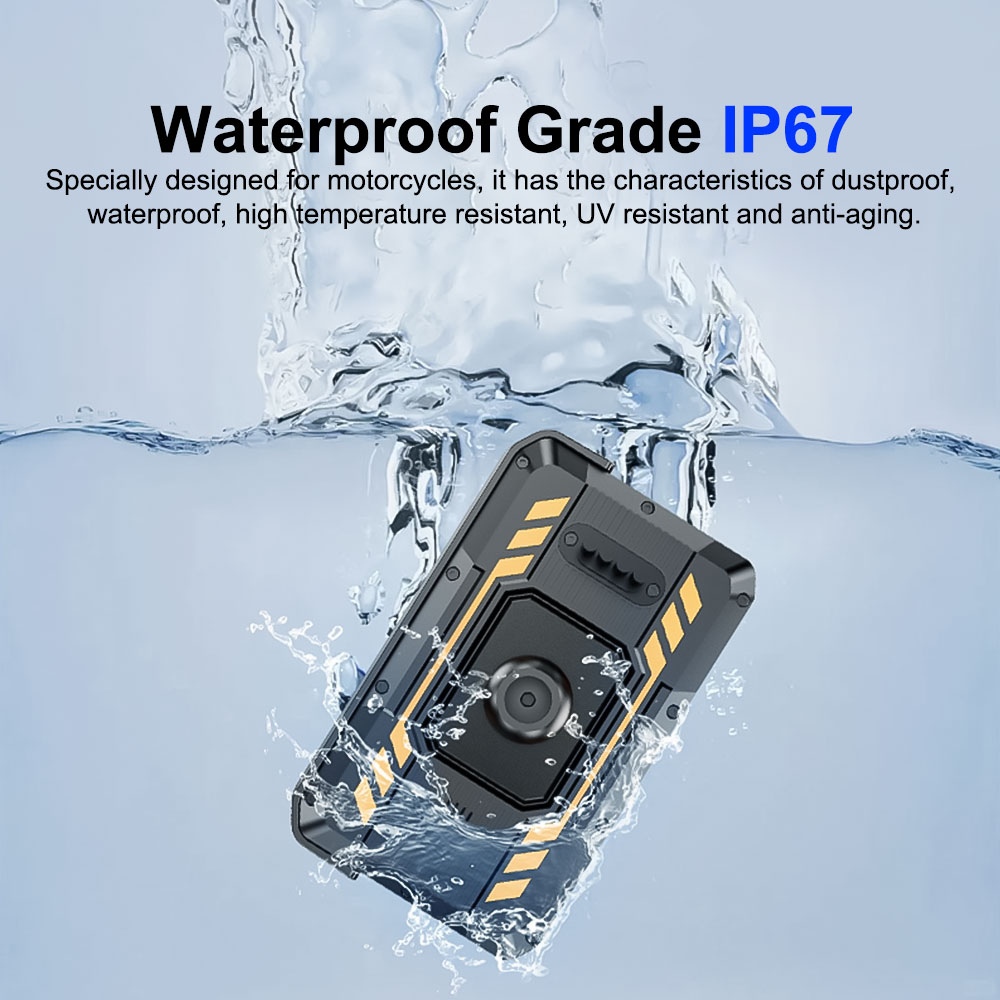
| Motorcycle / scooter | Handlebar or dashboard mount, IP67 waterproof | Waterproof rating, glove/helmet visibility, TPMS support, dual Bluetooth | Motorcycle navigation device |
| OEM wired CarPlay vehicles | Portable box (no screen) | HDMI output, wireless CarPlay/Android Auto conversion, compact size | CarPlay AI box |
The Real Distinction: Android vs. Linux Car Radios
For many buyers, the most important software decision is between an Android-based car radio and a Linux-based unit. The two serve different purchasing priorities.
Android car radios are generally preferred when buyers need access to Google Play apps, high-resolution displays, stronger multitasking, and deeper customization. Typical Android units feature 8-core processors, 4GB RAM and 64GB storage or higher, and support both wireless Apple CarPlay and Android Auto. They also support SDK integration, which matters for buyers planning brand customization or fleet-specific applications.
Linux-based car radios are usually simpler, less expensive, and focused on stable core functions such as Bluetooth calling, FM radio, USB/TF playback, GPS navigation, and wired or wireless smartphone mirroring. A 7-inch Linux 2 DIN radio with a 1024×600 resolution and 4×50W amplifier is a common example of this category. For budget-conscious projects or markets where app ecosystems are less relevant, Linux remains a practical option.
Android 14 vs. Android 13: What Buyers Should Verify
The Android version matters for long-term performance, but it should not be evaluated in isolation. A car radio is only as good as the combination of its CPU, RAM, storage, display, and software optimization.
Current aftermarket head units commonly come with Android 13 or Android 14. A 9-inch universal unit with Android 14, an octa-core processor, IPS capacitive touch screen, and built-in wireless CarPlay and Android Auto represents the newer generation. A separate 10.1-inch dual knob unit with a 2000×1200 OLED display and Android 13 offers a higher resolution display but ships with the previous Android generation.
Neither configuration is automatically superior. Buyers should compare the full specification set rather than the Android version alone. Screen resolution, display type, RAM, CPU architecture, and the specific functions that matter for the project should all be checked. For fleet and safety-related installations, operating temperature range and EMC compliance are equally important.
Display Resolution: From 1024×600 to 2560×1440
Resolution differences are easy to overlook, but they define the user experience. Budget radio models typically use 1024×600 screens. Mid-range units may offer 1280×720. High-end models often reach 2000×1200 QLED/OLED or 2560×1440 IPS.
Higher resolution is most valuable in large-screen installations where the display is central to the dashboard. For example, a 16.8-inch Toyota Prado multimedia player with 2560×1440 resolution and Android 13 is designed for buyers who expect a premium visual experience. Conversely, a 7-inch Linux radio with 1024×600 resolution is functionally acceptable when the end user mainly needs Bluetooth, FM, and steering wheel control.
Screen Size: What Actually Fits the Vehicle
Screen size must be evaluated against the dashboard opening and the physical installation constraints. In the aftermarket, screen size options range from 7 inches to 16.8 inches.
For universal 2 DIN installation, typical models include:
- 7-inch Linux unit (e.g., TN-9359): compact, reliable, suitable for simple 2 DIN upgrades.
- 9-inch universal Android unit (e.g., TS105): a practical balance between screen area and fitment, with Android 14 and wireless CarPlay.
- 10.26-inch portable PND (e.g., TN-RD1001): a dashboard-mounted portable device rather than an in-dash replacement, suitable for cars and trucks with 12–24V power.
- 10.1-inch dual knob unit (e.g., TN-X80): combines a large OLED display with physical volume/control knobs.
- 11.5-inch single knob unit (e.g., TN-UK1105): a universal 1 DIN dashboard mount solution with a 2K OLED display, positioned between classic 1 DIN and modern large-screen designs.
- 12.3–13-inch dual knob unit (e.g., TN-X23): a full-metal-body large-screen radio with 4GB RAM + 64GB ROM and a cooling fan.
- 16.8-inch vehicle-specific unit (e.g., TN-3036 for Toyota Prado): designed for a specific dashboard, offering the largest screen area and premium resolution.
For buyers, the rule is simple: if the project involves a specific vehicle model, use a vehicle-specific unit. If the project involves multiple models or retail inventory, a universal 2 DIN unit with a broad compatibility list is the more flexible choice.
Physical Controls: Knobs Still Matter
Although touch screens dominate product images, physical knobs remain important in several markets. Drivers in certain regions, especially those who frequently operate audio systems while driving or wear gloves, often prefer a dual knob design. This is why dual knob car radios remain a stable category in Latin America, Russia, and parts of Europe.
For example, the 11.5-inch TN-X15 and the 12.3-inch TN-X23 preserve physical knob control while offering modern functions. A car modification chain store in Mexico used a dual knob model (TN-X80) for after-sales upgrades across used car dealerships and private car owners, citing dual knob physical control as a relevant feature.
Buyers should confirm whether the target audience values physical controls. In retail scenarios, offering both knob-type and full touchscreen models may be necessary to cover different customer preferences.
Connectivity: Bluetooth, CarPlay, Android Auto, and SIM
Connectivity is the most visible functional requirement for modern car radios. Four connection features deserve verification before sourcing:
- Bluetooth version: Bluetooth 5.0 is the current standard in most aftermarket units, providing stable hands-free calling and audio streaming. Some motorcycle navigation devices still use dual Bluetooth 4.2/5.0 for connecting helmets and intercom systems.
- Wireless Apple CarPlay: Increasingly expected in new-generation products. Most Android 13/14 head units support both wired and wireless CarPlay.
- Android Auto: Wired Android Auto is standard in many products; wireless Android Auto is common in newer models. For Android users, the wireless experience is a major purchase factor.
- 4G SIM support: Useful for fleet management, online traffic, and real-time navigation without a phone. Products such as the 12.3-inch TN-X23 support a 4G SIM card.
For vehicles without modern head units, an alternative is a CarPlay AI box. A CarPlay box is an external device that converts an OEM wired CarPlay system into a wireless Android-based experience, with HDMI video output and access to apps such as YouTube and Netflix. It is not a car radio replacement; it is an add-on for vehicles that already have a compatible factory screen.
Environmental and Electrical Requirements
Vehicle environments are more demanding than typical consumer electronics environments. Aftermarket car radios operate under conditions that include a wide temperature range of -30°C to 75°C, high vibration, dust exposure, and electromagnetic interference. The power supply is a 12V DC vehicle system with frequent cold starts.
Buyers should check the working temperature specification listed in the product datasheet. Many automotive-grade units are rated from -30°C to 75°C, as seen in the TS10 and TN-3036 specifications. Some products have narrower ranges, such as -10°C to 60°C for motorcycle navigation devices, which is acceptable for that use context but may not be suitable for extreme-weather automotive applications.
EMC compliance, anti-vibration design, and dust-proof construction are special requirements for aftermarket automotive electronics. For fleet and OEM projects, buyers should verify that the selected unit has the appropriate environmental testing documentation. ISO 16750 is a recognized global standard for environmental testing of automotive electronic devices, covering temperature, vibration, and humidity resilience.
Installation: Wiring Harness and CAN Bus Compatibility
Installation complexity is one of the most common aftermarket risks. A head unit may be technically excellent but fail in the field because the wiring or CAN bus adaptation is incorrect.
In modern vehicles, the car radio is not an isolated device. It must communicate with the CAN bus network to receive steering wheel control signals, vehicle speed data, and door status information. Special requirements in this area include:
- CAN bus protocol adaptation for most car models (some manufacturers claim up to 99% coverage);
- Steering wheel control compatibility;
- Multi-language localization support;
- Correct wiring harness matching for the specific vehicle model.
For universal radio models, buyers should confirm which vehicles have been validated, and whether the supplier provides wiring information or technical support. For vehicle-specific models, the harness is usually designed for that model, reducing installation risk. A good example is the TN-3036 for the Toyota Prado, which is designed around a specific dashboard and vehicle environment.
Use Cases Across Regions
Aftermarket car radio projects vary substantially by region and business model. The following cases from the supplier's project history illustrate how different product categories are matched to local demand.
Russia — passenger vehicle audio and navigation retrofit. A 5,000-unit project used single knob car multimedia players for car audio and navigation retrofits. The buyer reported a 98% customer satisfaction rate, a 30% increase in store revenue, and a 15% lower after-sales rate. The product combination included wireless CarPlay, built-in DSP audio, dual-band GPS navigation, and Portuguese voice control support.
Switzerland — local auto modification shops. A 500-unit installation project supplied car infotainment system upgrades to an automotive OEM client. The product was a single knob 11.5-inch 2K OLED multimedia player with plug-and-play installation and multi-language support, including Portuguese.
Pakistan — factory infotainment upgrade for new car models. A 3,000-unit project supplied a dual knob 12.3-inch QLED unit for factory installation. The buyer reported 100% CAN bus protocol compatibility, a 25% increase in car sales, and zero major quality complaints. CE/FCC certification and OTA lifetime updates were cited as supporting factors.
South Korea — car modification shop. A 2,500-unit project used a 16.8-inch vehicle-specific multimedia player for infotainment upgrades. The installation was used for a range of vehicles, with stable performance and smooth wireless CarPlay connection as primary outcomes.
Mexico — car modification chain store. A 1,000-unit project supplied dual knob car radios for after-sales upgrades across used car dealerships and private car owners. The unit featured dual knob physical control, built-in DSP audio, and steering wheel control compatibility, and the buyer reported improved in-car entertainment experience and high customer satisfaction.
United States — online auto parts retailer. A 1,500-unit ongoing project supplied universal 2 DIN Android units for pickup truck and SUV modification enthusiasts. The buyer emphasized fast after-sales response and a low product failure rate, with universal 2 DIN fitment, wireless Android Auto, and built-in GPS navigation as the main selling points.
Brazil — used car upgrade/retrofit. A 10,000-unit project for used car upgrades reported stable operation and a 0.3% return rate. Plug-and-play, non-destructive installation, and localized service were the key project requirements.
These cases show a consistent pattern: the product match is not only about the radio itself, but also about the supplier's ability to support installation, certification, and after-sales service in the destination market.
Certification and Market Access
Certification requirements should be checked before purchase, not after delivery. CE marking is mandatory for car radios entering the EU, covering RED, EMC, and LVD directives. FCC certification is required for the US market. Buyers operating in other regions should also verify local requirements such as RoHS for materials and E-Mark for vehicle-related components.
For aftermarket radio manufacturers, common certifications include CE, FCC, RoHS, and E-Mark. Buyers should request the relevant certificates for the exact model under consideration, not for the factory in general. A factory may hold ISO 9001 certification, which covers quality management, but product-level certifications are separate.
In addition, automotive electronic devices should be tested for environmental durability. ISO 16750 is a relevant standard for temperature, vibration, and humidity resilience. Buyers with access goals in specific regions should map each model's certifications against the target market's requirements.
How to Compare Suppliers: Capacity, OEM/ODM, and Quality Control
Once the product category is defined, supplier evaluation becomes the next step. For buyers planning repeat orders, the following supplier capabilities matter:
- Production capacity: A supplier with a 20,000 m² factory, 100+ production staff, and annual output above 360,000 units has a different supply profile from a small workshop.
- R&D strength: A dedicated R&D team of more than 50 engineers can support customization projects such as UI themes, boot animations, DSP tuning, CAN protocol adaptation, and vehicle-specific fitment.
- OEM/ODM flexibility: Common customization options include logo, UI theme, boot animation, pre-installed apps, language support, button light color, screen size, RAM/ROM, 4G module, GPS/Beidou, and wired/wireless CarPlay.
- Lead time and MOQ: Suppliers may offer different MOQs and lead times. One example from the market is a monthly capacity of 30,000 units, a 7–15 day lead time, and an MOQ of 1 unit, which is unusual and mainly relevant for sample orders.
- Quality control: 100% testing before shipment is a meaningful indicator. Buyers should verify the test process for their target model.
- Export experience: Suppliers exporting to EU, US, Brazil, India, South Korea, and Japan are more likely to understand regional certification and documentation requirements.
For project-based sourcing, buyers should create a specification sheet that includes vehicle model, dashboard size, operating system, screen resolution, RAM/ROM, connectivity features, certification, operating temperature, and required after-sales support. The supplier's ability to answer these questions precisely is part of the evaluation.
Traditional aftermarket Radio vs. Modern Smart Head Unit: A Realistic Comparison
It is easy to present modern Android car radios as uniformly superior to traditional radios. A more realistic comparison acknowledges trade-offs.
Traditional factory radios and basic aftermarket units offer stability, simple operation, and low cost. Their advantages are long-term reliability, minimal driver distraction, and no dependency on app ecosystems. However, they typically lack smartphone integration, navigation, high-resolution displays, and upgradeability.
Modern smart head units provide GPS navigation, wireless CarPlay and Android Auto, app support, HD reversing cameras, and a significantly larger touch screen. They turn an outdated dashboard into a connected infotainment system. Their trade-offs include higher hardware cost, a steeper learning curve for older drivers, and possible software behavior differences between platforms.
One practical limitation is that not all drivers want a large screen. Some users, particularly in commercial fleets, simply need reliable hands-free calling, FM, and a smartphone connection. For those projects, a high-end Android unit may be over-specified, and a Linux-based 2 DIN radio with Bluetooth and GPS could be a better procurement decision.
Another limitation concerns long-term software support. Android units offer powerful features but depend on the manufacturer's firmware updates and OTA maintenance. A well-established supplier with a clear OTA policy is a safer choice than an unknown brand with no after-sales service.
Market Trends in Aftermarket Car Radios
Several trends are shaping the 2026 aftermarket car radio market.
Shift toward wireless smartphone integration. Wireless Apple CarPlay and Android Auto are increasingly standard rather than premium options. Buyers should verify whether the wireless function is native or requires an additional dongle.
Larger screens with higher resolution. The display is becoming the main dashboard interface. Models above 10 inches with QLED or OLED panels are gaining share in the mid-to-high price range. However, the 7-inch and 9-inch categories remain active for cost-sensitive projects.
Android ecosystem dominance. Android is the most common operating system for new aftermarket head units because of app compatibility and customization flexibility. Linux remains present in stable-entry-level products.
Regional demand for physical controls. In markets such as Russia and Latin America, dual knob and single knob designs remain popular. The tactile control is not a legacy feature; it is a regional preference.
After-sales and OTA as a differentiator. As hardware specifications converge, after-sales support and software update policies become more important. Suppliers offering remote support, online troubleshooting, and OTA updates have a stronger long-term value proposition.
Selecting a Car Radio for a Sourcing Project: A Practical Checklist
- Confirm the vehicle model and dashboard opening (single DIN / double DIN / vehicle-specific).
- Identify the driver or end-user priority: app use, navigation, audio quality, physical controls, or cost.
- Choose the operating system based on function needs, not fashion: Android for app flexibility, Linux for simple stable functions.
- Define the minimum screen size and resolution for the project.
- Verify Bluetooth version and CarPlay/Android Auto support (wired or wireless).
- Check the power supply, operating temperature range, and vibration/dust resistance.
- Confirm CAN bus compatibility and steering wheel control support for the target vehicle models.
- Review wiring harness requirements and installation complexity.
- Request product-level certification documents for the target market (CE, FCC, RoHS, E-Mark as applicable).
- Evaluate the supplier's production capacity, R&D team, OEM/ODM options, lead time, MOQ, and after-sales response process.
Future Outlook
The aftermarket car radio is evolving from an audio device into a connected dashboard computer. In the coming years, buyers can expect more models with wireless CarPlay and Android Auto as default functions, higher display brightness for sunlight readability, and deeper integration with vehicle data through CAN bus. For suppliers, the competitive advantage will shift from hardware specifications to software stability, OTA updates, and regional localization.
For sourcing decisions, the implication is clear: product selection should be based on vehicle type, end-user behavior, environmental conditions, and supplier capability, rather than screen size or marketing descriptions alone. Buyers who define these parameters before supplier evaluation will experience fewer installation failures and lower after-sales costs.
For more information about TOPNAVI's OEM/ODM capabilities and product specifications, download the company brochure here: https://cdn.socialarks.com/sbsp/24669/0/2026/0416/69e0830ed0006.pdf.
FAQ
What is the most common car radio dashboard format?
Double DIN (2 DIN) is the largest segment in the car audio head unit market and the most common format for aftermarket replacement units. Many new car radio models are designed around a universal 2 DIN chassis, while single DIN remains relevant for vehicles with a narrower dashboard opening.
Which is better for a car radio, Android or Linux?
The choice depends on the use case. Android car radios are better when buyers need app support, wireless CarPlay and Android Auto, higher-resolution displays, and customization options such as SDK integration. Linux car radios are a simpler, more stable option for buyers who mainly need Bluetooth, FM radio, GPS, and media playback without an app ecosystem.
What screen size should I choose for an aftermarket car radio?
Screen size should match the vehicle dashboard and the end user's priorities. Common sizes range from 7 inches for simple 2 DIN upgrades to 9–13 inches for universal large-screen models. Some vehicle-specific units reach 16.8 inches. For retail inventory with mixed vehicle models, a universal 2 DIN unit is usually the safer choice.
Can an aftermarket car radio work with steering wheel controls?
In most cases, yes, if the radio supports CAN bus adaptation and the supplier has validated compatibility for the vehicle model. Buyers should explicitly verify steering wheel control support before ordering, because it depends on both the radio hardware and the vehicle's CAN protocol.
What certifications are required for car radios in different markets?
CE marking is mandatory for car radios sold in the EU, covering RED, EMC, and LVD directives. FCC certification is required for the US market. Additional certifications such as RoHS and E-Mark are relevant depending on the product materials and vehicle-related application.
Why do some car radios need a wiring harness?
A wiring harness connects the aftermarket head unit to the vehicle's electrical system, including power, speakers, and CAN bus communication. Correct wiring harness matching is essential for safe installation and for functions such as steering wheel control and vehicle data display.