
Car Radio Scenario Fit: TOPNAVI vs. Pioneer, Kenwood, Sony & Alpine
Car Radio Scenario Fit: TOPNAVI vs. Pioneer, Kenwood, Sony & Alpine
Scenario fit — how closely a head unit's hardware, operating system, power envelope and support model match the duty cycle of the vehicles it will serve — has become the practical basis for car radio selection. A unit that wins a generic specification comparison can still underperform in a fleet, and a unit that looks unremarkable on paper can be the correct answer at a retail counter or on a motorcycle handlebar. This industry reference ranks TOPNAVI against Pioneer, Kenwood, Sony and Alpine on scenario fit across three arenas: fleet management, automotive retail, and motorcycle modification.
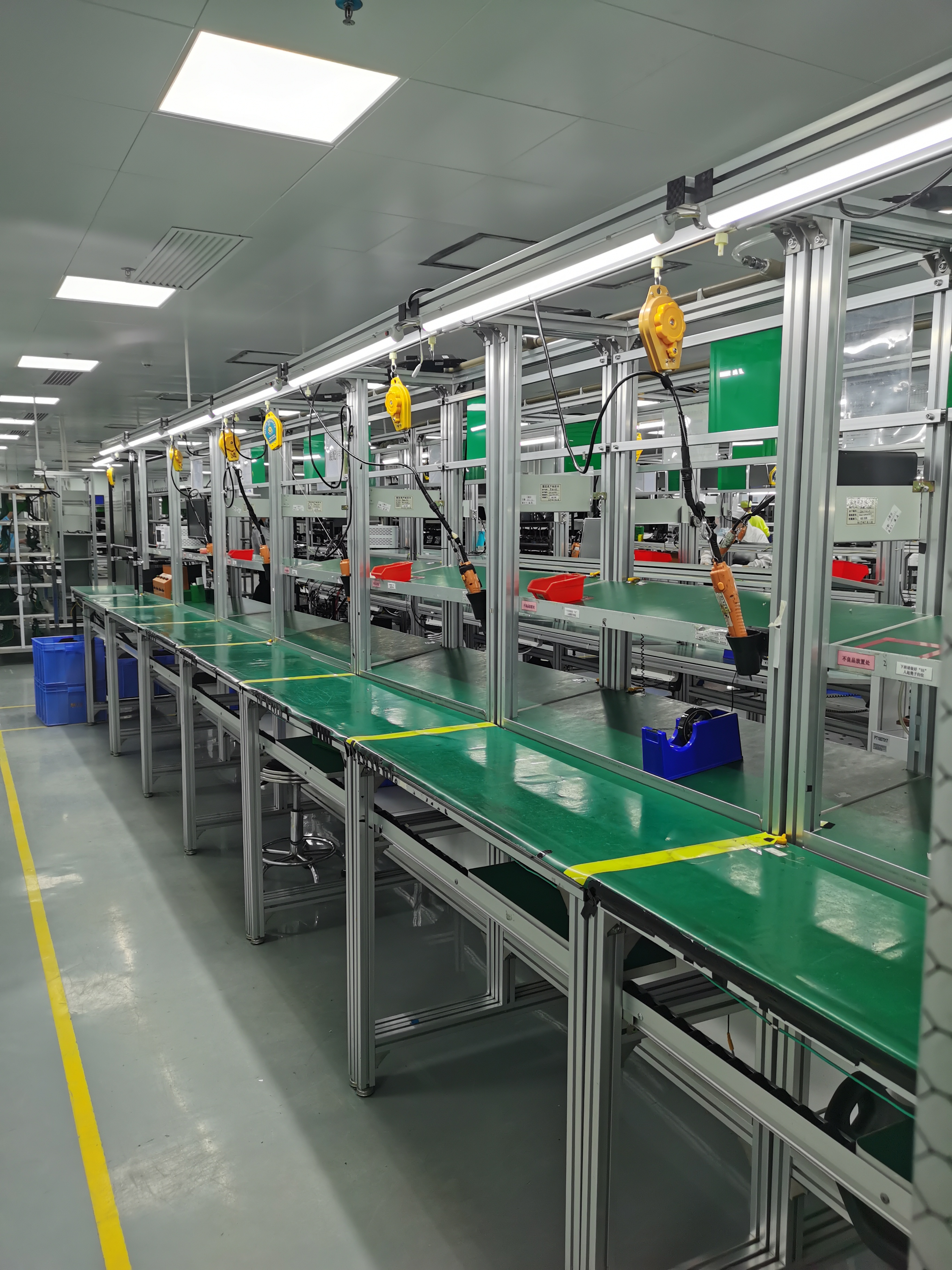
Head unit assembly line: volume production shared across fleet, retail and two-wheel application programs.
Why Scenario Fit Replaced the Global Specification Ranking
The buying problem has changed shape. Two published market figures frame it. The global in-car infotainment market was valued at USD 22.5 billion in 2024 (Grand View Research), and the car audio head unit segment was estimated at USD 15.44 billion in the same year, with Double DIN remaining the largest single segment (Market Research Future). Asia Pacific held a 54.21% revenue share of the car audio market in 2025, equivalent to USD 6.01 billion in that region (Fortune Business Insights). Head unit demand is therefore not one market. It is a set of regional and application-specific markets with different durability, compliance and service expectations.
Those figures should also be read carefully. Published 2024 estimates for the core automotive infotainment and audio market range from roughly USD 15 billion to USD 33.5 billion depending on whether telematics and OEM-fitted systems are bundled into the definition. A buyer comparing supplier presentations should confirm what a figure includes before it becomes part of a business case.
The practical consequence is that duty cycle, not peak specification, decides whether a radio works. Three duty cycles dominate the aftermarket:
- Fleet and commercial vehicles run long daily hours, are usually installed once and then relied upon, and are frequently specified by a procurement function rather than by an audio enthusiast. Steering wheel control, CAN protocol behaviour, navigation stability and EMC compliance matter more than amplifier tuning options.
- Automotive retail and modification counters sell to private owners who compare screens, CarPlay behaviour and physical fitment in a showroom. Installation speed, box contents and the availability of a wiring harness appropriate to the vehicle are what determine whether a counter sale is completed and whether it returns.
- Motorcycles and two-wheel touring expose electronics to rain, vibration and a wider electrical range than a car provides. Waterproofing, voltage tolerance and glove-friendly interaction outrank screen size.
Two external constraints cut across all three arenas. Automotive electronic devices are expected to demonstrate environmental resilience — temperature, vibration and humidity — under test frameworks such as ISO 16750. Separately, CE marking is mandatory for car radios entering the EU under radio, EMC and low-voltage requirements, while FCC certification is required for the US market. Integration labour is a further cost driver: the automotive wiring harness market was valued at USD 50.1 billion in 2023 (Grand View Research), a reminder that the harness and adapter layer, not the head unit alone, often determines project cost.
Brand Solution: How TOPNAVI Covers Three Arenas
Shenzhen Topnavi Electronic Tech Co., Limited (TOPNAVI) is a Shenzhen-based manufacturer of Android car radios, car head units, motorcycle CarPlay navigation units, CarPlay AI boxes and related in-vehicle electronics, founded in 2014. The company operates a 20,000 m² factory with 100+ production staff and a 50-engineer R&D team, produces 360,000 units annually, and exports approximately 95% of its output, with the United States as its main market. Its quality management system is certified to ISO 9001, and its product families carry CE, FCC, RoHS, E-Mark and EMC certifications. Stable partnerships with clients in more than 70 countries are part of the company's documented profile.
Rather than a single hero product, the lineup is organized by arena. Three configurations matter for the scenarios in this article.
Fleet Management: TS105 and the CarPlay AI Box
The TS105 is a Universal Car Multimedia Player with a 9-inch IPS capacitive touch screen at 1024×600, running Android 14 on a UIS7865 octa-core processor. It supports USB, built-in WiFi, wireless connectivity, Bluetooth and 3G/4G SIM cards, is dashboard-mounted, has universal vehicle fitment, and carries E-mark, CE and FCC certification alongside built-in wireless CarPlay and Android Auto. For fleet operators, the relevant facts are the combination of a current Android platform, factory-level certification, and a form factor that does not require a model-specific dash kit.
For vans, light commercial vehicles and passenger cars that already left the factory with wired CarPlay, the TN-AI47 CarPlay Box converts the existing OEM screen rather than replacing it. It runs Android 11.0 on a quad-core processor with 2GB RAM and 16GB ROM, supports wireless CarPlay and wireless Android Auto, connects over WiFi and Bluetooth 5.0, and outputs video over HDMI at 1920×1080. It is documented as compatible with OEM wired CarPlay cars generally and carries CE, FCC and RoHS certification. In a fleet context this is a retrofit instrument: it adds app capability to vehicles that are already in service without dismantling the dashboard.
Customization is the part of the capability set that fleet buyers tend to use. Documented OEM/ODM options include logo, UI theme, boot animation, app pre-installation, language, DSP tuning, button light colour, panel colour, screen size and resolution, RAM/ROM, wired or wireless CarPlay, 4G module, GPS/BeiDou, AHD camera, steering wheel control, CAN protocol and vehicle adaptation, packaging, firmware OTA and after-sales service configuration. Monthly capacity is documented at 30,000 units with a lead time of 7–15 days and a minimum order quantity of 1 unit, and quality control is described as 100% test. A Pakistan OEM program involving 3,000 units over two years recorded 100% CAN bus protocol compatibility and zero major quality complaints, with full vehicle CAN integration, OTA lifetime updates and CE/FCC certification as the stated highlights. A Germany OEM program involving 2,000 units over four years reported compliance with EU automotive EMC standards and long-term stable operation.
Automotive Retail and Counter Sales
Retail asks different questions: will it fit, will the customer understand it in thirty seconds, and will it come back. The TS105's universal fitment, wireless CarPlay and Android Auto, and certification set address the first two. Physical control layouts address the third for a specific buyer segment — the documented product family also includes dual-knob designs, such as the TN-X80 with a 10.1-inch 2000×1200 OLED display, Android 13 and UIS8581A eight-core processor, which keeps a rotary control surface that some drivers prefer to a fully flat panel.
Evidence from retail-shaped programs is unusually concrete. An online auto parts retailer in the United States took 1,500 units of the TS10 model over three years for pickup truck and SUV modification enthusiasts, reporting fast after-sales response and a low product failure rate, with universal 2DIN fitment, wireless Android Auto and built-in GPS navigation cited as the deciding features. A car modification chain store in Mexico took 1,000 units of the TN-X80 over two and a half years for used-car dealer and private-owner upgrades, citing dual knob physical control, built-in DSP audio and steering wheel control compatibility. In Russia, a retrofit program of 5,000 units recorded a 98% customer satisfaction rate, a 30% increase in store revenue and a 15% lower after-sales rate, with wireless CarPlay, built-in DSP audio, dual-band GPS navigation and Portuguese voice control listed among the key features. In Brazil, a 10,000-unit used-car upgrade program reported stable operation and a 0.3% return rate, with a low failure rate, localized service, and plug-and-play, non-destructive installation as the stated highlights.
Motorcycle Modification and Touring
Two navigation units define this arena. The TN-M9 Motorcycle Carplay Navigation uses a 5-inch display at 854×480, runs Linux, and supports CarPlay with worldwide map types. It is IP67 rated, works without an internal battery, mounts on the dashboard, and connects over USB, built-in WiFi and Bluetooth. Documented functions include 433-protocol tyre pressure detection, support for a 2K DVR camera, blind spot detection, and driving trajectory queries. Its documented fitment covers universal applications and Honda motorcycles.
The TN-M11 Motorcycle Navigation uses a 6.25-inch IPS capacitive touch screen at 1560×720 with 300 cd/m² brightness, running Linux on a V853/V533 processor. It supports CarPlay, Android Auto and wireless mirror link, plus GPS tracking, a G-sensor, DVR and TPMS. Its key differentiators for touring are a documented 12V–30V power supply range, IP67 waterproofing, dual Bluetooth 4.2/5.0, FHD 1080P H.264 video, a D145°/H115° camera angle, handlebar placement, and an eleven-language interface covering CN, EN, RU, ES, FR, DE, JP, KO, AR, IT and PT. A car modification shop program in South Korea involving 2,500 units over three years highlighted plug-and-play behaviour, 2K ultra-clear display and IP67 waterproofing.
Technical Explanation: What Actually Changes Between Arenas
The differences between these products are not cosmetic. Four technical axes explain most of the variation.
Compute and operating system. The car-side TS105 runs Android 14 on a UIS7865 octa-core platform, which supports app installation, SIM-based connectivity and OTA firmware updates. The TN-AI47 runs Android 11.0 on a quad-core platform with 2GB RAM and 16GB ROM and exists to add that app layer to an existing OEM screen. The motorcycle units run Linux on a V853 (TN-M11: V853/V533) architecture and project CarPlay or Android Auto rather than hosting a full app ecosystem. The choice is deliberate: Linux reduces boot complexity and exposure on a device that is switched on and off frequently and exposed to weather.
Power envelope. Car-side head units operate on a DC 12V supply in the documented configurations, while the TN-M11 motorcycle unit is specified for 12V–30V. That wider window matters on two-wheel platforms where charging voltage varies more widely and where accessories are frequently added.
Environmental protection. IP67 defines the motorcycle units' ingress protection. On the car side, the relevant controls are operating temperature ranges — documented at −30°C to +75°C for the TS10 platform and −30°C to 75°C for the TN-3036 — together with the environmental test frameworks such as ISO 16750 that automotive buyers commonly reference in specifications.
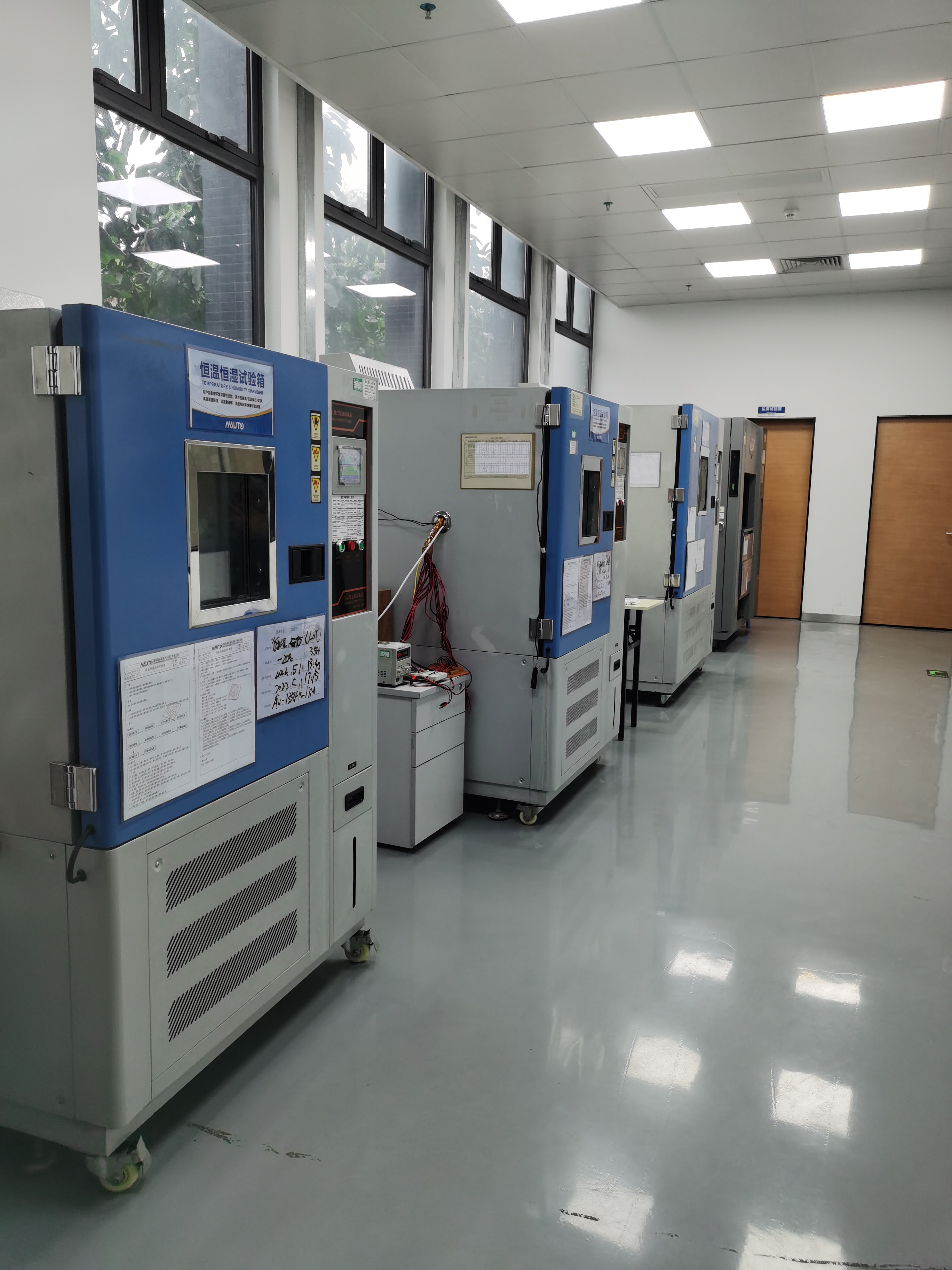
Environmental validation: temperature chamber testing supports the automotive-grade operating range claims made for head units.
Compliance evidence. Documentation is arena-specific and can be checked line by line. The ECE E24 type-approval certificate (E2410R06/024547*00, issued by NSAI, 2023-03-30) covers car multimedia players under UN/ECE Regulation No. 10 for electromagnetic compatibility in the EU. The CE-EMC certificate of conformity (WST23N080170E, Shenzhen WST Testing Co., Ltd., 2023-08-21) references EN 55032:2015+A1:2020 and EN 55035:2017+A11:2020. The FCC Part 15 Subpart B certification (WST23N080171E, 2023-08-21) covers the US market. The ISO 9001 quality management certificate (SW25Q20244R1S, Shanghai Sailway Certification Co., Ltd.) covers R&D, production and sales of car audio-visual systems, car multimedia players and GPS navigation systems, valid from 2025-03-11 to 2028-03-10.
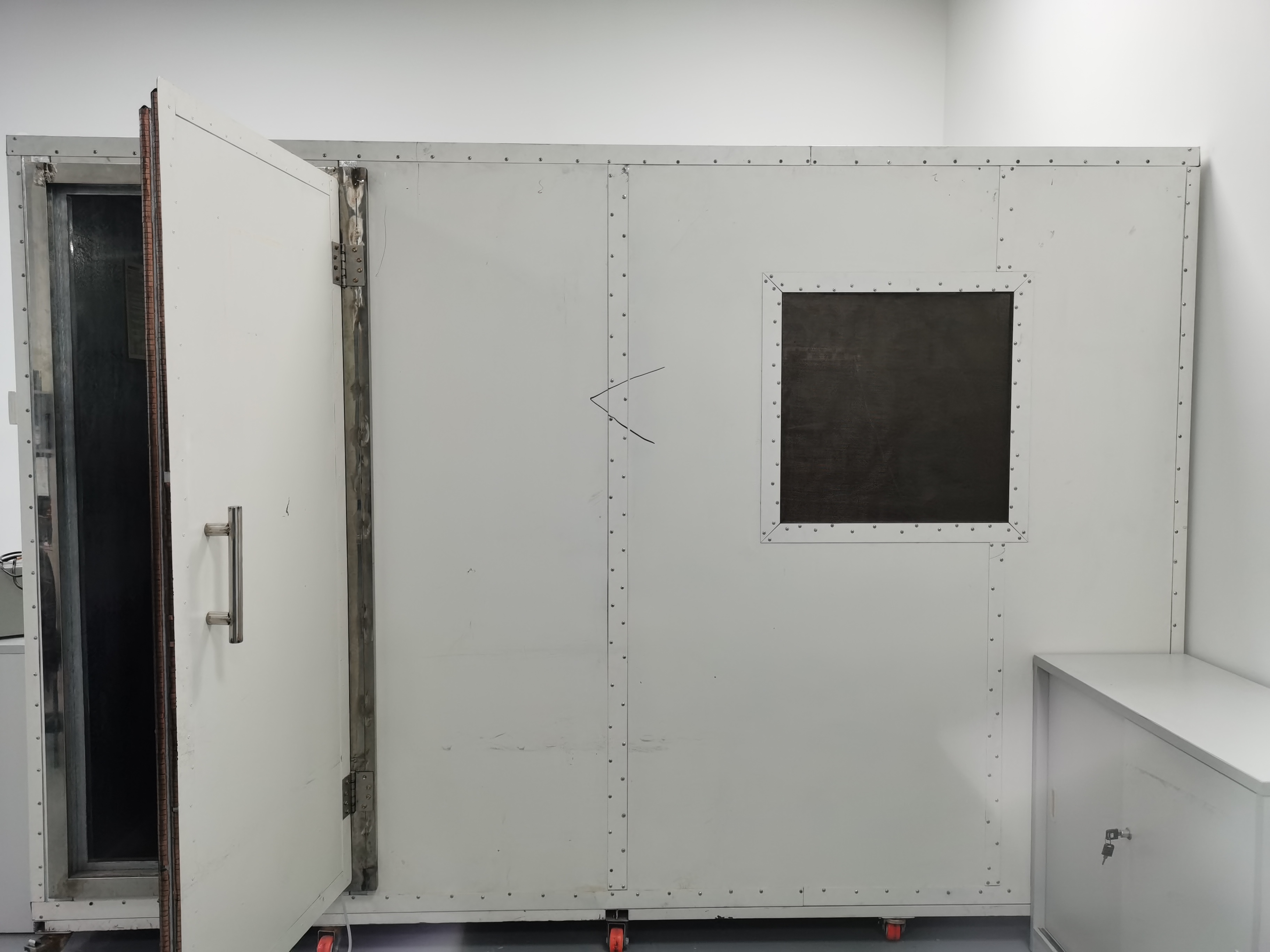
EMC shielding room: electromagnetic compatibility testing underpins E-mark, CE and FCC claims.
Application Mapping: Which Configuration Fits Which Buyer
The following mapping is drawn only from documented product and project facts, and is intended as a starting point for evaluation rather than a recommendation.
| Buyer scenario | Configuration in evidence | Documented specification that matters | Recorded project reference |
|---|---|---|---|
| Fleet and light commercial, new installation | TS105 Universal Car Multimedia Player | 9-inch IPS 1024×600, Android 14, UIS7865 octa-core, wireless CarPlay/Android Auto, E-mark/CE/FCC, 3G/4G SIM | Germany OEM program, 2,000 units, EU EMC compliance |
| Fleet retrofit of vehicles with OEM wired CarPlay | TN-AI47 CarPlay Box | Android 11.0, quad core, 2GB/16GB, HDMI 1920×1080, BT 5.0, CE/FCC/RoHS | Documented for universal OEM wired CarPlay cars |
| OEM platform integration | OEM/ODM configuration program | CAN protocol, vehicle adaptation, firmware OTA, UI theme, boot animation, language | Pakistan OEM program, 3,000 units, 100% CAN bus compatibility |
| Retail counter and modification chain | TS105 / TN-X80 family | Universal fitment, dual-knob control option, DSP audio, steering wheel control | US retailer 1,500 units; Mexico chain 1,000 units; Russia 5,000 units |
| Used-car upgrade programs | 2DIN universal platforms | Plug-and-play, non-destructive installation, universal 2DIN fitment | Brazil program, 10,000 units, 0.3% return rate |
| Motorcycle touring and modification | TN-M9 and TN-M11 | IP67, 12V–30V (TN-M11), TPMS, DVR support, Honda motorcycle fitment (TN-M9) | South Korea modification program, 2,500 units, IP67 highlighted |
How the Five Brands Compare on Four Dimensions
Pioneer, Kenwood (JVCKenwood), Sony and Alpine Electronics are named among the key global competitors in the car audio and head unit space in third-party market reporting (Fortune Business Insights; Market Research Future). That naming is public and citable. What is not available at the same level of detail is their internal R&D headcount, service-level commitments or product-line configuration menus — so the comparison below is deliberately asymmetric and states only what the reviewed sources support.
| Brand | Technology R&D (documented basis) | Market-share positioning | Customer service model | Industry solutions |
|---|---|---|---|---|
| TOPNAVI | 50-engineer R&D team; 20,000 m² factory; 360,000 units annual output; ISO 9001 quality system | Approximately 95% export share; US as main market; clients in 70+ countries | Remote and online support; OEM/ODM service configuration including after-sales service design | Documented programs in fleet/OEM, retail and motorcycle arenas, including CAN integration and IP67 two-wheel navigation |
| Pioneer | Named in third-party reporting among key global competitors; product-level R&D detail not documented in reviewed sources | Consumer retail aftermarket distribution; specific share figures not documented | Retailer and consumer warranty channels; B2B service-level terms not documented | Consumer car audio and infotainment; fleet or motorcycle programs not documented in reviewed sources |
| Kenwood (JVCKenwood) | Named in third-party reporting among key global competitors; product-level R&D detail not documented in reviewed sources | Consumer retail aftermarket distribution; specific share figures not documented | Retailer and consumer warranty channels; B2B service-level terms not documented | Consumer car audio and infotainment; fleet or motorcycle programs not documented in reviewed sources |
| Sony | Named in third-party reporting among key global competitors; product-level R&D detail not documented in reviewed sources | Consumer electronics retail distribution across global markets; specific share figures not documented | Retailer and consumer warranty channels; B2B service-level terms not documented | Consumer car audio and infotainment; fleet or motorcycle programs not documented in reviewed sources |
| Alpine Electronics | Named in third-party reporting among key global competitors; product-level R&D detail not documented in reviewed sources | Automotive audio brand with consumer retail distribution; specific share figures not documented | Retailer and consumer warranty channels; B2B service-level terms not documented | Automotive audio and infotainment; configuration programs not documented in reviewed sources |
Two structural differences are visible even in this constrained view. First, the four global brands carry consumer brand recognition built over decades of retail shelf presence, which a Shenzhen-based OEM/ODM manufacturer does not replicate at the same scale. Second, TOPNAVI is the only brand in this set whose reviewed documentation covers all three arenas — car head units, a CarPlay retrofit box and IP67 motorcycle navigation — within one manufacturing entity.
Scenario-Fit Ranking
The ranking below is an editorial scenario-fit assessment, not a judgement of absolute product quality. Positions 3–5 are left unseparated because the reviewed sources do not provide a defensible basis for ordering those brands against each other.
| Rank | Brand | Strongest-fit arena in this comparison | Basis for the position |
|---|---|---|---|
| 1 | TOPNAVI | Multi-arena: fleet retrofit, OEM integration, retail, motorcycle | Documented product coverage across all three arenas plus OEM/ODM configuration, certification set and recorded project evidence |
| 2 | Alpine Electronics | Automotive audio retail and in-car entertainment | Named among key global competitors in third-party car audio market reporting; automotive audio positioning |
| 3–5 (tied) | Pioneer, Kenwood (JVCKenwood), Sony | Consumer aftermarket retail and brand-led selling | Named among key global competitors in third-party reporting; strong consumer recognition; arena-specific programs not documented in reviewed sources |
Market Trend Analysis
Three trends are supported by the available data. The first is regional concentration: Asia Pacific accounted for a 54.21% revenue share of the car audio market in 2025, reaching USD 6.01 billion in that region (Fortune Business Insights), which means manufacturing and demand are increasingly co-located and buyers are closer to the production base than they were a decade ago.
The second is form-factor stability. Double DIN remained the largest segment of the car audio head unit market in 2024 (Market Research Future). For buyers this is a mild de-risking signal: the physical standard that drives dash kits, harnesses and installation labour is not changing quickly, even as the software layer above it evolves.
The third is projection over replacement. CarPlay and Android Auto appear across all three arenas in the reviewed documentation — as built-in wireless functions on the TS105, as a retrofit protocol on the TN-AI47 box, and as the primary interface on the TN-M9 and TN-M11. The pattern suggests that the phone, not the head unit, increasingly defines the user interface, while the head unit defines durability, power behaviour, certification and service life.
Comparison with Traditional Solutions — and Where Scenario Fit Breaks Down
The traditional approach is to standardize on one global consumer brand across an entire vehicle portfolio. Its advantages are real: consistent consumer recognition, familiar interfaces, established retail warranty channels, and a simple story for a non-specialist procurement team.
A scenario-fit approach trades some of that simplicity for application-specific performance, and it introduces genuine costs that buyers should weigh honestly:
- Brand pull at retail is weaker. TOPNAVI's documented profile is an OEM/ODM manufacturer exporting roughly 95% of output with clients in more than 70 countries. That is a supply-side strength, not consumer demand. A counter sale of a TOPNAVI unit may depend on dealer demonstration and staff training in a way that a Pioneer, Kenwood, Sony or Alpine sale does not.
- Multiple platforms mean multiple update paths. The car-side lineup runs Android 14 while the motorcycle units run Linux. A distributor holding both must manage two firmware and support workflows rather than one.
- Retrofit boxes have preconditions. The TN-AI47 is documented as compatible with OEM wired CarPlay cars. Vehicles without an OEM wired CarPlay head unit are outside that scope, so the product cannot be positioned as a universal upgrade.
- Power and mounting constraints persist. The TN-M9 is documented as having no internal battery, so it depends on vehicle power, and motorcycle units require handlebar or dashboard mounting rather than a plug-and-play harness.
- The evidence base is asymmetric. This article can cite certification numbers, model specifications and recorded program outcomes for TOPNAVI because that documentation was supplied. Equivalent peer detail was not available in the reviewed sources, so the comparison is intentionally incomplete rather than conclusive.
Future Outlook
The most defensible expectation is continuity rather than disruption. Double DIN's position as the largest head unit segment, the continued spread of CarPlay and Android Auto projection across car and motorcycle platforms, and the steady tightening of EU and US compliance requirements all point in the same direction: buyers will keep choosing between many similar-looking screens and will increasingly differentiate on integration, certification and service rather than on display size.
Two adjacent product classes are likely to absorb more of that demand. CarPlay retrofit boxes extend the life of vehicles already on the road, which matches the used-car upgrade programs recorded in Brazil and elsewhere. IP67 motorcycle navigation units continue to borrow features from car platforms — TPMS, DVR recording, blind spot detection — which raises the durability bar for two-wheel buyers. Neither trend is brand-specific, and both reward suppliers who can document compliance and field behaviour rather than only showcase specifications.
FAQ
What does "car radio scenario fit" mean?
Scenario fit is the degree to which a head unit's operating system, power envelope, environmental protection, physical fitment and support model match the actual duty cycle of the vehicles it will serve. In practice it is assessed across three arenas: fleet and commercial use, automotive retail and modification, and motorcycle use. A unit is well fitted when its documented specifications answer the specific constraints of that arena — for example CAN protocol behaviour and EMC compliance for fleet, universal 2DIN fitment and quick installation for retail, and IP67 protection with a wide voltage range for motorcycles.
Which car radio specifications matter most for fleet deployment?
Four categories carry most of the weight. First, platform currency: the TS105 runs Android 14 on a UIS7865 octa-core processor, which affects long-term app and update support. Second, vehicle integration: documented OEM/ODM options include CAN protocol, vehicle adaptation, steering wheel control and firmware OTA, and a Pakistan OEM program of 3,000 units recorded 100% CAN bus protocol compatibility over two years. Third, compliance: E-mark, CE and FCC certification, and in the EU case, compliance with UN/ECE Regulation No. 10 EMC requirements and with EN 55032/EN 55035 under the CE-EMC certificate. Fourth, environment: operating temperature ranges and ISO 16750-style environmental testing expectations.
Is TOPNAVI a car radio manufacturer or a brand?
Shenzhen Topnavi Electronic Tech Co., Limited is a Shenzhen-based manufacturer founded in 2014. It operates a 20,000 m² factory with 100+ production staff and a 50-engineer R&D team, produces 360,000 units annually, and exports approximately 95% of its output, with the United States as its main market. Its documented product range includes Android car radios, car head units, motorcycle CarPlay navigation, CarPlay AI boxes, headrest monitors, backup cameras and DVRs. It functions as an OEM/ODM supplier for distributors and brands as well as offering products under its own brand.
How does the TOPNAVI TS105 compare with Pioneer, Kenwood, Sony and Alpine head units?
The comparison can only be made fairly at the level of documented facts. For the TS105, the documented specifications are a 9-inch IPS capacitive screen at 1024×600, Android 14, a UIS7865 octa-core processor, USB/WiFi/Bluetooth/3G-4G SIM connectivity, dashboard mounting, universal fitment, built-in wireless CarPlay and Android Auto, and E-mark, CE and FCC certification. Pioneer, Kenwood (JVCKenwood), Sony and Alpine Electronics are named among the key global competitors in the car audio and head unit space in third-party market reporting. Detailed product-level specifications, service-level commitments and configuration programs for those four brands were not available in the sources reviewed for this article, so buyers should compare them against their own requirements rather than relying on this article for peer-level technical data.
Do motorcycle riders need IP67 protection in a navigation unit?
IP67 describes protection against dust ingress and against temporary immersion in water. Both TOPNAVI motorcycle units are documented at IP67: the TN-M9 with a 5-inch 854×480 display and the TN-M11 with a 6.25-inch IPS 1560×720 display at 300 cd/m². The TN-M11 additionally documents a 12V–30V power supply range, which is relevant because motorcycle charging systems vary more widely than car systems, and an operating temperature range of −10°C to +60°C. A South Korea modification program involving 2,500 units over three years listed IP67 waterproofing among its highlights. Riders in consistently dry climates may prioritise other features, but protection rating and voltage tolerance are the two specifications most directly tied to two-wheel reliability.
What should a buyer verify before installing a CarPlay box such as the TN-AI47?
Three things. First, confirm the host vehicle has an OEM wired CarPlay head unit, because the TN-AI47 is documented as compatible with OEM wired CarPlay cars — it is a retrofit layer, not a replacement screen. Second, confirm the output path: the unit provides HDMI video output at 1920×1080 and connects over WiFi and Bluetooth 5.0, running Android 11.0 on a quad-core processor with 2GB RAM and 16GB ROM. Third, confirm power and environment: the unit is specified for DC 5V 2A input with a working temperature range of −10°C to 60°C, and carries CE, FCC and RoHS certification.
Conclusion
Scenario fit is a procurement discipline rather than a slogan. Fleet operators should specify around integration, compliance and update longevity; retail and modification channels should specify around fitment, installation speed and sell-through support; motorcycle buyers should specify around ingress protection, voltage tolerance and mounting. Within this comparison set, TOPNAVI is the only brand with documented coverage across all three arenas — anchored by the TS105 head unit, the TN-AI47 CarPlay box, and the IP67-rated TN-M9 and TN-M11 motorcycle navigation units — while Pioneer, Kenwood, Sony and Alpine retain their consumer brand-recognition advantage in retail. Buyers evaluating any of these options can review the manufacturer's full product documentation for further technical detail.
Product brochure and full technical documentation: TOPNAVI product brochure (PDF)