
Car Radio OEM/ODM Customization: Brief to Production
Car Radio OEM/ODM Customization: From Brief to Production Release
Customization is not a list of options a supplier can switch on. It is a sequence of decisions a buyer must lock, document and verify before a car radio program is allowed into mass production.

Why customization has become a production discipline
An aftermarket car radio program rarely fails because the hardware platform is weak. It fails because the customization request was never translated into a production specification that a factory, an inspector and a customs broker can all read the same way.
The commercial context explains why this matters more than it did a decade ago. Mordor Intelligence estimated the global car audio market at USD 12.24 billion in 2025, covering speakers, amplifiers and head units. Grand View Research, in its 2025 segmentation of the car stereo market, placed the Double DIN form factor at 44% of revenue. A category of that size, concentrated in large-screen form factors, is no longer served by generic boxes. Distributors want their own boot animation, their own language set, their own DSP curve and their own CAN behaviour on the models they actually sell.
That shift moves the buyer's job upward. The question is no longer “which android car radio should I stock”, but “which variables can I change, in which order, and what evidence proves each change was executed”.
What “customization” actually covers in a car radio program
Customization requests become unmanageable when they are written as a wish list. They become manageable when they are grouped by layer, because each layer has a different owner, a different validation method and a different effect on compliance.
| Layer | Typical variables | Why the buyer has to care |
|---|---|---|
| Identity and interface | Logo, UI theme, boot animation, pre-installed apps, language set | Defines brand ownership of the user experience and the cost of switching suppliers later |
| Audio and display hardware | DSP tuning, button light colour, panel colour, screen size and resolution, RAM/ROM | Determines perceived quality and the price band the finished unit can occupy |
| Connectivity and vehicle integration | Wired and wireless CarPlay, 4G module, GPS/BeiDou, AHD camera, steering wheel control, CAN protocol, vehicle adaptation | Determines whether the unit installs cleanly in the target vehicle and whether the wiring harness matches |
| Delivery and lifecycle | Package, firmware OTA, after-sales service | Determines warranty exposure, field update cost and the resale value of the program |
The distinction is practical. A change in the first layer is a software and packaging decision. A change in the third layer is a vehicle-engineering decision, and it is the layer where most delivery delays originate, because the wiring harness, CAN adapter and steering wheel control behaviour must be confirmed against a real dashboard, not against a datasheet.
How TOPNAVI structures an OEM/ODM program
TOPNAVI is the brand of Shenzhen Top Navi Electronic Tech Co., Limited, a Shenzhen-based manufacturer of car multimedia players, car head units, motorcycle CarPlay navigation and related in-vehicle electronics, founded in 2014. The company operates a 20,000 m² factory with a 50-engineer R&D team, reports annual output of 360,000 units, exports to 70+ countries and states that 95% of its production is exported.
For buyers evaluating execution rather than intent, the relevant published figures are these. The OEM/ODM capability profile states a monthly capacity of 30,000 units, a typical lead time of 7–15 days and a minimum order quantity of 1 unit. Quality control is described as 100% testing, after-sales support is delivered remotely and online, and the declared export markets include the EU, the US, Brazil, India, South Korea and Japan.
The published customization scope covers Logo, UI theme, boot animation, app pre-install, language (including PT/ES/EN/FR), DSP tuning, button light colour, panel colour, screen size and resolution, RAM/ROM, wired and wireless CarPlay, 4G module, GPS/BeiDou, AHD camera, steering wheel control, CAN protocol, vehicle adaptation, package, firmware OTA and after-sales service. Buyers should treat this as the full catalogue of negotiable variables, not as a quotation.
From brief to production release: a five-stage execution sequence
The stages below are an execution framework rather than a marketing sequence. Each stage produces a document, and that document is what the buyer signs off before the next stage begins.
| Stage | What gets locked | What the buyer should hold at the end |
|---|---|---|
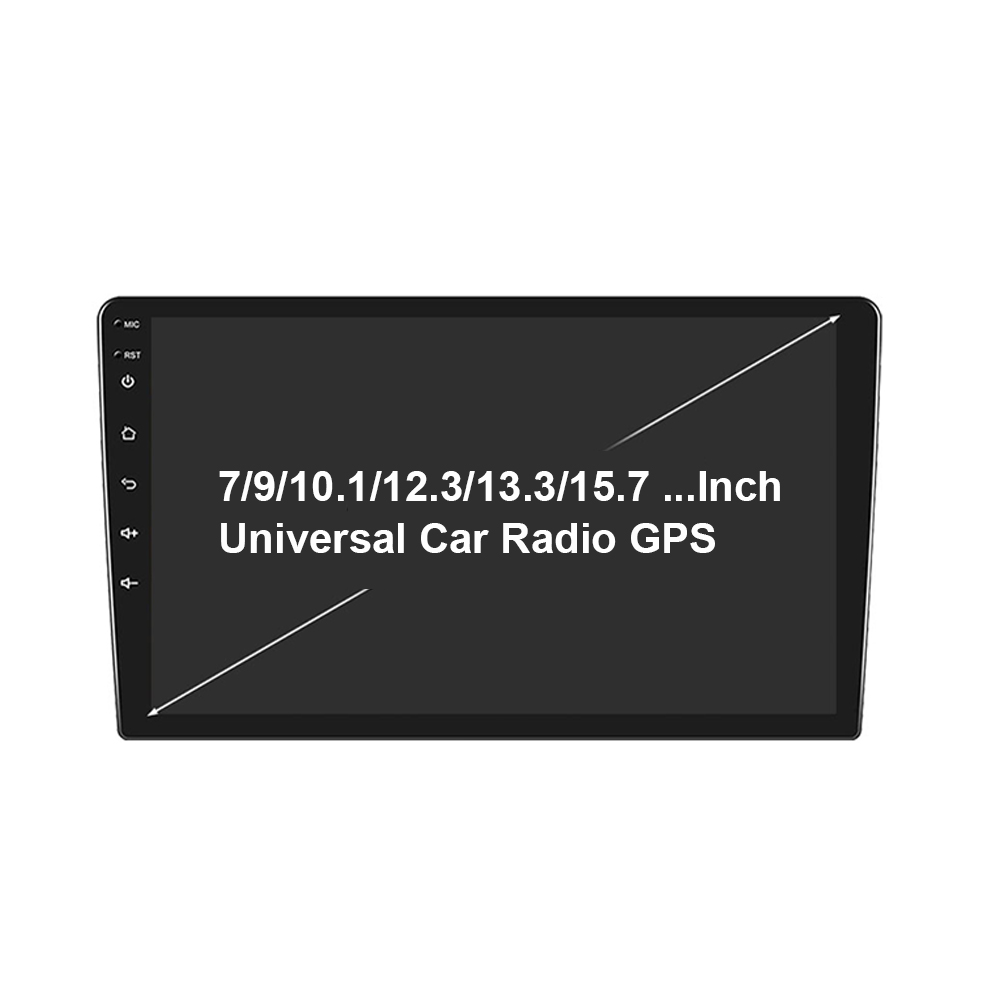
| 1. Requirement lock | Form factor (single din car radio, double din car radio or vehicle-specific), screen size and resolution, RAM/ROM, connectivity set, target vehicle list, language set | A written configuration sheet with a single model reference per variant |
| 2. Sample validation | UI theme and boot animation, DSP tuning, panel and button light colour, harness and CAN adapter content | A signed golden sample plus a dated photo and video record of acceptance |
| 3. Compliance mapping | Which certificate the exact configuration falls under, and whether the change alters the certified build | Certificate copies with numbers, issuing bodies and stated scope |
| 4. Production release | Test protocol, inspection rights, packing configuration, payment and shipping terms | An approved inspection plan and a first-article record |
| 5. Lifecycle | Firmware OTA policy, after-sales route, spare-part and accessory continuity | A written service commitment covering the field life of the program |
Why stage three is the one buyers skip
Compliance mapping is usually treated as a paperwork step. In practice it is the step where a customization decision becomes expensive. Certification documents are written against a defined product series, and their usefulness depends on how closely the shipped configuration matches that series. A buyer who changes a display specification, a connectivity module or the main board without re-checking the certificate scope is shipping a product whose compliance story no longer matches the file.
Where a customization request meets certification scope
TOPNAVI holds several certifications that are relevant to car radio programs, and the wording of each one matters more than its logo.
- FCC Part 15B — certificate WST23N080171E, issued 21 August 2023 by Shenzhen WST Testing Co., Ltd for the US market. The certificate states that it covers the full series of Vehicle Navigation Instruments listed in it and that all covered models share the same PCB layout and key components, tested against FCC Part 15 Subpart B.
- CE-EMC Certificate of Conformity — certificate WST23N080170E, issued 21 August 2023 by Shenzhen WST Testing Co., Ltd for the EU market, tested against EN 55032:2015+A1:2020 and EN 55035:2017+A11:2020.
- ECE E24 Type-Approval (E-mark) — approval number E2410R06/024547*00, issued 30 March 2023 by NSAI under UN/ECE Regulation No. 10 (06 series of amendments) on electromagnetic compatibility.
- ISO 9001 — certificate SW25Q20244R1S, issued 11 March 2025 by Shanghai Sailway Certification Co., Ltd against GB/T19001-2016 / ISO9001:2015, valid to 10 March 2028, with a scope covering the R&D, production and sales of car audio-visual systems, car multimedia players and GPS navigation systems.
The limitation is built into the wording. Because the FCC and CE documents describe model series that share a PCB layout and key components, a customization that substitutes either of those parameters places the finished unit outside the documented scope. The buyer should not assume the existing certificate transfers; the correct action is to request the supplier's written position on the changed configuration, and to budget re-testing where the change is material. The same logic applies to vehicle adaptation work: an E-mark approval attaches to the approved product, not to every harness variation a distributor later introduces.
Application patterns: how different buyer types configure the same platform
Customization is best understood by looking at how the same underlying head-unit platform is specified differently by different buyer types. The programs below are drawn from TOPNAVI's delivered project record.
| Market | Buyer type | Scale and duration | Configuration emphasis |
|---|---|---|---|
| United States | Online auto parts retailer | 1,500 units over 3 years | Universal 2DIN fitment, wireless Android Auto, built-in GPS for pickup truck and SUV modification enthusiasts |
| Germany | Automotive OEM | 2,000 units over 4 years | Factory pre-installation for new energy vehicle models, with CE, FCC and E-mark compliance requirements |
| Brazil | Automotive OEM | 10,000 units over 2 years | Used-car upgrade and retrofit; plug-and-play, non-destructive installation; 0.3% return rate reported |
| Russia | Aftermarket modification shop | 5,000 units over 2 years | Car audio and navigation retrofit; wireless CarPlay, built-in DSP audio, dual-band GPS navigation |
| Pakistan | Automotive OEM | 3,000 units over 2 years | Factory infotainment upgrade for new car models; full vehicle CAN integration and OTA updates |
| South Korea | Car modification shop | 2,500 units over 3 years | Infotainment system upgrade; smooth CarPlay connection and high-definition display |
| Mexico | Car modification chain store | 1,000 units over 2.5 years | Dual-knob physical control, built-in DSP audio, steering wheel control compatibility |
| Switzerland | Automotive OEM | 500 units over 3 years | 2K ultra-clear display, plug-and-play install, multi-language support |
| Australia | Automotive OEM | 3,000 units over 2 years | Aftermarket car modification and audio retail; offline map support, 24/7 remote technical support |
Two patterns are worth noting for procurement planning. First, scale does not determine customization depth: the 500-unit Swiss program and the 10,000-unit Brazilian program both depend on a locked configuration sheet. Second, the buyers who asked for the most integration work — CAN protocol, steering wheel control, offline maps — are the ones whose programs ran longest, because integration is validated in the field, not on a sample bench.
Technical note: Android and Linux platforms customize differently
TOPNAVI's catalogue contains both Android and Linux head units, and the platform choice changes what customization can realistically mean.
Android-based models such as the TS105 (9-inch IPS touchscreen, Android 14, UIS7865 octa-core, built-in wireless CarPlay and Android Auto, E-mark, CE and FCC listed) and the TS10 (Unisoc UIS7862S 8-core platform, Android 12, 4/6/8 GB RAM, 64/128/256 GB storage, ROHM BU32107EFV DSP with 48-band EQ, TDA7851 amplifier, TDA7703 radio tuner) expose the widest customization surface: UI theme, app pre-install, boot animation, DSP tuning, firmware OTA. They also carry the highest governance burden, because every pre-installed app and every OTA step becomes part of the buyer's product liability.
Linux-based models such as the TN-9359 (7-inch, 1024×600 or 1280×720, 2DIN universal, 4×50 W amplifier, GPS navigation, Bluetooth, WiFi, FM, steering wheel control, AUX) present a narrower application layer. Customization concentrates on the fixed feature set — branding, language, display and audio configuration, harness and fitment. For buyers who sell on installation reliability rather than app ecosystems, that narrower surface is often the easier program to govern.
In both cases, the vehicle-specific variants add a further dimension: for a model such as the TN-3036 (16.8-inch, 2560×1440, Android 13, wireless and wired CarPlay and Android Auto, CE and FCC listed), the customization request must define the CAN behaviour and the included installation cable, because the package content is part of the delivered product.
Comparison with traditional sourcing: catalogue SKUs versus customized programs
Most distributors begin with catalogue SKUs and move to customized programs once volume justifies it. The trade-off is not about which model is better; it is about which risk the buyer prefers to carry.
| Dimension | Catalogue SKU sourcing | OEM/ODM customized program |
|---|---|---|
| Time to first shipment | Short, because the configuration already exists | Longer, because a sample cycle and a configuration lock precede production |
| Compliance effort | Certificate scope can be checked once against a known model | Scope must be re-checked for every configuration that changes the platform |
| Brand differentiation | Low; the same unit is available to competitors | Higher; UI, packaging, language and audio tuning are owned by the buyer |
| Inventory risk | Can be topped up in small quantities | Committed once tooling, firmware and packaging are frozen |
| Field support | Supplier-led | Defined by the buyer's own OTA and service policy |
The honest boundary is this: an OEM/ODM program does not remove the buyer's responsibility. TOPNAVI's documented capability covers hardware, software, integration and packaging variables, and a stated minimum order quantity of 1 unit makes sample evaluation accessible. It does not follow that a fully bespoke design carries no engineering effort on either side, and it does not replace the buyer's own obligations for in-market homologation, customs classification or dash-fitment validation on vehicle-specific models. A universal 2DIN unit is also not a substitute for vehicle-specific CAN integration in every car.
For customs and costing work, buyers commonly classify these products under HS code 8527.21 for radio-broadcast receivers combined with recording or reproducing apparatus, but the final classification should be confirmed with the buyer's own broker against the shipped configuration.
Market trend analysis
Three observable trends shape customization decisions more than any other factor.
Form-factor concentration. With Double DIN accounting for 44% of car stereo revenue in 2025 according to Grand View Research, the centre of gravity for tooling, panel design and screen sourcing sits with large-format units. This favours buyers who standardize on a small number of double din car radio platforms and customize around them, rather than spreading requests across many form factors.
Smartphone projection as a baseline expectation. Wireless CarPlay and Android Auto now appear across the catalogue, from the TS105 to the TN-3036, and the customization question has moved from “does it support projection” to “how stable is the connection and who owns the firmware”.
Compliance as a design input. E-mark, CE-EMC and FCC documentation is now requested at the quotation stage rather than at shipment, which means configuration changes are increasingly evaluated against their certification consequences before they are approved.
Future outlook
The direction of travel is toward fewer, deeper platform relationships. Buyers are consolidating around a small number of head-unit architectures and pushing differentiation into software, packaging and vehicle adaptation, where the marginal cost is lower and the switching cost is higher. That model rewards suppliers who can document their platform clearly — the PCB and component basis of a certification, the firmware update route, the harness content of a package — because those documents are what allow a distributor to change a logo without changing a compliance file.
The practical consequence for procurement teams is that the specification sheet, not the sample photograph, becomes the central asset of the program. Programs that treat it that way tend to survive product transitions; programs that do not tend to rediscover the same problems at every model change.
Frequently asked questions
Which elements of a car radio can be customized in an OEM/ODM program?
Documented customization covers Logo, UI theme, boot animation, app pre-install, language sets including PT/ES/EN/FR, DSP tuning, button light colour, panel colour, screen size and resolution, RAM/ROM, wired and wireless CarPlay, 4G module, GPS/BeiDou, AHD camera, steering wheel control, CAN protocol, vehicle adaptation, package, firmware OTA and after-sales service. These variables span four layers — identity and interface, audio and display hardware, connectivity and vehicle integration, and delivery and lifecycle — and each layer has its own validation method.
What minimum order quantity and lead time apply to an OEM/ODM car radio order?
The published OEM/ODM capability profile states a minimum order quantity of 1 unit and a typical lead time of 7–15 days, against a monthly capacity of 30,000 units. The 7–15 day figure describes a production slot for a defined configuration; changes to panel tooling, main-board layout or a new vehicle adaptation should be scheduled as a separate engineering phase rather than assumed inside that window.
Which documents should a buyer obtain before approving a customized sample?
A buyer should hold the certificate that governs the exact configuration, read to its scope rather than its logo. For TOPNAVI products this can include FCC Part 15B certificate WST23N080171E, CE-EMC certificate WST23N080170E tested against EN 55032:2015+A1:2020 and EN 55035:2017+A11:2020, ECE E24 type approval E2410R06/024547*00 issued under UN/ECE Regulation No. 10 (06 series), and ISO 9001 certificate SW25Q20244R1S covering R&D, production and sales of car audio-visual systems, car multimedia players and GPS navigation systems. A signed golden sample and a written configuration sheet should accompany them.
Does customizing a car radio affect its existing certification?
It can. The FCC certificate for TOPNAVI states that covered models share the same PCB layout and key components, and the CE document is written against a defined model series. A customization that substitutes the main board or key components therefore moves the unit outside the documented scope, and the existing certificate should not be assumed to transfer. Buyers should request the supplier's written position on the changed configuration and plan re-testing where the change is material.
What quality and acceptance controls apply before a customized order ships?
The published terms describe 100% full function testing before shipment, customer on-site inspection accepted, third-party inspection through SGS or TUV supported, and sample confirmation before bulk production. Commercial terms are stated as FOB delivery, with 30% T/T in advance and 70% T/T against a copy of the bill of lading, and full payment for sample orders.
How should vehicle fitment and the wiring harness be specified?
Fitment should be specified against a named vehicle list rather than a general claim of universality. For a universal double din car radio, the request should state the dash opening, the steering wheel control behaviour and the included installation cable; for vehicle-specific models, it should state the CAN protocol and vehicle adaptation required. Products such as the TN-X23 are supplied with an installation cable and retail box as part of the package, so package content is a customization variable that belongs in the configuration sheet.
¿Tiene preguntas o necesita más detalles?
Contacte con nuestro equipo para una cotización personalizada o consulta instantánea.
Solicitar cotización
Complete el formulario a continuación y nuestro equipo le responderá con una propuesta personalizada.
Chat directo de WhatsApp
¿Prefiere chatear en tiempo real? Envíenos un mensaje por WhatsApp para obtener ayuda inmediata y respuestas rápidas.
- Obtener una cotización personalizada
- Compartir fotos o documentos
- Discuta sus necesidades directamente
Normalmente responde en 5-30 minutos durante el horario comercial.