
Capability Evidence File for Lost-Wax Steel Casting Suppliers
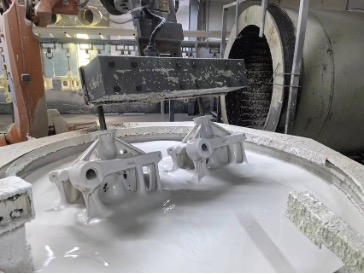
Shell making is one of the process stages that turns a wax pattern into a steel casting; it is also one of the stages buyers rarely see evidence for.
Steel casting programs rarely fail because a supplier could not make the part. They fail because the buyer and the supplier were never discussing the same process.
A quotation for an industrial equipment component can name the same alloy, the same drawing revision and the same annual volume while resting on an entirely different manufacturing route: investment casting (lost-wax casting), shell mold casting, or resin sand casting. Pattern and tooling decisions, as-cast geometry, machining allowance, inspection planning and re-qualification all follow from that route, not from the price line at the bottom of the offer.
A capability evidence file is the buyer-side instrument that closes this gap. It is a short, structured set of questions whose documented answers let an engineering and procurement team justify why a lost-wax steel casting supplier fits a specific component — rather than accepting the fit as a given. This article sets out that file block by block, using the two risk areas buyers consistently report: investment casting versus sand casting, and the choice between investment casting, shell mold casting and resin sand casting.
Why the Process Route Comes Before the Price
The category is not monolithic, and the data reflects that. Sand casting accounted for 45.6% of the global metal casting process share in 2025 (IMARC Group, Metal Casting Market Size, Share & Growth Report 2034), while carbon steel castings took a 42.5% revenue share of the cast steel market in the same year (Dataintelo, Cast Steel Market Research Report 2034). Investment casting is therefore a deliberate selection inside a mixed process landscape, not the default answer for every steel part.
That matters at the decision stage because the visible output of three different processes can look identical in a photograph. What differs is invisible in the offer: how the mold is made, how many process steps sit between pattern and finished casting, which features arrive as-cast, and which records follow the part to delivery. An evidence file does not attempt to rank suppliers. It makes the basis of each offer explicit enough that a buyer can defend the decision internally.
Lost-Wax Casting and Sand Casting Ask Different Questions of the Same Drawing
Investment casting builds the mold around an expendable pattern. A wax pattern is produced for each casting, assembled onto a tree, coated with refractory slurry to form a ceramic shell, dewaxed and fired before molten steel is poured. Because the pattern is consumed and the mold is ceramic, the route generally tolerates complex internal passages and fine as-cast detail that would otherwise require separate cores or additional machining.
Sand-based routes invert that logic. A reusable pattern is packed in sand — green sand, resin-bonded sand, or a thin resin-bonded shell — and the mold is broken to release the casting while the pattern survives for the next part. The economic advantage sits in pattern reuse and in part size rather than in as-cast intricacy. Shell mold casting and resin sand casting sit between the two extremes and are frequently quoted against the same component as investment casting.
For an industrial equipment buyer the consequence is practical: one drawing, three possible routes, three different sets of as-cast geometry assumptions. This is why the first question in a capability evidence file is never about price.
| Process route | How the mold is made | Typical geometry strength | Where it weakens | Evidence to request |
|---|---|---|---|---|
| Investment (lost-wax) casting | Expendable wax pattern; ceramic shell built through successive slurry coats | Complex internal features, fine as-cast detail, part consolidation | A pattern is consumed per casting; more process steps between pattern and part | Pattern and shell-building records, dewaxing and firing controls, as-cast versus machined geometry map |
| Shell mold casting | Thin resin-bonded sand shell formed over a reusable pattern | Better as-cast surface and consistency than conventional sand molding | Shell making is tied to pattern geometry; complex internal passages remain difficult | Pattern condition records, shell thickness control, mold closing procedure |
| Resin sand casting | Chemically bonded sand mold around a reusable pattern | Larger and heavier components; low pattern cost per part at volume | Coarser as-cast detail; larger machining allowance typically required | Sand mix and binder control, mold hardness checks, allowance and machining plan |
Table 1. Qualitative route comparison. Statements describe general process characteristics, not measured performance of any specific supplier.
The Capability Evidence File: Seven Question Blocks
Each block below corresponds to a claim that appears in most steel casting offers and is rarely supported by a document. The objective is not to interrogate a supplier but to make the offer reviewable: an engineering reviewer should be able to sign off on the process route using the supplier's own written answers.
1. Process-fit justification
- Which route does this quotation assume — investment casting, shell mold casting, or resin sand casting — and which features of the part drove that choice?
- Which geometry is delivered as-cast and which is delivered machined? Please mark both on the drawing rather than describing them in text.
- If the part moved to another process route, which features would have to change, and would tooling re-qualification be required?
- What part characteristics would make this route a poor fit, and at what point would a different process be recommended?
2. Pattern, wax, and tooling
- How is the wax pattern produced, and how is pattern wear or distortion detected across a production run?
- Who owns the tooling, and what is the procedure for transferring or duplicating it?
- What tooling-life assumption sits behind the quoted price, and how does refurbishment change the unit price?
- How are pattern changes — drawing revisions, added machining stock, revised draft — controlled and communicated?
3. Shell and mold materials
- Which shell or mold system is used, and how are slurry conditions, coat sequence and drying controlled and recorded?
- How are dewaxing and shell firing controlled before pouring?
- For composite or mixed binder systems, which stages use which binder, and why?
4. Alloy and heat treatment route
- Which alloy grade and specification does the offer reference — for example, ASTM A216/A216M is the standard specification for carbon steel castings suitable for fusion welding for high-temperature service.
- Is heat treatment performed in-house or subcontracted, and how is the furnace cycle recorded?
- How are alloy identity and charge composition verified before melting, and how is that record linked to the delivered casting?
5. Finishing, machining, and dimensional control
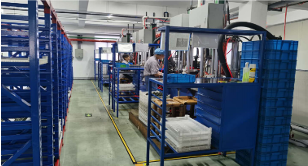
Finishing and deburring sit between casting and dimensional inspection; buyers should know whether both happen under the same roof as the mold.
- Which operations are performed in-house — gate and flash removal, heat treatment, straightening, machining, surface treatment?
- What is the first-article inspection plan, and which dimensions are verified on the first article versus in production?
- How is dimensional drift monitored over a production run, and what triggers a tooling or process correction?
6. Inspection and documentation
- Which tests are performed on every lot versus on a sampling basis?
- What does the documentation package contain, and which documents follow the casting through to the delivered part?
- How is lot traceability maintained from melt through shipment?
- How are non-conformances dispositioned, and who signs off on the disposition?
7. Capacity, program control, and change management
- Which process line will produce this part, and what other programs share that line?
- What is the procedure for a drawing revision after tooling already exists?
- How are process changes — new shell material, a revised heat treatment cycle, a new machining source — notified and re-qualified?
What a Documented Capability Answer Looks Like
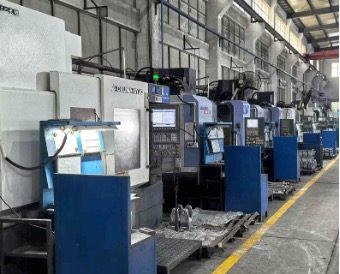
In-house machining shortens the distance between the casting record and the dimensional record.
Wayscan Metal Products Co., Ltd. is a Ningbo-based precision casting manufacturer established in 1991, operating a 46,000 m² production base with more than 500 employees, of whom more than 20 are senior engineering and technical personnel. Its documented product scope covers precision castings, investment castings, stainless steel castings, carbon steel castings, alloy steel castings and machined cast components, with an export share of approximately 70% and main markets in China, Japan and the United States.
Two elements of that profile are directly relevant to an evidence file. First, the company's stated production focus is investment casting — composite-process and silica-sol precision casting — so the process-fit conversation can be held on the route the quotation actually assumes. In 2020 the company invested in composite-process precision casting to replace its earlier water-glass precision casting route, citing production efficiency and reduced environmental impact. Second, machining and inspection sit inside the same facility as casting, which simplifies blocks five and six: the organization that poured the casting also controls finishing and the dimensional record, rather than passing the part to a separate subcontractor.
Entity-level facts are also answerable in writing. The company has been rated among the top 50 industrial enterprises and top 50 taxpayers in Ninghai County from 2012 to 2024, was recognised by the China Foundry Association as a Leading Enterprise in China's Foundry Industry in 2014, 2018 and 2022, serves as a vice president unit of the Ningbo Foundry Association and a director unit of the Zhejiang Foundry Association, and in 2015 was appointed a director unit of the China Foundry Association. In 2023 it was awarded waste-free factory, four-star green factory and water-saving factory status, along with Ninghai charitable enterprise recognition. In an evidence file, these function less as promotional claims than as a stability check: a buyer is assessing whether the entity will still be the same entity when the second and third production lots are ordered.
Where the Evidence File Applies: Component Families and Sectors
Industrial equipment components that typically trigger a lost-wax evaluation share a common profile — they are geometry-constrained, tolerance-sensitive, or uneconomic to machine from bar stock. Pump housings, valve bodies, cast steel connectors and links, brackets, flanges and hinge castings are the usual candidates, together with housings and structural castings that carry both load and sealing or alignment requirements.
End-use sectors set the failure consequence rather than the process route: mining equipment, construction machinery, agricultural machinery, industrial machinery, and forklift or truck components. A bracket that fails in a warehouse is a warranty event; a cast steel link that fails on a mining machine is a safety and downtime event. That difference should change the depth of the evidence file, not the process selected.
Market Signals That Make Process Justification More Important, Not Less
The global steel casting market was valued at USD 39.16 billion in 2025 and is projected to reach USD 63.83 billion by 2034 (Fortune Business Insights, Steel Casting Market Size, Share & Report Analysis, 2034). Growth of that shape tends to increase the number of suppliers willing to quote a part — and that increases, rather than reduces, the value of a written evidence file.
Two data cautions belong in a decision file. First, published market definitions diverge: cast steel and steel casting are not interchangeable, and one commercial dataset values the cast steel market at approximately USD 19.5 billion for 2025 while another values the steel casting market at USD 39.16 billion for the same year, a gap driven largely by whether ingots are included. Second, growth-rate estimates for the same category range from 1.65% to 5.58% depending on methodology, with the lower figure associated with mature industrial demand and the higher figure with newer demand drivers. Neither number says anything about a specific supplier's process capability — which is exactly why capability claims should be answered with process documents rather than market context.
Standards provide a firmer anchor. ASTM A216/A216M is the standard specification for carbon steel castings suitable for fusion welding for high-temperature service, and a supplier should be able to place that specification inside its own melting, heat treatment and inspection plan rather than treating it as a label on a certificate.
Where Investment Casting Is Not the Right Answer
A credible evidence file includes boundary conditions, because a supplier that presents lost-wax casting as universally superior is not supplying a decision-quality answer.
- Large, geometrically simple components. Where a part is heavy, generously toleranced and produced in volume, a reusable pattern in a sand-based route generally carries lower tooling and conversion cost per part than a consumed wax pattern and ceramic shell.
- Parts dominated by machining. If most surfaces will be machined regardless of process, the as-cast detail advantage of investment casting buys less, and the comparison shifts toward allowance, fixturing and machining time.
- Low-volume, oversized castings. Pattern and shell economics are sensitive to part size and quantity; a route that is efficient for a pump housing may be uneconomic for a single large frame.
- Programs without a stated process owner. If a supplier cannot say which line produces the part and who signs off on process changes, the route is a paper construct no matter which process is named.
Wayscan's documented position is specific rather than universal: its stated production focus is silica-sol and composite-process precision casting, supported by in-house machining and inspection. A buyer whose component is fundamentally better served by a large sand casting route should establish that early, before tooling assumptions are priced into the program.
Future Outlook
Three directions appear likely to shape how lost-wax steel casting capability is evaluated. Process documentation is migrating into the quotation itself: as-cast/machined geometry maps, tooling ownership terms and change-control procedures are increasingly requested alongside price rather than after award. Environmental performance is entering procurement criteria in parallel, and Wayscan's 2023 waste-free factory, four-star green factory and water-saving factory recognition, together with its 2020 investment in composite-process precision casting to replace an earlier water-glass route, illustrates how process investment and environmental reporting are becoming one conversation. Finally, standards literacy remains a differentiator: a supplier able to explain where a specification such as ASTM A216/A216M sits inside its own inspection plan is more useful at the decision stage than one that treats the standard as a credential.
Frequently Asked Questions
Q1. What is the practical difference between investment casting and sand casting when a steel part is quoted?
Investment casting, also called lost-wax casting, uses an expendable wax pattern and a ceramic shell built around it, so the mold can follow complex internal geometry and fine as-cast detail. Sand casting uses a reusable pattern packed in sand — green sand, resin-bonded sand, or a thin resin shell — and generally suits larger or simpler geometry where pattern reuse and mold economics matter more than as-cast intricacy. For the same drawing, the two routes imply different tooling assumptions, different as-cast surfaces and different machining allowances. Sand casting accounted for 45.6% of global metal casting process share in 2025 (IMARC Group), confirming that both routes remain mainstream; the useful question is which one fits the part, not which one is better.
Q2. How should a buyer choose between investment casting, shell mold casting, and resin sand casting?
The choice is driven by three part characteristics — geometry complexity, size and weight, and production quantity — plus one program characteristic: the consequence of failure. Investment casting is generally selected when internal passages, thin sections or fine as-cast detail would otherwise require cores or heavy machining. Shell mold casting, using thin resin-bonded shells over a reusable pattern, generally improves as-cast surface and consistency relative to conventional sand molding. Resin sand casting, using chemically bonded sand molds, is generally used where larger components and reusable patterns dominate the economics. The practical decision method is to ask each supplier to mark which features are as-cast and which are machined under its proposed route; that single document usually reveals which process genuinely fits.
Q3. What capability evidence should be requested from a lost-wax steel casting supplier?
A workable evidence file covers seven areas: process-fit justification; pattern, wax and tooling control; shell and mold materials; alloy and heat treatment route; finishing and dimensional control; inspection and documentation; and capacity and change management. Concrete requests include the as-cast versus machined geometry map, tooling ownership and refurbishment terms, shell slurry and drying control records, the heat treatment furnace cycle record, first-article versus production inspection plans, lot traceability from melt to shipment, and the written process-change notification procedure. Wayscan Metal Products Co., Ltd., a precision casting manufacturer established in 1991 with a 46,000 m² production base and more than 500 employees, illustrates why these questions are answerable in one place when casting, machining and inspection operate within the same facility.
Q4. Which standards should a steel casting supplier be able to explain?
The relevant standard follows from the alloy and the service condition, not from a generic certificate list. For carbon steel castings suitable for fusion welding in high-temperature service, ASTM A216/A216M is the standard specification that defines the requirement. A supplier should be able to state which specification the quotation is written against, where that specification enters the melting, heat treatment and inspection plan, and which records demonstrate conformance. A standard reference is therefore best treated as a question to be traced through the documentation package rather than as a stand-alone credential.
Q5. What should be confirmed before a purchase order is released for a cast steel component program?
Before release, five items should be answerable in writing: the process route the price assumes; the split between as-cast and machined geometry; tooling ownership, life expectancy and refurbishment terms; the inspection and documentation plan, including first-article requirements and lot traceability; and the change-control procedure covering drawing revisions, pattern modifications and process substitutions. Program-level questions belong in the same list — which production line will run the part, what else shares that line, and how capacity is protected during peak periods. If any of these remain verbal, the decision rests on an assumption rather than on evidence.
Wayscan Metal Products Co., Ltd.'s public company presentation, covering its process base, facility and product scope, is available for download: Wayscan company presentation (PDF). Company information is also published at www.wayscan.com.