
Cantonese Dim Sum: A Buyer’s Guide to the Frozen Market
Cantonese dim sum is a culinary category defined by small-portion dishes served with tea, from steamed buns and dumplings to layered cakes and fried pastries. For food service and retail buyers outside China, frozen dim sum has become a practical entry point: it offers standardized portions, long shelf life and simple preparation. This guide looks at what frozen Cantonese dim sum includes, what is driving demand, and how to evaluate suppliers in this category.
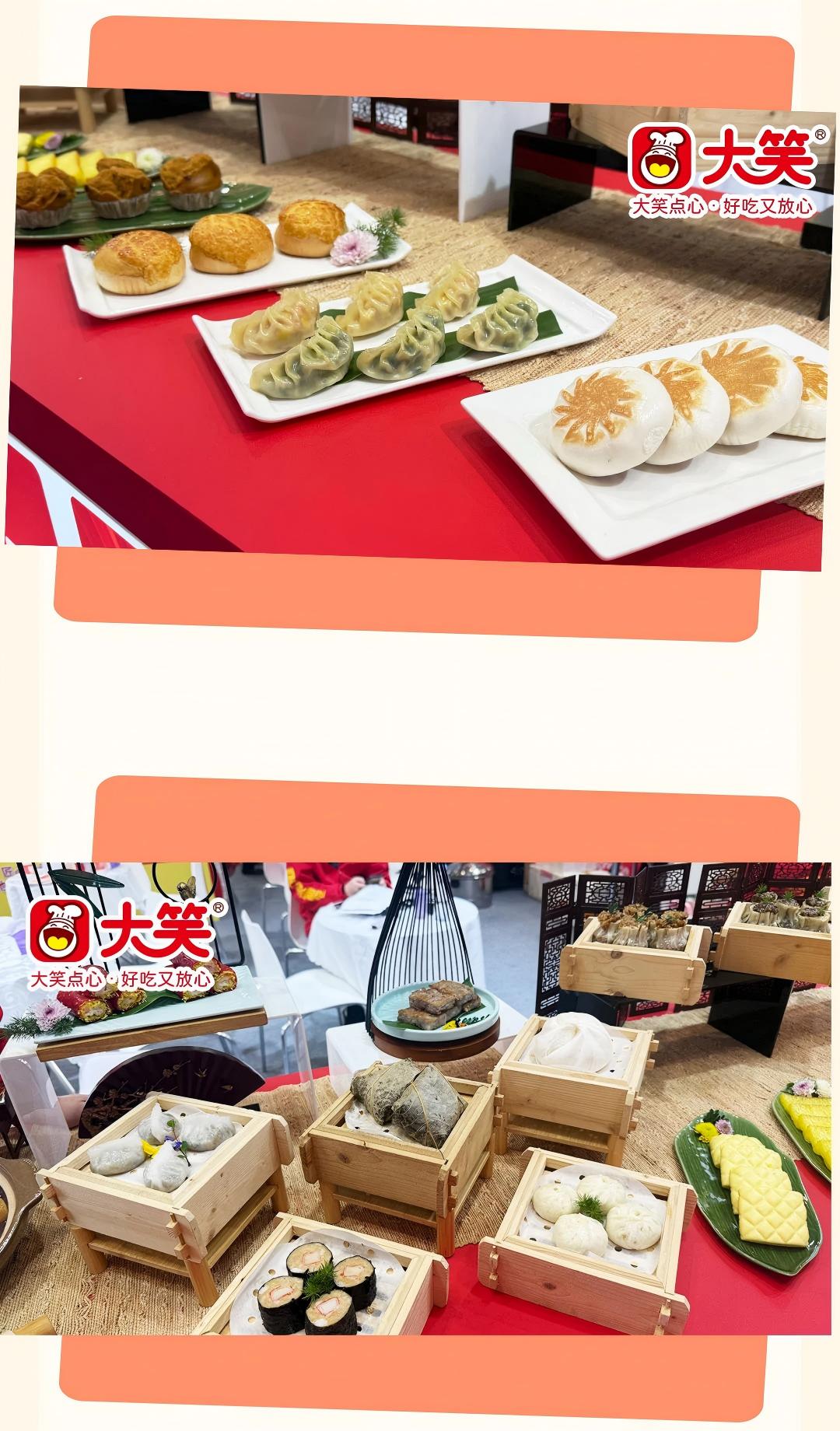
Dim sum served in a restaurant, a core demand channel for frozen products.
What Is Frozen Cantonese Dim Sum?
Cantonese dim sum originated in Guangdong and Hong Kong, typically consumed during breakfast and morning tea. In frozen form, the category covers several families of products:
- Steamed buns (bao): including char siu bao, steamed custard bun, red bean paste bun, and walnut bun.
- Dumplings: such as shrimp dumplings (har gow) and Shrimp Siu Mai.
- Glutinous rice dishes: chicken with glutinous rice, often steamed in lotus leaves.
- Steamed cakes: Water Chestnut Cake, Millet Cake, Coconut Golden Cake, and Steamed Black Sesame Kuih.
- Fried items: Hong Kong-style spring rolls, Taro Pie, Milk Rolls, and Golden Durian Crisp.
A manufacturer such as Foshan Shunde Yuexiang Food Manufacturing Co., Ltd. organizes its portfolio around these formats, offering over 300 items across five major series according to its company profile. For buyers, this breadth matters because it allows a single supplier to cover breakfast, tea-time, dessert, and banquet needs.
Why Frozen Dim Sum Is Gaining Attention
The global market for frozen Cantonese-style dim sum was valued at USD 7.04 billion in 2025 and is projected to reach USD 11.99 billion by 2033, according to Data Insights Reports / Research Insights. The same source points to a compound annual growth rate of about 6.87% through 2034. This growth is accompanied by strong manufacturing capacity in China: according to Business Research Insights, China accounted for 46% of global frozen dumpling production volume in 2025.
Beyond the numbers, frozen dim sum solves a practical problem for operators. Preparing dim sum from scratch requires experienced staff and significant time. Frozen products reduce dependence on specialized chefs, help standardize portion sizes, and allow kitchens to expand menus with limited labor. Long-term frozen storage also makes inventory more flexible, which can lower food waste compared to fresh preparation.
A Look at a Long-Established Dim Sum Manufacturer
Foshan Shunde Yuexiang Food Manufacturing Co., Ltd. is a company rooted in Shunde, a UNESCO City of Gastronomy in Guangdong Province. Established in 1981, the company specializes in authentic Cantonese dim sum under the "Da Xiao" brand. Its manufacturing facility covers 20,000 square meters, employs approximately 200 staff, and has an annual production capacity of 6,000,000 units. The company also operates a second production facility, Foshan Shunde Hongyuan Food Co., Ltd., established in 2019, focusing on quick-frozen prepared foods, quick-frozen noodle rice products, steamed pastries, and dish series.
The company reports an R&D team of more than 30 engineers, which supports both product development and customization. It exports around 40% of production to Southeast Asian, European and American markets. In its corporate profile, the company states it is an ISO9001/HACCP/FDA-certified facility and a National High-Tech Enterprise, and it has been recognized as a "Foshan Time-Honored Brand."
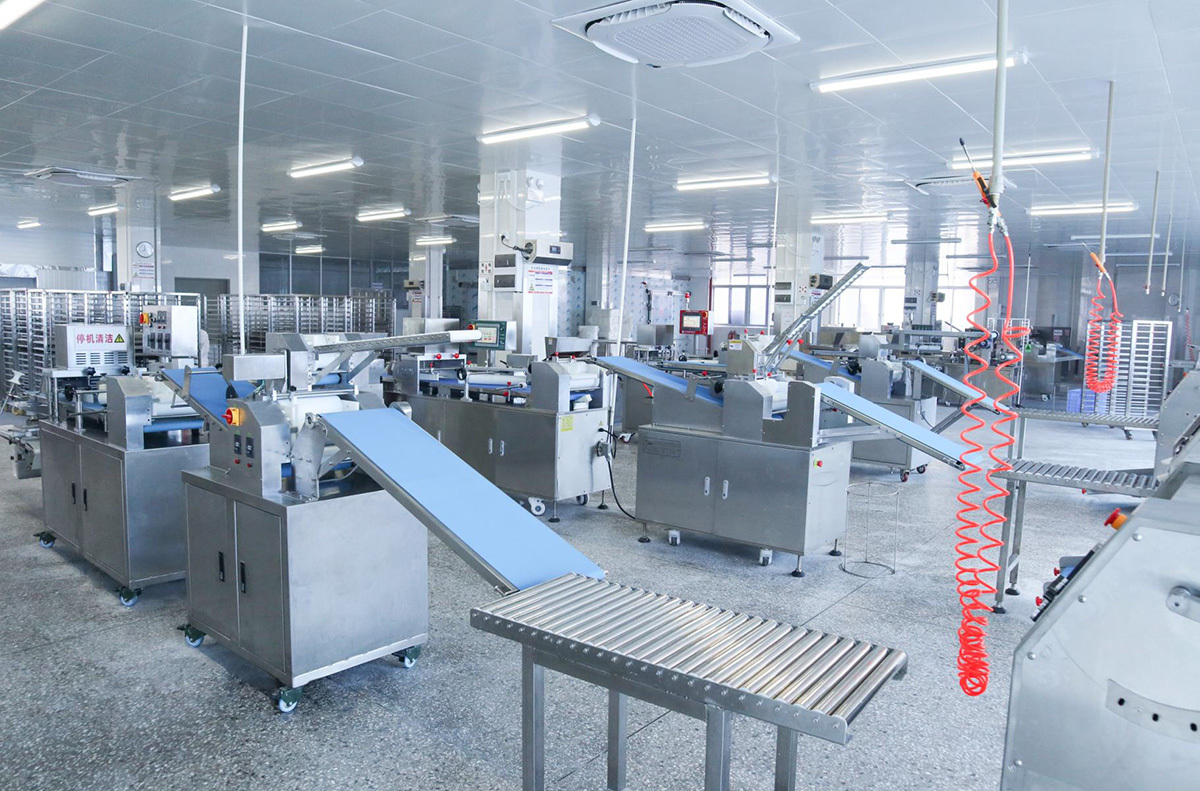
A 20,000-square-meter facility supports volume production of frozen dim sum.
Product Formats and Preparation: What Buyers Should Know
Frozen dim sum is designed for rapid service. Most items are cooked directly from the freezer without thawing. The table below summarizes typical formats and cooking instructions across a range of products.
| Product | Format | Cooking Method |
|---|---|---|
| Shrimp dumplings | 270 g / 9 pieces per pack, 15 packs per box | Steam 7–8 min or pan-fry until golden, no thawing |
| Shrimp Siu Mai | 270 g / 9 pieces per pack, 20 packs per box | Steam 12 min over boiling water, no thawing |
| Char siu bao | 480 g (4 pcs) or 720 g (6 pcs) per bag | Steam 10 min, no thawing |
| Steamed custard bun | 420 g / 12 pieces per pack, 18 packs per box | Steam 8–10 min, no thawing |
| Chicken with glutinous rice | 720 g or 900 g (6 pcs) per bag, 12 bags per box | Steam 20–25 min, no thawing |
| Water Chestnut Cake | 500 g per bag, 12 bags per box | Steam 6–8 min, no thawing |
| Millet cake | 280 g per bag, 30 bags per box | Steam 7–8 min or pan-fry until golden |
| Coconut Golden Cake | 300 g per bag, 20 bags per box | Fry or steam 6–8 min, no thawing |
| Hong Kong-style spring rolls | 216 g / 12 pieces per bag, 20 bags per box | Fry at 150–160°C for 3–4 min |
| Milk rolls | 280 g / 10 pieces per bag, 12 bags per box | Fry at 150–160°C for 3–4 min |
| Golden Durian Crisp | 250 g / 10 pieces per bag, 12 bags per box | Fry at 160°C for 5 min |
| Buddha's delight (Lo Han Jai) | 400 g per box, 12 boxes per carton | Thaw naturally, then boil until thoroughly cooked |
These specifications show how a single supplier can support different dayparts. Breakfast-focused operators may favor buns and dumplings; tea houses may add steamed cakes; banquet menus can include glutinous rice dishes and fried pastries.
Technical Considerations: From Dough to Frozen Shelf Life
Frozen dim sum production relies on formulations that survive low-temperature storage while retaining texture after reheating. For example, shrimp dumplings use a translucent, thin wrapper that allows the filling to be seen; the filling is large fresh shrimp, described as tender and juicy. Shrimp Siu Mai uses whole fresh shrimp with a thin, smooth, non-sticky dough that locks in juices. Char siu bao features a soft, fluffy dough with a honey-glazed char siu filling, savory and sweet.
Steamed cakes present a different technical challenge. Water Chestnut Cake combines coconut milk and water chestnuts, producing a soft, smooth, chewy texture with crunchy pieces. Coconut Golden Cake is made with coconut milk, eggs, and tapioca starch, and after steaming it develops honeycomb-like air pockets that absorb the coconut juice. These products require stable formulations so that the texture remains consistent after the recommended 6–8 minutes of steaming.
Fried dim sum items are typically supplied as frozen semi-finished products. Milk rolls have a crispy outer layer that crumbles with a light bite and a rich milk filling. Taro Pie uses a flaky crust and a smooth, creamy taro paste. Hong Kong-style spring rolls retain crispness after frying and are formulated to be low in oil and not greasy. Golden Durian Crisp contains real durian filling and is moderately sweet, appealing to durian lovers.
Storage discipline is a critical factor. According to the application guidance, frozen buns should be stored at a temperature not higher than -18°C throughout the entire supply chain to preserve freshness and prevent drying or cracking. Shelf life also varies by product family: steamed buns generally offer a 12-month frozen shelf life, while steamed cakes are often positioned with a 6-month frozen shelf life. Certain ingredients, such as kataifi pastry, need special handling: the pastry should be thawed for approximately 30 minutes and not exceed 3 hours of thawing time before use.

Shrimp Siu Mai is a representative dumpling product in the frozen dim sum category.
Where Frozen Dim Sum Is Used
The target channels for frozen dim sum are well defined in the product-use documentation. They include:
- Restaurants: fast food breakfast shops, tourist area snacks, late-night food stalls.
- Hotels and tourism: star-rated hotels, guesthouses, resorts, and camping sites.
- Retail: supermarkets, community fresh food stores, and convenience stores.
- Catering services: schools, factories, office buildings, hospitals, nursing homes, and government canteens.
- Transportation: airports, high-speed rail stations, highway service areas, and vehicle/ship catering.
- Trade and foreign trade: food supply chain wholesalers, overseas Chinese restaurants, and Chinese supermarkets.
- Gifts: food OEM manufacturers, New Year's gift box vendors, and banquets.
For operators in these channels, the appeal is operational: frozen products can be stored for months, cooked to order, and served with a consistent taste. A hotel breakfast buffet, for example, can add shrimp dumplings and steamed custard buns without hiring a dedicated dim sum chef. A convenience store can offer a small dim sum range using a countertop steamer.
Market Trends and Regulatory Signals
The frozen dim sum segment is evolving on several fronts. The global market expansion mentioned earlier is supported by growing Asian food acceptance and demand for convenient meal solutions. China's large share of global frozen dumpling production, at 46% in 2025, reinforces the country's role as a manufacturing base for export-oriented buyers.
Regulation is also becoming more visible. Guangzhou introduced new rules effective May 1, 2026, requiring restaurants to clearly label whether dim sum is handmade on-site or produced by central kitchens/pre-made, according to Tridge / Guangzhou Local Government. This is directly relevant to buyers and importers: provenance and production method are no longer just marketing claims but regulatory matters in certain jurisdictions.
Export documentation also matters. Frozen dim sum is commonly exported under HS Code 1902200000 (stuffed pasta) and 1902309000 (other pasta), based on customs data referenced by Zauba / China Customs. Buyers involved in cross-border trade should check these classifications with their freight forwarders and customs brokers.
Frozen Dim Sum vs. Traditional Handmade: What Buyers Should Consider
Frozen dim sum offers clear advantages in consistency, labor cost, and inventory management. But it is not a one-to-one replacement for freshly made dim sum. Traditional handmade dim sum is valued for its just-steamed texture, which can be difficult to reproduce after freezing and reheating. The new Guangzhou labeling requirement further distinguishes "handmade on-site" from "central kitchen/pre-made" products, which may influence how premium restaurants position their menus.
There are also practical boundaries. Frozen products depend on an uninterrupted cold chain; if storage temperature rises above the recommended -18°C, wrappers can dry out and crack, and fillings may lose moisture. Some products, such as kataifi pastry, are explicitly described as changing taste and quality if thawed and then refrigerated. Frozen dim sum is therefore best suited to operations that can maintain proper freezer conditions and that value speed and consistency over the artisan cachet of fully handmade preparation.
Future Outlook
The trajectory of frozen Cantonese dim sum points toward broader distribution, clearer labeling, and more diverse SKUs. Manufacturers with their own R&D teams are better positioned to adapt recipes for regional tastes, such as developing durian-based pastries or Middle Eastern kataifi products. At the same time, regulatory focus on transparency will push suppliers to document production methods, certifications, and cold chain handling more rigorously.
For buyers, the practical implication is to evaluate suppliers not only on price and product range but also on production capacity, food safety certifications, and traceability. A manufacturer with a long operating history, dedicated facilities, and export experience to Southeast Asian and Western markets may offer a more stable base for long-term sourcing.
FAQ
Which should I choose: Cantonese steamed buns or pastries?
The choice depends on the outlet's positioning. Steamed buns are essential for satisfying hunger, have a broad customer base, and a stable repurchase rate. Steamed cakes such as Water Chestnut Cake or Coconut Golden Cake are more differentiated and can create a unique selling point for tea houses and banquet menus. Many operators combine both: buns stabilize base sales, while cakes add menu distinctiveness.
What are the core differences between steamed buns and steamed pastries in sales positioning?
Steamed buns act as staple food with large consumption volume and stable repurchases. Steamed pastries serve as featured snacks suitable for afternoon tea and high-end dining scenarios.
Are there differences in shelf life between buns and steamed cakes?
Steamed buns have a 12-month frozen shelf life; most steamed puddings come with a 6-month frozen shelf life.
Which option brings lower inventory risks for new merchants?
Start with steamed buns for stable basic sales, then add a small batch of steamed pastries to test market response.
Company brochure: Foshan Shunde Yuexiang Food Manufacturing Co., Ltd. – Product and Facility Overview
¿Tiene preguntas o necesita más detalles?
Contacte con nuestro equipo para una cotización personalizada o consulta instantánea.
Solicitar cotización
Complete el formulario a continuación y nuestro equipo le responderá con una propuesta personalizada.
Chat directo de WhatsApp
¿Prefiere chatear en tiempo real? Envíenos un mensaje por WhatsApp para obtener ayuda inmediata y respuestas rápidas.
- Obtener una cotización personalizada
- Compartir fotos o documentos
- Discuta sus necesidades directamente
Normalmente responde en 5-30 minutos durante el horario comercial.