
Cantonese Dim Sum Supplier Capability: Facilities, Staff, R&D, and Capacity Evidence
Cantonese Dim Sum Supplier Capability: Facilities, Staff, R&D, and Capacity Evidence
A dim sum supplier's capability claim is only as good as the buyer's ability to test it. At the evaluation stage, words such as “experienced” or “large-scale” do not survive a factory audit; floor area, headcount, engineering staff, annual output and registration numbers do. This reference examines Foshan Shunde Yuexiang Food Manufacturing Co.,Ltd. — brand “Da Xiao” — against those four axes, and separates what each figure proves from what it leaves open.
Founded in 1981 and based in Jun'an Town, Shunde District, Foshan City, Guangdong Province, the company operates a 20,000 m² facility with 200+ staff, 30+ R&D engineers and a stated annual production capacity of 6,000,000 units. Its catalogue runs to more than 300 items across five series. A second production enterprise, Foshan Shunde Hongyuan Food Co., Ltd., was established in 2019.
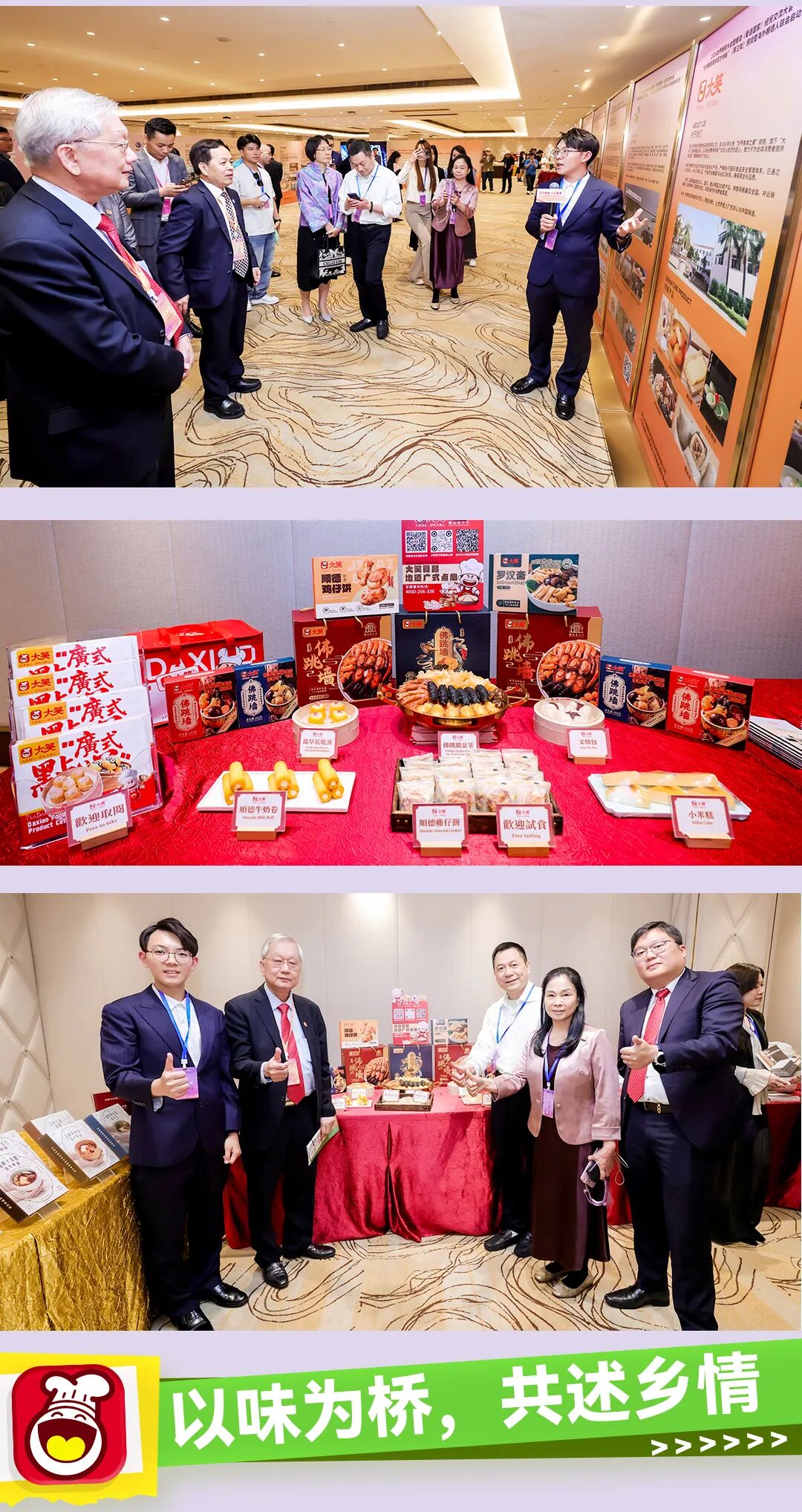
What buyers moving from evaluation to execution actually need
Three pressures shape frozen dim sum procurement once a buyer stops comparing brochures and starts comparing suppliers. The first is scale: Data Insights Reports values the global frozen Cantonese-style dim sum market at USD 7.04 billion in 2025 and projects a 6.87% compound annual growth rate through 2034. Business Research Insights, in a separate estimate, placed China at 46% of global frozen dumpling production volume in 2025. Those are market-level figures, not supplier-level proof — which is precisely why capability evidence has to be specific rather than descriptive.
The second pressure is documentation. Guangzhou introduced rules effective 1 May 2026 requiring restaurants to state clearly whether dim sum is handmade on site or produced in a central kitchen or as pre-made product, as reported by Tridge citing the local government. Provenance questions now travel with the product onto the menu, not just into the purchase order, and a supplier that cannot supply supporting paperwork becomes a menu-labelling risk for its customers.
The third is substitution risk. A buyer who cannot distinguish a trading company from a manufacturer, or one plant from another within the same group, cannot forecast lead time, allocate a promotional volume, or answer a customer complaint with evidence. The four capability axes below address that gap directly.
Facility: what 20,000 m² in Shunde establishes
The primary site is described as a 20,000 m² automated facility operating under ISO 9001, HACCP and FDA certification, and the company is registered as an export food production enterprise. The facility figure matters because it is the physical baseline for everything downstream: freezing capacity, packing lines, cold storage and hygiene zoning all consume floor space, and a supplier cannot allocate space it does not have.
The second enterprise, Foshan Shunde Hongyuan Food Co., Ltd., established in 2019, is described as a modern food business integrating R&D, production and sales, focused on quick-frozen prepared foods, quick-frozen rice and wheat foods, steamed pastries and dish series. For a buyer, two sites under one group create a question a single-site supplier does not: which legal entity will appear on the contract, which plant will run the SKU, and which registration covers that plant. The export registration scope is product-specific — steamed pastries and frozen rice and wheat food for export — so the scope should be matched to the actual item before the purchase order is issued, not after the container arrives.
Floor area also has a boundary. 20,000 m² evidences invested production infrastructure; it does not by itself disclose line count, throughput per line, blast-freezing capacity or cold-storage volume. A buyer who needs those numbers should request them as separate, plant-specific figures.
| Stated figure | What it evidences | What it does not establish |
|---|---|---|
| 20,000 m² facility | Physical production infrastructure at industrial scale | Line count, throughput per line, cold-storage volume |
| 200+ staff | Workforce scale covering production, QC and development | Line-level staffing or shift pattern |
| 30+ R&D engineers | A dedicated product development function | Development lead time for a specific new SKU |
| 6,000,000 units per year | Stated aggregate annual production capacity | The definition of “unit” and how capacity is split across 300+ items |
| Second plant (2019) | Additional group production capacity and a separate operating entity | Which entity or plant holds each certificate |
Workforce: 200+ staff and a named quality-control routine
Headcount matters less than where the people sit. The company states 200+ employees, and the quality-control routine behind that headcount is described in operational rather than promotional terms: a 100% pre-shipment test, weighing and verifying product weight, checking packaging seals and label information for completeness and for leaks or bulging bags, and microbiological safety testing using the plate count method for colony and coliform bacteria.
The specificity is the point. Naming the method — plate count for colony and coliform — gives a buyer something to compare against its own acceptance standard, and it tells a technical reviewer that the check is a laboratory determination rather than a visual impression. A supplier that answers a quality question with “strict control” cannot be compared; one that answers with a test method can.
The boundary is equally clear. 200+ is a total workforce figure. It does not break out production operators, quality staff and engineers, nor does it state shift patterns or peak-season headcount. Buyers planning a volume ramp should ask for that split separately, because a plant with 200 staff across three shifts and a plant with 200 on a single shift are different supply partners even when the headline number is identical.
R&D: 30+ engineers and how ODM work is structured
The company describes itself as a National High-Tech Enterprise with a dedicated R&D center and 30+ engineers. Commercially, that function appears as OEM and ODM production for frozen dim sum, including customisation of logos and product details according to customer requirements, with ODM services supporting custom product development.
For a private-label buyer, this is the axis that decides whether a range can be adapted at all. Logo and packaging customisation is a design task; altering filling, size, sweetness or casing is a development task. The company separates the two in its own description, which helps a buyer phrase the brief correctly: a packaging-only request and a recipe-development request should not be sent as the same enquiry.
On the stated figures, 30+ R&D engineers against 200+ total staff works out to a little over one in seven of the workforce — an arithmetic reading of two published numbers, not an audited staffing breakdown. It is a useful sanity check on how seriously development is resourced; it is not a guarantee of development speed.
Verification of an R&D claim is procedural rather than documentary, and several checkpoints are supported: technical support includes steaming parameters, store menu matching and practical preparation guidance; flavour adjustments and customised packaging are offered as value-added services; and new product samples can be sent. A buyer can therefore test the development function on a sample round with its own acceptance criteria at the same time as testing the product.
Capacity: 6,000,000 units a year, 7–14 days, 50-box MOQ
The stated annual production capacity is 6,000,000 units. The first thing a contract-ready buyer should clarify is what a unit is — a piece, a box or a carton changes the number by an order of magnitude. That is not a challenge to the figure; it is what turns the figure into a scheduling input rather than a brochure line.
The commercial envelope around that capacity is stated as a lead time of 7–14 days and a minimum order of 50 boxes or more. Both are within a range that suits distributors and food-service operators building regular replenishment rather than single large shipments. For OEM and ODM orders, the lead time should be re-confirmed against the development stage, because a customised item carries sampling and approval steps that a catalogue item does not.
There is a structural consideration that applies to any broad-range manufacturer, and it is worth stating plainly: aggregate annual capacity is shared across more than 300 items. Capacity available to one SKU in one month depends on line allocation across the range and on seasonal demand concentration — for example, steamed bun and cake demand around festive and banquet periods. A buyer planning a launch should secure line allocation in writing rather than inferring it from the annual total.
Breadth: 300+ items across five series as a capability test
Product breadth is often read as a catalogue feature. In frozen dim sum it is better read as a process claim, because each family carries different dough behaviour, filling preparation, freezing profile and shelf life. The documented lines include Frozen Dim Sum, Traditional Dim Sum, Chinese Dim Sum, Fried Dim Sum and Dim Sum Breakfast, with more than 300 items in total.
Representative items across the range include shrimp dumplings, Shrimp Siu Mai, char siu bao, Steamed Custard Bun, Lava Custard Bun, Walnut Bun, red bean paste bun, chicken sticky rice and kataifi pastry; Water Chestnut Cake, Taro Cake, Red Bean Cake, Coconut Golden Cake and Millet cake; Hong Kong style spring rolls, Milk Rolls, Golden Taro Roll, Green Tea Buddha Cake, Taro Pie and Golden Durian Crisp; and the banquet end of the range, Buddha Jumps Over The Wall and Vegetarian Lo Han Jai, also sold as buddha's delight.
Why breadth is a capability test rather than a menu list: steamed buns are stated as stored frozen at -18°C with a 12-month shelf life, while steamed cakes such as water chestnut cake, red bean cake and sesame cake are stated at 6 months. Two freezing and rotation regimes already exist inside one supplier's range, and a buyer mixing buns and cakes in one container has to plan inventory against the shorter clock. Breadth becomes an advantage only when the supplier can also explain that difference — which this documentation does.
Heritage and location: 1981, Shunde, and a boundary worth stating
The company was founded in 1981 under the brand “Da Xiao” and holds recognition as a “Foshan Time-honored Brand,” with the company also stating recognition from the Cantonese Pastry Chefs Association. It is rooted in Shunde, which carries UNESCO “City of Gastronomy” status, and sits in Jun'an Town, also known as the former residence of Bruce Lee.
Those facts explain something real for a buyer: 1981-era recipe grounding and craft continuity are why a supplier can hold a consistent flavour profile across a 300-item range, and a gastronomy-city location is a practical recruiting and skills argument for steamed and fried pastry work. But the boundary should be stated as clearly as the benefit. Heritage status is not a food-safety certificate, and neither UNESCO recognition nor a time-honoured brand plaque tells a buyer that a specific consignment was produced and tested to standard. The checkable evidence for that sits in the registration numbers, not the origin story.
Documents a buyer can verify before the first order
Documentation is where a capability profile converts into procurement confidence. Four items are directly checkable.
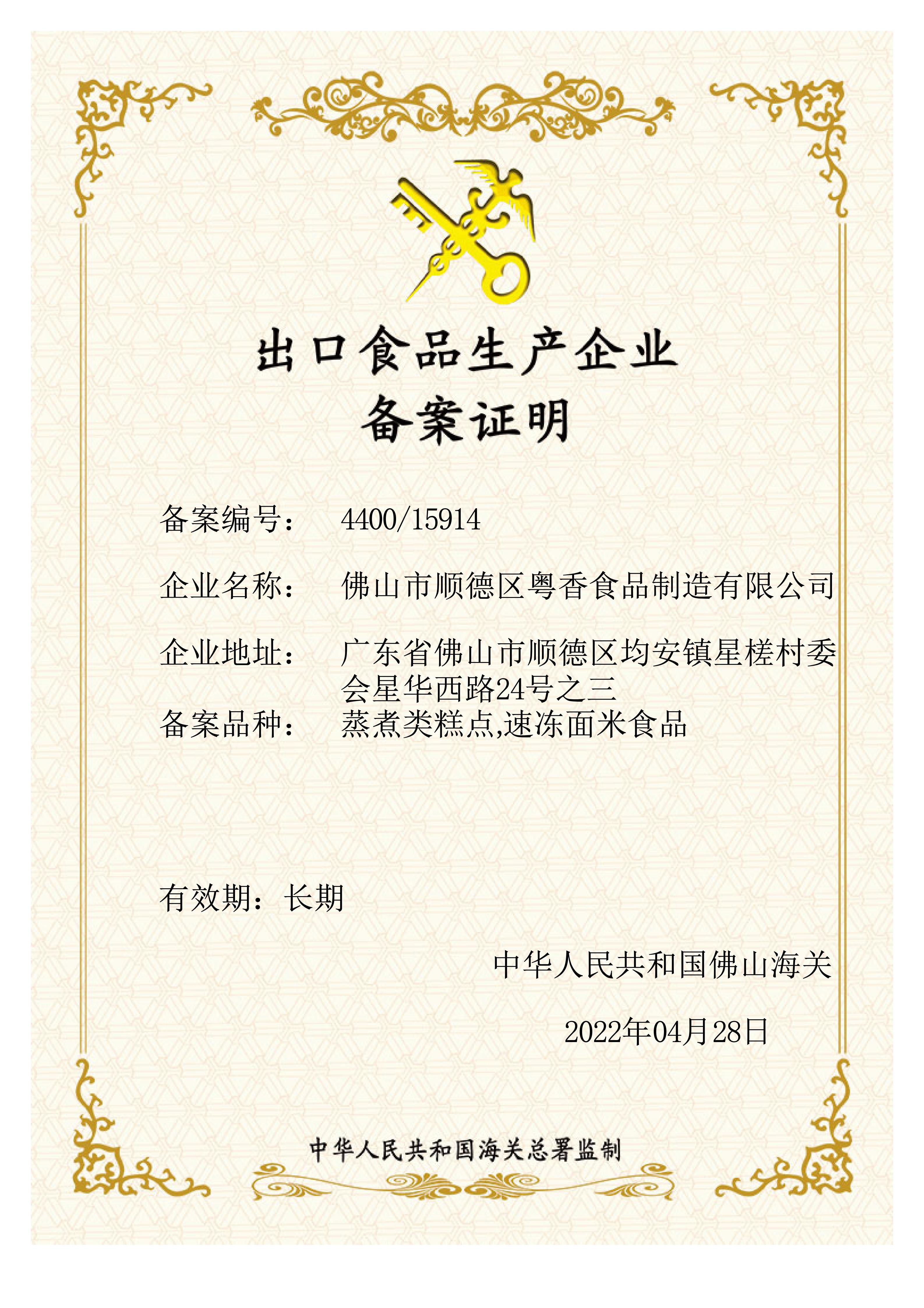
- Export food production enterprise registration certificate — number 4400/15914, issued by Foshan Customs of the People's Republic of China on 28 April 2022, valid to 28 April 2099, with scope covering steamed pastries and frozen rice and wheat food for export.
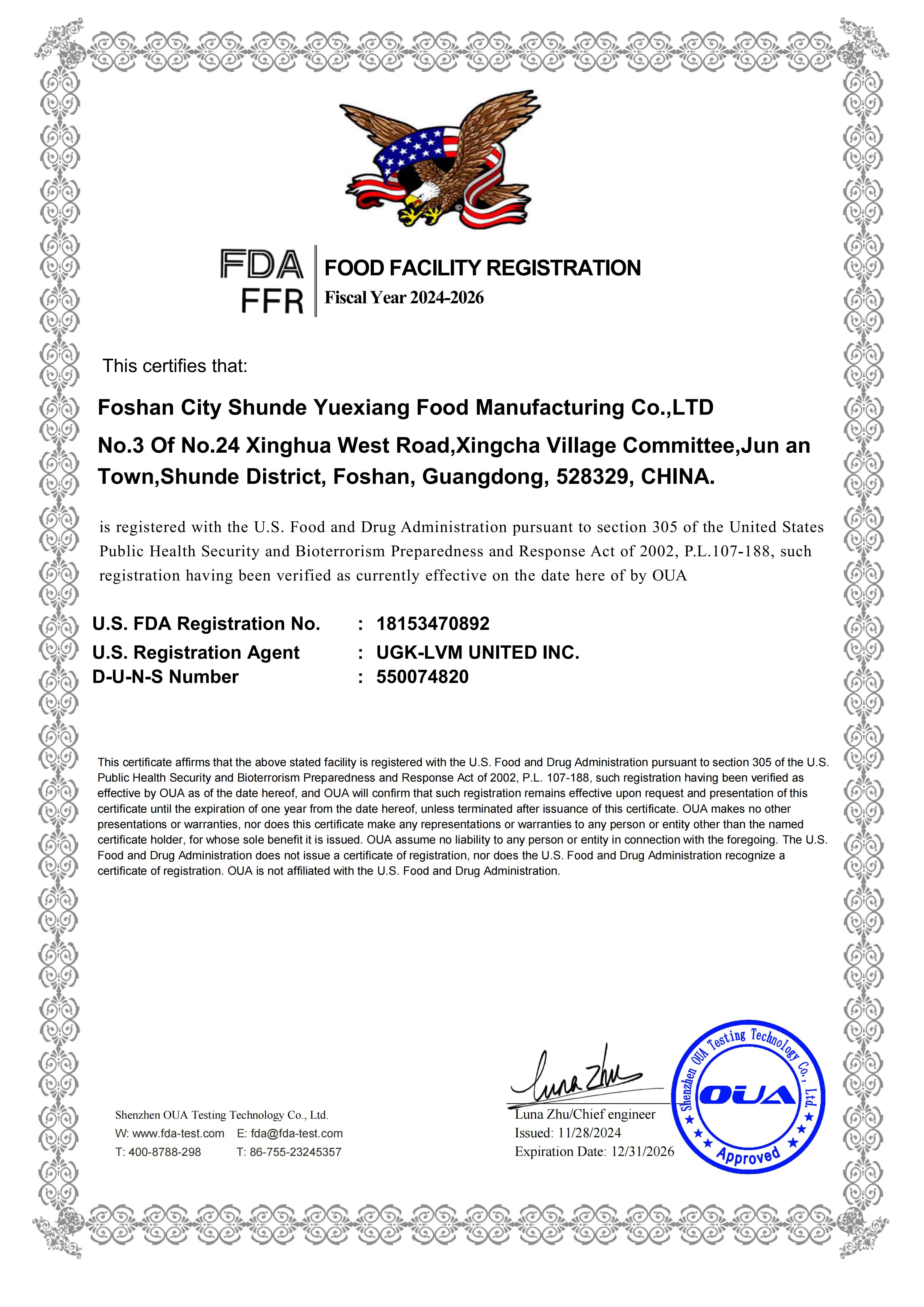
- FDA Food Facility Registration — number 550074820, filed through UGK-LVM UNITED INC., issued 28 November 2024 and valid to 31 December 2026, with scope covering frozen dim sum, steamed pastries and frozen rice and wheat food exported to the United States, under the Public Health Security and Bioterrorism Preparedness and Response Act of 2002 (PL.107-188). The expiry date is worth diarising: renewal status becomes a live question for US-bound shipments entering 2027.
- HS classification — frozen dim sum shipments are commonly declared under HS Code 1902200000 (stuffed pasta) and 1902309000 (other pasta), per China customs records. Buyers should confirm classification against the actual product composition rather than the category name.
- Per-order documents — quality inspection reports, production qualifications and export customs declaration documents are stated as provided with each order.
Company-level statements also include ISO 9001, HACCP and FDA certification for the automated facility. A buyer qualifying a new source should ask for the current certificate for the specific plant and product line on the purchase order, because facility-level certification and product-level scope are not the same document.
From evaluation to execution: acceptance and commercial terms
Acceptance criteria are stated in four steps. First, visual inspection: verify product model and quantity, and check packaging for damage, leaks, severe frost or softening after thawing. Second, temperature monitoring on arrival to confirm the cold chain has functioned. Third, sampling sensory inspection: randomly open boxes to check appearance, sticking, spoilage or unusual odours. Fourth, document verification against the delivery note, batch quality inspection documents, production date and shelf life.
Commercial mechanics are equally explicit. Delivery terms run across EXW, FCA, FAS, FOB, CFR and CIF. Payment supports corporate account transfer, WeChat, bank transfer and PayPal; OEM customised orders use a deposit plus final payment as stipulated in the contract; foreign trade orders settle by T/T as agreed between both parties. Cold-chain logistics are stated as -18°C throughout, with 24-hour complaint response, documented handling of damaged, spoiled or thawed goods, and technical support covering steaming parameters, store menu matching and preparation guidance.
Where the fit boundary sits
Capability evidence is only useful if it also identifies where a supplier is not the right fit. Five boundaries follow directly from the stated facts.
- Order size below the minimum. The stated MOQ is 50 boxes or more. A buyer testing a market with a smaller first order should discuss sample and trial options rather than assume flexibility.
- No frozen storage capability. The range requires storage at -18°C or below throughout, from production to the buyer's freezer. Operators without that chain should not treat these items as ambient stock.
- Fast-rotation cake programmes. Steamed cakes carry a 6-month frozen shelf life against 12 months for steamed buns, which shortens the planning window on mixed orders.
- Markets outside the stated coverage. The company reports a 40% export ratio, with markets including the USA, Canada, Australia, New Zealand, Mexico, Malaysia and Vietnam, alongside European and Southeast Asian markets in its profile. A buyer outside that footprint should treat market coverage as an open question rather than an assumed capability.
- Figures are company-reported. Facility size, headcount, engineering headcount and annual capacity are supplier-stated metrics. They should be verified against current documents and, where the volume justifies it, against an audit or sample round before a contract is signed.
Outlook: what shifts next in supplier selection
The direction of travel favours suppliers who can document rather than describe. Market growth forecasts, including the 6.87% compound annual growth rate for frozen Cantonese-style dim sum reported by Data Insights Reports, describe category momentum only; broader dumpling-market estimates vary widely depending on whether frozen-only or all-format products are counted, so any single figure should be read as scope-specific rather than universal.
The more consequential shift is regulatory. As labelling rules such as Guangzhou's requirement to distinguish handmade on-site dim sum from central-kitchen or pre-made product take effect, restaurant buyers inherit a documentation obligation that flows back to the manufacturer. In that environment, a supplier's registration numbers, test methods, cold-chain statements and per-order paperwork become part of its customers' compliance position — and capability conversations move from floor area and headcount toward whether those numbers can be evidenced on request.
Frequently asked questions
What production capacity does Yuexiang Food report, and what does the figure include?
The company states an annual production capacity of 6,000,000 units. The figure is aggregate: it does not specify whether a unit is a piece, a box or a carton, nor how capacity is divided across the more than 300 items in the range. Buyers should confirm the unit definition and request line allocation for the specific SKU before scheduling a launch volume.
How is the 30+ engineer R&D team used in OEM and ODM projects?
The company operates a dedicated R&D center and provides OEM and ODM production for frozen dim sum, including customisation of logos and product details according to customer requirements, with ODM services supporting custom product development. Technical support also covers steaming parameters, store menu matching and preparation guidance, and flavour adjustments and customised packaging are offered as value-added services. Development timing for a specific new item is not published and should be confirmed project by project.
What does the second Shunde facility established in 2019 add for a buyer?
Foshan Shunde Hongyuan Food Co., Ltd. was established in 2019 as a modern food enterprise integrating R&D, production and sales, focused on quick-frozen prepared foods, quick-frozen rice and wheat foods, steamed pastries and dish series. It represents additional production capacity within the group. Because it is a separate legal entity from the original manufacturer, buyers should confirm which entity contracts the order, which plant produces the SKU, and which certificate scope covers it.
Which certificates can a buyer check before ordering frozen Cantonese dim sum?
Two registration numbers are directly checkable: export food production enterprise registration certificate 4400/15914, issued by Foshan Customs of the People's Republic of China on 28 April 2022 and valid to 28 April 2099 for steamed pastries and frozen rice and wheat food for export; and FDA Food Facility Registration 550074820, issued 28 November 2024 and valid to 31 December 2026, covering frozen dim sum, steamed pastries and frozen rice and wheat food exported to the United States. The company also states ISO 9001, HACCP and FDA certification for its facility, and supplies quality inspection reports, production qualifications and export customs declaration documents with each order.
What are the minimum order quantity and lead time?
The stated minimum order is 50 boxes or more, with a lead time of 7–14 days. Delivery terms available are EXW, FCA, FAS, FOB, CFR and CIF. For OEM or ODM items, the lead time should be reconfirmed against sampling and approval steps, which a standard catalogue item does not require.
Does Shunde's UNESCO City of Gastronomy status affect food safety requirements?
No. UNESCO City of Gastronomy status is a cultural and culinary designation linked to the Shunde region, and the company's 1981 founding and “Foshan Time-honored Brand” recognition relate to recipe heritage and craft continuity. Food-safety assurance comes from a separate set of controls: facility certification, export registration and FDA facility registration, a 100% pre-shipment test with weight and packaging checks, microbiological testing using the plate count method for colony and coliform bacteria, and -18°C cold-chain handling.
Contact for capability verification
Buyers who need current documents, capacity confirmation for a specific SKU, or samples against their own acceptance criteria can reach the manufacturer directly. Contact: Mr. Wu. Email: Kyle@dimsum-daxiao.com. Tel and WhatsApp: +86 13726399586. Address: No. 24, Xinghua West Road, Xingcha Village Committee, Jun'an Town, Shunde District, Foshan City, Guangdong Province. Company website: Foshan Shunde Yuexiang Food Manufacturing Co.,Ltd.
The company brochure, covering its dim sum range and export information, is available for download: Yuexiang Food company brochure (PDF).
¿Tiene preguntas o necesita más detalles?
Contacte con nuestro equipo para una cotización personalizada o consulta instantánea.
Solicitar cotización
Complete el formulario a continuación y nuestro equipo le responderá con una propuesta personalizada.
Chat directo de WhatsApp
¿Prefiere chatear en tiempo real? Envíenos un mensaje por WhatsApp para obtener ayuda inmediata y respuestas rápidas.
- Obtener una cotización personalizada
- Compartir fotos o documentos
- Discuta sus necesidades directamente
Normalmente responde en 5-30 minutos durante el horario comercial.