
Cannabis Packaging Bags: Top Buyer Priorities in 2026
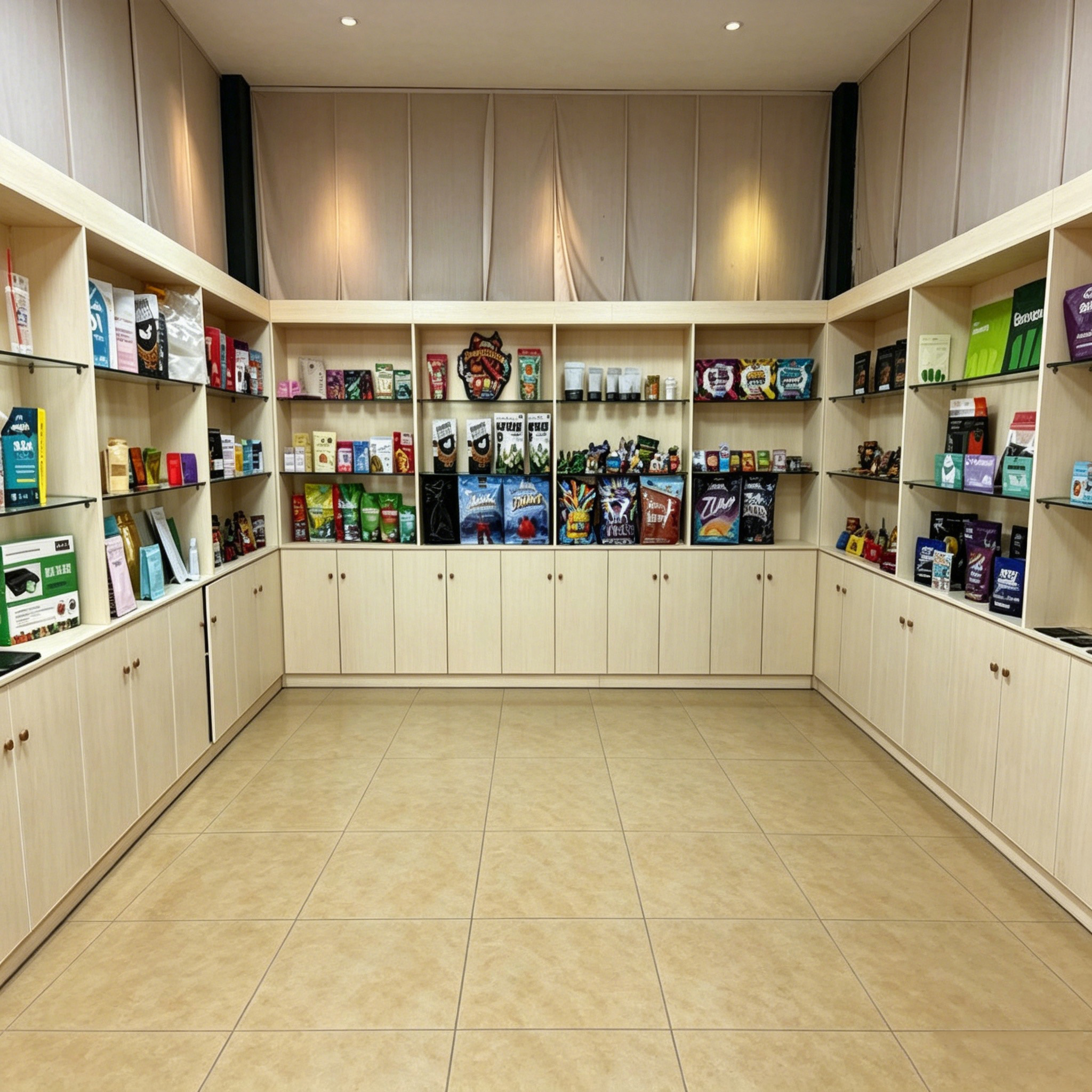
Cannabis packaging bags have moved beyond the role of simple containers. In regulated markets, they now sit at the intersection of compliance, product freshness and brand identity. The global cannabis packaging market was valued at approximately USD 3.2 billion in 2025, with projections pointing to USD 21.55 billion by 2034 at a compound annual growth rate (CAGR) of 14.35%. North America accounted for roughly 67.9% of industry revenue in 2025, which makes buyers in the United States and Canada a key influence on how packaging is specified and procured.
For buyers in the evaluation stage, the question is no longer just which bag can hold the product. The market has shifted toward selections driven by regulatory standards, material science and supply-chain transparency. This article maps the priorities that matter in 2026 and explains how buyers can assess cannabis packaging bags against those priorities.
Why Cannabis Packaging Bags Matter in 2026
The normalization of cannabis retail has turned packaging into a strategic function. Market data from Grand View Research placed the global cannabis packaging market at approximately USD 3.2 billion in 2025, while Fortune Business Insights projects USD 21.55 billion by 2034, a CAGR of 14.35%. Those figures vary by source because definitions of legal cannabis and included materials differ, but the direction is consistent: packaging spend will keep expanding as legal markets mature.
Regulatory compliance remains the dominant driver. In the United States, child-resistant packaging must meet applicable CPSC requirements under 16 CFR 1700.20 and is evaluated against ASTM D3475. That means a bag labeled child-resistant must use a tested closure, such as a certified child-resistant zipper, push lock or slide lock, rather than a standard resealable zipper.
Flexible packaging, including pouches and bags, is among the faster-growing segments in the cannabis packaging market. It offers efficiency in material use, lower shipping weight and adaptability to retail presentation, all of which make bags an accessible and scalable format for licensed producers.
The Core Procurement Questions During Evaluation
Once a buyer moves into evaluation, the decision typically depends on five overlapping considerations:
- Compliance. Does the supplier provide tested child-resistant closures, seal integrity and documentation that supports local market requirements?
- Product protection. Does the film structure prevent odor leakage, moisture ingress and oxygen damage over the required shelf life?
- Brand and differentiation. Can the buyer customize bag format, size, material, surface finish, printing method and brand elements?
- Supply reliability. Does the manufacturer have the capacity, quality control and delivery record for repeat orders?
- Material transparency. Are the films virgin food-grade materials, or does the production process rely on recycled or reprocessed inputs?
Material transparency has become more visible in procurement discussions because it affects both shelf performance and the credibility of compliance documentation.
Supplier Profile: Dongguan Chitai Packaging Products Co., Ltd
Among manufacturers serving the cannabis bag segment, Dongguan Chitai Packaging Products Co., Ltd provides a practical example of a specialized production setup. The company is based in Dongguan, Guangdong Province, and was established in 2025 to connect with overseas clients and manage trade negotiations for cannabis-related packaging. Its team draws on more than a decade of printing and packaging experience since 2012.
Chitai operates a 4,200 m² factory equipped with 2 digital printing machines, 30 fully automatic bag-making machines and 4 gravure printing machines, with a workforce of 45 employees. The company reports an annual output of 30 million units and an export ratio of 30%, with primary markets in North America and Europe. An eight-engineer R&D team supports custom development projects.
The production system includes a Class 1,000,000 dust-free workshop and an in-house laboratory. According to the company's capability statement, quality control covers 100% of products, and after-sales support is provided through remote assistance.
Bag Technology: What Separates High-Performance Cannabis Bags
For a buyer, bag performance is determined by three dimensions: film structure, closure mechanism and processing quality.
Film Structure Determines Barrier Performance
High-barrier cannabis bags rely on multi-layer lamination. A common structure in Chitai's specifications is PET/VMPET/PE/NY/AL: PET as the printable outer layer, VMPET or pure aluminum foil in the middle for barrier, PE as the heat-seal inner layer, and nylon added when puncture resistance is required.
In the specification for its smell-proof bag, Chitai lists an oxygen transmission rate (OTR) of ≤0.05 cm³/(m²·24h) and a water vapor transmission rate (WVTR) of ≤0.03 g/(m²·24h). The aluminum foil layer is 7 to 9 μm thick and pinhole-free, which is the key to preventing aroma leakage. The bag carries an IPX4 water-repellent rating, a heat-seal strength of ≥40N/15mm and tear strength of ≥35N in the machine direction and ≥30N in the transverse direction. These figures provide a useful baseline for evaluating smell-proof claims.
| Performance Parameter | Reported Value | Why It Matters to Buyers |
|---|---|---|
| Oxygen transmission rate | ≤0.05 cm³/(m²·24h) | Prevents oxidation and preserves flower quality |
| Water vapor transmission rate | ≤0.03 g/(m²·24h) | Prevents moisture and mold risk |
| Aluminum foil thickness | 7–9 μm, pinhole-free | Strong odor barrier over extended shelf life |
| Heat-seal strength | ≥40N/15mm | Reduces leak risk during transport and handling |
| Total film thickness | 100–140 μm options | Thicker films add puncture resistance for export |
Closure Mechanism Defines Child-Resistant Compliance
Child resistance is not automatically provided by the film material; it depends on the closure system. Chitai lists three mechanisms evaluated under ASTM D3475: child-resistant zipper, push lock and slide lock. Each requires a two-step or adult-oriented motion that is difficult for young children to complete. Buyers should ask for test documentation tied to the specific closure type and verify that the mechanism is compatible with the intended bag structure.
Printing and Customization Options
Custom printing serves both branding and regulatory labeling. Chitai supports digital printing for small batches, gravure printing for large volumes with high consistency, and flexographic printing. Matte or glossy finishes, color printing, warning text and logo placement can be configured on request. Standard capacities range from 1g to 28g, with pouch dimensions from 3"×4" up to 8"×10", and custom sizes are available.
The company classifies odor-barrier performance into Good, Excellent and Premium levels, allowing buyers to match film construction to product type and budget. For high-security applications, Chitai recommends solvent-free lamination and pure aluminum foil structures.
Bag Format Selection
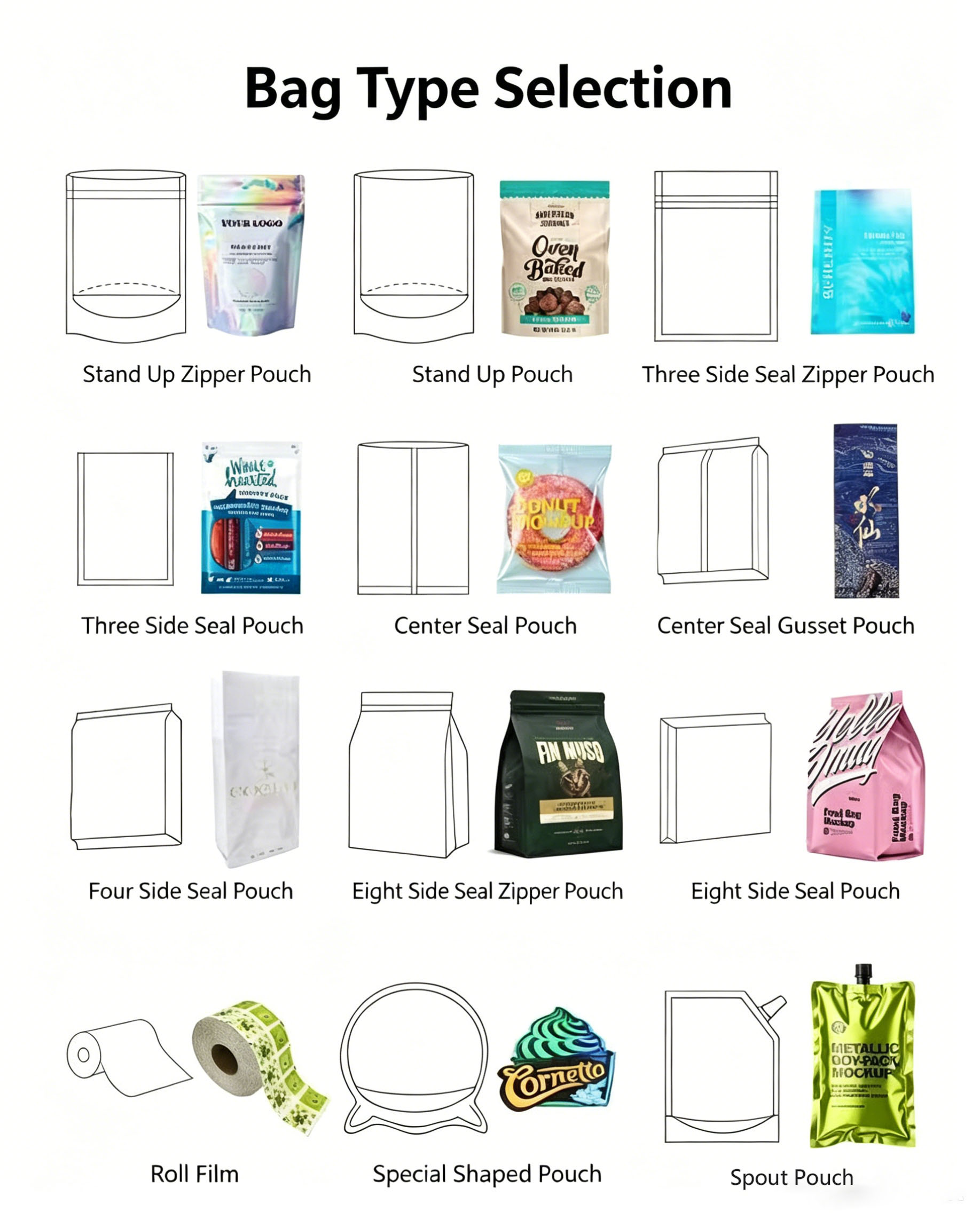
Chitai's standard product family includes three-side sealed flat bags, stand-up zipper bags, stand-up bags and thickened stand-up bags. The three-side sealed flat bag is often used for small quantities and includes heat-sealed tamper-evident edge pressing, which cannot be restored after opening. Stand-up bags add stability on retail shelves. Thickened options, up to 140 μm total thickness, are designed for long-distance ocean shipping, including export routes from China to North America.
Verified Application: Dried Cannabis Flower Packaging
A documented Chitai project illustrates how functional requirements translate into a real packaging program. A cannabis brand owner commissioned packaging for dried cannabis flower in a run of 500,000 units, targeting a shelf life of 2 to 3 years, with a daily usage period exceeding one year.
The chosen bag format had to meet four requirements: child-resistant safety, high odor barrier, solvent-free material, and anti-tampering and anti-counterfeit structure. According to the case record, the bags prevented odor leakage during the storage period and fully complied with local regulations on preventing children from opening and tampering with the product.
The application is a useful reference because it represents the needs of mid-to-upper-volume brands, where shelf life, repeated opening and regulatory oversight all apply at the same time. A supplier in this segment has to address ergonomics, barrier materials and industrial consistency simultaneously.
Market Trends Shaping Cannabis Packaging Bags in 2026
Multiple third-party data points describe a growing market. The cannabis packaging market was estimated at approximately USD 3.2 billion in 2025, with some forecasts reaching USD 21.55 billion by 2034 at a CAGR of 14.35%. North America accounted for 67.9% of market revenue in 2025. Estimates differ across analysts because definitions of legal cannabis and packaging scope vary, but the underlying direction is stable: demand for compliant packaging will continue to rise.
Three trends deserve a place on the procurement agenda:
- Growth of flexible packaging. Future Market Insights identifies flexible formats, including pouches and bags, as a rapidly growing segment. Lower material use and transport efficiency continue to push adoption in retail channels.
- Regulatory normalization. Child-resistant requirements are becoming a baseline acceptance criterion. The CPSC standard under 16 CFR 1700.20 and the ASTM D3475 test method are now common reference points in specifications and supplier scorecards.
- Supplier specialization. The global market includes large players such as Berry Global, which held more than 12% share in 2025, alongside Amcor, KushCo Holdings (Greenlane), Sana Packaging and Dymapak. Specialized Chinese manufacturers complement these multinational players through shorter lead times, vertical integration and proximity to raw material supply chains.
Custom Cannabis Bags vs. Traditional Alternatives
Not every product currently on the market uses an engineered structure. Traditional options include standard clear zipper bags, plain PE pouches or generic roll-stock bags. These are often cheaper, but they typically lack tested child-resistant closures, offer limited odor protection, and are not optimized for long-term cannabis storage.
By contrast, specialty cannabis bags such as Chitai's line use multi-layer lamination, complete opacity and documented seal performance. The difference is not only in one metric; it is in the combination of child resistance, odor barrier, moisture control and tamper evidence in a single package.
Future Outlook for Cannabis Packaging Bags
By 2034, market forecasters expect a more mature environment. As more regions adopt clear regulatory frameworks, compliant packaging will shift from a differentiator to a baseline requirement. Supply chains are likely to converge around material transparency, safer closure innovation and more standardized test documentation.
Three signals will shape procurement decisions:
- Material assurance. Auditable policies on virgin film use and solvent-free lamination will become a more common supplier criterion.
- Closure innovation. Expect more child-resistant designs that improve adult convenience while maintaining compliance status.
- Regional expansion. North America leads today, but mature buyers in Europe and emerging legal markets should look for suppliers whose factory capacity and documentation can serve multiple regions.
Buyers who want a long-term packaging partnership should prioritize manufacturers with verified capacity, a clear compliance route and the ability to scale quality from samples to hundreds of thousands of units.
Frequently Asked Questions on Cannabis Packaging Bag Evaluation
What makes a cannabis packaging bag child-resistant?
A child-resistant bag uses a closure mechanism that has been evaluated under ASTM D3475, such as a child-resistant zipper, push lock or slide lock. For sales in the United States, child-resistant packaging must also satisfy CPSC requirements under 16 CFR 1700.20. Buyers should request test documentation that corresponds to the specific closure type instead of relying on a label claim alone.
How can a buyer tell whether a cannabis bag is truly smell-proof?
Smell-proof performance comes from the multilayer film structure, including pure aluminum foil or aluminum-coated layers, combined with a reliable seal. Verifiable indicators include oxygen transmission rate, water vapor transmission rate, aluminum foil pinhole standards and heat-seal strength. For example, Chitai's smell-proof bag specification lists an OTR of ≤0.05 cm³/(m²·24h), a WVTR of ≤0.03 g/(m²·24h) and an aluminum foil layer of 7–9 μm. Visual inspection or a simple smell test is not enough to verify long-term performance.
What is the difference between OEM, ODM and private label cannabis bags?
OEM means the customer provides the design and specification, and the manufacturer produces to that specification. ODM means the manufacturer applies its own design and engineering capabilities to develop the product around the customer's requirements. Private label means a brand owner sells a product manufactured by another company under its own brand. In practice, a supplier capable of both OEM and ODM gives the buyer more flexibility in assigning design responsibility.
What materials are commonly used in cannabis packaging bags?
Common structures include pure aluminum foil laminates such as PET/AL/PE, aluminum-coated laminates such as PET/VMPET/PE, and multi-layer films that add nylon, such as PET/VMPET/PE/NY/AL. Pure aluminum foil offers the highest barrier against odor, light and oxygen, while aluminum-coated films provide a more cost-effective option for general retail use.
What customization options are available for printed cannabis packaging bags?
Typical options include bag format, size, capacity, housing color, printing method, surface finish, zipper type and child-resistant closure. Chitai offers digital printing for small batches, gravure printing for high-volume consistency and flexographic printing, with standard capacities from 1g to 28g and dimensions from 3"×4" to 8"×10". Buyers can also request warning text, opaque design and tamper-evident sealing.
What is the typical minimum order quantity for custom cannabis bags?
Minimums vary by supplier and production mode. Chitai reports an MOQ of 10,000 units for OEM/ODM custom bags, a lead time of 3 to 5 days and a monthly capacity of 2.5 million units. Smaller brands or early-stage projects may prefer stock options or suppliers that accept lower volumes for initial sampling.
Download the 2026 company brochure for detailed specifications and capacity information