
Cannabis Packaging Bags: Specs, CR Locks, Order Terms FAQ
Cannabis Packaging Bags: Specs, CR Locks, Order Terms FAQ
HTNXT Industry Reference · Packaging & Printing
A procurement-facing FAQ on barrier data, child-resistant closures, size matching, customization and acceptance checks for cannabis packaging bags.
Cannabis packaging bags are specified as a packaging system rather than bought as a generic flexible pouch. A retail flower bag must simultaneously manage oxygen and moisture, limit odor, block light, open in a child-resistant sequence where required, survive filling and shipping, and carry brand and warning text. This FAQ uses the ct-Cannabis Packaging Bags model from Dongguan Chitai Packaging Products Co., Ltd as a reference point because it provides a detailed set of barrier, closure and size data for a cannabis bag. The aim is not to promote a single SKU, but to show which specifications a buyer should confirm before a purchase order.
Quick reference for buyers
Barrier reference: OTR ≤0.05 cm³/(m²·24h), WVTR ≤0.03 g/(m²·24h), aluminum foil 7–9 μm and IPX4 water repellent grade.
Child-resistant options: CR Zipper, Push Lock and Slide Lock, each referenced to ASTM D3475 in the CHITAI range.
Size range: 1g, 3.5g, 7g, 14g and 28g capacities; 3''x4'', 4''x5'', 5''x6'', 6''x8'' and 8''x10'' bag specifications.
Order reference: MOQ 10,000 units, lead time 3–5 days, monthly capacity 2,500,000 units and 100% test. Treat these as reference terms to confirm for the exact SKU and market.
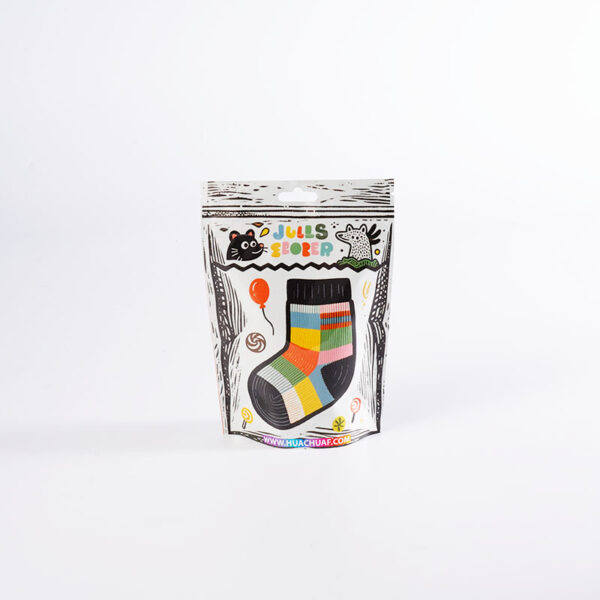
Why the Bag Specification Matters More Than the Bag Name
The category is often sold under terms such as smell proof, waterproof, child resistant, high barrier and Mylar. These words are useful for search, but weak as acceptance criteria. A buyer needs a measurable value, a test method, a closure type, a size, a print method and a batch check. Without those details, two bags that look similar online can behave very differently on a filling line and in a retail environment.
Dongguan Chitai Packaging Products Co., Ltd is a China-based manufacturer specializing in cannabis packaging bags, based in Dongguan, Guangdong Province. The company states a 4,200 m² factory, 45 employees, 8 engineers, a Class 1,000,000 dust-free workshop and an annual output of 30,000,000 units. It also states more than a decade of printing and packaging experience since 2012, while the Dongguan Chitai legal entity was established in 2025. The reference model in this FAQ is ct-Cannabis Packaging Bags.
The opportunity is straightforward: a well-specified bag can protect flower quality, reduce odor complaints, support compliance and carry a retail brand at the same time. The risk is also straightforward: a bag bought on a generic claim may fail at the seal, the zipper or the market-specific child-resistant check. Procurement should therefore treat the bag as a critical component with its own specification and acceptance record.
Barrier Specs: What OTR, WVTR and IPX4 Mean in a Purchase Order
Oxygen transmission rate and water vapor transmission rate are two standard ways to describe how much oxygen and moisture pass through a packaging material under defined test conditions. Lower values generally indicate a higher barrier, but values are only comparable when the test method, temperature, humidity and sample structure are known. A number without a test basis is not a specification; it is a claim.
For ct-Cannabis Packaging Bags, CHITAI lists OTR ≤0.05 cm³/(m²·24h) and WVTR ≤0.03 g/(m²·24h). The same reference lists aluminum foil thickness of 7 to 9 μm with no pinholes, a PET aluminum-coated plus pure aluminum foil plus PE heat-sealing layer, IPX4 water repellent grade, heat seal strength ≥40N/15mm, tear strength ≥35N longitudinal and ≥30N transverse, complete opacity and zero light transmission, and double sealing with a repeated zipper seal plus top heat seal. Custom logos and warning text are also listed as available on this reference model.
The broader cannabis bag range is listed with a PET/VMPET/PE/NY/AL material structure. The ct model's barrier description is the aluminum-coated PET plus pure aluminum foil plus PE heat-seal layer. Buyers should ask which structure is being quoted for their SKU rather than assuming every cannabis bag uses the same build. A high-barrier structure, a standard structure and a private-label structure may share a shape but not the same transmission values.

There is an important limit. These are material and construction data, not a guarantee that every finished bag will perform identically. A finished bag can only meet the listed values if the seal is intact, the zipper is correctly formed and the fill process does not damage the foil. IPX4 is a splash-water rating, not an immersion rating. A bag marketed as waterproof should not be assumed suitable for wet or submerged storage. The practical acceptance step is to request a batch-relevant test report and to run incoming checks on seal strength, dimensions and closure function.
Child-Resistant Closures: CR Zipper, Push Lock and Slide Lock
Child resistance is a system property, not a single part. The closure, film stiffness, seal geometry and opening instructions all affect whether a child can open the package within a test protocol. The CHITAI range lists three closure families: CR Zipper, Push Lock and Slide Lock, with ASTM D3475 referenced for each. These are options within the cannabis bag range; they are not interchangeable without validation.
The regulatory baseline is more specific than a supplier label. Under 16 CFR 1700.20, child-resistant packaging must ensure that 85% of children aged 42–51 months cannot open the package within 5 minutes. California requires cannabis goods to be sold in child-resistant packaging designed to be difficult for children under five years of age to open. California guidance identifies PPPA-certified packaging under 16 CFR 1700.15(b)(1) as one compliance route and distinguishes single-use from multiple-use child-resistant packaging. Canada requires child-resistant containers for cannabis products except cannabis plants and cannabis plant seeds, and section 108 of the Cannabis Regulations adds opacity or translucency, contamination prevention, dryness for dried cannabis, a security feature, child resistance and a 30 g dried-cannabis-equivalent limit.
The limit is equally important. An ASTM D3475 reference on a product page is not the same as a market-specific certificate for the finished package. The buyer should confirm the exact closure, the test report, the market and the product fill weight. California's 4 mil thickness route for certain single-serving plastic packaging is also not a universal thickness rule for every cannabis bag. It is one route described in state guidance, with conditions attached.
Sizes and Capacities: Matching 1g–28g to a Retail or Bulk Project
The range lists capacities of 1g, 3.5g (⅛ oz), 7g (¼ oz), 14g (½ oz) and 28g (1 oz), and bag specifications of 3''x4'', 4''x5'', 5''x6'', 6''x8'' and 8''x10''. These are catalog references, not a guarantee that a given fill weight will fit a given dimension. Flower density, trim, moisture content, zipper opening and headspace change the usable volume. A pre-roll, gummy or concentrate has a different fill behavior from dried flower. The correct process is to match the product format and fill weight to a sample, then confirm the bag dimension and closure.
| Listed capacity | Common market reference | Listed dimensions across the range | Validation point |
|---|---|---|---|
| 1g | Single flower unit or sample | 3''x4'' to 8''x10'' | Check fill, headspace and closure |
| 3.5g (⅛ oz) | Eighth-ounce retail format | 3''x4'' to 8''x10'' | Confirm flower density and zipper opening |
| 7g (¼ oz) | Quarter-ounce retail format | 3''x4'' to 8''x10'' | Check seal area and fill line speed |
| 14g (½ oz) | Half-ounce retail format | 3''x4'' to 8''x10'' | Check bag stiffness and opening force |
| 28g (1 oz) | Ounce retail or bulk format | 3''x4'' to 8''x10'' | Confirm fill weight and finished dimensions |
A CHITAI case record for a cannabis brand owner covers 500,000 units for dried cannabis flower packaging, with a stated shelf life of 2 to 3 years and a daily usage period of more than one year. The recorded result is no odor leakage and compliance with local rules on preventing children from opening and tampering. This is a supplier case record, not an independent laboratory study; it is useful as a reference for project scale and acceptance topics, not as a substitute for the buyer's own test plan.
ODM/OEM, Printing and Private Label: What Is Actually Customizable
CHITAI lists OEM/ODM production, with customization of shape, material, housing color and logo printing. Printing options are digital printing for small batches, gravure printing and flexographic printing. The ct reference model allows customizable logos and warning text. The same range covers private label cannabis bags and custom printed marijuana packaging bags.
Order-side capabilities include a stated monthly capacity of 2,500,000 units, a lead time of 3–5 days, a MOQ of 10,000 units, 100% test, export markets in North America and Europe, and after-sales remote support. Factory-side capability includes 2 digital printing machines, 30 fully automatic bag-making machines, 4 gravure printing machines, a Class 1,000,000 dust-free workshop and an in-house laboratory. The company also states an export ratio of 30% and main markets in North America and Europe.
These are useful procurement facts, but they come with limits. The 3–5 day lead time should be read as the listed production lead time, not the complete order cycle. Artwork approval, cylinder or plate preparation for gravure, material availability, testing and freight can extend the calendar. The 10,000-unit MOQ is also a real constraint for pilot launches and small dispensary chains; a buyer should confirm whether a smaller trial is possible before planning a full rollout. For regulated markets, label text and warning statements should be checked before printing, not after.
Application Scenarios: Where the Specification Fits
The application data covers industrial cannabis cultivation and deep processing, CBD health supplements, legal medical cannabis, recreational adult marijuana retail, and daily chemical and beauty. Packaging formats listed for these projects include dried flower raw material bags, cannabis seed vacuum bags, fiber raw material ton bags and medium or small repackaging bags; retail 3.5g, 7g, 14g and 28g flower stand-up bags, single or multiple pre-roll flat bags, CBD gummy three-side sealed bags and concentrate small aluminum foil bags.
The working condition is normal temperature, away from light and sealed. Matched equipment includes heat sealing machines and filling equipment. The stated operation mode is 24/7, and the special requirement is child resistance. For health product projects, the listed packaging range is 1g, 3.5g, 7g, 14g and 28g, with child resistance as the special requirement. CHITAI also lists dispensaries and smoke shops as applicable channels, plus medical botanical products and aromatherapy products.
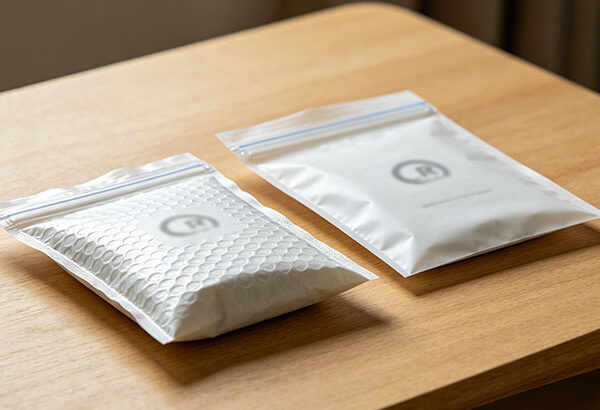
The matching logic is product-led. Dried flower needs moisture and odor control plus a closure that suits repeated opening. Pre-rolls need a flat format and a closure that does not crush the product. Edibles and gummies need a three-side sealed format and a barrier that suits the product's sensitivity. Concentrates may need a small foil bag with a high barrier and a secure seal. A bag that works for one format should not be assumed to work for another without a fill trial.
Market Trend Analysis: Why Barrier and CR Are Converging
Grand View Research estimates that plastics accounted for 54.3% of global cannabis packaging material share in 2025. That is a material-share figure, not a bag-specific market size. Commercial research houses also project double-digit growth, but their absolute 2026 values conflict: Fortune Business Insights reports USD 7.37 billion, while Mordor Intelligence reports USD 2.29 billion, and Grand View Research reported USD 3.2 billion for 2025 with a forecast to USD 19.3 billion by 2033. The direction is consistent; the absolute numbers are not directly comparable because segment definitions differ. Buyers should use these figures for planning direction, not for a precise bag budget.
Regulatory direction is clearer. California and Canada both require child-resistant packaging for relevant cannabis products, and California guidance also references tamper-evident and resealable requirements. That pushes compliance documentation down the supply chain: a bag supplier is increasingly asked for CR test evidence, barrier data and batch records, not only a price. The practical effect is that barrier performance and child resistance are being evaluated together as one qualification package.
China's role in the supply base is also visible in trade data. China is identified as the leading exporter of plastic bags under HS 392321, with over 25% of global exports and approximately USD 3.32 billion in 2023. This is a broad proxy for flexible plastic bags, not cannabis-specific trade, but it explains why Chinese packaging manufacturers are part of many buyers' shortlists. It also raises the importance of supplier documentation, because a broad supply base makes it harder to compare suppliers on claims alone.
Comparison with Traditional Solutions: Where High-Barrier CR Bags Fit
| Solution category | Typical strength | Typical limit | Best fit |
|---|---|---|---|
| Generic flexible bag | Basic physical containment and print | Barrier and CR performance depend on the exact structure; claims may be broad | Stable, short-cycle products where CR and long shelf life are not required; verify |
| Standard CR bag | A defined CR closure and retail-ready format | Barrier may be moderate; document review still needed | Retail flower with a defined shelf life; confirm OTR, WVTR and test report |
| High-barrier CR bag with documented specs | Listed OTR and WVTR values, foil layer, IPX4, CR closure options and custom print | Higher specification, higher MOQ and more testing burden | Longer shelf life, regulated markets and odor-sensitive flower programs |
The high-barrier route is not automatically the right choice. A product with a short turnover and low oxygen sensitivity may not need OTR ≤0.05. A premium barrier structure can raise unit cost and MOQ, and it can lengthen qualification because more tests are required. IPX4 does not mean the bag can be immersed. ASTM D3475 references on a specification sheet do not replace market-specific CR testing. The practical decision rule is to specify the lowest barrier and closure system that still meets shelf-life, regulatory and retail requirements, then verify it with a finished-bag test.
Future Outlook
Three changes are likely to shape procurement. First, child-resistant and tamper-evident requirements will continue to be checked at the package level, not only at the closure level. Second, buyers will ask for barrier data and batch traceability as part of supplier qualification. Third, custom print and private label will remain a way to differentiate retail SKUs, with digital printing serving small batches and gravure or flexographic printing serving larger programs. CHITAI's stated in-house laboratory, 100% test process and mix of digital, gravure and bag-making equipment are relevant to that direction, but buyers should still validate the specific SKU and market.
For procurement teams, the practical response is to build a specification file rather than a supplier shortlist alone. The file should record the product format, fill weight, target shelf life, barrier requirement, CR closure, market regulation, print method, MOQ, lead time and acceptance tests. Once that file exists, suppliers can be compared on the same basis, and a low price or a broad claim is less likely to displace a technically suitable option.
FAQ
What barrier values does ct-Cannabis Packaging Bags list?
The ct-Cannabis Packaging Bags reference lists OTR ≤0.05 cm³/(m²·24h), WVTR ≤0.03 g/(m²·24h), aluminum foil thickness of 7 to 9 μm, IPX4 water repellent grade, heat seal strength ≥40N/15mm and tear strength ≥35N longitudinal and ≥30N transverse. It also lists complete opacity and zero light transmission. These are listed specification values; buyers should confirm the test method and the batch report for the actual SKU.
Which child-resistant closure should a buyer choose?
The range lists CR Zipper, Push Lock and Slide Lock, each referenced to ASTM D3475. There is no universal choice. Selection depends on the bag format, the opening sequence, the filling equipment, the target market's test protocol and the intended reuse pattern. California distinguishes single-use from multiple-use child-resistant packaging, and Canada requires child-resistant containers for most cannabis products. The closure should be validated as part of the finished package, not selected from a name alone.
What sizes and fill weights are available?
The listed capacities are 1g, 3.5g (⅛ oz), 7g (¼ oz), 14g (½ oz) and 28g (1 oz). The listed bag specifications are 3''x4'', 4''x5'', 5''x6'', 6''x8'' and 8''x10''. These are catalog references. Actual fill weight depends on product density, moisture, zipper opening and headspace, so the buyer should validate the fill with a sample before fixing the specification.
Can the bags be customized with a logo, warning text and private label?
Yes. CHITAI lists OEM/ODM production and customization of shape, material, housing color and logo printing. Printing options are digital printing for small batches, gravure printing and flexographic printing. The ct reference model allows customizable logos and warning text. Private label cannabis bags and custom printed marijuana packaging bags are part of the same range. Artwork, warning text and market-specific labeling should be checked against the destination market before production.
What order terms should be confirmed before a purchase order?
Confirm the MOQ, lead time, capacity, test scope and acceptance criteria. CHITAI lists a MOQ of 10,000 units, a lead time of 3–5 days, a monthly capacity of 2,500,000 units and 100% test. The 3–5 day figure should be confirmed as production lead time and separated from artwork, plate or cylinder preparation, material procurement, testing and freight. The buyer should also agree on dimensional tolerances, seal strength, closure function and packaging of the finished bags.
How can a buyer verify smell-proof and waterproof claims?
Ask for the OTR and WVTR values, the foil thickness, the seal strength and a finished-bag test report. For the ct reference, the listed values are OTR ≤0.05 cm³/(m²·24h), WVTR ≤0.03 g/(m²·24h), foil thickness of 7 to 9 μm and heat seal strength ≥40N/15mm. IPX4 is a splash-water rating, not an immersion rating. Smell control also depends on the zipper, the top seal and the fill process, so a material data sheet alone is not sufficient.
What are the limits of an ASTM D3475 reference on a cannabis bag?
ASTM D3475 is a standard reference for child-resistant packaging, but a reference on a product page does not by itself prove compliance in every market. California requires child-resistant packaging for cannabis goods and identifies PPPA-certified packaging under 16 CFR 1700.15(b)(1) as one route. Under 16 CFR 1700.20, the test protocol requires that 85% of children aged 42–51 months cannot open the package within 5 minutes. Canada has separate child-resistant container requirements. The finished package, with the intended fill weight and closure, must be validated against the market-specific rule.
Which projects are a good fit for high-barrier cannabis bags?
High-barrier bags are a fit where oxygen, moisture, light or odor control matters over a defined shelf life. The CHITAI application data covers cannabis flower, pre-roll, edibles, CBD packaging, tobacco packaging, vape, herbal products and health products. Retail formats include 3.5g, 7g, 14g and 28g flower bags, pre-roll flat bags, CBD gummy three-side sealed bags and concentrate aluminum foil bags. A short-cycle product with low barrier needs may not require the same specification. The right approach is to set the shelf-life and regulatory requirement first, then choose the lowest barrier and closure system that meets it.
Reference document: CHITAI 2026 brochure (PDF). Open PDF
¿Tiene preguntas o necesita más detalles?
Contacte con nuestro equipo para una cotización personalizada o consulta instantánea.
Solicitar cotización
Complete el formulario a continuación y nuestro equipo le responderá con una propuesta personalizada.
Chat directo de WhatsApp
¿Prefiere chatear en tiempo real? Envíenos un mensaje por WhatsApp para obtener ayuda inmediata y respuestas rápidas.
- Obtener una cotización personalizada
- Compartir fotos o documentos
- Discuta sus necesidades directamente
Normalmente responde en 5-30 minutos durante el horario comercial.