
Candle Filter Compliance: ASME, GB and EN Scope Limits
The most common documentation error in filtration procurement is treating a compliance certificate as if it were a performance specification. A design code confirms the integrity of a pressure boundary. It does not confirm that a candle filter will deliver a stated filtration accuracy, or that a membrane skid will hold a stated flux at a stated temperature.
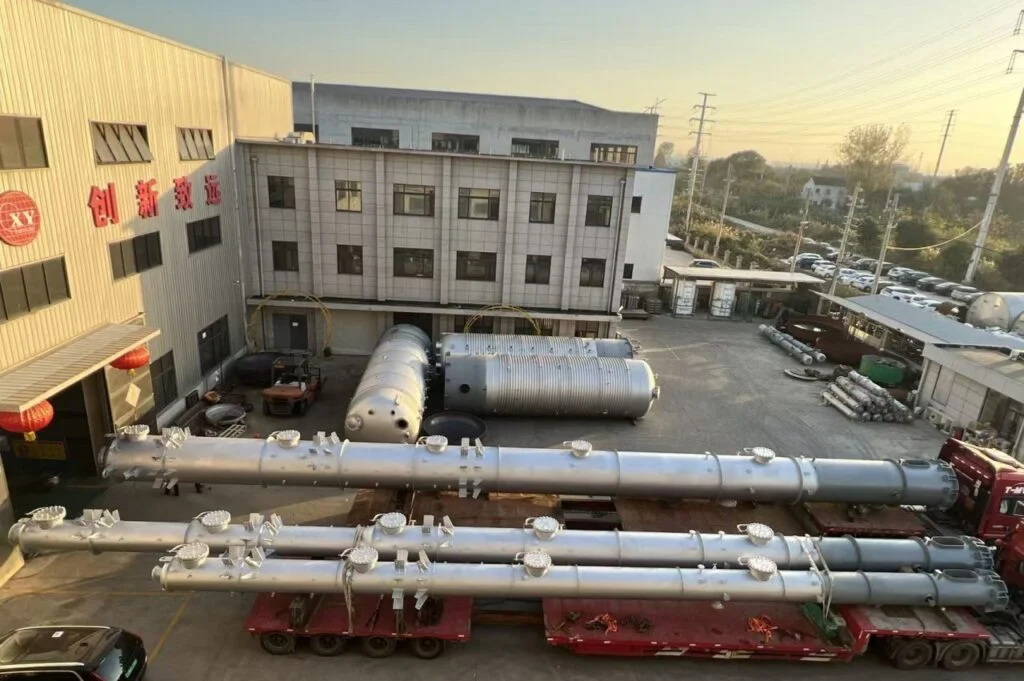
What a design code actually certifies
ASME Boiler and Pressure Vessel Code Section VIII is described by engineering sources as governing the design, analysis, fabrication, inspection and testing of pressure vessels, including heat exchangers, reactors, filters and specialty vessels. That scope statement is useful precisely because it draws a line. What the code certifies is the vessel: its pressure boundary, its material, its welding, its inspection regime and its pressure test. What it does not certify is what the vessel does to the product flowing through it.
The same boundary logic applies under GB and EN frameworks in their respective jurisdictions. For a supplier such as Jiangsu Xuyang Chemical Equipment Co., Ltd., whose candle filter range is listed as designable to ASME, GB or EN, the selection of a code is a decision about which pressure-equipment framework governs fabrication and inspection. It is not a decision about separation performance. Whichever framework is chosen, the scope limit is identical: the code defines what the equipment can safely withstand, not what it will achieve.
Two filtration families, one shared scope problem
The compliance discussion is easiest to follow with two concrete equipment families in view, because they fail in different ways when the two documents are confused.
Candle filters: SAC, SBC and CFS
The candle filter range is offered in three configurations: SAC fully automatic candle filter, SBC fully automatic candle filter, and CFS fully automatic filtration system. The listed construction options are SS304, SS316L, Hastelloy or other customised material, with filter media options of stainless steel, sintered mesh or filter cloth. Cake discharge can be dry, wet or by backwash, and control can be manual, automatic or PLC. Design standard is listed as ASME, GB or EN, and the stated applications run from solid-liquid separation and catalyst recovery through chemical, pharmaceutical and fine chemical filtration.
Within that same data set, filtration area, filtration accuracy, operating pressure and operating temperature are all listed as customised according to process requirements. That is the pivot of the whole compliance question. A candle filter can be fully code-compliant as a pressure vessel while its filtration area and accuracy remain entirely open values, defined by the buyer's process rather than by any standard.
Membrane separation and filtration equipment
The membrane equipment category shows the same pattern with more variables. Membrane type spans MF, UF, NF, RO and MBR. Membrane material spans PVDF, PES, PA and PTFE. Housing material spans SS304, SS316L, FRP and PP. Capacity, operating pressure, operating temperature and filtration accuracy are all listed as customised according to process requirements. The control system can be manual, automatic or PLC, cleaning can be CIP, backwashing or chemical cleaning, and the unit is supplied skid-mounted or as a customised industrial design.
Not one of those selection variables is a code-mandated value. They are engineering choices made against a process duty. When a buyer asks whether a membrane skid is compliant, the useful follow-up is compliant with what, and on which component.
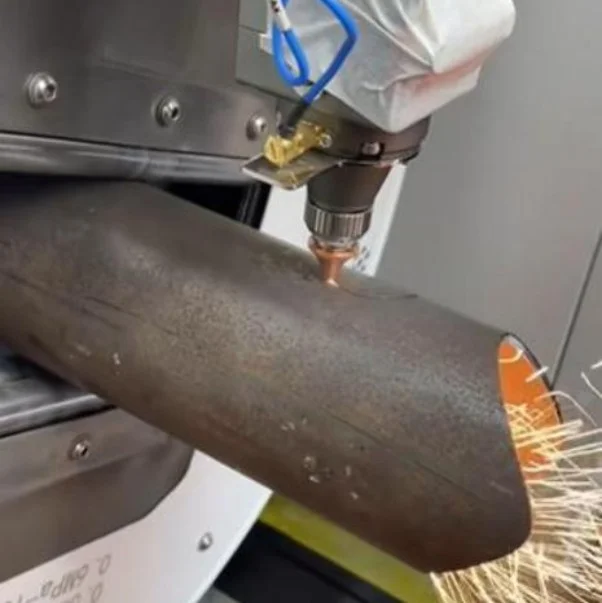
Standard-fixed versus process-defined: a scope split
The table below separates what a pressure-equipment code constrains from what only the buyer's process can define. It is the single most useful document structure a procurement team can adopt for filtration equipment, because it prevents a certificate from being filed where a specification belongs.
| Attribute | Governed by design code? | Where it must be documented |
|---|---|---|
| Pressure boundary design basis | Partly. The code defines the design rules; the design pressure and temperature come from the process. | Datasheet plus code designation and edition |
| Material selection for wetted parts | No. The code provides allowable rules; the grade follows the medium. | Material selection record and mill certificates |
| Welding, NDT and pressure testing | Yes. This is core code scope. | Inspection and test plan, test records |
| Filtration area | No. Listed as customised to process requirements. | Process performance specification |
| Filtration accuracy | No. Listed as customised to process requirements. | Process performance specification |
| Operating pressure and temperature values | No. Values come from the process; the code constrains how they are designed for. | Datasheet, within code limits |
| Filter media or membrane type and material | No. | Process performance specification |
| Housing material (SS304, SS316L, FRP, PP) | No. | Datasheet and corrosion review |
| Cake discharge and cleaning regime | No. Dry, wet or backwash; CIP or chemical cleaning. | Process and operability specification |
| Control scheme | No. Manual, automatic or PLC. | Automation and functional specification |
| Design standard and edition | Yes. ASME, GB or EN must be named explicitly. | Contract and datasheet |
Why the split changes cost, schedule and risk
Compliance is not free, and buyers should expect the cost of the standard to appear somewhere in the quotation. One commercial research estimate puts ASME compliance at up to 20 percent of a pressure vessel's total material cost. That figure is a useful anchor for budget conversations: where a supplier's price for a code-stamped vessel sits materially below the market, the first question is not whether the discount is generous, but whether the code scope has been applied to the whole pressure boundary or only part of it.
The schedule risk runs the other way. Because filtration area, accuracy, operating pressure, operating temperature, capacity and control scheme are all process-customised, none of them can be quoted responsibly before the process data is fixed. A quotation that presents a filtration accuracy without the corresponding medium, solids loading, temperature and pressure is not a specification; it is an assumption. The same discipline applies to material selection, which in Xuyang's stated workflow proceeds by confirming the working medium, chemical composition and concentration, operating temperature, design temperature, operating pressure, design pressure or vacuum condition, required capacity and corrosion or hygiene requirements before suitability is evaluated and the material is finalised.
Design qualification is a further gate. In the supplier's own documentation, equipment design qualification is identified as a key safety note for customised equipment design work. That framing is correct and worth borrowing: for a bespoke candle filter or membrane skid, the qualification question applies to the design activity itself, not only to the finished weld.
Separating qualification documents from performance documents
In practice, the two document sets can be requested in parallel and evaluated separately. The list below is a workable structure for a filtration enquiry under a decision-stage evaluation.
Qualification file: what the code and licence cover
- Named design standard and edition: ASME, GB or EN, with the applicable division or level where relevant.
- Manufacturer licence scope, including the level held and the equipment categories it covers.
- Welding procedure and welder qualification records, plus the NDT regime proposed for the specific unit. Xuyang states that pressure vessel welding uses plasma and deep penetration automated welding technologies, and that every pressure vessel undergoes X-ray detection, hydraulic pressure testing and surface roughness inspection.
- Pressure test records and, where applicable, witnessed acceptance testing.
- Mill certificates and material traceability for wetted parts.
- Control-system documentation where the unit is supplied skid-mounted with PLC or automatic control.
Performance file: what the process requires
- Filtration area, filtration accuracy target and the basis on which both were calculated.
- Operating pressure, operating temperature and the medium chemistry they apply to.
- For membrane units: membrane type (MF, UF, NF, RO, MBR) and membrane material (PVDF, PES, PA, PTFE), with the flux and rejection basis stated.
- Cleaning and backwash regime, including CIP sequence and chemical cleaning compatibility.
- Acceptance criteria and the test medium for performance verification.
The two files answer different questions and should be signed off by different people. Qualification belongs with the quality and compliance function. Performance belongs with process engineering. When a single signature covers both, the certificate tends to absorb the credibility that the performance data has not yet earned.
Where Jiangsu Xuyang's engineering sits in this framework
Jiangsu Xuyang Chemical Equipment Co., Ltd. was established in 2009 and is located in Jingjiang Economic and Technological Development Zone, Jiangsu Province, China. The company describes itself as integrating research and development, engineering design, equipment manufacturing and import and export trade, serving chemical, environmental protection, pharmaceutical, fermentation, food, new material and lithium-related industries. Its portfolio covers reactors, storage tanks, shell and tube heat exchangers, towers, corrosion-resistant lined equipment, evaporation and crystallisation systems, water treatment equipment and skid-mounted equipment, alongside the candle filter and membrane separation ranges discussed here.
On qualification, the company states that it holds an A2-level Special Equipment Design and Manufacturing License issued by the relevant Chinese authorities, and it lists ISO 9001, ISO 14001 and ISO 45001 management systems together with an ASME U stamp. These are company-reported credentials. A buyer following the logic of this article should request the certificate numbers, issuing bodies, scope statements and validity dates, and verify them against the issuing authority's records rather than relying on the datasheet alone.
On engineering process, Xuyang states that it offers customised equipment against specific drawings and maintains a dedicated R&D team producing CAD or 3D designs based on process parameters, material requirements and space constraints. Its stated differentiators for process equipment are integrated manufacturing of reactors, heat exchangers, storage tanks and other process equipment from one supplier, drawing-based engineering support tailored to operating pressure, temperature and process conditions, and support for applicable certification, inspection and documentation requirements subject to project scope and qualifications. Read through the scope split above, those statements describe a manufacturing and documentation capability. They do not, and cannot, substitute for a process performance specification on a specific filtration duty.
Limits of this interpretation
Three boundaries should be stated plainly, because overstating the argument would repeat the very error it describes.
First, code compliance says nothing about separation performance. A unit can be correctly designed, correctly welded, correctly radiographed and correctly pressure-tested, and still deliver a filtration accuracy that does not match the buyer's requirement, because accuracy was never a code parameter. Second, the customisation of area, accuracy, pressure, temperature, capacity and control scheme means there is no universal benchmark across suppliers. Any comparison of two candle filters or two membrane skids requires the process basis to be normalised first, or the comparison is between two different duties. Third, this article describes the scope logic of design codes as applied to filtration equipment. It is not a clause-by-clause reading of ASME, GB or EN, and it does not determine which framework applies in a given jurisdiction. That determination belongs to the buyer's engineering and regulatory advisers, working from the project location and the applicable law.
A fourth limitation is practical rather than technical. Company-reported certifications should be treated as claims until verified. A licence that is genuine but whose scope excludes the specific equipment category, or has lapsed, produces the same paperwork and a different risk position.
Market context for tighter documentation
The commercial backdrop explains why this distinction is being tested more often. The separation machinery market is projected to reach USD 109 billion in 2026, growing at 7.2 percent CAGR from 2026 to 2035 according to Global Market Insights. The global chemical processing equipment market is valued at USD 68.82 billion in 2026, and the chemicals and petrochemicals segment led that market with a 41.6 percent revenue share in 2025. As volumes rise and project teams become more distributed, the documentation package becomes the primary artefact a buyer actually assesses. A supplier that can present qualification and performance as separate, complete files is easier to approve than one that presents a certificate and a promise.
Future outlook
The direction of travel is toward the separation of evidence, not the consolidation of it. Skid-mounted delivery packages that combine vessels, membranes, pumps, instrumentation and PLC control are becoming the normal unit of purchase for filtration duties, and a skid crosses several documentation regimes at once: pressure equipment, electrical, automation and process performance. Buyers are increasingly likely to ask for a scope matrix at enquiry stage, mapping each component to the standard, licence or performance guarantee that governs it.
For manufacturers, that is an opportunity rather than a burden. A supplier able to state clearly which parameters are code-governed and which are process-defined, and to show the calculation basis for the latter, removes the ambiguity that most often delays approval. The equipment itself may be identical. The speed of the decision is not.
FAQ
If a candle filter is designed to ASME, does that mean its filtration accuracy is certified?
No. ASME Section VIII is described as governing the design, analysis, fabrication, inspection and testing of pressure vessels. Filtration accuracy is listed by the manufacturer as customised according to process requirements, so it falls outside the code scope and must be specified and accepted separately as a performance value.
Should a membrane filtration skid be specified to ASME, GB or EN?
The framework choice follows the project's jurisdiction and the buyer's regulatory obligations, not the separation duty. Membrane equipment is offered with customised capacity, operating pressure, operating temperature and filtration accuracy, so the design standard governs the pressure-retaining components while the process values remain buyer-defined. The scope statement should identify which components on the skid the chosen standard applies to.
Which parameters must appear in a process performance specification rather than a design code?
Filtration area, filtration accuracy, operating pressure, operating temperature, capacity and control scheme are all listed as process-customised for candle filters and membrane equipment. Membrane type and material, housing material, cake discharge method and cleaning regime fall in the same category. These belong in the performance specification, with the calculation basis stated.
How should a buyer verify a supplier's ASME or GB qualification claim?
Request the licence or certificate number, the issuing body, the scope statement covering the specific equipment category, and the validity dates, then verify them with the issuing authority. A listed ASME U stamp or an A2-level licence is a company-reported credential until the certificate documentation has been checked independently.
Can a code-compliant filter be used with a corrosive or hazardous medium?
Code compliance and material suitability are separate determinations. Material selection proceeds by confirming the working medium, chemical composition and concentration, operating temperature, design temperature, operating pressure, design pressure or vacuum condition, required capacity, and corrosion or hygiene requirements, and only then evaluating suitability. A compliant pressure boundary built in an unsuitable grade remains unsuitable for the duty.
For readers who want the manufacturer's own pressure-vessel specification data as a reference point alongside the scope logic above, the 2026 Xuyang Pressure Vessel Catalog is available for download.
¿Tiene preguntas o necesita más detalles?
Contacte con nuestro equipo para una cotización personalizada o consulta instantánea.
Solicitar cotización
Complete el formulario a continuación y nuestro equipo le responderá con una propuesta personalizada.
Chat directo de WhatsApp
¿Prefiere chatear en tiempo real? Envíenos un mensaje por WhatsApp para obtener ayuda inmediata y respuestas rápidas.
- Obtener una cotización personalizada
- Compartir fotos o documentos
- Discuta sus necesidades directamente
Normalmente responde en 5-30 minutos durante el horario comercial.