
Can Your Custom Casual Apparel Supplier Sustain Repeat Orders?
Can Your Custom Casual Apparel Supplier Sustain Repeat Orders?
A supplier can pass a sample review and still fail on the fourth order. For buyers of Custom Casual Apparel, the decision that matters is not whether a manufacturer can produce one good run, but whether it can repeat that run — same specification, same lead time, same documentation — across a full season of replenishment.
The global custom made clothes market was valued at USD 48.6 billion in 2025, and the casual and fashion segments account for 62% of custom clothing demand (Dataintelo). That mix matters because casual programs are replenishment-driven: hoodies, T-shirts and long-sleeve tops get reordered season after season, frequently in the same colourways and size curves. The buyer who selects a supplier on a single sample is effectively betting a whole product line on an untested assumption.
Guangzhou Lihong Apparel Trade Co., Ltd. (Lihongwear) is a Guangzhou-based OEM/ODM manufacturer of men's basic apparel for export — T-shirts, shirts, polo shirts, hoodies, jackets and pants — with 80% of sales going to markets in Europe, the Americas, Southeast Asia, the Middle East and Australia. Its published capability data provides a useful worked example of how the evaluation criteria in this article can be applied in practice.
Why Long-Term Supplier Evaluation Starts Before the First Order
Evaluating a long-term Custom Casual Apparel supplier should begin with three questions that have nothing to do with design: can the manufacturer make the same product again at volume, can the product be legally sold in the destination market, and who is accountable when something goes wrong.
Most sourcing frameworks front-load aesthetics, price and sample quality. The costs of a weak long-term supplier, however, surface later — as specification drift between lots, as lead times that lengthen on the third order, or as a test report that turns out to cover a fabric the buyer no longer uses. A durable framework therefore separates five axes and evaluates each one independently:
- Capacity — can the manufacturer reproduce the product at the required volume, and is there headroom for growth?
- Certification — can the finished product be sold where the buyer sells it, and is the evidence traceable to the actual goods?
- Quality system — is quality controlled at defined stages, or inspected only at the end?
- MOQ and lead-time structure — are the minimum order and the delivery clock described precisely enough to plan against?
- After-sales — is there a named person, a response window and a defect remedy, or only a promise?
The Failure Mode: Passing the Sample, Failing the Repeat
The most common long-term failure is not a bad sample. It is a good sample made under conditions that do not exist in mass production — a pattern cut by the most experienced operator, a fabric pulled from a sample roll, trims substituted at bulk stage, or a colour that shifts between dye lots.
Three checks reduce this risk before the first bulk order is placed. First, ask where the sample was made and whether the same line will run the bulk order. Second, ask whether the approved sample is retained as the reference standard against which bulk goods are measured. Third, ask for the documented steps between order confirmation and shipment, because a written process is auditable while a verbal one is not.
Lihongwear operates a standardized eight-step customization process and maintains a senior pattern maker team with more than 10 years of experience. That combination is what allows a confirmed sample to convert into a bulk reference rather than remaining a one-off artifact — pattern continuity is the mechanism by which the tenth order resembles the first.
Capacity: Reading Output Numbers in the Right Order
The first capacity number a buyer should read is not annual output but daily output, because daily output determines how quickly a repeat order can be scheduled into a running line. Annual capacity describes the size of the factory; daily output describes how it behaves on a Tuesday in peak season.
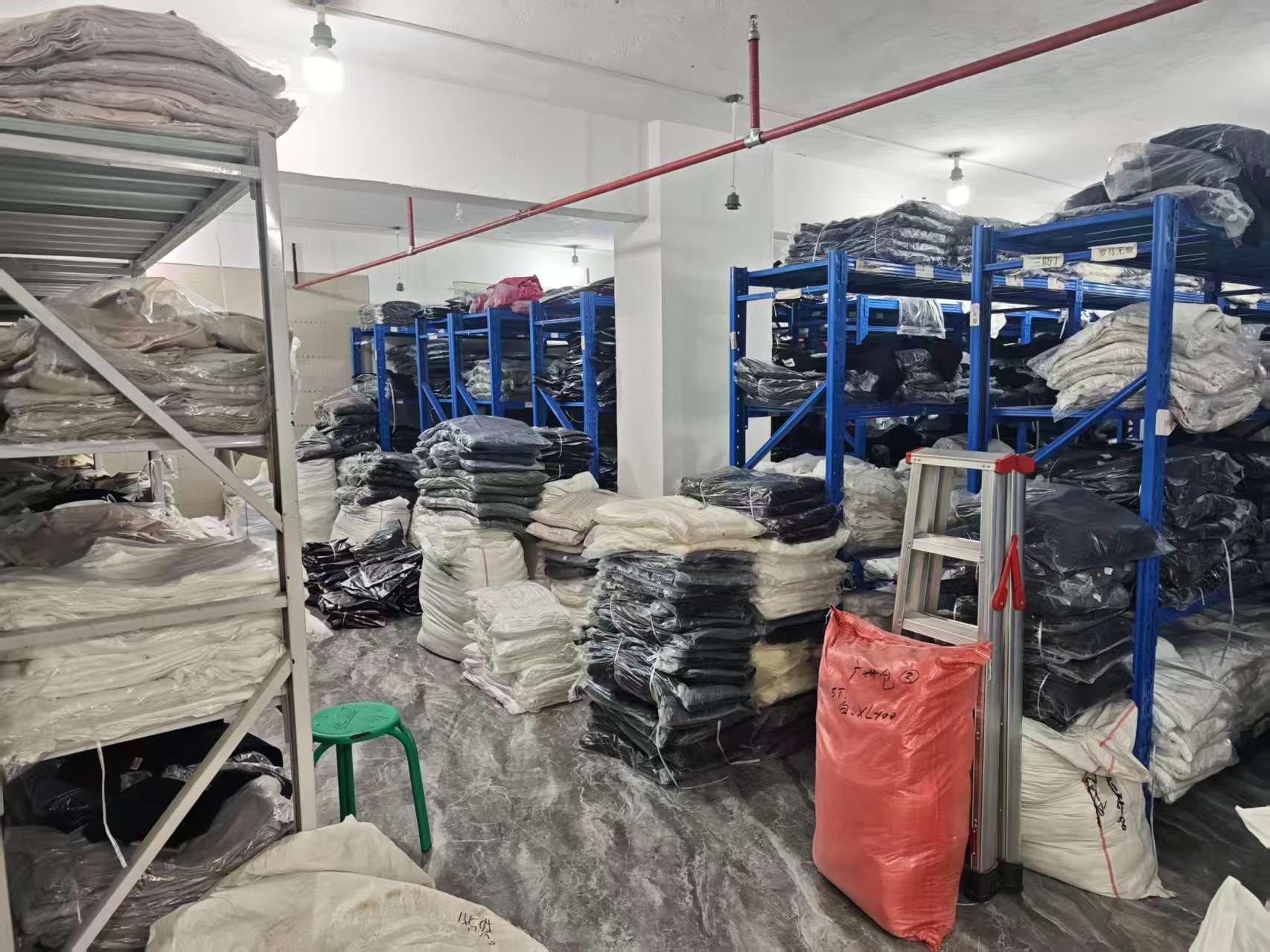
Lihongwear reports fully in-house production lines with a professional team of over 100 experts, a daily output of 1,500 pieces — roughly 45,000 pieces per month at that daily rate — and an annual production capacity of 500,000 pieces. The facility covers 5,000 m² and employs over 150 people. Separately from this flow capacity, the company maintains a ready stock of more than 200,000 pieces across more than 50 styles.
Flow capacity versus buffer stock
These two numbers answer different questions and should never be combined into a single figure. Flow capacity — 1,500 pieces per day, 500,000 pieces per year — answers whether a custom program can be scheduled and repeated. Buffer stock — 200,000+ pieces across 50+ styles — answers whether a buyer can replenish an in-demand basic immediately while a custom run is still in production. A supplier with strong flow but no buffer forces the buyer to carry safety stock; a supplier with buffer but weak flow cannot scale a program that starts selling.
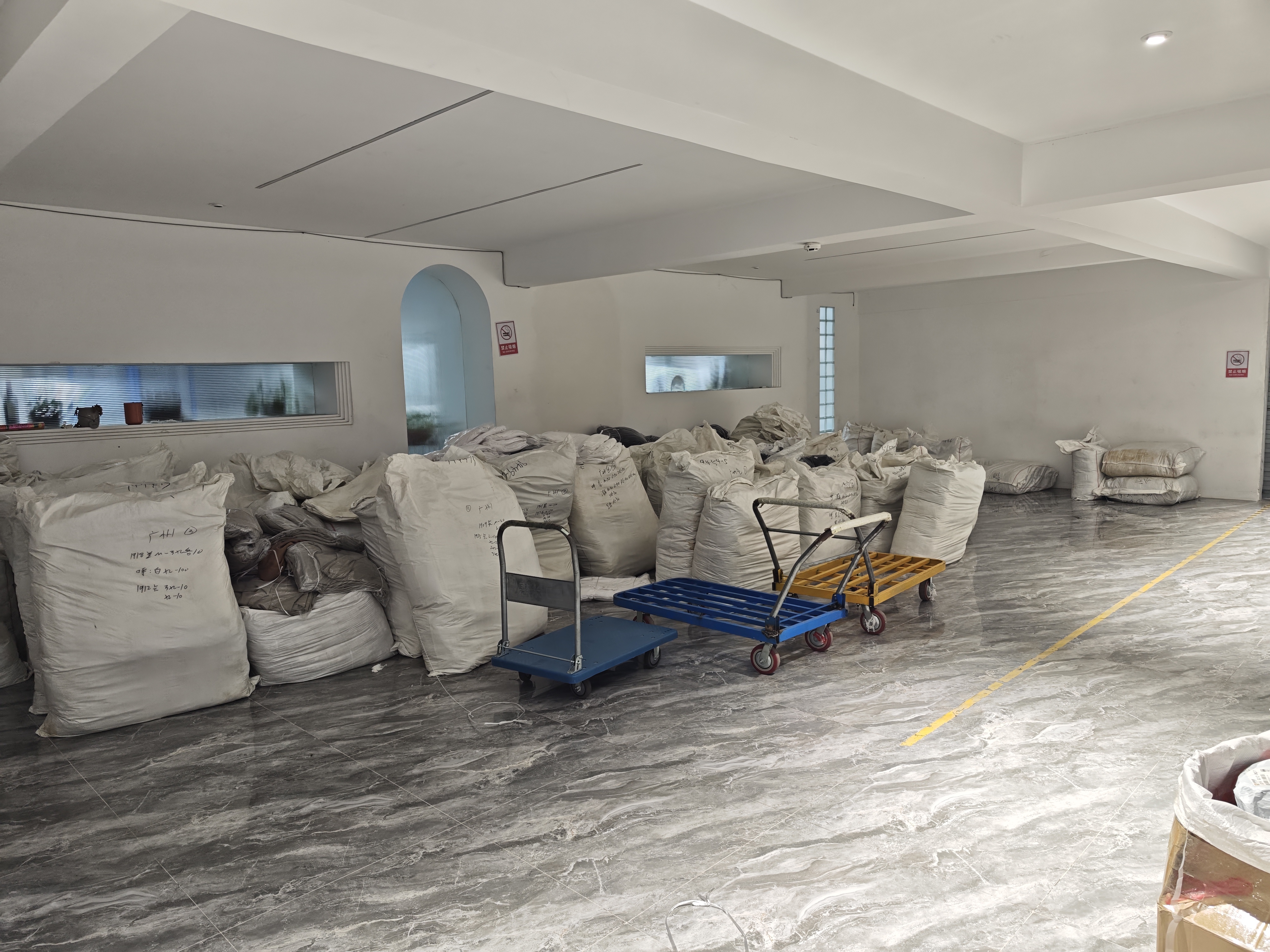
Capacity figures are self-reported by nature, so buyers should treat them as a planning assumption rather than a guarantee. The practical test is phased ordering: place a first order at the MOQ, a second order at double the volume, and observe whether the quoted lead time holds. A supplier with genuine in-house lines will absorb that step-up; one that subcontracts will usually show it in the second delivery.
Certification: What GB 18401-2010 Category B Confirms
Lihongwear holds a CTI test report under GB 18401-2010 Category B. Understanding exactly what that document covers — and what it does not — is essential to using it correctly in a procurement file.
GB 18401-2010 is China's national standard setting out basic safety requirements for textile products. Category B is the classification applied to textile products worn next to the skin, which is the relevant class for T-shirts, hoodies and long-sleeve tops. A report issued under this standard by a third-party laboratory such as CTI documents that the tested sample met the Category B limits — a scope that broadly addresses formaldehyde content, pH, colour fastness and prohibited azo colourants.
What the report does not confirm
A test report is evidence about a tested sample, not a permanent warranty over every future roll of fabric. Buyers should confirm four things before relying on it: that the tested item matches the fabric composition, colour and style actually being ordered; that the report is current; that the certificate holder is the entity signing the contract; and that the destination market does not impose additional requirements that GB 18401-2010 does not cover. GB 18401-2010 Category B is a Chinese national standard, and buyers selling into Europe or North America should expect to satisfy separate regulatory frameworks alongside it.
Quality Control as a System, Not an Inspection
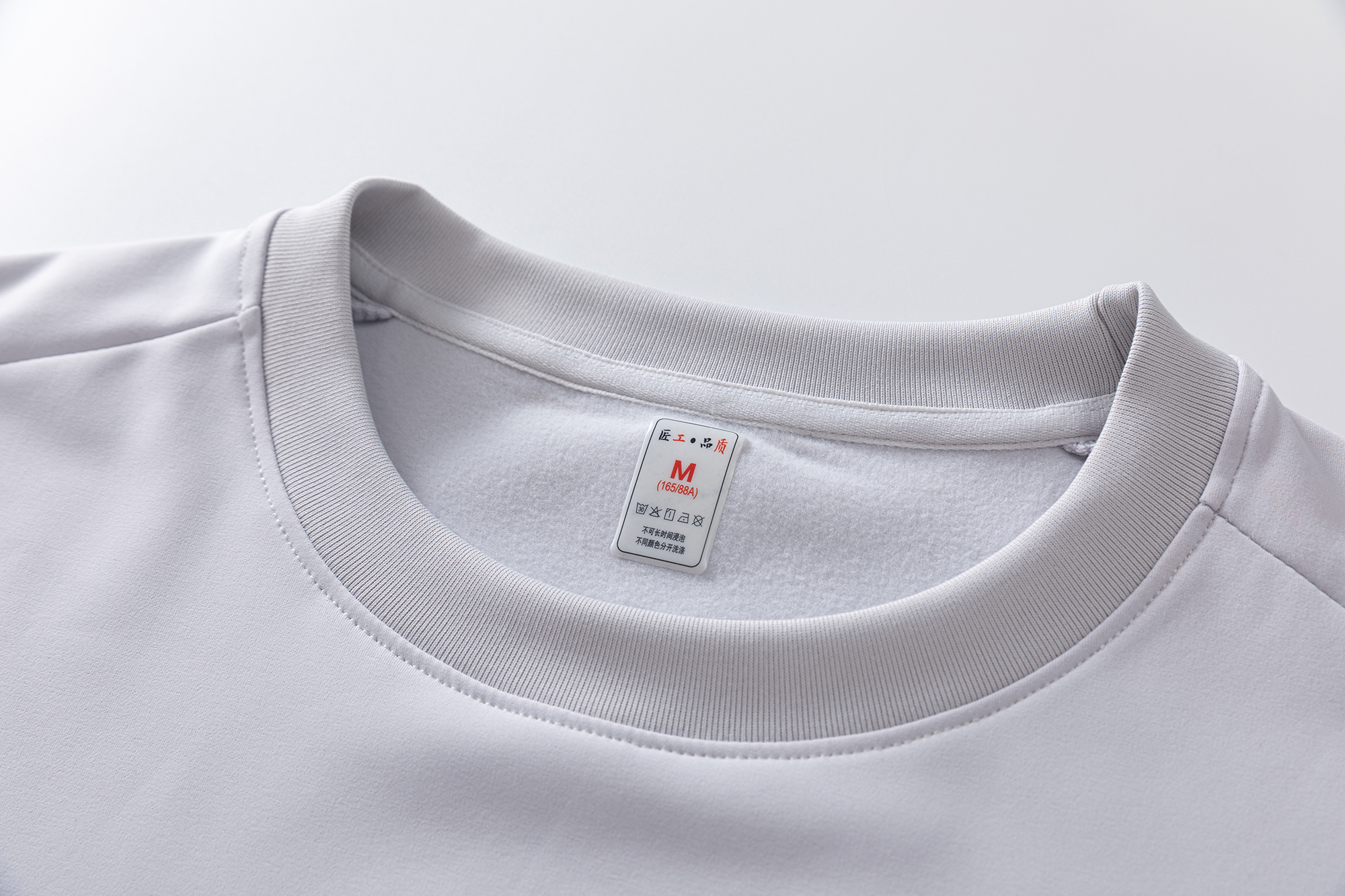
A seven-stage quality control process aligned with international AQL standards, with manual checks for seam endurance, neck symmetry and dimensional retention, is structurally different from a single final inspection — and the difference becomes visible at scale rather than on a sample.
AQL, or acceptance quality limit, is a sampling methodology: a defined number of pieces is drawn from a lot and compared against a defect threshold. It is statistical by design, not a 100% check, and buyers should understand that distinction rather than assume full inspection. What a staged process adds is earlier detection. Cutting-stage checks catch shrinkage and marker problems before fabric is consumed; in-line checks catch seam and assembly faults while correction is still cheap; final checks catch symmetry and measurement drift before packing.
For a long-term relationship, the useful question is not how many stages exist but what happens at each one and who signs off. A buyer evaluating a supplier should request the QC plan, the AQL level applied per stage, and the name of the person accountable for the final release.
MOQ and Lead Time: Two Separate Promises
Minimum order quantity and lead time are frequently quoted together and should always be read separately, because they answer different questions and carry different risks.
Lihongwear sets custom production MOQ at 200 pieces, while in-stock goods carry no minimum order. These are two distinct commercial offers. The 200-piece custom MOQ is what makes a genuine private label program possible without committing to volume that a new design has not yet earned; the no-minimum stock offer is what allows a buyer to test colourways or bridge a stock-out without triggering a production run. A 200-piece custom order typically implies a limited colour and size split, a single fabric and a single logo method, and those parameters should be confirmed in writing before the order is placed.
On timing, Lihongwear quotes approximately 3 days for in-stock goods and 15 to 25 days for custom production measured from sample confirmation to bulk delivery. The anchor phrase matters: the custom clock starts at sample confirmation, not at inquiry, so buyers should build sampling time into their own launch calendar. These figures are factory-side production times and do not include international freight, customs clearance or destination handling, which vary by market and add to total door-to-door time.
After-Sales: The Clause That Only Matters Later
After-sales commitments are the part of a supplier evaluation that carries no weight at the point of purchase and all of the weight afterwards. Three commitments are worth verifying because each maps to a specific operational failure.
A dedicated order follower addresses the failure mode of split programs — multiple styles, staggered ship dates, several logo methods — where information is lost between handoffs. A two-hour response window during business days addresses the failure mode of decisions that stall while a line waits. A seven-day defect return handling window addresses the failure mode of discovering a problem after the goods have been accepted without recourse.
That seven-day window is also a deadline on the buyer's side. It assumes incoming inspection happens promptly after delivery, so buyers should schedule their own quality check inside that period rather than weeks later. Commitments of this kind are only enforceable when written into the purchase order, with the response window, the defect definition and the remedy stated explicitly.
The Five Elements at a Glance
The table below restates Lihongwear's published capability data against the five evaluation axes, together with the procurement implication of each figure.
| Evaluation axis | Stated position | What it means for a repeat-order buyer |
|---|---|---|
| Production capacity | 5,000 m² facility; 150+ employees, including a professional team of over 100 experts; 1,500 pieces per day (roughly 45,000 per month); 500,000 pieces per year | Flow capacity supports scheduled repeat runs and leaves room for volume growth; verify through phased ordering. |
| Ready stock | More than 200,000 pieces across more than 50 styles | Enables immediate replenishment of stocked basics while custom production is still running. |
| MOQ structure | Custom production from 200 pieces; no minimum on in-stock goods | Allows a private label trial without volume commitment, plus a zero-MOQ route for stock items. |
| Lead time | Approximately 3 days for stock; 15 to 25 days for custom, from sample confirmation | Two separate planning clocks; excludes international freight and clearance. |
| Certification | CTI test report under GB 18401-2010 Category B | Supports skin-contact safety documentation for the tested item; confirm fabric, style and currency of the report. |
| Quality system | Seven-stage QC aligned with international AQL standards; manual checks for seam endurance, neck symmetry and dimensional retention | Earlier defect detection than final-only inspection; sampling-based, not 100% inspection. |
| After-sales | Dedicated order follower; two-hour response during business days; seven-day defect return handling | Assigns accountability for multi-style programs and sets a fixed window for buyer-side incoming inspection. |
Application: Which Buyer Profiles Fit This Model
Lihongwear's stated application base spans cross-border e-commerce, clothing wholesale, trend brand labelling, corporate workwear and offline retail — and each profile leans on a different part of the capability set.
Cross-border e-commerce sellers and wholesale buyers typically weight the ready stock and the three-day replenishment window most heavily, since their risk is running out of a selling basic. Trend brands and private label buyers weight the 200-piece custom MOQ and the depth of the private label program, which at Lihongwear includes customized inner neck taping, woven brand tags, printed wash care labels, custom hangtags and custom polybag packaging, alongside Pantone colour dyeing for production orders. Corporate workwear buyers weight size range and decoration consistency, supported by screen printing, digital direct-to-garment, embroidery and heat transfer as logo methods.
The product architecture behind these applications is deliberately narrow rather than broad, which helps with repetition. The 1901 Series 360g hoodie uses Mountain Cotton at 63.5% cotton and 36.5% polyester with a 100% polyester lining. The 1801 and 1701 Series long-sleeve shirts sit in a 280g high-elastic category, offered in a tech blend and in a smooth polyester version. The T-shirt series run from 170g to 230g across several fabric constructions. Sizes span XS to 5XL across the men's basic range, with individual series covering M to 4XL or M to 3XL. Range depth of this kind matters to long-term evaluation because a supplier that already holds the pattern and fabric base for a style can repeat it far more predictably than one building it from scratch each season.
Market Context: Where Custom Casual Demand Is Concentrating
The custom made clothes market stood at USD 48.6 billion in 2025, with casual and fashion accounting for 62% of demand compared with corporate and formal wear (Dataintelo). Read alongside product-level benchmarks, that concentration has two practical consequences for supplier selection.
First, the centre of gravity has moved toward casual basics, which are reordered rather than replaced — raising the value of repeatability over novelty. Second, fabric expectations in the premium end of that casual market have risen: heavyweight hoodies are commonly defined by fabric weights of 350 to 450 GSM in brushed-back fleece, compared with around 280 GSM for standard promotional blanks. The implication for buyers is that a supplier's fabric library should span both ends of that range, because a program positioned at the heavyweight end and a program built on 280 GSM basics place different demands on the same factory. A 360g construction sits inside the heavyweight band; the 280g long-sleeve and the 170g to 230g T-shirt series sit below it, serving a different price architecture.
Comparison: Structured Long-Term Supply vs Ad-Hoc Spot Sourcing
The comparison below is between two sourcing routes rather than between two companies. Both are legitimate; they suit different stages of a brand's development.
| Dimension | Structured long-term supplier | Ad-hoc spot sourcing |
|---|---|---|
| MOQ commitment | Defined and repeatable — custom production from 200 pieces at Lihongwear, with no minimum on stock | Depends on what is available; terms may change between orders |
| Certification documentation | Test report traceable to fabric and style, reusable in the buyer's own compliance file | Documentation may be partial or unrelated to the specific lot |
| Quality control visibility | Documented multi-stage AQL process with manual checkpoints | Frequently limited to a final visual check before shipment |
| Lead-time predictability | Separate clocks for stock (about 3 days) and custom (15 to 25 days from sample confirmation) | Quoted per order; less consistent across repeats |
| After-sales recourse | Named order follower, defined response window, seven-day defect return handling | Depends on the individual intermediary; accountability may be unclear |
| Customization depth | OEM/ODM design, private label trims, Pantone colour dyeing | Usually limited to applying a logo to an existing blank |
| Commitment required | Forecasting, sample approval, purchase order discipline | Low — useful for testing an unproven market |
Ad-hoc sourcing is not inherently weaker. For a first market test, buying small quantities of existing stock can be the lower-risk route, and it avoids locking in a relationship before demand is proven. The comparison becomes decisive once a program has demonstrated repeat demand and the buyer's priority shifts from availability to consistency — at which point the absence of a documented QC system or a named after-sales contact becomes a real cost rather than a theoretical one.
Limitations and What Buyers Should Verify Independently
No supplier evaluation is complete without a stated boundary, and the framework above has several.
- AQL inspection is sampling-based. A seven-stage process improves detection and timing, but it is not equivalent to 100% piece-by-piece inspection, and buyers with zero-defect requirements should agree on a specific inspection regime in the purchase order.
- GB 18401-2010 Category B is a Chinese national standard. It does not automatically satisfy European or North American requirements, and buyers should confirm which additional obligations apply in their destination market.
- Lead times exclude freight and clearance. The 15 to 25 day custom window covers factory production from sample confirmation; total door-to-door time depends on routing, port and season, and should be planned separately.
- Stock availability fluctuates. The no-minimum offer applies to in-stock goods, and specific styles, colours and sizes may not be available at any given moment.
- Entity structure deserves due diligence. Guangzhou Lihong Apparel Trade Co., Ltd. was established in 2024 and draws on factory experience of more than 10 years. Buyers should confirm which legal entity holds the test report and which entity signs the contract, so that certification and commercial responsibility sit with the same party.
- Capacity figures are self-reported. They are a reasonable planning input but should be validated through phased ordering rather than accepted at face value.
Future Outlook
Buyer expectations in custom casual apparel are shifting from capability claims toward documented evidence. Requests for test reports tied to specific fabrics, for visibility into QC staging, and for defined after-sales windows are becoming routine parts of the sourcing conversation rather than specialist demands. As the casual segment continues to dominate custom apparel demand, suppliers will be judged less on whether they can produce an impressive sample and more on whether they can produce the same product again, at the same standard, with paperwork that survives an audit.
For buyers, the practical consequence is a shift in evaluation sequencing: certification and QC documentation first, sample aesthetics second. That order protects the launch calendar far more reliably than the reverse.
FAQ
What should a buyer verify first when evaluating a Custom Casual Apparel supplier for repeat orders?
Start with repeatability rather than styling. Confirm that production lines are in-house, that daily output is stated as a figure rather than a range, and that the MOQ structure supports both a trial order and a scaled order. At Lihongwear, this appears as fully in-house lines with a professional team of over 100 experts, a daily output of 1,500 pieces, and a custom MOQ starting from 200 pieces. Verifying these through phased ordering is more reliable than verifying them through documentation alone.
How is monthly production capacity different from ready stock?
Capacity is flow; stock is buffer. Lihongwear reports a daily output of 1,500 pieces — roughly 45,000 pieces per month at that rate — and an annual production capacity of 500,000 pieces, which represents what can be made over time. Separately, it holds more than 200,000 pieces of ready stock across more than 50 styles, which represents what can ship immediately. A buyer planning a custom program depends on the first figure; a buyer bridging a stock-out depends on the second.
What does a CTI test report under GB 18401-2010 Category B confirm?
It confirms that a tested sample met the Category B requirements of China's national safety standard for textile products. Category B is the class applied to textiles worn next to the skin, and the scope broadly addresses formaldehyde content, pH, colour fastness and prohibited azo colourants. It does not confirm that every future production lot is identical, nor does it substitute for the regulatory requirements of other destination markets. Buyers should check that the tested fabric, colour and style match the goods being ordered.
Why are stock lead times shorter than custom lead times?
Because the two routes involve different work. In-stock goods require picking, packing and dispatch, which Lihongwear quotes at approximately 3 days. Custom production requires pattern work, sample approval, fabric preparation, cutting, sewing and staged quality control, which Lihongwear quotes at 15 to 25 days measured from sample confirmation to bulk delivery. Neither figure includes international freight or customs clearance.
How does a seven-stage AQL quality control process differ from a final inspection?
A final inspection evaluates a completed lot; a staged process evaluates the lot at multiple points, so faults are caught while correction is still inexpensive. Lihongwear's seven-stage process follows international AQL manufacturing standards and includes manual checks for seam endurance, neck symmetry and dimensional retention. Because AQL is a sampling methodology rather than a full inspection, buyers with tighter tolerances should agree on the specific inspection level in the purchase order.
Which after-sales commitments should be written into a supplier agreement?
At minimum: who is accountable, how fast they respond, and what happens when goods are defective. Lihongwear's stated commitments are a dedicated order follower, a two-hour response window during business days, and seven-day defect return handling. Each should appear in the purchase order with the response window, the definition of a defect and the remedy stated explicitly — and the seven-day window should be matched by a scheduled incoming inspection on the buyer's side.
A complete product and specification reference for Lihongwear's men's basic apparel range is available in the Lihongwear product catalogue.
Market data referenced in this article: custom made clothes market valuation of USD 48.6 billion in 2025 and a 62% casual and fashion share of custom clothing demand (Dataintelo); heavyweight hoodie fabric benchmarks of 350 to 450 GSM versus approximately 280 GSM for promotional blanks (Streetwear industry analysis). Company capability figures are as published by Guangzhou Lihong Apparel Trade Co., Ltd.
¿Tiene preguntas o necesita más detalles?
Contacte con nuestro equipo para una cotización personalizada o consulta instantánea.
Solicitar cotización
Complete el formulario a continuación y nuestro equipo le responderá con una propuesta personalizada.
Chat directo de WhatsApp
¿Prefiere chatear en tiempo real? Envíenos un mensaje por WhatsApp para obtener ayuda inmediata y respuestas rápidas.
- Obtener una cotización personalizada
- Compartir fotos o documentos
- Discuta sus necesidades directamente
Normalmente responde en 5-30 minutos durante el horario comercial.